TokyoKamakuraDay tripsGreat BuddhaJapan
Kamakura Day Trip from Tokyo: The Great Buddha and Beyond
Plan a Kamakura day trip from Tokyo: the Great Buddha and temples, Kamakura plus Enoshima combos, guided walks vs the train on your own, and the top-rated tours.
By SimilarTours Editorial · Travel Research · · 15 min read

A Kamakura day trip from Tokyo is the easy one: an hour on the train from the capital and you are standing before the Great Buddha, a giant bronze figure that has sat in the open air for centuries. Kamakura is a coastal town known for that statue, its hydrangea temples, forested hiking trails, and beaches, and it makes for one of the most rewarding short escapes from Tokyo. You get temples, sea air, and history in a compact, walkable area, all within a comfortable half or full day of the city.
This guide walks the Kamakura day trip end to end: when to do Kamakura on its own versus paired with Enoshima along the coast, when a guided walk earns its keep, and when the train on your own is the smarter move. Every tour referenced is currently bookable through our partner OTAs and ranked on real ratings and review counts, verified July 2026.
Browse all Tokyo and Kamakura day trips →The core decision: Kamakura alone, Kamakura plus Enoshima, or a broader combo
Most day trips frame this for you. A Kamakura-focused day, often a guided walk, digs into the Great Buddha and the temples at a relaxed pace. Add Enoshima and you get the temple town plus a small coastal island in one full day. Broader combos pair Kamakura with Mt Fuji and Lake Ashi for maximum breadth in a long day. And because the train is so direct, doing it independently is a genuine option.
| Format | Best for | Typical length | Guide |
|---|---|---|---|
| Guided group day tour | Breadth, combos | 10-11 hours | Yes |
| Private with driver-guide | Control, small groups | 4-5 hours | Yes |
| Kamakura + Enoshima combo | Temples plus seaside | 10-11 hours | Yes |
| Walking / private customizable | Depth on temples | 3.5-5 hours | Yes |
| Independent by train | Budget, own pace | Self-paced | No |
1. Guided group day tours: the full-day, wide-coverage pick
If you want breadth in a single day and would rather not solve the logistics, the group day tours are the workhorse. Some stay coastal, pairing Kamakura with Enoshima; the most-reviewed option in the catalog goes wide, folding the Great Buddha into a Mt Fuji and Lake Ashi loop for travelers who want the region's headline sights in one long day.
Top guided group Kamakura day tours

Mount Fuji, Kamakura, Big Buddha, & Lake Ashi Day Trip
The most-reviewed day trip in the Kamakura set - pairs the Great Buddha with a Mt Fuji viewing area and Lake Ashi for maximum breadth in one long day.
4.9(1,300)11 hoursViewFrom$49
From Tokyo: Kamakura & Enoshima 1-Day Bus Tour
The coastal pairing by coach - the Great Buddha and Kamakura's temples plus Enoshima island in a single full day, no train connections to work out.
4.5(246)10 hoursViewFrom$63
From Tokyo Kamakura, Hachimangu Shrine and Enoshima Full Day Tour
A budget-friendly full day linking the Hachimangu shrine, the Great Buddha area, and Enoshima along the coast - the temples-and-seaside itinerary at a lower price.
4.5(52)10 hoursViewFrom$52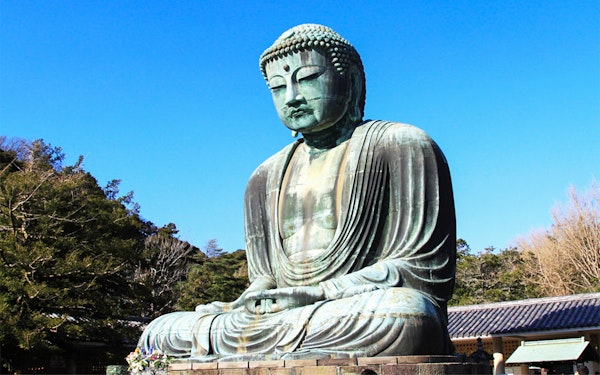
From Tokyo: Kamakura & Hasedera Day Trip with Kotoku In Temple, Enoshima, Enoden Train, & More
4.0(6)10 hoursViewFrom$61
Day Trip Kamakura from Tokyo with National Licensed Guide
8 hoursViewFrom$300
Kamakura Customized Half-Day Tour with Licensed Local Guide
4.9(63)4 hoursViewFrom$96
Introducing all the Famous Spots in Kamakura and Enoshima!
5.0(7)7 hoursViewFrom$123
Kamakura Scenic Bike Tour
4.9(13)6 hoursViewFrom$147
Kamakura Full-Day Private Tour
5.0(5)6 hr 30 minViewFrom$160
Kamakura Tours with an expert guide, PRIVATE, CUSTOMIZABLE, FUN
5.0(20)8 hoursViewFrom$65
Insider tip
Kamakura alone or with Fuji. The Fuji-plus-Kamakura combo is the most-reviewed option here, but it is a broad day that gives each stop a short visit. If Kamakura's temples are the real reason you are going, a Kamakura-focused or Kamakura-and-Enoshima day keeps you on the ground longer where it counts. The combo is best when you want to tick both regions in one trip rather than dig into either.
2. Private guided and walking tours: depth on the temples
Kamakura rewards a slower pace, and this is where the private and small-group walking tours shine. A local guide walks you through the Great Buddha, the hillside temples, and the quieter forest trails, unpacking the town's history as a former seat of shogun power. These are the highest-rated tours in the whole set, and the shorter formats leave the rest of your day free.
Top private and walking Kamakura tours

Kamakura Historical Walking Tour with the Great Buddha
The top-rated guided walk in the set - the Great Buddha and Kamakura's historic temples on foot, with the town's shogun-era history woven in.
4.9(161)5 hoursViewFrom$94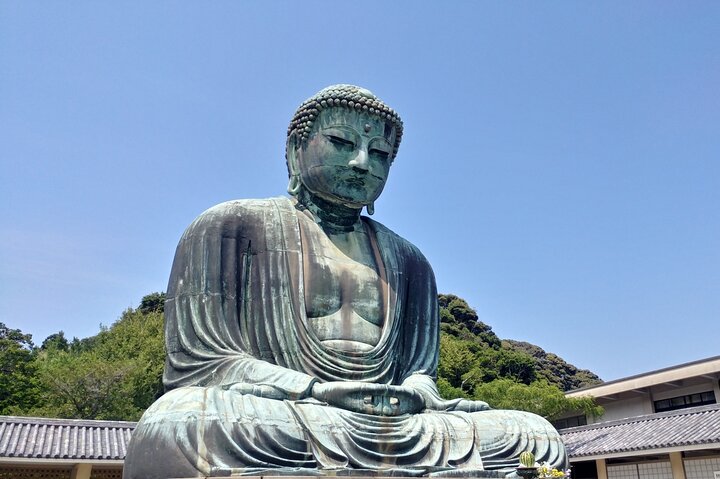
Kamakura Walking Tour - The City of Shogun
A perfect-rated, budget-friendly half-day walk framed around Kamakura's era as the shogun's capital - the best-value guided option in the catalog.
5.0(136)3.5 hoursViewFrom$35
Kamakura Private Tour: Temples, Nature, and the Great Buddha
A private half-day covering the temples, the wooded trails, and the Great Buddha at your own pace - the flexible, small-group version of the walking day.
4.9(129)5 hoursViewFrom$94
Kamakura 4hr Private Trip with Government-Licensed Guide
A licensed-guide private trip in a tight four-hour window - the credentialed, customizable choice for travelers who want expertise and a shorter day.
4.9(61)4 hoursViewFrom$95From Tokyo: Kamakura & Hasedera Day Trip with Kotoku In Temple, Enoshima, Enoden Train, & More
4.0(6)10 hoursViewFrom$61Day Trip Kamakura from Tokyo with National Licensed Guide
8 hoursViewFrom$300Introducing all the Famous Spots in Kamakura and Enoshima!
5.0(7)7 hoursViewFrom$123Kamakura Scenic Bike Tour
4.9(13)6 hoursViewFrom$147Kamakura Full-Day Private Tour
5.0(5)6 hr 30 minViewFrom$160Kamakura Tours with an expert guide, PRIVATE, CUSTOMIZABLE, FUN
5.0(20)8 hoursViewFrom$65
3. Kamakura plus Enoshima: the temples-and-seaside combo
Enoshima is the natural companion to Kamakura: a small island a short local-line ride down the coast, with a shrine, a lighthouse, sea caves, and views back toward the mainland. Pairing the two turns a temple visit into a rounded coastal day, temples in the morning, sea air in the afternoon.
Top Kamakura and Enoshima combo tours

Day Trip to Kamakura & Enoshima: Shrines, Seaside, Temples & Tea
A top-rated full day linking Kamakura's shrines and temples with Enoshima's seaside, plus a tea stop - the most rounded version of the coastal pairing.
4.9(51)11 hoursViewFrom$161From Tokyo: Kamakura & Enoshima 1-Day Bus Tour
The coach version of the pairing - the Great Buddha and temples plus Enoshima island in one full day, with the transport handled end to end.
4.5(246)10 hoursViewFrom$63From Tokyo Kamakura, Hachimangu Shrine and Enoshima Full Day Tour
The value pick for the coastal day - the Hachimangu shrine, the Great Buddha area, and Enoshima strung together at a lower price point.
4.5(52)10 hoursViewFrom$52From Tokyo: Kamakura & Hasedera Day Trip with Kotoku In Temple, Enoshima, Enoden Train, & More
4.0(6)10 hoursViewFrom$61Day Trip Kamakura from Tokyo with National Licensed Guide
8 hoursViewFrom$300Kamakura Customized Half-Day Tour with Licensed Local Guide
4.9(63)4 hoursViewFrom$96Introducing all the Famous Spots in Kamakura and Enoshima!
5.0(7)7 hoursViewFrom$123Kamakura Scenic Bike Tour
4.9(13)6 hoursViewFrom$147Kamakura Full-Day Private Tour
5.0(5)6 hr 30 minViewFrom$160Kamakura Tours with an expert guide, PRIVATE, CUSTOMIZABLE, FUN
5.0(20)8 hoursViewFrom$65
4. Doing it independently, or an early start
Kamakura is one of the easiest rail day trips from Tokyo: a direct train in about an hour, then the scenic coastal local line linking the Great Buddha, the temples, and Enoshima. If you would rather beat the crowds than skip the guide, a couple of early-start and short-format tours get you to the temples before the day-trippers arrive.
Early-start and independent-style Kamakura tours

Kamakura Early Morning Tour (Tokyo Departure Available)
A perfect-rated early-morning run at the temples before the crowds build - the pick for travelers who want quiet and a free afternoon back in Tokyo.
5.0(32)6 hoursViewFrom$67
Exciting Kamakura - One Day Tour from Tokyo
A highly rated single-day Kamakura tour that covers the headline sights without the coastal detour - the focused option when Kamakura itself is the goal.
4.9(51)8.5 hoursViewFrom$139From Tokyo: Kamakura & Hasedera Day Trip with Kotoku In Temple, Enoshima, Enoden Train, & More
4.0(6)10 hoursViewFrom$61Day Trip Kamakura from Tokyo with National Licensed Guide
8 hoursViewFrom$300Kamakura Customized Half-Day Tour with Licensed Local Guide
4.9(63)4 hoursViewFrom$96Introducing all the Famous Spots in Kamakura and Enoshima!
5.0(7)7 hoursViewFrom$123Kamakura Scenic Bike Tour
4.9(13)6 hoursViewFrom$147Kamakura Full-Day Private Tour
5.0(5)6 hr 30 minViewFrom$160Kamakura Tours with an expert guide, PRIVATE, CUSTOMIZABLE, FUN
5.0(20)8 hoursViewFrom$65
Kamakura Highlights Great Buddha Shrine and Scenic Enoden Ride
5.0(1)2 hr 30 minViewFrom$126
The Kamakura highlights: what the town delivers
Whether on a guided walk or under your own steam, these are the stops that rotate through the itineraries. Knowing them helps you read what a given tour actually includes.
The Great Buddha (Kotoku-in). The signature sight: a giant bronze statue seated in the open air, its temple hall long gone. It is the image most people picture when they think of Kamakura, and most tours build around it.
Hachimangu shrine. Kamakura's grand central shrine, reached by a long approach avenue, and a fixture of the town's history as a former seat of shogun power.
Hase-dera. A hillside temple with gardens, a viewpoint over the coast, and hydrangeas that draw crowds in early summer. Often paired with the Great Buddha nearby.
Hiking trails and beaches. Forested trails thread the hills between temples, and the coast has the beaches that fill up on summer weekends. It is the mix of temple and sea that sets Kamakura apart from Tokyo's other day trips.
Getting to Kamakura
Kamakura is about 50 km southwest of Tokyo on the coast, roughly 55 minutes to an hour by direct train from central Tokyo. From Kamakura Station, the scenic coastal local line runs toward Hase, near the Great Buddha, and onward toward Enoshima, which is what makes the temples-and-seaside pairing so natural. Guided coach tours drive down and handle every connection; independent travelers ride the train both ways and use the local line to hop between the sights.
Booking lead time and cancellation
Kamakura's peak tracks its seasons: the early-summer hydrangea weeks around June, autumn foliage, and summer beach weekends. In those windows the higher-rated small-group walks and the full-day combos book out several days to a week ahead. Off-peak you can often book a day or two out. Most tours offer free cancellation up to 24 hours before the start, the policy worth filtering for if your Tokyo plans are still fluid.
Practical tips for the day
Wear shoes you can walk in. Kamakura is a walking town, with temple steps, gravel paths, and hillside trails between the main sights.
Start early. The Great Buddha and Hase-dera draw crowds by mid-morning, especially in hydrangea season; an early start buys you quieter temples and better photos.
Carry some cash. Smaller temples, local stalls, and the coastal line stops often prefer it over cards.
Time the hydrangeas if that is your goal. Early summer is the window, and it is also the busiest, so weekday mornings beat weekend afternoons.
Quick compare: the best Kamakura day trips from Tokyo
| Tour | Format | From | Duration | Rating |
|---|---|---|---|---|
| Fuji, Kamakura, Big Buddha & Lake Ashi | Combo (Fuji) | $49 | 11h | ★4.9 (1,300) |
| Kamakura & Enoshima 1-Day Bus Tour | Combo (Enoshima) | $63 | 10h | ★4.5 (246) |
| Kamakura Historical Walking + Great Buddha | Walking | $94 | 5h | ★4.9 (161) |
| Kamakura Walking - City of Shogun | Walking | $35 | 3.5h | ★5.0 (136) |
| Kamakura Private: Temples, Nature, Buddha | Private | $94 | 5h | ★4.9 (129) |
| Kamakura & Enoshima: Shrines, Seaside, Tea | Combo (Enoshima) | $161 | 11h | ★4.9 (51) |
| Kamakura Early Morning Tour | Early start | $67 | 6h | ★5.0 (32) |
Kamakura or a broader combo: the honest answer
If you are choosing between a Kamakura-focused day and a wide combo that folds in Mt Fuji, the question is depth versus breadth. The combo lets you see the Great Buddha and Fuji's headline sights in one long day, but each stop gets a short visit. A Kamakura-focused walk or a Kamakura-and-Enoshima day keeps you in the temple town and along its coast, which is where the character of the place actually lives. For a first visit that is genuinely about Kamakura, we steer most travelers toward the focused options and reserve the Fuji combo for those who specifically want to cover both regions at once.
Plan your trip
See all Tokyo and Kamakura day trips →How far is Kamakura from Tokyo?
Kamakura is about 50 km southwest of Tokyo on the coast. By train it is roughly 55 minutes to an hour from central Tokyo, with direct lines running to Kamakura Station. That short hop is exactly why it is one of the easiest day trips from the city: you can be standing in front of the Great Buddha well before lunch and back in Tokyo for dinner.
Is Kamakura worth a day trip from Tokyo?
Yes. Kamakura is a coastal town known for its Great Buddha, its hydrangea temples, historic Zen monasteries, and beaches, all packed into a walkable area an hour from Tokyo. It gives you a very different day from the city: temples, forested hillside trails, and sea air rather than skyscrapers, which makes it one of the most rewarding easy escapes from the capital.
Should I combine Kamakura with Enoshima?
For a full day, the Kamakura and Enoshima pairing is the most popular combo and an easy one, since the two sit a short local-line ride apart along the coast. Kamakura brings the Great Buddha and the temples; Enoshima adds a small island with a shrine, a lighthouse, sea caves, and coastal views. Combo tours string the two together so you get the temple town and the seaside in a single trip.
What is there to do in Kamakura?
The headline sight is the Great Buddha, a giant bronze statue at Kotoku-in temple. Beyond it, Kamakura has the Hachimangu shrine, the hillside Hase-dera temple, hydrangea gardens that peak in early summer, hiking trails through the forested hills, and the beaches along the coast. A guided walk links the highlights and explains the town's history as a former seat of shogun power.
Do I need a guide or can I do Kamakura on my own?
Kamakura is very doable independently: the train from Tokyo is direct, the town is compact, and the main sights are walkable or a short local-line ride apart. A guide adds context on the temples and the town's history, walks you along the quieter trails you might otherwise miss, and handles the logistics. For a first visit with a strong interest in the history, a guided walk is worth it; for a relaxed wander, the train on your own works well.
How long does a Kamakura day trip take?
Kamakura-focused guided tours run roughly 4 to 8 hours depending on how much walking and how many temples they include. Full-day combos that add Enoshima or another stop run 10 to 11 hours door to door. Because Kamakura is close to Tokyo, even a half-day trip covers the Great Buddha and a couple of temples comfortably.
When is the best time to visit Kamakura?
Early summer, roughly June, is the signature season, when the hydrangeas bloom across temples like Hase-dera and Meigetsu-in. Autumn brings foliage through the wooded hills; spring adds blossom. Summer weekends draw beach crowds along the coast. Any time of year the Great Buddha and the main temples deliver, so the best window depends on whether you are chasing hydrangeas, autumn color, or a quieter visit.
Can you combine Kamakura with Mt Fuji in one day?
Yes, some long full-day tours pair Kamakura and the Great Buddha with a Mt Fuji viewing area and Lake Ashi, running around 11 hours. It is an ambitious day that trades depth for breadth, so you see the headline sights of both without lingering. If your priority is Kamakura's temples specifically, a Kamakura-focused or Kamakura-and-Enoshima day gives you more time on the ground.
How do I get from Tokyo to Kamakura by train?
Direct train lines run from central Tokyo stations to Kamakura Station in about an hour. From Kamakura, the scenic local line runs along the coast toward Hase, near the Great Buddha, and onward toward Enoshima. It is one of the simplest rail day trips from Tokyo, which is why many travelers do it independently rather than on a tour.
Is Kamakura or Nikko the better day trip from Tokyo?
They offer different days. Kamakura is closer, coastal, and compact, built around the Great Buddha, temples, and beaches, and easy as a half or full day. Nikko is farther, mountainous, and centered on ornate shrine architecture and waterfalls in a national park. If you want a short, easy escape near the sea, Kamakura wins; if you want dramatic mountain shrines and can spare a longer day, Nikko is the pick.
Keep reading
More reads
More guides to help you plan your trip

2 Days in Tokyo: Two Districts, Done Properly
Two days in Tokyo is enough for two districts and nothing else - and that is the right plan. A day-by-day route, what to book, and what to deliberately skip.

5 Days in Tokyo: How to Use a City With No Centre
Five days in Tokyo, organised by district rather than by sight - a day-by-day plan, the day trip worth taking, and why the fifth day should not be booked.

The Best Walking Tours in Tokyo: Which Ones Actually Help
Tokyo is the city where a guide earns their money. A guide to the walking tours worth booking - by neighbourhood, by theme, and by what you need explained.

Tokyo in Summer: How to Enjoy a City That Is Genuinely Hot
Summer in Tokyo is hot, humid, and full of things worth seeing. How to structure days around the heat, what to book, and when the season is actually at its best.

The Best Day Trips from Tokyo: Mt Fuji, Kamakura, Nikko and More
The best day trips from Tokyo ranked by what is worth a full day: Mt Fuji and Hakone, Kamakura, Nikko, Yokohama, and Kawagoe, with the top-rated tours for each.

Tokyo in Winter: Clear Skies, Illuminations, and the Best Fuji Views
Tokyo in winter is the underrated season: crisp clear skies, the year's best Mt Fuji visibility, city-wide illuminations, onsen day trips, and thin crowds.

Things to Do in Tokyo with Kids: A Family Guide That Actually Works
The best things to do in Tokyo with kids: teamLab, the Skytree, a theme park day, animal cafes and parks, plus the transit and hotel logistics that matter.

The Best Time to Visit Tokyo: A Month-by-Month Guide
The best time to visit Tokyo, month by month: the real trade-offs between weather, crowds, and prices, plus the two sweet-spot windows for cherry blossom and autumn colour.