TokyoMt FujiDay tripsBullet trainHakone
Mt Fuji Day Trip from Tokyo: The 2026 Planning Guide
Plan a Mt Fuji day trip from Tokyo. Bullet-train vs bus, Hakone or Five Lakes, viewing-platform routes, when to book, and the small-group tours worth the seat.
By SimilarTours Editorial · Travel Research · · 14 min read

Mount Fuji is the single most-photographed mountain on earth and the most cancelled day trip from Tokyo. The reason for both is the same: Fuji is shy. The summit is fully visible on roughly a quarter of all days, less in summer, and the trip is at the mercy of weather more than any other Tokyo excursion. Plan around that, pick the right combo, and you get the classic postcard. Ignore it and you spend $150 staring at clouds.
This guide walks the Mt Fuji day trip from Tokyo the way the best-rated tours run it: which transport mix is worth paying for, which viewing spot beats the others, and what to do if Fuji refuses to show. Every tour referenced is currently bookable through our partner OTAs and ranked on real ratings and review counts.
Browse all Tokyo and Mt Fuji tours →When to go: the visibility calendar
Fuji clouds over from below most summer afternoons. The rule of thumb regulars use: if you can see Fuji from Tokyo on the morning of your trip, it will hold for the day. If Tokyo skyline cameras already show haze at 07:00, your odds drop sharply.
| Month | Summit visibility | Snow cap | Crowds | Verdict |
|---|---|---|---|---|
| Jan | High | Heavy | Low | 🟢 Photographer's pick |
| Feb | Very high | Heavy | Low | 🟢 Best of the year |
| Mar | High | Medium | Rising | 🟢 Last good month |
| Apr-May | Medium | Light, melting | High | 🟡 Cherry-blossom crossover |
| Jun-Aug | Low | None | Very high | 🔴 Climbing season only |
| Sep-Oct | Medium | Returns late Oct | Medium | 🟡 Shoulder season |
| Nov-Dec | Very high | Returning | Low | 🟢 Dry air, fresh snow |
A short, important detail most guides miss: even on cloud days Fuji often clears for 30 to 90 minutes around dawn or dusk. Tours that arrive at the viewing platforms before 10:00 catch those windows more often than mid-day tours.
The two main routes: Hakone combo or Five Lakes loop
Almost every day-trip tour from Tokyo picks one of these two structures.
Route 1: Mt Fuji + Hakone combo (most popular). Drive to Fuji 5th Station or Oishi Park, then loop through Hakone for the Owakudani volcanic valley, the ropeway, and a Lake Ashi pirate-ship cruise. Return to Tokyo by bullet train. Roughly 11 hours door to door. This is the best first-Fuji format because Hakone gives you a Plan B if Fuji clouds over and an active onsen-region experience either way.
Route 2: Mt Fuji + Lake Kawaguchiko (Five Lakes). Drive to Oishi Park or Chureito Pagoda on the Fuji Five Lakes side, take a Lake Kawaguchi cruise, ride the Mt Fuji panoramic ropeway, return by coach. Roughly 10 hours. This route gets you closer to the iconic "Fuji with a lake foreground" photograph but offers less to do if the mountain hides.
Top Mt Fuji + Hakone combo day trips

Mt Fuji and Hakone 1-Day Bus Tour Return by Bullet Train
The most-booked Fuji format by review volume - coach outbound, bullet-train return so you skip the evening traffic, full Hakone loop.
4.8(30,131)11 hoursViewFrom$157
1-Day Tokyo Bus Tour to Mt Fuji and Hakone
Best-rated Fuji day trip in the category - covers Fuji 5th Station, Lake Ashi pirate-ship cruise, and the Hakone ropeway in a single coach loop.
4.9(15,808)9-10 hoursViewFrom$124
Tokyo: Mt Fuji Cruise and Hakone Ropeway Day Trip by Bus
Newer entry with very high ratings. Lake Kawaguchi cruise included alongside the standard Fuji 5th Station and Hakone stops.
4.9(320)10 hoursViewFrom$89Mt Fuji and Hakone 1-Day Bus Tour Return by Bus
The pure-bus version of the top combo - cheaper than the bullet-train return, longer day, same itinerary.
4.6(954)11 hoursViewFrom$131
Hakone Full-Day Private Tour
4.8(5)7 hoursViewFrom$261
Mt Fuji Hakone Tour from Tokyo: Cable Car and Cruise Option
4.6(521)10 hoursViewFrom$78
Hakone customized private one day tour
5.0(1)7 hoursViewFrom$192
Visiting Historical Sites in Hakone with a View of Mount Fuji
7 hoursViewFrom$170
Mount Fuji Full Day Sightseeing Tour from Tokyo
4.8(2,127)10 hoursViewFrom$54
Hakone for Children to Enjoy! Japanese Crafts Experience
5.0(1)6 hoursViewFrom$178
The bullet-train-return format is worth the extra $20 to $30 over the all-bus version. Tokyo evening traffic on the Tomei Expressway routinely adds 90 minutes between 16:00 and 19:00, exactly when you are trying to get home.
Where to actually see Mt Fuji from on a day trip
Six viewing spots get rotated between the major tours. They are not equivalent.
Fuji Subaru Line 5th Station (2,300 m). The high-altitude option. On clear days you stand above the cloud line with the summit cap directly above you. The trade-off is that you cannot see Fuji's full shape from this close. Open year round; the road above 5th Station closes November to April due to snow.
Oishi Park (Lake Kawaguchiko). The picture-postcard spot. Lavender in early summer, kochia in autumn, and a clean foreground reflection of Fuji across the lake. Most tours stop for 30 to 45 minutes.
Chureito Pagoda (Arakurayama Sengen Park). The five-storey red pagoda with Fuji behind. Reached by a 400-step climb that buses cannot drive up. Some tours skip it for that reason; the ones that include it earn the photo.
Lake Ashi (Hakone). Fuji visible across the lake on clear days from the pirate-ship cruise deck. Lower altitude, more often cloudy, but the Hakone experience around it is the strongest Plan B in the region.
Owakudani (Hakone volcanic valley). Sulfurous steam vents, the black eggs cooked in the geothermal water, and Fuji as a distant cone on the horizon. The Hakone Ropeway runs over the valley; tours pause for 20 to 30 minutes at the eggs.
Hakone Open Air Museum. Indoor backup if everything else is rained out. Some tour variants substitute it on bad-weather days.
Private vs group: when the upgrade is worth it
Private Fuji day tours run two to three times the group price. The case for them: control over the schedule when weather is marginal. A good private driver checks the live cams at 06:30 and can flip the order of stops, push the Fuji visit to a clearing window, or pivot to Hakone if Fuji is locked in. Group coach tours stick to the published itinerary regardless.
Top private Mt Fuji day trips

Private Tour to Mt Fuji and Hakone (Fully Licensed Operator)
The leading private operator by volume - licensed guide, English-speaking, weather-adaptive routing across Fuji 5th Station and Hakone.
4.9(2,319)10 hoursViewFrom$501
Mt Fuji Full Day Private Tour from Tokyo with English Driver
5.0(107)10 hoursViewFrom$430
Mt Fuji Private Nature Tour from Kawaguchiko
5.0(329)5 hours - 6 hoursViewFrom$320Mount Fuji Full Day Sightseeing Tour from Tokyo
4.8(2,127)10 hoursViewFrom$54
Mt Fuji Customized Private Tour See Top Attractions in 1 Day
5.0(11)8 hours - 12 hoursViewFrom$198Mt Fuji Hakone Tour from Tokyo: Cable Car and Cruise Option
4.6(521)10 hoursViewFrom$78
Mt Fuji Private Tour from Tokyo, Licensed (Customizable)
5.0(91)10 hoursViewFrom$420
Private 1 Day Round Trip Tour from Tokyo to Mount Fuji
5.0(1)10 hoursViewFrom$372
Private Mt Fuji Tour from Tokyo: Scenic BBQ & Hidden Gems
5.0(159)9 hours - 10 hoursViewFrom$284
For couples and small groups (up to 4 travelers) the private tour math often works out close to the per-person group rate once you factor in the bullet-train upgrade, hotel pickup, and the weather flexibility. For solo travelers and groups of 5 or more, the group coach wins on cost without much downside.
Budget options: when to take the group coach
Budget Mt Fuji day trips from Tokyo

Mount Fuji Full Day Sightseeing Tour from Tokyo
Most affordable Fuji day trip in the catalog - coach format, Fuji 5th Station and Lake Kawaguchiko, return by bus.
4.7(891)10 hoursViewFrom$58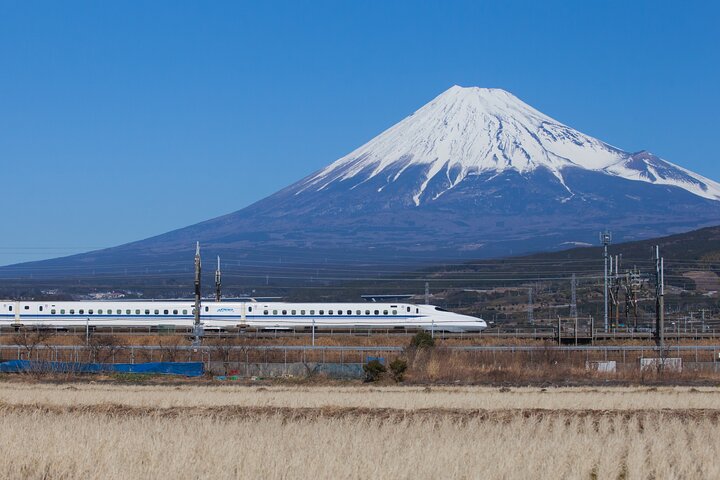
Mt Fuji and Hakone Day Trip From Tokyo with Bullet Train Option
Bullet-train-return option at a lower price point, with both Fuji and Hakone covered. Lower rating than the category leaders, but the price gap is real.
4.1(481)11 hoursViewFrom$94
Mount Fuji Highlights Minibus(small group) Tour from Tokyo
5.0(1)10 hoursViewFrom$106
Mt.Fuji Full-Day Private Tour By Public Transportation
11 hoursViewFrom$198
From Tokyo: Mount Fuji Sightseeing Full Day Trip
4.9(212)10 hoursViewFrom$52
Classic Shizuoka with Mt.Fuji view 1 Day Private Shore Excursion
5.0(1)8 hr 45 minViewFrom$249
Mount Fuji Full Day Sightseeing Tour from Tokyo
4.3(119)10 hoursViewFrom$65Mt Fuji Customized Private Tour See Top Attractions in 1 Day
5.0(11)8 hours - 12 hoursViewFrom$198
Tokyo / Shinjuku: Mount Fuji Day Tour Lake Kawaguchi & Yamanaka
4.9(106)10 hoursViewFrom$52
Tokyo: Mt. Fuji Cruise & Hakone Ropeway Day Trip by Bus
4.9(353)10 hoursViewFrom$83
Below the $80 mark the format is almost always all-bus with limited inclusions (no cruise, no ropeway, fewer rest stops). Fine if Fuji visibility is your only goal. The mid-tier $120 to $160 bracket includes the cruise, ropeway, and bullet-train return; that is where most travelers land.
Climbing season: what changes July to September
If you visit between early July and early September, the Subaru Line opens above 5th Station and the actual climb is possible. A summit climb is a 10 to 12 hour round trip done overnight from a mountain hut, so it stops being a day trip from Tokyo. What does work as a day trip during climbing season is the mid-altitude hike from 5th Station up to the 6th or 7th Station and back, which adds 2 to 3 hours to the standard day-trip format and gives you a taste of the climbing route.
Insider tip
Permit fee, climbing season 2026. Yamanashi prefecture charges a 2,000 yen climbing fee per person above 5th Station, plus the long-standing 1,000 yen mountain-protection donation. Pay at the 5th Station booth on the day; cash only. Hikers are capped at 4,000 per day with a 16:00 cutoff above 5th Station. Day-trip tours that include the 6th Station climb handle the booking and the fee for you.
What to do if Fuji hides
A real possibility on any trip. The good tours acknowledge this in their itinerary: Hakone is the rain plan. The Open Air Museum, the Owakudani black eggs, the Lake Ashi cruise (cloudier but still scenic), and the onsen towns of Hakone Yumoto and Gora give you a full day even with zero Fuji. Tours that only go to Lake Kawaguchiko without the Hakone loop have nothing to fall back on.
If you book a Hakone-combo tour and Fuji is invisible, the day is still strong. If you book a Five Lakes-only tour and Fuji is invisible, request a refund per cancellation policy and try again from Tokyo on a clearer morning.
Browse all Tokyo day trips →Booking lead time and cancellation
Peak-season (March cherry blossoms, July to August climbing, late October to early December for autumn colors) tours book out 2 to 4 weeks ahead, especially the bullet-train-return variants. Off-peak (January, February, June rainy season) you can often book the day before.
Cancellation policies vary by operator: the Viator-listed coach tours typically offer free cancellation up to 24 hours before pickup, which is the policy worth filtering for if Fuji visibility is your only reason to go. Private tours are stricter (48 to 72 hours) and pre-paid bullet-train tickets are non-refundable once issued, usually around 7 days before departure.
Quick compare: top Mt Fuji day trips
| Tour | Format | From | Duration | Rating |
|---|---|---|---|---|
| Mt Fuji + Hakone Bus + Bullet Train Return | Group coach + train | $157 | 11h | ★4.8 (30,131) |
| 1-Day Tokyo Bus Tour to Fuji + Hakone | Group coach | $124 | 9-10h | ★4.9 (15,808) |
| Mt Fuji Cruise + Hakone Ropeway by Bus | Group coach | $89 | 10h | ★4.9 (320) |
| Private Tour to Fuji + Hakone (Licensed Guide) | Private | $501 | 10h | ★4.9 (2,319) |
| Private Driver Fuji + Hakone Day Tour | Private (driver) | $436 | 10h | ★4.7 (852) |
| Mt Fuji Full Day Sightseeing (Budget) | Group coach | $58 | 10h | ★4.7 (891) |
Practical tips for the day
Wear layers. The 5th Station is 2,300 meters up and routinely 10 to 15 degrees colder than central Tokyo with stronger wind. A light jacket from spring through autumn is the minimum; winter requires gloves and a hat.
Cash for souvenirs and the climbing fee in season. Cards work at major Hakone restaurants but not at the 5th Station shrine, smaller noodle stalls, or the climbing-fee booth.
Bring a Pasmo or Suica card for the bullet-train return. Most tours hand out the physical ticket but it speeds up the platform transfer at Odawara or Mishima.
Pack motion sickness tablets if the winding roads up to 5th Station are a problem for you; the last 30 minutes of the climb is a series of tight switchbacks.
Plan your trip
See all Tokyo tours and activities →How far is Mt Fuji from Tokyo?
About 100 km southwest of central Tokyo. By bullet train (Shinkansen) it is roughly 40 minutes to Mishima or Odawara, then 30-50 minutes onward by bus or local train to the viewing areas. By road it is 2 to 2.5 hours each way without traffic. Most day-trip tours bundle a one-way bullet train return and a coach for the outbound leg.
Can you actually see Mt Fuji on a day trip?
Yes on clear days. The catch is weather. Fuji is famously shy: the summit shows on roughly 80 to 90 days a year, mostly in winter and early spring when the air is dry. Summer afternoons cloud over fast. November to February gives the highest hit rate, but check the live cameras at Kawaguchiko or Lake Yamanaka the morning of your trip before committing.
Should I do Mt Fuji and Hakone in the same day?
If it is your first Fuji visit, yes. Hakone adds the Owakudani volcanic valley, the Hakone ropeway, and a Lake Ashi pirate-ship cruise within a 30-minute drive of the Fuji viewing platforms. The standard combo coach tour leaves Tokyo around 08:00, hits Fuji 5th Station or Oishi Park, then loops through Hakone and returns by Shinkansen around 19:00.
Can I climb Mt Fuji on a day trip from Tokyo?
Officially the climbing season runs early July through early September. A summit climb takes 10 to 12 hours round trip, which makes it a 24-hour overnight rather than a day trip in practice. Day-trip tours instead drive up to the Fuji Subaru Line 5th Station at 2,300 meters, where you get summit views, a shrine, and souvenir shops without the climb.
Bullet train or bus to Mt Fuji?
Most rated tours use a coach outbound and a bullet train return. The bus lets the guide narrate, control rest stops, and adapt to weather on the morning. The bullet train back saves around 90 minutes against evening traffic. Pure-bus tours are 15 to 25 percent cheaper but you lose that hour each way.
When does Mt Fuji have snow?
The classic snow-capped summit photograph is reliable from late October through May. Snow cover is heaviest February to early April. By late June it is mostly bare rock, which is when the climbing season opens. If your reason for going is the snowy postcard view, target November or March on the same trip as Tokyo.
Is the Mt Fuji 5th Station worth visiting?
The 5th Station on the Subaru Line side is the main day-trip stop. At 2,300 meters you are above the cloud line on most clear mornings, with a shrine, a small museum, and 360-degree views of Yamanashi prefecture below. Crowds peak between 10:00 and 14:00. Combo tours that arrive before 10:00 give you the photographic window before the buses pile in.
Can I do a Mt Fuji day trip in winter?
Yes, and many regulars say winter is the best season for it. The summit is reliably snow-capped, the air is dry so the mountain shows more often, and crowds are thinner. The Subaru Line above 5th Station closes due to snow from November to April but the 5th Station itself stays open and accessible by tour bus.
Keep reading
More reads
More guides to help you plan your trip

2 Days in Tokyo: Two Districts, Done Properly
Two days in Tokyo is enough for two districts and nothing else - and that is the right plan. A day-by-day route, what to book, and what to deliberately skip.

5 Days in Tokyo: How to Use a City With No Centre
Five days in Tokyo, organised by district rather than by sight - a day-by-day plan, the day trip worth taking, and why the fifth day should not be booked.

The Best Walking Tours in Tokyo: Which Ones Actually Help
Tokyo is the city where a guide earns their money. A guide to the walking tours worth booking - by neighbourhood, by theme, and by what you need explained.

Tokyo in Summer: How to Enjoy a City That Is Genuinely Hot
Summer in Tokyo is hot, humid, and full of things worth seeing. How to structure days around the heat, what to book, and when the season is actually at its best.

The Best Day Trips from Tokyo: Mt Fuji, Kamakura, Nikko and More
The best day trips from Tokyo ranked by what is worth a full day: Mt Fuji and Hakone, Kamakura, Nikko, Yokohama, and Kawagoe, with the top-rated tours for each.

Tokyo in Winter: Clear Skies, Illuminations, and the Best Fuji Views
Tokyo in winter is the underrated season: crisp clear skies, the year's best Mt Fuji visibility, city-wide illuminations, onsen day trips, and thin crowds.

Things to Do in Tokyo with Kids: A Family Guide That Actually Works
The best things to do in Tokyo with kids: teamLab, the Skytree, a theme park day, animal cafes and parks, plus the transit and hotel logistics that matter.

The Best Time to Visit Tokyo: A Month-by-Month Guide
The best time to visit Tokyo, month by month: the real trade-offs between weather, crowds, and prices, plus the two sweet-spot windows for cherry blossom and autumn colour.