TokyoListicleFood toursDay tripsSkip the line
Things to Do in Tokyo: 24 Experiences Worth Booking in 2026
The 2026 Tokyo shortlist - 24 neighborhoods, food walks, day trips, and unique rides ranked by what's actually worth your time, with booking-window notes for each.
By SimilarTours Editorial · Travel Research · · 14 min read

Tokyo is the easiest enormous city to visit. Public transit is the most reliable on earth. Almost every neighborhood is walkable. English signage exists at every major station. The catch is that "easiest enormous city" still means 37 million people, 23 special wards, hundreds of viable food districts, and dozens of attractions worth a half-day each. A four-day trip with one clear loop per day covers more ground than people expect - provided you book the ticketed sites ahead and skip the queues that do not need skipping.
This guide cuts the famous Tokyo list down to 24 experiences worth booking in 2026, grouped by neighborhood, theme, and what you are optimizing for: headline observation decks, food walks, day trips, and the unique rides Tokyo specifically rewards. Every entry has the bare planning facts, one specific reason it is worth the time, and what to skip if you are tight on it.
Browse all 1,500+ Tokyo tours and tickets →Top food walks: Shinjuku, Tsukiji, Shibuya
Tokyo food is the city's most-booked experience category for a reason. A 3-hour guided walk gives you 5 to 13 tastings, the context on each dish, and a working framework for the rest of the trip.
Top Tokyo food walking tours

Tokyo: Shinjuku Food Tour (13 Dishes at 4 Local Eateries)
The most-booked Tokyo food walk - 13 tastings across 4 local izakaya in Shinjuku, evening format, replaces dinner.
4.9(8,580)3 hoursViewFrom$80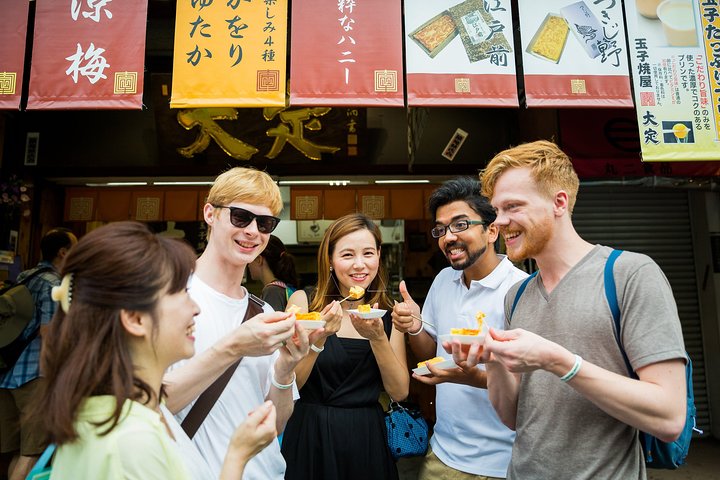
Tokyo Tsukiji Fish Market Food Walking Tour with 5 Tastings
Morning Tsukiji outer-market walk with tuna sashimi, tamagoyaki, fresh oysters, and tea. Highest review count in the Tsukiji category.
4.9(3,615)3 hoursViewFrom$107
Tokyo: Tsukiji Fish Market Food and Walking Tour
Best-value Tsukiji walk under $35 - covers the outer market food stalls with 4 tastings and the major knife shops.
4.9(1,930)2 hoursViewFrom$32
Tokyo: Shibuya Food Tour (13 Dishes and 3 Eateries)
Shibuya alternative to the Shinjuku food walk - tighter, 13 tastings, includes Yokocho alley spots most tourists miss.
4.9(1,091)3 hoursViewFrom$83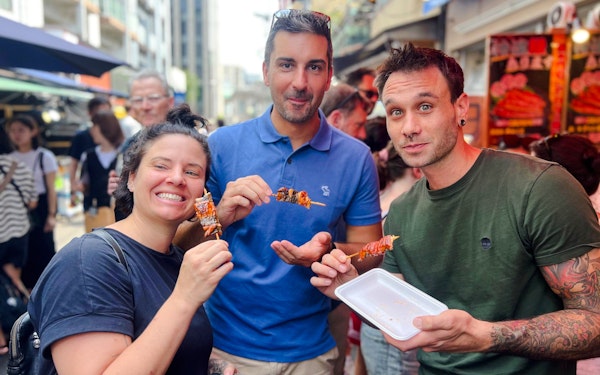
Tokyo Food Tour: Tsukiji Fish Market Walking Tour with Temple Visit
0.0(0)2 hoursViewFrom$31
2026 Small Town in the Big City: Tasting Tokyo’s Kichijoji
4.9(37)6 hoursViewFrom$195
Tokyo Ginza Friendly Food Tour Explore Taste Enjoy By Local Guide
5.0(2)4 hoursViewFrom$180
The 10 Tastings of Tokyo With Locals: Private Street Food Tour
5.0(48)3 hoursViewFrom$195![[1 Group Only] Tokyo Shinjuku Food Tour for Family](https://media-cdn.tripadvisor.com/media/attractions-splice-spp-480x320/15/b4/69/50.jpg)
[1 Group Only] Tokyo Shinjuku Food Tour for Family
4.9(308)3 hr 30 minViewFrom$78
Tokyo Ginza Authentic Food Tour (Izakaya Hopping by local guide)
5.0(36)3 hours - 4 hoursViewFrom$185
Headline neighborhoods: a one-day loop
Tokyo rewards a one-loop-per-day approach. Trying to combine Shibuya + Asakusa in the same morning means too much transit time and too little walking.
Asakusa + Skytree (half day, morning). Sensoji Temple complex, the Nakamise-dori shopping street, then a 15-minute walk or one metro stop to the Skytree base for the elevator up. Senso-ji is busiest 10:30 to 14:00; arrive by 09:00 if you want the temple atmosphere.
Shibuya + Harajuku + Shinjuku (full day, midday to evening). Shibuya Crossing at midday for the daylight chaos, then Shibuya Sky observation. Harajuku for the Meiji Shrine and Takeshita-dori. Shinjuku for evening - the Omoide Yokocho alley, the Robot Restaurant building (the show is closed but the neon survives), the Golden Gai bars after 22:00.
Ginza + Imperial Palace (half day, any time). Tokyo's luxury retail strip, the Tokyo International Forum, and a walk through the Imperial Palace East Gardens (free, often near-empty). Best as an afternoon between two bigger days.
Akihabara + Ueno (half day). Akihabara for electronics, anime, and the maid cafes if that is your scene. Ueno Park for the museums (Tokyo National, Western Art, Science) and the cherry blossoms in March-April. Akihabara is most atmospheric after dark; Ueno is best in the morning.
Unique rides Tokyo specifically rewards
The two formats most travelers do not have at home: the rickshaw walks of Asakusa and the street go-karts dressed as Mario characters.
Top Tokyo unique rides

Tokyo Asakusa Rickshaw Tour
The most-booked rickshaw tour in Tokyo - 30 to 180 minute formats through the back lanes of Asakusa with the traditional jinrikisha format.
5.0(1,415)30 minutes to 3 hoursViewFrom$38
Tokyo Go Kart Tour Asakusa, Skytree, and Akihabara
Street go-karts in costume through Tokyo traffic. Requires an International Driving Permit - bring one or you cannot board.
4.8(1,058)1 hour 10 minutesViewFrom$96
Tokyo Top Highlights 3h Guided Cycling Tour
The under-rated picks - small-group bike tour covering Imperial Palace, Akihabara, and Asakusa in 3 hours.
4.9(815)3-4 hoursViewFrom$61
Go Karting Tokyo Uptown Experience|7 Top Destinations in 90 Mins
5.0(49)1 hr 30 minViewFrom$92
Flagship 2-Hours Official Street Go-Kart Tour - Tokyo Bay Shop
4.9(5,246)2 hours - 2 hr 30 minViewFrom$107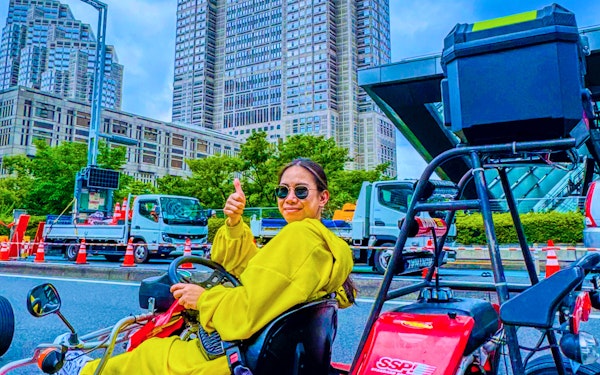
Tokyo: Shibuya & Shinjuku 60-Min Go-Karting Experience by Fuji Classic Kart
4.8(84)1 hourViewFrom$56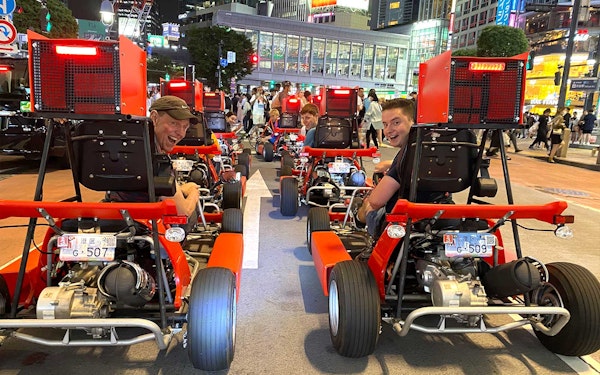
Tokyo: Akihabara Electric Town 60-Min Go-Karting Experience by STREET KART
4.6(20)1 hourViewFrom$75
Oita Go Kart Adventure to Kamado Shrine and Hot Spring Hell
1 hourViewFrom$96
Tokyo Go-Kart Tour Shibuya-Harajuku-Shinjuku (*IDP Required)
4.9(306)1 hr 15 minViewFrom$103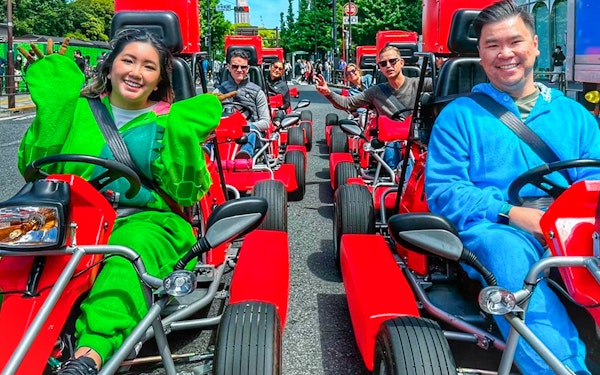
Tokyo: Shibuya 60-Min Go-Karting Experience by STREET KART at Shibuya Annex Store
3.0(2)1 hr 15 minViewFrom$91
Insider tip
International Driving Permit for go-karts. The street go-kart tours legally require an IDP issued in your home country before departure. The shops will not accept your domestic license at the counter, full stop. Get the IDP at home for a few dollars at a national auto association office; takes a week or less.
Private and small-group tours: when the upgrade is worth it
For families, multi-generational groups, and travelers with limited Japanese, a private guide flattens the learning curve on day one.
Top private Tokyo tours

Tokyo 6hr Private Tour with Government-Licensed Guide
The highest-volume licensed-guide private tour. Government certification means the guide is professionally trained, fluent, and can customize the route.
4.9(4,442)6 hoursViewFrom$140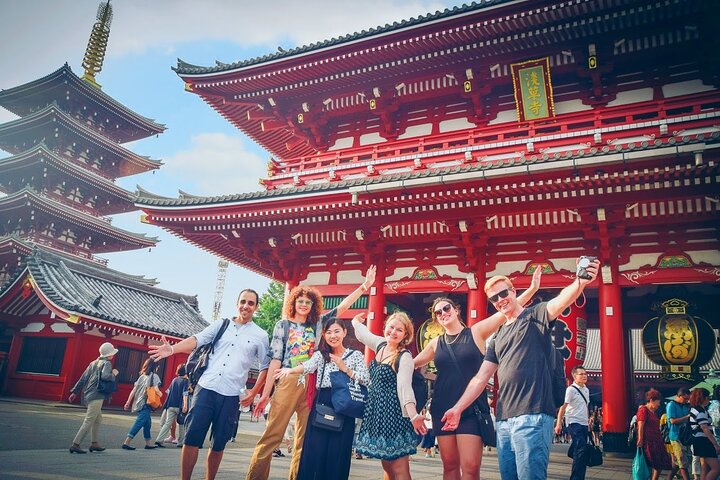
Tokyo Customized Private Tour: See Top Attractions in 1 Day
Fully customized day - you pick the neighborhoods, the guide builds the route. Best for travelers with specific interests (anime, food, history).
5.0(1,805)4-8 hoursViewFrom$140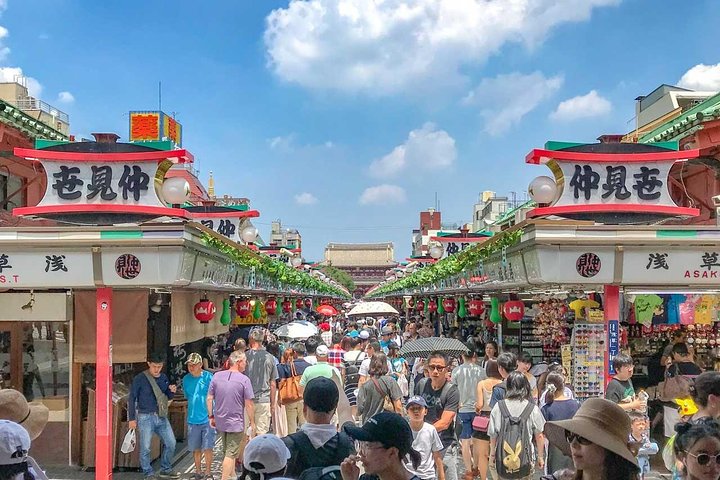
Tokyo Private Day Trip: First-Time Visit
Standard first-time-visitor format - Tsukiji, Asakusa, Skytree, Shibuya all in one private day. Hotel pickup included.
4.9(850)7 hoursViewFrom$96
Private Day Tour in Tokyo with Government-Licensed Guide
5.0(63)6 hoursViewFrom$109
Tokyo Japanese Gardens Private Tour with Licensed Guide
5.0(44)6 hoursViewFrom$141
Tokyo Highlights Private Custom Tour with Licensed Guide & Driver
5.0(63)8 hoursViewFrom$528
Tokyo Private Customized Tour with a Next-Gen Local Guide
5.0(131)1 hour - 8 hoursViewFrom$20
Tokyo in 6 Hours: Private Subway Tour with Licensed English Guide
5.0(2)6 hoursViewFrom$179
Kyoto Customized Private Tour in 1 Day with Licensed Guide
4.9(1,693)4 hours - 8 hoursViewFrom$107
Tokyo Customized Full-Day Private Tour with Licensed Guide
4.9(211)4 hours - 8 hoursViewFrom$107
For 1 to 4 travelers, private tours work out close to per-person group rates once you factor in flexibility, no minimum group threshold, and the ability to pivot mid-day. For solo travelers and groups of 5 or more, the group formats win on cost.
Best day trips: Mt Fuji, Nikko, Kamakura
Tokyo has the best day-trip portfolio of any major Asian capital. Three picks for three different weather scenarios.
Mt Fuji + Hakone (clear days, March or November sweet spot). 11-hour coach + bullet-train return loop covering Fuji 5th Station, the Hakone ropeway, and Lake Ashi cruise. Visibility is the variable; book a free-cancellation tour and decide the morning of your trip. See the full Mt Fuji day trip guide for the deeper breakdown.
Nikko (cloudy days, autumn). 2 hours north by train. The Toshogu Shrine, the Kegon Falls, Lake Chuzenji. October to early November is the peak for autumn colors. Day-trip tours include the train ride and a guided shrine visit; independents take the Tobu line.
Kamakura (any day, coastal change-of-pace). 1 hour south by train. The Great Buddha at Kotokuin, the Hasedera Temple with its Kannon statue, and the coastal walk to Yuigahama beach. A half-day version is possible.
Browse all Tokyo day trips →Modern Tokyo: teamLab, observation decks, gaming districts
The single most-booked Tokyo attraction outside food and day trips is teamLab Planets, the immersive digital-art installation in Toyosu. Walk-through, water-and-mirror rooms, designed to be photographed. Books out 1 to 3 weeks ahead in peak season; the planet (Toyosu) and borderless (Azabudai) sites have different programming.
For city views, Shibuya Sky's open-air top deck and Tokyo Skytree's 450-meter Tembo Galleria are the two picks. Shibuya Sky is the social-media winner; Skytree is the panoramic-view winner. Both book 2 to 4 weeks ahead in peak.
For gaming and pop-culture, Akihabara is the obvious answer; Nakano Broadway and Pokemon Center Shibuya are the under-rated alternates. The Pokemon Cafe is a separate reservation lottery that opens 31 days before each visit; expect to lose the first 2 to 3 attempts in peak season.
Practical Tokyo: getting around, money, etiquette
Buy a Suica or Pasmo IC card on arrival. Tap-and-go on every metro line, JR train, bus, and most convenience stores. Around 2000 yen with a refundable 500 yen deposit. Skip the JR Pass for Tokyo-only trips; add it for trips that include Mt Fuji or Kyoto.
Cash for small purchases. ATMs at 7-Eleven and Japan Post accept foreign cards reliably; bank ATMs often do not. Carry 5000 to 10000 yen at any time.
Tipping is not a thing in Japan. Restaurants, taxis, hotels - no tip. Trying to tip is mildly awkward and often refused. The bill is the bill.
Tattoos and onsen: most public bath houses still bar visibly tattooed visitors. Tattoo-friendly onsen and private rooms exist; book ahead if relevant.
Trash bins are rare on the street. Carry your wrappers and bottles to your hotel or a convenience store; eating while walking is considered rude.
Quick compare: top Tokyo experiences
| Tour | Format | From | Duration | Rating |
|---|---|---|---|---|
| Shinjuku Food Tour (13 Dishes) | Group walk | $80 | 3h | ★4.94 (8,580) |
| Tokyo 6hr Private Tour Licensed Guide | Private | $140 | 6h | ★4.92 (4,442) |
| Tsukiji Fish Market Food Tour | Group walk | $107 | 3h | ★4.89 (3,615) |
| Tsukiji Food Walking Tour | Group walk | $32 | 2h | ★4.94 (1,930) |
| Tokyo Customized Private Tour | Private | $140 | 4-8h | ★4.95 (1,805) |
| Asakusa Rickshaw Tour | Pair/solo | $38 | 30 min-3h | ★4.96 (1,415) |
| Shibuya Food Tour | Group walk | $83 | 3h | ★4.91 (1,091) |
| Go Kart Tour Asakusa/Skytree/Akihabara | Group ride | $96 | 1.2h | ★4.81 (1,058) |
| First-Time Private Day Trip | Private | $96 | 7h | ★4.88 (850) |
| Top Highlights Cycling Tour | Group ride | $61 | 3-4h | ★4.93 (815) |
What to skip in Tokyo
Robot Restaurant in Kabukicho permanently closed in 2020. Old guidebooks still list it; do not waste a search.
Roppongi as a food destination - the area is built for foreign expats and overpriced for tourists. The neighborhood has the worst yen-to-dollar exchange rates in the city.
Shibuya Crossing tourist photo stops with paid "best view" guides - the Mag's Park rooftop at the Shibuya 109 building gives the same shot for the price of a coffee.
Conveyor sushi in tourist districts at 3 PM - the morning shop closes and chains take over the afternoon shift. Worth the wait for the breakfast-and-lunch shift before 14:00 instead.
Plan your trip
See all Tokyo tours and activities →How many days do I need to see Tokyo?
Five full days is the comfortable minimum for a first visit - two for the central Tokyo loop (Asakusa, Skytree, Ginza, Imperial Palace), one for Shibuya + Shinjuku at night, one for the museums and Akihabara, and one for a day trip (Nikko, Kamakura, or Mt Fuji). Three days works if you focus tightly; seven lets you add Yokohama or Disney without rearranging.
What is the single most-booked Tokyo experience?
Skip-the-line teamLab Planets tickets and Shinjuku food tours rotate at the top of Tokyo bookings by volume. The teamLab digital-art experiences sell out 1 to 3 weeks ahead in peak season; the Shinjuku and Tsukiji food walks fill 3 to 7 days out. Mt Fuji day trips are the third pillar - bullet-train returns book out fastest.
Are Tokyo food tours worth it?
Yes for first visits. A 3-hour Shinjuku or Tsukiji food walk introduces 5 to 13 small tastings with context on each dish - what to order, where the queue is worth it, what is local versus tourist. After one food walk most visitors can navigate the rest of the trip independently. The tour fee pays for itself in the meals you would have wasted on the wrong stall.
Is the Tsukiji or Toyosu fish market better?
Different things. The original Tsukiji site closed for inner-market wholesale in 2018 but the outer market with the food stalls, sushi counters, and knife shops still runs and is the food-walk pick. Toyosu, the new wholesale market, has the early-morning tuna auction viewing (5 AM) and bigger sushi counters but is a 20-minute train ride from central Tokyo and feels less atmospheric.
What should I avoid in Tokyo?
Robot Restaurant in Kabukicho - permanently closed since 2020 but still suggested by old guides. Avoid changing money in Roppongi (worst rates in the city). Skip Sensoji on Saturday afternoons unless you enjoy elbow-to-elbow crowds. Do not eat the discount sushi at 3 PM near major stations - the morning shop closes and chain conveyor places take over. Roppongi Hills is a tourist trap; Shibuya Sky and Tokyo Skytree have the better views.
Tokyo Skytree or Shibuya Sky for the view?
Both are great for different reasons. Skytree is taller (450 m top deck), older, more famous, with a wider panoramic view including Mt Fuji on clear days. Shibuya Sky is newer (2019), shorter (229 m), open-air on top, and faces back toward Skytree itself which makes the photographs more visually complete. Shibuya Sky books out faster; reserve 2 to 4 weeks ahead in peak season.
What is the best Tokyo day trip?
Mt Fuji + Hakone for first visits if the weather looks clear (use the morning's Tokyo skyline view as your visibility check). Nikko for the temples and waterfalls when Fuji is hiding. Kamakura for the Great Buddha and coastal walking. Yokohama if you want a half-day in a relaxed seaside neighborhood. Each is 1.5 to 2 hours from central Tokyo by train.
How do I get around Tokyo?
Buy a Suica or Pasmo IC card on arrival (vending machines at any major station, around 2000 yen including a 500 yen deposit). Tap on, tap off, works on every metro, JR train, bus, and most convenience stores. Skip the JR Pass for Tokyo-only trips - it costs more than you will use. Add it for trips that include Mt Fuji or Kyoto. Most Tokyo destinations are 20 to 40 minutes by metro.
Is Tokyo expensive?
Cheaper than London, Paris, or New York for food and transit, comparable for hotels in the central wards. A great ramen lunch costs $8 to $12; a mid-range dinner $25 to $50; a one-day metro pass $7. Tokyo hotels run $120 to $400 a night in the central wards; capsule hotels and well-rated budget chains (APA, Toyoko Inn) are $50 to $100. Skip the high-end omakase sushi unless you specifically want it - the conveyor places are a fraction of the price and excellent.
What is the best time to visit Tokyo?
March to early April for cherry blossoms (book 3 to 6 months ahead). October to November for autumn colors and dry weather. December for illuminations and clear Fuji views. Avoid June (rainy season) and August (humid, often above 90F). January and February are cold but cheaper, less crowded, and the air is dry enough to see Mt Fuji from the city most days.
More reads
More guides to help you plan your trip

2 Days in Tokyo: Two Districts, Done Properly
Two days in Tokyo is enough for two districts and nothing else - and that is the right plan. A day-by-day route, what to book, and what to deliberately skip.

5 Days in Tokyo: How to Use a City With No Centre
Five days in Tokyo, organised by district rather than by sight - a day-by-day plan, the day trip worth taking, and why the fifth day should not be booked.

The Best Walking Tours in Tokyo: Which Ones Actually Help
Tokyo is the city where a guide earns their money. A guide to the walking tours worth booking - by neighbourhood, by theme, and by what you need explained.

Tokyo in Summer: How to Enjoy a City That Is Genuinely Hot
Summer in Tokyo is hot, humid, and full of things worth seeing. How to structure days around the heat, what to book, and when the season is actually at its best.

The Best Day Trips from Tokyo: Mt Fuji, Kamakura, Nikko and More
The best day trips from Tokyo ranked by what is worth a full day: Mt Fuji and Hakone, Kamakura, Nikko, Yokohama, and Kawagoe, with the top-rated tours for each.

Tokyo in Winter: Clear Skies, Illuminations, and the Best Fuji Views
Tokyo in winter is the underrated season: crisp clear skies, the year's best Mt Fuji visibility, city-wide illuminations, onsen day trips, and thin crowds.

Things to Do in Tokyo with Kids: A Family Guide That Actually Works
The best things to do in Tokyo with kids: teamLab, the Skytree, a theme park day, animal cafes and parks, plus the transit and hotel logistics that matter.

The Best Time to Visit Tokyo: A Month-by-Month Guide
The best time to visit Tokyo, month by month: the real trade-offs between weather, crowds, and prices, plus the two sweet-spot windows for cherry blossom and autumn colour.