LisbonSintraDay tripsPena PalaceCascais
Sintra Day Trip from Lisbon: Tickets, Trains, and Which Palaces to Pick
Everything a Sintra day trip needs: which palace tickets to buy, how the train from Lisbon works, which sights to prioritise, and whether to take a tour.
By SimilarTours Editorial · Travel Research · · Updated · 22 min read

Sintra is the day trip that makes Lisbon visitors rearrange their plans. A short hop northwest of the city, it stacks a candy-colored hilltop palace, a garden estate with a famous spiral well, and Moorish castle ruins into one fairytale town. The challenge is not getting there, the train is easy, but managing the steep, scattered, crowd-prone hilltop sites once you arrive.
This guide walks the Sintra day trip from Lisbon: which palaces to prioritize, whether to add the coast at Cascais and Cabo da Roca, and how to handle Sintra's notorious hills and queues. Every tour referenced is currently bookable through our partner OTAs and ranked on real ratings and review counts, verified June 2026.
Browse all Lisbon day trips →The core decision: Sintra-focused or Sintra-plus-coast
Because Sintra is so close to Lisbon and so close to the coast, most tours make a choice for you: go deep on Sintra's palaces and gardens, or loop the palaces with the seaside town of Cascais and Cabo da Roca, the westernmost point of mainland Europe. Both are good days with different rhythms.
| Format | Best for | Typical length | Coast included |
|---|---|---|---|
| Sintra + Cascais + Cabo da Roca | Variety, the classic loop | 8 hours | Yes |
| Sintra palaces focused | The Pena Palace and gardens | 8-9 hours | No |
| Private Sintra tour | Control, skipping the hill logistics | 8 hours | Optional |
| Independent (train) | Budget, own pace | Self-paced | Your call |
1. The classic loop: Sintra, Cascais and Cabo da Roca
The most-booked format, and a satisfying one: Sintra's palaces in the morning, then the dramatic clifftop of Cabo da Roca and the genteel seaside town of Cascais in the afternoon. It is the variety day, palaces, cliffs, and coast in one small-group loop.
Top Sintra, Cascais and Cabo da Roca day trips

Sintra and Cascais Small-Group Day Trip from Lisbon
The most-reviewed Sintra-and-coast loop from Lisbon - palaces plus the Cascais seaside in one small-group day, the reliable first-timer's pick.
4.8(7,568)8 hoursViewFrom$69
Guided Tour to Sintra, Pena, Regaleira, Cabo da Roca and Cascais
A fuller loop adding the Pena Palace and Quinta da Regaleira to the coast - very high ratings, the choice for hitting both headline palaces plus the cliffs.
4.9(3,555)10 hoursViewFrom$94
Small Group Tour to Sintra, Pena Palace, Cabo Roca and Cascais
A small-group day pairing the Pena Palace with Cabo da Roca and Cascais - strong ratings on big volume, a well-rounded palaces-and-coast run.
4.8(4,316)8 hoursViewFrom$82
Sintra, Pena Palace, Cabo da Roca & Cascais Small-Group Tour
5.0(74)8 hoursViewFrom$101
Sintra, Cabo da Roca & Cascais Tour - Local Guide Small Group
5.0(42)5 hours - 6 hoursViewFrom$93
Palace of Pena, Sintra, Cascais, Cape Roca, private tour, premium
5.0(78)8 hoursViewFrom$201
Sintra, Pena Palace, Cabo Roca, Cascais Small Group from Lisbon
4.8(545)8 hr 30 minViewFrom$95
From Lisbon: Sintra, Pena Palace, Cabo da Roca, Cascais & Quinta de Regaleira Full-Day Trip
4.7(419)8 hoursViewFrom$28
Sintra, Pena Palace, Cabo da Roca, Cascais Day Trip from Lisbon
5.0(404)8 hours - 9 hoursViewFrom$97Full-Day Tour of Sintra, Pena Palace, Cabo da Roca & Cascais from Lisbon with Lunch
4.3(1,715)9 hoursViewFrom$112

Insider tip
Book the Pena Palace slot. The colorful hilltop Pena Palace is Sintra's signature sight and runs on timed entry, with the popular slots selling out and queues at the gate on busy days. Guided tours bundle the entry and timing, which is a large part of their value. If you go independently, book the palace ticket online ahead rather than risking the on-site line.
2. Sintra palaces focused: the Pena Palace and the gardens
If the coast holds less appeal than the palaces themselves, choose a tour that gives Sintra the day. These cover the Pena Palace and the Quinta da Regaleira, with its gardens and famous initiation well, at a steadier pace than the coast combos allow.
Top Sintra palace-focused day trips

Sintra-Cascais-Pena Palace 8-People Small Group Tour from Lisbon
A tightly capped eight-person group built around the Pena Palace - very high ratings and a low price, the value pick for a small-group Sintra day.
4.9(1,841)9 hoursViewFrom$55
Tour to Sintra, Pena, Regaleira, Cabo Roca, Cascais (small group)
Covers both headline palaces plus the coast in a small group - very high ratings, a good balance of palace depth and a coastal finish.
4.9(2,010)8 hoursViewFrom$77
Sintra, Pena, Regaleira, Roca & Cascais Tour with Pick Up
A well-rated small-group loop with hotel pickup taking in both palaces, Cabo da Roca, and Cascais - convenient and comprehensive.
4.8(1,711)8 hoursViewFrom$76Sintra, Pena Palace, Cabo da Roca & Cascais Small-Group Tour
5.0(74)8 hoursViewFrom$101
Sintra, Pena, Regaleira, Roca & Cascais Guided Tour from Lisbon
4.8(1,309)9 hoursViewFrom$34
Private Monuments Tour in Sintra from Lisbon
5.0(64)8 hoursViewFrom$296
Lisbon to Sintra Pena & Regaleira guided tour in 8pax group
4.9(686)9 hours - 10 hoursViewFrom$62
Tour Sintra from Lisbon
5.0(81)7 hours - 8 hoursViewFrom$260
Private Tour Sintra from Lisbon Palaces of Pena and Regaleira
5.0(758)8 hours - 9 hoursViewFrom$160
Private Sintra Tour from Lisbon: Pena Palace, Cabo Roca & Cascais
5.0(113)8 hoursViewFrom$171
3. Private Sintra day trips
For travelers who want the day on their own terms, private tours skip the shared-group logistics: your own vehicle up the hills, the order of palaces set to your pace, and a relaxed lunch on the coast if you want one. They cost more than the small groups, but for couples and families the comfort and flexibility can be worth it.
Top private Sintra day trips from Lisbon

Sintra Private Trip from Lisbon Customizable Dreamlike Experience
A fully customizable private Sintra day - the top-rated private option, built around what you want to see at your own pace.
5.0(1,698)8 hoursViewFrom$164
Private Tour Sintra from Lisbon: Palaces of Pena and Regaleira
A private day focused on the Pena Palace and Quinta da Regaleira - very high ratings, ideal for going deep on the two headline palaces.
5.0(684)8 hoursViewFrom$153Tour Sintra from Lisbon
5.0(81)7 hours - 8 hoursViewFrom$260
Sintra Private Tour from Lisbon
4.9(305)6 hours - 8 hoursViewFrom$160Private Monuments Tour in Sintra from Lisbon
5.0(64)8 hoursViewFrom$296
Sintra, Roca and Cascais Full-Day Private Tour with Pena Tickets
5.0(96)8 hours - 10 hoursViewFrom$254
Sintra, Pena Palace & Regaleira Private Tour from Lisbon
5.0(10)8 hoursViewFrom$172
Private day in Sintra skip line Flexible Tour DiscoverWonderland
5.0(177)8 hours - 10 hoursViewFrom$162
Guided Tour to Sintra, Pena, Regaleira, Cabo da Roca and Cascais
4.9(3,986)10 hoursViewFrom$92Private Sintra Tour from Lisbon: Pena Palace, Cabo Roca & Cascais
5.0(113)8 hoursViewFrom$171
Sintra's sights, compared
Sintra packs several distinct sights onto its wooded hills, and knowing what each is helps you decide which a one-day visit should prioritize, because you cannot do all of them well in a day.
Pena Palace is the signature: a riotously colorful nineteenth-century royal palace of red and yellow towers perched on the highest hill, with views over the whole region. It is the one most visitors come for, the most crowded, and the one whose timed entry sells out first. If you see one thing in Sintra, see this.
Quinta da Regaleira is the romantic counterpoint, a estate of gardens, grottoes, and a famous spiral initiation well you descend into. It rewards unhurried wandering and is many visitors' favorite, precisely because it is more about atmosphere than grandeur.
The Moorish Castle is the ancient ruined fortress whose walls snake along the ridge, offering the best panoramic walk in Sintra. Less about interiors, more about the views and the climb.
Monserrate Palace sits further out and quieter, a romantic palace with exotic gardens that rewards travelers who want to escape the central crowds. Few day trips reach it, which is part of its appeal.
A realistic day covers two of these, three at a push if you move briskly. Most tours pair the Pena Palace with the Quinta da Regaleira, the two headline sights, and leave the castle and Monserrate for a return visit.
Sintra tickets: what you actually need to buy
This is where most independent Sintra days go wrong, so it is worth being precise.
There is no single "Sintra ticket." The hilltop sights are separately ticketed, and several are run as timed-entry attractions with a fixed number of visitors per slot. Buying at the gate on the day is possible at the quieter sites and a genuinely bad idea at the busy ones.
Pena Palace is the one that matters. It runs timed entry, it is the most-visited sight in Sintra by a wide margin, and its slots sell out first - weeks ahead in the summer. It also sells two different things: entry to the palace interior plus the park, and entry to the park only, which is considerably cheaper and does not get you inside the building. Visitors regularly buy the park ticket by accident and discover the mistake at the palace door. Read which one you are buying.
Quinta da Regaleira is the second booking most people should make. It is less capacity-constrained than Pena but busy enough that a pre-booked slot saves real time, and the site is large enough that arriving without a plan wastes an hour.
The National Palace of Sintra, down in the town rather than up the hill, is the easiest of the group - central, cheaper, and rarely a queueing problem. It is the sensible third sight if you have time, and the sensible substitute if the hilltop tickets are gone for your date.
The Moorish Castle is a walk along ruined ramparts rather than an interior visit. Tickets are straightforward and it is the one sight where turning up on the day is usually fine.
The pattern that works for most day-trippers: book Pena ahead, book Regaleira ahead, and leave the rest flexible.
Sintra palace tickets
- tiqets
National Palace of Pena & Park: Entry Ticket
Palace interior plus the park - the full ticket, not the park-only one.
4.1(7,944)ViewFrom$25.50 - tiqets
Quinta da Regaleira: Entry Ticket + Digital Audio Guide
Entry with narration - the estate rewards knowing what you are looking at.
3.8(701)ViewFrom$31.87 - tiqets
National Palace of Sintra: Entrance Ticket
The town-centre palace - cheap, central, and rarely a queue.
4.4(615)ViewFrom$14.80 - tiqets
Pena Park in Sintra: Entry Ticket
Park grounds only - cheaper, and it does NOT include the palace interior.
4.2(1,676)ViewFrom$13.66 
Sintra: Regaleira Guided Tour & Tickets (add-on Pena, Monserrate)
4.9(110)3 hours - 5 hoursViewFrom$69
Pena Palace & Park Tickets
4.5(28,698)1 hourViewFrom$19
Sintra Tour with Pena Palace and Regaleira All Tickets Included
4.9(1,218)8 hoursViewFrom$137Sintra, Roca and Cascais Full-Day Private Tour with Pena Tickets
5.0(96)8 hours - 10 hoursViewFrom$254
Half-Day Sintra: Pena Palace & Regaleira Small-Group Tour
5.0(279)4 hoursViewFrom$74
Small group Sintra, Pena Palace, Regaleira, Cabo Roca, Cascais
4.9(2,320)9 hoursViewFrom$64
Combined tickets
If you are visiting two sights - and most one-day visitors should - the paired tickets are usually cheaper than two separate entries and remove one booking step.
The common pairings are Pena with Regaleira, Pena with the National Palace, and the National Palace with Regaleira. Which is right depends on how much climbing you want: the first is the classic and the most strenuous, the last keeps you low and is much gentler.
Combined Sintra tickets

Combo: National Palace of Sintra + Pena Palace & Park Tickets
The town palace plus the hilltop headliner.
4.5(25,653)ViewFrom$36.64
Combo: National Palace of Sintra + Quinta da Regaleira Tickets
The gentler pairing - both reachable without the steep climb.
4.8(24,255)ViewFrom$42.19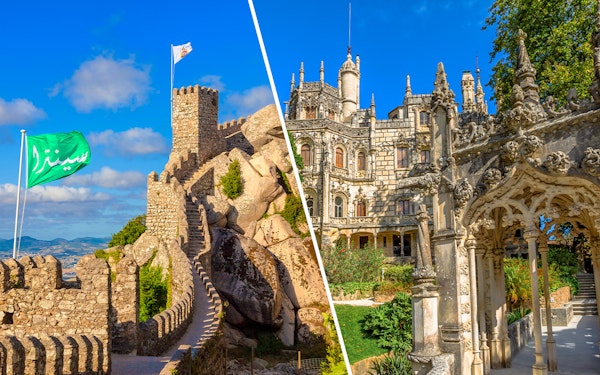
Combo: Moorish Castle + Quinta da Regaleira Tickets
Ramparts and gardens - the most outdoor of the pairings.
4.9(20,808)ViewFrom$41.32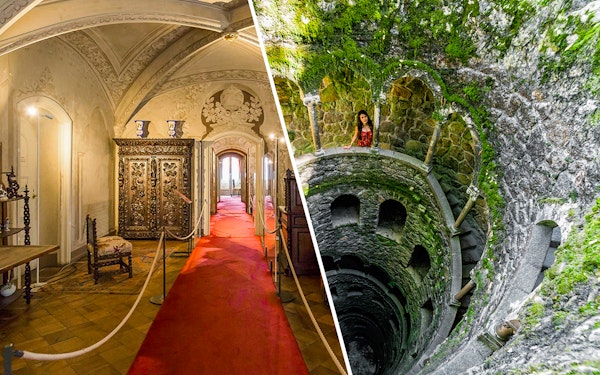
Combo: Pena Palace and Park + Quinta da Regaleira Tickets
The two most-visited estates on one booking - a comfortable full day.
4.7(48,842)ViewFrom$48.42
Sintra Highlights: Private Tour of Palaces & Coast in Classic 4x4
5.0(27)4 hours - 6 hoursViewFrom$77Pena Palace & Park Tickets
4.5(28,698)1 hourViewFrom$19
Lisbon: Sintra Half-Day Guided Tour with Pena Palace Tickets
4.9(623)5 hoursViewFrom$86
Monserrate Palace & Park Fast-Track Tickets
4.5(445)ViewFrom$14
Madrid: Royal Palace Guided Tour with Skip the Line Ticket
4.7(3,099)2 hoursViewFrom$40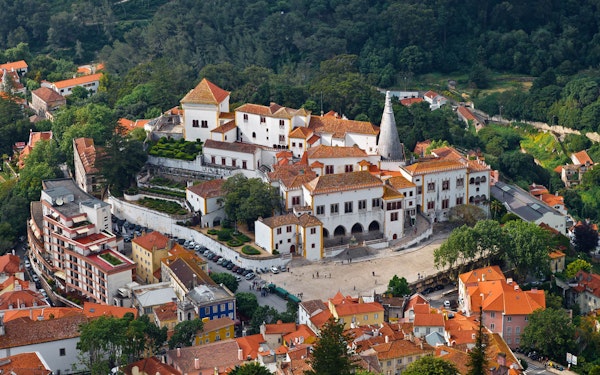
National Sintra Palace Tickets with Audio Tour
4.1(9)2 hoursViewFrom$23
Guided visits with tickets included
The middle option between a full day tour and going alone: a guided visit to one or two sights with entry bundled in. You keep control of the rest of your day and hand off the part that causes the most trouble - the timed entries and the order you do things in.
Sintra guided tours with tickets

Half-Day Sintra: Pena Palace & Regaleira Small-Group Tour
The two headline sights in a half day, small group.
4.9(179)4 hoursViewFrom$69.74
Sintra: Regaleira Guided Tour & Tickets (add-on Pena, Monserrate)
Regaleira guided, with the option to bolt on the other estates.
5.0(52)4 hoursViewFrom$69.31
Sintra Quinta da Regaleira Skip the Line Ticket, Optional Host
Entry with an optional guide - the flexible middle ground.
4.8(213)2 hours 30 minutesViewFrom$33.64
Sintra Private Tour with Tickets: Pena Palace & Moorish Castle
Private, with both hilltop sights and their entries handled.
4.9(161)4 hours 30 minutesViewFrom$211.44
Sintra Private Tour with All Tickets Included
5.0(256)8 hoursViewFrom$349
Sintra Electric Tuk Tuk Tour with Local Expert Guides 2h30
5.0(49)2 hr 30 minViewFrom$177Lisbon: Sintra Half-Day Guided Tour with Pena Palace Tickets
4.9(623)5 hoursViewFrom$86Sintra, Roca and Cascais Full-Day Private Tour with Pena Tickets
5.0(96)8 hours - 10 hoursViewFrom$254
Sintra Tour with Tickets - Estoril Cascais & Cabo da Roca
5.0(330)9 hoursViewFrom$31Private Sintra Tour from Lisbon: Pena Palace, Cabo Roca & Cascais
5.0(113)8 hoursViewFrom$171
The train from Lisbon, in practice
The train is cheap, frequent, and the reason Sintra works as a day trip at all - but the journey has a second half that catches people out.
The train itself is easy. Services run from central Lisbon to Sintra town regularly through the day and take roughly forty minutes. Tickets are inexpensive, bought on a rechargeable card at the station rather than reserved in advance, and there is no need to book a specific departure - you turn up and take the next one. Trains are busiest on summer mornings, when everyone has the same idea.
The last mile is the problem. Sintra station puts you in the town, at the bottom. The Pena Palace and the Moorish Castle sit on a steep wooded hill above it, and the walk up is long, sustained, and on narrow roads shared with traffic. This is the single most underestimated part of an independent Sintra day.
Your options from the station:
- The local bus that loops up to the hilltop sights. Cheap, and frequently full to standing in high season.
- A tuk-tuk. Ubiquitous, negotiable, and the quickest way up. Worth the money if you are short on time or short on legs.
- A taxi or rideshare. Reliable, and the roads get congested enough in summer that it is not always faster than the bus.
- Walking. Genuinely feasible if you are fit and it is not July, and genuinely miserable otherwise.
The rhythm that works: ride up to the highest sight you plan to visit first thing, then work your way down on foot. Sintra is much more pleasant descending, and it puts you back in the town for lunch at roughly the right time.
One warning about the return. Late afternoon trains back to Lisbon in high season are busy, and the queue for the bus down from the hilltop can be long enough to make you miss the train you planned on. Leave the hill earlier than feels necessary.
Beating the crowds
Sintra's popularity is its one real drawback. The town is small, the hilltop sights have limited capacity, and on a summer afternoon the Pena Palace in particular can feel overwhelmed. The fixes are simple and worth following. Go early: the first entry slots are by far the calmest, and a tour that reaches the Pena Palace soon after opening beats the worst of it. Book the timed palace entry ahead rather than queuing on the day. And consider the shoulder seasons, spring and autumn, when the weather is still good but the crowds thin noticeably. Midweek is quieter than weekends year round. A guided tour helps here too, because handling the entry timing and the transport between the scattered hilltop sites is exactly where independent visitors lose time to queues.
Which tickets to skip
Sintra sells more than a day can absorb, and knowing what to leave out is as useful as knowing what to book.
Skip the park-only tickets unless you genuinely want the grounds and not the building. They are cheaper for a reason, and the interior is what most people came for.
Skip a fourth sight. Two done properly is a good Sintra day and three is the ceiling. A four-sight ticket bundle looks like value and buys you a day of rushing between entrances.
Skip Monserrate on a first visit unless quiet gardens are specifically your priority - it is further out, and reaching it eats time you do not have on a single day.
Skip the pre-booked lunch that some packages bundle in. Sintra's town centre has better options at your own pace, and a fixed lunch slot is another appointment on a day that already has two.
Doing it independently by train
The train from Lisbon reaches Sintra town in about 40 minutes and is cheap and frequent. The catch is the last mile: Sintra's sights sit on steep hills above the town, so you still need the local bus, a tuk-tuk, or a long uphill walk to reach the Pena Palace and the castle ruins. Book the Pena Palace ticket online ahead and start early to beat the worst of the hilltop crowds, and it is a rewarding self-guided day, though the transport between scattered sites is exactly what the tours exist to smooth.
Booking lead time and cancellation
Peak season for Sintra is spring through early autumn, when the small-group tours and the Pena Palace slots book out fastest. Reserve the popular loops 1 to 2 weeks ahead in those months; off-peak, a few days is usually enough. Most guided tours offer free cancellation up to 24 hours before, which is the policy worth filtering for. Timed palace tickets are often non-refundable once issued, so lock in the date first.
Quick compare: the best Sintra day trips from Lisbon
| Tour | Format | From | Duration | Rating |
|---|---|---|---|---|
| Sintra & Cascais Small-Group | Palaces + coast | $69 | 8h | ★4.8 (7,568) |
| Sintra, Pena, Regaleira, Roca & Cascais | Full loop | $94 | 10h | ★4.9 (3,555) |
| Pena Palace, Cabo Roca & Cascais | Palaces + coast | $82 | 8h | ★4.9 (4,316) |
| Sintra-Cascais-Pena (8-person) | Value small group | $55 | 9h | ★4.9 (1,841) |
| Private Customizable Sintra Day | Private | $164 | 8h | ★5.0 (1,698) |
| Private Pena & Regaleira | Private | $153 | 8h | ★5.0 (684) |
Small group, private, or independent?
The three ways to do Sintra suit different travelers. A small-group tour is the value sweet spot: it handles the hilltop transport and entry timing, keeps the cost down, and the higher-rated options cap the group small enough to stay flexible. A private tour costs more but buys control, your own pace up the hills, the order of palaces set to you, and a relaxed lunch if you want one, which families and couples often find worth it. Going independently by train is the cheapest and most flexible, but you take on Sintra's two real frictions yourself: the steep last mile to the hilltop sights and the timed-entry queues at the Pena Palace. For a first visit, most travelers find a small-group tour the best balance of cost, ease, and coverage.
Practical tips for the day
Start early. Sintra's hilltop sites, the Pena Palace above all, get crowded by mid-morning; the first entry slots are the calmest.
Wear comfortable shoes. The town and the palace grounds are steep and uneven, and you will be climbing.
Don't try to do everything. Two or three sights at a real pace beats five rushed ones; Sintra rewards a slower day.
Bring a layer. The hilltop is often cooler and mistier than Lisbon, even when the city is warm and clear, the microclimate is part of what makes Sintra's gardens so lush.
Eat in the town. Sintra's old centre has good cafes and the famous local pastries (travesseiros and queijadas), a better lunch stop than the rushed options up at the palaces. Build in 30 minutes for it between sights.
Plan your trip
See all Lisbon day trips and tours →Do I need to book Sintra tickets in advance?
For Pena Palace, yes - it runs timed entry with limited capacity and sells out weeks ahead in summer. Quinta da Regaleira is worth pre-booking too, though it is less constrained. The National Palace in the town and the Moorish Castle are usually fine to buy on the day. The rule of thumb: book the hilltop sights ahead, improvise the rest.
How do I get from Lisbon to Sintra by train?
Trains run regularly from central Lisbon and take about forty minutes. Fares are cheap and bought on a rechargeable card at the station - there is no need to reserve a specific departure, you simply take the next train. The complication is not the train but what follows it: the station leaves you in the town, and the main palaces sit on a steep hill above it, so budget for a bus, tuk-tuk, or taxi for the climb.
What is the difference between the Pena Palace ticket and the Pena Park ticket?
The park ticket covers the grounds only and does not admit you to the palace building. The palace ticket covers both. The park version is noticeably cheaper, which is why people buy it by mistake, and the difference only becomes apparent at the palace entrance. If you want to go inside, make sure the listing says palace and park.
How far is Sintra from Lisbon?
Sintra sits about 30 km northwest of Lisbon. By train it is roughly 40 minutes from the city center, and by road around 40 minutes to an hour depending on traffic. The short distance is what makes Sintra one of the easiest and most popular day trips from Lisbon, and why many tours add Cascais and the coast to fill out the day.
Is Sintra worth a day trip from Lisbon?
Yes. Sintra packs colorful palaces, a hilltop castle, and lush gardens into a compact, fairytale-like town a short hop from Lisbon, and it is consistently one of the highest-rated day trips in the region. The catch is that it is popular and the hilltop sites get busy, so going with a tour or an early start makes a real difference.
What should you see in Sintra in one day?
The headline sights are the colorful Pena Palace on the hilltop, the Quinta da Regaleira with its gardens and famous initiation well, and the Moorish castle ruins. One day is enough for two or three of these at a steady pace, not all of them deeply. Most tours pair the palaces with a coastal stop at Cascais or Cabo da Roca.
Should I add Cascais and Cabo da Roca to a Sintra trip?
Many of the most-booked tours do exactly that, looping Sintra's palaces with the coastal town of Cascais and Cabo da Roca, the westernmost point of mainland Europe. It makes for a fuller, more varied day. If your priority is the palaces and gardens, a Sintra-focused tour gives them more time; if you want palaces plus coast, the combined loops deliver both.
Do you need to book Sintra palace tickets in advance?
For the Pena Palace especially, yes. It runs on timed entry and the popular slots sell out in peak season, with queues at the gate on busy days. Guided tours typically bundle the entry and timing, which is a big part of their value. If you go independently, book the palace tickets online ahead rather than risking the on-site queue.
Is it better to do Sintra by tour or by train?
The train from Lisbon is cheap and easy to the town, but Sintra's sights sit on steep hills above it, so you still need the local bus, a tuk-tuk, or a long uphill walk to reach the Pena Palace. A guided tour handles the transport between the scattered hilltop sites and the entry timing, which is why many visitors find it worth it despite the easy train.
How long is a Sintra day trip from Lisbon?
Most guided day trips run 8 to 10 hours door to door, especially the ones that add Cascais and Cabo da Roca. A Sintra-only visit can be shorter, but the hilltop sites and the crowds mean even a focused day fills up quickly. Plan for a full day rather than a half.
Which Sintra palace should you prioritize if you only see one?
The Pena Palace. Its colorful hilltop towers are Sintra's signature image, the views from it are the best in the area, and it is the sight most visitors regret missing. It is also the busiest, so book the timed entry ahead and go as early as you can. If you have time for a second, the Quinta da Regaleira with its gardens and initiation well is the popular pairing.
Is Sintra suitable for children?
Yes, with some caveats. The fairytale palaces and the Quinta da Regaleira's grottoes and tunnels delight many kids, but Sintra is steep and involves a lot of uphill walking and stairs, which tires younger children. Comfortable shoes, a relaxed pace, and not trying to cram in too many sights make it work. A private tour can ease the logistics for families with the flexibility to set their own pace.
Keep reading
More reads
More guides to help you plan your trip

2 Days in Lisbon: The Itinerary That Handles the Hills
Two days in Lisbon, planned around the terrain rather than the map - what to book, what to walk, and why the second day should leave the city.

The Best Day Trips from Lisbon: Sintra, Cascais, Obidos and More
The best day trips from Lisbon ranked by what deserves a full day: Sintra, Cascais and Cabo da Roca, Obidos and Fatima, and Evora, with top-rated tours.

Lisbon Travel Guide: First-Time Visitor Essentials for 2026
A practical 2026 Lisbon travel guide: where to stay, how to handle the hills, the Belem ticket strategy, fado and food, and the day trips worth planning around.

3 Days in Lisbon: The Perfect First-Timer's Itinerary
A 3-day Lisbon itinerary that flows: the historic hills on day one, Belem and a food tour on day two, and Sintra on day three, with the top-rated tours at each stop.

Belem Tower Tickets: The 2026 Guide to Entry, Jerónimos Monastery, and the Best Belem Tours
A no-fluff 2026 guide to Belem Tower tickets - entry options compared, how to combine with Jerónimos Monastery, and the best bike and walking tours of Belem.

Things to Do in Lisbon: 20 Experiences Worth Booking in 2026
A 2026 Lisbon shortlist - 20 experiences, day trips, and food tours ranked by what's actually worth booking, with neighborhood notes and honest price-band guidance.

The Cost of a Guided Walking Tour: What 50 Cities Actually Charge in 2026
We measured the price of every guided walking tour in our cross-platform catalog across 50 cities. The median is $50. The more useful number is how far prices spread inside a single city.

1 Day in London: A Realistic Itinerary That Does Not Waste the Day
One day in London, planned around what actually fits - a walkable route through the centre, the two things worth booking, and the traps that eat an hour each.