ParisMuseumsLouvreArtSkip the line
The Best Museums in Paris: Where to Go and How to Skip the Line
The best museums in Paris ranked by what is worth your time: the Louvre, the Musee d'Orsay, Versailles, and more, with the skip-the-line and small-group guided tours travelers rate highest.
By SimilarTours Editorial · Travel Research · · 15 min read

Paris has more world-class museums than any short trip can absorb, which makes the real skill knowing what to skip. Try to do six in three days and you will remember none of them. Pick two or three, book them properly, and give each the hours it deserves, and you get the version of Paris people come back raving about.
This guide ranks the best museums in Paris by what is genuinely worth your limited time, with the practical part front and center: how to skip the lines that can otherwise swallow your morning. Every tour referenced is currently bookable through our partner OTAs and ranked on real ratings and review counts, verified June 2026.
Browse all Paris museum tours and tickets →The one rule for Paris museums: book the slot, not the day
The biggest mistake is treating museum entry as a walk-up. The Louvre, the Orsay, and Versailles all run on timed entry, and the popular slots vanish days ahead in season. A skip-the-line ticket or a small-group guided tour bundles a reserved timeslot and, in the guided case, someone who routes you straight to what matters. That reserved slot is the single biggest time-saver in the city.
| Museum | Best for | Typical visit | Book ahead |
|---|---|---|---|
| The Louvre | The headline works, scale | 2-3 hours | Essential |
| Musee d'Orsay | Impressionists, manageable size | 2 hours | Essential |
| Palace of Versailles | Royal grandeur, gardens | Half to full day | Essential |
| Combined Louvre + Orsay | Art-heavy single day | Full day | Essential |
1. The Louvre: start here
The most-visited museum on earth, and the most-booked museum experience in Paris by a wide margin. It is also the easiest to do badly, because the scale is overwhelming and the crowds around the headline works are intense. A small-group guided tour with reserved entry is the format that consistently rates highest: a guide takes the navigation and the queueing off your plate and gets you to the key galleries before they fill.
Top Louvre guided tours and skip-the-line tickets

Louvre Museum Essential Guided Tour Semi Private (6 guests max)
A semi-private guided tour capped at six guests with entry included - the highest-rated Louvre format for getting to the highlights without the crowd-shuffle.
5.0(3,993)2.5 hoursViewFrom$74
Louvre Museum Premium Guided Tour (6 guests max, entry included)
A premium small-group tour with entry - very high ratings on big volume, the reliable pick for a first, highlights-focused Louvre visit.
5.0(6,742)2.5 hoursViewFrom$74
Louvre Museum Access Guided Tour with Mona Lisa
A lower-priced guided option that still routes you to the Mona Lisa and the headline works - the value pick for a guided first visit.
4.7(1,194)2.5 hoursViewFrom$53
Louvre Museum Guided Tour with Artist
5.0(102)2 hoursViewFrom$231
Louvre Museum Masterpieces Guided Tour with Access
4.5(13,607)2 hr 30 minViewFrom$72
Louvre Museum Mona Lisa & Highlights Express Guided Tour
4.3(566)2 hoursViewFrom$86
Paris: Louvre Museum Private Tour
2 hr 30 minViewFrom$93
Picasso Museum Skip-the-Line Guided Tour
4.5(1,323)1 hr 30 minViewFrom$42
From Louvre to Street Art - original museum guided tour (skip the line!)
5.0(21)2 hr 30 minViewFrom$296
Prado Museum Madrid Guided Tour with Skip the Line Ticket
4.7(798)1 hr 30 minViewFrom$45
Insider tip
Louvre timing. Two to three hours is the right length for a first visit; the museum is far too large to finish in a day, and trying to see everything is the surest way to enjoy none of it. Early-morning and late-afternoon entry slots are noticeably calmer than midday. A guided tour keeps you to a focused couple of hours by design.
2. The Musee d'Orsay: the art lover's pick
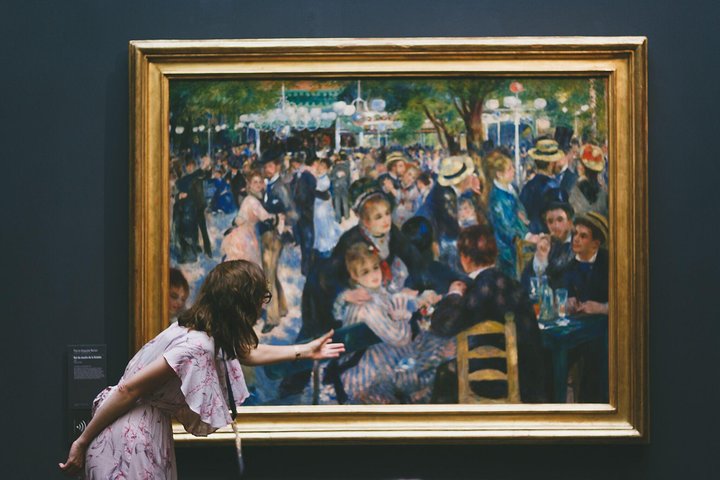
For many visitors the Orsay edges the Louvre. Its Impressionist and Post-Impressionist collection is one of the greatest anywhere, the building (a former railway station) is a pleasure to move through, and crucially it is small enough to actually cover in a single visit. Pair it with the Louvre or do it on its own as the more relaxed of the two.
Top Musee d'Orsay tours and tickets

The Musee d'Orsay Guided Tour Semi Private (6 people)
A semi-private guided tour of the Orsay's Impressionist collection - the top-rated way to do it with a guide and a small group.
5.0(1,000)2 hoursViewFrom$74
Paris: Musee d'Orsay Skip-the-Line Tour with Expert Guide
A guided skip-the-line tour with reserved entry - the convenient pick if your main goal is to bypass the queue with an expert along.
4.7(1,195)1.8 hoursViewFrom$82
Paris: Orsay Museum Daily Entry Ticket
A straightforward timed-entry ticket if you would rather explore solo - reserves your slot without a guide, the cheapest way in.
4.3(741)2 hoursViewFrom$23
Skip the line Les Invalides War Museum Exclusive Guided Tour
5.0(13)2 hoursViewFrom$166
Paris Musée d'Orsay Fully Guided Skip the Line Tour
4.5(643)2 hoursViewFrom$54
Orsay Museum Guided Tour
4.5(89)2 hoursViewFrom$68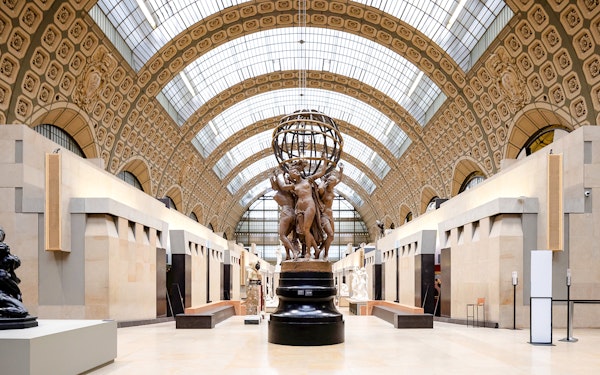
Orsay Museum Guided Tour with Tickets
4.5(61)2 hoursViewFrom$53
Royal Palace & Prado Museum Skip the Line Guided Tour
4.5(1,604)5 hoursViewFrom$82
The Musée d’Orsay in Focus: Impressionists & Beyond (Max 6)
5.0(44)2 hoursViewFrom$188Prado Museum Madrid Guided Tour with Skip the Line Ticket
4.7(798)1 hr 30 minViewFrom$45
3. Louvre and Orsay together: the art-heavy day
If you only have one museum day and want the two giants, the combined tours cover both with reserved entry at each, a short walk apart across the Seine. It is a full, intense, rewarding day; eat well in between and accept that each will be a highlights visit.
Top combined Louvre and Orsay tours
Louvre and Musee d'Orsay Guided Museum Tour Semi Private (6 people)
Both giants in one semi-private guided day with reserved entry at each - the highest-rated way to pair them without queueing twice.
5.0(644)5.5 hoursViewFrom$281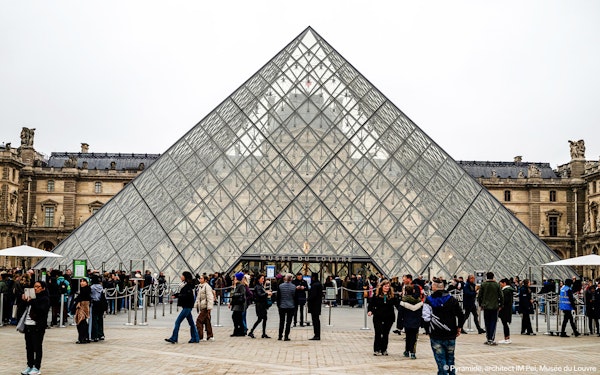
Louvre Museum + Orsay Museum Semi-Private Guided Tour
5.0(2)5 hr 30 minViewFrom$300
Louvre Museum Guided Tour with Orsay Museum Ticket Option
3.8(4,640)2 hours - 3 hoursViewFrom$56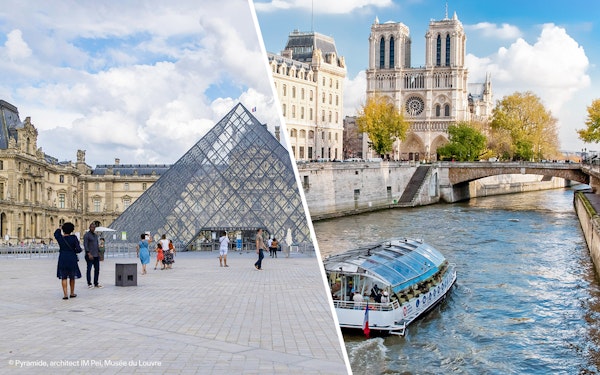
Combo: Louvre Museum Pre-Reserved Entry + Seine River Cruise
4.2(1,974)ViewFrom$79
Versailles Palace and Gardens Tour from Paris
4.4(4,672)3 hours - 3 hr 30 minViewFrom$73
The Musee d Orsay Guided Tour Orsay Museum Semi Private 6ppl Max
5.0(1,089)2 hours - 2 hr 30 minViewFrom$72
Paris Highlights Tour: Notre-Dame & Louvre Semi-Private & Private
5.0(23)7 hr 30 minViewFrom$354Paris Musée d'Orsay Fully Guided Skip the Line Tour
4.5(643)2 hoursViewFrom$54
Paris in A Day Louvre Eiffel Tower Notre Dame and Seine Cruise
4.8(2,604)4 hours - 9 hoursViewFrom$113Louvre Museum Masterpieces Guided Tour with Access
4.5(13,607)2 hr 30 minViewFrom$72
4. The Palace of Versailles: the half-day grandeur trip
Technically outside Paris, run as a museum and monument, and worth a half to full day on its own. The palace interiors and the gardens are the draw, and the independent ticket queues are notorious, so a guided tour from Paris that bundles transport and reserved palace entry is the path of least resistance.
Top Versailles tours from Paris

Versailles Palace Guided Tour with Reserved Entry
A guided palace tour with a reserved entry slot - the efficient way to skip the worst of the Versailles queue and see the state rooms with context.
4.5(2,535)1.5 hoursViewFrom$74
Versailles Palace and Gardens Tour from Paris
Covers both the palace and the gardens on a guided day from Paris - the most-reviewed full Versailles experience in the catalog.
4.4(3,992)3 hoursViewFrom$75
Versailles Palace and Gardens Tour by Train from Paris
A train-based guided option with reserved entry and high ratings - good if you prefer rail over a coach for the trip out.
4.7(942)3 hoursViewFrom$106
Versailles Palace Guided Tour with Gardens Access from Paris
4.2(5)3 hoursViewFrom$150
Versailles Palace and Giverny Private Guided Tour from Paris
4.9(73)9 hoursViewFrom$814
Paris to Versailles Tour: Private Guide & Transport included
5.0(17)4 hoursViewFrom$467
Versailles Palace & Gardens Audio Tour Private Transportation
4.7(11)4 hoursViewFrom$532
From Paris: Versailles Palace Live Tour with Gardens Access
4.6(897)4 hours - 10 hoursViewFrom$109
PRIVATE Versailles Palace & Gardens Tour with transfer included
5.0(35)4 hr 30 minViewFrom$615
Versailles Palace Guided Tour with Gardens Access
4.6(724)1 hr 30 minViewFrom$97
Beyond the big three
If you have already done the Louvre and the Orsay, or want something quieter, Paris has a deep bench of smaller museums and monument-museums that reward a half day without the crowds. The standout for many visitors is Sainte-Chapelle, a small royal chapel whose upper level is a near-complete cage of stained glass, paired naturally with the neighboring Conciergerie. These are monument-museums rather than art galleries, and a guided ticket bundles the timed entry that the most popular ones now require.
Top smaller Paris museums and monuments

Sainte-Chapelle and Conciergerie Guided Tour with Tickets
A guided pairing of the stained-glass chapel and the neighboring Conciergerie with reserved tickets - the efficient way to do both monument-museums in one go.
4.6(218)2 hoursViewFrom$93
Paris Grevin Wax Museum Ticket
A straightforward ticket to the Grevin wax museum - a light, family-friendly counterpoint to the art-heavy days, valid for a flexible entry window.
4.1(1,169)24 hoursViewFrom$33
Notre-Dame, Sainte-Chapelle & Conciergerie Walking Tour
5.0(19)1 hr 30 minViewFrom$5
Medieval Paris: Notre Dame, Sainte Chapelle and Conciergerie
5.0(24)3 hoursViewFrom$945
Paris Guided Tour with Access to Notre Dame or Sainte-Chapelle
4.6(342)1 hour - 2 hoursViewFrom$31
Sainte-Chapelle Guided Tour
5.0(2)1 hourViewFrom$52
Notre Dame Outdoor Walking Tour and Entrance to Sainte Chapelle
4.8(1,029)2 hoursViewFrom$63
In the Heart of Paris Sainte Chapelle to Notre Dame - Small Group
5.0(12)2 hoursViewFrom$224
Paris Sainte-Chapelle and Conciergerie Private Guided Tour
4.4(5)2 hoursViewFrom$320
Sainte-Chapelle Entry Ticket + Notre-Dame Exterior Guided Tour
4.0(12)2 hoursViewFrom$77
Other smaller museums worth a slot if your interests run that way: the Orangerie for its oval rooms of Monet water lilies, the Rodin museum with its sculpture garden, and the Pompidou for modern and contemporary art. None of them need a full day, which makes them ideal second or third museum stops once the giants are done. The pattern that works best is one giant plus one small museum per day, rather than two giants back to back, which leaves you saturated.
How to plan your museum days
The single biggest lever is sequencing. Put the museum you care most about first, in an early slot when you are fresh and the galleries are calm, and let the smaller or lighter stops come later when fatigue sets in. Avoid stacking two enormous museums in one day; the Louvre alone is a marathon, and pairing it with Versailles or the full Orsay leaves most people unable to take in the second. If you have three days in the city, a clean rhythm is the Louvre on day one, the Orsay plus a small museum on day two, and Versailles as a half-day trip on day three, with the afternoons left for the streets, parks, and cafes that are half the point of Paris.
A note on the Paris Museum Pass
A pass that bundles entry to many museums and monuments can pay off if you are visiting several over consecutive days. But the pass alone does not always include the reserved timeslot the busiest sites now require, and it does not give you a guide. For a short trip built around the Louvre and the Orsay, a couple of skip-the-line or guided tours is often the simpler route to the same time savings.
Booking lead time and cancellation
Peak season for Paris museums runs spring through early autumn, plus the December holidays. In those windows the small-group Louvre and Orsay tours and the Versailles slots book out several days to two weeks ahead. Off-peak, a few days' notice is usually fine. Most guided tours offer free cancellation up to 24 hours before; timed-entry tickets are often non-refundable once the slot is issued, so lock in the date before you commit.
Quick compare: the best Paris museum experiences
| Experience | Museum | From | Duration | Rating |
|---|---|---|---|---|
| Essential Guided Tour (6 max) | Louvre | $74 | 2.5h | ★5.0 (3,993) |
| Premium Guided Tour (6 max) | Louvre | $74 | 2.5h | ★5.0 (6,742) |
| Guided Tour Semi Private | Musee d'Orsay | $74 | 2h | ★5.0 (1,000) |
| Daily Entry Ticket | Musee d'Orsay | $23 | 2h | ★4.3 (741) |
| Combined Guided Tour | Louvre + Orsay | $281 | 5.5h | ★5.0 (644) |
| Palace & Gardens Tour | Versailles | $75 | 3h | ★4.4 (3,992) |
Guided tour or ticket only?
The last decision is whether to pay for a guide or just an entry ticket. A timed-entry ticket is cheaper and lets you move at your own pace, which suits repeat visitors and travelers who like to read the labels and linger. A guided tour costs more but earns it in two ways: a guide routes you efficiently through enormous museums like the Louvre so you actually reach the highlights, and the context turns a wall of paintings into a story you remember. For a first visit to the Louvre in particular, where the scale defeats most people, the small-group guided tours are the option that consistently rates highest. For the smaller museums, where you can see everything in an hour or two regardless, a ticket alone is often enough.
Practical tips
Wear shoes you can stand in for hours. Museum days are deceptively hard on the feet, especially the Louvre.
Check bag rules before you go. The big museums limit large bags and luggage, and cloakroom queues add time.
Eat between, not during. Museum cafes are slow and pricey; a proper meal between the Louvre and the Orsay beats grazing on the move.
Go early or late. The first and last entry slots of the day are consistently the calmest at all three big sites.
Pick your day. Many Paris museums close one day a week (commonly Monday or Tuesday, and it varies by museum), so check before you build a day around one. Holidays and the first Sunday of some months can also shift hours and crowds.
Plan your visit
See all Paris museum tours and tickets →What is the best museum in Paris?
The Louvre is the one most visitors put first, both for its scale and its headline works, and it is the most-booked museum experience in the city by a wide margin. But the Musee d'Orsay rivals it for many art lovers, who find its Impressionist collection more rewarding and its building far easier to cover in a single visit. The honest answer is to do both if you can, and the Louvre first if you can only pick one.
Do you need to book Paris museums in advance?
Yes, for the big ones. The Louvre, the Musee d'Orsay, and Versailles all run on timed entry and the popular slots sell out days ahead in peak season. A skip-the-line or guided tour bundles a reserved timeslot, which is the single biggest time-saver. Walking up without a booking can mean a long queue or no entry at all on busy days.
How do you skip the line at the Louvre?
Book a timed-entry ticket or a guided tour in advance rather than queuing for same-day admission. Small-group guided tours include reserved entry and a guide who routes you straight to the highlights, which matters in a museum this large. Early-morning and late-afternoon slots are calmer than midday.
Is the Paris Museum Pass worth it?
It can be, if you plan to visit several museums and monuments over consecutive days, because it bundles entry and reduces queueing at many sites. For a short trip focused on just the Louvre and the Orsay, a couple of individual skip-the-line tickets or guided tours is often simpler and gets you the reserved-slot and guide benefits the pass alone does not.
How long should you spend at the Louvre?
Plan two to three hours for a first visit focused on the highlights; the museum is far too large to see fully in a day. A guided tour built around the key works keeps that to a manageable couple of hours. If you try to see everything, you will see very little; pick a wing or a theme and go deep.
Can you visit the Louvre and Musee d'Orsay in one day?
Yes, and the two sit a short walk apart across the Seine, so it is a popular pairing. A combined guided tour covers both with reserved entry at each. Realistically it is a full, art-heavy day, so eat well between them and accept that both will be highlights visits rather than exhaustive ones.
Is Versailles a museum or a day trip?
Both. The Palace of Versailles is a former royal residence now run as a museum and monument, and because it sits outside Paris it functions as a half- or full-day trip. Guided tours from Paris bundle the transport and reserved palace entry, which is the easiest way to do it given how long the independent ticket queues can run.
Which Paris museums are good for families with kids?
The Grevin wax museum is the easiest family win, followed by short, focused visits to the Orsay, whose building and Impressionist works hold attention without the scale of the Louvre. Sainte-Chapelle is a quick, visually dramatic stop that even young children respond to. The Louvre is doable with kids if you keep it to a short, highlights-only guided visit rather than attempting the whole museum.
How many museums can you realistically see in a day in Paris?
One large museum, or one large plus one small, is the realistic and enjoyable maximum. The Louvre on its own is a half to full day; pairing two giants in one day leaves most visitors too saturated to absorb the second. Spreading the museums across your trip, with cafe and street time in between, gets you far more out of each than cramming them together.
Keep reading
More reads
More guides to help you plan your trip

1 Day in Paris: The Itinerary That Fits, and the One That Does Not
One day in Paris, planned around real distances - what to book, what to walk, what to skip, and why three museums in a day is the classic mistake.

The Best Food Tours in Paris: Which Ones Are Worth the Money
Paris food tours are expensive and the good ones are excellent. How to tell them apart - by neighbourhood, by format, and by what you actually want to learn.

Arc de Triomphe Tickets in 2026: Rooftop Access, Combos and How to Skip the Line
A 2026 guide to Arc de Triomphe tickets - rooftop terrace timed entry, skip-the-line, Paris viewpoint and cruise combos, and guided Champs-Elysees walks.

Musee d'Orsay Tickets in 2026: Types, Skip-the-Line and Combos Compared
A 2026 guide to Musee d'Orsay tickets - timed entry, skip-the-line, guided highlights tours, Louvre and Orangerie combos and pass options compared.

5 Days in Paris: The Perfect Itinerary at a Relaxed Pace
A 5-day Paris itinerary at a human pace: the icons, Montmartre and Le Marais, a full day at Versailles, and the tours travelers rate highest for each day.

The Best Walking Tours in Paris: Highlights, Montmartre, Food and More
Every kind of walking tour of Paris compared: classic highlights, Montmartre, food walks, Le Marais, and night walks, ranked on real ratings and reviews.

Christmas Markets in Paris: The Best Festive Spots and Tours
The best Christmas markets in Paris, from the Tuileries to La Défense, plus when the season runs, how to plan around crowds, and the top festive experiences.

Summer in Paris: What to Expect and What to Book
What summer in Paris is really like - long evenings, heat waves, August closures, and the Seine cruises, Eiffel Tower visits, and day trips worth booking.