RomePompeiiDay tripsAmalfi CoastSorrento
Pompeii Day Trip from Rome: How to Do It Right in 2026
Plan a Pompeii day trip from Rome: train vs guided coach, whether to add the Amalfi Coast or Sorrento, how long the day really takes, and the tours travelers rate highest.
By SimilarTours Editorial · Travel Research · · 14 min read

Pompeii is one of the great day trips from Rome and one of the easiest to get wrong. The site sits near Naples, a few hours south, which means the day is mostly defined by how you handle the distance. Choose well and you get an unforgettable walk through an ancient Roman city; choose badly and you spend most of the day on a coach for two rushed hours among the ruins.
This guide walks the Pompeii day trip from Rome the way the best tours run it: how to cover the distance, whether to add the Amalfi Coast or Sorrento, and how to protect your time on site. Every tour referenced is currently bookable through our partner OTAs and ranked on real ratings and review counts, verified June 2026.
Browse all Rome day trips →The core decision: Pompeii-only or Pompeii-plus
Because Pompeii is so far south, almost every tour makes a choice for you: spend the saved travel time deeper at the ruins, or use the proximity to bolt on the Amalfi Coast, Positano, or Sorrento. There is no wrong answer, only a trade-off.
| Format | Best for | Typical length | On-site time |
|---|---|---|---|
| Pompeii-focused day trip | The ruins as the priority | 11 hours | High |
| Pompeii + Sorrento | Ruins plus a coastal town | 12 hours | Medium |
| Pompeii + Amalfi Coast / Positano | The scenic bonus day | 12-13 hours | Medium-low |
| Independent train | Budget, flexibility | Self-paced | Your call |
1. Pompeii-focused day trips: the ruins as the point
If Pompeii itself is your reason for going, choose a tour built around the site rather than one that races through it to reach a beach. The guided versions give the ruins the structure they need, and the best are led by archaeologists who turn a field of stones into a legible ancient city.
Top Pompeii-focused day trips from Rome

Unveiling Pompeii: Guided Day Trip from Rome
A Pompeii-centered guided day with the ruins as the focus rather than a stop en route to the coast - the pick when the site is the priority.
4.4(710)11 hoursViewFrom$122
Premium Minivan Trip from Rome: Pompeii Tour & Lunch in Sorrento
A small premium-minivan day pairing a Pompeii tour with lunch in Sorrento - very high ratings, a comfortable middle ground between focus and a coastal bonus.
5.0(278)11 hoursViewFrom$104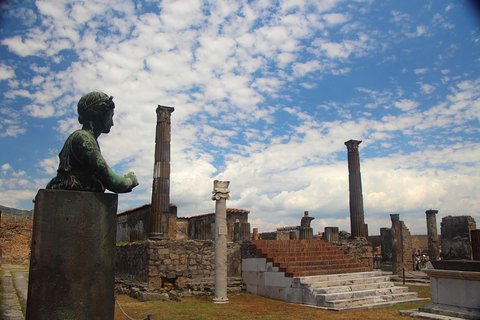
Day Trip to Pompeii Ruins from Rome
4.9(14)8 hoursViewFrom$692
Private Transfer from Amalfi Coast to Rome or vice versa
5.0(10)5 hours - 7 hoursViewFrom$402
Pompeii, Amalfi Coast and Positano Day Trip from Rome
4.5(7,205)13 hoursViewFrom$125
From Rome: AC Coach Transfers to Pompeii with Pompeii Guided Tour
0.0(0)12 hoursViewFrom$194
Pompeii, Sorrento & Amalfi Coast Day Trip from Rome
4.7(2,196)12 hoursViewFrom$79
Skip-the-Line Best of Pompeii in one Day Tour w Local Guide & new opened houses
5.0(24)4 hoursViewFrom$390
From Rome: Best of Pompeii Guided Tour and Sorrento Day Trip
4.7(196)13 hoursViewFrom$112
Exclusive Pompeii with Wine and Lunch on Vesuvius-Skip-the-line
5.0(26)5 hours - 7 hoursViewFrom$565
Insider tip
Protect your on-site time. Two to three hours covers Pompeii's main streets and highlights at a steady pace. If the ruins are your main reason for the long day, read the itinerary for how much time it actually allocates on site versus on the coach, and favor the tour that gives Pompeii the hours rather than the one that adds the most stops.
2. Pompeii plus the Amalfi Coast or Positano: the scenic combo
The most-booked format from Rome, and it makes sense: you have come all this way south, so the tours pair the ruins with the famously beautiful coast. Expect a long 12- to 13-hour day and slightly less time at Pompeii in exchange for Positano, Sorrento, or an Amalfi drive.
Top Pompeii and Amalfi Coast day trips from Rome

Pompeii, Amalfi Coast and Positano Day Trip from Rome
The most-reviewed Pompeii combo from Rome - the ruins plus the Amalfi Coast and Positano in one long, scenic coach day.
4.5(6,758)13 hoursViewFrom$128
Pompeii, Sorrento & Amalfi Coast Day Trip from Rome
A well-priced pairing of Pompeii with Sorrento and the Amalfi Coast - high ratings and a lower ticket than most coast combos.
4.7(1,604)12 hoursViewFrom$81
Day Trip from Rome: Explore Pompeii & Sorrento Amalfi Coast
Another Pompeii-plus-coast day with strong ratings - covers the ruins and the Sorrento and Amalfi stretch in a single guided run.
4.8(303)12 hoursViewFrom$89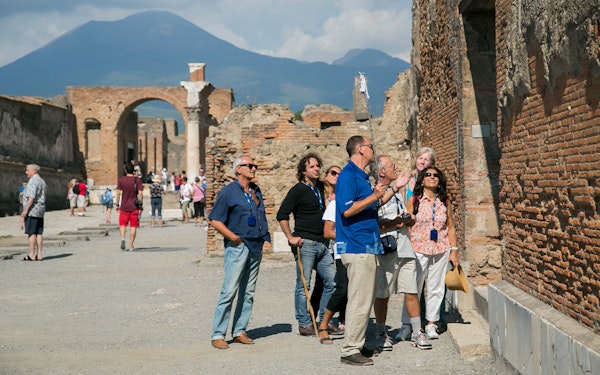
From Rome: Pompeii Guided Tour and Amalfi Coast Day Trip
4.7(313)13 hoursViewFrom$103Private Transfer from Amalfi Coast to Rome or vice versa
5.0(10)5 hours - 7 hoursViewFrom$402
Pompeii Sorrento Positano , Minivan + Guide
5.0(33)7 hoursViewFrom$355
Amalfi & Positano Day Trip from Rome with Coastal Cruise
4.4(1,192)15 hoursViewFrom$79
Skip-the-line Pompeii and Amalfi Coast Shore Excursion from Salerno Cruise Port
4.9(16)8 hoursViewFrom$567
Pompeii Tour & Amalfi Coast Day Trip from Rome
4.6(2,030)13 hoursViewFrom$227
Pompeii & Amalfi Coast Private Tour: Archaeologist-led, Flexible
5.0(49)8 hours - 9 hoursViewFrom$532
3. Private and premium options
For travelers who want the day on their own terms, private tours control the pace: more time at Pompeii if you want it, a relaxed lunch on the coast if you do not. They cost considerably more than the group coaches, but for a small group splitting the price the math can close.
Top private Pompeii day trips from Rome

Pompeii Tour & Amalfi Coast Day Trip from Rome
A higher-end guided day pairing Pompeii with the Amalfi Coast - more inclusions and a premium feel than the standard group coach.
4.6(1,994)13 hoursViewFrom$234
Private Pompeii, Positano and Amalfi Coast Tour from Rome
A fully private Pompeii, Positano and Amalfi day - your own vehicle and pace, the splurge option for couples and small groups who want control.
4.4(1,888)11 hoursViewFrom$1047
Exclusive Private Tour: Explore Pompeii and the Amalfi Coast
5.0(46)9 hoursViewFrom$379Private Transfer from Amalfi Coast to Rome or vice versa
5.0(10)5 hours - 7 hoursViewFrom$402Pompeii, Amalfi Coast and Positano Day Trip from Rome
4.5(7,205)13 hoursViewFrom$125Pompeii & Amalfi Coast Private Tour: Archaeologist-led, Flexible
5.0(49)8 hours - 9 hoursViewFrom$532Pompeii, Sorrento & Amalfi Coast Day Trip from Rome
4.7(2,196)12 hoursViewFrom$79
Amalfi Coast and Pompei from Rome: Private Full-Day Guided Tour
4.8(615)12 hoursViewFrom$329
Private full day tour to Pompeii Amalfi Coast and Ravello
5.0(39)8 hoursViewFrom$769Skip-the-line Pompeii and Amalfi Coast Shore Excursion from Salerno Cruise Port
4.9(16)8 hoursViewFrom$567
Doing it independently by train
If you would rather go it alone, the fast train from Rome to Naples takes around 70 minutes, then the local Circumvesuviana line runs onward to the Pompeii ruins. It is the cheapest and fastest route, and it gives you full control of your time on site. Once there, an on-site guided tour led by an archaeologist is a high-rated way to add the context the ruins lack without committing to a full coach day from Rome.
Top on-site Pompeii guided tours

Pompeii Small Group Tour with an Archaeologist
A small-group on-site tour led by an archaeologist - the top-rated way to add expert context once you have made your own way to the ruins.
4.8(7,110)2 hoursViewFrom$34
Pompeii private tour with an Official Guide
A private on-site guide for a focused hour at the ruins - very high ratings, ideal if you have arrived independently and want a tailored walk.
5.0(741)1 hourViewFrom$104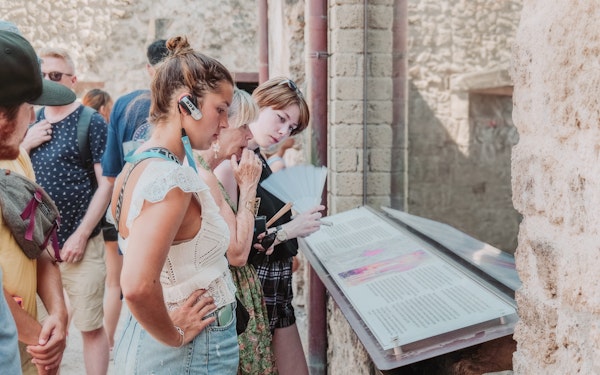
Pompeii & Villa of Mysteries Small Group Guided Tour
4.7(185)3 hoursViewFrom$54
2 Hours Pompeii Group Tour with Archaeologist Guide and Skip the Line
5.0(40)2 hoursViewFrom$130
Pompeii Skip the Line Small Group Tour with Archaeologist Guide
4.7(492)2 hours - 3 hoursViewFrom$63
Pompeii & Herculaneum Exclusive Private Tour with Archaeologist
5.0(71)4 hoursViewFrom$456
Pompeii and Herculaneum Small Group Tour with an Archaeologist
4.8(1,845)6 hours - 11 hoursViewFrom$73
Private tour of Pompeii with archaeologist - 3 hours.
5.0(41)2 hr 50 min - 3 hoursViewFrom$355
Pompeii 2h Small-Group Tour with Expert Archaeologist
4.9(608)2 hoursViewFrom$34
Private Pompeii Tour with Archaeologist & Winery on Mt Vesuvius
5.0(61)4 hours - 7 hoursViewFrom$426
What a day at Pompeii is actually like
The thing that surprises most first-time visitors is the scale. This is not a single ruin or a handful of columns; it is a whole town of streets, houses, shops, and public squares spread across a large site, and you walk its original stone roads. That scale is exactly why a guide helps: left alone, it is easy to wander for an hour without realizing you have seen a fraction of it, or to miss the houses and spaces that bring the place to life. A good guided route gives the morning a shape and a story, so the stones read as a place people lived rather than a field of rubble.
It is also physically demanding in a way the photos do not convey. The ancient paving is uneven and slick in places, the site is large and largely shadeless, and in summer the heat off the stone is real. Wear proper shoes, carry water, and pace yourself. Two to three focused hours is plenty for a first visit; trying to see every street leaves you exhausted and having absorbed less.
Naples or Sorrento: choosing your pairing
Because Pompeii sits between Naples and the Sorrento peninsula, most combo tours pair it with one or the other, and the choice shapes the day. Sorrento is the gentler, more polished option, a cliff-top resort town with lemon groves and sea views, and it pairs smoothly with a relaxed lunch before the drive back. The Amalfi Coast and Positano add the most dramatic scenery but also the most road time on famously winding cliff roads, which makes for a long, full day. Naples is the grittier, more authentic stop, and the home of the pizza, though fewer Rome day trips build it in as a destination in its own right.
If your priority is the ruins, lean toward a tour that keeps the coastal stop short and the Pompeii time long. If the scenery is half the reason you are going, the Amalfi and Positano combos deliver it, with the trade-off of less time among the stones and more time on the coach.
Booking lead time and cancellation
Peak season for Pompeii day trips is spring through early autumn, when the coast combos book out fastest. In those months reserve the popular Pompeii-plus-Amalfi tours 1 to 2 weeks ahead. Off-peak, a few days is usually enough. Most guided coach tours offer free cancellation up to 24 hours before pickup, which is the policy worth filtering for given how weather can affect the coast portion of the day.
Quick compare: the best Pompeii day trips from Rome
| Tour | Format | From | Duration | Rating |
|---|---|---|---|---|
| Unveiling Pompeii: Guided Day Trip | Pompeii-focused | $122 | 11h | ★4.4 (710) |
| Premium Minivan + Lunch in Sorrento | Small premium | $104 | 11h | ★5.0 (278) |
| Pompeii, Amalfi Coast & Positano | Scenic combo | $128 | 13h | ★4.5 (6,758) |
| Pompeii, Sorrento & Amalfi Coast | Value combo | $81 | 12h | ★4.7 (1,604) |
| Pompeii Tour & Amalfi Coast (premium) | Premium combo | $234 | 13h | ★4.6 (1,994) |
| Small Group with an Archaeologist | On-site guide | $34 | 2h | ★4.8 (7,110) |
Is the long day worth it?
It is a fair question, because a Pompeii day trip from Rome is a genuine commitment: 11 to 13 hours, much of it on a coach, for a couple of hours at the ruins. For most visitors the answer is still yes. There is nowhere else quite like Pompeii, a whole Roman town you walk through rather than look at from behind a rope, and the combination of the ancient site with the coast or Sorrento makes the long day feel varied rather than gruelling. The travelers who come away disappointed are usually the ones who underestimated the distance and expected more on-site time, or who picked a coast-heavy combo when the ruins were what they really wanted. Choose the format that matches your priority, set expectations for the travel, and the day delivers.
Practical tips for the day
Wear sturdy closed shoes. Pompeii's ancient paving is uneven and unforgiving, and you will be on it for hours.
Bring sun protection and water. The site is large and exposed with little shade, which catches people out on hot days, and refill points are limited once you are inside.
Pack light. Bags are sometimes restricted on site, and the coach days are long, so a small daypack beats a bulky bag you carry for hours.
Eat on the move on combo days. The 12- to 13-hour coast tours leave little room for a leisurely sit-down, so plan for snacks across the transfer legs.
Confirm the pickup point and time the night before. The early starts (often before 07:30) and central-Rome departure points catch people out, and missing the coach means missing the day. Build in a buffer for Rome's morning traffic on the way to the meeting point.
Plan your trip
See all Rome day trips and tours →How far is Pompeii from Rome?
Pompeii sits south of Rome near Naples, roughly 240 km away. The fast train to Naples takes about 70 minutes, then a local line onward to the Pompeii ruins adds 30 to 40 minutes. By road it is around 2.5 to 3 hours each way. Most guided day trips drive down by coach and handle the connection, so you are not juggling two train systems on a tight clock.
Can you do Pompeii as a day trip from Rome?
Yes, and it is one of the most popular day trips from Rome, but it is a long day: most guided versions run 11 to 13 hours door to door. If your only goal is the ruins, an early train down and back is doable independently. If you want a guide on site, or want to add the Amalfi Coast or Sorrento, the coach tours are built for it.
Should I add the Amalfi Coast or Sorrento to a Pompeii day trip?
Many of the most-booked tours pair Pompeii with the Amalfi Coast, Positano, or Sorrento, because you are already most of the way there. The trade-off is time: adding the coast makes for a 12- to 13-hour day with less time at the ruins. If Pompeii itself is the priority, choose a Pompeii-focused tour; if you want a scenic-coast bonus, the combos deliver it.
Is it worth getting a guide at Pompeii?
For most first-time visitors, yes. Pompeii is large, sparsely labeled, and easy to wander without grasping what you are looking at. A guided tour gives the site structure and context that the ruins alone do not provide. Tours led by archaeologists are especially well rated for exactly this reason.
How long do you need at Pompeii?
Two to three hours on site covers the main streets and the highlights at a steady pace; a half day lets you go deeper. Guided day trips from Rome typically allow a couple of focused hours because the travel each way eats the rest. If Pompeii is your main reason for the trip, prioritize a tour that maximizes on-site time over one that bolts on extra stops.
What is the best way to get from Rome to Pompeii?
For independent travelers, the fast train to Naples then the local Circumvesuviana line to Pompeii is the cheapest route. For convenience, a guided coach tour from Rome handles the whole journey, includes a guide on site, and often adds Sorrento or the Amalfi Coast. The coach is longer in hours but simpler; the train is faster and cheaper but more do-it-yourself.
What should I bring to Pompeii?
Sturdy closed shoes for the uneven ancient paving, sun protection and water (the site is large and exposed with little shade), and a hat in summer. Bags are sometimes restricted, so travel light. On a coach day from Rome you will be out 11 to 13 hours, so bring snacks for the long transfer legs.
Is Pompeii or Herculaneum better for a day trip from Rome?
Pompeii is the larger, more famous site and the one nearly all Rome day trips visit, so it is the default choice and the easiest to book. Herculaneum is smaller and better preserved in some respects, and far less crowded, but fewer organized day trips from Rome include it. For a first visit on a tour, Pompeii is the practical pick; Herculaneum rewards travelers going independently who want a quieter, more intimate site.
What is the best time of year to visit Pompeii?
Spring and autumn are ideal: mild temperatures and manageable crowds. Summer is the busiest and the hottest, and the exposed site offers little shade, so an early start matters. Winter is quiet and cool, a good option if you do not mind the chance of rain on the open ruins. Whatever the season, morning visits beat the midday heat and the largest tour-group waves.
Keep reading
More reads
More guides to help you plan your trip

5 Days in Rome: The Itinerary Where the City Finally Opens Up
Five days in Rome is where the checklist ends and the city begins. A day-by-day route with the two day trips worth taking and the mistakes that waste the extra time.

The Best Walking Tours in Rome: Which Ones Are Worth Booking
Rome is a walking city with more guided tours than any visitor can sort through. Which types actually help, when to do them, and what the free tours really cover.

Christmas Markets in Rome: What the Season Is Actually Like
Rome at Christmas is not a northern market city, and that is the point. What the season actually offers, when it runs, and how to plan a December trip around it.

Pantheon Tickets in 2026: Prices, Types and How to Skip the Line
A practical 2026 guide to Pantheon tickets in Rome - now that entry is paid, the ticket types compared, when to reserve, and how to skip the line.

Sistine Chapel Tickets in 2026: Prices, Types and How to Skip the Line
A practical 2026 guide to Sistine Chapel tickets - how entry works through the Vatican Museums, the ticket types compared, and when skip-the-line is worth it.

Galleria Borghese Tickets: 2026 Guide to Timed Entry, Guided Tours, and Beating the Sell-Outs
A practical 2026 Borghese Gallery guide - every ticket type compared, how the strict 2-hour slot system works, and what to do when official tickets are gone.

1 Day in Rome: The Itinerary and the Best Rome in One Day Tours
How to spend 1 day in Rome without losing it to queues: Colosseum morning, Vatican or historic center afternoon, and the full-day tours that solve it all.

Rome in Winter: Why November to February Is the Connoisseur's Season
Rome in winter means short queues at the Colosseum and Vatican, mild days, Christmas in the piazzas, and the city at its most local - here is how to plan it.