TokyoItineraryTwo daysPlanning
2 Days in Tokyo: Two Districts, Done Properly
Two days in Tokyo is enough for two districts and nothing else - and that is the right plan. A day-by-day route, what to book, and what to deliberately skip.
由SimilarTours Editorial撰写,Travel Research · · 19分钟阅读

Two days in Tokyo is a constraint, not a trip plan, and the single decision that makes it work is accepting the constraint early.
Tokyo has no centre. Its districts are individually substantial, an hour apart, and each capable of absorbing a full day. A two-day itinerary that lists six famous places becomes a two-day itinerary spent on trains. A two-day itinerary that picks two districts and walks them properly delivers a genuine, memorable slice of the city.
This is the second version.
Compare Tokyo tours and tickets →The plan in one line
One historic district, one modern district, one day each, on foot.
That contrast is the point. The old temple areas and the dense modern hubs are so different from one another that experiencing both is a better introduction to Tokyo than four attractions in four separate places would be. It also means each day has a single travel decision rather than five.
| Day | Focus | Fixed bookings |
|---|---|---|
| 1 | Historic east - temple district, old streets, market | 0-1 |
| 2 | Modern west - crossings, shopping, nightlife, food | 1 |
Two bookings maximum. Most two-day trips that go wrong have four.
Insider tip
No day trips. The mountains and lakes outside Tokyo are excellent and they take a full day. On a two-day visit that is half your time spent somewhere other than the city you flew to. If you want both, you need four days; if you have two, choose.
Day 1: the historic east, starting early
Be out early. This is the strongest single recommendation for a short Tokyo trip, and jet lag will probably make it easy - arriving from Europe or North America you are likely to be awake well before you would like to be.
The major temple areas before eight in the morning are a genuinely different experience from the same places at eleven: quiet, atmospheric, and photographable. By mid-morning they are full. Nothing else in a two-day itinerary offers that large a return for that little effort.
Then stay in the area. The streets around the main sites are where the district actually lives, and they reward an unhurried couple of hours far more than a train ride to something else does.
A market walk pairs naturally with this day - the market areas run early, and a guided one doubles as breakfast and orientation.
Morning market and historic district walks

Tsukiji Fish Market: Street Food & Culture Walking Tour
Ninety minutes early in the morning - short enough to leave the day open.
4.9(1,071)1 hour 30 minutesViewFrom$12.78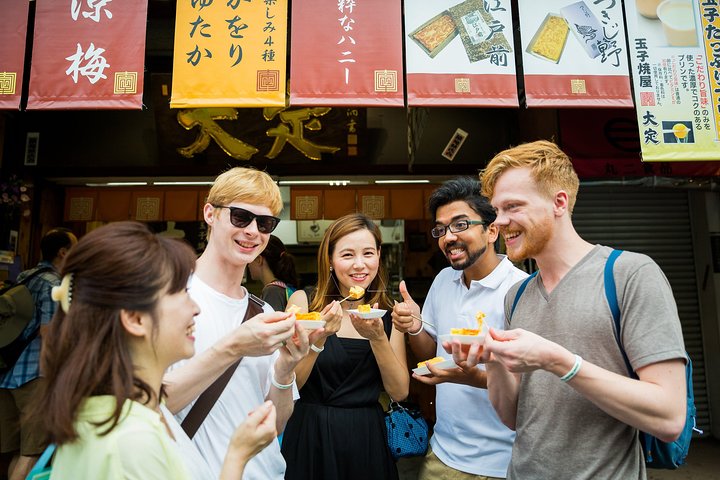
Tokyo Tsukiji Fish Market Food Walking Tour with 5 Tastings
A longer market walk with tastings, effectively breakfast.
4.8(3,685)3 hoursViewFrom$93.63
Tokyo: Imperial Palace and Shogun Historical Walking Tour
Two hours of central historical context, useful on a first morning.
4.9(2,819)2 hoursViewFrom$22.36
Tokyo: Tsukiji Fish Market Food and Walking Tour
A market-district walk combining food stops with the surrounding streets.
4.9(1,928)2 hoursViewFrom$31.94
Explore Tokyo’s History on Foot Asakusa Kappabashi and Ueno
4.8(18)3 hoursViewFrom$41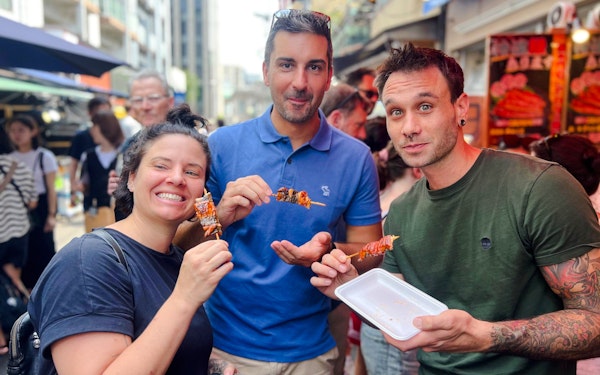
Tokyo Food Tour: Tsukiji Fish Market Walking Tour with Temple Visit
0.0(0)2 hoursViewFrom$31
Tokyo Full Day Sightseeing Private City Tour with English Guide
5.0(10)8 hours - 10 hoursViewFrom$319
Tokyo: Toyosu Tuna Auction and Tsukiji Market Guided Walking Tour
0.0(0)3 hr 30 minViewFrom$125
Asakusa History and Kappa Street (Kappabashi Dogugai) Tour
4.7(12)2 hoursViewFrom$17
Half-Day Takayama Walking Tour with an English Speaking Guide
5.0(1)3 hr 30 minViewFrom$121
Afternoon of day one: stay east. If you want one ticketed thing, a viewpoint on this side of the city is the natural fit and it is quick - which matters when you have forty-eight hours.
Evening of day one: eat near where you are and go to bed earlier than you would at home. Jet lag will make this easy and day two starts properly.
Quick ticketed attractions on the eastern side
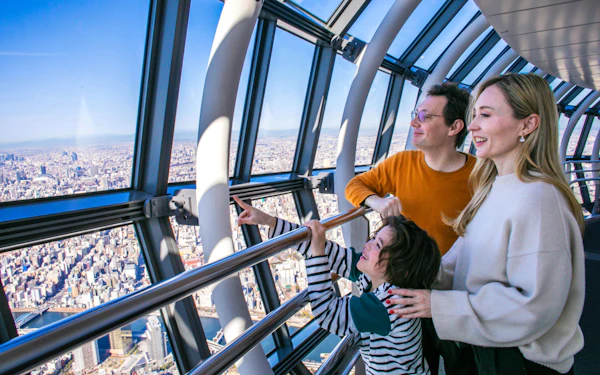
TOKYO SKYTREE Tickets
A fast, high viewpoint - about an hour, which suits a short trip.
4.5(4,924)1 hourViewFrom$13.43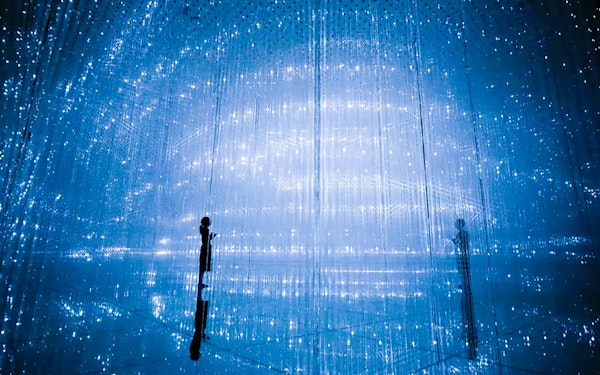
teamLab Planets TOKYO Tickets
A timed-entry immersive art space - book ahead, slots sell out.
4.6(4,224)2 hoursViewFrom$20.78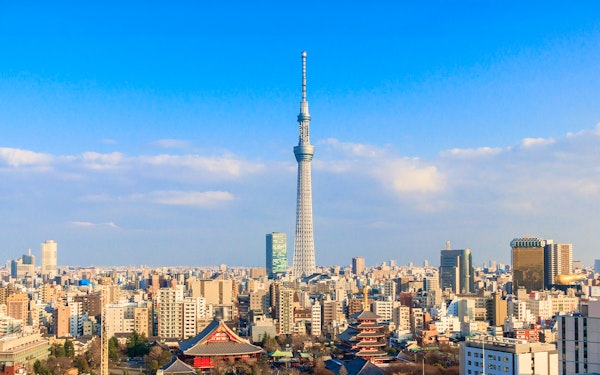
TOKYO SKYTREE Tembo Deck & Tembo Galleria Tickets
The full two-level version of the viewpoint.
4.5(2,748)1 hourViewFrom$19.13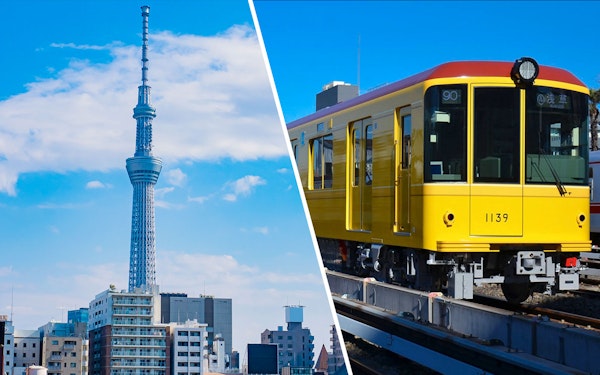
Combo: TOKYO SKYTREE + 1-Day Tokyo Subway Tickets
Viewpoint plus a day of unlimited subway - useful on a two-day trip.
4.5(2,628)ViewFrom$27.28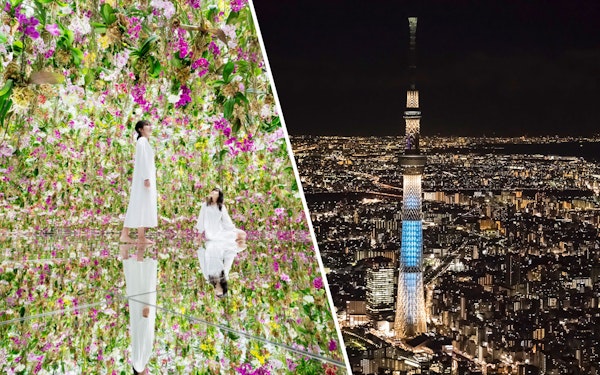
Combo: teamLab Planets Tokyo + Tokyo Observation Decks Tickets
4.6(286)ViewFrom$54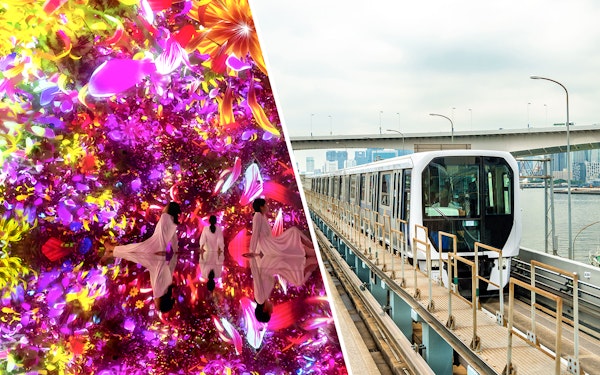
Combo: teamLab Planets TOKYO Tickets + Tokyo Subway Pass
4.6(648)ViewFrom$30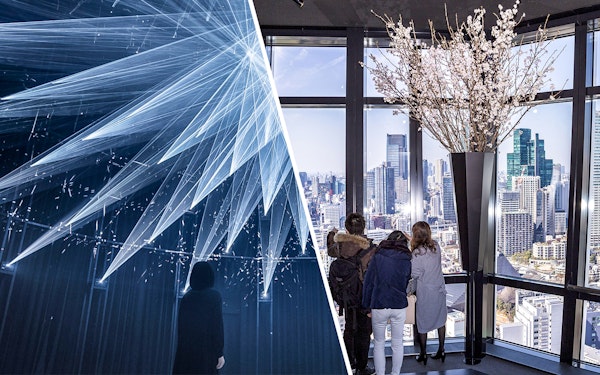
Combo (Save 7.5%): teamLab Planets TOKYO + Tokyo Tower Main Deck Tickets
4.7(364)ViewFrom$32![teamLab Planets Skip-the-Line Tickets [Premium Pass]](https://cdn-imgix.headout.com/media/images/63658f937f475e757a859abbf0d0e820-18403-tokyo-team-lab-planets-tokyo-admission-ticket-05.jpg?w=600&auto=format%2Ccompress&fit=crop&q=75)
teamLab Planets Skip-the-Line Tickets [Premium Pass]
4.8(568)3 daysViewFrom$85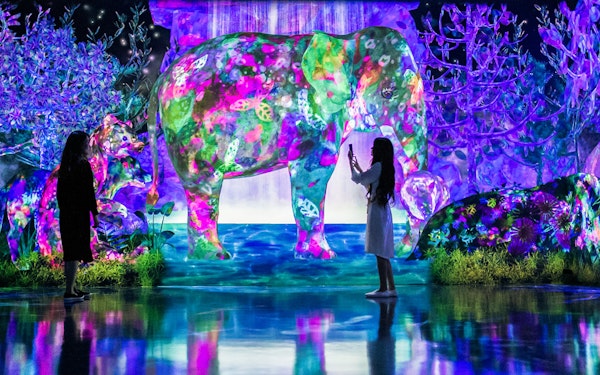
E・ZO FUKUOKA teamLab Forest Tickets
4.6(69)ViewFrom$16
Tickets to Sunshine 60 Observatory Tenbou Park
3.5(2)ViewFrom$5
Day 2: the modern west, ending late
The opposite rhythm. This half of the city is at its best from the afternoon onwards and genuinely spectacular after dark, so there is no reason to rush the morning.
Spend the afternoon walking. The famous crossings and shopping streets are worth seeing, and the backstreets one block off them are worth more. This is a district where wandering pays, and where a lot of what is interesting is above or below street level rather than on it.
Then give the evening to a food or bar tour. On a two-day trip this is the booking to make, for a specific reason: the small-bar and izakaya formats are genuinely hard to attempt cold on a first visit, and going once with a guide is the difference between seeing that side of Tokyo and walking past it.
Evening food and bar tours

Tokyo: Shinjuku Food Tour (13 Dishes at 4 Local Eateries)
Four stops across a dense district - the single best two-day-trip booking.
4.9(8,560)3 hoursViewFrom$79.84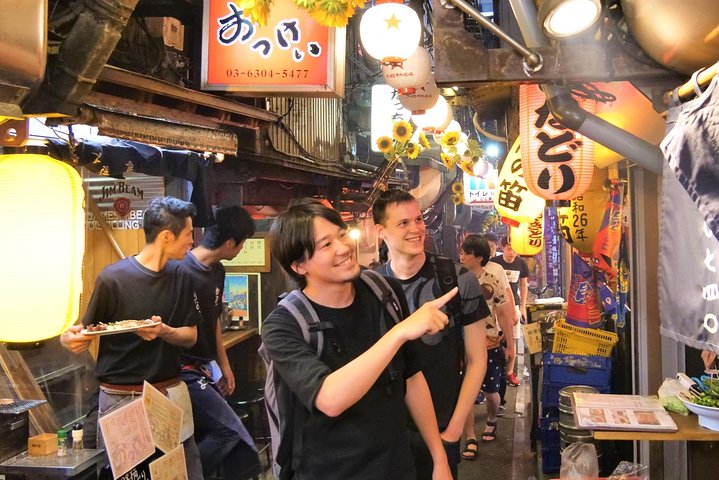
Tokyo Bar Hopping in Shinjuku: Free-Flow, Full Dinner, Golden Gai
A guided evening through the small-bar district, dinner included.
4.9(3,906)3 hoursViewFrom$106.29
Best of Shinjuku: Izakaya Food Tour (3-4 Stops, 14+ Tastings)
An izakaya crawl - the format most worth doing with a guide the first time.
4.9(2,825)3 hours 30 minutesViewFrom$89.37
Tokyo: Shibuya Highlights Walking Tour & Secret View Spot
A short afternoon walk through the district before the evening tour.
4.9(605)1 hour 30 minutesViewFrom$12.78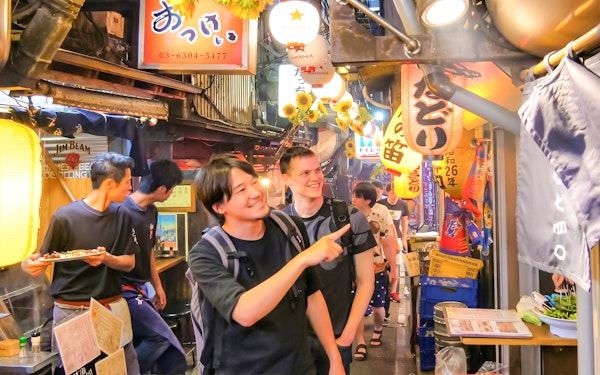
Tokyo: Shinjuku Bar Hopping Tour with All-You-Can-Drink and Dinner
0.0(0)3 hoursViewFrom$106
Shinjuku Tokyo Bar Exploration Tour
5.0(1)3 hoursViewFrom$800
Experience Izakaya With A Mini Food Tour Of Tokyo
5.0(2)3 hoursViewFrom$158
Shinjuku Night Tour Include Drinks and Food with Local Guide
5.0(1)3 hoursViewFrom$98
Tokyo: Shinjuku Golden Gai Bar Hopping that only locals know
5.0(3)2 hoursViewFrom$96
Trackside Eats & Bars by Train from Shinjuku with Ex-JR Conductor
4.9(11)3 hoursViewFrom$116
Choosing your two districts
The itinerary names them by character rather than by name, because the right pair depends on what you want. A short framework.
The historic pick is straightforward: one of the older temple districts, with the surrounding streets of small shops and food stalls. This is the Tokyo of most people's mental image, it is best in the early morning, and skipping it on a first visit would be a strange choice.
The modern pick has more options and they are meaningfully different. One of the big western hubs gives you the crossings, the scale, the neon, and the densest nightlife. A fashion-and-shopping district gives you a younger, more design-led version of the same energy. A waterfront area gives you space and modern architecture rather than crowding. All three read as "modern Tokyo"; which one you want depends on whether you are after intensity, style, or air.
What to avoid pairing: two districts of the same character. Two modern hubs feel repetitive in a way that a modern and a historic district never do, and on two days repetition is expensive.
A note on distance: where you have a choice between two candidates, take the one closer to your accommodation or to the other district you picked. On a forty-eight-hour trip, twenty minutes saved on each journey is a real gain.
Arriving and leaving on the same trip
Two-day Tokyo visits are frequently bookended by long flights or by onward travel, and that shapes the itinerary more than the sightseeing does.
If you land in the morning, you have most of day one. Do not waste it in the hotel waiting for check-in - drop your bags, get the transit card, and start the historic day immediately. You will fade early, which fits the plan.
If you land in the evening, treat that as day zero. Eat near your accommodation and sleep. A two-day trip that begins with a late arrival is realistically a one-and-a-half day trip, and pretending otherwise produces an exhausted first morning.
If you leave in the evening of day two, use left-luggage at a station rather than returning to your hotel. The hour saved is a meaningful share of what is left.
If Tokyo is a stopover in a longer Japan trip, consider luggage forwarding. Sending bags ahead to your next city is inexpensive, widely used, and removes the single most annoying part of moving between places on a short schedule.
The mistakes that cost a two-day trip
Building the plan around attractions. The recurring theme, and the one that matters most. Tokyo's famous individual sights are scattered, and a list-driven itinerary turns into a transit itinerary. Districts first, attractions second.
Booking a day trip anyway. It is tempting because the mountain trips are genuinely excellent and they are heavily marketed. On two days it is simply the wrong purchase.
Not starting early on day one. The single cheapest improvement available, made easy by jet lag, and skipped by most people.
Booking dinner after a food tour. The evening tours are substantial meals. Read the tasting count.
Trying to shop and sightsee in the same afternoon. Tokyo's shopping is genuinely world-class and genuinely time-consuming. On two days, pick one.
Assuming everything takes as long as the map says. Between the size of the stations, the walking within districts, and the sheer number of things worth stopping for, journeys here consistently take longer than planned. Two significant journeys in two days is not laziness, it is realism.
Getting around on a short trip
Two days is short enough that transport friction genuinely matters.
Get a rechargeable transit card immediately. At the airport, on arrival. It works across operators, removes fare calculation entirely, and also pays for convenience-store purchases and vending machines. Do this before anything else.
Skip the rail passes. The nationwide passes exist for intercity travel and will not repay themselves on two days of local journeys. A one-day subway ticket can make sense on a heavy-travel day; the big passes will not.
Budget extra time for the major stations. They are enormous, multi-level, and served by several companies. The first two or three times you use one, allow more time than the journey planner suggests, and note the exit rather than just the station name.
Walk within districts, ride between them. The whole itinerary above involves two significant journeys in two days. That is the correct number.
Insider tip
Use the jet lag rather than fighting it. Coming from Europe or North America you will likely be wide awake at five in the morning and finished by nine at night, for exactly the two days you are here. That is not a problem to solve - it is the reason you can be at a temple district at seven, which is when it is at its best and which no well-rested visitor manages.
What to book, and what not to
Book: one food or small-group evening tour, and one timed-entry attraction if there is something you specifically want to see. The evening tours cap at low numbers and fill weeks ahead; the timed-entry attractions sell out on popular dates.
Do not book: anything for your arrival afternoon, a second guided walk, a day trip, or a restaurant on the same evening as a food tour.
Two bookings across two days feels light. It is the correct density for a city where the travel times are real and the best moments are unplanned.
Eating well in forty-eight hours
Food is a large part of why people come here, and two days is short enough that a little structure helps.
Breakfast is the market, or a convenience store, and both are legitimate. The convenience-store option is genuinely good, cheap, and a small cultural experience in its own right. The market option is better and requires the early start you should be making anyway.
Lunch is where the value is. Many restaurants that are expensive and heavily booked in the evening run a set lunch that is a fraction of the price and requires no reservation. On a two-day trip this is the single best-value meal decision available, and it fits neatly into the middle of a walking day.
Dinner on day one should be near your accommodation. You will be tired and jet-lagged, and a long journey to a highly-rated restaurant is a poor use of the little energy you have left.
Dinner on day two is the food tour. Booked, guided, and covering places you would not otherwise enter.
Do not queue for more than twenty minutes. Tokyo has queues everywhere, some of them for genuinely exceptional food and some for social-media reasons. On two days, no single meal is worth an hour of standing still - there is almost always something excellent within a block.
What two days actually gives you
Worth being honest about, because expectations determine whether a short stop feels rewarding or frustrating.
You will get: a temple district in the early morning quiet, a dense modern neighbourhood after dark, one guided evening that opens up a side of the city you could not have accessed alone, several very good meals, and a working sense of how the rail network and the daily rhythms operate.
You will not get: the famous list, a day trip, more than a glancing sense of how large the city is, or anything approaching completeness.
The trade is worth making because the first list is memorable and the second is not achievable at any trip length. Visitors who come away disappointed from a two-day stop are almost always the ones who measured it against the second list.
And it makes an excellent argument for coming back, which is the outcome most two-day visitors report anyway.
What to skip, deliberately
- Day trips. Covered above. Half your trip, spent elsewhere.
- A third district. Two is the number. A third turns both of the others into stops.
- Multiple viewpoints. They are more similar to each other than the marketing suggests. One is enough, and only on a clear day.
- Any single attraction requiring a long journey. A forty-minute ride each way is nearly a fifth of a two-day trip's usable time.
- A theme park. A full day, and a different holiday.
- Two guided tours. One is orientation or access. Two is being led around a city you came to walk.
If it rains, or if it is very hot
Two days gives you no slack, so the response is to substitute rather than reschedule.
Rain: Tokyo handles it better than almost any large city. The covered shopping streets, the extensive underground concourses connected to major stations, and the sheer density of indoor options mean a wet day here costs you comfort rather than content. Swap an outdoor viewpoint for an indoor attraction and continue.
Heat: invert both days. Outdoors early and late, indoors in the middle. The historic district works before nine; the modern one works after four. The middle of the day belongs to department stores, museums, and long lunches, which is what the city itself does in August.
Storms: in the late-summer window, keep any timed-entry booking flexible if the terms allow.
Compare Tokyo tours, tickets, and food experiences →Two days with children
The two-district structure holds, with the pace halved.
Cut the ticketed content to one thing, and make it something with movement rather than something to look at. Use the trains as entertainment rather than transport - for a certain age they are a highlight in their own right, and a journey adults experience as a transfer can be the best part of a child's day.
Keep the historic morning and shorten it. Keep the modern afternoon and skip the evening tour, which runs late and leans adult. And build in a park or an indoor play space in the middle of each day rather than treating breaks as something that happens when things go wrong.
If your two days become three
The third day changes the trip more than the second one did, and the priority order is clear.
Add a third district rather than a day trip - specifically a residential or creative one, smaller and less obvious than the first two. That is where most visitors say Tokyo clicked for them, and it is the first thing a two-day trip has to cut.
Only at four days does a day trip out of the city become the right call. Below that, the city has more than enough and the travel time is too large a share of the whole.
The short version
Two districts, one day each, walked properly. Two bookings: an evening food tour and one ticketed attraction. Nothing else.
Start day one at dawn while jet lag is on your side, end day two late while the modern city is at its best, and do not get on a train more than you have to. Two days will not show you Tokyo, but done this way it will show you enough to understand why people come back.
Is two days enough for Tokyo?
Two days is enough for two districts done properly, and that is genuinely worthwhile. It is not enough to see Tokyo, and nothing is - the city is too large and too varied. The visitors who enjoy a two-day stop are the ones who accept the constraint and go deep on a small area. The ones who try to cover the famous list spend both days on trains.
What should I do with only two days in Tokyo?
Pick one historic district and one modern one, give a full day to each, and do everything within them on foot. That contrast gives you a real sense of how varied the city is, which is more valuable in two days than a scattered list of individual attractions. Add one guided walk on the first morning if you want the orientation.
What should I book in advance for two days in Tokyo?
One food or small-group walking tour, and one timed-entry attraction if there is something specific you want. That is it. Two or three bookings across two days is plenty, and over-booking is worse here than in most cities because the travel times between districts are substantial.
Should I do a day trip with only two days in Tokyo?
No. A day trip from Tokyo is a full day, and on a two-day visit that means giving half your time to somewhere that is not Tokyo. If the mountains are why you came, that is a reasonable choice - but be clear that you are then having a one-day Tokyo trip. On two days, stay in the city.
How do I get around Tokyo in two days?
Get a rechargeable transit card the moment you arrive and use the trains. The network is superb and covers everything. The thing to plan for is that major stations are enormous and multi-level - allow extra time the first few times, and note the exit name rather than just the station.
Where should I stay for a two-day Tokyo trip?
Near a major interchange station rather than in a specific famous district. On a short trip, shortening every journey matters more than the character of the immediate neighbourhood, and being able to get back easily late at night is worth more than a view.
Is jet lag a problem on a two-day Tokyo trip?
It can be, and on a short stop it is worth planning around rather than fighting. Arriving from Europe or North America you will likely wake very early and fade in the evening for the first couple of days. Use it - the temple districts and markets before eight in the morning are extraordinary and almost empty, and an early start is the single biggest advantage a short trip can have.
What should I skip on a two-day Tokyo trip?
Day trips, a third district, multiple viewpoints, and any attraction that requires a long journey for one item. Two days rewards depth over coverage, and the most common regret is a schedule so full of transit that neither district got walked properly.
Keep reading
Itinerary
3 days in Tokyo: a realistic itinerary
What the third district adds, and why it is the one people remember.
Read more
Itinerary
5 days in Tokyo: how to use a city with no centre
The longer version, with a day trip and an unscheduled day.
Read more
Tokyo pillar
Tokyo travel guide: first-time visitor essentials
Where to stay, how the rail network really works, and what to book ahead.
Read more
Tours
The best walking tours in Tokyo
Which guided walks actually help on a short trip.
Read more
更多阅读
更多指南帮助您规划旅行

5 Days in Tokyo: How to Use a City With No Centre
Five days in Tokyo, organised by district rather than by sight - a day-by-day plan, the day trip worth taking, and why the fifth day should not be booked.

The Best Walking Tours in Tokyo: Which Ones Actually Help
Tokyo is the city where a guide earns their money. A guide to the walking tours worth booking - by neighbourhood, by theme, and by what you need explained.

Tokyo in Summer: How to Enjoy a City That Is Genuinely Hot
Summer in Tokyo is hot, humid, and full of things worth seeing. How to structure days around the heat, what to book, and when the season is actually at its best.

The Best Day Trips from Tokyo: Mt Fuji, Kamakura, Nikko and More
The best day trips from Tokyo ranked by what is worth a full day: Mt Fuji and Hakone, Kamakura, Nikko, Yokohama, and Kawagoe, with the top-rated tours for each.

Tokyo in Winter: Clear Skies, Illuminations, and the Best Fuji Views
Tokyo in winter is the underrated season: crisp clear skies, the year's best Mt Fuji visibility, city-wide illuminations, onsen day trips, and thin crowds.

Things to Do in Tokyo with Kids: A Family Guide That Actually Works
The best things to do in Tokyo with kids: teamLab, the Skytree, a theme park day, animal cafes and parks, plus the transit and hotel logistics that matter.

The Best Time to Visit Tokyo: A Month-by-Month Guide
The best time to visit Tokyo, month by month: the real trade-offs between weather, crowds, and prices, plus the two sweet-spot windows for cherry blossom and autumn colour.

Kamakura Day Trip from Tokyo: The Great Buddha and Beyond
Plan a Kamakura day trip from Tokyo: the Great Buddha and temples, Kamakura plus Enoshima combos, guided walks vs the train on your own, and the top-rated tours.