ParisItineraryFranceEiffel TowerLouvre
2 Days in Paris: The Perfect Weekend Itinerary
A 2-day Paris itinerary that flows: the Eiffel Tower and Champs-Elysees on day one, the Louvre and Montmartre on day two, with the tours travelers rate highest.
Av SimilarTours Editorial · Travel Research · · 17 min lesing

Two days in Paris sounds tight, and it is, but it is enough to see the city that lives on the postcards without feeling like you sprinted through it. The trick is the same one that works in any dense capital: cluster by area, give each day a shape, and book the two sights that sell out before you land. This 2 days in Paris itinerary does exactly that, built for a first visit, with the Eiffel Tower and the grand avenues on day one and the Louvre and Montmartre on day two, tied together by an evening on the Seine.
The plan below keeps each day in one part of the city so you spend your hours seeing Paris rather than riding the Metro across it. Every tour referenced is currently bookable through our partner OTAs and ranked on real ratings and review counts, verified July 2026.
Browse all Paris tours and experiences →Before you go
Where to stay. For a first visit, stay central so the icons are within walking distance. The Marais (3rd and 4th) is atmospheric and superbly connected; Saint-Germain and the Latin Quarter (5th, 6th, and 7th) put you by the river and a short walk from the Louvre; the streets around the Eiffel Tower (7th) are quieter and scenic. Wherever you land, prioritize being close to a Metro line, because that is what saves time over two short days.
How to get around. The Metro is fast, cheap, and reaches everywhere on this itinerary. Buy a carnet of tickets or a rechargeable Navigo pass and tap through the gates. Central Paris is also genuinely walkable, and much of each day here links on foot; save the Metro for the longer hops, such as crossing from the Eiffel Tower side to Montmartre on day two.
What to book ahead. This is the part that makes or breaks a two-day trip. The Eiffel Tower summit and the Louvre both sell out their online slots days in advance in peak season, and the walk-up queues can eat hours you cannot spare. Reserve a timed-entry ticket or a guided tour with reserved access for both before you arrive. The Seine cruise and the shorter walking experiences you can usually book a day or two out.
Pace it. Two days of icon-hopping adds up to a lot of walking, often well past 15,000 steps a day. Build one proper sit-down meal into each day rather than grazing on the move, wear shoes you have already broken in, and do not schedule a booked experience for every slot. Paris rewards an hour of unplanned wandering along the river or through a side street as much as anything on the ticket.
Day 1: The Eiffel Tower and the grand avenues
Start with the sight everyone comes for. Day one runs along the western spine of the city: the Eiffel Tower and its viewpoint at Trocadero in the morning, the Champs-Elysees up to the Arc de Triomphe in the afternoon, and the river after dark. It is the most photogenic day of the trip and the one to lead with while your legs are fresh.
Morning: the Eiffel Tower and Trocadero
Cross to the Trocadero side first for the classic head-on view of the tower, then walk down and across the river to the base. The single most important booking of your trip is your Eiffel Tower slot: a reserved-access ticket or a guided climb skips the main queue and locks in a time, which matters enormously when you only have two days. The tours below are the highest-rated and most-reviewed access options in the catalog, best first.
Top Eiffel Tower access and summit tours

Eiffel Tower Guided Tour by Stairs with Optional Summit by Lift
A guided climb by the stairs with an optional summit by lift - the highest-volume Eiffel access tour in the catalog and a strong first-morning anchor.
4.8(4,669)2 hoursViewFrom$51- viator
Eiffel Tower Dedicated Reserved Access Top or 2nd floor by lift
Reserved lift access to the top or second floor - the value pick if you want the fast entry without a guide, and cheap enough to leave budget for the rest of the day.
4.7(3,220)1.5 hoursViewFrom$29 
Eiffel Tower Climbing Tour with Optional Summit with Elevator
A guided climb with an optional summit by elevator - highly rated and a good middle option between the stairs tour and the plain reserved ticket.
4.7(2,049)2 hoursViewFrom$52
Eiffel Tower Climbing Stairs Experience & Optional Summit Upgrade
The stairs experience with a summit upgrade option - a longer window and a good pick if you want the climb as part of the experience rather than just the view.
4.5(3,020)3 hoursViewFrom$51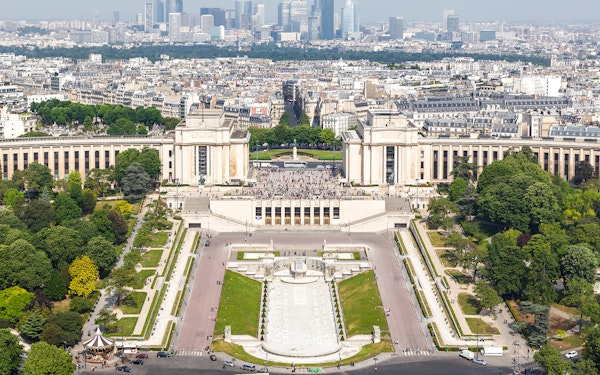
Eiffel Tower Dedicated Reserved Summit Access by Elevator
4.4(10,182)1 hourViewFrom$65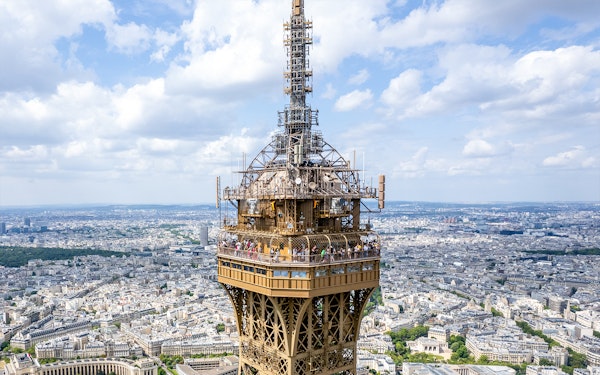
Eiffel Tower Ticket: Summit with Host + Audioguide
5.0(1)ViewFrom$87
Eiffel Tower Guided Tour by Elevator: Reserved Entry to the Summit or Second Floor
4.4(21,426)1 hourViewFrom$42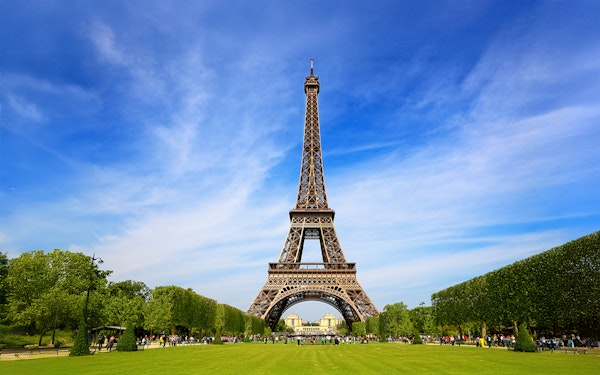
Eiffel Tower Guided Climb by Stairs
4.2(7,255)2 hoursViewFrom$48
Illumination Tour of Paris and Eiffel Tower 2nd Floor (Reserved Access)
0.0(0)3 hoursViewFrom$83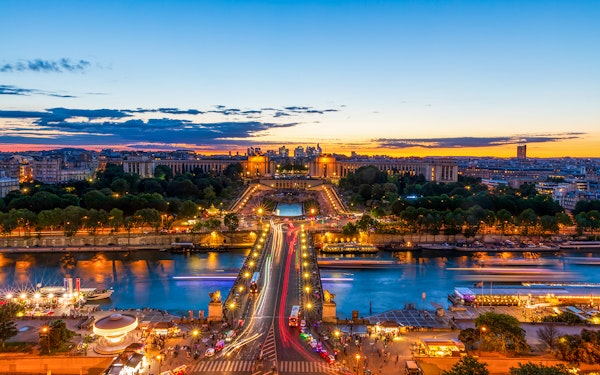
Paris Evening Sightseeing Tour with Eiffel Tower Summit Tickets
3.4(9)3 hoursViewFrom$97
Insider tip
Book the tower first. Everything else on day one flexes around your Eiffel Tower slot, so lock that in before anything else and build the morning around it. A mid-morning slot gives you the head-on Trocadero view in good light beforehand and leaves the afternoon clear for the avenues. In peak season these times go days ahead, so treat the tower booking as the first thing you sort, not the last.
Afternoon: the Champs-Elysees and the Arc de Triomphe
From the tower, work northeast toward the Champs-Elysees, the broad avenue that runs up to the Arc de Triomphe at the top. It is a walk best done slowly, with a stop for coffee or a late lunch along the way; the avenue is as much about the parade of the city as any single monument. The Arc anchors the far end, and the view back down the avenue from its base is one of the great Paris sightlines. This stretch needs no ticket, which is part of why it pairs well with a booked morning at the tower.
Browse all Paris skip-the-line tickets →Evening: a Seine river cruise
End day one on the water. A Seine cruise gives you the riverside landmarks, the tower among them, from the middle of the river in about an hour, and it is at its best in the evening once the bridges and monuments light up. It is also a welcome sit-down after a day on your feet. The range runs from short sightseeing loops to full lunch and dinner cruises, so pick the one that matches how you want to spend the evening; the options below are the highest-rated across that spread, best first.
Top Seine river cruises in Paris

Bateaux Parisiens Seine River Gourmet Lunch & Sightseeing Cruise
A gourmet lunch and sightseeing cruise - the highest-rated of the meal cruises and a good midday alternative if you would rather do the river by day.
4.7(2,832)2 hoursViewFrom$97
Bateaux Mouches® Dinner Cruise on the Seine River in Paris
A classic evening dinner cruise past the lit-up landmarks - a heavily reviewed way to end day one on the water with a meal built in.
4.4(5,048)3 hoursViewFrom$144
Bateaux Parisiens Seine River Gourmet Dinner & Sightseeing Cruise
The most-reviewed dinner cruise in the catalog - a gourmet meal and sightseeing along the river after dark, the full evening in one booking.
4.4(7,261)2.5 hoursViewFrom$145
Paris Seine River Hop-On Hop-Off Sightseeing Cruise by Batobus
A hop-on hop-off river shuttle rather than a set cruise - the budget way to see the river and a handy way to reach the riverside sights across both days.
4.0(3,518)2 hoursViewFrom$27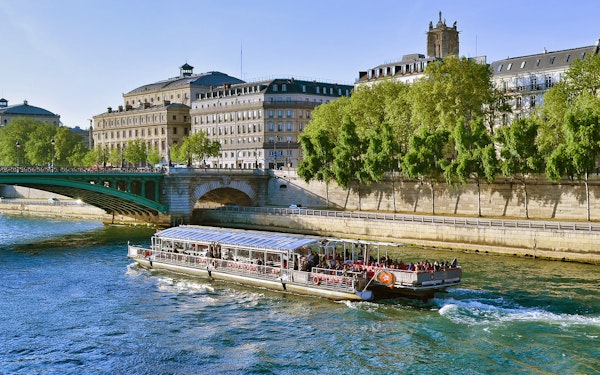
Seine River Cruise and Paris City Tour Combo
3.5(570)3 hoursViewFrom$45
Seine River Cruise with Champagne from Notre-Dame
4.5(10)1 hourViewFrom$45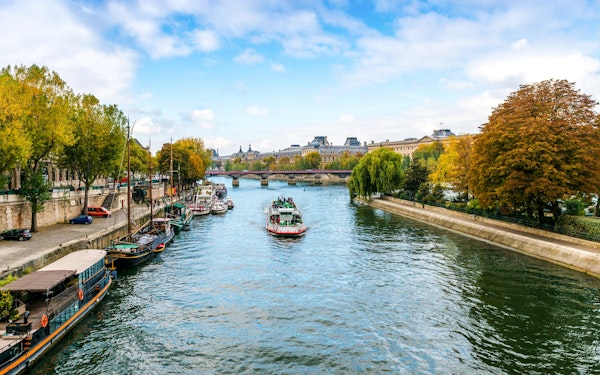
Bateaux Mouches® Seine River 1-Hour Sightseeing Cruise with Live Commentary
4.4(4,563)1 hr 10 minViewFrom$20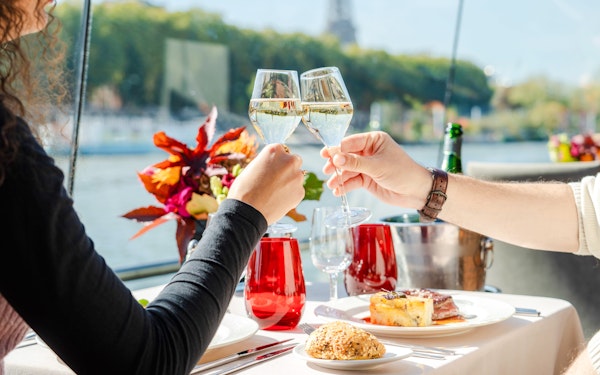
Bateaux Mouches® Seine River Lunch Cruise with Live Music
5.0(1)2 hoursViewFrom$104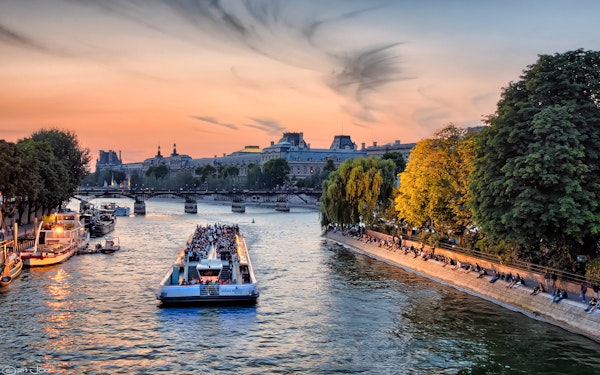
Seine River Cruise from Pont de l'Alma with Sparkling Champagne
4.5(2,084)1 hr 10 minViewFrom$70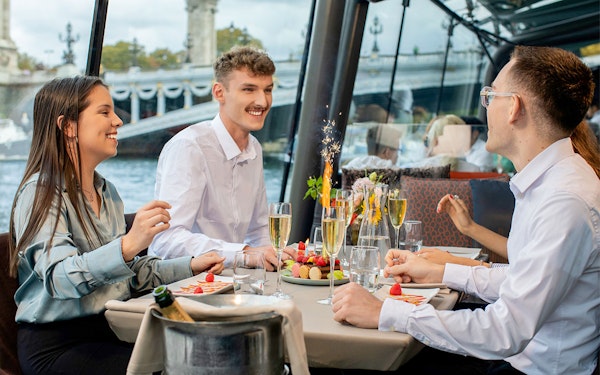
Bateaux Parisiens Seine River Lunch Cruise with French Menu
4.6(4,389)2 hoursViewFrom$92
Day 2: The Louvre, the islands, and Montmartre
Day two swings to the heart of the city and then up to the hill. The Louvre in the morning, the river islands and Notre-Dame from the outside around midday, and Montmartre in the afternoon and evening. It is a day that moves from the grandest museum in the city to its most village-like quarter, which makes for a satisfying arc.
Morning: the Louvre
The Louvre is enormous, and the classic first-timer mistake is trying to see all of it. On a two-day trip, two to three hours focused on a route through the headline works is the rewarding version, and a guided tour is the most efficient way to do it: a guide walks you straight to the highlights and back out, which suits a packed itinerary far better than wandering the wings alone. Book a reserved-access slot or a guided tour ahead, as this is the other sight that sells out. The tours below lead the catalog on rating and review volume, best first.
Top Louvre Museum guided tours

Louvre Museum Premium Guided Tour 6 GUESTS MAX Entry Included
A small-group premium tour capped at six guests with entry included - very high ratings across a large review base, the pick if you want the headline works without the crowd.
5.0(6,842)2.5 hoursViewFrom$73
Louvre Museum Essential Guided Tour Semi Private 6 GUESTS MAX
A semi-private essential tour, six guests max - one of the highest-rated Louvre tours in the catalog and a focused route through the must-sees.
5.0(4,040)2.5 hoursViewFrom$73
Louvre Highlights & Mona Lisa Guided Tour with Reserved Access
A highlights tour with reserved access and the Mona Lisa - a shorter, lower-priced option that still skips the main queue and hits the headline route.
4.7(1,297)2 hoursViewFrom$58
Louvre Museum Masterpieces Guided Tour with Access
The most-reviewed Louvre tour in the catalog by a wide margin - a masterpieces route with access included, the high-volume default if you want the well-trodden option.
4.5(12,846)2.5 hoursViewFrom$75
Louvre Museum Guided Tour with Artist
5.0(98)2 hoursViewFrom$224
Paris Louvre Essentials Tour (Reserved Entry Included)
5.0(29)2 hr 30 minViewFrom$164
Louvre Exclusive Tour – Private Guide & Hotel Pickup in Paris
5.0(19)2 hr 30 minViewFrom$378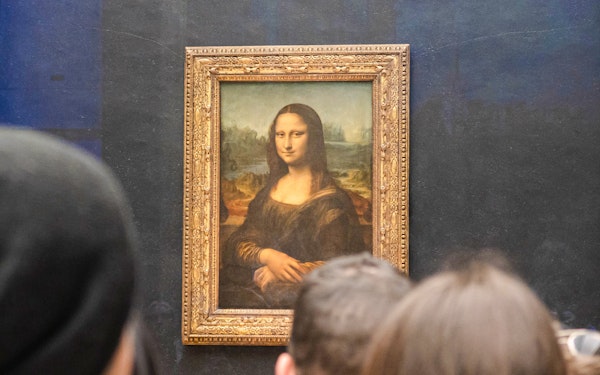
Louvre Museum Skip-the-Line Small-Group Guided Tour
4.5(2,577)2 hoursViewFrom$63
The Essential Louvre Masterpieces Tour - Limited to Six Guests
5.0(209)2 hr 30 minViewFrom$210
Louvre Museum Private 2-h Tour on Italian Art and masterpieces
5.0(52)2 hoursViewFrom$199
Midday: the Ile de la Cite and Notre-Dame
From the Louvre it is a short walk to the river islands at the center of the city. The Ile de la Cite holds Notre-Dame, and even seen from the outside the cathedral and the square in front of it are worth the detour, with the flower market and the quieter Ile Saint-Louis a bridge away for a slower lunch stop. This is the oldest core of Paris, and it is the natural bridge between the museum morning and the climb up to Montmartre later. Take it on foot and let the riverbank set the pace.
Afternoon and evening: Montmartre
Ride the Metro up to Montmartre for the final stretch. The hilltop quarter has a different register from the grand center: steep lanes, artists' squares, the white domes of the basilica at the top, and one of the best free views back over the whole city from the terrace out front. It is the right place to end two days, unhurried, with a coffee or a glass of something as the light goes, and it rewards wandering more than any booked experience. A guided walk can add the context if you want it, but the neighborhood is made for drifting.
Browse all Paris walking tours →If you have an extra day: day trips from Paris
Two days is tight for the city, so most first-timers keep both days in Paris and save the palaces and gardens for a return trip. But if your trip stretches to a third day, the two classic escapes are within easy reach. Versailles, the vast palace and its formal gardens, is the most popular day trip and the obvious first choice for its sheer scale. Giverny, the gardens that inspired a famous series of paintings, is the gentler, greener alternative and pairs beautifully with late spring or summer. Either one fills a full day, which is exactly why they do not fit inside a two-day plan without displacing the city itself.
Compare Paris day trips side by side →Practical tips
Book the Eiffel Tower and the Louvre first. These are the two sights with capped, sell-out availability; lock both slots in before you arrive, then build the free walking stretches around them.
Wear broken-in shoes. Two days of icon-hopping is a lot of walking on hard pavement, and the Montmartre lanes are steep and cobbled.
Carry a little cash. Paris is very card-friendly, but small cafes, market stalls, and some bakeries still prefer coins and notes for small purchases.
Watch your bag in crowds. The busy tourist stretches, the tower base, the Metro, the top of the Champs-Elysees, are where pickpockets work; a zipped, front-facing bag removes most of the risk.
Time the cruise for the evening. The Seine looks its best after dark when the bridges and monuments are lit, so if you can only do one cruise, put it on the first evening.
Your 2-day Paris itinerary at a glance
| Day | Time | Where | Anchor |
|---|---|---|---|
| 1 | Morning | Eiffel Tower & Trocadero | Reserved-access or guided tower climb |
| 1 | Afternoon | Champs-Elysees & Arc de Triomphe | On foot, no ticket |
| 1 | Evening | The Seine | Evening river cruise |
| 2 | Morning | The Louvre | Guided highlights tour, 2-3 hours |
| 2 | Midday | Ile de la Cite & Notre-Dame | On foot, exterior |
| 2 | Afternoon | Montmartre | Wander, basilica terrace view |
The through-line across both days is the one this itinerary is built on: cluster by area, give each day a shape, book the two big sights ahead, and leave room to wander. Do that and two days in Paris feels complete rather than rushed, with a clear shortlist of reasons to come back.
Plan your trip
See all Paris tours and experiences →Is 2 days enough for Paris?
Two days is enough to see the headline Paris in a way that feels complete rather than rushed, as long as you cluster by area and book the big-ticket sights ahead. One day around the Eiffel Tower and the Champs-Elysees, one around the Louvre and Montmartre, covers the icons with an evening Seine cruise to tie it together. You will not exhaust the city in two days, but you will get a genuine feel for it and a clear shortlist for a return trip.
What should I see in Paris in 2 days?
The efficient version is the Eiffel Tower, the Trocadero viewpoint, and the Champs-Elysees up to the Arc de Triomphe on day one, then the Louvre, the Ile de la Cite and Notre-Dame from the outside, and Montmartre on day two. A Seine river cruise on the first evening threads the riverside landmarks together after dark. That sequence keeps each day in one part of the city rather than crisscrossing the map.
How do you get around Paris as a tourist?
The Metro is fast, cheap, and covers everywhere you will want to go. Buy a carnet of tickets or a rechargeable Navigo pass and tap through the gates; a single ticket covers one journey with connections. Central Paris is also very walkable, and much of this itinerary links on foot. Save the Metro for the longer hops, such as crossing from the Eiffel Tower side to Montmartre.
Do you need to book the Eiffel Tower and Louvre in advance?
Yes, both. The Eiffel Tower summit and the Louvre routinely sell out their online slots days ahead in peak season, and the walk-up queues can swallow hours you do not have on a two-day trip. Booking a timed-entry ticket or a guided tour with reserved access locks in your slot and skips the main ticket line. This is the single most important thing to sort before you arrive.
How much time do you need at the Louvre?
The Louvre is vast, and trying to see all of it is the classic first-timer mistake. On a two-day trip, two to three hours is realistic and rewarding if you focus on a route through the headline works rather than every wing. A guided tour is the most efficient way to do this: a guide walks you straight to the highlights and out again, which suits a packed itinerary far better than wandering.
Is a Seine river cruise worth it?
For a first visit, yes. A Seine cruise gives you the riverside landmarks from the water in about an hour, which is a restful counterpoint to a day on your feet, and it is especially good in the evening when the bridges and monuments are lit. There is a wide range, from short sightseeing loops to lunch and dinner cruises, so you can match it to your budget and how you want to spend the evening.
What is the best area to stay in Paris for first-timers?
For a first visit, the central arrondissements put you within walking distance of the icons. The Marais (3rd and 4th) is atmospheric and well connected; Saint-Germain and the Latin Quarter (5th, 6th, 7th) sit near the river and the Louvre; the area around the Eiffel Tower (7th) is quieter and scenic. Wherever you land, prioritize being close to a Metro line, because that is what saves time over two short days.
Should I do a day trip on a 2-day Paris trip?
Generally no. Two days is tight for the city itself, and a day trip to Versailles or Giverny eats one of them. If seeing Versailles matters more to you than a full second day in Paris, you can swap it in, but most first-timers keep both days in the city and save the palaces and gardens for a third day or a return visit. If you do add one, Versailles is the classic choice for its scale and proximity.
When is the best time to visit Paris?
Late spring (April to June) and early autumn (September to October) are the sweet spots, with mild weather and long daylight without the deep summer crowds. July and August are hot and busy, and some local businesses close for the holidays, though the major sights stay open. Winter is quieter and often atmospheric, with shorter days to plan around. Whatever the season, book the Eiffel Tower and Louvre ahead.
How much should I budget for tours in Paris?
Paris spans a wide range. Reserved-access Eiffel Tower tickets and short Seine sightseeing cruises start low, often in the $20 to $50 band, while guided Louvre tours and lunch or dinner cruises run higher. A reasonable plan for two days is one anchor experience per major sight, the Eiffel Tower, the Louvre, and an evening cruise, which keeps the itinerary structured without overspending on things you can do on foot for free.
Keep reading
Mer lesing
Flere guider for å hjelpe deg med reiseplanlegging

1 Day in Paris: The Itinerary That Fits, and the One That Does Not
One day in Paris, planned around real distances - what to book, what to walk, what to skip, and why three museums in a day is the classic mistake.

The Best Food Tours in Paris: Which Ones Are Worth the Money
Paris food tours are expensive and the good ones are excellent. How to tell them apart - by neighbourhood, by format, and by what you actually want to learn.

Arc de Triomphe Tickets in 2026: Rooftop Access, Combos and How to Skip the Line
A 2026 guide to Arc de Triomphe tickets - rooftop terrace timed entry, skip-the-line, Paris viewpoint and cruise combos, and guided Champs-Elysees walks.

Musee d'Orsay Tickets in 2026: Types, Skip-the-Line and Combos Compared
A 2026 guide to Musee d'Orsay tickets - timed entry, skip-the-line, guided highlights tours, Louvre and Orangerie combos and pass options compared.

5 Days in Paris: The Perfect Itinerary at a Relaxed Pace
A 5-day Paris itinerary at a human pace: the icons, Montmartre and Le Marais, a full day at Versailles, and the tours travelers rate highest for each day.

The Best Walking Tours in Paris: Highlights, Montmartre, Food and More
Every kind of walking tour of Paris compared: classic highlights, Montmartre, food walks, Le Marais, and night walks, ranked on real ratings and reviews.

Christmas Markets in Paris: The Best Festive Spots and Tours
The best Christmas markets in Paris, from the Tuileries to La Défense, plus when the season runs, how to plan around crowds, and the top festive experiences.

Summer in Paris: What to Expect and What to Book
What summer in Paris is really like - long evenings, heat waves, August closures, and the Seine cruises, Eiffel Tower visits, and day trips worth booking.