ParisItineraryFranceVersaillesMontmartre
5 Days in Paris: The Perfect Itinerary at a Relaxed Pace
A 5-day Paris itinerary at a human pace: the icons, Montmartre and Le Marais, a full day at Versailles, and the tours travelers rate highest for each day.
By SimilarTours Editorial · Travel Research · · 23 min read

Most Paris itineraries are written for people in a hurry. 5 days in Paris is the trip where you finally get to slow down: the icons still fit comfortably, but so do the things shorter visits amputate first, a whole unhurried day in Montmartre, a full day at Versailles instead of a squeezed half, an afternoon lost to the Luxembourg Gardens with nothing booked at all. This five days in Paris itinerary is built around that pace.
The structure is simple: each day owns one part of the city, mornings carry the booked anchor, and afternoons and evenings stay loose. Days one and two cover the Eiffel Tower and the Louvre, day three belongs to Montmartre, day four goes to Versailles, and day five closes with Le Marais and the Left Bank, with Giverny as the optional swap. Every tour referenced is currently bookable through our partner OTAs and ranked on real ratings and review counts, verified July 2026.
Browse all Paris tours and experiences →Before you go
Where to stay. With five nights, pick one central base and keep it. The Marais puts cafes and boutiques outside the door; Saint-Germain and the Latin Quarter give you the river and the gardens; the 7th near the Eiffel Tower is quieter and scenic. What matters most is a nearby Metro line with easy reach of the Louvre area and Montmartre, because those are the two poles this itinerary swings between.
How to get around. Walk within neighborhoods, Metro between them. A rechargeable Navigo pass or a carnet of tickets covers everything, including the RER commuter line out to Versailles on day four. This itinerary is clustered specifically so that most days need one or two train hops and no more.
What to book ahead. Four bookings make or break the trip: the Eiffel Tower, the Louvre, Versailles, and any evening cruise you care about. All four sell out their good slots days ahead in season. Everything else, walking tours, food tours, day-trip seats, can usually wait until a day or two out.
Pace it. The whole point of five days is that you do not have to sprint. One anchor per day, long lunches, and at least one afternoon with nothing planned will give you a better trip than a checklist twice as long. Build in the wandering; it is where Paris actually happens.
Day 1: The Eiffel Tower, Trocadero, and the Seine
Start with the icon. Day one runs along the river's western stretch: the head-on tower view from Trocadero in the morning, the tower itself before lunch, the Champ de Mars and the surrounding 7th in the afternoon, and the Seine after dark. It is the gentlest day of the five and the right way to land in the city.
Morning: Trocadero and the Eiffel Tower
Cross to the Trocadero terrace first for the classic view, then walk down and over the river to the tower. Your timed slot here is the trip's first fixed point, so book it before you fly: a reserved-access ticket or a guided visit skips the main queue, and the stairs option turns the visit into a small adventure if your knees are willing.
Top Eiffel Tower access and tours

Eiffel Tower Guided Tour by Stairs with Optional Summit by Lift
A guided climb by the stairs with an optional summit by lift - the highest-volume of the top-rated Eiffel access tours and a memorable way up.
4.8(4,730)2 hoursViewFrom$51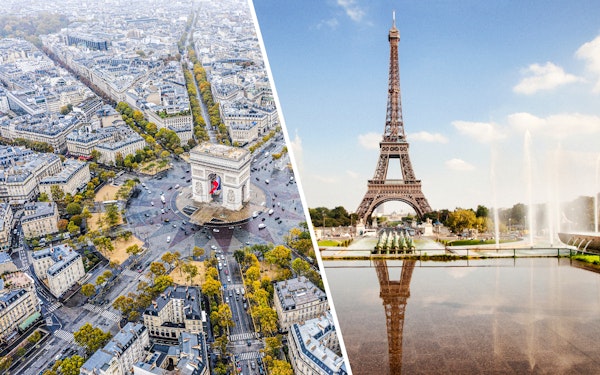
Combo: Arc de Triomphe with Rooftop Access & Eiffel Tower Guided Tour by Elevator
A combo pairing the Eiffel Tower guided visit with Arc de Triomphe rooftop access - strong value that also sets up a second viewpoint later in the trip.
4.4(26,529)ViewFrom$42
Eiffel Tower Climbing Tour with Optional Summit with Elevator
A guided climbing tour with an optional elevator to the summit - a well-reviewed middle path between the stairs experience and the plain ticket.
4.6(2,055)2 hoursViewFrom$52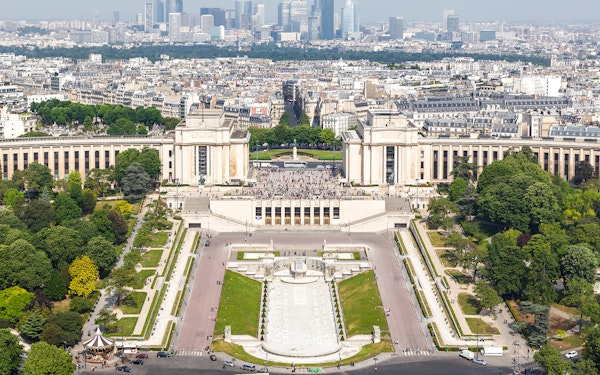
Eiffel Tower Dedicated Reserved Summit Access by Elevator
4.4(10,182)1 hourViewFrom$65
Eiffel Tower Ticket: Summit with Host + Audioguide
5.0(1)ViewFrom$87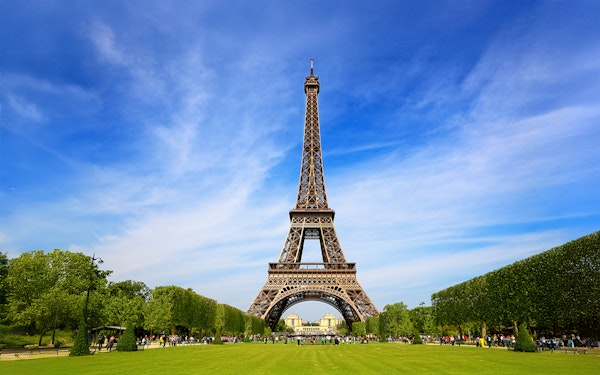
Eiffel Tower Guided Climb by Stairs
4.2(7,255)2 hoursViewFrom$48
Eiffel Tower Guided Tour by Elevator: Reserved Entry to the Summit or Second Floor
4.4(21,426)1 hourViewFrom$42
Illumination Tour of Paris and Eiffel Tower 2nd Floor (Reserved Access)
5.0(1)3 hoursViewFrom$95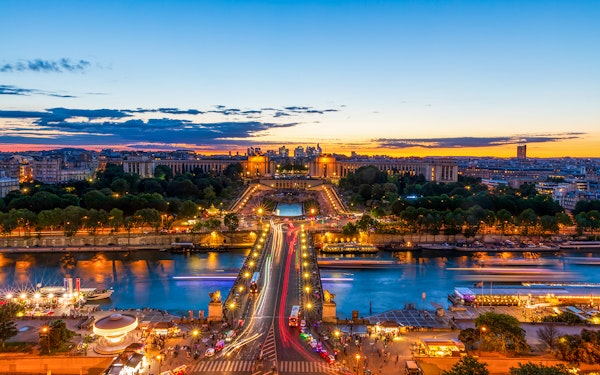
Paris Evening Sightseeing Tour with Eiffel Tower Summit Tickets
3.4(9)3 hoursViewFrom$112
Afternoon: the Champ de Mars and the 7th
After the tower, resist the urge to rush somewhere else. The lawns of the Champ de Mars are made for a long picnic lunch, and the surrounding 7th arrondissement, the market street of Rue Cler, the gilded dome of Les Invalides a short walk east, is one of the most pleasant aimless-wandering quarters in the city. On a two-day trip this afternoon gets sacrificed; on five days it is exactly the kind of slack that makes the trip feel like a holiday.
Evening: the Seine after dark
End the first day on the water. An evening cruise puts the riverside landmarks, the tower included, on parade while you sit down for the first time all day, and the after-dark version is the one worth planning around, when the bridges and monuments are lit. Options run from one-hour sightseeing loops to full dinner cruises; on a five-day trip the simple evening loop tonight leaves room for a farewell dinner cruise on day five if the trip earns one.
Insider tip
Book the big four before you fly. The Eiffel Tower, the Louvre, Versailles, and any specific-date dinner cruise are the four bookings that sell out. Lock them to days one, two, four, and five respectively and the whole itinerary snaps into place around them, with every afternoon left flexible. Everything else on this plan can be booked in Paris a day or two ahead.
Day 2: The Louvre, the islands, and the Latin Quarter
Day two is the classic heart of the city: the Louvre in the morning, the river islands at midday, and the Latin Quarter for the afternoon and evening. It is the most sight-dense day of the five, which is why it comes early while energy is high.
Morning: the Louvre
The Louvre rewards a plan and punishes wandering. Two to three focused hours on the headline works is the version that leaves you elated rather than flattened, and a guided tour is the efficient way to get it: straight to the essentials, context along the way, and out before fatigue sets in. Book a morning slot ahead; this is the trip's second sell-out sight.
Top Louvre Museum tours and tickets

Louvre Museum Premium Guided Tour 6 GUESTS MAX Entry Included
A premium small-group tour capped at six with entry included - near-perfect ratings across a huge review base, the pick for doing the Louvre properly.
5.0(6,850)2.5 hoursViewFrom$73
Louvre Museum Essential Guided Tour Semi Private 6 GUESTS MAX
The essential route in a semi-private group of six - one of the highest-rated Louvre tours in the catalog for a focused morning.
5.0(4,046)2.5 hoursViewFrom$73
Louvre Museum Masterpieces Guided Tour with Access
The most-reviewed Louvre tour in the catalog by a wide margin - the masterpieces route with access included, the high-volume default.
4.5(12,868)2.5 hoursViewFrom$75
Louvre Museum Guided Tour with Artist
5.0(102)2 hoursViewFrom$231
Paris Louvre Essentials Tour (Reserved Entry Included)
5.0(36)2 hr 30 minViewFrom$166
Louvre Exclusive Tour – Private Guide & Hotel Pickup in Paris
5.0(24)2 hr 30 minViewFrom$372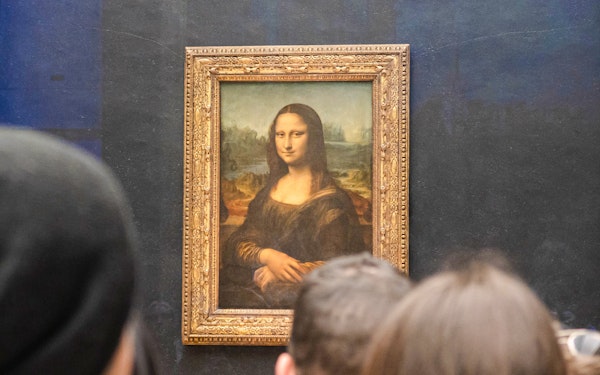
Louvre Museum Small-Group Guided Tour
4.5(2,629)2 hoursViewFrom$71
The Essential Louvre Masterpieces Tour - Limited to Six Guests
5.0(223)2 hr 30 minViewFrom$212
Louvre Museum Private 2-h Tour on Italian Art and masterpieces
5.0(52)2 hoursViewFrom$200
Midday: the Ile de la Cite and Ile Saint-Louis
From the Louvre, walk east along the river to the two islands at the city's core. The Ile de la Cite carries Notre-Dame and the flower market; the smaller Ile Saint-Louis, one bridge over, is the quieter island of narrow streets, ice cream shops, and riverbank steps made for a slow lunch. This is the oldest Paris, and crossing it on foot is the point.
Afternoon and evening: the Latin Quarter
Cross to the Left Bank and give the rest of the day to the Latin Quarter: the student streets around the Sorbonne, the booksellers' boxes along the river, the Pantheon's dome above it all, and cafe terraces that reward sitting still. Dinner here or in neighboring Saint-Germain closes the day without a single additional ticket. On five days you can let an evening be just an evening.
Day 3: Montmartre, slowly, with a food tour
Shorter itineraries give Montmartre two rushed hours at the end of a packed day. The five-day version gives the hilltop village what it actually deserves: a whole day, taken slowly, with food at the center of it.
Morning: the butte and the basilica
Take the Metro north and start with the climb, or the funicular, up to the white domes of Sacre-Coeur, where the terrace serves the best free view over the whole city. Then let the morning dissolve into the lanes: the artists' square of Place du Tertre, the vineyard tucked behind the hill, the staircases and squares that made the neighborhood famous. Montmartre rewards drifting more than any district in Paris, and today drifting is the plan.
Afternoon: a Montmartre food and walking tour
The best way to go deeper than the postcard lanes is to eat your way through them. Montmartre's food tours, cheese, bread, wine, chocolate, and the neighborhood's stories between tastings, are among the highest-rated experiences in the entire Paris catalog, and a mid-afternoon tour doubles as a very long, very good lunch.
Top Montmartre walking and food tours

Paris Montmartre Walking Tour Best Art Culture and Food
The most-reviewed Montmartre walk in the catalog - art, culture, and food in ninety minutes, the efficient way into the neighborhood's stories.
4.8(2,818)1.5 hoursViewFrom$37
Paris Montmartre Guided Food Tour: A Full Meal by Do Eat Better
A guided food tour that adds up to a full meal - one of the highest-rated food experiences in Paris across a big review base.
4.9(1,348)3.5 hoursViewFrom$104
Montmartre Hill French Gourmet Food and Wine Tasting Walking Tour
A gourmet food and wine tasting walk up the hill - the heavyweight tasting option with thousands of reviews behind it.
4.8(2,703)3.5 hoursViewFrom$140
Paris Montmartre Walking Tour: Hidden Gems, Views & Croissant
A two-hour walk through the quieter corners with a croissant stop built in - the value pick for a lighter Montmartre afternoon.
4.8(934)2 hoursViewFrom$41
The food, wine & tragedies tour of Montmartre
5.0(18)2 hr 40 min - 3 hr 10 minViewFrom$105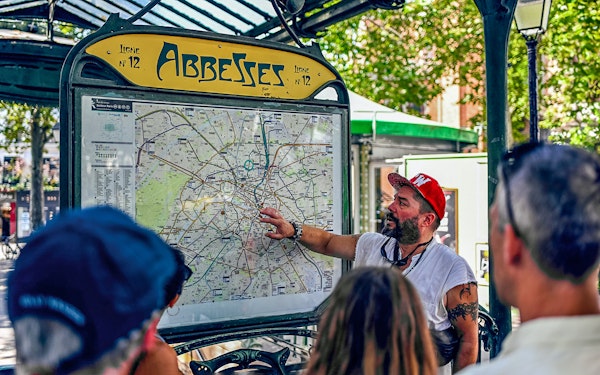
Montmartre Food Tour
4.3(106)3 hr 30 minViewFrom$139
-Kids friendly- Eat, play, love Montmartre: 3H Walking Food Tour
5.0(51)3 hoursViewFrom$112
Chocolate and Pastry Walking Tour in Montmartre, Paris
5.0(26)2 hours - 2 hr 30 minViewFrom$118
Montmartre Tour Paris
5.0(37)2 hoursViewFrom$157
Montmartre Walking Tour with Secret Tales, Views & Croissant
5.0(41)2 hr 30 minViewFrom$50
Evening: dinner on the hill
Stay for the evening. Montmartre after the day-trippers leave is a different neighborhood, quieter, local, and at its best over a long dinner on a sloping side street. There is no better night of the five to have nothing booked.
Day 4: A full day at Versailles
This is the day the five-day itinerary earns its keep. Versailles as a half-day is a crowd-crush through the state apartments; Versailles as a full day is one of the great sights of Europe taken properly. The RER train runs there directly from central Paris, or a guided day tour handles every step for you.
Structure the day the way the palace's own rhythm suggests: the state apartments and the Hall of Mirrors early, before the peak crowds; the gardens through the middle of the day, with lunch in the grounds; and the Trianon estates and the Queen's Hamlet in the afternoon, which most rushed visitors never reach and which regularly end up the day's favorite part. Rent a bike or a golf cart in the gardens if the distances intimidate; the estate is far bigger than the postcards imply.
Top Versailles tours and day trips from Paris

Versailles Palace and Gardens Tour from Paris
The highest-volume Versailles tour from Paris - palace and gardens with the logistics handled, a straightforward anchor for the day.
4.4(4,136)3.5 hoursViewFrom$75
Versailles Palace and Gardens Tour by Train from Paris
A guided palace-and-gardens visit built around the train from Paris - the best-rated of the classic formats and an easy way to do the day independently paced.
4.7(974)3 hoursViewFrom$102- viator
Versailles Bike Tour with Palace Entry by Train from Paris
A full day covering the estate by bike with palace entry included - the top-rated way to actually see the gardens, canal, and Trianons at their scale.
4.8(605)8.5 hoursViewFrom$127 - tiqets
Palace of Versailles: Guided Tour + Transport from Paris
A guided palace tour with round-trip transport from Paris - the all-handled option if you would rather not manage the trains.
4.3(205)ViewFrom$96 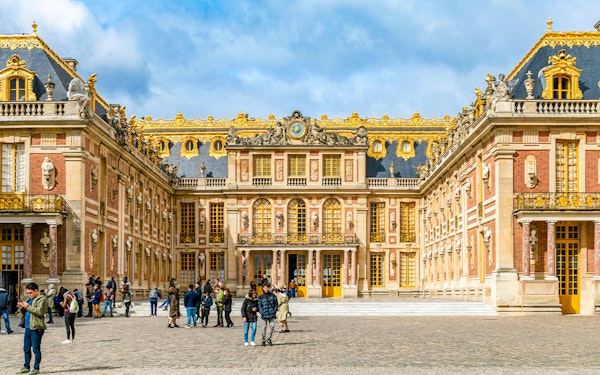
From Paris: Round trip Transfers & Versailles Palace Tickets
3.9(475)6 hoursViewFrom$78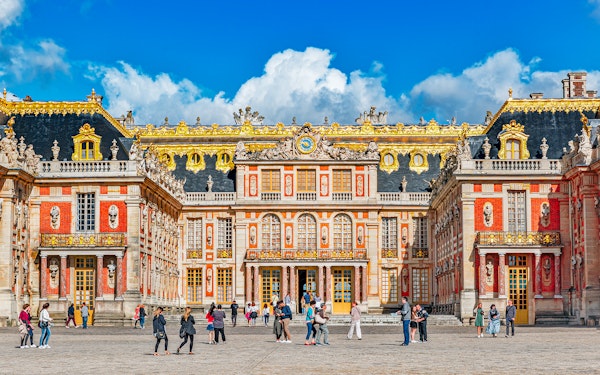
From Paris: Versailles Palace & Giverny Guided Day Trip
4.4(1,296)10 hoursViewFrom$155
From Paris: Giverny & Versailles Small-Group Guided Day Trip
0.0(0)9 hoursViewFrom$290
Versailles Palace & Gardens Audio Tour Private Transportation
4.7(11)4 hoursViewFrom$532
Private Versailles Half Day Trip: Palace and Gardens
5.0(1)5 hoursViewFrom$626
Versailles from Rouen | Private Roundtrip Transfer
9 hoursViewFrom$1,099
Day 5: Le Marais, Saint-Germain, and a proper goodbye
The final day belongs to the neighborhoods, the Paris of squares, gardens, and shopfronts rather than ticketed monuments, with an evening finale on the river.
Morning: Le Marais
Start in the Marais, the district of pre-revolutionary mansions, the arcaded Place des Vosges, the old Jewish quarter around Rue des Rosiers, and the best casual food-and-boutique streets in the city. It is compact, dense, and made for on-foot discovery; a guided walk adds the layered history if you want it, but the neighborhood works beautifully unguided too.
Afternoon: Saint-Germain and the Luxembourg Gardens
Cross the river to Saint-Germain-des-Pres for the classic Left Bank afternoon: the storied cafes, the gallery streets, and then the Luxembourg Gardens, where the chairs by the central pond exist precisely for the hour you are about to spend in one. This is the exhale the whole trip has been building toward. If you have been saving souvenir shopping, this is its natural home.
The Giverny swap
If gardens are your thing, or you have already seen Paris before, day five swaps cleanly for a half-day trip to Giverny, the village and flower gardens that inspired the water-lily paintings, at their best from spring through early autumn. The well-rated half-day tours get you there and back with the afternoon to spare, and combined Versailles-and-Giverny days exist for the ambitious.
Compare Giverny day trips from Paris →Evening: the farewell cruise or the long dinner
Close the trip on the water or at the table. A dinner cruise past the lit-up monuments is the full-ceremony version of a Paris goodbye; a long unhurried dinner in Saint-Germain is the local one. Either way, end near the river and walk a last stretch of it afterward. Five days in, that walk will pass landmark after landmark you now know.
The evenings: where to eat, night by night
Five days means five dinners, and in Paris the dinners are half the itinerary. A shape that works, keyed to where each day already leaves you:
Night one, the 7th. After the evening cruise you are steps from the bistro streets behind the tower; walk a few blocks back from the river and the menus improve immediately. Keep it simple, you have been traveling.
Night two, the Latin Quarter or Saint-Germain. The day ends on the Left Bank, so eat there: the Latin Quarter for casual creperies and student-priced menus, Saint-Germain for the classic brasserie experience one notch up. Book nothing; wander until a room feels right.
Night three, Montmartre. The best dinner of the trip if you let it be. The side streets away from the main square keep small, unhurried rooms where the evening stretches; if the afternoon food tour was late and large, this is the night a glass of wine and a shared plate counts as dinner.
Night four, near your base. You will come back from Versailles pleasantly wrecked. The neighborhood place two streets from the hotel, the one you have walked past four times, is tonight's answer.
Night five, the send-off. Either the dinner cruise, book it days ahead for a window table, or the trip's one deliberate restaurant reservation in Saint-Germain or the Marais. Make this the night you order properly: starter, main, dessert, and the unhurried two hours the French consider normal.
A standing note on timing: kitchens mostly open for dinner from about 7:30 p.m. and rooms fill from 8:30. Turning up at 6 p.m. gets you a cafe, not a restaurant, so bridge the gap the local way, with an aperitif on a terrace.
What 5 days in Paris costs
Leaving flights and hotels aside, the on-the-ground spend for this itinerary is more predictable than most people expect, because it is built around one paid anchor per day.
The anchors. Reserved Eiffel Tower access runs roughly $45 to $52, a top-rated guided Louvre morning $73 to $75, the Montmartre food tour $37 to $156 depending on how much eating is included, the Versailles day $75 to $127 by format, and the final-night cruise anywhere from about $27 for a simple sightseeing loop to $145 for the full dinner-cruise ceremony. Added up, the five anchors land between roughly $260 and $650 per person, with about $350 to $450 the realistic middle for the well-rated mid-range picks.
Everything else. Metro travel for five days is modest, a carnet or Navigo pass covers it for the cost of a couple of coffees a day. Food spans from $15-a-day picnic-and-crepe frugality to $80+ bistro days; most travelers settle around $40 to $60. The neighborhoods themselves, the Marais, the islands, the Luxembourg Gardens, the riverbank, cost nothing, which is the quiet economics of a five-day trip: the marginal days are the cheapest ones, because they are the wandering days.
Where to spend up, where to save. Spend up on the Louvre guide and the Montmartre food tour, the two experiences where quality visibly varies. Save on the Eiffel Tower (the plain reserved ticket delivers the same view as pricier packages) and on day five, which needs no tickets at all until dinner.
How to adapt this itinerary
Traveling with kids? Keep days one and four, they are the child-favorite days, swap the Louvre morning for a family-format tour, and consider trading day five for Disneyland, which sits a direct train ride away. The Montmartre day works for kids too if you swap the wine tastings for a crepe crawl.
Second visit to Paris? Drop day one's tower interior (keep the Trocadero view), give the freed morning to the Musee d'Orsay or the Rodin sculpture garden, and upgrade day five's Giverny swap from optional to planned. The Montmartre and Marais days survive any number of repeat visits.
Museum lover? Trade the day five morning for a second museum block and buy your Louvre slot for the earliest opening; the semi-private small-group formats are worth their premium to you specifically.
Bad weather week? The itinerary reorders gracefully: the Louvre and the food tours are weatherproof, Versailles wants the driest day on the forecast for its gardens, and the cruise moves to whichever evening clears.
Practical tips
Book the Eiffel Tower, the Louvre, and Versailles before you travel. Those three carry timed, sell-out entry; everything else on this itinerary flexes.
Keep one base for all five nights. Packing and moving mid-trip costs half a day; a central base near a good Metro line costs nothing.
Cluster, do not crisscross. Each day here owns one area on purpose; resist the urge to bounce across the city chasing single sights.
Leave real gaps. The unbooked Montmartre evening and the Luxembourg Gardens hour are not filler, they are the reason five days beats three.
Carry a little cash and watch your bag. Cards work almost everywhere, but small bakeries prefer coins, and the busy tourist stretches and the Metro are pickpocket territory; a zipped front bag solves it.
Time the river for after dark. Whichever cruise you choose, the Seine is at its best once the bridges and monuments light up.
Your 5 days in Paris at a glance
| Day | Area | Anchor |
|---|---|---|
| 1 | Eiffel Tower, Trocadero, the 7th | Timed tower visit, evening Seine cruise |
| 2 | Louvre, the islands, Latin Quarter | Guided Louvre morning |
| 3 | Montmartre | Food and walking tour, free evening |
| 4 | Versailles | Full-day palace, gardens, and Trianons |
| 5 | Le Marais, Saint-Germain, Luxembourg Gardens | Optional Giverny swap, farewell dinner or cruise |
The five-day shape gives you everything the sprint itineraries promise plus the things they cannot: whole neighborhoods, a real Versailles, and afternoons that belong to you. It is the length at which Paris stops being a checklist and starts being a place.
Plan your trip
See all Paris tours and experiences →Is 5 days too long for Paris?
Not at all, and for most travelers it is close to the ideal length. Five days lets you cover the icons without cramming, give whole days to neighborhoods like Montmartre and Le Marais that shorter trips squeeze into an afternoon, and take a full day trip to Versailles without sacrificing the city. The pace is the real luxury: two-day visitors sprint, five-day visitors live a little. If anything, five days tends to end with a list of reasons to come back.
What should I see in Paris in 5 days?
The shape that works: day one for the Eiffel Tower, Trocadero, and an evening Seine cruise; day two for the Louvre, the river islands, and the Latin Quarter; day three for Montmartre at a slow pace with a food tour; day four for a full day at Versailles; day five for Le Marais, Saint-Germain, and the Luxembourg Gardens, with Giverny as an optional swap. That covers the headline sights and, just as importantly, the neighborhoods where Paris actually lives.
Is Versailles worth a full day from Paris?
Yes. The palace alone takes a morning, and the gardens, the Trianon estates, and the grounds are what most rushed visitors miss entirely. Doing Versailles as a half-day means seeing the state apartments in a crowd-crush and leaving; a full day lets you take the palace early, picnic or lunch in the gardens, and explore at the pace the place deserves. On a five-day trip you can afford it, which is exactly why the five-day version of Paris beats the three-day one.
Should I do Giverny or Versailles with 5 days in Paris?
With five days you comfortably fit Versailles, and Giverny becomes the optional second escape. If you must choose one, Versailles is the default for first-timers on scale alone. Garden lovers and anyone traveling between spring and early autumn should weigh Giverny seriously though: the village and gardens that inspired the water-lily paintings are smaller, gentler, and half a day each way. Combined day trips covering both in one long day also exist and rate well.
Where should I stay in Paris for 5 days?
With five days you can afford character over pure convenience, but central still wins. The Marais suits travelers who want to walk out into cafes and boutiques; Saint-Germain and the Latin Quarter give you the river, the gardens, and easy Metro reach of everything; the 7th near the Eiffel Tower is quieter and scenic. Pick one base for all five nights, ideally near a Metro line that runs both to the Louvre area and toward Montmartre, and let the trip radiate from it.
How do you get around Paris in 5 days?
Walk the neighborhoods and ride the Metro between them. A rechargeable Navigo pass or a carnet of tickets covers the whole trip cheaply, and the Metro reaches every stop on this itinerary including the RER line out to Versailles. Central Paris rewards walking more than almost any city, and this itinerary is deliberately clustered so most days need only one or two train hops.
What should I book ahead for 5 days in Paris?
Four things: the Eiffel Tower (timed slots sell out days ahead), the Louvre (same), Versailles (book the palace entry or a guided day for a specific date), and any dinner cruise if you want a particular evening. Walking tours, food tours, and standard Seine cruises can usually be booked a day or two out. Locking the big four in early gives each day one fixed anchor and leaves the rest of the trip flexible.
How much should I budget for tours in Paris for 5 days?
A sensible plan is one anchor experience per day, which spans roughly $20 to $150 each depending on the format: reserved Eiffel Tower access and Seine cruises sit at the low end, guided Louvre tours and Montmartre food tours in the middle, and full Versailles day tours or dinner cruises at the top. Budget around $300 to $500 per person for a well-anchored five days, less if you swap some guided experiences for self-guided wandering, which this itinerary leaves plenty of room for.
When is the best time to spend 5 days in Paris?
Late spring (April to June) and early autumn (September to October) are the sweet spots: mild weather, long daylight, and gardens at their best, which matters on a trip that includes Versailles and possibly Giverny. July and August are hot and crowded, though the long evenings suit the riverside days. Winter is quieter and cheaper with shorter days to plan around. Whatever the season, the big-ticket bookings matter more than the month.
Keep reading
More reads
More guides to help you plan your trip

1 Day in Paris: The Itinerary That Fits, and the One That Does Not
One day in Paris, planned around real distances - what to book, what to walk, what to skip, and why three museums in a day is the classic mistake.

The Best Food Tours in Paris: Which Ones Are Worth the Money
Paris food tours are expensive and the good ones are excellent. How to tell them apart - by neighbourhood, by format, and by what you actually want to learn.

Arc de Triomphe Tickets in 2026: Rooftop Access, Combos and How to Skip the Line
A 2026 guide to Arc de Triomphe tickets - rooftop terrace timed entry, skip-the-line, Paris viewpoint and cruise combos, and guided Champs-Elysees walks.

Musee d'Orsay Tickets in 2026: Types, Skip-the-Line and Combos Compared
A 2026 guide to Musee d'Orsay tickets - timed entry, skip-the-line, guided highlights tours, Louvre and Orangerie combos and pass options compared.

The Best Walking Tours in Paris: Highlights, Montmartre, Food and More
Every kind of walking tour of Paris compared: classic highlights, Montmartre, food walks, Le Marais, and night walks, ranked on real ratings and reviews.

Christmas Markets in Paris: The Best Festive Spots and Tours
The best Christmas markets in Paris, from the Tuileries to La Défense, plus when the season runs, how to plan around crowds, and the top festive experiences.

Summer in Paris: What to Expect and What to Book
What summer in Paris is really like - long evenings, heat waves, August closures, and the Seine cruises, Eiffel Tower visits, and day trips worth booking.

Winter in Paris: What to Expect and What to Book
What winter in Paris is really like - short days, thin crowds, festive lights, and the museum tours, cabaret shows, and food experiences worth booking.