ParisFamily TravelFranceDisneyland ParisEiffel Tower
Paris with Kids: Where to Stay and What to Do as a Family
A family guide to Paris with kids: the neighborhoods worth staying in, the sights children actually enjoy, plus the family tours travelers rate highest.
By SimilarTours Editorial · Travel Research · · 22 min read

Paris with kids is a different city from the Paris of long museum afternoons and late dinners, and it is honestly a great one. The parks turn out to be full of playgrounds and puppet shows, the crepe stands are everywhere, and the sights kids rate highest, the Eiffel Tower, the river boats, the carousels, are the same icons you wanted to see anyway. The two questions every family asks first are the same ones this guide is built around: where to stay in Paris with kids, and what to actually do with them once you are there.
Below you will find the neighborhoods that work as a family base, the experiences children reliably enjoy, the Disneyland question answered properly, and the family tours travelers rate highest. Every experience referenced is currently bookable through our partner OTAs and ranked on real ratings and review counts, verified July 2026.
Browse all Paris tours and experiences →Before you go: Paris family basics
Pace is everything. The single biggest difference between a good and a bad family trip to Paris is scheduling. One booked anchor per day, a park every afternoon, and a treat built into every outing beats any ambitious checklist. Paris with kids rewards the family that plans less and wanders more.
Getting around. The Metro is fast but stair-heavy; buses are slower but stroller-friendly and double as sightseeing. Kids under four travel free on public transport and young children ride at reduced fares, so moving around is cheap. Central Paris is walkable in short hops, and the walk itself, past bakeries, fountains, and carousels, is often the entertainment.
Eating with kids. Cafes are casual and used to families at lunch; dinner service starts later than most children last, so aim early or go the picnic route, a baguette, cheese, and fruit in a park is the most Parisian family dinner there is. Crepe stands, bakeries, and ice cream shops function as the city's built-in reward system between sights.
What to book ahead. The Eiffel Tower, any Louvre visit, and Disneyland dated tickets are the three things that sell out. Lock those in before you fly and let everything else stay loose.
Where to stay in Paris with kids: the neighborhoods that work
Choosing where to stay in Paris with kids comes down to three things adults can otherwise ignore: green space within walking distance, quiet at night, and step-free access to transport. Here is how the family-friendly neighborhoods stack up.
The 7th arrondissement (Eiffel Tower area) - the classic family base. Quiet, residential, and safe-feeling, with the Champ de Mars lawns and playgrounds directly under the Eiffel Tower and the river cruises leaving from the quay below. Kids get the tower as their daily backdrop, and the market street of Rue Cler makes picnic shopping easy. The trade-off is that restaurants skew touristy near the tower itself; walk a few streets back for better food.
The 5th and 6th (Latin Quarter and Saint-Germain) - best for parks and atmosphere. The Luxembourg Gardens are the strongest single family asset in central Paris: a large fenced playground, pony rides, puppet theater, and the famous toy sailboats on the central pond. The surrounding streets are lively but not rowdy, full of creperies and bookshops, and the river islands are a short walk away. This is the pick if your kids are past the stroller stage and you want classic Paris outside the door.
The Marais (3rd and 4th) - central and charming, but busy. Superbly connected and packed with character, with the Place des Vosges as its one good green space. It works well for families with older kids who can handle crowds and narrow sidewalks; it is harder work with a stroller and toddlers, and the nightlife hum reaches some streets late.
Montmartre (18th) - beautiful, but think twice with small kids. The hilltop village looks like a storybook and has a carousel at the bottom of the basilica steps, but the neighborhood is built on slopes and staircases that are genuinely punishing with a stroller. Better as a day visit than a base for families with young children.
Near Disneyland (Marne-la-Vallee) - only for Disney-first trips. The resort hotels make sense if Disneyland is the centerpiece of your trip and Paris the side dish. If it is the other way around, stay in the city; the direct train makes the park an easy day trip, while the reverse commute into Paris every day gets old fast.
The honest summary: for most families the 7th or the Luxembourg Gardens area wins, the Marais suits older kids, and everywhere else is a compromise you should make knowingly.
Things to do in Paris with kids: tours built for families
The things to do in Paris with kids are mostly the things to do in Paris, delivered differently. The format matters more than the sight: a treasure hunt beats a lecture, two hours beats four, and a guide who talks to the children rather than over them changes everything. A small industry of family-specific tours has grown up around exactly this, from kid-paced bike rides to private Louvre visits built around stories and games, and they are among the best-rated experiences in the whole Paris catalog.
Top family tours and experiences in Paris
- viator
Paris Sightseeing Family Friendly Guided Electric Bike Tour
A guided electric-bike loop of the sights at a family pace - one of the highest-rated ways for a family to cover ground without tired legs.
4.9(434)2 hoursViewFrom$76 - viator
Paris Kids and Families Private Louvre Tour
A private Louvre visit designed for children, stories and games instead of a lecture - the proven way to make the museum land with kids.
4.9(452)3 hoursViewFrom$244 - viator
Paris Family Adventure- a Fun City Quest for Kids
A city quest that turns the center of Paris into a treasure hunt - a perfect-scoring format for kids who would mutiny on a normal walking tour.
5.0(56)2.5 hoursViewFrom$87 - viator
Paris Private Family Tour - Highlights & the Best Museum for Kids
A private family tour pairing the highlights with a kid-friendly museum stop - the flexible option when you want the day shaped around your children.
4.9(24)3 hoursViewFrom$73 
Family friendly private tour of Versailles Palace & Gardens
5.0(6)2 hoursViewFrom$302
Kid-Friendly Nantes City Wonders Private Guided Tour for Families
2 hr 30 minViewFrom$254
Private Louvre Museum Tour for Kids & Families with Alberto or his team in Paris
5.0(45)2 hoursViewFrom$306
-Kids friendly- Eat, play, love Montmartre: 3H Walking Food Tour
5.0(51)3 hoursViewFrom$112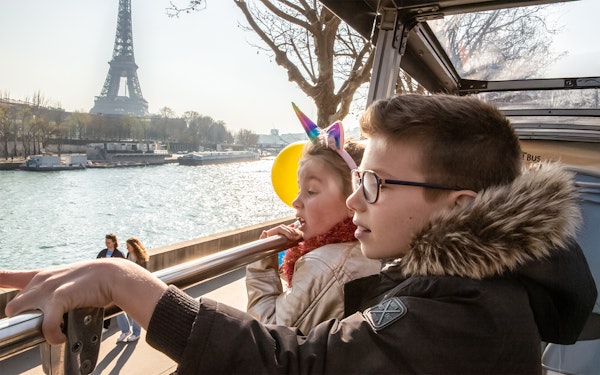
Tootbus: Paris Guided Kids Bus Tour
4.4(1,040)1 hr 30 minViewFrom$34
Family Friendly Louvre Museum Private Guided Tour
5.0(300)2 hr 30 minViewFrom$435
The Eiffel Tower and the Seine with kids
The Eiffel Tower is the one Paris sight that needs no selling to a child, and the logistics are the only thing that can spoil it. Book a timed slot or a guided visit ahead, because the walk-up queue is far longer in child-minutes than adult-minutes, and aim for a morning slot before energy fades. The stairs option is surprisingly popular with school-age kids, who treat the climb as the adventure, while the lift keeps things easy for everyone else.
Pair the tower with a Seine cruise on the same day and you have the single most reliable family day in Paris: an hour on the water, everyone seated, and every landmark sliding past at child height. The boats leave from the quays right by the tower, which makes the combination almost logistics-free.
Top Eiffel Tower and Seine cruise options for families

Eiffel Tower Guided Tour by Stairs with Optional Summit by Lift
The guided stairs climb with an optional summit by lift - the version school-age kids remember as an adventure rather than a queue.
4.8(4,730)2 hoursViewFrom$51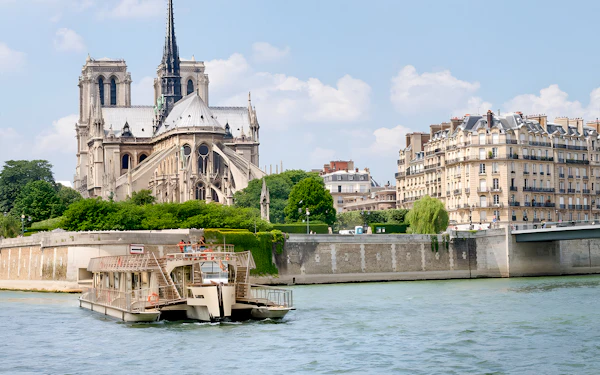
Seine River 1-Hour Sightseeing Cruise from the Eiffel Tower
An hour on the river departing right by the tower - the cheapest big-hitter in the family day, and one of the best-reviewed cruises on the Seine.
4.7(12,067)1 hourViewFrom$14- viator
Paris Seine River Sightseeing Guided Cruise Vedettes du Pont Neuf
A classic one-hour guided sightseeing loop from the Pont Neuf - a well-reviewed alternative departure point if you are starting from the river islands.
4.2(1,035)1 hourViewFrom$20 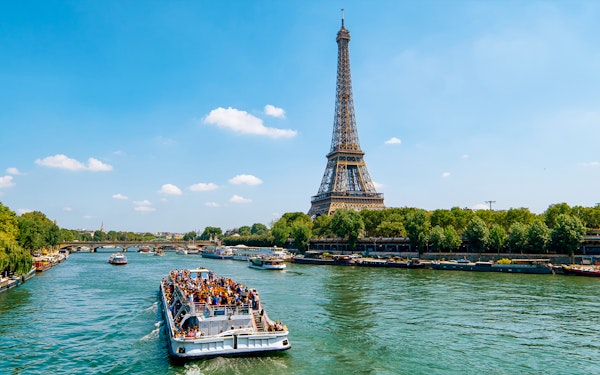
Eiffel Tower Tickets with City Tour & Seine River Cruise
4.4(6,957)4 hoursViewFrom$115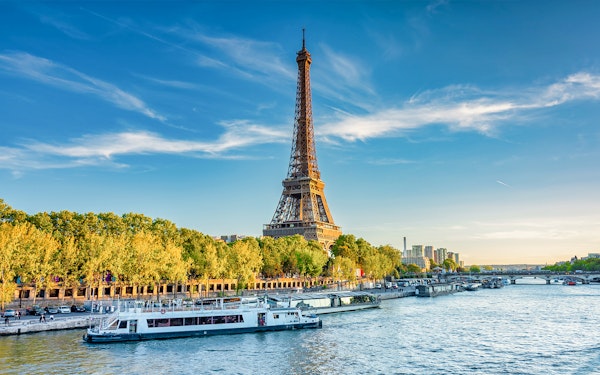
Combo: Eiffel Tower Guided Tour by Elevator with Seine River Cruise
4.3(2,993)2 hoursViewFrom$49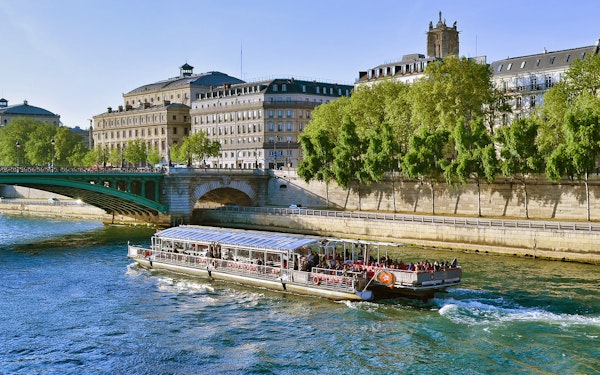
Seine River Cruise and Paris City Tour Combo
3.5(570)3 hoursViewFrom$45
Paris Sightseeing Tour with Seine River Cruise from Disneyland®
3.9(19)10 hoursViewFrom$112
Paris Sightseeing Tour with Eiffel Tower 2nd Floor Tickets
0.0(0)3 hoursViewFrom$103
Paris Evening Sightseeing Tour with Eiffel Tower Summit Tickets
3.4(9)3 hoursViewFrom$112
Insider tip
Build the day around one anchor. With kids, the Eiffel Tower slot is the day's fixed point: book the morning, let the Champ de Mars playgrounds absorb the post-tower energy, picnic on the lawns, and take the cruise mid-afternoon when legs are done. That is a full, great day with exactly one timed commitment in it, which is the right number.
Disneyland Paris: the honest answer
Every family trip to Paris eventually has the Disneyland conversation, so here is the short version. The park is a genuine full day, it sits on a direct suburban train line from central Paris of roughly 40 minutes, and if your kids care about Disney it delivers. One day covers the main park's headline rides if you arrive at opening; the two-park ticket adds the movie-studio side and suits families who want everything without sprinting. Buy dated tickets in advance, both because gate prices run higher and because peak days genuinely sell out.
The equally honest flip side: Disneyland eats a full day of a Paris trip plus the round trip, and on a short visit that is a real cost. Families with a five-day stay fit it comfortably; on three days it means dropping a Paris day, which is a fair trade only if Disney is a headline for your kids rather than a nice-to-have.
Top Disneyland Paris tickets
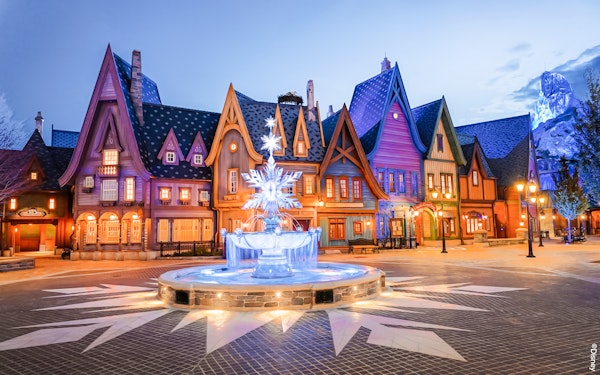
1-Day Ticket to Disneyland® Paris
The straightforward one-day, one-park ticket - the highest-volume Disneyland Paris option in the catalog and the right default for most families.
4.5(27,090)12 hoursViewFrom$55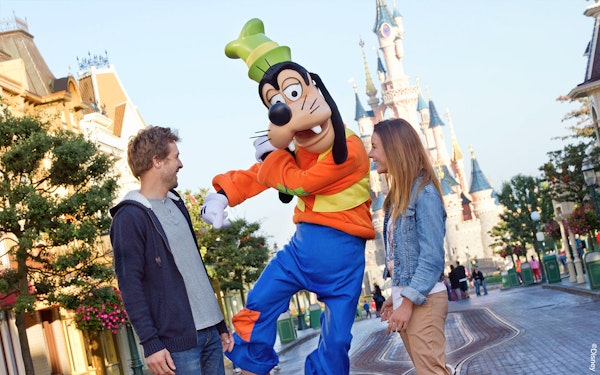
1-Day 2 Park Ticket to Disneyland® Paris
One day with hopping between both parks - the pick for older kids who want the studios side and the main park in a single push.
4.6(7,112)12 hoursViewFrom$93- tiqets
Disneyland® Paris: Admission Ticket
A flexible dated admission ticket with strong ratings across a large review base - a solid alternative if your preferred date is tight elsewhere.
4.6(13,728)ViewFrom$102 
Disneyland® Paris 1 Day Ticket with Transport from Paris
3.7(311)11 hoursViewFrom$60
Disneyland® Paris 1-Day/1-Park Admission Ticket
3.2(167)1 dayViewFrom$61
From Paris: Disneyland® Paris 2-Park Tickets with Shuttle Bus Transfers
4.5(204)13 hoursViewFrom$212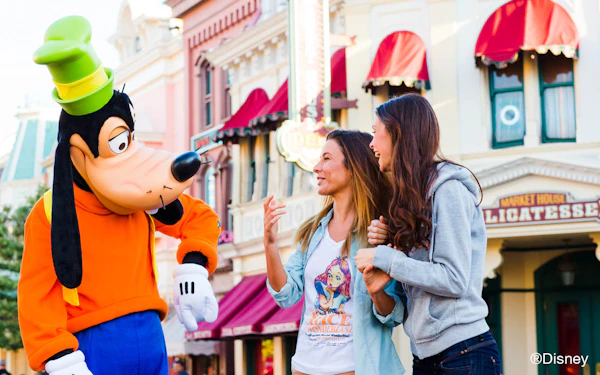
1-Day Flexible Date Ticket to Disneyland® Paris
4.5(2,523)ViewFrom$159
1-Day Disney Premier Access Ultimate Ticket to Disneyland® Paris
4.6(271)ViewFrom$196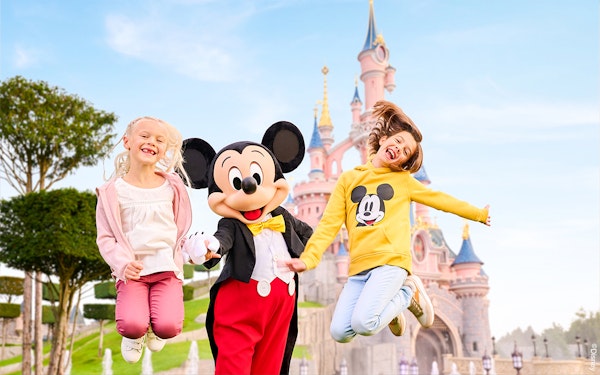
Multi-Day Ticket to Disneyland® Paris
4.4(4,782)ViewFrom$172
Asterix Park® Ticket with Transport
3.8(4)10 hoursViewFrom$125
Sweet Paris: crepe, macaron, and pastry classes with kids
The most underrated family experiences in Paris happen in kitchens. A hands-on baking class, making crepes, macarons, or croissants with a chef, is two to three hours where the kids are busy, the adults are entertained, and everyone leaves with something they made and can eat. These classes rate extraordinarily high across the board, they are indoors (which quietly solves the rainy-day problem), and for food-curious kids they are often the trip's surprise highlight. Most welcome children accompanied by a participating adult; check the individual listing for minimum ages when booking.
Top Paris baking classes for families

Amazing Sweet Crêpe Cooking Class Paris
A three-hour sweet crepe class with near-perfect ratings - the most kid-natural of the Paris baking formats, since everyone already loves the result.
5.0(238)3 hoursViewFrom$102- viator
Paris Cooking Class: Learn How to Make Macarons
The classic macaron-making class, three hands-on hours with a big review base - the one to book for kids (and adults) with patisserie ambitions.
5.0(666)3 hoursViewFrom$150 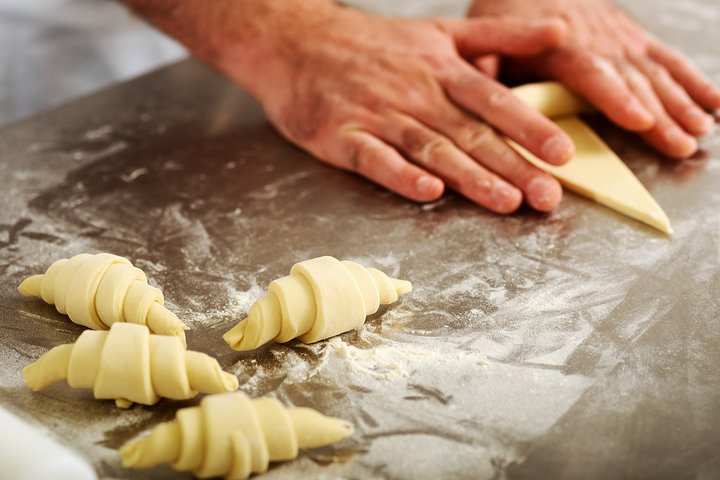
Paris Croissant Small-Group Baking Class with a Chef
A small-group croissant class led by a chef - the most-reviewed of the baking classes and a hit with teens who want the real technique.
4.9(1,026)2.5 hoursViewFrom$197- viator
Paris Macaron baking class with a Chef Patissier
Macarons with a chef patissier at a lower price point - the value pick among the top-rated pastry classes.
5.0(149)2.5 hoursViewFrom$121 
Macaroons lessons with Flora
5.0(23)2 hoursViewFrom$130
Macaron Masterclass at The Cookery Studio in Bath
5.0(5)2 hr 30 minViewFrom$131
French Macaron Workshop with a Masterchef in his Private Atelier
5.0(12)1 hr 30 minViewFrom$269
French pastries in a small group with a cheffe
5.0(2)2 hoursViewFrom$141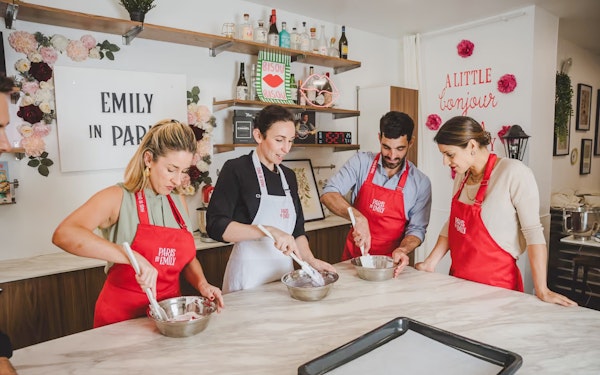
Emily in Paris Macaron-Making Workshop
4.3(236)2 hr 30 minViewFrom$144
Macaron making with a Master Chef - Carmel-by-the-Sea, CA
4.9(59)1 hr 30 minViewFrom$119
Parks, carousels, and downtime
The secret weapon of Paris with kids is that the city's parks are engineered for children in a way few capitals match. The Luxembourg Gardens lead the pack, with a large playground, pony rides, a vintage carousel, and toy sailboats to push around the pond; the Tuileries between the Louvre and the Place de la Concorde has trampolines and a summer funfair; and the Champ de Mars under the Eiffel Tower is one giant picnic lawn with playgrounds at the edges. On the western edge of the city, the Jardin d'Acclimatation combines an old-fashioned amusement park with gardens, a well-rated half-day when the sightseeing quota is full.
Build one park into every afternoon and the whole trip runs better. Kids burn energy, adults sit with a coffee, and the day's second sight, if there is one, goes twice as smoothly.
Paris with kids by age: what changes when
The same city plays very differently at three, eight, and fourteen, and the most common family-trip mistake is planning for the wrong age.
Toddlers and preschoolers (roughly 0-5). Paris at this age is a parks-and-carousels trip with a tower in the background. The Luxembourg Gardens and the Champ de Mars can each absorb a whole morning; the carousels scattered across the city, there is one near most major sights, function as portable bribes; and a one-hour Seine cruise is exactly the right length of sight. Skip the Louvre and any tour longer than 90 minutes, keep dinner early, and treat the stroller logistics (buses over Metro, no Montmartre base) as the trip's main planning constraint. Disneyland works at this age but shines brighter a few years later.
School-age kids (roughly 6-11). This is the sweet spot for Paris. The Eiffel Tower stairs become an adventure rather than an obstacle, the treasure-hunt walking tours and city quests land perfectly, a family Louvre tour genuinely works, and the baking classes turn into the trip's surprise highlight. Disneyland at this age is a guaranteed hit and worth its full day. The formula of one anchor plus one park per day still applies; what changes is how much the anchor can carry.
Teens (12+). Teens want agency, so give them some: let each teen pick one day's anchor, whether that is Disneyland, a croissant class, or a themed walking tour built around a show or a story they already care about. The food scene starts doing real work at this age, market wanders, crepe-stand comparisons, a proper bistro dinner, and the evening city opens up: the illuminated riverbank walk and a late Seine cruise beat an early night. Museums still work best in guided, story-led doses rather than open-ended wandering, but the dose can double.
Mixed-age families should plan for the youngest and add one teen-picked anchor; the park afternoons are the great equalizer, since every age group needs them for different reasons.
The rainy-day plan
Paris rain is usually showers rather than washouts, but every family trip needs an indoor fallback, and the city has better ones than most. The baking classes above are the strongest move: two to three indoor hours where the weather is irrelevant and the output is edible. A family-format Louvre tour is the second, the museum is vast, warm, and dry, and a guided visit built for kids removes the wandering that sinks solo family visits. The main Seine operators run covered boats, so the river stays available in the wet, and the city keeps a deep bench of indoor family stops, from the aquarium near Trocadero to the science and natural history museums that Parisian families themselves default to on wet Sundays.
The cheapest rainy fix is also the most Parisian: pick a covered passage or a cafe, order hot chocolate, the old-fashioned thick kind that French kids consider a food group, and wait it out. Showers pass; the trip does not need rescheduling around them, just softening. If the forecast shows a genuinely wet full day, that is the day to swap in Disneyland, where queues thin noticeably in bad weather and a surprising amount of the waiting is under cover.
Two sample family days
The icon day (works for every age). Morning: booked Eiffel Tower slot, as early as you can get it, with the Trocadero photo stop first. Midday: picnic from the Rue Cler market on the Champ de Mars lawns while the kids run the playgrounds. Mid-afternoon: the one-hour Seine cruise from the quay below the tower, everyone seated, energy recovering. Late afternoon: back to the hotel neighborhood, ice cream en route. Dinner early and local. One timed booking, one park, one boat: the full formula in a single day.
The hands-on day (best for 6+). Morning: family Louvre tour or a city-quest walking tour, two hours with a guide who talks to the kids rather than over them. Midday: lunch near the Tuileries, then an hour of trampolines and toy boats in the garden itself. Afternoon: a crepe or macaron class, where the day's souvenir gets baked rather than bought. Evening: the illuminated riverbank walk if legs allow, or the earliest dinner sitting if they do not. Two anchors is normally one too many with kids, but a morning tour plus an afternoon class works because the class involves sitting down, aprons, and sugar.
Swap-ins for either day: Disneyland replaces everything on its day, and the Jardin d'Acclimatation replaces the park hour when the playground quota needs raising. The template underneath stays the same, one fixed thing, one green thing, one sweet thing.
Practical tips for Paris with kids
Book the Eiffel Tower, the Louvre, and Disneyland before you travel. Those are the three sell-out bookings; everything else can stay flexible.
Use buses instead of the Metro where you can. They are stroller-friendly, you see the city as you ride, and kids genuinely prefer them to the tunnels.
One anchor per day. A booked morning experience plus a free-form park afternoon is the rhythm that works; two booked things a day with kids is one too many.
Carry snacks, buy more snacks. The bakery every 200 meters is your friend; a pain au chocolat solves most family morale problems for under two euros.
Eat dinner early or picnic. Restaurant dinner service starts later than most kids last; the early seating, or bread and cheese in a park, keeps evenings calm.
Watch the scooter lanes. Parisian bike and scooter lanes are fast and quiet; teach kids to treat them like roads at every crossing.
Quick recap: Paris with kids
Stay in the 7th near the Eiffel Tower or by the Luxembourg Gardens; the Marais for older kids only; skip Montmartre as a base with a stroller. Do the Eiffel Tower plus Seine cruise day, one family-format tour or Louvre visit, one baking class, and a park every single afternoon. Add Disneyland as a full day if your trip has five days or Disney-mad kids. Book ahead the tower, the Louvre, and Disney; leave the rest loose. That is the whole formula, and it produces the version of Paris that children remember.
Plan your trip
See all Paris tours and experiences →Where is the best place to stay in Paris with kids?
The 7th arrondissement around the Eiffel Tower is the classic family base: quiet residential streets, the huge lawns of the Champ de Mars on your doorstep, and the tower itself as the daily backdrop. The 5th and 6th near the Luxembourg Gardens are the strongest alternative, with the best playground in central Paris a short walk away. The Marais is wonderful but busy and short on green space, and Montmartre's hills and stairs are hard work with a stroller. Wherever you land, being close to a Metro station with an elevator or escalator matters more than the neighborhood's postcard value.
Is Paris a good city for kids?
Genuinely yes, and better than its formal reputation suggests. The parks are full of playgrounds, pony rides, puppet theaters, and toy sailboats; the river cruises and the Eiffel Tower are exciting at any age; and the food, from crepes to hot chocolate, is half the fun for children. The trick is pacing: one major sight per day, a park every afternoon, and dinner earlier than the locals eat it. Paris punishes over-scheduling with kids the same way it rewards wandering without them.
What are the best things to do in Paris with kids?
The reliable hits are the Eiffel Tower (kids love the lifts and the height), a Seine river cruise (an hour, seated, and everything looks better from the water), the Luxembourg Gardens with its playground and toy boats, and a crepe or pastry stop built into every day. Older kids tend to enjoy the Louvre in small guided doses, treasure-hunt style walking tours, and baking classes where they make their own macarons or crepes. Disneyland Paris is the obvious full-day add-on if your trip has room for it.
Is Disneyland Paris worth it, and how many days do you need?
If your kids are into Disney at all, one full day is worth it, and it is easy to bolt onto a Paris trip: the park sits on a direct suburban train line from the city center, roughly 40 minutes each way. One day covers the main park's headline rides if you arrive at opening; two days or a two-park ticket makes sense for Disney-focused families who want both parks without sprinting. Buy dated tickets ahead, because gate prices are higher and peak days sell out.
Can you visit the Louvre with children?
Yes, but do it in a small dose with a plan. The museum is enormous, and wandering it cold is how families end up with a meltdown by the second wing. A family-oriented guided tour, typically two to three hours built around stories, treasure hunts, and the headline works, is the format that consistently works; kids leave having enjoyed a museum that defeats plenty of adults. Book a morning slot, and promise a park or an ice cream afterward.
How easy is Paris with a stroller?
Manageable but not effortless. Central sidewalks are generally fine and the parks are perfect, but many Metro stations rely on stairs, so plan around the buses, which are stroller-friendly and let kids see the city as you go. Cobbled areas and Montmartre's staircases are the main pain points. A lightweight folding stroller plus a carrier for the hill days is the setup most traveling families settle on.
What should families book ahead in Paris?
Three things: the Eiffel Tower (timed slots sell out days ahead in season, and a queue is much longer in child-minutes than adult-minutes), any Louvre visit or family tour, and Disneyland Paris dated tickets. Seine cruises, workshops, and walking tours are easier to grab a day or two out. Booking the fixed slots first also gives each day a single anchor, which is exactly the right amount of structure for a family day.
What is the best age to take kids to Paris?
Paris works at every age, but roughly 6 to 11 is the sweet spot: old enough for the Eiffel Tower stairs, treasure-hunt tours, a guided Louvre visit, and a baking class, young enough that the carousels and toy sailboats still count as magic. Toddler trips work fine as parks-and-carousels holidays with a cruise thrown in, and teens do well when they get to pick some anchors themselves. Plan for the youngest child in the group and add one older-kid pick per trip.
What can you do in Paris with kids when it rains?
The strong moves are a baking class (two to three indoor hours making crepes or macarons), a family-format Louvre tour, and a covered Seine cruise, which the main operators run year-round. The aquarium near Trocadero and the science and natural history museums are the local families' wet-weekend defaults. For light showers, the most Parisian fix is a cafe stop with thick hot chocolate until it passes; for a genuinely wet full day, swap in Disneyland, where queues shrink in bad weather.
Keep reading
More reads
More guides to help you plan your trip

1 Day in Paris: The Itinerary That Fits, and the One That Does Not
One day in Paris, planned around real distances - what to book, what to walk, what to skip, and why three museums in a day is the classic mistake.

The Best Food Tours in Paris: Which Ones Are Worth the Money
Paris food tours are expensive and the good ones are excellent. How to tell them apart - by neighbourhood, by format, and by what you actually want to learn.

Arc de Triomphe Tickets in 2026: Rooftop Access, Combos and How to Skip the Line
A 2026 guide to Arc de Triomphe tickets - rooftop terrace timed entry, skip-the-line, Paris viewpoint and cruise combos, and guided Champs-Elysees walks.

Musee d'Orsay Tickets in 2026: Types, Skip-the-Line and Combos Compared
A 2026 guide to Musee d'Orsay tickets - timed entry, skip-the-line, guided highlights tours, Louvre and Orangerie combos and pass options compared.

5 Days in Paris: The Perfect Itinerary at a Relaxed Pace
A 5-day Paris itinerary at a human pace: the icons, Montmartre and Le Marais, a full day at Versailles, and the tours travelers rate highest for each day.

The Best Walking Tours in Paris: Highlights, Montmartre, Food and More
Every kind of walking tour of Paris compared: classic highlights, Montmartre, food walks, Le Marais, and night walks, ranked on real ratings and reviews.

Christmas Markets in Paris: The Best Festive Spots and Tours
The best Christmas markets in Paris, from the Tuileries to La Défense, plus when the season runs, how to plan around crowds, and the top festive experiences.

Summer in Paris: What to Expect and What to Book
What summer in Paris is really like - long evenings, heat waves, August closures, and the Seine cruises, Eiffel Tower visits, and day trips worth booking.