ParisListicleSkip the lineDay tripsFood
Things to Do in Paris: 24 Experiences Worth Booking in 2026
The 2026 Paris shortlist - 24 attractions, museums, food experiences, and day trips ranked by what's actually worth your time, with booking-window notes for each.
By SimilarTours Editorial · Travel Research · · 20 min read

Paris is structured for visitors. Every major sight is on one of three concentrated lines: the Seine bend (Eiffel → Louvre → Notre-Dame → Bastille), the Right Bank museum cluster, and the Left Bank's Latin Quarter + Saint-Germain. A four-day trip with one good loop per day covers more ground than people expect - provided you book ticketed sites ahead and skip the lines that don't actually need skipping.
This guide cuts the famous Paris list down to 24 experiences that hold up in 2026, grouped by what you're optimizing for: headline monuments, museums, neighborhoods, food experiences, unique rides, and day trips. Each entry has the bare planning facts, one specific reason it's worth booking, and what to skip if you're tight on time.
Browse all 2,000+ Paris tours and tickets →The non-negotiable monuments
Pick all five if you have four days; pick the first three if you have two.
1. Eiffel Tower (summit, second floor, or stairs)
Quick facts
- Price band - From $40 (stairs) · $50-$90 (elevator + summit) · $120+ (skip-line VIP)
- Duration - 2 hours total round trip
- Best for - First visits, sunset slots, anyone who's never seen Paris from above
- Book ahead? - Summit slots sell out 4-8 weeks ahead in peak; stairs rarely
The summit view is the one that lands. The second-floor view is the postcard. The stairs to second floor are the under-rated hack - they rarely queue, the climb is gentle (674 steps in two segments with rest landings), and you can take the elevator the rest of the way up. Pre-booked summit access is the only way to skip the worst of the queue in May-September.
Top Eiffel Tower tours

Eiffel Tower Elevator Tour with Optional Summit & Cruise Access
The most-booked Eiffel format - second-floor lift, summit add-on, and a Seine cruise voucher.
4.5(1,223)2 hoursViewFrom$40
Eiffel Tower Guided Tour by Stairs with Optional Summit by Lift
Stairs route - skips the elevator queue, climb to floor 2 then lift to summit.
4.7(3,809)2 hoursViewFrom$52
Eiffel Tower Ticket: Summit with Host + Audioguide
5.0(1)ViewFrom$87
Paris Sightseeing Tour with Eiffel Tower 2nd Floor Tickets
0.0(0)3 hoursViewFrom$103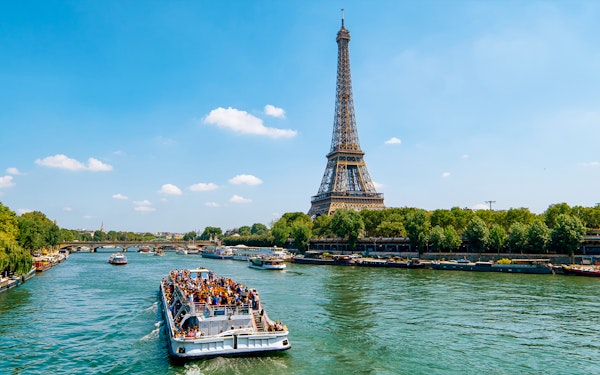
Eiffel Tower Tickets with City Tour & Seine River Cruise
4.4(6,957)4 hoursViewFrom$115
Illumination Tour of Paris and Eiffel Tower Summit (Reserved Access)
3.4(12)3 hr 30 minViewFrom$95
Eiffel Tower Guided Tour by Elevator: Reserved Entry to the Summit or Second Floor
4.4(21,426)1 hourViewFrom$42
Illumination Tour of Paris and Eiffel Tower 2nd Floor (Reserved Access)
5.0(1)3 hoursViewFrom$95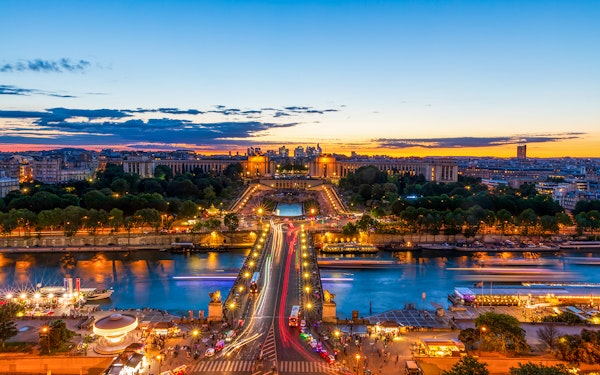
Paris Evening Sightseeing Tour with Eiffel Tower Summit Tickets
3.4(9)3 hoursViewFrom$112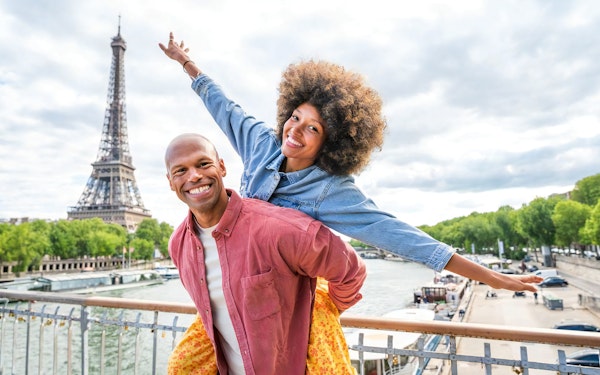
Private Photoshoot at the Eiffel Tower
4.5(45)15 minutesViewFrom$79
2. Louvre Museum
Quick facts
- Price band - From $25 (timed entry) · $55-$130 (guided tour)
- Duration - 2-3 hours for a guided highlights route
- Neighborhood - 1st arrondissement, Metro Palais Royal-Musée du Louvre
- Best for - First visits, art beginners, anyone who wants the Mona Lisa with context
- Book ahead? - Always. Walk-up entry can be a 2-hour queue at the Pyramid
The Louvre holds about 35,000 displayed objects. A focused 2-hour highlights tour with a guide is the single biggest improvement over walking it alone - a guide picks the route, skips the long galleries you don't care about, and gets you in through Porte des Lions or Carrousel (shorter queues than the headline Pyramid entrance).
Top Louvre Museum tours

Louvre Museum Masterpieces Guided Tour with Access
The most-booked Louvre tour by volume - 12k+ reviews, hits Mona Lisa + Venus + Liberty + Italian Renaissance highlights.
4.5(12,534)3 hoursViewFrom$88
Louvre Museum Premium Guided Tour (6 GUESTS MAX)
Small-group premium - capped at 6, deepest narrative depth, often the highest-rated Louvre option.
5.0(6,603)2.5 hoursViewFrom$75
Paris Louvre Essentials Tour (Reserved Entry Included)
5.0(36)2 hr 30 minViewFrom$166
Louvre Museum Guided Tour with Artist
5.0(102)2 hoursViewFrom$231
Louvre Exclusive Tour – Private Guide & Hotel Pickup in Paris
5.0(24)2 hr 30 minViewFrom$372
Paris: Louvre Museum Private Tour
2 hr 30 minViewFrom$93
Louvre Museum Private 2-h Tour on Italian Art and masterpieces
5.0(52)2 hoursViewFrom$200
Louvre Treasures Private Experience – Languages Available
5.0(18)2 hoursViewFrom$491
The Essential Louvre Masterpieces Tour - Limited to Six Guests
5.0(223)2 hr 30 minViewFrom$212
Louvre Museum Mona Lisa & Highlights Express Guided Tour
4.3(566)2 hoursViewFrom$86
3. Notre-Dame Cathedral (exterior + new visit format)
Quick facts
- Price band - Free (exterior) · $25-$60 (guided)
- Duration - 30 minutes exterior · 1.5 hours with guide
- Best for - Any visit; post-2024 reopening; iconic photography
- Book ahead? - Yes for the interior - limited capacity post-reopening
Notre-Dame reopened to the public in late 2024 after the fire restoration. Interior access is by free timed-entry reservation; the queue without a reservation is long. The exterior + Île de la Cité walk needs no booking and is one of Paris's best free experiences. A guided walking tour of Île de la Cité pairs Notre-Dame with Sainte-Chapelle next door.
4. Sainte-Chapelle
Quick facts
- Price band - From $14 (direct) · $35-$70 (combined Notre-Dame walk)
- Duration - 45 minutes inside
- Best for - Stained-glass lovers, day-2 visitors, paired with Notre-Dame
- Book ahead? - Yes - small chapel, capacity caps at the morning
The upper chapel is 15-meter walls of 13th-century stained glass - the most concentrated medieval glass surviving anywhere. Pick a bright morning slot to see the light through; on overcast days the glass goes flat. Combined skip-the-line + Conciergerie tickets exist for a small add-on and are usually worth it.
5. Arc de Triomphe + Champs-Élysées
Quick facts
- Price band - From $15 (rooftop) · $35-$60 (guided walk)
- Duration - 1.5 hours combined
- Best for - Sunset slot, view across to Eiffel
- Book ahead? - Helpful in peak; not always necessary
The Arc rooftop view is Paris's underrated free-of-the-tower panorama - straight-shot photographs of the Eiffel + La Défense skyline + the Champs-Élysées axis to the Louvre. The Champs-Élysées itself is fine as a walk but skip the chain-restaurant lunch (every restaurant on it is a tourist trap).
Museums (after the Louvre)
6. Musée d'Orsay
Quick facts
- Price band - From $20 (direct) · $50-$95 (guided)
- Duration - 2 hours
- Neighborhood - 7th arrondissement, opposite the Louvre across the Seine
- Best for - Impressionists (Monet, Renoir, Van Gogh, Degas)
The Orsay is the Louvre's logical sequel - a smaller, more digestible museum in a renovated Beaux-Arts train station, holding the world's deepest collection of Impressionist + post-Impressionist art. A 2-hour guided tour is the right format for first visits. Combined Orsay + Louvre passes save a small amount.
7. Modern art: Musée d'Art Moderne or Musée Picasso (the Pompidou is closed)
Quick facts
- Price band - Free permanent collection (Musée d'Art Moderne); from $16 (Musée Picasso)
- Duration - 1.5 to 2 hours
- Best for - Modern art lovers
The Centre Pompidou closed in September 2025 for a five-year renovation and reopens around 2030, so it's off the table for this trip. Its collection (Picasso, Matisse, Kandinsky, Pollock) is touring partner venues in the meantime. For modern art right now, the Musée d'Art Moderne de Paris has a strong free permanent collection, and the Musée Picasso in the Marais is a short walk from the old Pompidou site.
8. Musée de l'Orangerie
Quick facts
- Price band - From $14
- Duration - 1 hour
- Best for - Monet's Water Lilies, paired with a Tuileries walk
The two oval rooms holding Monet's eight massive Water Lilies panels are a 45-minute experience that lands harder than most full museum visits. Same-day tickets often available; combine with Orsay on the same ticket for a small discount.
9. Picasso Museum (Le Marais)
Quick facts
- Price band - From $16
- Duration - 1.5 hours
- Neighborhood - 3rd arrondissement (Le Marais)
- Best for - Day 3+, paired with a Marais walk + food tour
The Hôtel Salé hosts 5,000 Picasso works across his entire career. Less crowded than the headline museums; pair with a Marais walking + food tour for a slow day in the most underrated Paris neighborhood.
10. Rodin Museum + sculpture garden
Quick facts
- Price band - $14 (museum + garden) · $7 (garden only)
- Duration - 1.5 hours
- Best for - Sunny afternoons, photography, the garden alone is worth the entry
Rodin's "The Thinker" and "The Gates of Hell" sit outdoors in a planted garden behind the Invalides. You can spend an hour with the bronzes between hedges and not see a queue. The garden-only ticket is the price-conscious move if you're not going to do the museum interior.
See all Paris cultural + historical tours →Neighborhoods worth a half-day each
11. Montmartre + Sacré-Cœur
Quick facts
- Price band - Free (mostly) · $30-$70 (guided walk)
- Duration - Half-day (3 hours)
- Best for - Sunrise or sunset light, photography, the hilltop view
The classic Paris postcard hill - the Sacré-Cœur basilica with the city laid out below, the artists' Place du Tertre square, the funicular up from Anvers metro. A guided walking tour gets you the history (Renoir, Picasso, Toulouse-Lautrec all worked here) and saves you the navigation; self-guided also works if you don't mind getting lost.
12. Le Marais walking + food tour
Quick facts
- Price band - $90-$160 (food tour)
- Duration - 3 hours
- Best for - Food, Jewish heritage, the one Paris neighborhood where most shops actually open on Sunday
Le Marais is Paris's most walkable historic neighborhood - narrow medieval lanes between the Hôtel de Ville and Bastille, the rebuilt Place des Vosges, the Jewish quarter (rue des Rosiers + the L'As du Fallafel queue that's been there since 1979), and dense pockets of art galleries and designer boutiques. A 3-hour food walk hits 8-10 tastings: falafel, cheese, charcuterie, wine, pastries.
Top Le Marais walking + food tours

Paris Le Marais Food Tour With 10+ Tastings, Cheese, Wine & More
The best-rated Le Marais food walk - small group, 10+ tastings, replaces dinner.
4.8(1,106)3 hoursViewFrom$105
Paris Le Marais Walking Tour: An Incredible History - Small Group
5.0(30)2 hoursViewFrom$65
Paris Le Marais Self Guided Walking Tour & Scavenger Hunt
5.0(22)2 hoursViewFrom$4
Paris: Le Marais Private Guided Food Tour with 10 French Tastings
5.0(129)3 hr 30 minViewFrom$276
Paris Montmartre Walking Tour Best Art Culture and Food
4.9(2,881)1 hr 30 minViewFrom$36
Jewish History Tour of Le Marais
5.0(26)4 hoursViewFrom$118
Paris Le Marais Food Tour – Full French Meal by Do Eat Better
4.9(407)3 hr 30 minViewFrom$86
Paris Food Tour
0.0(0)3 hoursViewFrom$110
Paris Le Marais Food and Wine Tour with Eating Europe
4.9(596)3 hoursViewFrom$154
Notre-Dame Secret Food Tour
4.8(8)3 hr 30 minViewFrom$127
13. Saint-Germain-des-Prés + Latin Quarter
Quick facts
- Price band - Free (walking) · $25-$60 (guided)
- Duration - 2-3 hours
- Best for - Bookstore lovers, literary history, evening cafés
The Left Bank's intellectual heart - Café de Flore + Les Deux Magots (Sartre's, Camus's, Picasso's), Shakespeare & Company bookshop opposite Notre-Dame, the Jardin du Luxembourg up the hill. A walking tour adds context; the self-guided version is as good if you have a map and an hour.
14. Île Saint-Louis + Île de la Cité walk
Quick facts
- Price band - Free
- Duration - 1 hour
- Best for - Quiet morning loop, Berthillon ice cream, between-museum break
The two river islands at the heart of Paris - Notre-Dame and Sainte-Chapelle on Île de la Cité, the quieter residential Île Saint-Louis behind it. Walk the perimeter of both in an hour; stop for Berthillon ice cream (the original location is here).
The food experiences worth booking
15. Cooking class (croissant, macaron, or full French menu)
Quick facts
- Price band - $100-$240
- Duration - 2-4 hours
- Best for - Couples, families, dinner-replacement
Paris cooking-class options divide into three:
- Croissant or pastry workshops (2-3 hours, $100-$160) - make laminated dough, take home a dozen croissants
- Macaron workshops (2 hours, $150) - the meringue technique is harder than it looks; you walk out with the box
- Full French menu with market visit (4 hours, $200-$250) - shop at the morning market, cook lunch, eat with wine
Top Cooking class tours

Paris Cooking Class and Lunch with Wine plus Market Visit Option
The premium pick - market visit, 4-hour cooking class, sit-down lunch with wine.
5.0(1,068)4 hoursViewFrom$236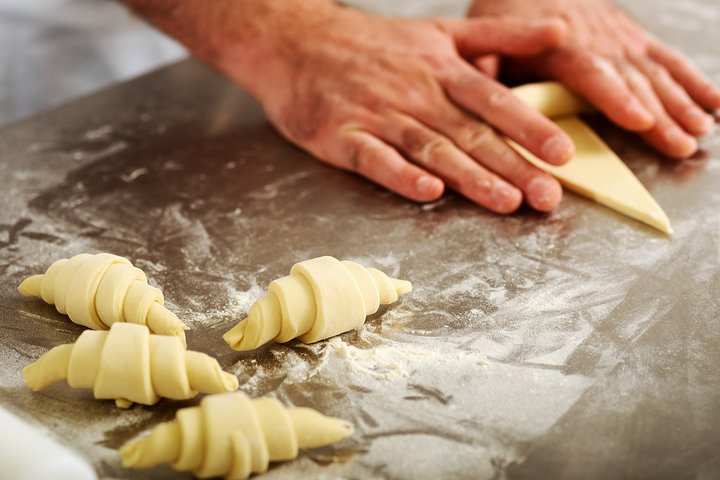
Paris Croissant Small-Group Baking Class with a Chef
The most-booked Paris pastry class - laminated dough technique, take-home dozen.
4.8(982)3 hoursViewFrom$154
Classic French Cooking Class in Paris with Local Expert Francoise
5.0(11)3 hoursViewFrom$429
Traditional French Cooking Class near Fontainebleau Castle
2 hr 30 minViewFrom$215
Plant-based French Cooking Class with Market Tour in Bordeaux
5.0(19)4 hoursViewFrom$147
Cooking Class/Dinner W/ Celebrity French Chef OR Private Chef Ser
4.6(9)2 hr 30 minViewFrom$115
PRIVATE Provence Cooking Class with Michelin Star Trained Chef
5.0(1)4 hoursViewFrom$499
Cooking Class & 3-Course Tasting by a Michelin-Trained Chef
5.0(1)2 hr 30 minViewFrom$132
Cooking lessons in a French House in the Loire Valley
5.0(6)3 hr 30 minViewFrom$160
Market Tour, Cooking Class & Lunch with Chef in Lyon Studio
4.9(26)4 hoursViewFrom$364
16. Wine tasting + cheese pairing
Quick facts
- Price band - $60-$140
- Duration - 2 hours
- Best for - Evening, couples, paired with a wine bar route
2-hour tastings in a Marais or Saint-Germain wine bar usually cover 5-7 French regional wines + a cheese board + charcuterie. Booked as a guided wine walk hits 3 bars over an evening.
17. Champagne day trip (Reims + Épernay)
Quick facts
- Price band - $180-$340
- Duration - Full day (10 hours)
- Best for - Wine lovers, return visitors, a slower full day out
Train to Reims + cellar tour at a Grand Marque (Veuve Clicquot, Pommery, or Taittinger) + lunch + an afternoon family-grower tasting in Épernay. The slowest, most indulgent full-day excursion out of Paris, and the only one where you'll come home with bottles.
Day trips worth pulling out for
18. Versailles (half-day or full-day)
Quick facts
- Price band - $75-$165
- Duration - Half-day (5-6 hours) or full-day (10 hours)
- Best for - First visits, palace history, the gardens at any season
Versailles is the most-booked Paris day trip by a wide margin. A half-day guided tour gets you palace skip-the-line + the Hall of Mirrors + the State Apartments and back to Paris by mid-afternoon. A full day adds Marie-Antoinette's Hameau (the model farm), the Grand and Petit Trianons, and proper time in the gardens.
Top Versailles tours

Versailles Palace and Gardens Tour from Paris
The standard Versailles day trip - skip-the-line palace + gardens + transport from central Paris.
4.4(3,812)Half-dayViewFrom$76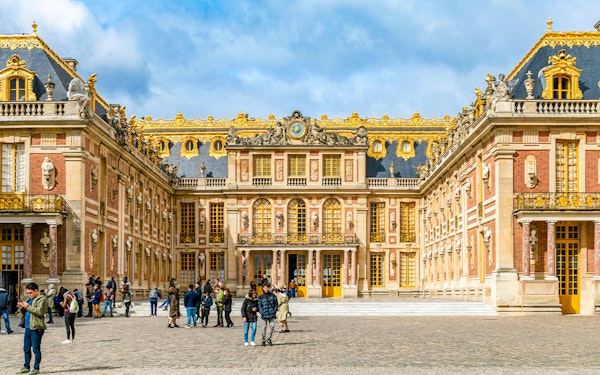
From Paris: Round trip Transfers & Versailles Palace Tickets
3.9(475)6 hoursViewFrom$78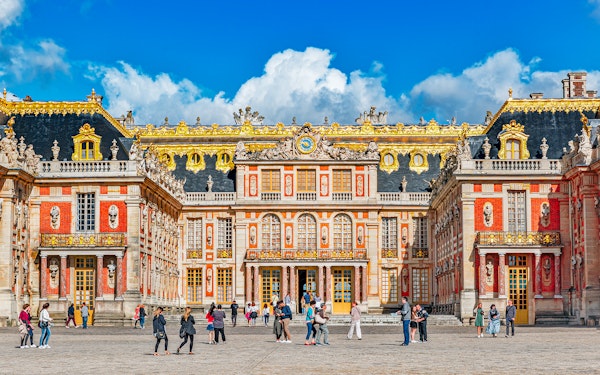
From Paris: Versailles Palace & Giverny Guided Day Trip
4.4(1,296)10 hoursViewFrom$155
From Paris: Giverny & Versailles Small-Group Guided Day Trip
0.0(0)9 hoursViewFrom$290
Versailles Palace & Gardens Audio Tour Private Transportation
4.7(11)4 hoursViewFrom$532
Private Versailles Half Day Trip: Palace and Gardens
5.0(1)5 hoursViewFrom$626
Versailles from Rouen | Private Roundtrip Transfer
9 hoursViewFrom$1,099
Versailles Palace and Park Private Guided Day Tour from Paris
4.8(25)7 hours - 9 hoursViewFrom$729
Versailles from Honfleur | Private Roundtrip Transfer
9 hoursViewFrom$1,499
Versailles Half Day Bike Tour with Marie Antoinette's Hamlet
5.0(103)4 hoursViewFrom$105
19. Giverny (Monet's home + gardens)
Quick facts
- Price band - $100-$180 (often combined with Versailles)
- Duration - Full day (10 hours) - open April through October only
- Best for - Garden lovers, return visitors, Impressionism enthusiasts
Monet's home and the gardens he painted from his Water Lilies are 75 minutes outside Paris. Combined Versailles + Giverny day trips are inefficient (long bus day) but cover two top sites; standalone Giverny is more relaxed.
Top Giverny tours

Giverny Monet's Home & Versailles Palace Day Trip from Paris
The combined classic - Monet's gardens at Giverny + Versailles in one full day.
4.5(817)Full dayViewFrom$165
Monet’s House & Gardens Giverny Small Group Tour from Paris
4.7(54)5 hours - 7 hoursViewFrom$325
Half-Day Tour to Giverny from Paris with Monet’s House & Gardens
4.0(12)6 hoursViewFrom$74
Giverny and Impressionism Private Tour
6 hoursViewFrom$602
Monet's Gardens & House-Private Giverny Tour From Paris
4.7(154)5 hoursViewFrom$508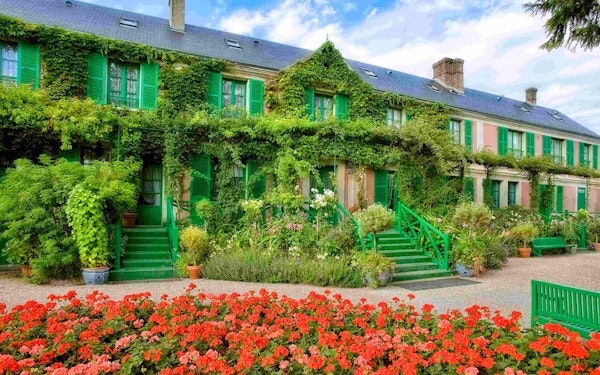
From Paris: Giverny Day Trip with Monet's House & Gardens Entry
4.4(3,971)5 hoursViewFrom$46
Giverny from Rouen | Private Tour | Guide Optional
8 hoursViewFrom$1,299
From Paris: Giverny Day Trip with Monet's House & Gardens Entry - Small group
5.0(3)ViewFrom$151
Private Half-Day Tour to Monet's Garden in Paris
5.0(4)4 hoursViewFrom$756
Giverny Half-Day Guided Tour from Paris
5.0(21)4 hr 30 minViewFrom$450
20. Normandy D-Day beaches + cemeteries
Quick facts
- Price band - $100-$220
- Duration - Full day (12+ hours)
- Best for - Military history, anyone with personal D-Day connection
Long day (leaves 7 a.m., returns 9 p.m.) - Omaha Beach, Pointe du Hoc, the American Cemetery, the Caen Memorial Museum. The single most emotionally weighted day trip from Paris; not casual. Bring snacks; lunch is hurried.
Top Normandy D-Day tours

Normandy D-Day Sites & Cemetery Day Trip from Paris with Lunch
The top-rated D-Day day trip from Paris - Omaha Beach, Pointe du Hoc, American Cemetery.
4.8(7,988)Full dayViewFrom$107
Normandy Day Tour from Paris D-Day Beaches and Caen Memorial
5.0(1)13 hoursViewFrom$530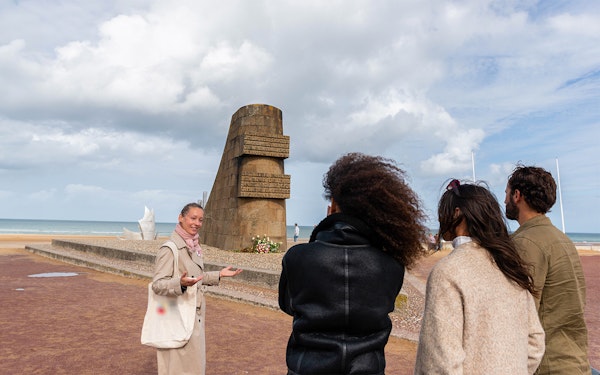
From Paris: Normandy D-Day Beaches Full-Day Guided Tour with Lunch
4.6(1,606)12 hoursViewFrom$325
Normandy D Day Beaches Tour from Paris with Lunch
4.9(116)14 hoursViewFrom$112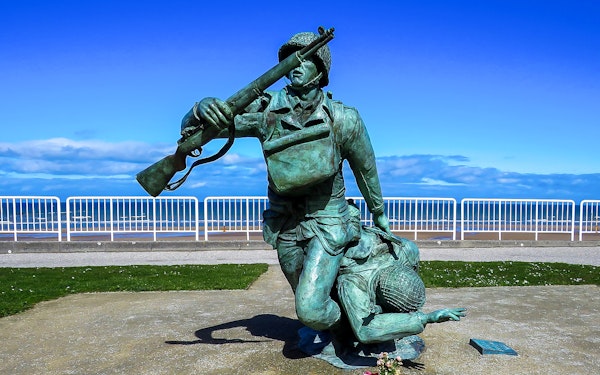
From Paris: D-Day Normandy Beaches Full-Day Guided Tour
4.0(210)13 hoursViewFrom$104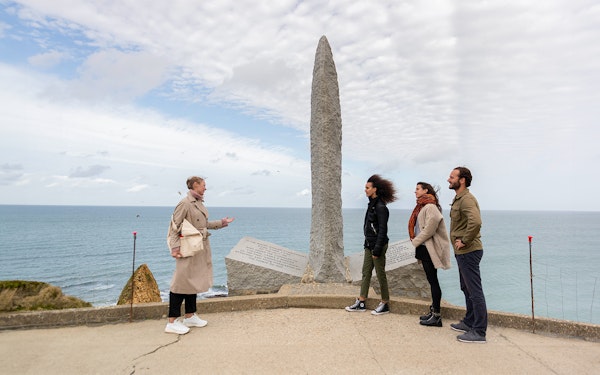
From Paris: Normandy US D-Day Landing Beaches Full-Day Tour
4.2(109)13 hoursViewFrom$104
Private round transfer to Normandy D Day Beaches from Paris
5.0(3)12 hoursViewFrom$1,232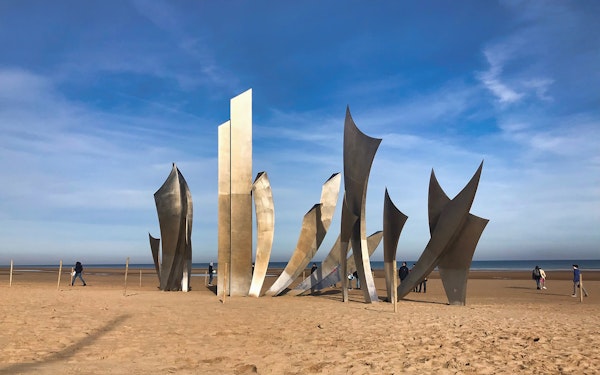
From Paris: Normandy US D-Day Landing Beaches Semi-Private Full-Day Tour
5.0(3)11 hoursViewFrom$278
Normandy D-Day Landing Beaches Small Group Tour
5.0(3)12 hours - 16 hoursViewFrom$307
D-Day Omaha Beach sector - Small group from Caen aboard a Van
5.0(6)6 hours - 7 hoursViewFrom$236
Unique ways to see Paris
21. Seine river cruise (1-hour daytime or sunset)
Quick facts
- Price band - $20-$35 (sightseeing) · $90-$200 (dinner cruise)
- Duration - 1 hour (sightseeing) · 2.5 hours (dinner)
- Best for - First visits, sunset slots, low-effort sightseeing
The 1-hour sightseeing cruise from below the Eiffel hits every floodlit bridge + monument with no walking. Skip the dinner cruises unless you specifically want the experience - the food is fine, not great, and you pay 4x the sightseeing price. Hop-on hop-off Batobus cruises ($25 for a day pass) are the price-conscious alternative.
Top Seine river cruise tours

Paris Seine River Hop-On Hop-Off Sightseeing Cruise by Batobus
Day pass - 9 Seine stops, hop on and off at each major sight, all day.
4.0(3,475)All dayViewFrom$27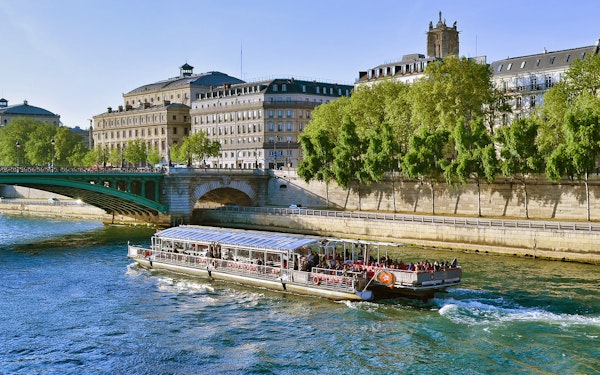
Seine River Cruise and Paris City Tour Combo
3.5(570)3 hoursViewFrom$45
Seine River Cruise with Champagne from Notre-Dame
4.5(10)1 hourViewFrom$45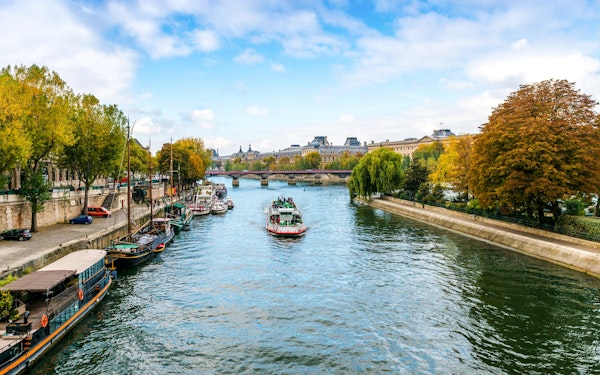
Bateaux Mouches® Seine River 1-Hour Sightseeing Cruise with Live Commentary
4.4(4,563)1 hr 10 minViewFrom$20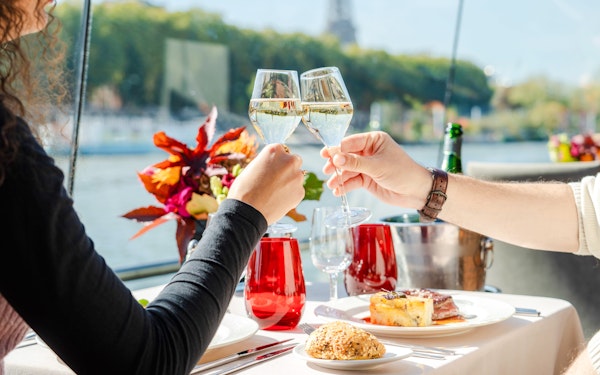
Bateaux Mouches® Seine River Lunch Cruise with Live Music
5.0(1)2 hoursViewFrom$104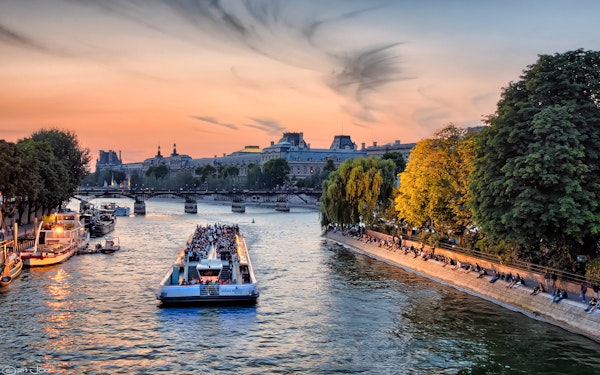
Seine River Cruise from Pont de l'Alma with Sparkling Champagne
4.5(2,084)1 hr 10 minViewFrom$70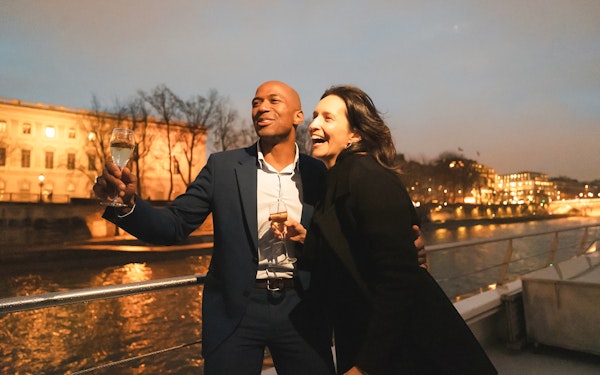
Bateaux Mouches® Seine River Dinner Cruise with Live Music & French Menu
4.4(939)2 hr 15 minViewFrom$156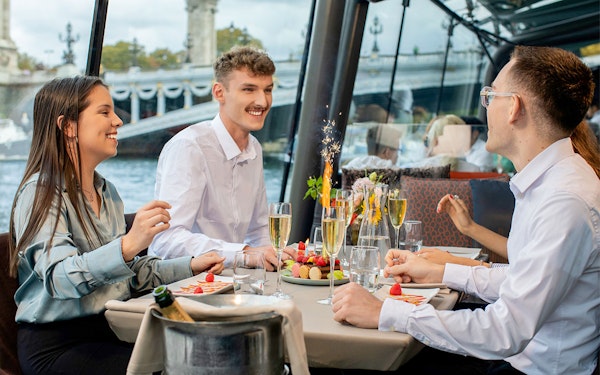
Bateaux Parisiens Seine River Lunch Cruise with French Menu
4.6(4,389)2 hoursViewFrom$92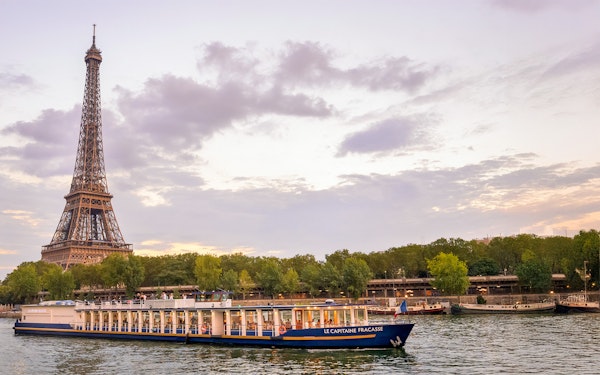
Capitaine Fracasse Seine River Dinner Cruise
4.8(24)2 hoursViewFrom$121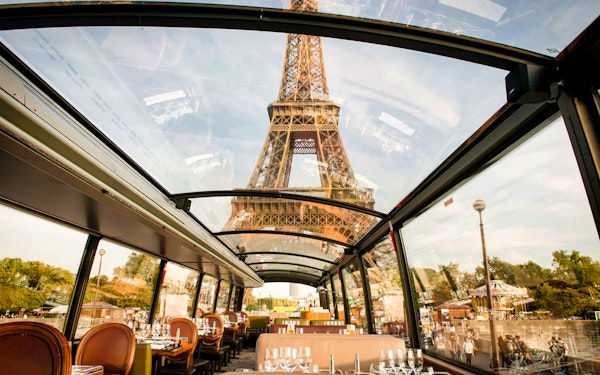
Marina Seine River Lunch Cruise with Brasserie Menu
4.3(2,489)2 hoursViewFrom$80
22. Vespa or vintage 2CV tour
Quick facts
- Price band - $100-$220
- Duration - 1.5-3 hours
- Best for - Couples, evenings, photographers wanting a different angle
Passenger Vespa or vintage 2CV citroën tours cover four times the ground of a walking tour. Vespa with a driver is the same model used in Rome; the 2CV is the Paris-specific charm - old convertible roof down, picnic blanket optional, hits the photogenic side streets a walking tour misses.
23. Catacombs
Quick facts
- Price band - $25 (direct) · $50-$110 (skip-the-line guided)
- Duration - 1 hour underground
- Best for - Off-beat Paris, the morbidly curious; not for the claustrophobic
- Book ahead? - Yes - capacity capped at 200 underground at a time
Two kilometers of ossuary tunnels under the 14th arrondissement holding the remains of 6 million people. Walk-up queues are 2+ hours; skip-the-line tickets are the only practical way for short stays. Audio guides are €5 add-on.
24. Moulin Rouge or Crazy Horse cabaret evening
Quick facts
- Price band - $115-$280
- Duration - 2.5 hours
- Best for - Couples, special-occasion evenings, replaces dinner
Paris's two surviving major cabarets. Moulin Rouge is the historic option (Toulouse-Lautrec, can-can history, packaged with optional dinner). Crazy Horse is the smaller, edgier modern revue. Both book out for premium slots - Friday + Saturday evenings sell 3+ weeks ahead.
How to pick from this list, fast
- One day in Paris: Eiffel Tower morning + Seine sunset cruise + walk through Tuileries to the Louvre exterior.
- Two days: Add a Louvre guided tour + Île de la Cité (Notre-Dame + Sainte-Chapelle) + a Le Marais evening.
- Three days: Add Montmartre half-day + Musée d'Orsay + a cooking class.
- Four days: Add Versailles half-day + Latin Quarter walking + a Champagne day trip OR a wine + cheese tasting evening.
- Five days: Add Giverny full day OR Normandy + one more neighborhood deep-dive.
Common questions
How many days do I need to see the main Paris attractions?
Four full days is the comfortable minimum - two for the Eiffel-Louvre-Tuileries core, one for Montmartre or Le Marais, and one for either Versailles or a Seine cruise + Sainte-Chapelle day. Three days works if you skip one major museum; five lets you add Champagne or Giverny without rearranging.
Which Paris attraction is the single most-booked?
Skip-the-line Eiffel Tower summit-access tickets dominate Paris bookings by volume - they pair with Seine cruise add-ons on most operators. The Louvre is second, with the guided "Mona Lisa highlights" format leading the pack.
Is the Louvre Museum worth a guided tour over a plain ticket?
Yes for first visits - the museum is 73,000 m² across three wings, and unguided visits routinely consist of a Mona Lisa sprint and nothing else. A 2-hour highlights tour gets you a curated route through the Italian Renaissance + the Greek antiquities + the French royal apartments, often entering via the lower-queue Porte des Lions or Carrousel.
Should I climb the Eiffel Tower or just photograph it?
If it's your first visit: climb it once for the summit view, then return for the Trocadéro or Champ-de-Mars photograph at sunset. Stairs to the second floor cost less than the elevator and rarely queue; the summit costs more and books out 4+ weeks ahead in peak season.
Which Paris day trip is the best pick?
Versailles for first visits - half-day or full-day with palace skip-the-line, lots of operators, frequent departures. Giverny (Monet's gardens) for return visits. Champagne (Reims/Épernay) for a slower indulgent day. Normandy D-Day sites are the long full-day for history travelers.
Are evening Paris activities worth booking?
Yes - a 1-hour sunset Seine cruise hits every floodlit monument with no walking; a Montmartre cabaret (Moulin Rouge, Crazy Horse) replaces dinner; an after-dark Latin Quarter food walk is the under-rated pick. Skip the dinner-cruises unless you specifically want the experience - you pay 4x for fine food.
What are the top 10 things to do in Paris?
The top ten that hold up year after year are the Eiffel Tower, the Louvre, Notre-Dame + Sainte-Chapelle on the Ile de la Cite, the Musee d'Orsay, Montmartre + Sacre-Coeur, the Arc de Triomphe, a Seine river cruise, the Marais, the Musee de l'Orangerie for Monet's Water Lilies, and a Versailles day trip. The Eiffel, Louvre, and Versailles are the three worth booking skip-the-line access for; the rest reward seeing on foot.
What are some free things to do in Paris?
Plenty. Notre-Dame's exterior + the Ile de la Cite walk cost nothing, and the reopened cathedral interior is free by timed reservation. Add a wander through Montmartre to Sacre-Coeur (basilica entry is free), the Marais, the Jardin du Luxembourg, and the Promenade Plantee elevated park. The Musee d'Orsay is free on the first Sunday of each month, and the Louvre is free on the first Friday evening from October to March - both need a booked time slot.
What are the most romantic things to do in Paris?
A sunset Seine cruise, the Eiffel Tower summit after dark, and a slow evening walk through Montmartre's back lanes top most couples' lists. For a quieter version, pair the Musee de l'Orangerie's Water Lilies rooms with a Tuileries stroll, picnic on the Pont des Arts, or book a 2-hour wine + cheese tasting in a Saint-Germain wine bar. A vintage 2CV tour with the roof down is the under-rated splurge.
What are the best things to do in Paris with kids?
The Eiffel Tower (take the stairs to floor two - kids love the climb), a Seine cruise, and the hands-on science halls at the Cite des Sciences in La Villette work for most ages. The Jardin du Luxembourg has toy sailboats + a playground, the Catacombs suit older kids who aren't claustrophobic, and a croissant-baking workshop keeps younger ones busy. Versailles' gardens give them room to run on a day trip.
Keep reading
Paris pillar
Paris travel guide: first-time visitor essentials for 2026
Where to stay, how the Metro really works, ticket strategy for the Louvre + Eiffel, eating timing, and seven first-timer mistakes.
Read more
Paris itinerary
3 days in Paris: a walkable itinerary for 2026
A field-tested 3-day Paris itinerary built around the 2026 booking realities - what to do, in what order, and which tours save you time.
Read more
Paris timing
Best time to visit Paris: month-by-month guide for 2026
Trade-offs between rain, crowds, museum queues, and prices - with the two sweet-spot windows for Paris travel.
Read more
Paris ticket guide
Eiffel Tower tickets: summit access, stairs, and the best-value tour
Every Eiffel ticket type compared, when summit access is non-negotiable, and the stairs hack most travelers miss.
Read more
Paris ticket guide
Louvre Museum tickets: skip-the-line, early access, and the best guided tour
Every Louvre ticket type compared, the entry-door hacks that save 40 minutes, and which guided format actually beats walking it alone.
Read more

Destination guide
Paris, France
Browse the full Paris destination page - categorized tours, ticket comparisons, and city FAQs.
More reads
More guides to help you plan your trip

1 Day in Paris: The Itinerary That Fits, and the One That Does Not
One day in Paris, planned around real distances - what to book, what to walk, what to skip, and why three museums in a day is the classic mistake.

The Best Food Tours in Paris: Which Ones Are Worth the Money
Paris food tours are expensive and the good ones are excellent. How to tell them apart - by neighbourhood, by format, and by what you actually want to learn.

Arc de Triomphe Tickets in 2026: Rooftop Access, Combos and How to Skip the Line
A 2026 guide to Arc de Triomphe tickets - rooftop terrace timed entry, skip-the-line, Paris viewpoint and cruise combos, and guided Champs-Elysees walks.

Musee d'Orsay Tickets in 2026: Types, Skip-the-Line and Combos Compared
A 2026 guide to Musee d'Orsay tickets - timed entry, skip-the-line, guided highlights tours, Louvre and Orangerie combos and pass options compared.

5 Days in Paris: The Perfect Itinerary at a Relaxed Pace
A 5-day Paris itinerary at a human pace: the icons, Montmartre and Le Marais, a full day at Versailles, and the tours travelers rate highest for each day.

The Best Walking Tours in Paris: Highlights, Montmartre, Food and More
Every kind of walking tour of Paris compared: classic highlights, Montmartre, food walks, Le Marais, and night walks, ranked on real ratings and reviews.

Christmas Markets in Paris: The Best Festive Spots and Tours
The best Christmas markets in Paris, from the Tuileries to La Défense, plus when the season runs, how to plan around crowds, and the top festive experiences.

Summer in Paris: What to Expect and What to Book
What summer in Paris is really like - long evenings, heat waves, August closures, and the Seine cruises, Eiffel Tower visits, and day trips worth booking.