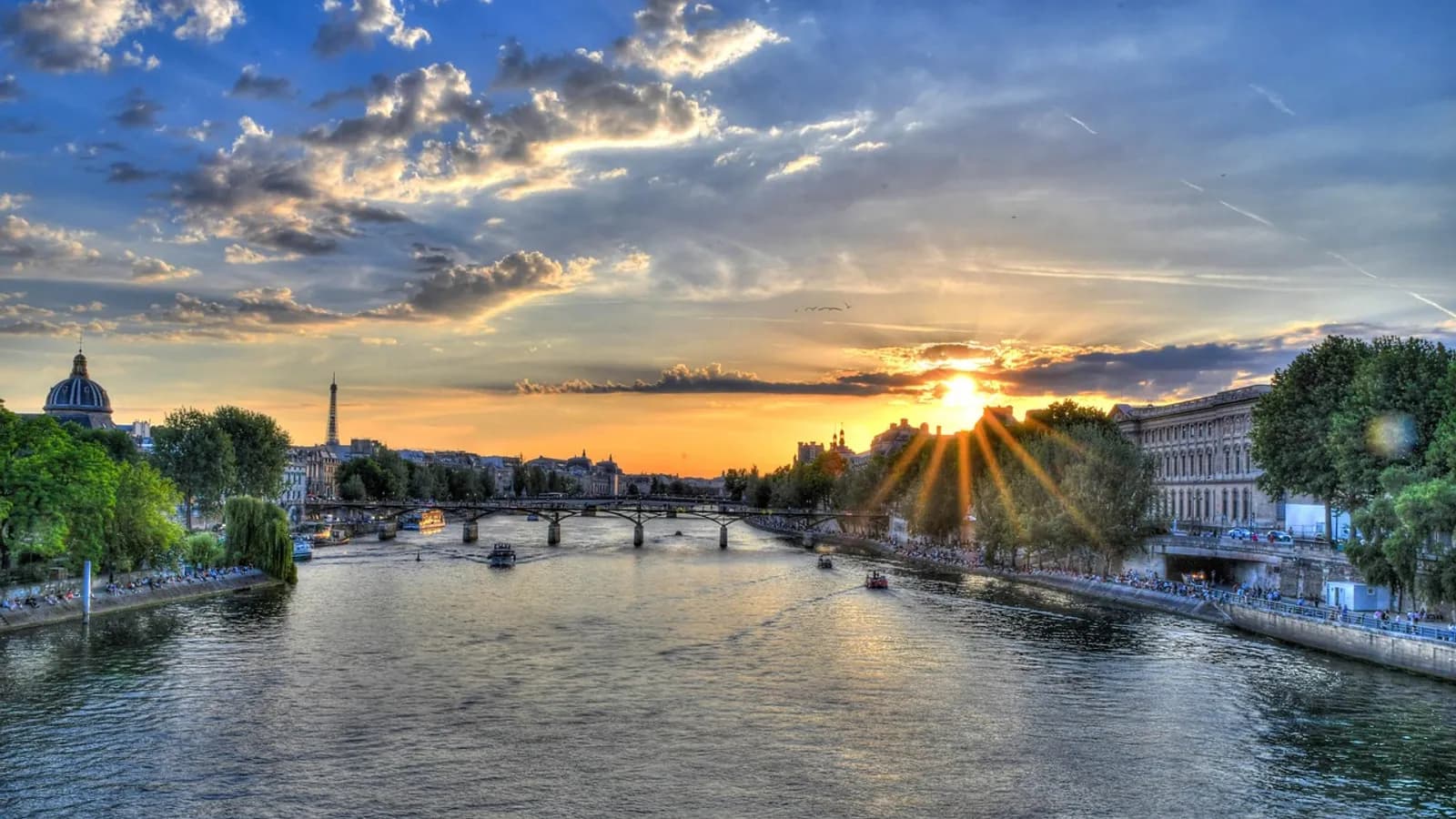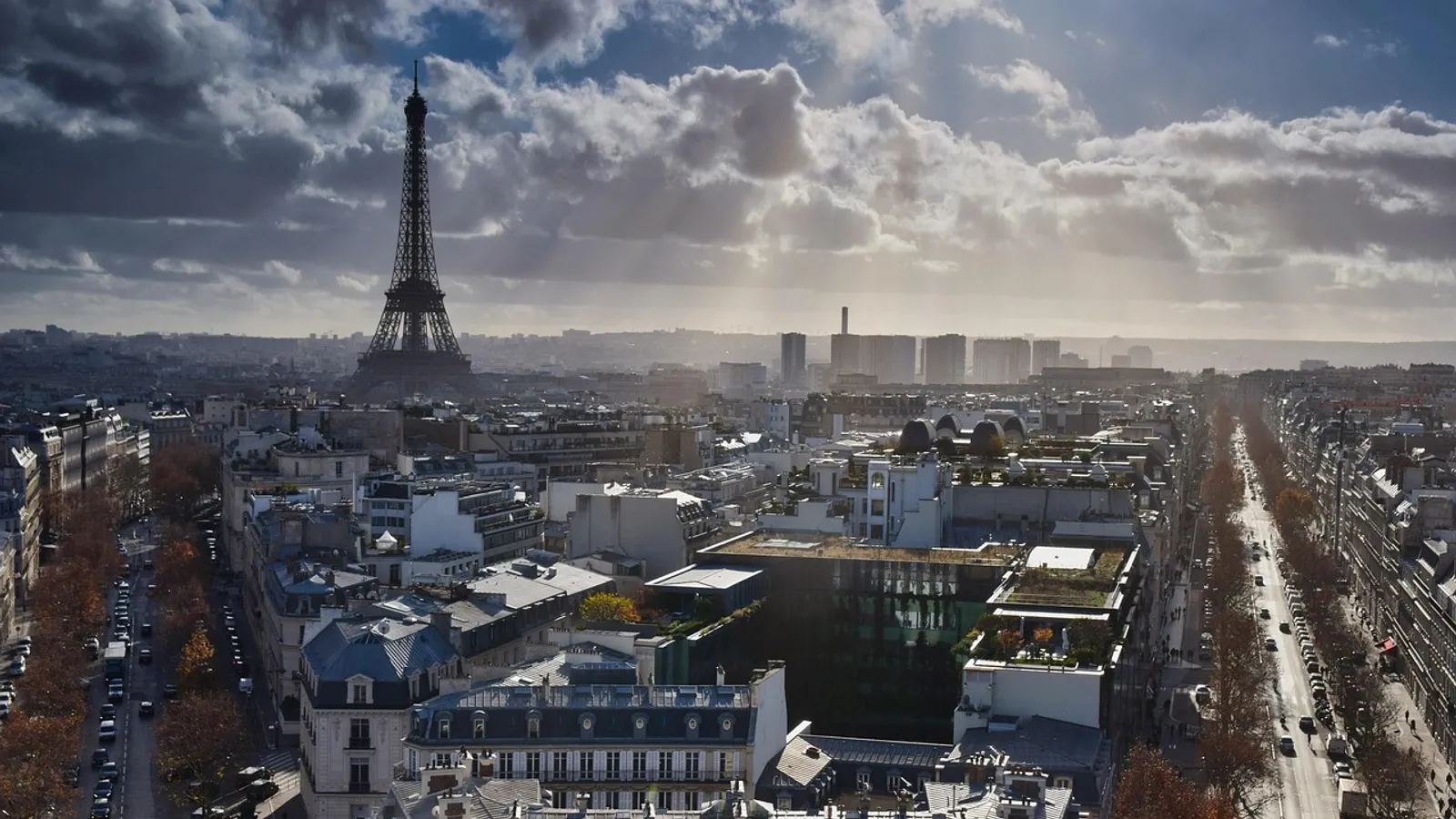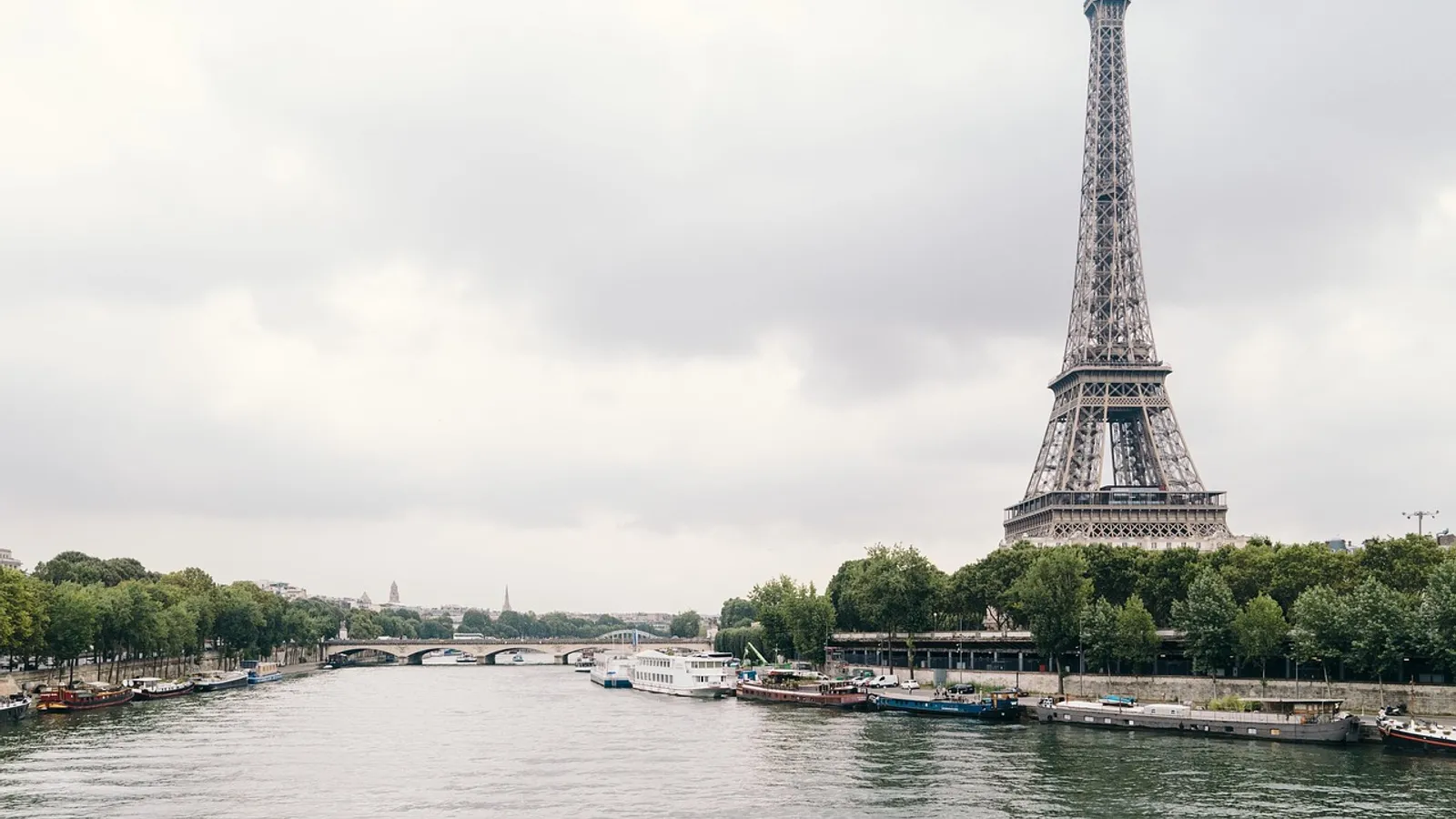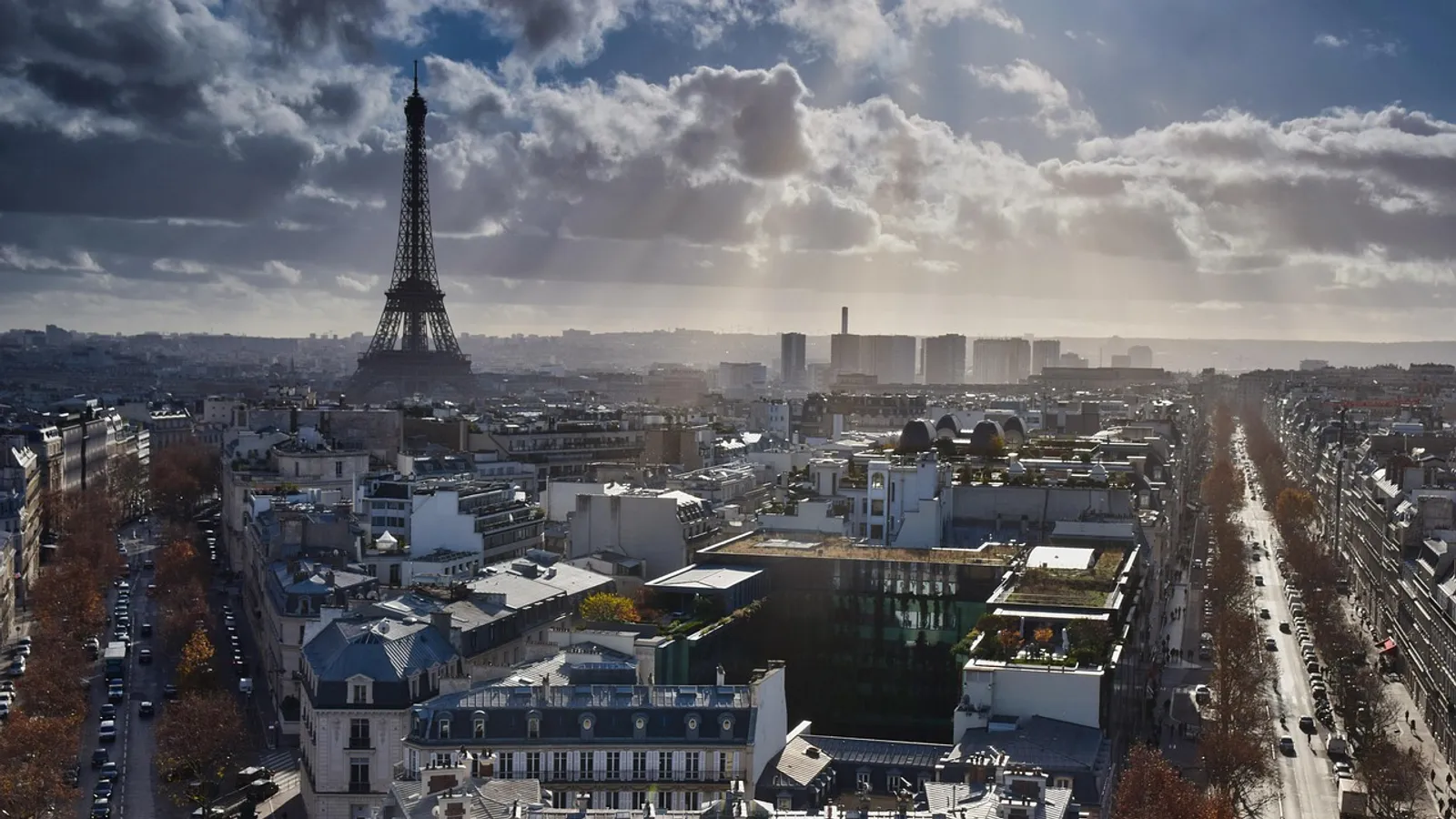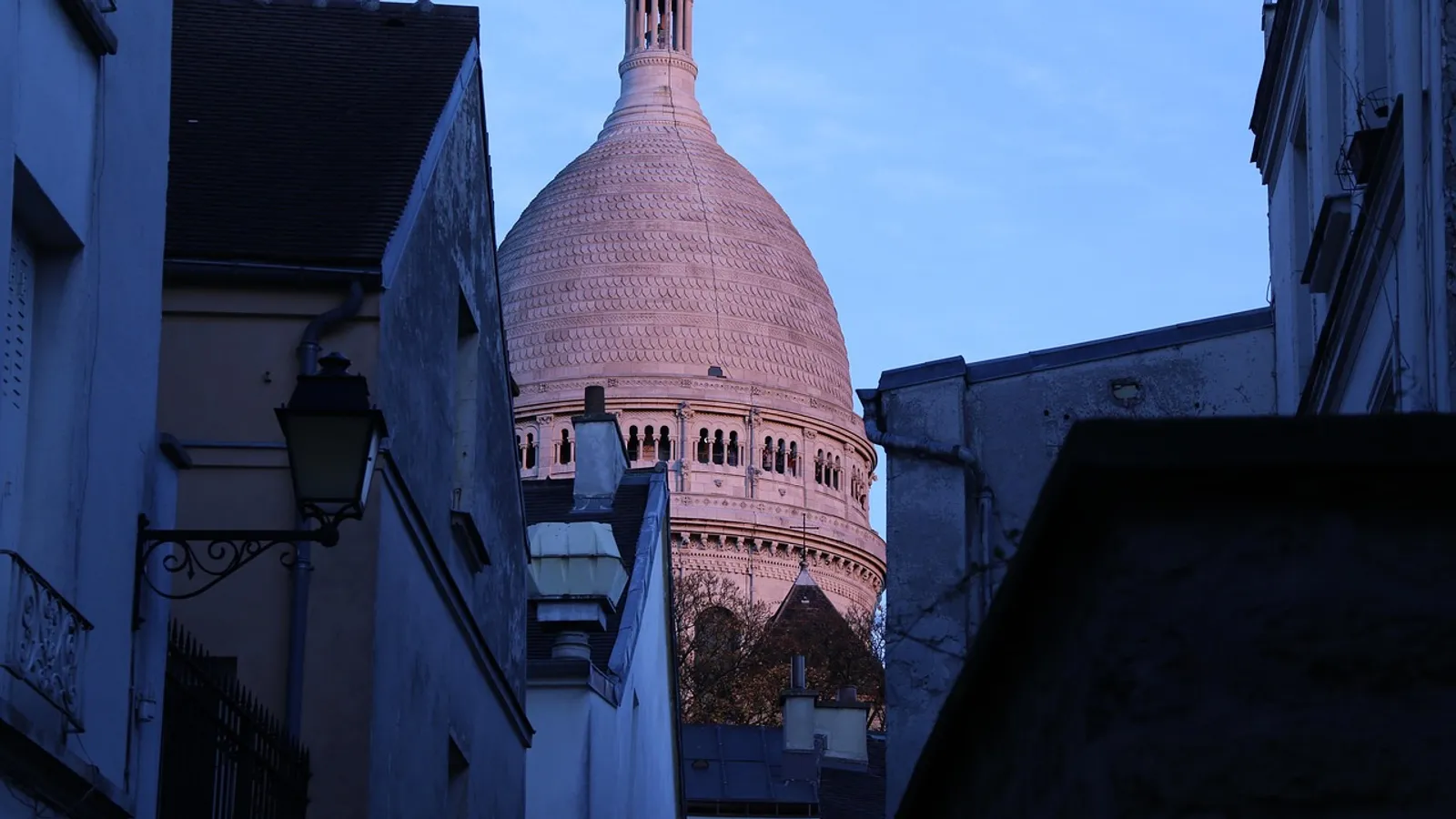
The best walking tours in Paris are neighbourhood walks: Montmartre for the hilltop village and its painters, Le Marais for 17th-century mansions and the Jewish quarter, and the Latin Quarter with Ile de la Cite for the oldest layers of the city. Book a guide where the history is invisible from the pavement. The Seine banks, a UNESCO World Heritage Site, make an easy walking tour of Paris on your own.
- Sacré-Coeur
- 6:30 am until 10:30 pm, every day; entry costs nothing
- Sacré-Coeur dome
- €8 adults, €5 up to age 15, checked 13 Nov 2026
- Montmartre funicular
- Covered by a €2.55 metro ticket, checked 13 Nov 2026
- Notre-Dame
- Entry costs nothing; booking a slot is optional
- Seine banks
- UNESCO World Heritage Site since 1991
- Eiffel Tower sparkle
- 5 minutes on the hour after dark, last at 11 pm
How Paris walking tours work: tip-based, group and private
Paris walking tours come in three formats, and the choice matters more than the route. Tip-based tours have no fixed price, and the guide earns whatever the group hands over at the end. Paid group walks set a price and a maximum group size, and some add an entry or a tasting. Private walks follow your pace and your questions. Whichever you choose, expect to spend most of the time outdoors, because the big monuments set their own rules for guides.
Those rules are worth knowing before you book anything that promises to go inside:
- Notre-Dame towers: the Centre des monuments nationaux does not permit public speaking on the tower circuit, and tour guides and other tourism professionals may not buy tickets.
- Sainte-Chapelle: tourism professionals and groups of 8 or more must book, and a group is limited to 24 people (official practical information).
- Sacré-Coeur: groups need no reservation, but the basilica asks group leaders for the utmost discretion, and photography is not permitted in the nave (basilica hours page).
We picked the walks below on one test: does a guide show you something you would walk straight past alone? Where the answer is no, we say so and give you the route instead. The cards under each guided section show live options from several booking sites.
Which walk to book first
| Walk | Best for | Area | Ticketed extras on the way (optional) |
|---|---|---|---|
| Montmartre | First-timers, art lovers | 18th arrondissement | Sacré-Coeur dome, €8, 280 steps |
| Le Marais | History, architecture | 3rd and 4th | None needed: Carnavalet and Victor Hugo collections cost nothing |
| Latin Quarter and Ile de la Cite | Medieval and Roman Paris | Left bank and the cathedral island | Notre-Dame towers, €16, 424 steps; Sainte-Chapelle, from €16 |
| Classic highlights | A first day in Paris | Louvre to the Eiffel Tower, along the river | Louvre, Eiffel Tower |
| Night walk | The Eiffel Tower sparkle | Seine banks, Montmartre | None |
| Self-guided Seine route | Doing it alone | Seine banks | Any interior you choose |
Prices are official, checked 13 Nov 2026. If you have time for one guided walk, make it Montmartre or Le Marais. In both, most of the history sits behind ordinary facades, and a storyteller is what makes it visible. The highlights and the river you can do yourself.
Classic Paris highlights walks
A highlights walk is a good first morning in Paris, not a substitute for the museums it passes. These walks string together the riverside palaces and squares of the right bank, and the guide's job is orientation: which building is which, and how the city fits together.
The Paris tourist office's riverside walk covers the same ground. It detours into the Louvre's Cour Carrée for a view of Ieoh Ming Pei's pyramid, crosses to the left bank and looks back over the river at the Tuileries garden designed by André Le Nôtre, the Musée de l'Orangerie and the obelisk of Place de la Concorde. It then crosses the Pont Alexandre III and back, and finishes along Quai Branly at the Eiffel Tower, which is where a highlights walk naturally runs out of road.
None of this includes going in. If the museum is the point of your trip, buy Louvre tickets for a timed slot after the walk, rather than a "highlights" product that only circles the outside. The same logic applies at the end of the route: Eiffel Tower tickets are a separate decision, best made once you know whether you want the summit.
Paris highlights walks to compare

Paris Highlights Tour: Notre-Dame & Louvre Semi-Private & Private
5.0(28)7 hr 30 minViewFrom$423
VIP Paris in a Day: Montmartre, Louvre, Île de la Cité, Cruise
4.9(16)8 hoursViewFrom$446
Paris History Walk: Medieval Marais, Notre Dame Islands & Stories
5.0(15)2 hoursViewFrom$77
Explore Paris Highlights by Bike
5.0(70)4 hoursViewFrom$45
Paris French Revolution Small Group Walking Tour: 1789 to Today
5.0(13)2 hoursViewFrom$61
Paris: Segway Night highlights small group tour
5.0(30)1 hr 30 minViewFrom$79
Paris starts here The Tour for first-time visitors
4.8(15)2 hoursViewFrom$17
Paris: Montmartre Walking Tour with Wine & Cheese Tasting
5.0(17)6 hours - 7 hoursViewFrom$135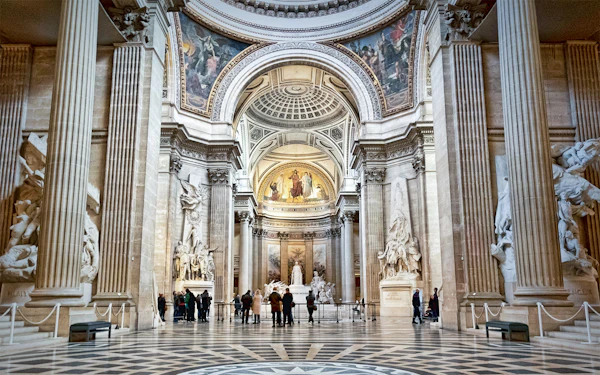
Notre-Dame to Panthéon Tour with Panthéon Ticket
3.7(3)1 hr 30 minViewFrom$38
Kickstart Paris Private Tour. City Highlights for Newcomers
5.0(21)2 hr 30 minViewFrom$97
Montmartre walking tours
Montmartre is the Paris walking tour most worth paying a guide for. The tourist office counts Picasso, Van Gogh, Renoir, Monet, Zola and Piaf among the artists who lived here, and a good guide ties their studios, cabarets and the vineyard into one story. Alone, it is easy to see the basilica and the artists' square and miss everything between them.
Getting up the hill. The Montmartre funicular is covered by a standard Metro-Train-RER ticket, at €2.55 full fare, checked 14 Nov 2026. The alternative is Rue Foyatier, a street made entirely of stairs with 222 steps, according to the tourist office's Montmartre walk. At the other end of the hill, Abbesses is the deepest station on the Paris metro: its platforms lie 36 metres below the street, and a lift spares you the spiral stairs.
The Sacré-Coeur. Every day of the year, without exception, the doors open at 6:30 am and close at 10:30 pm, and admission costs nothing (official hours, checked 13 Nov 2026). Its own page puts the busy period at 10:30 am to 5:00 pm, when you may queue 10 to 15 minutes to enter the sanctuary. The tourist office gives its height as 83 metres and dates its completion to 1923, after ground was broken in 1875.
The dome climb. It is the paid extra on a Montmartre walk: adults pay €8 and children up to 15 pay €5, at the dome's own ticket office (dome page, checked 13 Nov 2026). Climbs start at 10:15 am, the last visitors go up at 5:00 pm and the dome closes at 5:30 pm, stopping for a break around lunchtime as well; the basilica adds that these times shift with the season and the weather. Expect a narrow staircase of 280 steps, and there is no lift.
What a guide adds. Place du Tertre, where some 300 painters and portrait artists take turns, is easy to find alone; the context is not. The Musée de Montmartre at 12 rue Cortot sits in some of the oldest buildings on the hill; Suzanne Valadon, Maurice Utrillo and André Utter moved there in 1912, and the museum has rebuilt their studio-apartment. Round the corner, the Clos Montmartre vineyard has 2,000 vines and makes at most 1,000 bottles a year. The museum's programme, as read on 20 Nov 2026, listed a guided vineyard visit with a tasting, run with the Montmartre festival committee until 2 January 2027.
The tourist office's own route finishes at Place des Abbesses, where the "I love you" wall in Square Jehan Rictus collects the phrase in more than 300 languages and dialects. Tip-based walks of Montmartre exist too and follow much the same streets; read the section on tip-based tours below before you choose one.
Montmartre walking tours to compare

Montmartre guided walking tour with local guide in small group
5.0(21)2 hr 20 minViewFrom$45
Paris Montmartre Free Walking Tour in English
5.0(264)2 hoursViewFrom$5
Montmartre Semi Private Tour: from Moulin Rouge, to Sacré-Cœur
5.0(72)2 hoursViewFrom$127
Montmartre Walking Guided Tour
5.0(135)2 hoursViewFrom$25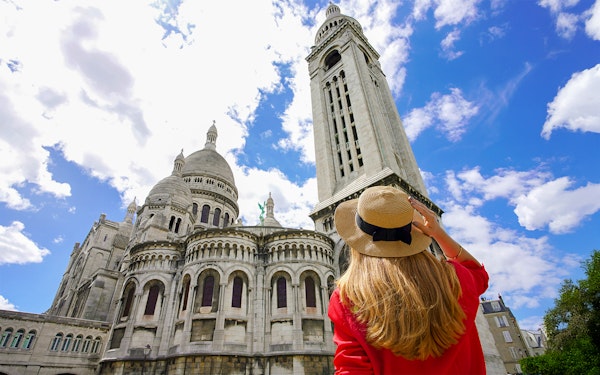
Montmartre & Sacré-Cœur Guided Walking Tour
3.0(1)1 hr 30 minViewFrom$48
Montmartre Private Walking Tour: Famous Artists and Cabarets
5.0(38)2 hr 15 minViewFrom$323
Explore Montmartre like a local - Private walking tour
5.0(17)2 hr 30 minViewFrom$307
Montmartre Tour Paris
5.0(38)2 hoursViewFrom$148
The food, wine & tragedies tour of Montmartre
5.0(19)2 hr 40 min - 3 hr 10 minViewFrom$99
Paris: Montmartre Semi-Private Guided Walking Tour
5.0(18)2 hoursViewFrom$70
Le Marais walking tours
Le Marais is the best Paris walking tour for architecture. The district was marshland drained by religious orders, then an aristocratic quarter whose private mansions peaked in the 17th century, according to the tourist office's Marais walk. Many of those mansions now hold museums, so a guide has plenty to point at without buying a single ticket.
The usual anchors of a Marais walk:
- Place des Vosges, with 36 red-brick houses around a garden. Number 6 was Victor Hugo's home from 1832 to 1848; it is now the Maison de Victor Hugo, and its permanent collections cost nothing to see.
- The Jewish quarter around rue des Rosiers. In the 19th and 20th centuries the mansions filled with tailors' and goldsmiths' workshops, and a Jewish quarter grew up around this street. It is the part of the Marais where a guide's stories matter most, since there is no single monument to visit.
- The Musée Carnavalet, the city's history museum, at 23 rue Madame de Sévigné. Entry to the permanent collections costs nothing and needs no booking (practical information, checked 13 Nov 2026). The museum is closed on Mondays, opens from 10 am to 6 pm on the other days, and turns away luggage.
- The Philip Augustus wall, a 12th-century stretch of the city's old fortifications, 60 metres long and 7.6 metres high, at the corner of rue Charlemagne and rue des Jardins Saint-Paul.
One change for autumn 2026: the Marché des Enfants Rouges, which the tourist office describes as dating from 1615, burned down in the night of 11 to 12 October 2026. An officer at the scene told reporters that the market was completely destroyed (Euronews), and on 18 Nov 2026 the Paris region's visitor site still listed it as closed, with no reopening date. If a Marais food walk advertises a stop there, ask the operator what replaces it.
Le Marais walking tours to compare

Paris Le Marais Walking Tour: An Incredible History - Small Group
5.0(30)2 hoursViewFrom$61
Paris: Le Marais Private Guided Food Tour with 10 French Tastings
5.0(130)3 hr 30 minViewFrom$262
Small Group Marais/Place des Vosges Walking Tour -10 people max
5.0(34)2 hoursViewFrom$56
Jewish History Tour of Le Marais
5.0(33)4 hoursViewFrom$112Paris History Walk: Medieval Marais, Notre Dame Islands & Stories
5.0(15)2 hoursViewFrom$77
Paris Latin Quarter Walking Tour: History & Culture - Small Group
5.0(18)2 hoursViewFrom$61
Paris Le Marais Self Guided Walking Tour & Scavenger Hunt
5.0(22)2 hoursViewFrom$4
Paris Latin Quarter Private Tour—Roman Ruins, Sorbonne & Pantheon
5.0(65)2 hr 15 minViewFrom$324
Hidden Paris and Wine Class : A Walking Tour
5.0(30)3 hoursViewFrom$278
Latin Quarter Private Walking Tour
5.0(14)2 hoursViewFrom$188
Latin Quarter and Ile de la Cite walks
This is the walk for the oldest Paris: Roman ruins on the left bank, medieval churches, and the cathedral island. The Latin Quarter is named after the language of its medieval classrooms, according to the tourist office's Latin Quarter walk. It straddles the 5th and 6th arrondissements (tourist office, 5th arrondissement), and the tourist office's own walk starts at Place Saint-Michel.
On the left bank, look for the Arènes de Lutèce, a first-century Gallo-Roman amphitheatre with room for 15,000 spectators in its day, which anyone can walk into today, and the Roman baths beside the Musée de Cluny. The church of Saint-Julien-le-Pauvre dates from the 12th century, and the robinia in the garden next to it, Square René Viviani, was planted in 1601. Many Latin Quarter routes, the tourist office's included, climb to the Panthéon; note that its panoramic view was closed to visitors on 20 Nov 2026, according to the monument's own page, even though the tourist office's walk still suggests the climb.
Across the river, Ile de la Cite holds Notre-Dame, which reopened on 8 December 2024 after the fire of 15 April 2019, according to the tourist office's Notre-Dame guide. The cathedral's own site, read on 20 Nov 2026, says it is open to all at no charge, every day of the year: 7:55 am to 7 pm from Monday to Friday, until 10 pm on Thursdays, 8:25 am to 7:30 pm on Saturday and 8:15 am to 7:30 pm on Sunday, with last entry 30 minutes before closing. Booking a time slot is optional and costs nothing; it only shortens the wait at the door, and slots open a few hours before the visit, according to the cathedral's booking page. The cathedral also warns that no third-party platform is authorised to sell tickets, so a paid "Notre-Dame entry" is not something to buy.
Two interiors on the island are ticketed:
| Visit | Official price | November hours | Booking |
|---|---|---|---|
| Notre-Dame towers | €16 | 9 am to 5:30 pm, last entry an hour before closing | Online only, 424 steps |
| Sainte-Chapelle | €22 (outside the EEA), €16 (EEA nationals and residents) | 9 am to 5 pm, last entry 30 minutes before closing | Timed entry: arrive at your booked time |
Official prices from the Centre des monuments nationaux (towers, Sainte-Chapelle), checked 13 Nov 2026. The November hours apply from 1 October to 31 March.
Because guides cannot take groups up the towers, a guided island walk is really a guided exterior plus your own visits. Book the towers or the Sainte-Chapelle for the slot after your walk ends.
Latin Quarter and Notre-Dame walks to compare
Paris Latin Quarter Walking Tour: History & Culture - Small Group
5.0(18)2 hoursViewFrom$61Paris Latin Quarter Private Tour—Roman Ruins, Sorbonne & Pantheon
5.0(65)2 hr 15 minViewFrom$324
Semi-private Walking Tour: Notre Dame Mystery and Latin Quarter
4.9(61)2 hr 10 minViewFrom$32Notre-Dame to Panthéon Tour with Panthéon Ticket
3.7(3)1 hr 30 minViewFrom$38
Old Montreal, Notre-Dame & Downtown Walking Tour | Gratuity-Based
4.8(364)3 hoursViewFrom$5
Visits in Italian : Latin Quarter and the Seine ( 2 itineraries)
5.0(21)2 hoursViewFrom$32
Paris Old Town and Latin Quarter Guided Walking Tour
5.0(14)3 hoursViewFrom$40
The Ultimate Notre-Dame Cathedral & Île de la Cité Walking Tour
4.4(1,488)2 hoursViewFrom$66
Paris Latin Quarter Walking Tour with Pantheon Entry
5.0(1)ViewFrom$65
Paris Latin Quarter Small-Group Guided Walking Tour, 12 Max
5.0(274)2 hr 30 minViewFrom$61
Themed walks: film, literature and Belle Epoque Paris
A themed walk is the right second tour, once you know the main sights. The theme gives the route a reason, and the guide's knowledge matters more than on a general walk, because the places are often ordinary-looking buildings.
Literary Paris on the left bank
The left bank's literary history centres on Saint-Germain-des-Prés. The tourist office's Saint-Germain walk names Les Deux Magots and the Café de Flore as regular meeting places of the 20th-century literary world, frequented by Jean-Paul Sartre, Simone de Beauvoir and Albert Camus among others. The same walk passes the Institut de France, whose five academies include the Académie française, founded in 1635. Across the Latin Quarter, the tourist office singles out the Shakespeare and Company bookshop for readers of English literature.
Belle Epoque Paris
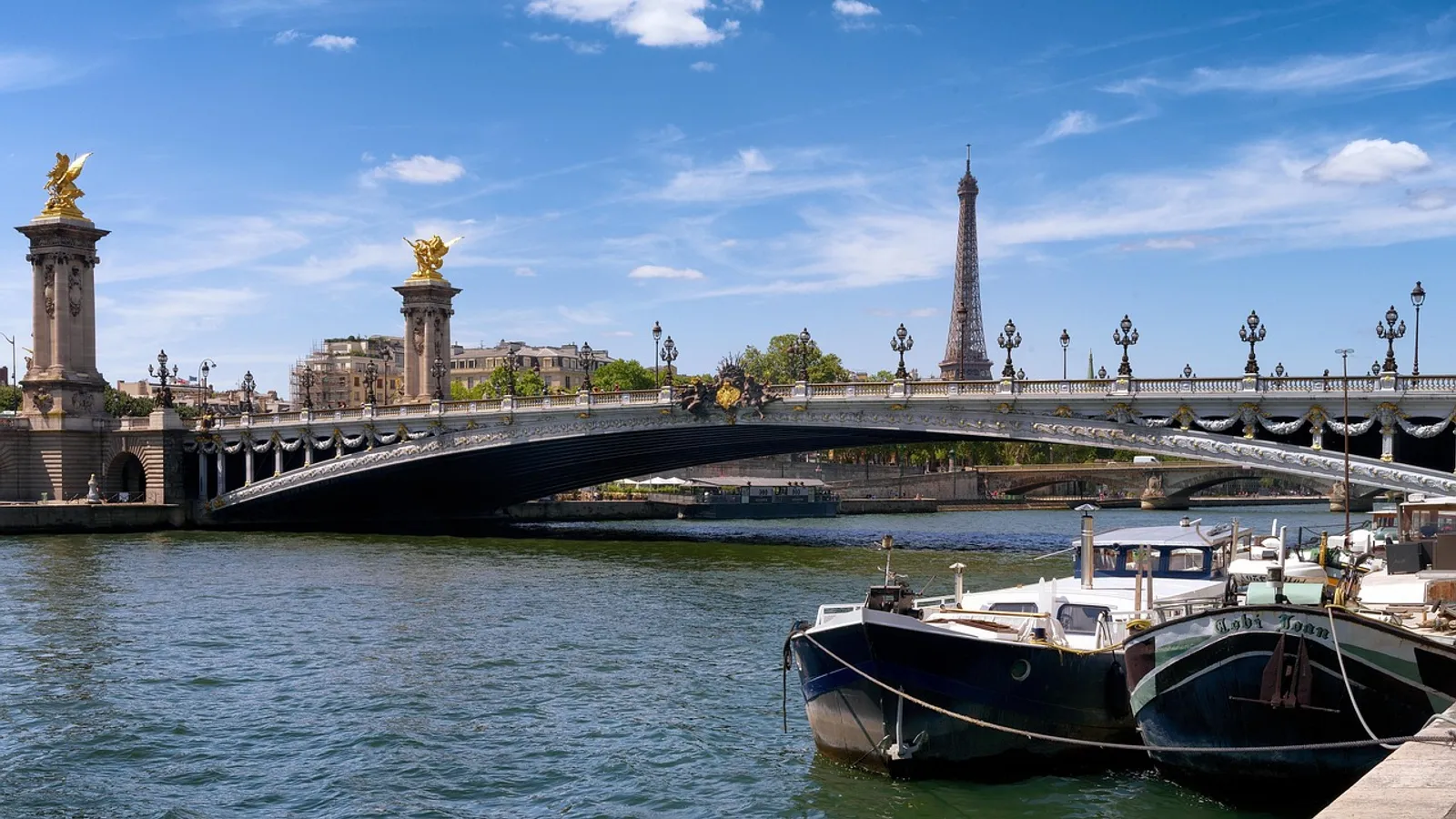
For the turn of the 20th century, the Seine between the Grand Palais and the Musée d'Orsay is the classroom. The tourist office calls the Pont Alexandre III a superb example of the Belle Epoque style, with 17-metre towers topped by gilded winged horses. The Petit Palais and the Grand Palais were both built for the Universal Exhibition of 1900, and so was the railway station that now houses the Musée d'Orsay. Book Musée d'Orsay tickets separately if you want the Impressionists after the walk.
On a wet day, the covered passages on the right bank are the better walk, though they belong to an earlier Paris. Paris has around twenty of them, most from the 19th century and mostly on the Right Bank, according to the tourist office's passages guide. Galerie Vivienne, built in 1823, has been a listed historic monument since 1974. Some passages close at night or at weekends, so check the hours of the ones on your route.
Emily in Paris filming locations walk
Walks themed on the TV series Emily in Paris lead you past streets, squares and cafes associated with its scenes, with the guide telling the story of each one. Every operator picks its own stops, so compare the routes before you book, and expect an outdoor walk rather than access to any set.
Paris night walking tours
Night walking tours trade interiors for light. The two reasons to book one are the Eiffel Tower sparkle and seeing Montmartre or the islands by evening light.
The tower's sparkle runs for 5 minutes on the hour once it is dark, using 20,000 bulbs laid over the golden lighting. The last sparkle is at 11 pm, and the lighting goes off completely at 11:45 pm, according to the Eiffel Tower's own page. The same page, read 14 Nov 2026, says photographing the tower at night is not illegal and anyone may share their photos on social networks, but the lighting and the sparkle are protected by copyright, so professional use of night images needs prior authorisation and may carry a fee.
Two interiors stay open late enough for an evening walk: the Sacré-Coeur until 10:30 pm every day, and Notre-Dame until 10 pm on Thursdays, with last entry at 9:30 pm. On other days the cathedral closes at 7 pm, or 7:30 pm at the weekend, so a late walk on Ile de la Cite stays on the square unless it falls on a Thursday.
Paris night walking tours to compare

Paris Evening Sightseeing Tour with Eiffel Tower Summit Tickets
3.4(9)3 hoursViewFrom$105
Illumination Tour of Paris and Eiffel Tower Summit (Reserved Access)
3.7(15)3 hr 30 minViewFrom$90
Illumination Tour of Paris and Eiffel Tower 2nd Floor (Reserved Access)
5.0(3)3 hoursViewFrom$90Paris: Segway Night highlights small group tour
5.0(30)1 hr 30 minViewFrom$79
Paris and Montmartre 2CV Tour by Night with Champagne
4.6(380)2 hoursViewFrom$318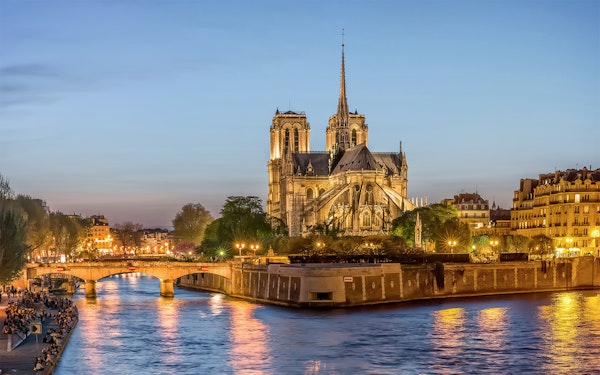
1-Hour Paris Illuminated Evening Sightseeing Cruise
4.5(11,319)1 hourViewFrom$20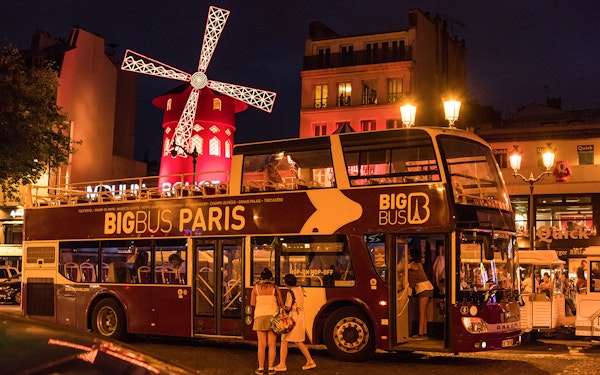
Big Bus: Paris Panoramic Night Bus Tour
4.4(2,060)ViewFrom$33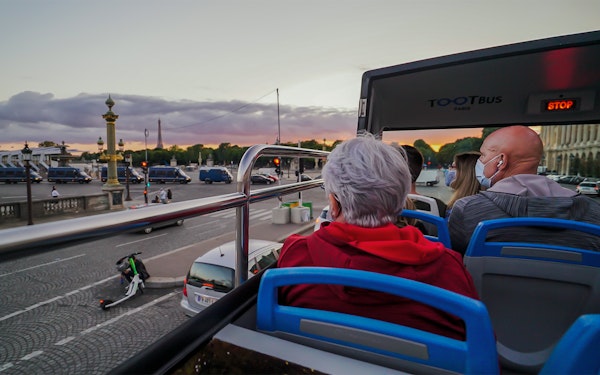
Tootbus: Paris Hop-on Hop-off Bus Tour with Night Tour
4.6(5)ViewFrom$59
Private Night Tour of Paris with Hotel Pick-up
3 hoursViewFrom$558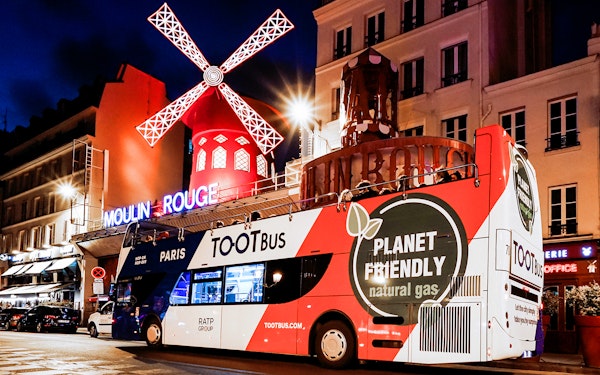
Tootbus: Paris Night Bus Tour
4.6(1,182)2 hoursViewFrom$31
Food walks in Paris
Food walks are their own category, with tastings rather than monuments at each stop, and we cover them in a separate guide to the best food tours in Paris. To get two walks out of one, choose a food walk in a neighbourhood you also want to see, so the stops double as orientation. Le Marais and Montmartre both suit this.
Tip-based walking tours in Paris: how they work
On a tip-based walking tour in Paris, you reserve a place without paying a set price, and the guide is paid by what the group gives at the end. So the price is whatever you decide to give, which is not the same as nothing. Settle on a figure before the walk starts, and bring some notes and coins, since not every guide will have a card reader.
Before you join one, ask three things:
- How many people can join? On narrow streets such as Montmartre's, a big group means you hear less. Paid small-group walks state their cap; ask a tip-based operator for theirs.
- Does it go inside anywhere? Expect a street walk. Where a stop has an entry fee, you pay it separately.
- Is there a booking charge? Read the booking platform's terms before you assume the reservation costs nothing.
If you want a guided visit at no charge, the official option worth knowing is at Notre-Dame. Volunteers from the CASA association lead visits of the cathedral on weekdays, and on Saturday and Sunday afternoons an outdoor tour in front of the three portals of the west front, according to the cathedral's pages for individual visitors and outdoor tours, as read on 20 Nov 2026. Tours run in French, English and other languages, depending on which volunteers are available. The outdoor tours need no registration, and the meeting point is on rue du Cloître Notre-Dame, at the corner of rue d'Arcole, next to the north tower. The cathedral links to the CASA schedule, so check the day's times before you go.
For how tip-based and paid formats compare on price in general, see the cost of a guided walking tour. For Paris itself, the cards on this page show live prices for the paid formats.
A self-guided Paris walking route along the Seine
A self-guided walking tour of Paris works best along the river. The banks of the Seine between the Pont de Sully and the Pont d'Iéna were inscribed as a UNESCO World Heritage Site in 1991, and in UNESCO's words, "the evolution of Paris and its history can be seen from the River Seine". UNESCO also notes that the lower quays have been closed to cars over nearly the whole stretch since 2014 on the Left Bank and 2016 on the Right Bank, so wherever you can drop down to river level, you walk away from the traffic.
The route below runs east to west, so that it ends at the Eiffel Tower around dusk. Leave room in the day for any interiors you add along the way. The tourist office publishes its own longer version, the Seine riverside walk, which starts upstream at Gare d'Austerlitz.
1. Notre-Dame and the cathedral square
Start on the square in front of Notre-Dame, and go in if the queue is short: entry costs nothing. The Pont au Double footbridge links the square to the left bank.
2. Sainte-Chapelle and the Tour de l'Horloge
Walk west along the island to the Palais de Justice. The clock on the Tour de l'Horloge has shown the time since 1371, according to the tourist office. The Sainte-Chapelle is a few steps away at 10 boulevard du Palais, and the 1,113 narrative panels in its 15 stained-glass windows are the reason to buy a ticket.
3. Pont Neuf and Square du Vert-Galant
At the island's western tip, the Pont Neuf was inaugurated by Henri IV in 1607 and is, despite its name, the oldest bridge in Paris, as the tourist office points out. UNESCO's listing cites it as an expression of the French Renaissance. Square du Vert-Galant sits at the very tip of the island.
4. Pont des Arts and the Institut de France
Cross to the left bank, walk along Quai de Conti and take the Pont des Arts, the footbridge between the Institut de France and the Louvre. The present bridge opened in 1984, replacing the cast-iron original. Couples used to fix padlocks to its railings until the practice was banned in 2015, because it threatened the structure of the bridge.
5. The Louvre's Cour Carrée and the pyramid
Step off the river into the Cour Carrée, then through the arcades to the pyramid. If you hold a timed Louvre entry, this is the place to leave the route and rejoin it later.
6. Tuileries garden and Place de la Concorde
Follow the garden west to the Musée de l'Orangerie and Place de la Concorde with its obelisk. Across the river stands the Musée d'Orsay, in the former Orsay railway station.
7. Pont Alexandre III
Cross the Belle Epoque bridge to the left bank. Its open design leaves the view clear from the Champs-Elysées side to the Invalides, and the Grand Palais and Petit Palais stand at its right-bank end.
8. The Eiffel Tower
Walk the last stretch along Quai Branly to the tower. If you time it for dusk, the first sparkle comes on the hour after dark.
Practical tips: shoes, timing and group size
Shoes. Wear shoes you have already walked in. Montmartre is steps and cobbles, and the two climbs on these routes, the Sacré-Coeur dome and the Notre-Dame towers, are 280 and 424 steps with no lift.
Timing in winter. From 1 October to 31 March, interiors close early: the Sainte-Chapelle at 5 pm and the towers of Notre-Dame at 5:30 pm, with last entries earlier still. Book walks for the morning if you plan to go inside afterwards. On the first Sunday of November, December, January, February and March, entry to the Sainte-Chapelle and the Panthéon costs nothing, a useful detail if a walk ends near either. For weather and crowds across the year, read the best time to visit Paris.
Group size. The smaller the group, the more you hear on narrow streets. Ask any operator for its maximum before you book; the Sainte-Chapelle's own cap of 24 per group is a sensible benchmark for guided visits inside.
Bags. Bring one small bag. The Carnavalet does not accept luggage, rucksacks on the Notre-Dame towers may be no bigger than 40 x 40 x 20 cm, and the cathedral itself turns away luggage and large bags and allows backpacks of up to 20 litres.
Travel advice. Before the trip, check your own government's travel advice for France.
Use the slot after the walk
Walks around Ile de la Cite and the Louvre pass ticketed interiors that sell timed entries. Book the interior for 30 to 60 minutes after the walk's advertised end, so a late finish doesn't cost you the slot.
For every other kind of experience in the city, browse Paris tours.
Paris walking tours FAQ
Can wheelchair users join a Paris walking tour?
On a flat route such as the Marais or the Seine banks, ask the operator about kerbs and cobbles before you book. Montmartre is harder, though the Sacré-Coeur has a lift for visitors with disabilities or reduced mobility at the back of the basilica, at 35 rue du Chevalier de la Barre, open 6:30 am to 9:30 pm. Neither the Sacré-Coeur dome nor the Notre-Dame towers has a lift. Inside Notre-Dame, tactile booklets and 3D models are available on request at reception, according to the cathedral's page as read on 20 Nov 2026; check the cathedral's own accessibility pages for wheelchair access before you go.
Can a walking tour guide take you inside Notre-Dame?
Yes, within the cathedral's group rules. Its groups page, read on 20 Nov 2026, has a category for visitors with a licensed tour guide from outside the cathedral, takes group reservations on its official site only, with no intermediaries authorised, and gives liturgy priority. Every visit led by a professional guide must be booked ahead through an approved professional account and use the cathedral's audio headsets, which are rented for a fee, for groups of 2 to 25 people including the guide and at most one hour inside. On your own, entry costs nothing and booking is optional. The towers are a separate visit that admits no groups, and tour guides may not buy tickets for it.
Is there a dress code for churches on a Paris walking tour?
Yes. The Sacré-Coeur asks every visitor to dress appropriately and to remain quiet, because it is above all a place of prayer. Notre-Dame's visitor rules, read on 20 Nov 2026, ask for modest clothing: shoulders, torso, stomach and thighs covered, and men remove hats indoors. On the Notre-Dame towers circuit, visitors in flip-flops, stiletto heels or swimming costumes, or with bare chests, are not permitted.
Are Paris walking tours suitable for children?
Most street walks are, as long as the route suits small legs. Two climbs are the exceptions. The Sacré-Coeur dome is not recommended for very young children, and on the Notre-Dame towers anyone under 18 needs an accompanying adult. For families, the Musée de Montmartre's programme, as read on 20 Nov 2026, listed family visits until 3 January 2027.
Are Paris night walking tours safe?
GOV.UK's travel advice for France, read 14 Nov 2026, does not single out night walks. It says pickpockets can work in gangs, with one distracting you while another goes into your bag, and that thieves operate on the Paris metro, on RER lines and at mainline stations. Its advice includes carrying your bag across your body rather than on your shoulder, keeping valuables in separate bags or pockets, and not getting distracted around tourist attractions and cash machines. Visitors from other countries should also read their own government's advice for France.
Is there an official Paris walking tour map?
Yes. The Paris tourist office publishes its own walks with numbered stops, and its Montmartre, Marais and Latin Quarter walks each come with an interactive map. They cost nothing to use and work well as a base for a self-guided day.
Sources
Sources for this guide, as read on 13 November 2026:
- Basilica of the Sacré-Coeur: hours and directions and the dome tour
- Ile-de-France Mobilités: Metro-Train-RER ticket (fare and Montmartre funicular)
- Musée de Montmartre
- Musée Carnavalet: practical information
- Paris tourist office walks: the Latin Quarter and the 5th arrondissement, Montmartre, the Marais, Saint-Germain-des-Prés, the Seine banks and the covered passages
- Paris tourist office: Notre-Dame visitor's guide
- Notre-Dame de Paris cathedral: opening hours, booking, groups, guided tour with a certified guide, visitor rules, individual visitors, outdoor tours and accessibility for visitors with visual impairments, read on the live site on 20 November 2026
- Centre des monuments nationaux: Notre-Dame towers, Sainte-Chapelle and Panthéon
- UNESCO: Paris, Banks of the Seine
- Eiffel Tower: the tower at night (photography and copyright passage re-read on 14 November 2026)
- GOV.UK: France safety and security, read on 14 November 2026
- Read on 18 November 2026: Euronews on the Enfants Rouges fire, Visit Paris Region: Enfants Rouges market, The Art Newspaper on the Sainte-Chapelle windows and Sortir à Paris on the Pont des Arts