TokyoSummerSeasonalPlanning
Tokyo in Summer: How to Enjoy a City That Is Genuinely Hot
Summer in Tokyo is hot, humid, and full of things worth seeing. How to structure days around the heat, what to book, and when the season is actually at its best.
Door SimilarTours Editorial - Travel Research · · 19 min leestijd

Tokyo in summer is a genuine trade, and the honest version of it is worth stating before anything else: this is the season with the most happening and the least comfortable conditions for doing it. Festivals, fireworks, long evenings, a city that visibly changes character - all of that is real. So is humidity that makes an afternoon of walking a serious undertaking rather than a pleasant one.
Visitors who plan around the heat have an excellent time. Visitors who plan a normal sightseeing schedule and assume they will cope end up spending the middle of every day recovering. This guide is about the difference.
Compare Tokyo tours and tickets →What the season actually feels like
The single most useful correction: it is the humidity, not the temperature.
Travellers who have handled hot, dry climates elsewhere routinely underestimate a Tokyo August, because the numbers on the forecast look manageable and the experience is not. Sustained walking in the middle of the day leaves you genuinely depleted in a way that the same temperature in a dry climate does not.
The other components worth knowing:
The rainy season comes first. Much of June is characterised by extended damp rather than dramatic storms. It is less unpleasant than it sounds - the temperatures are lower and the crowds are thinner - but plan for wet.
True heat arrives in July. From then through August is the hottest and most humid stretch, and also the most event-dense.
September is a second summer. Frequently still very warm, and the month with the most tropical storm activity. Travel disruption is a real possibility rather than a remote one.
Indoor cooling is aggressive. Air conditioning in trains, shops, and restaurants is strong. Moving between outdoors and indoors repeatedly is its own small climate challenge, and a light extra layer genuinely helps.
Insider tip
Invert the day and the season becomes easy. Outdoors early and late, indoors in the middle. This is not a workaround - it is what the city does. The parks and shrines at seven in the morning are a completely different experience from the same places at two in the afternoon, and the evenings are when summer Tokyo is at its best.
The reason to come anyway: the season is the event
Summer is the densest festival period of the Japanese year, and that is the genuine argument for accepting the weather.
Neighbourhood festivals, fireworks displays, seasonal food, and a general shift in how the city uses its public space all belong to these months. Unlike a lot of "seasonal atmosphere" elsewhere, this is not staged for visitors - it is a local calendar that you happen to be present for.
The practical implication: check what is on during your specific dates, because events are spread across the whole summer rather than concentrated in one week. Two trips a fortnight apart can have entirely different seasonal content.
Popular fireworks events draw enormous crowds, and the good viewing positions are taken hours in advance. Treat them as a whole-evening commitment rather than something to drop in on.
Structuring a summer day
Early morning, roughly until ten. This is your outdoor window and it is the best part of the day. Temples, gardens, markets, neighbourhood walking. Jet lag from Europe or North America frequently works in your favour here - you will be awake anyway.
Late morning to mid-afternoon. Indoors. Museums, aquariums, department stores, the extensive underground concourses connected to the major stations, a long lunch. This is not lost time; it is the part of the day the city itself spends inside.
Late afternoon into evening. Back outdoors as the heat eases. This is when the districts come alive and when the summer version of Tokyo actually distinguishes itself from every other season.
Night. The best walking of the day, and the reason summer evenings here are so well regarded. The city stays busy late, and the temperature finally becomes pleasant.
Evening and food tours - the summer-friendly format

Tokyo: Shinjuku Food Tour (13 Dishes at 4 Local Eateries)
An evening food route moving between air-conditioned stops - the right shape for August.
4.9(8,560)3 hoursViewFrom$79.84
Tokyo Bar Hopping in Shinjuku: Free-Flow, Full Dinner, Golden Gai
A guided evening through a dense bar district, dinner included.
4.9(3,906)3 hoursViewFrom$106.29
Best of Shinjuku: Izakaya Food Tour (3-4 Stops, 14+ Tastings)
An izakaya crawl - almost entirely indoors and almost entirely after dark.
4.9(2,825)3 hours 30 minutesViewFrom$89.37
Tsukiji Fish Market: Street Food & Culture Walking Tour
A short early-morning market walk - the other reliable summer slot.
4.9(1,071)1 hour 30 minutesViewFrom$12.78
Tokyo: Asakusa Food Tour- 15 Dishes and 4 Eateries
5.0(4)3 hoursViewFrom$179
Athens Evening Food Tour
4.9(931)3 hoursViewFrom$95
Asakusa Foods & Drinks, Culture Nightlife
5.0(5)2 hr 30 minViewFrom$192
Tokyo: Tsukiji Fish Market Food and Walking tour
4.9(2,022)2 hoursViewFrom$16
Savor Tokyo After 5: Hidden Gems & Delicious Bites With Guide
5.0(1)3 hr 30 minViewFrom$185
Tokyo Tsukiji Fish Market Food Walking Tour with 5 Tastings
4.9(3,719)3 hoursViewFrom$96
The early-morning options
Morning is the underused half of a summer Tokyo trip, and it is where the season's best sightseeing sits.
Market walks run early by nature and are consequently the single best-timed guided activity in July and August. Historical districts and gardens are at their most pleasant before the heat builds, and considerably less crowded than later in the day. And the light is good, which matters if you care about photographs.
The habit worth forming: decide the night before what your morning outdoor thing is, and go straight to it. Summer punishes a slow start more than any other season here.
Morning walks and historical districts

Tokyo: Imperial Palace and Shogun Historical Walking Tour
A central historical walk - book the earliest departure in summer.
4.9(2,819)2 hoursViewFrom$22.36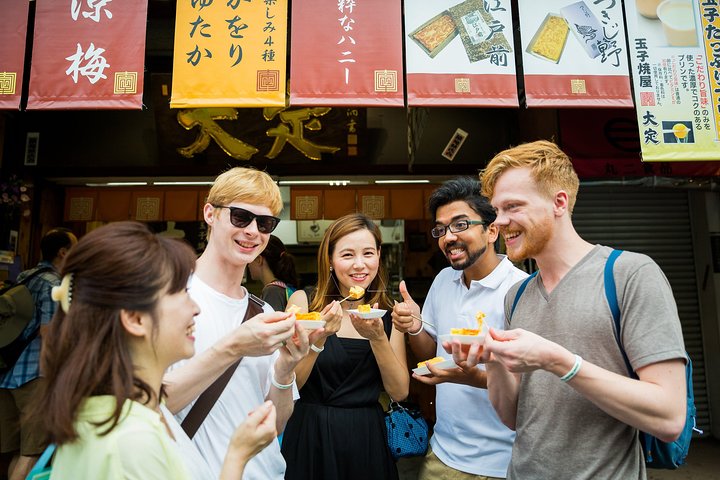
Tokyo Tsukiji Fish Market Food Walking Tour with 5 Tastings
A market tour with tastings, naturally scheduled before the heat arrives.
4.8(3,685)3 hoursViewFrom$93.63
Imperial Palace East Garden and Edo Castle Walking Tour in Tokyo
Gardens and castle grounds - shaded in places and best done early.
4.8(682)2 hours 30 minutesViewFrom$35.00
Tokyo: Shinjuku Historical Walking Tour & Secret Backstreets
A ninety-minute backstreet walk - short enough to fit the comfortable window.
4.9(984)1 hour 30 minutesViewFrom$16.37
Tokyo Early Morning Tour Asakusa Meiji Shrine Private Opt
5.0(78)5 hoursViewFrom$58
Kyoto Gion Early Morning Walking Tour
5.0(34)3 hoursViewFrom$48
Harajuku Meiji Shrine Walking Tour in Tokyo
5.0(111)2 hoursViewFrom$20
Asakusa Senso-ji Temple and Old Tokyo Walking Tour
4.9(1,029)2 hoursViewFrom$24
Takayama Early Morning Guided Walking Tour and Market Visit
5.0(1)2 hr 30 minViewFrom$112
Tokyo Castle & Imperial Palace - Shogun Walking Tour
4.9(1,719)2 hoursViewFrom$13
Getting out of the city in summer
Day trips work in this season with one filter applied: altitude and water beat everything else.
The mountain and lake areas outside Tokyo are meaningfully cooler than the city, which turns a day trip from an add-on into a genuine relief. Coastal trips have the same effect for different reasons. Both are more attractive in July and August than they are in the cooler months, which is the inverse of how day trips usually work.
The caveat is haze. Long-distance mountain views are less reliable in summer than in the clear, dry winter months, so a trip whose entire value is a distant view is a gamble. Pick trips where the ground-level experience stands on its own.
Cooler day trips out of Tokyo
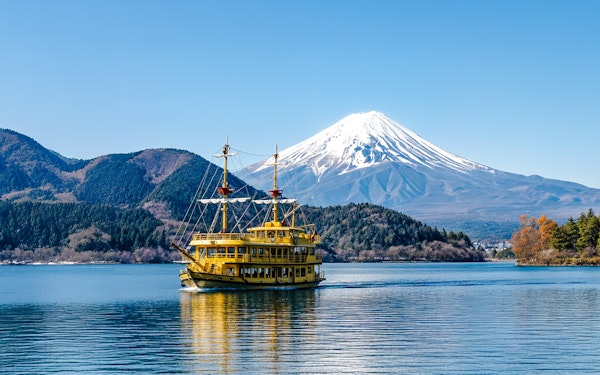
Mount Fuji Tour with Hakone Ropeway, Lake Ashi & Hakone Shrine
A lake-and-mountain day - noticeably cooler than the city.
4.6(2,778)10 hours 30 minutesViewFrom$55.58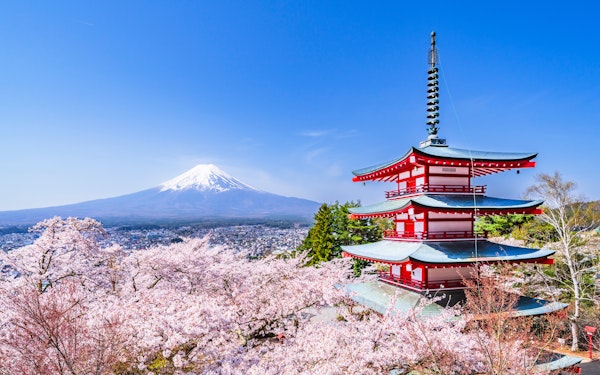
Mount Fuji Highlights Tour: Chureito Pagoda, Lake Kawaguchi & More
A lakeside circuit at altitude, with several viewpoints.
4.7(3,170)10 hoursViewFrom$52.71
Mt Fuji and Hakone 1-Day Bus Tour with Bullet Train Return
The most-booked version, returning by fast train rather than road.
4.8(5,552)11 hoursViewFrom$157.24
Mt Fuji & Hakone Tour: Cruise, Drum Show & Bullet Train Return
A lake cruise included - time on the water is the summer bonus.
4.1(7,589)12 hoursViewFrom$170.70
Hakone customized private one day tour
5.0(1)7 hoursViewFrom$179
Mount Fuji Full Day Sightseeing Tour from Tokyo
4.8(1,421)10 hoursViewFrom$58
Mount Fuji Majesty with Hakone Wonders Exclusive Private Day Trip
5.0(2)10 hoursViewFrom$459
Mt Fuji Hakone Tour from Tokyo: Cable Car and Cruise Option
4.6(456)10 hoursViewFrom$77
Hakone Full-Day Private Tour
4.8(5)7 hoursViewFrom$252
Mount Fuji, Hakone and Owakudani One Day Bus Tour from Tokyo
4.5(51)10 hoursViewFrom$53
What to pack, specifically
Generic hot-weather advice is not quite right for this climate. The specifics:
A small towel. The single most useful item, and a standard local habit. You will understand within an hour of arriving.
Breathable rather than merely light clothing. Humidity is the problem, so fabrics that handle damp matter more than thin ones that do not.
A folding umbrella. Doubles for sudden rain and for sun, and is normal here rather than eccentric.
A light extra layer. Counterintuitive in August, and genuinely useful because indoor cooling is strong and you will move between the two repeatedly.
Shoes that tolerate getting damp. You will sweat, and it may rain. Suede is the wrong choice.
A water bottle, and the willingness to keep refilling it. Vending machines and convenience stores are everywhere, so running out is a choice rather than a risk.
What to leave: anything heavy, anything that only works dry, and the assumption that you will want to walk between two and four in the afternoon.
Insider tip
Use the underground city. The concourses and shopping levels connected to the major stations form a substantial air-conditioned network, and locals use them to cross districts in summer without surfacing. On a hot afternoon, a journey that would be unpleasant above ground is comfortable below it - and there is plenty to look at on the way.
Month by month through the summer
The three and a half months usually grouped as "summer" behave differently enough to change which one you should pick.
June is the rainy season, and it is the most misunderstood month of the Japanese year. Extended damp rather than dramatic downpours, temperatures below the July peak, hydrangeas at their best, and noticeably fewer visitors. If you can tolerate grey and wet, June offers a quieter, cheaper, cooler city than the months either side, and the indoor half of Tokyo is superb.
July is when the heat arrives properly and the festival calendar opens up. The second half of the month is when the season fully declares itself. Humidity is high, evenings are long and lively, and this is the start of the stretch where inverting your day stops being optional.
August is the peak in every direction: hottest, most humid, most event-dense, and the month with the largest domestic travel volumes around the mid-month holiday period. Accommodation prices around those dates spike, and popular sites are busier than at any other point in the summer. It is also the most atmospheric month, which is precisely the trade.
September is a second summer with a complication. Temperatures often stay high well into the month, and it is the peak window for tropical storm activity, which means genuine travel disruption is a possibility rather than a theoretical risk. Late September starts to hand over to the excellent autumn walking weather.
If you want the season's atmosphere with the least discomfort, target early July or late September. If you want the full festival calendar, August is where it lives.
Indoor Tokyo is not a consolation prize
The advice to spend the middle of the day indoors reads like damage limitation. In this city it is not.
Tokyo's indoor offering is genuinely deep, and much of it is the sort of thing visitors would prioritise anyway. Large aquariums, art and design collections, immersive digital spaces, department store food halls that function as attractions in their own right, and entire shopping and dining complexes built into and above the major stations. None of these are weather substitutes; they are things people plan trips around.
The underground concourse networks deserve particular mention. The passages connecting the big stations are substantial, air-conditioned, and lined with shops and restaurants, and locals use them to cross districts in summer without ever surfacing. On a hot afternoon a journey that would be punishing above ground is comfortable below it.
The practical planning move: list your indoor priorities before you arrive, so that the middle of each day has a plan rather than a scramble. Visitors who do this report the heat as a mild inconvenience. Visitors who do not report it as the defining feature of the trip.
Staying comfortable, in practice
A handful of habits do most of the work, and they are all things residents do without thinking.
Drink before you are thirsty. Vending machines and convenience stores are on nearly every block, and cold drinks are cheap. There is no reason to ration.
Use convenience stores as cooling stops. They are air-conditioned, they are everywhere, and nobody minds you spending five minutes in one. On a long walk this is the equivalent of shade.
Buy the cooling products. Cooling sheets, sprays, and wipes are sold everywhere in summer for exactly this reason. They work, they are cheap, and there is nothing touristy about using them.
Plan shade into the route. Covered shopping streets and arcades are common and they change a walk substantially. A slightly longer route under cover beats a direct one in full sun.
Watch the changeover. Moving repeatedly between strong air conditioning and outdoor humidity is its own small strain. The light extra layer is what manages it.
Summer with children
The season suits families less well than the shoulder months, and being honest about that helps.
Heat and humidity hit small children harder, and the standard family strategy of long outdoor stretches broken by snacks does not survive an August afternoon. The workable version is the same inversion applied harder: outdoor time strictly early and late, and a genuinely good indoor plan for the middle four hours.
The compensations are real, though. The aquariums and science-focused attractions are excellent and are exactly where you want to be at two in the afternoon. Festivals are family events rather than adult ones. And the summer evenings, with the city out on the street until late, are more memorable for children than any daytime sightseeing would have been.
If your dates are flexible and you are travelling with young children, the autumn months are an easier trip. If they are not, structure beats stamina.
Where summer works against you
Midday sightseeing is effectively off the table. Not impossible, but expensive in energy for what you get. Any itinerary that assumes a full day of outdoor activity will not survive contact with an August afternoon.
Long-distance views are less reliable. Haze reduces the odds of the clear mountain sightlines that are a highlight in winter.
September carries storm risk. Travel disruption in the tropical storm window is a real possibility, and it is worth having flexible bookings on anything that involves leaving the city.
Popular events mean serious crowds. The summer festival and fireworks calendar is the reason to come, and it also produces some of the densest crowds of the year in specific places on specific nights.
Accommodation over peak festival dates prices accordingly. Not the whole season, but specific nights spike hard.
Booking notes specific to the season
A few things change about how you should book a summer trip here.
Prefer flexible cancellation on anything outdoors. Day trips, outdoor viewpoints, and open-air events are the bookings most likely to be affected by heat, rain, or storm activity. Where two similar products differ mainly on cancellation terms, the flexible one is worth the small premium in this season and not in others.
Book evening slots wherever a choice exists. Many tours and experiences run several departures a day. In July and August the evening departure is not merely more pleasant, it is a different quality of experience.
Watch the mid-August travel period. Domestic travel peaks around then, which affects train reservations, accommodation pricing, and crowding at popular sites simultaneously. If your dates are flexible by a week, moving them is worth real money.
Reserve long-distance train seats early if you are leaving the city. Summer is a heavy travel season and unreserved carriages can mean standing.
Who should come in summer
Come in summer if the festival and fireworks calendar is what you want, you are happy to be out early and late and indoors in between, you want the version of the city with the most going on, or your travel dates are fixed by school holidays anyway and you would rather plan well than wish otherwise.
Choose another season if you want to walk all day, you are travelling with people who struggle in heat and humidity, clear mountain views are a priority, or your idea of a good trip is a relaxed unstructured schedule - summer here rewards structure.
For pure walking comfort, the autumn months are the better choice, and Tokyo in the cold months is underrated for clarity and quiet. But neither has the summer calendar.
Compare Tokyo tours, tickets, and day trips →The short version
Tokyo in summer is hot, humid, and full of things worth being there for. The season punishes the visitor who plans a normal itinerary and rewards the one who inverts the day.
Be outside early, be inside in the middle, and be outside again in the evening - which is when the city is at its best anyway. Book the food and bar tours, which suit the season naturally, and the market walks, which run before the heat. Check the festival calendar for your exact dates, because that is what you are really coming for. And carry the towel.
How hot is Tokyo in summer?
Hot and, more importantly, humid. The temperature alone does not convey the experience - it is the humidity that makes midday walking genuinely draining rather than merely warm. Visitors who have handled dry heat elsewhere are frequently caught out. Plan for a climate where sustained outdoor activity in the middle of the day is not realistic, and structure your days accordingly.
Is summer a good time to visit Tokyo?
It is the season with the most going on and the least comfortable weather, which makes it a genuine trade. Summer brings festivals, fireworks, outdoor events, and a distinct seasonal atmosphere you cannot get at any other time. It also brings heat that will reshape your days. If you want the events and you plan around the heat, it is excellent. If you want to walk all day, choose another season.
When does summer start and end in Tokyo?
The rainy season typically runs through much of June and gives way to true summer heat from roughly July into September. September can still be very warm and is also when tropical storm activity is most likely. The most reliably hot and event-filled window is July and August; late September onwards begins to cool into the excellent autumn walking season.
What should I wear in Tokyo in summer?
Light, breathable clothing that copes with humidity rather than just heat, and shoes you can walk in that will get damp. Carry a small towel - it is a standard local habit and you will understand why within an hour. A folding umbrella covers both sudden rain and sun. Indoor air conditioning is strong enough that a light extra layer is genuinely useful.
How do I avoid the heat in Tokyo in summer?
Invert the day. Be outdoors in the early morning and again from late afternoon onwards, and use the middle of the day for anything indoors - museums, department stores, aquariums, long lunches, the extensive underground networks connected to the major stations. This is not a compromise; it is how the city itself operates in August.
Are there festivals in Tokyo in summer?
Summer is the densest season for festivals and fireworks events in Japan, and it is the main reason to choose these months. Events are spread across the city and across the calendar rather than concentrated in one week, so it is worth checking dates for your specific travel window. Popular fireworks events draw very large crowds and viewing spots fill hours ahead.
Is Mount Fuji visible from Tokyo in summer?
Less reliably than in winter. Clear long-distance visibility is generally best in the colder, drier months, and summer haze frequently obscures distant views. Summer is, however, the season when the mountain itself is accessible for climbing. If seeing it from a distance matters, treat any clear day as an opportunity to take rather than something to schedule.
Should I still do walking tours in Tokyo in summer?
Yes, but pick the departure time deliberately. Early morning and evening tours are comfortable; midday ones are hard work. Food and bar tours are naturally suited to the season because they run in the evening and move between air-conditioned stops. Market tours in the early morning are the other reliable summer choice.
Keep reading
Seasonal
Tokyo in winter: clear skies and the quiet season
The opposite trade - cold, dry, clear, and far less crowded.
Read more
Planning
Best time to visit Tokyo: month by month
Weather, crowds, and events across the year, with the trade-offs stated plainly.
Read more
Tokyo pillar
Tokyo travel guide: first-time visitor essentials
Where to stay, how the rail network really works, and what to book ahead.
Read more
Tours
The best walking tours in Tokyo
Which guided walks actually help, and which departure times work in summer.
Read more
Meer lezingen
Meer gidsen om je reisplanning te helpen

2 Days in Tokyo: Two Districts, Done Properly
Two days in Tokyo is enough for two districts and nothing else - and that is the right plan. A day-by-day route, what to book, and what to deliberately skip.

5 Days in Tokyo: How to Use a City With No Centre
Five days in Tokyo, organised by district rather than by sight - a day-by-day plan, the day trip worth taking, and why the fifth day should not be booked.

The Best Walking Tours in Tokyo: Which Ones Actually Help
Tokyo is the city where a guide earns their money. A guide to the walking tours worth booking - by neighbourhood, by theme, and by what you need explained.

The Best Day Trips from Tokyo: Mt Fuji, Kamakura, Nikko and More
The best day trips from Tokyo ranked by what is worth a full day: Mt Fuji and Hakone, Kamakura, Nikko, Yokohama, and Kawagoe, with the top-rated tours for each.

Tokyo in Winter: Clear Skies, Illuminations, and the Best Fuji Views
Tokyo in winter is the underrated season: crisp clear skies, the year's best Mt Fuji visibility, city-wide illuminations, onsen day trips, and thin crowds.

Things to Do in Tokyo with Kids: A Family Guide That Actually Works
The best things to do in Tokyo with kids: teamLab, the Skytree, a theme park day, animal cafes and parks, plus the transit and hotel logistics that matter.

The Best Time to Visit Tokyo: A Month-by-Month Guide
The best time to visit Tokyo, month by month: the real trade-offs between weather, crowds, and prices, plus the two sweet-spot windows for cherry blossom and autumn colour.

Kamakura Day Trip from Tokyo: The Great Buddha and Beyond
Plan a Kamakura day trip from Tokyo: the Great Buddha and temples, Kamakura plus Enoshima combos, guided walks vs the train on your own, and the top-rated tours.