ParisChristmas marketsFranceWinterFestive
Christmas Markets in Paris: The Best Festive Spots and Tours
The best Christmas markets in Paris, from the Tuileries to La Défense, plus when the season runs, how to plan around crowds, and the top festive experiences.
SimilarTours Editorial 작성 · Travel Research · · 21분 읽기

If you are planning a festive trip, the Christmas markets in Paris are the easiest way to feel the season the moment the early dusk sets in. They typically run from late November to late December, with the biggest ones opening earliest and some carrying into the new year, and they come wrapped in the thing Paris does better than any market city: the setting. Wooden chalets in the Tuileries Garden with the Louvre behind them, an avenue of lights up the Champs-Elysees, and the Eiffel Tower sparkling on the hour over all of it.
This guide walks the best Christmas markets in Paris the way we would plan them: which markets are worth building an evening around, how they differ in mood, when the season actually runs, and the festive experiences travelers rate highest to pair with them. One honest note up front: Paris markets are smaller than the famous German ones, and they work best as the evening layer of a winter trip rather than the whole reason for it. Every tour referenced is currently bookable through our partner OTAs and ranked on real ratings and review counts, verified July 2026.
Browse all Paris tours and festive experiences →At a glance: the festive spots of Paris
Think of the season's spots as a spread rather than a ranking: one or two big markets for the full festive fair, the lights for the spectacle, and the smaller neighborhood markets for a calmer local evening.
| Spot | Best for | Vibe | Area |
|---|---|---|---|
| Tuileries Garden market | The big fair, families | Large, central, lively | Louvre / Concorde |
| La Défense market | Stall count, local crowd | Big, modern backdrop | Business district |
| Neighborhood markets | A calmer, local evening | Small, village feel | Notre-Dame area, Montmartre, and beyond |
| Champs-Elysees lights | The illuminations | Grand, glittering avenue | 8th arrondissement |
| Department-store windows | Free festive spectacle | Classic, family tradition | Boulevard Haussmann |
The big one: the Tuileries Garden market
The market most visitors picture is the one in the Tuileries, the formal garden between the Louvre and the Place de la Concorde. For the season it fills with rows of wooden chalets, food stalls, festive rides, and an ice rink, making it less a market stroll and more a full winter fair in the middle of the city's most famous axis. The location is the trump card: you can walk out of the Louvre and into mulled wine in five minutes, and the ferris wheel views take in the whole illuminated center.
It is also, predictably, the busiest of the markets, and the most tourist-facing. On a December Saturday night it gets genuinely crowded, and the stalls lean more toward festive fair standards, crepes, vin chaud, gifts, than artisan discoveries. Come for the setting and the atmosphere rather than the shopping, aim for a weekday if you can, and treat it as the anchor of a bigger festive evening that continues up the Champs-Elysees.
The practical read: this is the market to see on a first festive visit to Paris, ideally in the early evening when the lights are on and the after-work crowd has not yet peaked.
Insider tip
Go when the lights come on. December darkness falls around five in Paris, which means the markets hit their photogenic best in the late afternoon, before the evening crowds build. Arriving at four thirty on a weekday gets you daylight browsing, the switch-on, and the first hour of glow, the market's best stretch, with room to move.
La Défense: the biggest stall count
Out at the western end of the grand axis, among the towers of the business district, La Défense traditionally hosts one of the largest Christmas markets in the Paris region by number of stalls. The setting is the opposite of the Tuileries: modern skyscrapers and a vast esplanade instead of a royal garden, with the market's wooden chalets running in long rows underneath. The crowd is more local, a lot of it office workers on their way home, and the prices reflect that.
It is worth the short Metro ride if a big market browse is the goal, more stalls to work through and more of the classic market shopping, and it pairs with a look at the giant modern arch that anchors the district. It is not the postcard Paris backdrop, and travelers short on time should take the Tuileries first. But as a second market evening, or for anyone who wants the biggest version of the market format itself, this is the one.
The two markets also bookend the same straight line through the city, which makes a neat festive geography: the historic axis runs from the Louvre and the Tuileries up the Champs-Elysees and out to La Défense, and in December the whole line is dressed for the season.
The neighborhood markets: smaller, calmer, more local
Beyond the two big fairs, smaller Christmas markets appear around the city through December, in the square in front of Notre-Dame's neighborhood on the Left Bank, up in Montmartre near the basilica, at Saint-Germain, and in squares and high streets across the arrondissements. They change a little from year to year, which is part of their character: a few dozen chalets, a local crowd, and a scale that feels closer to a village market than a fair.
These are the markets for the second evening, after the Tuileries has delivered the spectacle. The Montmartre setting is the most atmospheric, festive stalls with the white basilica above and the city below, and the Left Bank markets fold naturally into an evening of bookshop and cafe wandering. None of them will take more than an hour to browse, which is exactly the point: they are a warm, glowing pause in a winter evening rather than a destination.
The honest framing matters here. If you have stood in the great markets of Strasbourg or Vienna, the Paris neighborhood markets will read as modest. What they offer instead is Paris itself in season: the market as one lit-up corner of a city that does winter evenings exceptionally well.
The Christmas lights: the real Paris spectacle
The strongest festive card Paris holds is not a market at all; it is the lights. The Champs-Elysees illuminations, with the avenue's trees wrapped in lights from the Arc de Triomphe end to the Concorde, are the headline, and the animated department-store windows on Boulevard Haussmann are a Paris family tradition worth a detour on their own. Add the monument lighting, the dressed shopping streets, and the Eiffel Tower's hourly sparkle, and a December evening walk is a show before you spend a cent.
A guided lights experience strings the best of it together without the long cold march: an evening bus loop covers the most ground from a warm seat, a walking tour with tastings works the Champs-Elysees end more closely, and a Segway or cruise version splits the difference. Below are the illuminated-evening experiences travelers rate highest.
Top Paris Christmas lights and illuminations experiences

Paris Christmas Lights & Stories with Tastings on Champs-Élysées
A guided festive walk along the Champs-Elysees illuminations with seasonal tastings along the way - small review count so far, but a perfect score from its early guests.
5.0(15)1.5 hoursViewFrom$69
Paris Tootbus Festive Christmas Lights Tour
The dedicated Christmas lights bus loop - a warm seat through the illuminated avenues, and the easiest format on a cold December night.
3.8(84)1.5 hoursViewFrom$45
Combo: Louvre Museum Priority Entry with Paris Illuminated Evening Cruise
A high-volume combo stacking priority Louvre entry with an evening cruise past the illuminated banks - a full festive day in one ticket, steps from the Tuileries market.
4.5(10,327)ViewFrom$83
Segway by night ! Illuminated Paris
The illuminated city by Segway - more ground than a walk with the open-air feel a bus loses, and near-perfect ratings from its riders.
5.0(162)2 hoursViewFrom$92
Vintage Tour DE Noël Epernay
2 hoursViewFrom$70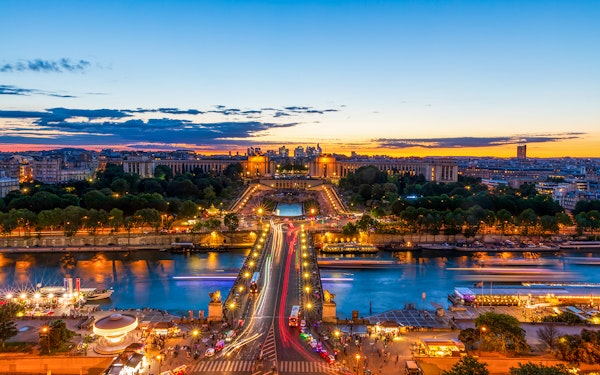
Paris Evening Sightseeing Tour with Eiffel Tower Summit Tickets
3.4(9)3 hoursViewFrom$97
Illumination Tour of Paris and Eiffel Tower 2nd Floor (Reserved Access)
0.0(0)3 hoursViewFrom$83
London Christmas Lights Private Guided Taxi Tour
5.0(25)3 hoursViewFrom$416
1-Hour Paris Illuminated Evening Sightseeing Cruise
4.5(10,773)1 hourViewFrom$21
London Christmas Lights Guided Tour by Cab
5.0(64)3 hoursViewFrom$402
Pair the markets with a Seine dinner cruise
The classic festive evening upgrade is dinner on the river. December's early darkness means every dinner sailing runs past the fully illuminated banks, the boats are enclosed and heated, and the format turns a cold night into the most atmospheric meal of the trip: the lit-up monuments sliding past the window between courses. It slots naturally after a late-afternoon market wander, and on December weekends the good tables sell out ahead, so this is the one festive booking to make early.
Top Seine dinner cruises for a festive evening

Bateaux Parisiens Seine River Gourmet Dinner & Sightseeing Cruise
The most-reviewed dinner cruise on the river - a gourmet sit-down dinner while the illuminated landmarks slide past.
4.4(7,269)2.5 hoursViewFrom$145
Bateaux Mouches® Dinner Cruise on the Seine River in Paris
The other big-name dinner boat, and marginally the higher rated of the two classics - three hours on the water with dinner served against the lights.
4.4(5,056)3 hoursViewFrom$144
Paris Gourmet Dinner Seine River Cruise with Singer and DJ Set
The livelier version - a gourmet dinner cruise with a singer and DJ set, for a festive night that leans celebration over quiet romance.
4.4(1,737)3.5 hoursViewFrom$114
Paris Capitaine Fracasse 3 Course Seine River Dinner Cruise
The value pick among the dinner boats - a three-course cruise at roughly half the price of the big names.
4.1(988)2 hoursViewFrom$66- tiqets
Seine River: Cruise by Bateaux Parisiens
The budget alternative - the standard one-hour sightseeing loop, which in December runs fully illuminated from the early evening sailings onward.
4.3(9,444)1 hourViewFrom$19 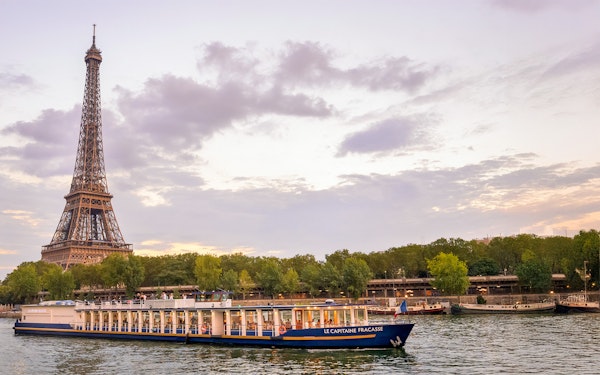
Capitaine Fracasse Seine River Dinner Cruise
4.8(24)2 hoursViewFrom$121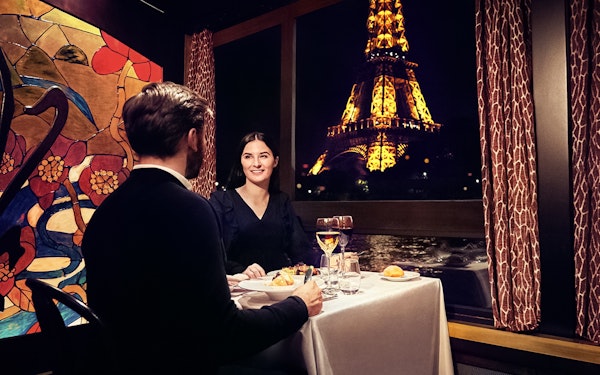
Maxim's Seine River Dinner Cruise with Live Music and Bistro Menu
4.6(136)1 hr 15 minViewFrom$191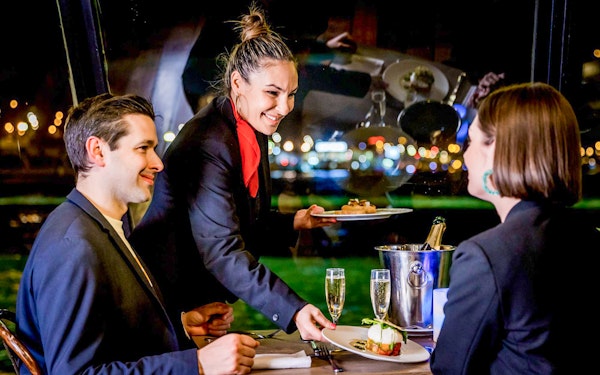
Romantic Seine River Dinner Cruise
4.5(2)1 hr 15 minViewFrom$156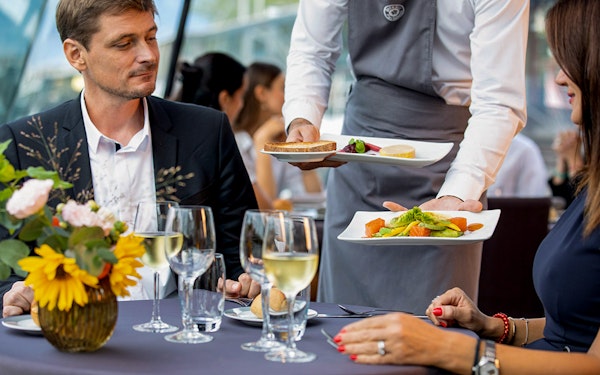
Bateaux Parisiens Seine River Early Evening Dinner Cruise with Gourmet Menu
4.5(89)1 hr 15 minViewFrom$115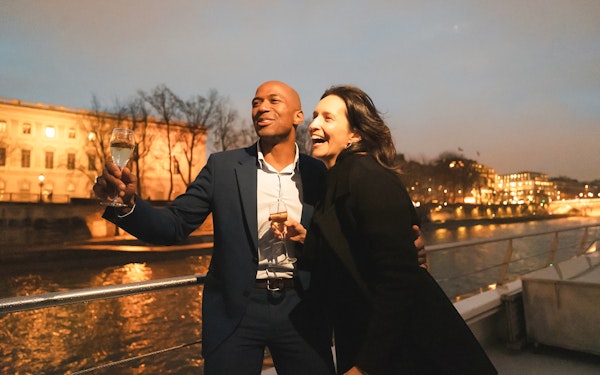
Bateaux Mouches® Seine River Dinner Cruise with Live Music & French Menu
4.4(939)2 hr 15 minViewFrom$156
Chocolate, pastry, and the edible side of a Paris December
The other festive pairing that Paris serves better than any market stall is chocolate. December is high season for the city's chocolatiers and patisseries, with seasonal windows dressed like galleries, and a guided chocolate or pastry walk strings the best shops together with tastings and the stories behind them. The Saint-Germain and Montmartre versions double as neighborhood walks through two of the city's most atmospheric winter quarters, and a chocolate museum visit adds a warm indoor hour with tastings for a market-day afternoon.
Top Paris chocolate and food experiences

Saint-Germain The Original Chocolate Tasting Tour with Pastries and Macaron
The most-reviewed dedicated chocolate walk - three hours of chocolatiers, pastries, and macarons through Saint-Germain.
4.7(237)3 hoursViewFrom$115
Devour Paris Ultimate Food Tour
The top-rated broad food walk in the city - the pick if you want the full spread of bakeries, cheese, and chocolate rather than sweets alone.
4.9(2,760)3 hoursViewFrom$118
#1 Montmartre Pastries & Chocolate Food Tour with 6+ Tastings
Pastries and chocolate through the lanes of Montmartre with six-plus tastings - the sweet tour in the city's most village-like winter neighborhood.
4.7(69)2 hoursViewFrom$92
Paris: Choco-Story Chocolate Museum Visit
The indoor option - a chocolate museum visit at a budget price, a warm hour that pairs neatly with a cold market afternoon.
3.9(193)1.5 hoursViewFrom$21
Chocolate and Pastry Walking Tour in Montmartre, Paris
5.0(20)2 hours - 2 hr 30 minViewFrom$117
Paris Small-Group Montmartre Chocolate & Pastry Walking Tour
5.0(54)3 hoursViewFrom$101
Paris Sweet & Chocolate Family Treasure Hunt
5.0(38)2 hoursViewFrom$564
Paris Christmas Lights & Stories with Tastings on Champs-Élysées
5.0(15)1 hr 30 minViewFrom$69
French Pastry and Dessert Walking Tour in Nancy with Local Guide
5.0(19)2 hoursViewFrom$73
Paris: Pastries & Damnations - A Sweet Tour of the Old City
5.0(24)2 hoursViewFrom$81
What to eat and drink at the markets
The market menu is half the reason to go, and the Paris version blends the classic market fare with the city's own strengths. Vin chaud, the French take on mulled wine, is the official drink of the season, served steaming from most stalls, with hot chocolate the family alternative and hot cider appearing here and there. On the food side, expect the standards done well: crepes made to order, roasted chestnuts in paper cones, gaufres dusted with sugar, melted-cheese dishes scraped over potatoes for the truly cold nights, and grilled sausages in bread for the walk between stalls.
Where Paris pulls ahead is when the market food hands over to the city around it. The stalls are a warm-up, not the meal; the better plan is grazing at the market as the lights come on, then a proper sit-down dinner afterward, a brasserie's onion soup, a bistro braise, or the dinner cruise covered above. December's oysters and shellfish piled on brasserie ice displays are the local festive-week indulgence, and the chocolatiers' seasonal windows are the elevated version of everything the market sweet stalls promise.
Prices at the stalls are moderate by central-Paris standards, and the vin chaud plus crepe combination remains one of the cheapest genuinely festive hours the city offers. Bring gloves you can eat in.
A sample festive day in Paris
Morning and early afternoon. Run a normal winter sightseeing day while the light lasts: a museum with a booked slot in the morning, the Louvre sits conveniently beside the Tuileries market, then a long warm lunch and a neighborhood wander, Montmartre or the Marais, while the markets are at their daytime quietest.
Late afternoon. Time your arrival at the Tuileries for the switch-on, around half past four, and browse the chalets through the best hour of the market day: daylight fading, lights coming up, crowds still thin. Vin chaud in hand, work the stalls, then walk the axis out through the Place de la Concorde as the Champs-Elysees illuminations take over.
Evening. The avenue of lights up to the Arc de Triomphe is the free spectacle; the department-store windows on Boulevard Haussmann are the detour for anyone with children or a camera. Close the night with the booked centerpiece, a Seine dinner cruise past the illuminated banks, a lights tour, or a cabaret show, and save the second evening for the calmer version: a neighborhood market, a chocolate walk, and an early warm dinner. Two evenings run this way cover the whole festive spread without a single cold forced march.
When the markets run and how to plan
The reliable window for Christmas markets in Paris is late November to late December. The big markets, the Tuileries and La Défense among them, typically open in the second half of November and run through the month, with some carrying into the first days of January, while the smaller neighborhood markets appear through December and close soon after the holiday. Exact dates and lineups shift each year, so treat that window as the frame and confirm the specific market before you build a day around it.
For crowds, the rhythm matters more than the date. Weekday afternoons and early evenings in the first half of December are the calmest; weekends and the run-up to the holiday are the busiest by a wide margin, with the Tuileries getting properly crowded on Saturday nights. The Christmas-to-New-Year week behaves like peak season across the whole city, hotels included, so festive travelers with flexible dates do best in the first three weeks of December.
As a plan, one big market plus one small one is the sweet spot, with the lights threaded between them: the Tuileries for the fair, the Champs-Elysees for the avenue, and a neighborhood market or a chocolate walk for the calmer second evening. The markets are the evening layer of a December trip; the city's museums, monuments, and food carry the days.
Getting around on a December evening
The festive geography is kind to visitors: the Tuileries market, the Champs-Elysees lights, and the department-store windows all sit within one central band, walkable in stages or a couple of short Metro hops apart. La Défense is a straight ride out on the same axis, and the neighborhood markets scatter across areas you would visit anyway, Montmartre, the Latin Quarter, Saint-Germain.
Plan around the early dark rather than against it. Lights on around five means the festive evening starts before dinner, so daytime sightseeing hands over to markets and lights without wasted hours. The Metro is the warm way between spots, but the best stretches, Tuileries to Concorde, the length of the lit avenue, are worth doing on foot with gloves on. And when the cold wins, that is what the enclosed river cruises, the bus loops, and the cafes are for.
Practical tips
Dress for standing, not walking. Market evenings involve a lot of standing still outdoors with a drink in hand, which feels colder than a walking tour. Warm coat, hat, gloves, and waterproof shoes are the uniform.
Arrive at the switch-on. Late afternoon on a weekday, as the lights come on around five, is the markets' best hour: full glow, thinner crowds, and daylight-to-dusk photos in one visit.
Book the evening experiences, improvise the markets. Market browsing is walk-up; December's dinner cruises, lights tours, and shows sell out. Lock the fixed-capacity evenings in ahead and leave the wandering spontaneous.
Carry a little cash. Most stalls take cards, but small stands at the neighborhood markets sometimes prefer cash, and the mulled-wine queue moves faster with coins ready.
Calibrate expectations, then enjoy the setting. Paris markets are not Strasbourg, and travelers who arrive expecting the great Alsatian markets rate them lower than they deserve. What no other city offers is this backdrop: chalets by the Louvre, lights up the grand avenue, and the tower sparkling on the hour.
Plan your trip
See all Paris tours and festive experiences →When do Christmas markets start in Paris?
Paris Christmas markets typically run from late November to late December, with the biggest ones opening in the second half of November and some carrying on into the first days of January. The large markets, like the one in the Tuileries Garden and the one at La Défense, tend to open earliest and run longest, while smaller neighborhood markets appear through December and wind down soon after the holiday. Exact dates shift each year, so treat late November to late December as the reliable window and check the specific market before building a day around it.
What are the best Christmas markets in Paris?
The biggest and best known is the market in the Tuileries Garden, a full festive fair with stalls, food, and rides between the Louvre and the Place de la Concorde. The market at La Défense, out among the towers of the business district, is traditionally one of the largest in the region by stall count. Beyond those two, smaller markets appear around the city through December, near Notre-Dame, in Montmartre, and in various squares and neighborhoods, offering a calmer, more local version. Pairing one big market with one small one is the sweet spot.
Are Paris Christmas markets free to enter?
Browsing the markets is generally free; you pay for what you eat, drink, and buy, and for rides and attractions like ice rinks or ferris wheels inside the bigger fairs. That makes the markets one of the cheapest festive evenings in the city: the lights, the atmosphere, and the wander cost nothing, and a mulled wine and a snack keep the total modest. Individual attractions and any special events inside a market are ticketed separately, so check on the spot or ahead for those.
Are the Christmas markets in Paris worth visiting?
Yes, with the right expectations. Paris markets are smaller and more commercial than the famous German and Alsatian ones, and travelers coming from Strasbourg or Vienna sometimes find them modest. What Paris does better than almost anywhere is the setting around them: the market in the Tuileries sits between the Louvre and the illuminated Champs-Elysees, and the whole city dresses up for the season. Treat the markets as one layer of a festive Paris evening, alongside the lights, the store windows, and a warm dinner, and they deliver.
When is the best time to visit the Paris Christmas markets?
Weekday afternoons and early evenings are the calmest, especially in the first half of December before the pre-holiday rush. Weekends and the days right before the holiday are the busiest by a wide margin, with the Tuileries in particular getting crowded on Saturday nights. Arrive as the lights come on in the late afternoon, which in a Paris December is around five, and you get the market at its prettiest before the evening crowds peak.
Where are the best Christmas lights in Paris?
The headline display is the Champs-Elysees, where the avenue's trees are strung with lights for the season, with the department-store windows on Boulevard Haussmann a close second and a tradition in their own right. Beyond those, the big squares, the shopping streets, and the Eiffel Tower's hourly sparkle round out the show. An evening lights tour by bus, or a Seine cruise past the illuminated banks, strings the best of it together without a long cold walk.
Do I need to book anything in advance for a festive Paris trip?
The markets themselves are walk-up, but the experiences around them book out. Seine dinner cruises on December weekends, festive lights tours, and anything in the Christmas-to-New-Year week deserve advance booking, as do cabaret shows and popular food tours. Museum entries also still benefit from timed tickets in December. Book the fixed-capacity evening experiences first and leave the market wandering spontaneous.
What should I wear to the Paris Christmas markets?
Warm and waterproof. December in Paris is cold and damp more often than snowy, so a warm coat, hat, gloves, and waterproof shoes are what keep a market evening pleasant. You will be standing outdoors after dark, often with a drink in hand rather than moving, which feels colder than walking. Layers you can add as the evening cools are the practical answer, and warm feet are the difference between staying for the atmosphere and cutting it short.
What food should I try at the Paris Christmas markets?
Vin chaud, the French mulled wine, is the season's official drink, with hot chocolate as the family alternative. On the food side the reliable pleasures are crepes made to order, roasted chestnuts in paper cones, sugared gaufres, melted-cheese dishes over potatoes on the coldest nights, and grilled sausages for the walk between stalls. Treat the market as the warm-up rather than the meal: graze as the lights come on, then follow with a proper brasserie or bistro dinner, which is where the Paris version of a festive evening beats most market cities.
Can you combine the Christmas markets with regular Paris sightseeing?
That is exactly how to do them. The markets and lights come alive from late afternoon, which in December means around five, so a normal sightseeing day, museums, neighborhoods, the big monuments, hands over naturally to a festive evening. The Tuileries market sits next to the Louvre, and the Champs-Elysees lights start a short walk away, so the classic day flows museum to market to avenue without a Metro ride. The markets work best as the evening layer of a winter trip, not as the whole itinerary.
Keep reading
더 읽을 거리
여행 계획을 돕기 위한 더 많은 가이드

1 Day in Paris: The Itinerary That Fits, and the One That Does Not
One day in Paris, planned around real distances - what to book, what to walk, what to skip, and why three museums in a day is the classic mistake.

The Best Food Tours in Paris: Which Ones Are Worth the Money
Paris food tours are expensive and the good ones are excellent. How to tell them apart - by neighbourhood, by format, and by what you actually want to learn.

2026년 개선문 티켓: 옥상 접근, 콤보 상품, 줄 서지 않는 방법
2026년 개선문 티켓 가이드 - 옥상 테라스 시간 지정 입장, 줄 서지 않기, 파리 전망대 및 크루즈 콤보, 샹젤리제 가이드 투어.

2026년 뮤제 도르세 티켓: 종류, 줄 건너뛰기 및 결합 상품 비교
2026년 뮤제 도르세 티켓 가이드 - 정시 입장, 줄 건너뛰기, 가이드 투어, 루브르 및 오랑주리 결합 티켓과 패스 옵션 비교.

5 Days in Paris: The Perfect Itinerary at a Relaxed Pace
A 5-day Paris itinerary at a human pace: the icons, Montmartre and Le Marais, a full day at Versailles, and the tours travelers rate highest for each day.

The Best Walking Tours in Paris: Highlights, Montmartre, Food and More
Every kind of walking tour of Paris compared: classic highlights, Montmartre, food walks, Le Marais, and night walks, ranked on real ratings and reviews.

Summer in Paris: What to Expect and What to Book
What summer in Paris is really like - long evenings, heat waves, August closures, and the Seine cruises, Eiffel Tower visits, and day trips worth booking.

Winter in Paris: What to Expect and What to Book
What winter in Paris is really like - short days, thin crowds, festive lights, and the museum tours, cabaret shows, and food experiences worth booking.