ParisCity pillarPlanningFirst-timer
Paris Travel Guide: First-Time Visitor Essentials for 2026
A field-tested 2026 Paris guide - where to stay, how the Metro really works, ticket strategy for the Louvre + Eiffel, eating timing, and the seven mistakes first-timers most regret.
By SimilarTours Editorial · Travel Research · · 19 min read

Paris is well-mapped, well-walked, and well-served by transit - but the city has its own rhythm that catches first-timers out. Dinner doesn't start until 7:30. Most restaurants close Sunday. The Metro is faster than you expect for short hops and slower than you expect for long ones (the line transfers can eat 15 minutes). The Louvre is huge in a way that's not obvious until you're standing in it. This guide is the practical layer the brochures skip.
If you have ten minutes, the section on ticket strategy is the single most useful - it'll save you the trip's worst hours of standing in queues.
Browse all 2,000+ Paris tours and tickets →When to go
Four-season city; pick by tolerance for crowds, rain, and pricing.
- April + May - the consensus best window. Cherry blossom in Parc de Sceaux, gardens reopening, lengthening days, full sun by mid-May. Crowds heavy from Easter onwards.
- June + early September - peak summer warmth, long evenings (sunset 9:45 p.m. in June), but crowds at maximum.
- Late July + August - Parisians leave for vacation; many family restaurants close mid-August. The city itself is calmer for tourists but the closures eat into the experience.
- September + October - strong shoulder window. Mild, smaller crowds, the autumn restaurants reopening, fashion week energy.
- November through February - quiet, often grey, occasional rain. The off-season pricing is real (40-60% off hotels). Christmas markets December.
- March - the gamble month. Some warm days, mostly chilly. Cheapest spring window.
The sweet-spot 3 weeks
Mid-April through early May and mid-September through early October are the two windows that consistently combine acceptable weather with manageable crowds. Most experienced Paris travelers come back to one of those two windows specifically.
Where to stay - the four practical neighborhoods
Le Marais (3rd + 4th arrondissements) - the most popular first-visit pick. Medieval streets, Place des Vosges, dense food + restaurant scene, the only neighborhood that stays alive on Sundays (the Jewish quarter is open). Walkable to the Louvre + Notre-Dame; Metro access via Saint-Paul and Rambuteau. Mid-to-high price.
Saint-Germain-des-Prés (6th) - the literary Left Bank. Cafés where Sartre wrote, the Luxembourg Gardens, Shakespeare & Company nearby. Quieter than Le Marais; the same walking distance to the headline sights via the Pont des Arts.
Quartier Latin (5th) - student-quarter feel, the Panthéon, the Sorbonne. Cheaper than Saint-Germain, slightly grittier; the Mouffetard market street is the food anchor.
7th arrondissement (Eiffel + Invalides) - calm, residential, the Eiffel Tower at the end of your street. Best for Eiffel-photo lovers + travelers prioritizing the morning Eiffel slot; the rest of Paris is a Metro or RER ride away.
Avoid for first visits: the 1st arrondissement around Châtelet (every restaurant is a tourist trap), anywhere near Gare du Nord at night (practical for trains, gritty after dark), and Pigalle proper (lively but seedy).
Getting around
Paris is one of the most transit-dense cities in the world. Pieces:
- Metro (14 lines) - fast, frequent (every 2-4 minutes peak), runs 5:30 a.m. to ~1 a.m. (2 a.m. Fri + Sat). A single metro/RER ticket is around €2.55 (check current fare - prices rose in January 2026). The old carnet of 10 has been retired and paper tickets are being phased out in 2026; buy tickets on your phone or load a reusable Navigo Easy card (a €2 card you top up). A one-day Navigo pass is the option for heavy single-day use.
- RER (5 lines, A through E) - suburban rail to Versailles (RER C), CDG (RER B), Disneyland (RER A). Same ticket as Metro within central Paris zone.
- Bus - useful for routes the Metro misses (especially along the Seine), but trip times are unpredictable. Skip unless going somewhere the Metro doesn't reach.
- Walking - adjacent neighborhoods are nearly always faster on foot than 2-line Metro connections. The Louvre to Notre-Dame is 20 minutes via the Seine vs. 15 minutes by Metro with the transfer. Walking wins on the scenic value.
- Taxi + Uber + Bolt - all real, all metered, all in the same price band (€10-€20 for typical central-Paris hops). Stand at a taxi rank (taxis green light = available); never get in a "taxi" with someone who approaches you at CDG or Gare du Nord.
- Vélib' bike share - €5 day pass; flat city, bike lanes. Useful in summer for the Seine quays.
Pickpocket awareness
The Châtelet-Les Halles Metro complex + Line 1 at peak hours + the area immediately around the Eiffel Tower are Paris's three pickpocket hotspots. Front pockets; bag zipped + visible; ignore anyone who asks you to sign a "deaf children's" petition. The petition is the most common active scam in 2026.
Tickets - the strategy that saves your trip
The two attractions where pre-booking is non-negotiable: Eiffel Tower and Louvre Museum. Walk-up entry at either can mean 90+ minute outdoor queues in any season and 2.5+ hours in summer.
Book 4-8 weeks ahead in summer:
- Eiffel Tower summit access (the slot that sells out fastest)
- Louvre Museum guided tours (the highest-rated small-group operators)
- Versailles palace + Hall of Mirrors (peak slot competition)
- Moulin Rouge or Crazy Horse Friday + Saturday slots
Book 1-3 weeks ahead in summer:
- Eiffel Tower second-floor elevator
- Louvre Museum direct timed-entry
- Sainte-Chapelle + Notre-Dame interior (post-2024 reopening - capacity capped)
- Catacombs
Walk up freely:
- Notre-Dame exterior + Île de la Cité
- Sacré-Cœur Basilica (interior is free; the dome climb has a ticket of around €8)
- Tuileries + Luxembourg Gardens (free)
- Most smaller museums (Orangerie, Rodin, Picasso usually have same-day stock)
Top Paris tickets to book

Eiffel Tower Elevator Tour with Optional Summit & Cruise Access
The most-booked Eiffel format - second-floor lift, summit add-on, Seine cruise voucher.
4.5(1,223)2 hoursViewFrom$40
Louvre Museum Masterpieces Guided Tour with Access
The most-booked Louvre tour - 12k+ reviews, 3-hour curated highlights route.
4.5(12,534)3 hoursViewFrom$88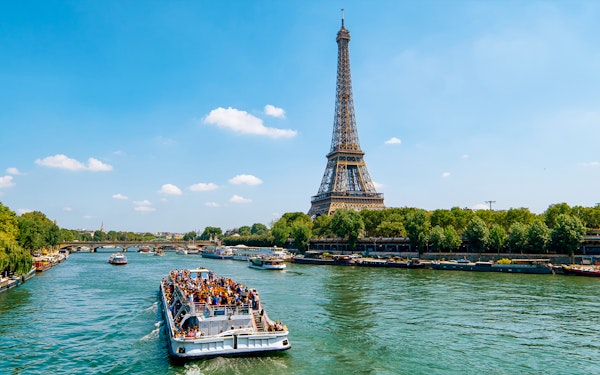
Eiffel Tower Tickets with City Tour & Seine River Cruise
4.4(6,957)4 hoursViewFrom$115
Paris Sightseeing Tour with Eiffel Tower 2nd Floor Tickets
0.0(0)3 hoursViewFrom$103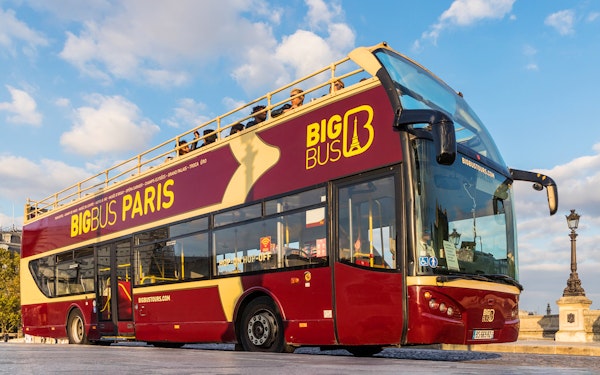
Big Bus: Paris Hop-on Hop-off Bus Tour & Pantheon Entry Tickets
3.6(15)ViewFrom$63
Turbopass Paris Essentials City Pass: Access to 20+ Attractions
4.0(1)ViewFrom$162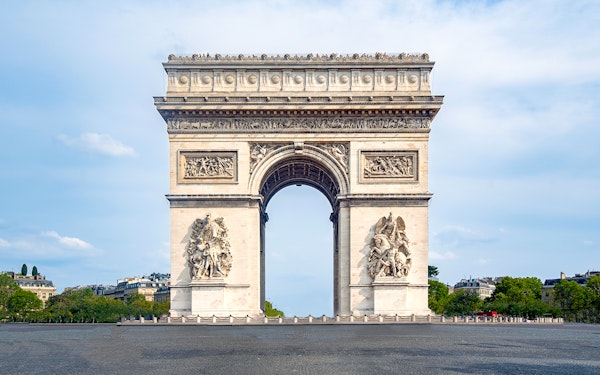
Arc de Triomphe Entry Tickets with Rooftop Access
4.4(8,050)ViewFrom$20
Turbopass Paris City Card with Paris Museum Pass: Access to 60+ Attractions
3.7(35)ViewFrom$184
Paris: Quai Branly Museum & Seine River Cruise Tickets
2.5(2)ViewFrom$38
Tootbus: Paris Hop-on Hop-off Bus Tour with Versailles Palace Tickets
4.7(3)ViewFrom$113
How long things take
- Eiffel Tower (second floor + summit): 2 hours round trip
- Louvre highlights guided tour: 2.5-3 hours
- Notre-Dame exterior + Île de la Cité walk: 1 hour
- Sainte-Chapelle: 45 minutes
- Musée d'Orsay: 2 hours
- Musée de l'Orangerie (Monet's Water Lilies): 1 hour
- Versailles half-day guided tour: 5 hours including transport
- Versailles full-day with Trianons + Hameau: 8 hours
- Seine 1-hour sightseeing cruise: 1 hour (+ travel time)
- Le Marais food tour: 3 hours, replaces dinner
- Catacombs: 1 hour underground
- Champagne day trip to Reims + Épernay: 10 hours
- Normandy D-Day day trip: 12+ hours
Eating - the practical version
Three rules:
-
Don't eat in the immediate vicinity of the major attractions. Around the Eiffel, around the Louvre Pyramid, on the Champs-Élysées - uniformly bad and overpriced. Walk 3-4 blocks; quality jumps immediately.
-
Lunch is 12:00 to 2:30 p.m. Dinner is 7:30 to 10:30 p.m. Outside those windows, only brasseries (continuous service) are open. The brasserie + bistro distinction is real - brasseries are big and serve all day; bistros are small and stick to lunch + dinner windows.
-
Tipping is round-up culture, not American-percentage. Service is included by law ("service compris"). At cafés, round up €1-2 for a casual lunch; leave 5-10% only at upscale dinners if service was unusually good. The line "service is included" doesn't preclude tipping - it just clarifies that you're not required to.
The Paris dishes to order: steak-frites (with béarnaise sauce), confit de canard, soupe à l'oignon, escargots de Bourgogne (if you eat them), boeuf bourguignon, croque-monsieur, the lunch prix-fixe (most non-tourist restaurants offer a 2- or 3-course lunch for €18-€28). Skip the "Eiffel-view set menu" anywhere; the view's free outside, the food won't be.
From the editor
The cafés on the small streets behind Le Marais and Saint-Germain - the ones with handwritten chalkboards, no English-language sign, and one server who looks like she runs the place - are where you actually want to eat. The places with photo menus and laminated tri-fold pamphlets are the ones to walk past.
Safety + scam awareness
Paris is safe for first-time visitors. The risks are nuisance-level:
- Pickpockets on Line 1, around the Eiffel Tower and Sacré-Cœur funicular, and in the Châtelet-Les Halles Metro complex. Front pockets only.
- Friendship-bracelet scam around Sacré-Cœur and the Eiffel - men approach to tie a bracelet on your wrist, then demand €20+. Walk away the moment they start.
- Petition scam in central tourist zones - somebody hands you a clipboard asking to sign for "deaf children" or similar. Active distraction so an accomplice can lift your wallet.
- Gold-ring scam - a stranger picks up a "gold" ring near you, asks if it's yours, then offers to sell it cheap. Walk on; the ring is brass.
- Unlicensed taxi at CDG and Gare du Nord. Take the line at the taxi rank; never accept a ride from someone who approaches you.
That's the list. Violent crime in the tourist zones is rare.
What first-time visitors most regret
- Not pre-booking the Eiffel summit. "We tried walk-up. Sold out for the next four days."
- Booking the wrong Eiffel ticket. Second-floor and summit are separate ticket tiers; the summit elevator goes from floor 2, so a "second floor" ticket does not include the summit climb.
- Eating at the Champs-Élysées or the Eiffel base. "Worst croque-monsieur of the trip; €22."
- Not pre-booking the Louvre. "We bought tickets at the door; the door queue was 80 minutes."
- Doing the Louvre alone with no plan. "We saw the Mona Lisa and then walked for an hour without finding anything else we recognized." A 2-hour guided tour fixes this.
- Skipping the Orsay. "We did the Louvre and were so wiped we cancelled the Orsay. Friends said Orsay was their favorite."
- Not budgeting for a Sunday dinner reservation. Many restaurants close Sundays; the open ones book out Friday.
Getting in from the airport
Paris has three airports, and the transfer differs sharply between them. Charles de Gaulle (CDG) is the main international hub northeast of the city; the cheapest fast route in is the RER B suburban train to the centre in about 35 to 45 minutes, and Paris sets a fixed official taxi fare between CDG and the Right or Left Bank, take only the marked taxis at the rank and confirm the flat rate. Orly (ORY), south of the city, connects via the Orlyval shuttle to the RER B, a tram-and-metro combination, or the Orlybus, and also has a fixed taxi fare. Beauvais (BVA) is the misleadingly named budget-airline airport well north of Paris, reached only by a long shuttle coach, factor in the extra time and cost before booking a "Paris" flight that lands there.
The reliable advice mirrors Rome's: ignore the drivers who approach you inside the terminal and walk to the official taxi rank or the train. The RER B is the workhorse, but it can be crowded and is not the most scenic introduction to the city, so travelers with heavy luggage or young children often find the fixed-fare official taxi worth the extra euros.
Money, costs, and tipping
Paris is on the euro and almost entirely card-friendly; contactless works nearly everywhere, though a little cash is handy for bakeries, markets, and small cafes. Costs are high but not extreme: a cafe espresso is a couple of euros (cheaper at the bar than seated on a terrace), a casual lunch 12 to 20 euros, and a relaxed dinner for two with wine often 60 to 100 euros at a good bistro. The famous prix-fixe lunch menus are the value move, two or three courses for a fraction of the dinner price.
Tipping is gentle and not obligatory. By law, service is included in the bill ("service compris"), so you are never required to add a percentage; for good service, locals simply leave a euro or two, or round up. You do not tip for coffee at the bar, and you do not tip taxis beyond rounding. The classic Paris money-saver is the same as Rome's: avoid the cafes and restaurants with photo menus right on the main tourist squares, where you pay double for the address, and walk a few streets into a residential block for better food at a fairer price.
Traveling with kids
Paris is more child-friendly than its chic reputation suggests. The Eiffel Tower is the obvious hit, and going up it is worth the queue for kids, but the city's parks do a lot of quiet work: the Luxembourg Gardens with its toy sailboats on the pond and its playground, the Tuileries with its seasonal funfair, and the Champ-de-Mars lawns under the tower. The Seine cruises are an easy win that rests tired legs while still sightseeing, and the science museum at La Villette and the natural history galleries are strong rainy-day options. Practical notes: under-fours ride public transport free and under-tens at half fare, many museums are free for children, and the famous Paris bakeries make cheap, happy lunches, a ham-and-butter baguette and a pain au chocolat please most kids more than a sit-down restaurant. The main thing to manage is distance, Paris is walkable but big, so lean on the metro and build in park breaks.
Top experiences to book
Paris is a city where the headline sights, the Eiffel Tower, the Louvre, all run on timed entry that sells out, so the experiences worth booking ahead are the ones that bundle reserved access. Beyond those, a Seine cruise is the classic way to see the riverfront monuments without walking, and a Montmartre walk gives you the village-on-a-hill side of the city that the big sights miss. Some of the top-rated Paris experiences currently bookable, sorted by traveler ratings:
Top-rated Paris experiences

Eiffel Tower Guided Tour by Stairs with Optional Summit
A guided climb of the tower with an optional summit add-on - the highest-volume Eiffel experience, and the stairs route skips the worst elevator queue.
4.8(4,211)2 hoursViewFrom$51
Paris Montmartre Walking Tour: Art, Culture and Food
A very highly rated guided walk through the Montmartre village - the artists' quarter and Sacre-Coeur, the side of Paris the big sights miss.
4.8(2,791)1.5 hoursViewFrom$37
Bateaux Parisiens Seine River Gourmet Lunch & Sightseeing Cruise
A gourmet lunch cruise past the riverfront monuments - the relaxed way to see the Seine landmarks from the water.
4.7(2,812)2 hoursViewFrom$98Eiffel Tower Tickets with City Tour & Seine River Cruise
4.4(6,957)4 hoursViewFrom$115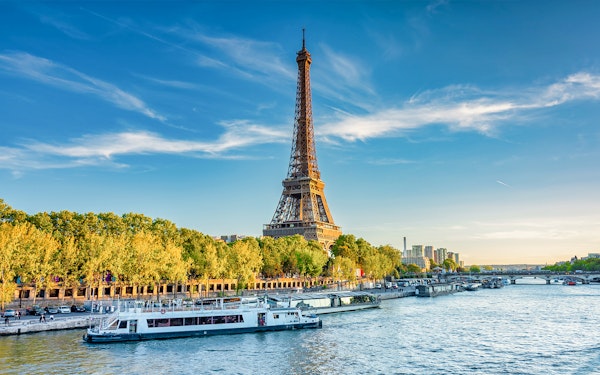
Combo: Eiffel Tower Guided Tour by Elevator with Seine River Cruise
4.3(2,993)2 hoursViewFrom$49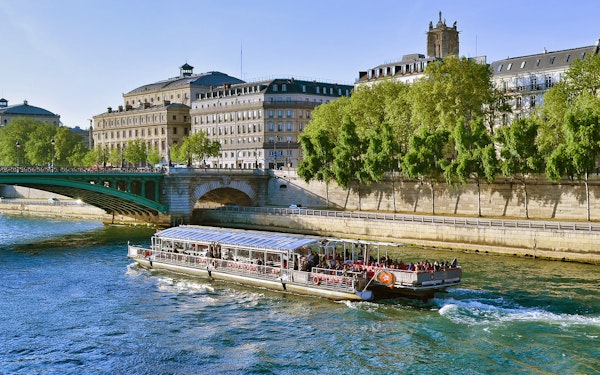
Seine River Cruise and Paris City Tour Combo
3.5(570)3 hoursViewFrom$45
Paris Sightseeing Tour with Seine River Cruise from Disneyland®
3.9(19)10 hoursViewFrom$112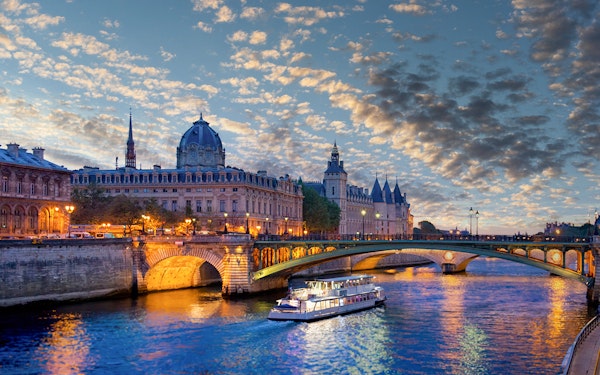
Seine River Cruise & Moulin Rouge Show with Champagne and Return Transfers
4.2(1,024)4 hoursViewFrom$227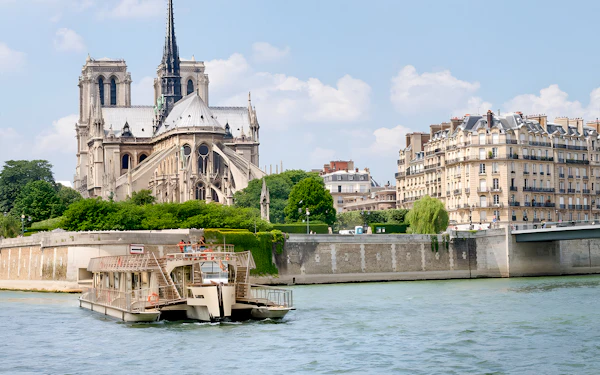
Seine River 1-Hour Sightseeing Cruise from the Eiffel Tower
4.7(12,481)2 hr 45 minViewFrom$21
Paris and Montmartre 2CV Tour by Night with Champagne
4.6(374)2 hoursViewFrom$336
Day trips worth taking
The standout day trip from Paris is the Palace of Versailles, close enough to be a half-day and grand enough to fill a full one; its independent ticket queues are notorious, so a guided tour with reserved entry is the easy path. For art lovers, the city's deep bench of museums is its own kind of day out, covered in our guide to the best museums in Paris. A couple of the most-booked Versailles options:
Popular day trips from Paris

Versailles Palace and Gardens Tour from Paris
The most-reviewed full Versailles experience - the palace and the gardens on a guided day with reserved entry, skipping the worst of the queue.
4.4(3,992)3 hoursViewFrom$75- viator
Versailles Palace Guided Tour with Reserved Entry
A focused guided palace tour with a reserved entry slot - the efficient way to see the state rooms with context.
4.5(2,535)1.5 hoursViewFrom$74 
Versailles Palace Guided Tour with Gardens Access from Paris
4.2(5)3 hoursViewFrom$150
Paris to Versailles Tour: Private Guide & Transport included
5.0(17)4 hoursViewFrom$467
Versailles Palace & Gardens Audio Tour Private Transportation
4.7(11)4 hoursViewFrom$532
PRIVATE Versailles Palace & Gardens Tour with transfer included
5.0(35)4 hr 30 minViewFrom$615
Private Versailles Half Day Trip: Palace and Gardens
5.0(1)5 hoursViewFrom$626
Versailles Palace and Park Private Guided Day Tour from Paris
4.8(25)7 hours - 9 hoursViewFrom$729
Versailles Palace and Gardens Guided Experience 10-Guests Max
5.0(6)2 hours - 3 hoursViewFrom$182
Versailles Private Half Day Guided Tour Hotel Pickup & Transfer
5.0(183)5 hoursViewFrom$754
Sample itineraries
If you are still shaping the days, our 3 days in Paris itinerary lays out a walkable, field-tested route: the Eiffel Tower and the Seine on day one, the Louvre and the Ile de la Cite on day two, and a flexible day three for Versailles, Montmartre, or a museum-heavy Right Bank day. Use this guide for the practical decisions, where to stay, how to get around, when to go, and the itinerary for the hour-by-hour plan.
Common questions
What's the best neighborhood to stay in Paris for a first visit?
The 4th arrondissement (Le Marais) is the most popular first-visit pick - central, walkable to the Louvre + Notre-Dame, dense restaurant scene, and Sunday opening (most of Paris closes Sunday but Le Marais doesn't). The 6th (Saint-Germain) is the slightly quieter literary alternative. Avoid the 1st (Châtelet - tourist-trap restaurants) and anything outside the 1st-11th rings for short stays.
Is the Paris Metro enough to get around?
Yes - 14 numbered lines plus the RER (suburban rail to Versailles, CDG, Disneyland) cover every major attraction. A single metro/RER ticket is around €2.55 (check the current fare - prices rose in January 2026). The old carnet of 10 has been retired and paper tickets are being phased out in 2026; load tickets onto a reusable Navigo Easy card (€2) or buy them on your phone. Trains run roughly 5:30 a.m. to 1 a.m. (2 a.m. Fri + Sat). Walking between adjacent neighborhoods is often faster than a 2-line metro connection.
When do Paris restaurants actually open?
Lunch is 12:00 to 2:30 p.m.; dinner is 7:30 to 10:30 p.m. (later on weekends). Many family restaurants close on Sundays, some also Monday. Tea-time + afternoon café is 3:00 to 6:00; aperitivo + apéro hour bridges 6:00 to 7:30. The city's brasseries (continuous service) are the exception - open from morning until midnight.
Do I need to book Paris tours in advance or can I walk up?
Eiffel Tower summit and Louvre Museum should always be pre-booked - walk-up entry can mean 90-minute queues even off-peak, multi-hour in summer. Versailles + Sainte-Chapelle + Catacombs likewise. Restaurants for Friday + Saturday dinner: book 1-2 weeks ahead for anywhere recommended; the trendy spots run 3-4 weeks ahead.
Is Paris safe at night for first-time visitors?
Yes for the central tourist arrondissements (1st-8th, plus 11th + 14th). Pickpocketing on the Metro (especially Line 1, the Châtelet-Les Halles complex, Trocadéro, and around the Eiffel) is the only common issue - avoid carrying a wallet in a back pocket. The Trocadéro at night and around the Sacré-Cœur funicular at night attract the most common scams; don't engage strangers who try to start a friendship-bracelet.
How much cash should I carry in Paris?
Cards work almost everywhere - contactless on every Metro turnstile + most cafés. Carry €30-€50 cash for boulangerie counters, small tip-only restaurants, the rare paper market, and Metro day-pass fallback. Tipping is not American-style: round up the bill at cafés (€1-2), leave 5-10% only at upscale dinners if service was particularly good.
What are the best day trips from Paris?
Versailles is the easy half-day - 45 minutes on the RER C, the palace + Hall of Mirrors + gardens. The big full-day trips run by tour because the logistics are hard solo: Normandy D-Day beaches (12+ hours, the most-booked), Champagne tasting in Reims + Épernay (10 hours), Mont-Saint-Michel (14 hours, very long), the Loire châteaux, and Giverny + Monet’s garden (half-day, April-October). Normandy and Champagne are the two most people are glad they booked guided.
Is the Versailles day trip worth it, and how do I get there?
Yes, it’s the standout day trip from Paris. Take the RER C to Versailles Château Rive Gauche (about 45 minutes, same ticket zone extension), then a 10-minute walk. Pre-book a timed palace entry or a guided tour - the walk-up queue runs 60-90 minutes in summer. Budget a half-day for the palace + Hall of Mirrors + gardens, or a full day to add the Trianons and Marie-Antoinette’s Hameau. The fountain shows run weekends April-October.
Keep reading
Paris listicle
Things to do in Paris: 24 experiences worth booking in 2026
The Paris shortlist - 24 attractions, museums, food experiences, and day trips ranked by what's actually worth your time.
Read more
Paris itinerary
3 days in Paris: a walkable itinerary for 2026
A field-tested 3-day Paris itinerary built around the 2026 booking realities - what to do, in what order, and which tours save you time.
Read more
Paris timing
Best time to visit Paris: month-by-month guide for 2026
Trade-offs between rain, crowds, museum queues, and prices - with the two sweet-spot windows for Paris travel.
Read more
Paris ticket guide
Eiffel Tower tickets: summit access, stairs, and the best-value tour
Every Eiffel ticket type compared, when summit access is non-negotiable, and the stairs hack most travelers miss.
Read more
Paris ticket guide
Louvre Museum tickets: skip-the-line, early access, and the best guided tour
Every Louvre ticket type compared, the entry-door hacks that save 40 minutes, and which guided format actually beats walking it alone.
Read more
More reads
More guides to help you plan your trip

1 Day in Paris: The Itinerary That Fits, and the One That Does Not
One day in Paris, planned around real distances - what to book, what to walk, what to skip, and why three museums in a day is the classic mistake.

The Best Food Tours in Paris: Which Ones Are Worth the Money
Paris food tours are expensive and the good ones are excellent. How to tell them apart - by neighbourhood, by format, and by what you actually want to learn.

Arc de Triomphe Tickets in 2026: Rooftop Access, Combos and How to Skip the Line
A 2026 guide to Arc de Triomphe tickets - rooftop terrace timed entry, skip-the-line, Paris viewpoint and cruise combos, and guided Champs-Elysees walks.

Musee d'Orsay Tickets in 2026: Types, Skip-the-Line and Combos Compared
A 2026 guide to Musee d'Orsay tickets - timed entry, skip-the-line, guided highlights tours, Louvre and Orangerie combos and pass options compared.

5 Days in Paris: The Perfect Itinerary at a Relaxed Pace
A 5-day Paris itinerary at a human pace: the icons, Montmartre and Le Marais, a full day at Versailles, and the tours travelers rate highest for each day.

The Best Walking Tours in Paris: Highlights, Montmartre, Food and More
Every kind of walking tour of Paris compared: classic highlights, Montmartre, food walks, Le Marais, and night walks, ranked on real ratings and reviews.

Christmas Markets in Paris: The Best Festive Spots and Tours
The best Christmas markets in Paris, from the Tuileries to La Défense, plus when the season runs, how to plan around crowds, and the top festive experiences.

Summer in Paris: What to Expect and What to Book
What summer in Paris is really like - long evenings, heat waves, August closures, and the Seine cruises, Eiffel Tower visits, and day trips worth booking.