
Tbilisi
Georgia's capital on the Mtkvari, from the sulfur baths of the old town to the cable car up to Narikala
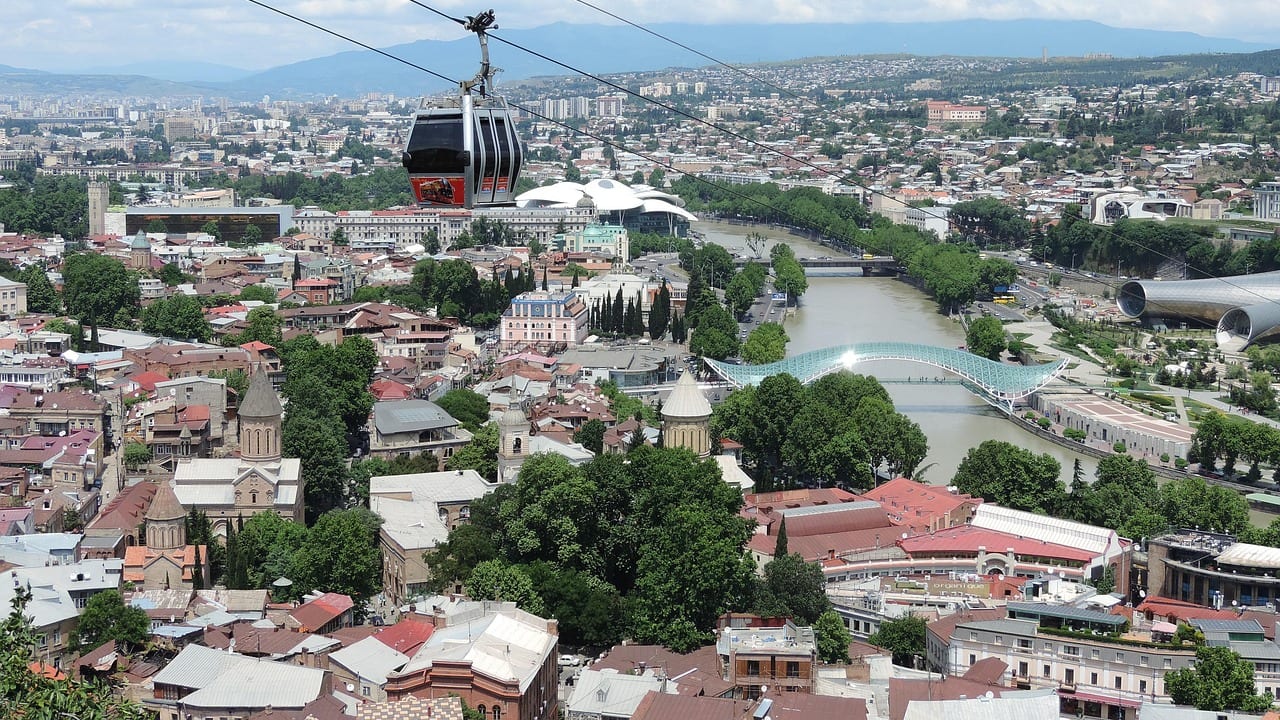
Tbilisi is Georgia's capital on the Mtkvari River, with an old town of sulfur baths, the Narikala walls, churches, a mosque and two synagogues. This guide covers what to see, where to stay, how to get around by cable car and funicular and how to spend three days, with separate pages for Old Tbilisi, Abanotubani, Narikala and Fabrika.
Where Tbilisi sits and how it grew
Tbilisi spreads along both banks of the Mtkvari River, and it has been the cultural, political and economic centre of Georgia for fifteen centuries.81 King Vakhtang Gorgasali began building it in the 5th century near Narikala, on the right bank, and his son Dachi finished the work and moved the capital here from Mtskheta, as his father had wished.3
The first quarter grew up around the hot springs, and the name follows from them: tbili means warm or hot in Georgian.38 The founding legend has the king's sparrowhawk chasing a pheasant until both birds were found in a boiling spring. Under the Russian Empire the city was called Tiflis, a name that lasted until 1936.3
The old city began as three settlements: Tpilisi, Kala and Isani. Kala, on the right bank inside the Narikala wall, once held a royal residence, palaces, churches and baths; Isani, across the river, was walled during the Arab period and later took the name Avlabari. An invasion in 1795 left a large part of the city in ruins.8
Today about 1.37 million people live here, by the national statistics office's estimate for 1 January 2026, and the 2024 census counted 34 percent of the country's population in the capital.67
What to see in Tbilisi
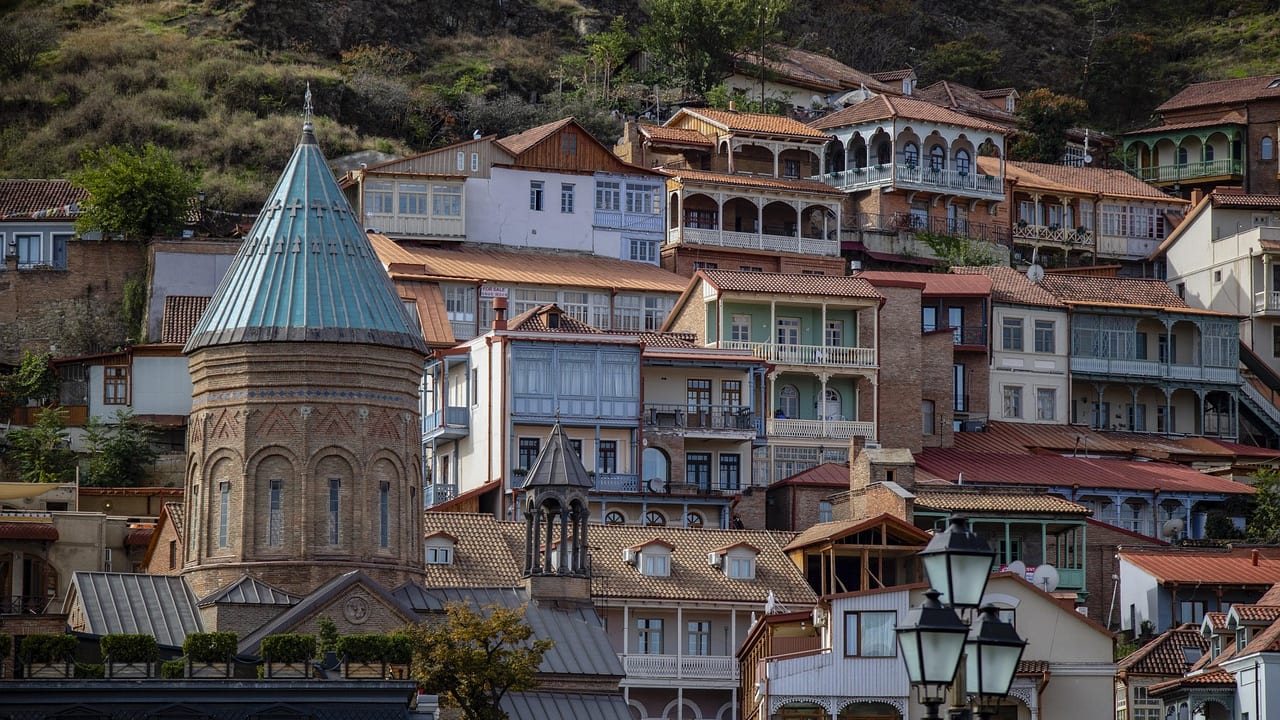
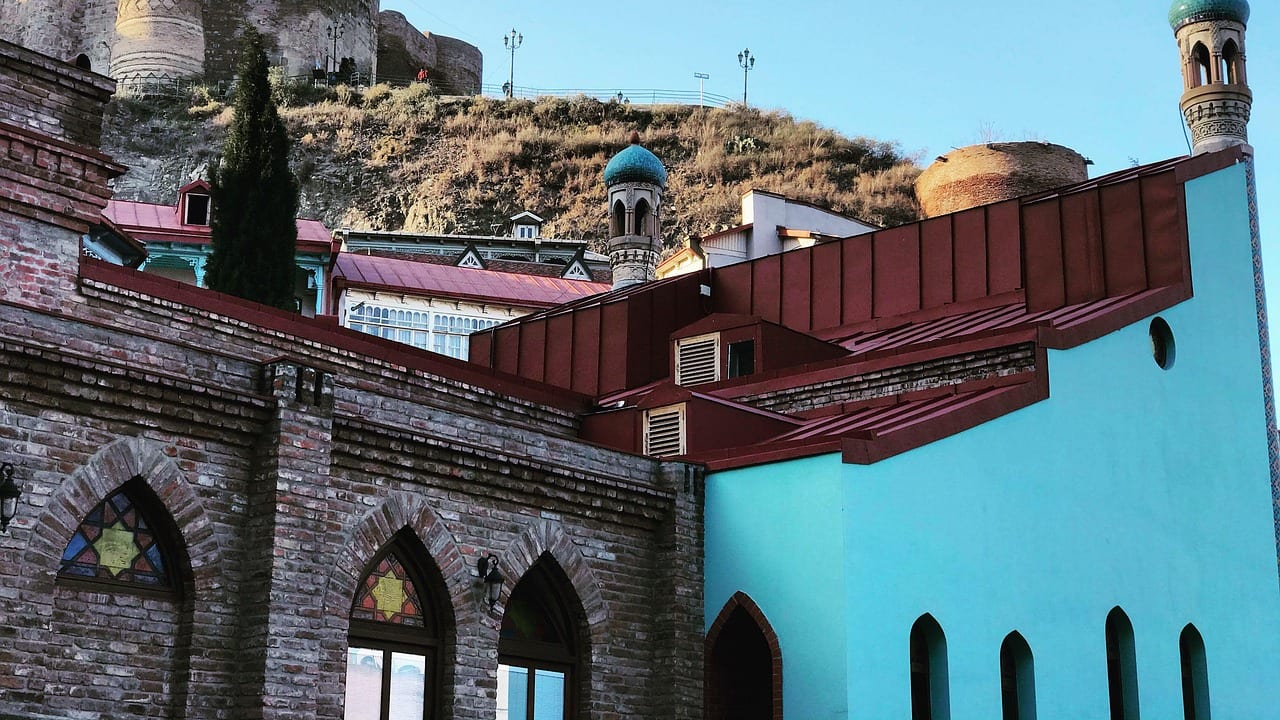
Start in Old Tbilisi, the heart of the city, built in the early Middle Ages and about two square kilometres in size. As you walk its streets you pass the domed sulfur baths and churches of the Georgian Orthodox, Armenian and Catholic faiths, as well as a mosque and two synagogues, with the Narikala walls above.1 A second day belongs to Rustaveli Avenue and the hill of Mtatsminda, and a third to the cable car up to Turtle Lake.
Abanotubani, the bath quarter
One of the oldest districts of the city, Abanotubani counted 65 baths in the 12th century; more than ten are in use today, still fed by sulfur springs.3 The domes over the bathhouses are 17th-century work.1 The Abanotubani page covers the quarter in detail.
Narikala Fortress and the Rike cable car
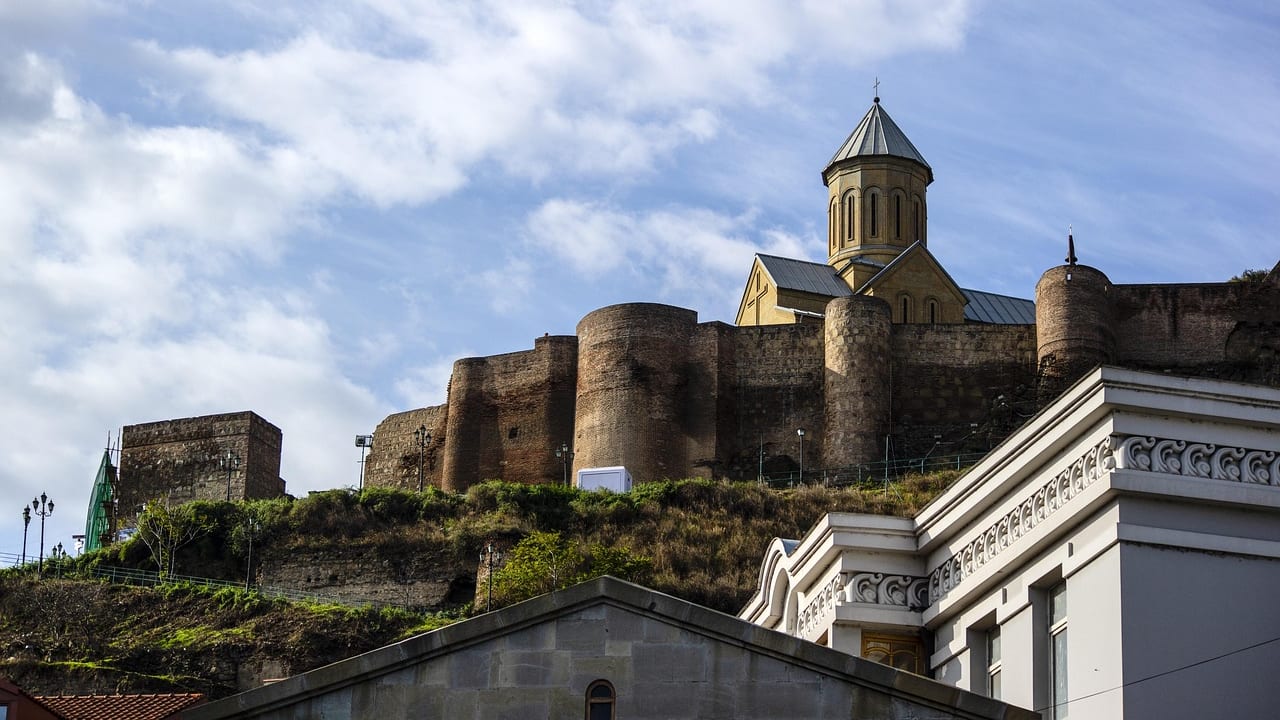
From Rike Park, a 500 m cable car lifts you to Narikala Fortress in one of seven gondolas, each holding up to eight people.4 The Narikala page has the fortress's history.
Metekhi and the Peace Bridge
Metekhi church sits high on a cliff above the city, and a statue of King Vakhtang Gorgasali has stood in its courtyard since 1965.18 Nearby, the Peace Bridge, a pedestrian bridge of glass by the Italian architect Michele De Lucchi, crosses the Mtkvari between the Baratashvili and Metekhi bridges.8
Rustaveli Avenue
The 1.5 km main avenue holds the Parliament, the Opera House, the National Gallery, the Rustaveli Theatre, the National Library, the Modern Art Museum and Kashveti Church.1 It is also where most of the city's protests gather, often on Saturday evenings, so check the news before you go.10
Mtatsminda Park
The highest viewpoint over the city is Mtatsminda, a park of about 100 hectares ringed by forest, with rides, cafes and restaurants and a footpath across to Turtle Lake.12 The funicular from 22 Daniel Chonkadze Street takes about three minutes to the top.2
Sameba Cathedral and Mother of Georgia
Holy Trinity (Sameba) Cathedral stands on the left bank in Avlabari, and the statue of Kartlis Deda, Mother of Georgia, is another of the monuments the tourism board counts among the symbols of the city.81
Turtle Lake
A 1,140 m cable car climbs from Vake Park to Turtle Lake in six minutes, in gondolas that keep their original design from 1965.4
Neighbourhoods and where to stay in Tbilisi
For a first visit, stay in Old Tbilisi on the right bank or across the river in Avlabari, so the baths, Narikala and the Peace Bridge are all a walk away.8 For a longer stay, Marjanishvili, around the Fabrika complex and its hostel, and Vake, by the park where the Turtle Lake cable car starts, put you in the newer city.114
Old Tbilisi and Kala
The streets inside the old walls are closest to the sights. Shardeni Street, named after the 17th-century French traveller Jean Chardin, is the old town's strip of bars and restaurants.8
Abanotubani
Staying in the bath quarter puts the sulfur baths at your door, in one of the oldest districts of the city; the Abanotubani page covers it in detail.3
Avlabari
On the left bank, Avlabari has Metekhi church, Sameba Cathedral, Rike Park and the Peace Bridge close together, and the Rike cable car to Narikala leaves from Rike Park.84
Marjanishvili and Fabrika
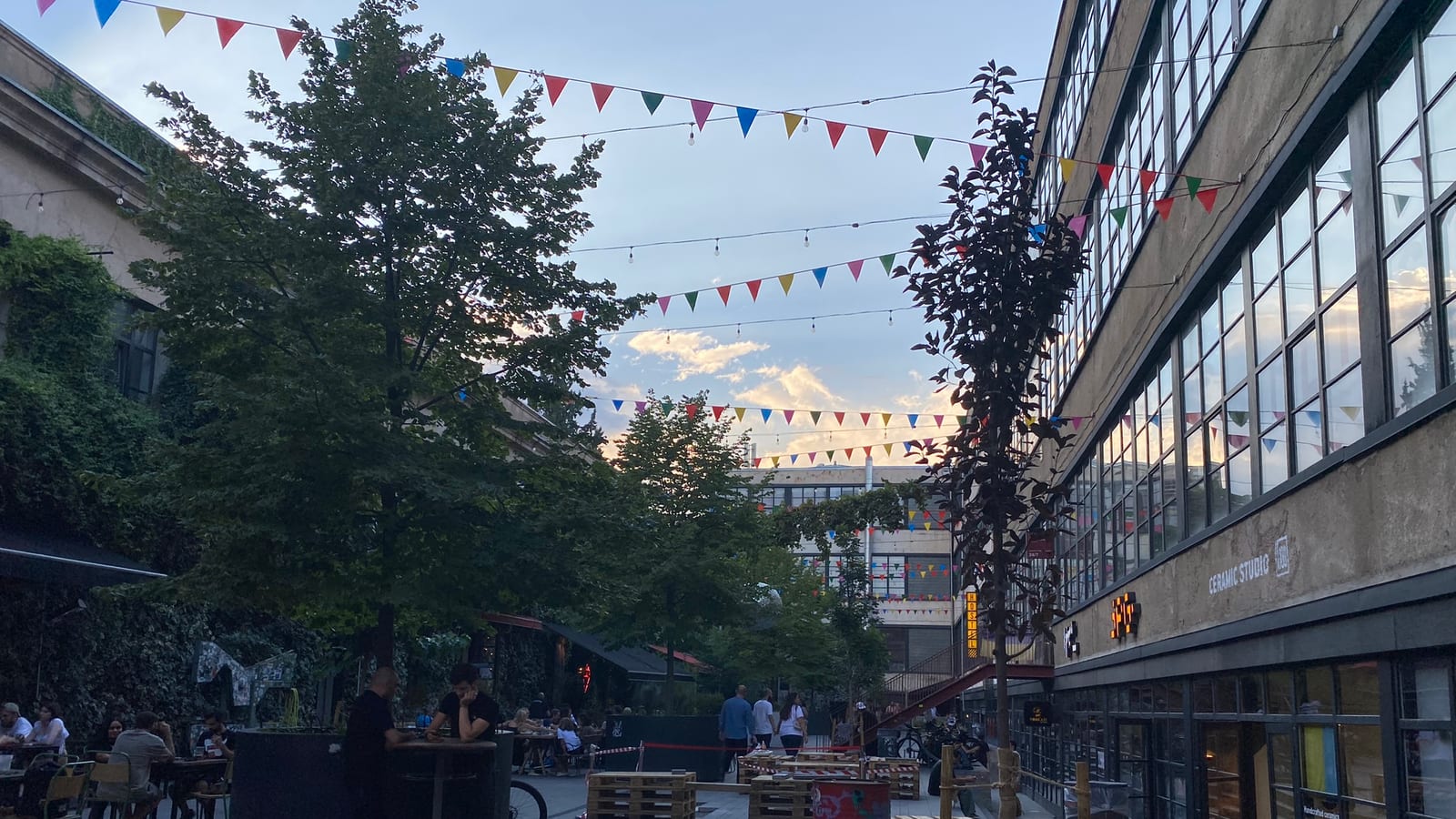
The Fabrika complex at 8 Ninoshvili Street has a hostel with dorms and private rooms, 8 minutes on foot from Marjanishvili metro station and 10 to 15 minutes from the Dry Bridge.11 The Fabrika page describes the rest of the complex.
Rustaveli Avenue
A base on the main avenue puts the Opera House and the museums close by, but the protests FCDO reports centre on the Parliament here, often on Saturday evenings.10
Vake
Vake is the district around Vake Park, where the cable car up to Turtle Lake starts.4
Getting around Tbilisi
Walk the old town and let the cable cars, the funicular, the metro and city buses do the rest. Tbilisi has three cable car lines: Rike Park to Narikala (500 m), Vake Park to Turtle Lake (1,140 m, six minutes) and Tbilisi State University to the Bagebi district (320 m, four minutes).4 The Mtatsminda funicular runs from its lower station at 22 Daniel Chonkadze Street to the park in about three minutes.2
For taxis, FCDO advises booking through an app rather than flagging a car in the street, and it notes construction work under way around central Tbilisi.10
Tbilisi International Airport is 17 km southeast of the city. Municipal bus 337 runs into town, and taxis wait at the entrance day and night.5
For trips out of the city, Mtskheta is 20 minutes away by road, Sighnaghi 1 hour 40 minutes, Telavi 1 hour 50 minutes and Stepantsminda (Kazbegi) just under 3 hours.1213114 Outside the city roads are often badly lit, and snow at altitude can make mountain roads difficult or impossible, so a day trip with a driver is worth considering.10
How to spend 3 days in Tbilisi
Give the first day to the old town, the baths and Narikala, the second to Rustaveli Avenue and Mtatsminda, and the third to the newer city: Fabrika, the Dry Bridge and the cable car from Vake Park to Turtle Lake. If you would rather leave the city, swap the third day for Mtskheta, 20 minutes away by road.12
Day 1: Old Tbilisi, Abanotubani and Narikala
Start at Gorgasali Square (Meidani), walk to the bath quarter for a soak, then cross the Peace Bridge to Rike Park and ride the Rike cable car up to Narikala Fortress. Finish at Metekhi church on its cliff above the city.84
Day 2: Rustaveli Avenue and Mtatsminda
Spend the morning on Rustaveli Avenue, with the National Gallery and the Opera House on the way, then take the funicular from Daniel Chonkadze Street up to Mtatsminda Park for the view from the city's highest point and dinner at one of its restaurants.12
Day 3: Fabrika, the Dry Bridge and Turtle Lake
Take the metro to Marjanishvili and walk 8 minutes to Fabrika, then 10 to 15 minutes on to the Dry Bridge.11 In the afternoon, ride the cable car from Vake Park up to Turtle Lake; a footpath also links the lake with Mtatsminda Park.42
Day 3, the other way: Mtskheta
Swap the newer city for Mtskheta, the former capital, 20 minutes away by road. Jvari Church, Svetitskhoveli Cathedral and Samtavro are all on the World Heritage List.12
Book or do it yourself
Top booking sites sell three kinds of experiences here that are worth paying for. Guided walking tours bring the stories behind the old town's churches and baths that a self-guided walk misses; food and drink experiences put several regions' wines and dishes on one table; and day trips and excursions take the mountain roads off your hands, roads that FCDO warns are often badly lit and can be hard going in snow.10
The rest is easy on your own. The Rike cable car and the Mtatsminda funicular are ordinary rides you can take without a guide, and the old town covers about two square kilometres, small enough to walk in a day with the Old Tbilisi page as your route.421
Places in Tbilisi
Questions about Tbilisi
What is the best time to visit Tbilisi?
No official source we read gives a best season for the city on its own, so plan around the trips you want to add from it. The Georgia page sets out the seasons region by region, for the coast, Kakheti and the high mountains.
How do you get to Tbilisi?
Tbilisi International Airport has regular and charter flights to 26 countries.5 Overland, an overnight train runs between Yerevan and Tbilisi, and FCDO notes a daily train between Georgia and Azerbaijan.1510
Why is Tbilisi the capital of Georgia?
King Vakhtang Gorgasali founded the city in the 5th century; Dachi, his son, then moved the capital here from Mtskheta.3 It has been the country's centre for fifteen centuries, and the Constitution names it the capital.116
How do you get from Tbilisi airport to the city centre?
Take municipal bus 337 or a taxi; the airport is 17 km southeast of the city, and taxis wait at the entrance day and night.5
Sources
- Georgian National Tourism Administration
- Georgian National Tourism Administration
- Georgian National Tourism Administration
- Georgian National Tourism Administration
- Georgian National Tourism Administration
- National Statistics Office of Georgia (Geostat)
- National Statistics Office of Georgia (Geostat)
- Georgian National Tourism Administration
- GeoNames (CC BY 4.0)
- UK Foreign, Commonwealth & Development Office (GOV.UK)
- Fabrika Hostel
- Georgian National Tourism Administration
- Georgian National Tourism Administration
- Georgian National Tourism Administration
- Georgian Railway
- Legislative Herald of Georgia (Constitution of Georgia)