TokyoCity guideFirst-time visitorsJapan
Tokyo Travel Guide: First-Time Visitor Essentials for 2026
A practical 2026 Tokyo travel guide - airports, the Suica card, where to stay, what to eat, etiquette, and the experiences first-timers actually book and remember.
由 SimilarTours Editorial · Travel Research · · 26 分鐘閱讀

Tokyo is enormous, dense, and famously efficient, which sounds intimidating and turns out to be the opposite. The transit is the best on earth, the city is astonishingly safe, signage is bilingual, and the things that trip up first-timers are small and learnable: which airport, how the tap card works, which ward to sleep in, what to do when a restaurant is cash-only. This guide is the practical layer that gets the logistics out of the way so the city itself can do the rest.
If you read one section first, make it getting around - your Suica card and a working data connection are the two things that turn Tokyo from overwhelming into easy.
Browse all Tokyo experiences and tickets →Getting there - Narita, Haneda, and the ride into town
Tokyo has two international airports and they are not interchangeable. Haneda sits much closer to the city, on the south side near the bay, and is the one to choose when you have the option. From Haneda the Tokyo Monorail or the Keikyu Line drops you into central wards in roughly 30 to 45 minutes, and because it is so close, even a late-night taxi is merely expensive rather than ruinous. Narita sits well out to the east in Chiba, and while it often carries cheaper or more direct long-haul flights, the transfer is a real journey: budget an hour and a bit on a fast train and more in traffic by road.
From Narita you have three sensible options. The Narita Express (N'EX) is the JR train that runs directly to Tokyo Station, Shinjuku, Shibuya, and Yokohama, comfortable and reserved-seat, taking around 55 to 90 minutes depending on your final stop. The Keisei Skyliner is the fast private alternative into Ueno and Nippori in about 45 minutes, often the quickest if your hotel is on that side of the city. Limousine buses run to major hotels and are worth it if you have heavy luggage and a direct route, though they are at the mercy of traffic. From Haneda, the Monorail to Hamamatsucho and the Keikyu Line to Shinagawa and onward are both quick and cheap, and both connect straight into the wider train network.
A taxi from either airport is available around the clock but pricey, especially from Narita where the long distance and tolls add up fast. The trains are so good that most visitors never consider a cab from the airport, and you shouldn't either unless you land in the small hours with a mountain of bags or a group splitting the fare. One small but useful habit: set up your IC card or buy your express-train ticket before you leave the arrivals floor, so you walk onto the platform ready rather than puzzling over a machine with a queue behind you.
Pick Haneda when the fares are close
If two flights are similar in price and one lands at Haneda, take Haneda. The shorter, cheaper, later-running transfer into the city is worth a small premium, and it is a far gentler arrival after a long flight.
Getting around - the best transit system in the world
Tokyo moves on rail, and once you understand the basic shape of it the city opens up. There are two overlapping networks plus the loop line that ties them together. The Tokyo Metro and the Toei Subway are the underground lines that crisscross the center, color-coded and lettered on every map, with bilingual signs and announcements. Overlaid on top are the JR lines, the most important of which is the Yamanote Line, the green loop that circles central Tokyo and stops at almost every district a first-timer cares about: Tokyo Station, Shinjuku, Shibuya, Harajuku, Ueno, Akihabara, and more. If you can picture the Yamanote loop, you can orient yourself anywhere in the core.
The thing that makes all of this painless is the IC card. Suica and Pasmo are rechargeable tap cards that work across every train, subway, and bus regardless of which company runs the line, so you never have to work out fares or buy individual tickets. Tap the gate on the way in, tap on the way out, and the correct fare is deducted. The same card pays at convenience stores, vending machines, station lockers, and countless shops, which means it doubles as your small-change wallet. Buy one from any ticket machine at the airport or a major station, or, if you have a compatible iPhone or Apple Watch, add a digital Suica straight to your wallet and top it up with a card - no physical card, no queue. This is genuinely the single best setup move you can make on arrival.
A few practical notes on riding the rails. Trains are punctual to the minute and stop running around midnight to 1 a.m., so plan your last train rather than assuming a late option exists; missing it means a long, expensive taxi. Rush hour, roughly 8 to 9:30 a.m. and 5:30 to 7 p.m., is as crowded as the videos suggest, so avoid it with luggage or small children if you can. Stand on the correct side of the escalator (left in Tokyo, with the right side kept clear for walkers), keep phone calls off the train, and queue in the marked lines on the platform - the locals do, and it makes everything flow. Google Maps gives accurate door-to-door directions including which train, which platform, and which exit to use, and the station-exit numbers matter because large stations have dozens of exits that emerge blocks apart.
Buses exist and are useful in a few neighborhoods the trains miss, and they take the same IC card, but you will rarely need them as a first-timer. Taxis are clean, safe, metered, and honest, with doors that open automatically, but they are expensive and the trains are usually faster across the center. Keep taxis in mind for late nights after the trains stop, for short hops with luggage, or for getting a tired group back to the hotel. Walking, meanwhile, is underrated: individual neighborhoods reward wandering, and the distances within a single district are usually short even when the city as a whole is vast.
Where to stay - the neighborhoods that matter
Tokyo is a collection of distinct centers rather than one downtown, so the ward you choose shapes your whole trip. Here are the ones a first-timer should weigh, each with who it suits, the feel of the place, the rough price register, and how well it connects.
Shinjuku is the high-energy heart of the action - towering and neon-lit, with the world's busiest station feeding lines in every direction, including direct trains to both airports and the western day-trip routes. It packs department stores, the nightlife of Golden Gai and Kabukicho, skyscraper hotel bars, and quiet garden corners all within walking distance. Prices run the full range from capsule hotels to luxury towers. It suits travelers who want everything on the doorstep and don't mind crowds and stimulation. The transit access is arguably the best in the city, which is the main reason it is the default first-stay pick.
Shibuya is younger, trendier, and built around the famous scramble crossing and the shopping streets that fan out from it. The vibe is fashion, cafes, music, and a constant churn of people, busy well into the night. It is brilliantly connected on the Yamanote loop and several metro lines, putting Harajuku, Shinjuku, and Roppongi minutes away. Prices skew mid-to-high, with a growing crop of stylish design hotels. Stay here if you want to be in the middle of contemporary Tokyo and like the idea of stepping out into the city's most photographed crossing.
Ginza is the upscale, polished district of flagship stores, fine dining, and galleries, calmer and more grown-up than Shinjuku or Shibuya. The streets are wide and elegant, the pace more measured, and on weekends the main avenue turns into a pedestrian promenade. It is central and well-connected, an easy reach to Tokyo Station and the bay. Prices are high, both for hotels and for the surrounding restaurants and shops. Choose Ginza if you want refinement, easy access, and a quieter base, and you don't mind paying for it.
Asakusa is the old-town counterweight to the glass-and-neon districts, an atmospheric quarter of traditional streets, craft shops, and the city's most beloved temple district. The feel is low-rise, historic, and more relaxed, with a strong sense of old Tokyo that the modern wards lack. It is also notably better value, with comfortable mid-range hotels and well-run hostels. Transit is solid though slightly off the Yamanote loop, sitting on metro lines and within a short ride of Ueno. It suits travelers who want character and a softer budget and don't mind a few extra minutes to the nightlife districts.
Tokyo Station and Marunouchi is the business-district base - sleek, central, and supremely connected, sitting on top of the hub that feeds the entire rail network including the bullet trains. The area is corporate and a touch quiet after dark, with grand architecture, upscale hotels, and excellent food hidden in the basements and surrounding lanes. Prices are high. This base makes the most sense for travelers planning bullet-train day trips, for whom waking up steps from the shinkansen platforms is a real luxury, and for anyone who values the most efficient possible transit access.
Shimokitazawa is the bohemian wildcard - a low-rise warren of vintage shops, tiny live-music venues, indie cafes, and theaters, with almost no chain feel. The vibe is creative, laid-back, and local, the antithesis of the skyscraper wards. Prices are gentle, with boutique stays and guesthouses rather than big hotels. It sits a short, direct train ride from Shibuya and Shinjuku, close enough to be convenient while feeling a world away. Choose it if you want a neighborhood that feels lived-in rather than touristic and you are happy to commute a few stops to the headline sights.
A simple rule for choosing
First trip and want everything easy: Shinjuku or Shibuya. Want character and value: Asakusa. Want refinement: Ginza. Doing bullet-train day trips: Tokyo Station. Want a local, creative base: Shimokitazawa.
Top things to do - the first-timer shortlist
You could spend a month in Tokyo and not run out, so a first visit is about choosing a handful of experiences that show the city's range: the old and the new, the food and the spectacle, the city center and one trip beyond it. A few that consistently earn their place on a first itinerary are the temple-and-history walks through the old quarters, a hands-on food experience, the surreal fun of go-karting past famous landmarks, and at least one big day trip toward Mt Fuji. We rank the full shortlist in our companion piece on the things to do in Tokyo, but here are a few of the highest-rated, most-booked experiences to anchor your plan around.
 Featured tour
Tokyo 6hr Private Tour with Government-Licensed Guide
A half-day with a licensed local guide who builds the route around what you want to see - the most efficient way to orient yourself on a first day, and very highly rated.
4.9(4,436)Half-day
From
$141
 Featured tour
Tokyo: Imperial Palace and Shogun Historical Walking Tour
A two-hour guided walk through the historic core - a low-cost, top-rated way to add context to the central palace grounds.
4.9(2,819)2 hours
From
$22
 Featured tour
Official Street Go-Kart in Shibuya
The famous street go-kart experience past Shibuya landmarks - two hours of pure spectacle, consistently one of the most-booked novelty experiences in the city.
4.9(3,786)2 hours
From
$105
Food and dining - the part you came for
Tokyo is, by many measures, the best eating city on the planet, and the good news for a first-timer is that the depth runs all the way down to the cheapest counters. You do not need a fine-dining budget to eat astonishingly well; you need to know the formats and a few simple manners. Here is the lay of the land.
The izakaya is the Japanese pub, and it is where locals actually eat and drink. You order a steady stream of small plates - grilled skewers, sashimi, fried morsels, pickles - alongside beer, sake, or highballs, and the whole thing is convivial and inexpensive. Many are tucked down alleys or up narrow stairwells, marked only by a lantern, and the best ones are exactly the kind of cash-only places worth carrying yen for. Sushi ranges from temple-of-craft counters to brilliant value, and the most fun entry point for a first-timer is the conveyor-belt (kaiten) shop, where plates circle past on a belt and you grab what you like, with prices keyed to plate color and a screen for ordering extras. For the freshest possible morning experience, the area around the old Tsukiji market is still packed with stalls and small restaurants serving seafood, and it makes a superb early-morning food walk.
Ramen deserves its own pilgrimage - regional styles, broths simmered for hours, shops where you buy a ticket from a vending machine at the door, hand it to the counter, and slurp (slurping is fine and even encouraged). Then there is the depachika, the food hall in the basement of every major department store, a glittering wonderland of prepared dishes, sweets, bento, and samples that is the easiest place in the city to assemble a spectacular picnic or an effortless dinner. Convenience stores, too, are a genuine food category here: the onigiri, sandwiches, and hot snacks at 7-Eleven, Lawson, and FamilyMart are far better than the words "convenience store" suggest.
A few points of etiquette make the whole thing smoother. There is no tipping, ever - the price is the price and service is superb regardless. Say "itadakimasu" before eating if you like, slurp noodles freely, do not stick your chopsticks upright in rice or pass food chopstick-to-chopstick, and hand over money on the small tray at the register rather than into a hand. Many great places are tiny and cash-only, so keep yen handy. And do not be shy about the language barrier: pointing, photos, and a translation app get you through, and staff are unfailingly patient.
The most rewarding way to crack open the food scene on a first trip is to do one guided food experience early, ideally on your first or second evening, because a good guide teaches you how to order, what to look for, and where to come back to on your own for the rest of the trip. These are some of the highest-rated food experiences currently bookable.
 Featured tour
Tokyo: Shinjuku Food Tour (13 Dishes at 4 Local Eateries)
Thirteen dishes across four local Shinjuku eateries in three hours - a crash course in how to eat in Tokyo, exceptionally well-rated.
4.9(8,560)3 hours
From
$80
 Featured tour
Tokyo Tsukiji Fish Market Food Walking Tour with 5 Tastings
A morning walk through the Tsukiji outer market with five tastings - the best way to eat the city's seafood scene at its freshest.
4.9(3,612)3 hours
From
$107
 Featured tour
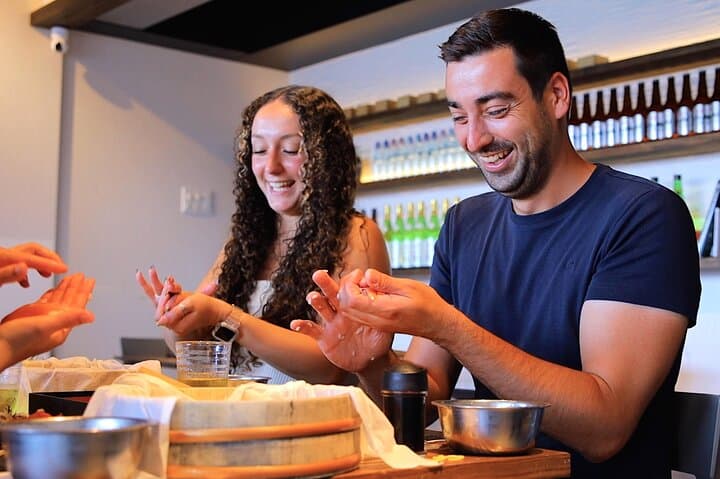
Make Sushi and Create Unforgettable Memories in Tokyo
A two-hour hands-on sushi class - the rare experience that turns into a skill you take home, with a perfect rating.
5.0(1,417)2 hours
From
$77
Money and connectivity
Tokyo has become far more card-friendly, but cash has not gone away, and the smart move is to be set up for both. Department stores, hotels, chain restaurants, and most mid-range and up establishments take international cards without fuss, and your IC card sweeps up the small stuff at convenience stores and vending machines. But the city's best cheap eating - the alley izakaya, the old ramen counter, the market stall, the family soba shop - is frequently cash-only, and so are many shrine and temple offerings and small craft shops. Carry a few thousand yen at all times. When you run low, the ATMs inside 7-Eleven, Lawson, and FamilyMart reliably accept foreign cards around the clock, which is more than can be said for many bank ATMs, so think "convenience store" when you need cash.
On connectivity, do not rely on public wifi - it exists but is patchy, often requires sign-ups, and will frustrate you exactly when you need directions. Sort out constant data before you fly. An eSIM is the cleanest option for a modern phone: buy and install it before departure and it activates when you land, giving you maps, translation, and messaging from the moment you step off the plane. A rented pocket wifi hotspot suits groups who want to share one connection or travelers with older phones, and it can be collected at the airport or delivered to your hotel. Either way, the goal is to never be stranded without Google Maps in a city where the right station exit is the difference between a two-minute walk and a confusing fifteen.
Keep cash on you
The single most common money mistake first-timers make is assuming cards work everywhere and getting caught at a wonderful little cash-only restaurant with no yen. Top up at a convenience-store ATM before you are empty, not after.
Etiquette and safety
Tokyo runs on quiet consideration, and a few habits will make you a welcome visitor rather than a conspicuous one. Keep your voice down on trains and do not take phone calls; eating and drinking while walking is generally avoided; queue patiently and let people off before you board; and carry your trash with you, because public bins are scarce and the city stays immaculate anyway. Shoes come off where you see a step up and a rack of slippers - some restaurants, traditional accommodations, and homes. Bowing is everywhere; a small nod in return is plenty and no one expects a foreigner to get it exactly right. And, to repeat the most important one, there is no tipping - the gesture lands as confusion, not generosity.
On safety, Tokyo is genuinely one of the easiest and lowest-stress big cities in the world to visit, including for solo and female travelers. Violent crime is rare, the streets feel calm at night in busy areas, and lost property has a famous habit of being handed in. The handful of things to watch are minor: in the nightlife pockets of Kabukicho and Roppongi, ignore touts who try to pull you into bars, as the well-known scam involves opaque cover charges and inflated bills at the places they steer you toward. Stick to bars you choose yourself and you will never encounter it. Beyond that, the usual common sense covers you, and you can otherwise relax in a way that few major cities allow.
Day trips - getting out of the city
If you have four days or more, build in one trip beyond the city limits, because the change of register is part of what makes a Tokyo trip memorable. The headline option is Mt Fuji and Hakone, combining the iconic mountain with Hakone's hot-spring valley, lake cruises, and ropeways in one long, scenery-rich day. The logistics of doing it yourself are awkward - multiple transfers, timing the views, weather luck - which is exactly why the organized full-day tours are so popular, whether by comfortable coach, by bullet train, or by private car for a tailored pace. Other strong day trips include the forested shrine area of Nikko, the coastal temples and giant Buddha of Kamakura, and the easygoing waterfront of Yokohama, but Mt Fuji is the one most first-timers add. For the full breakdown of routes and the highest-rated options, see our dedicated guide to the Mt Fuji day trip from Tokyo.
 Featured tour
Mt Fuji and Hakone 1-Day Bus Tour Return by Bullet Train
The classic full-day Mt Fuji and Hakone loop by coach with a bullet-train return - by far the most-booked way to do it, with tens of thousands of ratings.
4.8(30,116)Full day
From
$157
 Featured tour
Spectacular Mt. Fuji and Lake Cruise, Noodles Making Experience
A full day pairing Mt Fuji views and a lake cruise with a hands-on noodle-making session - a more interactive take on the classic trip.
4.8(1,542)Full day
From
$105
 Featured tour
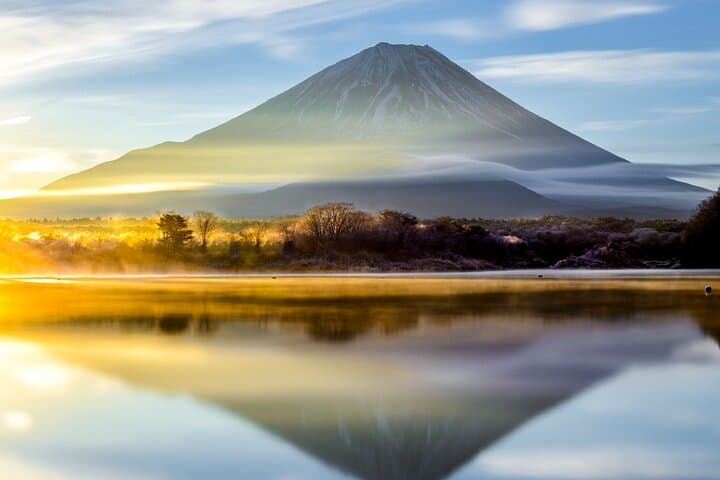
Private Tour to Mt. Fuji and Hakone (Fully Licensed Operator)
The private, fully-licensed version - your own car and guide for a tailored Mt Fuji and Hakone day at your own pace, top-rated.
4.9(2,314)Full day
From
$501
Sample itineraries
For a first visit, a simple three-day shape works beautifully and stops you from scattering across a city this large. Spend day one in old Tokyo, anchored on the Asakusa temple district and the surrounding traditional streets, then drift toward Ueno's museums and park, ending with an izakaya dinner to ease into the food scene. Use day two for the neon center: the Shibuya scramble crossing and its shopping streets, Harajuku's fashion lanes, the skyscrapers and gardens of Shinjuku, and a night out in one of the nightlife quarters. Keep day three flexible for a big day trip - Mt Fuji and Hakone is the obvious choice - or, if you'd rather stay in town, use it to go deeper into a single district, add a food tour or sushi class, and pick up the souvenirs and depachika treats you spotted earlier.
Stretch to four or five days and the plan only gets better: you can split the central wards across two gentler days, add a second day trip such as Nikko or Kamakura, and leave proper time for the things Tokyo rewards most, which are wandering, eating, and people-watching rather than ticking off sights. For a pace-tested, hour-by-hour version of the three-day plan, our 3 days in Tokyo itinerary lays it all out and pairs naturally with this guide - use this page for the decisions (where to stay, how to get around) and the itinerary for the running order.
Compare every Tokyo experience in one search →A note on seasons
Tokyo is a four-season city and the time you visit changes the mood more than the logistics. Spring, especially late March into April, brings the cherry blossom and some of the most beautiful and crowded weeks of the year, while autumn from October into November delivers crisp air, clear skies, and foliage, the other peak window. Summer is hot and humid with a rainy spell around June and a run of festivals to compensate, and winter is cold but bright and notably less crowded, with clear days that are often the best for distant Mt Fuji views. Spring and autumn accommodation books up early, so if you are chasing blossom or foliage, reserve well ahead and expect company at the famous spots.
A couple of experiences worth singling out
Beyond the food and the day trips, two experiences come up again and again as first-timer favorites because they are pure Tokyo and hard to replicate anywhere else. A traditional sumo show with the chance to meet wrestlers and get a photo is a vivid, accessible window into a side of Japanese culture most visitors never see up close, and a guided full-day city bus tour is a low-effort way to stitch the major districts together if you would rather be shown around than navigate. Both rate highly and book up in peak season.
 Featured tour
Tokyo Shinjuku Sumo Show & Experience with Photo
A two-hour sumo show in Shinjuku with a photo opportunity - an accessible, highly-rated way to experience the sport without a tournament ticket.
4.9(3,250)2 hours
From
$77
 Featured tour
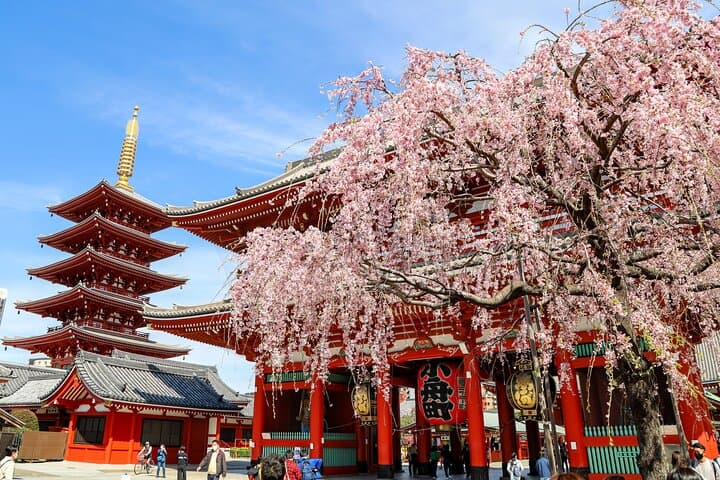
1-Day Tokyo Bus Tour
A full-day guided bus tour linking the city's headline districts - the easy, sit-back option for covering a lot of ground, with thousands of ratings.
4.9(15,820)Full day
From
$124
Common questions
Which Tokyo airport should I fly into, Narita or Haneda?
Haneda if you can choose - it sits much closer to the city, so the train or monorail into central Tokyo takes roughly 30 to 45 minutes, and it runs late. Narita is further out east, an hour-plus by the Narita Express or Skyliner, but it often has cheaper or more direct international flights. Either works fine; Haneda just saves you time and money on the transfer. Check which one your flight uses before assuming the transfer cost.
Do I need a JR Pass for a Tokyo-only trip?
No. The Japan Rail Pass only pays off if you are taking long-distance bullet trains between cities. For a trip that stays inside Tokyo, a Suica or Pasmo IC card is all you need - tap on, tap off, top up as you go. Only consider the JR Pass if you are also doing Kyoto, Osaka, or other shinkansen day trips, and even then do the math against individual ticket prices first.
What is a Suica or Pasmo card and how do I get one?
Suica and Pasmo are the rechargeable tap cards that run Tokyo's trains, subways, and buses, and they also pay at convenience stores and many vending machines. Get one from a ticket machine at the airport or any major station, or add a digital Suica to an iPhone or Apple Watch wallet and top it up with a card. Tap the gate going in and out; the fare is deducted automatically. It is the single best thing you can set up on arrival.
Is Tokyo a cash or card city?
More card-friendly than it used to be, but cash still matters. Big stores, hotels, chains, and most restaurants take cards now, and IC cards cover small purchases. But small izakaya, old ramen counters, market stalls, and some shrines and temples are cash-only. Carry a few thousand yen at all times. 7-Eleven, Lawson, and FamilyMart ATMs reliably accept foreign cards if you run low.
Do I tip in Tokyo?
No. Tipping is not part of the culture in Japan and can cause confusion or even mild offense. The price you see is the price you pay; service is included and is consistently excellent without any tip. Do not leave money on the table at restaurants or hand cash to drivers or guides beyond the agreed fare. The one exception is a private guide on an organized experience, where a thank-you gift is occasionally appreciated but never expected.
How many days do I need in Tokyo for a first visit?
Three full days is the sweet spot for a first visit - enough to cover the old-town temple district, the neon central wards, a food experience, and one day trip without rushing. Four or five days lets you slow down and add a Mt Fuji or Hakone day. Two days is tight but workable if you focus. If Tokyo is one stop on a wider Japan trip, three days here balances well against Kyoto and Osaka.
What are the best day trips from Tokyo?
Mt Fuji and Hakone is the headline day trip, doable by organized bus tour, bullet train, or private car in a single long day. Other strong options include Nikko's forested shrine area, Kamakura's coastal temples and giant Buddha, and Yokohama's waterfront. Mt Fuji and Hakone is the one most first-timers add because the logistics are awkward to self-drive, which is why a guided full-day tour is so popular for it.
Is Tokyo safe for first-time and solo travelers?
Tokyo is one of the safest large cities in the world for visitors, including solo and female travelers. Violent crime is rare, lost wallets are often returned, and walking at night in busy areas is generally comfortable. The usual common sense still applies in nightlife districts, and you should be wary of touts pulling you into bars in Kabukicho or Roppongi, which is the one well-known scam to avoid. Otherwise it is remarkably easy and low-stress.
Do I need pocket wifi or an eSIM in Tokyo?
Yes, get one or the other - constant data makes navigating Tokyo's transit and finding restaurants far easier. An eSIM is the simplest if your phone supports it: buy and install before you fly, and it activates on landing. Pocket wifi (a rented portable hotspot) suits groups sharing one connection or older phones. Public wifi exists but is patchy and a hassle. Sort this out before the trip rather than at the airport.
When is the best time to visit Tokyo?
Spring (late March into April) for cherry blossom and autumn (October into November) for crisp air and foliage are the two most popular windows, with mild weather and the city at its most photogenic. Summer is hot and humid with a rainy stretch in June, and winter is cold but clear and far less crowded. Spring and autumn book up fast for accommodation, so reserve early if you target blossom or foliage season.
How do I get around Tokyo without speaking Japanese?
Easily. Station signs, train announcements, and ticket machines all have English, Google Maps gives accurate train-by-train directions, and your IC card removes the need to decode fares. Staff are helpful even across a language barrier, and a translation app covers menus and questions. Tokyo is one of the most navigable non-English-speaking cities in the world for a first-timer.
Keep reading
Tokyo listicle
Things to Do in Tokyo: experiences worth booking in 2026
The Tokyo shortlist - temples, food tours, day trips, and neon nightlife ranked by what's worth your time.
Read more
Tokyo itinerary
3 Days in Tokyo: the perfect first-timer itinerary
A pace-tested three-day plan covering the old city, the neon districts, and a day trip.
Read more
Day trip
Mt Fuji Day Trip from Tokyo
How to do Mt Fuji and Hakone in one day from Tokyo - by bullet train, bus, or private car.
Read more
Ticket guide
Tokyo Skytree Tickets: prices, views, and how to skip the line
Skytree ticket tiers compared and the best time to go up.
Read more

Destination guide
Tokyo, Japan
Compare thousands of Tokyo experiences and tickets across the top booking sites in one search, with no added fees.
更多閱讀
更多指南以幫助您計畫旅程

The Best Day Trips from Tokyo: Mt Fuji, Kamakura, Nikko and More
The best day trips from Tokyo ranked by what is worth a full day: Mt Fuji and Hakone, Kamakura, Nikko, Yokohama, and Kawagoe, with the top-rated tours for each.

Tokyo in Winter: Clear Skies, Illuminations, and the Best Fuji Views
Tokyo in winter is the underrated season: crisp clear skies, the year's best Mt Fuji visibility, city-wide illuminations, onsen day trips, and thin crowds.

Things to Do in Tokyo with Kids: A Family Guide That Actually Works
The best things to do in Tokyo with kids: teamLab, the Skytree, a theme park day, animal cafes and parks, plus the transit and hotel logistics that matter.

The Best Time to Visit Tokyo: A Month-by-Month Guide
The best time to visit Tokyo, month by month: the real trade-offs between weather, crowds, and prices, plus the two sweet-spot windows for cherry blossom and autumn colour.

Kamakura Day Trip from Tokyo: The Great Buddha and Beyond
Plan a Kamakura day trip from Tokyo: the Great Buddha and temples, Kamakura plus Enoshima combos, guided walks vs the train on your own, and the top-rated tours.

Nikko Day Trip from Tokyo: Shrines, Waterfalls and Tours
Plan a Nikko day trip from Tokyo: guided group tours vs private guides, the Kegon Falls and Lake Chuzenji nature route, going by train, and the top-rated options.

teamLab Planets Tokyo Tickets: The 2026 Guide to Entry, Combos, and Guided Tours
A no-fluff 2026 guide to teamLab Planets Tokyo tickets - the three ticket formats compared, how far ahead to book, and what to wear on the day.

3 Days in Tokyo: The Perfect First-Timer's Itinerary
A 3-day Tokyo itinerary that actually flows: old Tokyo and Asakusa on day one, food and markets on day two, a Mt Fuji or city-deep-dive day three, with the tours travelers rate highest at each stop.