BarcelonaItinerary3 daysSpain
3 Days in Barcelona: The Perfect First-Timer Itinerary for 2026
A walkable, well-paced 3 days in Barcelona itinerary for first-timers - Gaudi core, the Gothic Quarter, a Montserrat or Girona day trip, and what to pre-book.
由 SimilarTours Editorial · Travel Research · · 18 分鐘閱讀

Three days in Barcelona is the classic first-timer trip - long enough to cover the Gaudi headliners, the medieval old city, and one day trip into Catalonia without ever feeling rushed, short enough to keep the whole thing tight and mostly walkable. This itinerary is built for first-time visitors moving at a comfortable pace, assuming a central base somewhere around the Eixample or the edge of the old city so the morning sights are a short metro hop or a walk away.
The structure is simple and it is the order that matters most: a Gaudi day, an old-city day, and a choose-your-own day trip. Barcelona spreads wider than a compact city like Florence, so the sequence below is designed to cut down on backtracking and to line up the timed-entry sites - the Gaudi ones in particular - before they sell out under you. Adjust the hour-by-hour timings for energy, weather, and how many late dinners your group can handle, but keep the day themes intact and you will see the best of the city without the death-march pace that ruins so many three-day trips.
Browse all Barcelona experiences →Before you go
A little planning up front is the difference between a smooth Barcelona trip and a frustrating one, because the marquee sights here are timed-entry and the good slots vanish first.
Where to stay (quick note). For this itinerary, base yourself central. The Eixample is the comfortable first-timer pick - wide grid streets, the Gaudi houses on your doorstep, and a short metro ride to everything else. The edge of the Gothic Quarter or El Born puts you in the atmospheric heart of the old city, walkable to La Rambla and the waterfront, though noisier at night. Either zone keeps the whole plan within a walk or a couple of metro stops.
Getting around with a T-casual. Walk the old city, take the metro for distance. Buy a T-casual ticket - ten rides shareable across metro, bus, and tram - which comfortably covers a typical three-day trip for one person, or split it across a couple if you are walking most of the time. The metro is fast, clean, and the simplest way to reach Park Guell and the waterfront.
What to pre-book - the Gaudi timed entries. This is the one rule that makes or breaks the trip. The Sagrada Familia and Park Guell both run on strict timed entry and sell out days ahead in peak season - book these first, before you lock anything else. If you want the Gaudi houses on Passeig de Gracia, Casa Batllo and Casa Mila are also timed, so reserve those once the big two are set. Day trips with hotel pickup fill up too. Tapas crawls, cooking classes, and restaurants are far more flexible, but a popular small-group food experience is worth grabbing a few days out.
Book the Sagrada Familia slot first
Of everything on this itinerary, the Sagrada Familia is the entry that sells out earliest and hardest. The morning slots go first, and a guided ticket saves you from juggling the timing yourself. Lock your Sagrada time before you build the rest of the trip around it, then slot Park Guell and the Gaudi houses into the gaps.
Day 1 - The Gaudi core
Theme: the Sagrada Familia first thing, Park Guell at midday, the Gaudi houses on Passeig de Gracia in the afternoon, and an Eixample dinner to close.
Morning - The Sagrada Familia
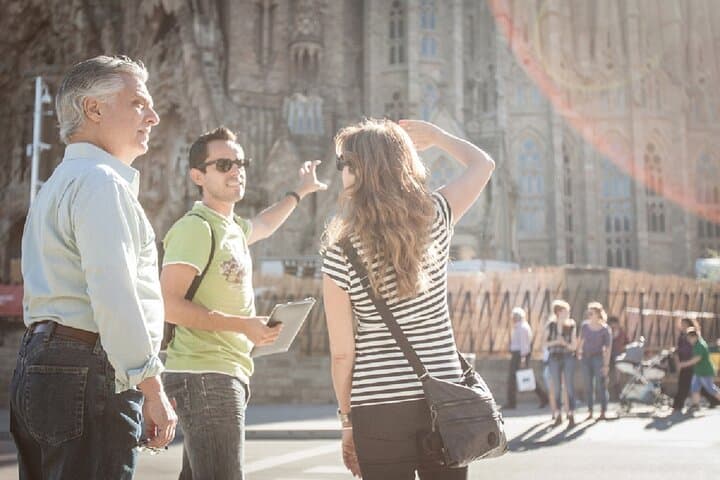
Start at the Sagrada Familia, the city's signature landmark and the one sight every first-timer comes for. Go early: the first slots of the day are quieter and the morning light through the eastern stained glass is the reason to time it right. The basilica runs on strict timed entry, so your booked slot is your start time - aim to arrive a few minutes ahead.
A guided tour is the recommended format for a first visit. The interior rewards context, the standard ticket includes no narration, and a guide handles the entry logistics that trip up walk-up visitors. Budget around ninety minutes to two hours inside, more if you have added a tower climb. This is also the natural anchor for the whole day, so build everything else around the slot you managed to book.
 Featured tour
Sagrada Familia Guided Tour with Skip the Line Ticket
The high-volume first-timer pick - guided interior with skip-the-line entry, a focused two-hour visit that handles the timed-slot logistics for you.
4.4(9,442)2 hours
From
$65
Midday - Park Guell
From the Sagrada Familia, head north and uphill to Park Guell, the terraced Gaudi park famous for its mosaic-tiled serpentine bench and the panorama over the city. The metro plus a short escalator-and-walk stretch, or a quick taxi, saves your legs for the climb at the top. The monumental zone is timed-entry like the Sagrada, so your slot matters here too - aim for an early-afternoon entry that follows your basilica morning cleanly.
Give it sixty to ninety minutes. A guided ticket adds the back-story and skips the entrance queue, which can swallow time in peak months. If you would rather pair both Gaudi headliners into one seamless guided block instead of timing two separate slots and crossing the city yourself, a combined Sagrada-and-Park-Guell tour is the cleanest way to run the morning and midday as a single experience.
 Featured tour
Park Guell and Sagrada Familia Tour with Skip the Line Tickets
Both Gaudi headliners in one guided block - skip-the-line entry to each, four hours, no juggling two separate timed slots or the cross-city transfer.
4.8(6,785)4 hours
From
$140
Afternoon - Passeig de Gracia and the Gaudi houses
Come back down into the Eixample and walk Passeig de Gracia, the city's grand boulevard, lined with the Gaudi residences that turned an ordinary city street into an open-air gallery of his work. The two to see are Casa Batllo, with its scaled, bone-like facade and dreamlike interior, and Casa Mila, the undulating stone apartment block with the famous chimney-studded rooftop. Both are timed-entry, both reward an unhurried hour, and you can do one or both depending on your energy after a full Gaudi morning.
An audio-guide ticket lets you move at your own pace through the interiors, which is the format most first-timers prefer here after a guided basilica earlier in the day. If you only have appetite for one, Casa Batllo is the more theatrical interior; Casa Mila wins on the rooftop. Either way, the boulevard itself - the shops, the modernist architecture, the people-watching - is part of the experience.
 Featured tour
Casa Batllo Admission Ticket with Intelligent Audio Guide
The self-paced Casa Batllo visit - timed entry with an interactive audio guide through the interior and rooftop, two hours at your own rhythm.
4.4(3,282)2 hours
From
$53
Evening - Eixample dinner
Stay in the Eixample for dinner. The grid streets a block or two off Passeig de Gracia are full of restaurants that serve a more local crowd than the old-city tourist drag, and the neighborhood is built for a slow evening stroll. Remember the timing - locals rarely sit down before 9 p.m., so fill the gap with an early-evening drink and a few small plates, then settle into a proper dinner once the kitchens get going. If you would rather compress the whole Gaudi day into one efficient guided outing, a combined highlights tour with pickup covers the headliners in a single morning and frees your afternoon and evening entirely.
See all Barcelona skip-the-line tickets →Day 2 - The old city
Theme: the Gothic Quarter, La Rambla, and La Boqueria in the morning; El Born and the Picasso area in the afternoon; a tapas crawl in the evening.
Morning - Gothic Quarter, La Rambla, and La Boqueria
Spend the morning on foot in the Barri Gotic, the medieval heart of the city - a maze of narrow stone lanes, hidden squares, and the cathedral, best explored by simply wandering and getting a little lost. A guided walking tour is the way to make sense of the layers here, since the streets carry centuries of history that a map will not explain. Aim to start early, while the lanes are still cool and uncrowded.
Drift onto La Rambla, the famous tree-lined promenade that cuts through the old city. It is touristy and you should keep a hand on your valuables, but it is part of the first-timer experience and it delivers you to La Boqueria, the cathedral-like covered market just off the strip. Go for the color, the produce stalls, the jamon counters, and a stand-up snack - it is one of the best free sights in the city and a perfect mid-morning graze.
See guided Gothic Quarter walking tours →Afternoon - El Born and the Picasso area
Cross into El Born, the old city's most atmospheric quarter - tighter, more design-forward, and lined with independent boutiques, wine bars, and the kind of small museums first-timers actually enjoy. This is the area around the Picasso museum, and even if you skip the galleries the neighborhood itself rewards a slow afternoon: the basilica of Santa Maria del Mar anchors it, and the surrounding lanes are made for an unhurried wander with stops for coffee or a glass of cava.
It is a deliberately gentler half-day after a sight-heavy Gaudi Day 1 and a walking-heavy morning. Let it be loose - browse the shops, sit in a square, and pace yourself for the evening, which is the real event on Day 2. If museums are your thing, the Picasso collection is the headline draw and works well as a timed mid-afternoon stop before the light fades.
Evening - Tapas crawl
Day 2 ends with the quintessential Barcelona evening: a tapas crawl. Rather than one sit-down dinner, you hop between bars for small plates and local wine, which is both how locals eat and the best way to taste your way across a neighborhood. A guided small-group tapas-and-wine walk takes the guesswork out of which bars are worth it and folds in the local context, and it doubles as your dinner - graze across several stops and you will not need a formal meal afterward.
If you would rather get hands-on, a paella cooking class with a market visit is the alternative evening - shop for ingredients, cook a Catalan menu, and eat what you made, the most immersive way to spend a Barcelona night.
 Featured tour
Barcelona Tapas and Wine Experience Small-Group Walking Tour
The classic tapas crawl - a small-group walk through several local bars with wine and small plates that adds up to dinner, plus the context on what you are eating.
4.9(6,229)3 hours
From
$81
 Featured tour
Barcelona Paella Cooking Class with Market Visit, Tapas & Sangria
The hands-on alternative - a market visit, a paella cooking class, and tapas with sangria, the most immersive way to turn an evening into the meal.
5.0(2,908)3 hours
From
$112
Day 3 - A Catalonia day trip
Day 3 is the natural slot for one excursion out of the city, and there are two strong options for first-timers. Both give you a taste of Catalonia beyond Barcelona without cutting into the city sights you have already covered on Days 1 and 2.
Option A - Montserrat (recommended for first visits)
The easy first-timer win. Montserrat is a dramatic mountain monastery set among jagged peaks under an hour from the city, and it makes a clean half-day: the basilica, the views over the serrated range, and often a wine or gourmet tasting woven in on the way back. Most tours run with transport included and have you back in Barcelona by mid-afternoon, leaving your evening free for a final dinner in town. It is the pick if you want scenery and a relaxed pace rather than a long day on the road.
 Featured tour
Montserrat Small Group Tour with Tapas and Gourmet Wines
The scenic half-day - a small-group run to the Montserrat monastery and peaks with tapas and gourmet wine tastings, back in the city by afternoon.
4.9(7,880)Half-day
From
$63
Option B - Girona and the Costa Brava
If you would rather have a medieval town and coastline than a mountain. A full-day trip pairs Girona, with its walled old town, colorful riverfront houses, and steep stone lanes, and a stretch of the Costa Brava, the rugged Catalan coast of coves and cliffside views. It is a longer day than Montserrat, but it is the single best way to combine an atmospheric old town and the coast in one outing without renting a car, and pickup from Barcelona keeps the logistics simple.
 Featured tour
Girona & Costa Brava Small-Group Tour with Pickup from Barcelona
The full-day alternative - the walled old town of Girona paired with the Costa Brava coastline, small-group with pickup from Barcelona.
4.9(7,627)Full day
From
$117
Optional add-ons and swaps
The three-day spine is deliberately lean, so here is where to flex it. More beach: trade a slow old-city afternoon for Barceloneta, the city beach a short walk from El Born, for a swim or a seafood lunch on the sand. More views: swap an evening for the Montjuic hill - a cable car up to the castle, the gardens, and a sweep over the harbor at sunset. Tighter on time: the full city-highlights tour on Day 1 compresses the Gaudi headliners and the old town into a single guided morning, freeing a whole afternoon. Slower pace or with kids: drop the second Gaudi house, build in a long lunch, and let the children loose in Park Guell and on the beach rather than back-to-back interiors. Return visitors: keep one day trip and add the other, doing Montserrat and Girona on separate days instead of choosing between them.
Compare every Barcelona experience in one search →Practical tips
A handful of things that smooth out a first Barcelona trip.
Money. Cards are accepted nearly everywhere, including small bars and the metro machines, so you rarely need much cash - keep a little for tips and the odd market stall. Lunch is the value meal: many restaurants run a good-value fixed-price midday menu that costs a fraction of the same food at dinner.
Language. Barcelona is bilingual - Catalan and Spanish - and English is widely spoken in tourist-facing spots. A few words of either language go a long way, but you will manage comfortably without them across this itinerary.
Dinner timing. Eat late. Locals do not sit down for dinner before 9 p.m. and kitchens often do not get busy until 9:30 or 10. Use the early-evening hours for a drink and tapas, then a full dinner later - or skip the formal meal entirely on your tapas-crawl night.
Pickpockets. Barcelona is safe in the ordinary sense but has a real reputation for pickpockets in crowds - La Rambla, the metro, the beach, and busy sights. Keep your phone and wallet in a front or zipped pocket, never on a cafe table or in a back pocket, stay alert on transport, and never leave a bag unattended on the sand. Treat it as routine city caution, not a reason to worry.
Common questions
Is 3 days enough for a first visit to Barcelona?
Yes, three days is the sweet spot for a first visit. It covers the Gaudi headliners, the old-city quarters, the waterfront, and one day trip without rushing. The trick is order and pre-booking: keep the Gaudi sites on Day 1, the medieval quarters on Day 2, and use Day 3 for Montserrat or Girona. Anything shorter forces you to cut, and a fourth day mostly adds beach time or a second day trip rather than new must-sees.
What do I absolutely need to book in advance for Barcelona?
The Gaudi sites run on strict timed entry and sell out days ahead in peak season - book the Sagrada Familia and Park Guell first, then Casa Batllo or Casa Mila if you want them. Day trips with hotel pickup also fill up. Restaurants and tapas crawls are far more flexible, though a popular small-group food tour or cooking class is worth reserving a few days out.
How do I get around Barcelona in 3 days?
On foot plus the metro. The old city is walkable end to end, and the metro connects the Gaudi sites and the waterfront fast. Buy a T-casual ticket - ten rides shareable across the metro, buses, and trams - which covers a typical three-day trip comfortably. Park Guell sits uphill, so the metro plus an escalator stretch, or a short taxi, saves your legs for the rest of the day.
Should I do Montserrat or Girona on the third day?
Montserrat is the easy win for first-timers - a dramatic mountain monastery under an hour out, often paired with a wine tasting, and back by mid-afternoon. Girona and the Costa Brava is the pick if you want a medieval town and coastline rather than a mountain, but it runs as a longer full day. Choose Montserrat for scenery and a half-day pace, Girona for old-town atmosphere and the coast.
Do I need to book Sagrada Familia and Park Guell together?
You can, and on a first trip it often makes sense. Combined Gaudi tours bundle the Sagrada Familia and Park Guell into one guided morning with skip-the-line entry to both, which removes the logistics of timing two separate timed slots and crossing the city between them. If you would rather move at your own pace, book each site individually - just lock the Sagrada Familia slot first, since it is the one that sells out earliest.
When should I eat dinner in Barcelona?
Late. Locals rarely sit down for dinner before 9 p.m., and many kitchens do not get busy until 9:30 or 10. If you are hungry earlier, that is exactly what tapas and the early-evening aperitivo hour are for - graze your way through small plates from around 7, then a full dinner later, or skip the formal dinner entirely on a tapas-crawl night. Lunch, by contrast, is the big midday meal and many places run a good-value set menu.
Is Barcelona safe, and how bad are the pickpockets?
Barcelona is a safe city for visitors in the usual sense, but it has a well-earned reputation for pickpockets in tourist-dense spots - La Rambla, the metro, the beach, and crowded sights. The fix is simple: keep your phone and wallet in a front or zipped pocket, never on a cafe table or in a back pocket, stay alert in crowds and on transport, and do not leave bags unattended on the sand. Treat it as routine city-crowd caution, not a reason to worry.
What if I have a fourth day in Barcelona?
A fourth day lets you slow down or add a second day trip. The easy moves are a morning at the beach in Barceloneta, a cable car up Montjuic for the castle and gardens, or the second day trip you skipped - so Montserrat and Girona on separate days instead of choosing. You could also give the extra time to a leisurely food experience, a cooking class, or a stretch of the Eixample you rushed past on Day 1.
Keep reading
Barcelona pillar
Barcelona Travel Guide: first-time visitor essentials for 2026
Where to stay, getting around, the Gaudi ticket strategy, eating timing, and day-trip picks.
Read more
Barcelona listicle
Things to Do in Barcelona: 22 experiences worth booking in 2026
The full Barcelona shortlist ranked by what's worth your time.
Read more
Ticket guide
Sagrada Familia Tickets: types, prices, and how to skip the line
Ticket tiers compared, tower add-ons, and the best light hours.
Read more

Destination guide
Barcelona, Spain
Compare every Barcelona experience across the top booking sites in one search, with no added fees.
更多閱讀
更多指南以幫助您計畫旅程

2026年Casa Batllo門票:價格、類型及如何跳過排隊
2026年巴塞隆納Casa Batllo門票實用指南 - 門票類型比較、何時值得跳過排隊,以及最佳高迪組合票預訂。

2 Days in Barcelona: What to See and How to Plan the Perfect Weekend
What to see in Barcelona in 2 days: the Sagrada Familia and the Gothic Quarter on day one, Park Guell, Montjuic, and the seafront on day two, plus top tours.

The Best Day Trips from Barcelona: Montserrat, Girona, Costa Brava and More
The best day trips from Barcelona ranked by what is worth a full day: Montserrat, Girona, Costa Brava, Sitges, Tarragona, and Dali's Figueres, with top tours.

Montserrat Day Trip from Barcelona: Tours, Trains and Tips
Plan a Montserrat day trip from Barcelona: guided tours vs the train, the wine and cava combos, private options, and the tours travelers rate highest in 2026.

Park Guell Tickets: The 2026 Guide to Skip-the-Line, Guided Tours, and the Free Zone
A practical 2026 guide to Park Guell tickets - the Monumental Zone vs free area, when skip-the-line matters, and the best guided tours to book.

Barcelona Travel Guide: First-Time Visitor Essentials for 2026
A practical 2026 Barcelona travel guide - where to stay, getting around, the Gaudí timed-entry strategy, food timing, day trips, and the pickpocket truth.

聖家堂門票:2026年完整指南 - 免排隊、塔樓通道及導覽團
2026年聖家堂門票實用指南 - 比較各類型門票、塔樓通道的實際運作方式,以及為何定時入場及塔樓時段往往提前售罄。
巴塞隆納必做的事:2026年值得預訂的22個體驗
2026年巴塞隆納精選清單 - 22個景點、一日遊、塔帕斯美食之旅和高迪體驗,按實際值得花費時間和金錢的程度排列。
