LisbonItineraryTwo daysPlanning
2 Days in Lisbon: The Itinerary That Handles the Hills
Two days in Lisbon, planned around the terrain rather than the map - what to book, what to walk, and why the second day should leave the city.
由 SimilarTours Editorial · Travel Research · · 20 分鐘閱讀

Lisbon is one of the better two-day cities in Europe, and the reason is scale. The parts a first-time visitor wants are close together, the atmosphere is in the ordinary streets rather than locked inside ticketed buildings, and you can see a genuinely representative slice of it in forty-eight hours without sprinting.
The one thing that undoes people is the terrain. Lisbon is built on hills, and the map does not show them. A two-day plan that ignores that will run out of legs somewhere in the middle of day two. This itinerary is arranged around the climbs, not against them.
Compare Lisbon tours and tickets →The one decision to make first
Two days gives you exactly enough room for one of these two shapes, and not both:
Shape A - two days in the city. Day one for the historic core and the viewpoints, day two for the riverside monuments and a second neighbourhood. This is the right choice for a first visit if what you want is Lisbon.
Shape B - one day in the city, one day out. Day one covers the city centre in compressed form, day two goes to the palaces in the hills outside. This is the right choice if those palaces are specifically why you booked the trip.
Trying to do both properly is the classic two-day failure. The day trip is a full day - travel, entry, walking, travel back - and pretending it is a half day is how people end up seeing neither thing well.
Insider tip
Plan your routes downhill. The single most useful piece of Lisbon-specific advice. Where you have a choice, get to the top by tram, funicular, lift, or taxi, and walk down. The city is far more pleasant descending, you see more because you are not staring at your feet, and you arrive at the evening with legs left.
Day one: the historic core, from the top down
Morning - start high. Get to one of the upper viewpoints early, before the light gets flat and before the day's crowds start. Beginning at the top sets up the whole day as a descent, which is the correct direction of travel in this city.
Late morning - walk down through the old streets. This is the heart of what a two-day visitor comes for, and it does not require a ticket. Narrow lanes, tiled facades, laundry, small squares, the occasional tram squeezing past. Go slowly and let the route wander.
A guided walk here is worth considering specifically because the layout of the old city is not intuitive and a guide gives you the thread through it. Two to three hours in the morning is the right dose.
Lisbon walking and small-group tours

Best of Lisbon Small-Group Guided Walking Tour
A small-group walk through the central districts - the practical way to get oriented.
4.9(5,225)3 hours 30 minutesViewFrom$22.32
Lisbon City Center Tour - The Unmissable Lisbon
A central walking tour covering the core in two and a half hours.
4.9(24,017)2 hours 30 minutesViewFrom$3.51
Private Lisbon Sightseeing Tuk-Tuk Tour: Alfama, Belém & More
A tuk-tuk circuit - the answer for anyone who would rather not climb.
4.8(4,784)2 hours 30 minutesViewFrom$16.24
True 4-Hour Private Tuk Tuk Tour: Discover Lisbon with a Local
A longer private circuit covering ground that would be a hard walk.
4.9(9,543)4 hoursViewFrom$105.72
Lisbon city tour on history, culture and current topics
5.0(73)3 hr 30 minViewFrom$47
Alfama and the Castle of Saint George Skip the line Tour
5.0(60)3 hoursViewFrom$39
Walking Tour of Mouraria & Alfama with Dinner & Live Fado Show
5.0(1)ViewFrom$75
Almada’s Tale: A Self-Guided Audio Tour
1 hr 30 min - 2 hoursViewFrom$12
Lisbon Guided Walking Tour
0.0(0)3 hoursViewFrom$22
Authentic Lisbon Food Walk in Mouraria
5.0(1)3 hr 20 minViewFrom$95
Afternoon - the flat part. Once you are down, stay down for a while. The lower streets are level, easy walking, and full of the shops, cafés, and squares that make up the ordinary life of the city. This is the recovery half of day one and it should not be scheduled tightly.
Evening - eat late, sit outside if the season allows. Lisbon's evenings run long and the food is a large part of why people come back. Do not compress dinner to fit another sight in.
Day two, option A: the riverside monuments
If you are keeping both days in the city, day two belongs to the riverside district downstream from the centre.
This is where Lisbon's grand set-piece architecture sits, and it is a completely different experience from day one - open, flat, monumental, and organised around a handful of major ticketed sites rather than around wandering. That contrast is exactly why it works as a second day.
The practical notes: it is a short journey from the centre, the sites are close together once you are there, and the queues at the biggest ones are real. This is the part of a two-day Lisbon trip most worth pre-booking.
Lisbon's riverside monuments
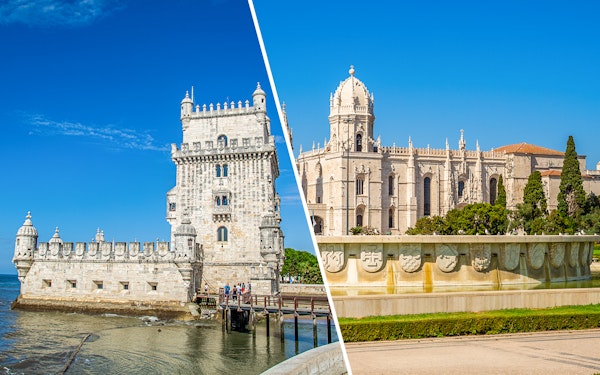
Belém Essential Combo: Belém Tower + Jerónimos Monastery Tickets
The two headline riverside sites on one booking - the efficient way to do the district.
4.7(30,516)ViewFrom$35.88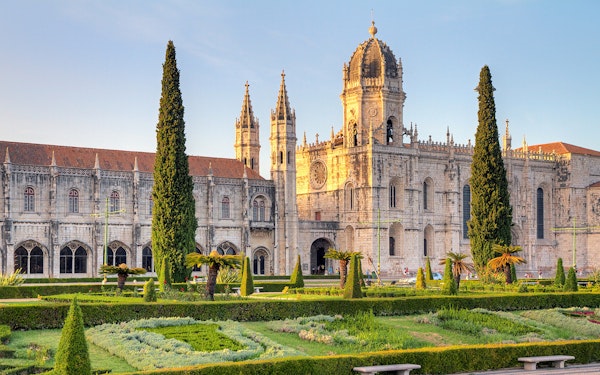
Lisbon Essential Combo: Jerónimos Monastery + Belém Tower + Pena Palace
The riverside pair plus a palace outside the city, if you want both in one purchase.
4.6(55,105)ViewFrom$60.67
Combo: Fado in Chiado + Jerónimos Monastery + Belém Tower Tickets
The monuments bundled with an evening performance - covers day two end to end.
4.7(30,606)ViewFrom$60.90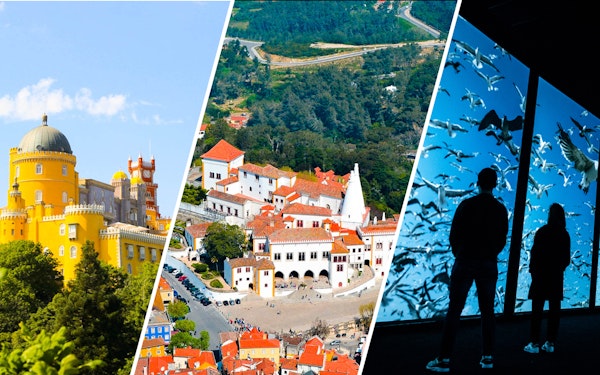
Combo: Lisboa's Oceanário + National Palace of Pena + Sintra National Palace
A wider multi-site bundle for visitors extending beyond two days.
4.6(14,070)ViewFrom$67.99
Jerónimos Monastery Entry Tickets
4.6(18,696)4 hoursViewFrom$23
Tickets to Batalha Monastery
4.6(1,805)ViewFrom$17
Lisbon: Half-Day City Tour & Belém Sites - Small Group
5.0(126)4 hoursViewFrom$40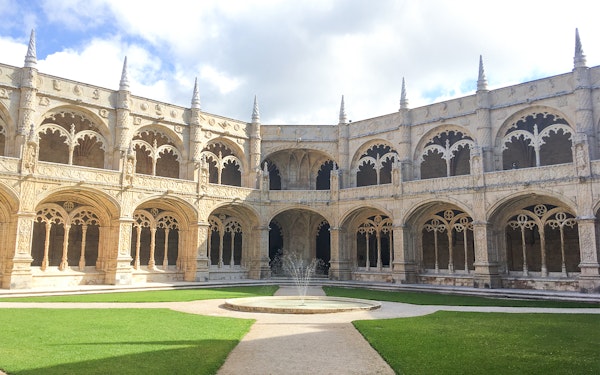
Jerónimos Monastery Skip-the-Line Guided Tour
4.8(685)2 hoursViewFrom$52
Tower of São Jorge Castle Church Tickets + Free Drink
3.8(22)ViewFrom$7
Alcobaça Monastery Tickets
4.6(1,773)ViewFrom$17
Day two, option B: the palaces outside the city
If you chose Shape B, day two leaves Lisbon for the hills to the west, where a cluster of palaces and estates sits within a short train ride.
Be realistic about what this costs you. It is a full day: travel each way, a significant amount of walking on steep ground once you arrive, and queues at the most popular sites. It is also genuinely one of the more remarkable day trips available from any European capital, which is why so many people make the trade.
Two practical points. First, book entry in advance - the headline palace runs timed entry and the good slots go. Second, do not try to see everything out there in one day; two sites is a comfortable day, three is a march.
Palace tickets for the day trip
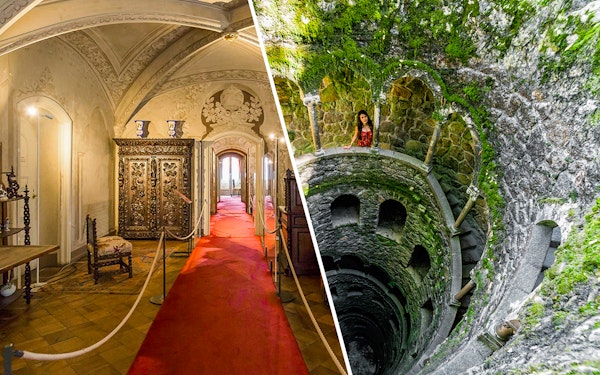
Combo: Pena Palace and Park + Quinta da Regaleira Tickets
Two of the most-visited estates on one booking - a comfortable full day.
4.7(48,842)ViewFrom$48.42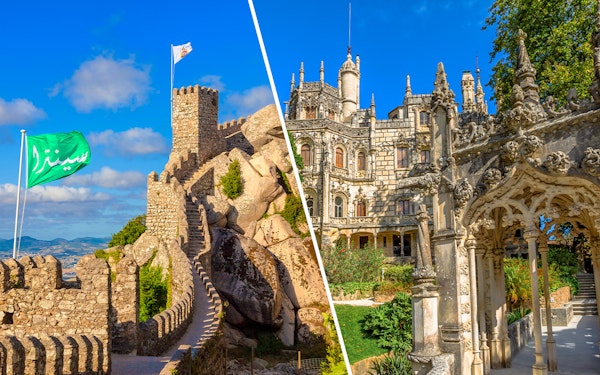
Combo: Moorish Castle + Quinta da Regaleira Tickets
A hilltop fortification plus an estate - the more outdoor of the pairings.
4.9(20,808)ViewFrom$41.32
Combo: National Palace of Sintra + Quinta da Regaleira Tickets
A town-centre palace plus an estate - less climbing than the hilltop options.
4.8(24,255)ViewFrom$42.19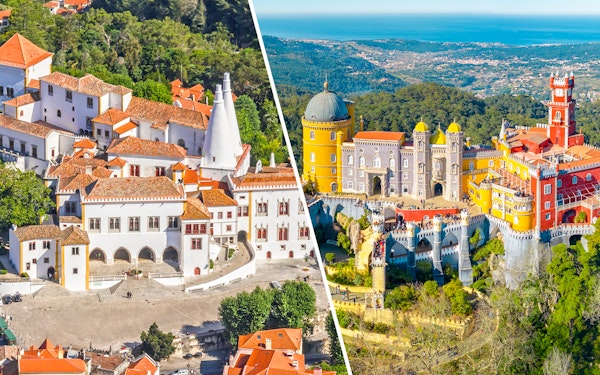
Combo: National Palace of Sintra + Pena Palace & Park Tickets
The two best-known palaces together.
4.5(25,653)ViewFrom$36.64
Pena Palace & Park Tickets
4.5(28,698)1 hourViewFrom$19
Private Sintra Tour from Lisbon: Pena Palace, Cabo Roca & Cascais
5.0(113)8 hoursViewFrom$171
Pena Palace Jeep Safari
5.0(37)6 hoursViewFrom$93
Sintra, Roca and Cascais Full-Day Private Tour with Pena Tickets
5.0(96)8 hours - 10 hoursViewFrom$254
Tickets to the National Palace of Queluz & Gardens
4.5(51)2 hr 30 minViewFrom$16
National Palace of Sintra Tickets
4.3(590)ViewFrom$15
The hills, and how to stop them ruining day two
This deserves its own section because it is the thing that most often turns a good two-day trip into a tired one.
Lisbon's climbs are individually short and collectively relentless. No single hill is difficult. The problem is that there are dozens of them, and by the afternoon of day two the cumulative effect is real - particularly if you have spent a day on stone stairs and polished pavement.
Use the vertical transport. The funiculars and the street lift exist precisely because the locals do not walk every hill either. Using them is not a shortcut, it is how the city works.
Take the tram uphill and walk down. The rides that are unpleasantly crowded in the middle of the day are perfectly fine early, and going up is when you actually want to be sitting.
Consider a tuk-tuk for one leg. They are unashamedly aimed at visitors, and they are also the most efficient way to cover the steep old districts without a climb. On a two-day trip, one circuit early on can buy back a genuine amount of energy.
Wear the right shoes. Lisbon's pavements are decorative stone that has been polished smooth by a very long time of foot traffic. In the wet, they are slippery in a way that surprises people. Grip matters more than style here.
Eating: the part not to compress
Two-day itineraries always squeeze meals, and in Lisbon that is a mistake, because a large share of what makes the city enjoyable happens at a table.
The practical structure that works: a light, fast breakfast, a proper sit-down lunch when you have come down off the hills and want to stop, and a long dinner that you do not schedule anything after. If you want to do a food-focused tour, day one is better than day two - it doubles as orientation, and it introduces you to areas you will then want to go back to.
Lisbon food and wine experiences

Lisbon Small-Group Portuguese Food and Wine Tour
A three-hour small-group tasting walk through the central districts.
4.8(4,410)3 hoursViewFrom$77.53
Undiscovered Lisbon Food & Wine Tour
A longer food walk into areas most two-day visitors would not find alone.
4.9(8,201)3 hours 30 minutesViewFrom$122.27
Lisbon Highlights: Private Tuk Tuk Tour Adventure Sightseeing
A long private circuit that covers the hills without the climbing.
4.9(3,810)5 hours 30 minutesViewFrom$99.85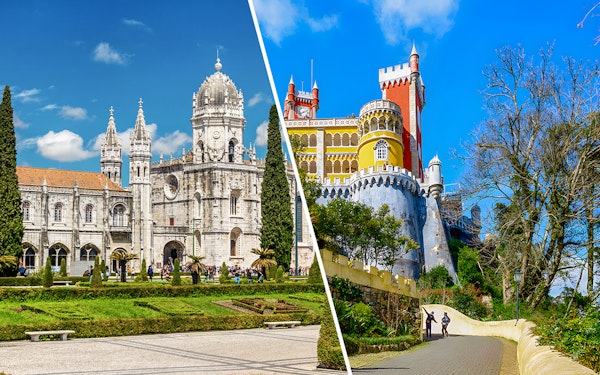
Combo: Jerónimos Monastery + Pena Palace & Park Tickets
A riverside monument plus a palace - useful if you are mixing both day-two options.
4.6(40,830)ViewFrom$41.76
Lisbon Food Tour: Pesticos and Wine Tasting
0.0(0)3 hoursViewFrom$80Authentic Lisbon Food Walk in Mouraria
5.0(1)3 hr 20 minViewFrom$95
Authentic Lisbon Food Walk in Baixa
4.0(1)3 hoursViewFrom$77
Brodie´s Taste of Lagos
5.0(8)4 hoursViewFrom$90
Lisbon's authentic Food and Wine tour with a Winemaker
5.0(74)3 hoursViewFrom$130
NEW Small Group VIP Food and Wine Dinner Tour in Lisbon
5.0(68)3 hoursViewFrom$181
The two days, hour by hour
A shape rather than a timetable. The slack in the afternoons is deliberate - it is what absorbs a long lunch or a slower climb than you expected.
Day one
| Time | What | Booked? |
|---|---|---|
| 09:00 | Ride or walk up to a high viewpoint | No |
| 10:00 | Guided walk, or a self-guided descent through the old streets | Optional |
| 13:00 | Long lunch, down on the flat | No |
| 15:00 | Lower streets, squares, shops, nothing scheduled | No |
| 17:30 | Second viewpoint for the late light | No |
| 20:30 | Dinner, unhurried | Worth booking |
Day two
| Time | What | Booked? |
|---|---|---|
| 08:30 | Travel to the monuments district or out to the palaces | Yes if a tour |
| 10:00 | First major site, timed entry | Yes - book ahead |
| 12:30 | Lunch nearby rather than returning to the centre | No |
| 14:00 | Second site | Yes - book ahead |
| 17:00 | Return, and stop moving | No |
| 20:30 | Final dinner | Worth booking |
Day one carries almost no bookings. Day two carries almost all of them. That asymmetry is intentional: it puts the fixed commitments on the day you already know the city a little.
Getting around in two days
Lisbon's transport is genuinely useful here, more so than in cities where walking covers everything.
The metro is fast, clean, and handles the longer hops - notably the airport run and the journeys to the outer districts. It does not go everywhere in the old town, because the old town is on hills the metro sensibly avoids.
Trams and funiculars are the vertical solution. The famous tram route is an attraction in its own right and consequently often full; the funiculars are shorter, less celebrated, and considerably more useful when your legs have gone.
The suburban train is what you take for the palace day trip. It runs frequently from a central station and the journey is short enough that the day trip is genuinely feasible rather than an expedition.
Taxis and rideshare are worth using without guilt for one specific job: getting up a hill at the start of the day so you can walk down it. On a two-day trip, that is money well spent.
Walking covers the rest, and it is the point. Just plan the direction of travel rather than the distance.
Where two days goes wrong
Four failure patterns account for most disappointing Lisbon trips of this length.
Scheduling the day trip and then trying to also do the monuments. Both are full-day-ish commitments once travel and queueing are counted. Attempting both leaves you rushing through the second and enjoying neither.
Planning routes on a flat map. The classic. A route that reads as a pleasant loop can involve four separate climbs, and by the third one the mood has changed. Look at the terrain, not the distance.
Under-booking the popular sites and over-booking everything else. The two or three things that genuinely need advance tickets are the ones people improvise, while the neighbourhood wandering that needs no booking at all gets scheduled to the half hour. Invert that.
Treating meals as interruptions. In Lisbon the meals are a substantial part of the experience. Two days is short enough that squeezing them feels efficient and is in fact the fastest way to end up with a trip you cannot remember.
Two days with children
The itinerary adapts, with the terrain being the main constraint rather than the schedule.
Use wheels more than you would otherwise. Tuk-tuks, trams, funiculars, and the lift all turn a climb that would end a young child's morning into something they actively enjoy. The cost is modest against the alternative.
Shorten day one and keep it downhill. The wandering half of the itinerary works well with children as long as it descends, and there are enough small squares to stop in that the pace can be genuinely slow.
On day two, the outdoor estates outside the city are usually a better bet than the monument interiors - gardens, paths, and things to climb on beat a queue for a building. If you are staying in the city instead, the riverside district is flat, open, and has room to run.
And accept the same ceiling that applies everywhere: two ticketed sites in a day is a full day with children, and one plus a long lunch is often better.
If you have a third day
Should your two days turn into three, the priority order is clear and it is not another monument.
Give day three to whichever of the two day-two options you did not choose - the palaces if you stayed in the city, the riverside monuments if you left it. That single addition is what makes a Lisbon trip feel complete rather than sampled.
If you have already done both, spend the third day on a neighbourhood rather than a sight: somewhere residential, uphill, with a market and a viewpoint and no ticketed attraction at all. That is the day people describe when they say they want to come back.
What to skip on two days
- A second museum on monument day. The riverside sites are substantial on their own and adding a gallery makes the afternoon a slog.
- Both the day trip and a full city itinerary. Covered above, and the most common regret.
- Anything requiring a long transit for one item. On two days, a forty-minute journey each way is a quarter of your daylight.
- Climbing to a viewpoint you could ride to. There is no prize for the stairs, and there is a cost.
- A packed evening. Lisbon's evenings are the payoff. Leave them alone.
When to go, if you can choose
Two days is short enough that the season materially changes what you get.
Spring and autumn are the best fit for this itinerary. The walking is comfortable, the light is good, and the queues at the monuments and palaces are shorter than in summer without the shortened daylight of deep winter. If your dates are flexible, aim here.
Summer works but changes the shape of the day. The middle of the afternoon becomes genuinely hot on exposed stone, which pushes the walking to early morning and evening and makes the flat, shaded parts of the itinerary more valuable. Book the timed-entry sites well ahead; this is the season when they actually sell out.
Winter is the quiet, cheap version, and it suits Lisbon better than it suits most European cities because the climate stays mild. The trade is daylight and a higher chance of rain on stone that does not handle it kindly. On two days, one wet day is half your trip, which is the argument against.
If it rains
Two days does not give you much room to wait weather out, so the adjustment is to reorder rather than replace.
Move the riverside monuments forward - they are the most indoor-heavy part of the itinerary and the district handles rain better than the steep old streets, which become genuinely slippery. Push the neighbourhood wandering to whichever half-day looks clearer.
If both days are wet, the honest answer is that Lisbon is still worth walking, but slowly and in the right shoes. And the covered markets, the churches, and a long lunch are all legitimate ways to spend an hour waiting for a shower to pass.
Two days, summarised
Day one goes downhill through the old city, ends with a long dinner, and involves almost no tickets. Day two is either the monuments or the palaces, booked in advance, and nothing else.
That is a full but unhurried forty-eight hours, and it leaves you with the two things people actually remember about Lisbon - the views from the top of the hills, and the time spent sitting still at the bottom of them.
Compare Lisbon attractions, tours, and day trips →Is two days enough for Lisbon?
Two days is a good fit for Lisbon specifically, because the city is compact and the main areas sit close together. You can cover the historic centre, the riverside monuments district, and one neighbourhood properly, and still have an evening that is not rushed. What two days will not stretch to is both a full day trip out of the city and a complete tour of Lisbon itself - you have to choose.
Should I do a day trip on a two-day Lisbon visit?
It is the single biggest planning decision, and there is no universal answer. A day trip to the palaces outside the city is genuinely spectacular and it consumes an entire day of two. If you have never been and you want to see Lisbon, keep both days in the city. If the palaces are specifically why you came, give day two to them and accept that Lisbon itself gets one day.
How hilly is Lisbon really?
Hillier than the map suggests and hilly enough to change your planning. Distances that look like a ten-minute walk can involve a substantial climb on uneven surfaces, and the cumulative effect over a day is significant. Plan routes that descend rather than climb where you can, and use the funiculars and lifts without feeling like you are cheating.
What should I book in advance for two days in Lisbon?
The riverside monuments if you want to go inside them, and any day trip. Both run on timed entry or fixed departures and both get busy. Everything else - the neighbourhoods, the viewpoints, the eating - is better improvised. Two or three bookings across two days is the right density.
Is the tram worth taking in Lisbon?
As transport it is slow and frequently full. As an experience it is genuinely part of the city, and a short ride up through the older streets is worth doing once. The compromise most visitors land on: take it one way, when you would otherwise be climbing, and walk the rest. Ride early in the day if you want a seat and a window.
What is the best area to stay in for two days in Lisbon?
Somewhere central and reasonably flat, so that arriving back tired at the end of a long day does not involve a climb. The historic core and the streets just above the river put you within walking distance of most of what a two-day itinerary covers. Being high up gives you a view and costs you a climb every single time you come home.
How much walking is a two-day Lisbon itinerary?
A lot, and it is vertical as much as horizontal. Expect long days on your feet on stone surfaces that are polished smooth in places and genuinely slippery when wet. Shoes with grip are worth more here than in most European cities, and pacing matters - the fatigue creeps up because the climbs are short individually and constant in aggregate.
What should I skip on a two-day Lisbon trip?
Anything that requires a long transit for a single item, a second museum on the same day as the monuments, and the temptation to do both a day trip and a full city tour. Two days rewards depth in a small area. The most common regret is a schedule so full that the terraces, the viewpoints, and the long dinners got squeezed out.
Keep reading
Lisbon pillar
Lisbon travel guide: first-time visitor essentials
Where to stay, how to move around, and the ticket strategy for the big sights.
Read more
Listicle
Things to do in Lisbon: the experiences worth booking
The Lisbon shortlist, ranked by what is actually worth your time.
Read more
Day trip
Sintra day trip from Lisbon: how to do it properly
Which palaces to pick, how to get there, and what a realistic day looks like.
Read more
Itinerary
3 days in Lisbon: what the third day adds
The neighbourhoods and trips that two days cannot fit.
Read more
更多閱讀
更多指南以幫助您計畫旅程

The Best Day Trips from Lisbon: Sintra, Cascais, Obidos and More
The best day trips from Lisbon ranked by what deserves a full day: Sintra, Cascais and Cabo da Roca, Obidos and Fatima, and Evora, with top-rated tours.

Lisbon Travel Guide: First-Time Visitor Essentials for 2026
A practical 2026 Lisbon travel guide: where to stay, how to handle the hills, the Belem ticket strategy, fado and food, and the day trips worth planning around.

3 Days in Lisbon: The Perfect First-Timer's Itinerary
A 3-day Lisbon itinerary that flows: the historic hills on day one, Belem and a food tour on day two, and Sintra on day three, with the top-rated tours at each stop.

Belem Tower Tickets: The 2026 Guide to Entry, Jerónimos Monastery, and the Best Belem Tours
A no-fluff 2026 guide to Belem Tower tickets - entry options compared, how to combine with Jerónimos Monastery, and the best bike and walking tours of Belem.

辛特拉一日遊:從里斯本出發 - 票券、火車和宮殿選擇指南
辛特拉一日遊完整攻略:宮殿票券購買指南、里斯本火車交通詳解、景點優先順序建議,以及是否值得參加導覽團。

里斯本景點:2026年值得預訂的20個體驗
2026年里斯本精選清單 - 20個體驗、一日遊和美食之旅,根據實際值得預訂的內容排名,附帶社區註記和誠實的價格區間指南。

導覽步行遊的成本:50個城市在2026年實際收費
我們測量了跨平台目錄中50個城市的每場導覽步行遊價格。中位數是$50。更有用的數字是單一城市內價格的分佈情況。

1 Day in London: A Realistic Itinerary That Does Not Waste the Day
One day in London, planned around what actually fits - a walkable route through the centre, the two things worth booking, and the traps that eat an hour each.