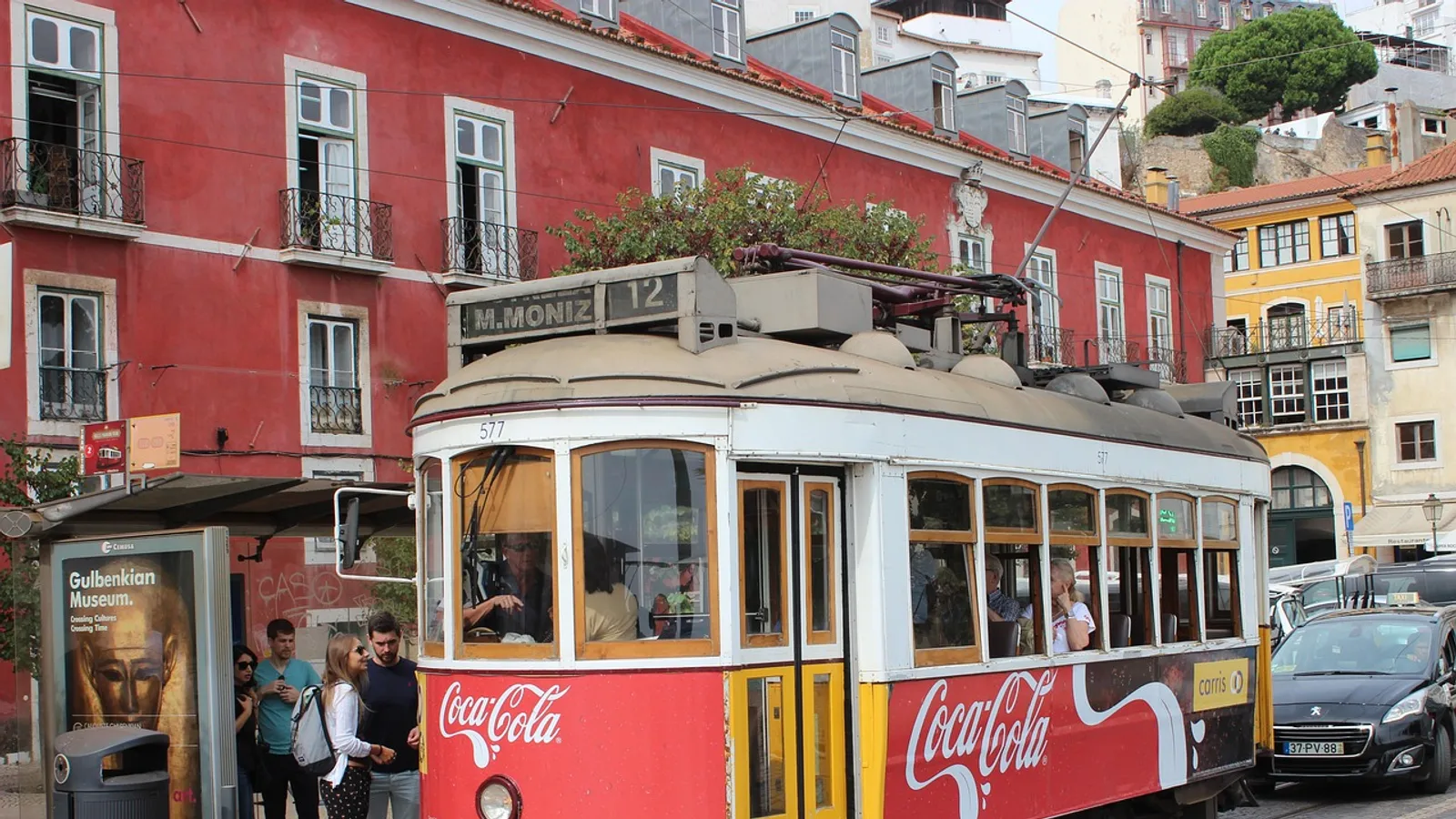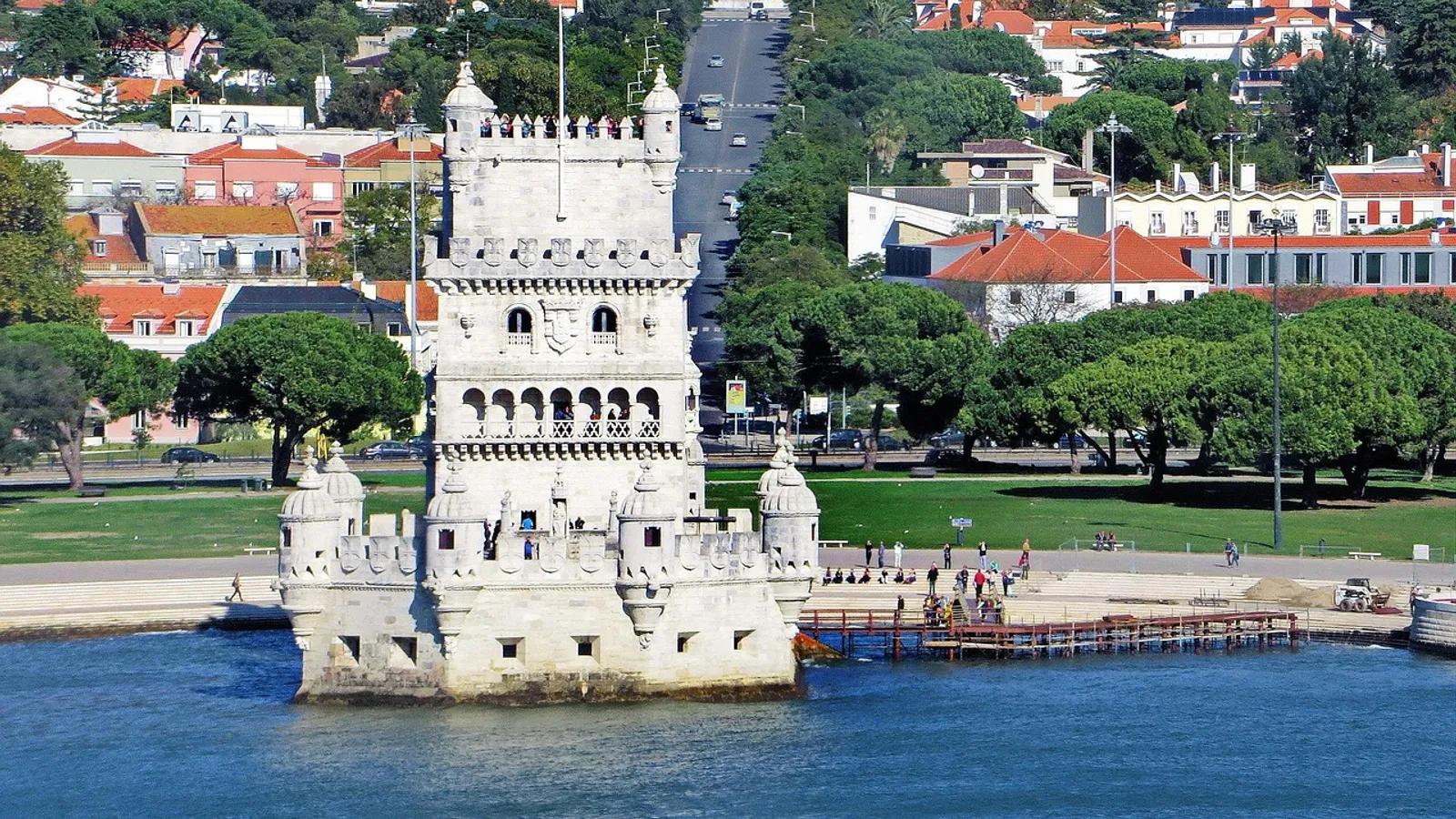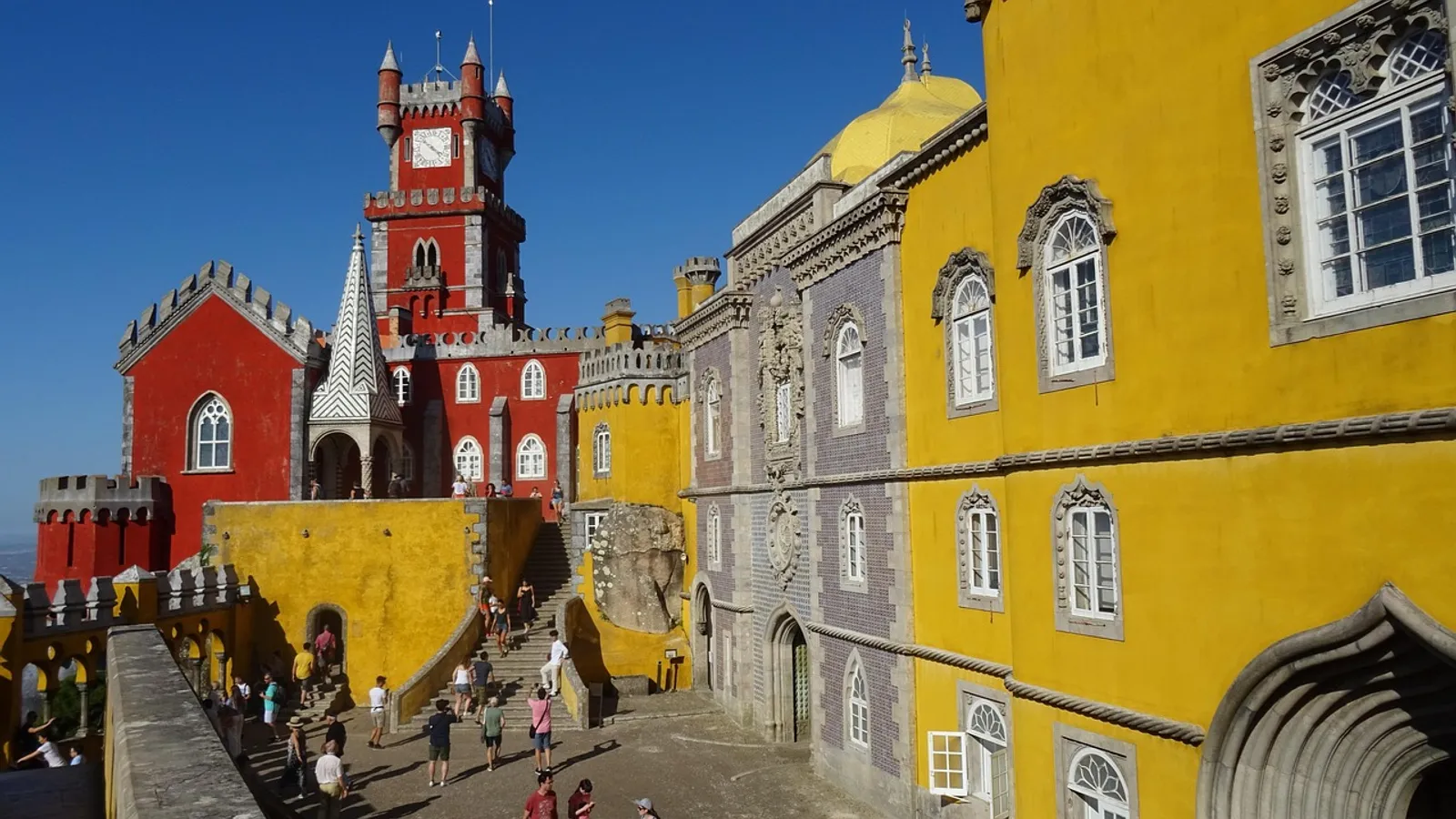
The best day trips from Lisbon start with Sintra, 40 minutes away by suburban train, then the Cascais coast and Évora, a walled city in the Alentejo reached by direct train. These eleven day trips from Lisbon are grouped by direction and distance, because the ride decides how much of the day you have left. Each entry gives the official travel time, the entry price at the main sight and the days to avoid, all checked on 13 November 2026.
- Closest trip
- Queluz, about 18 minutes from Rossio by train
- Our first pick
- Sintra, about 40 minutes from Rossio
- Longest train ride here
- Tomar, about two hours from Santa Apolónia
- Easier by car or tour
- Arrábida, Sesimbra, Ericeira, Nazaré
- Winter watch-out
- Storm closures and shorter hours from Oct or Nov
- Checked
- 13 Nov 2026, on operator and monument sites
The best day trips from Lisbon at a glance
Travel times come from the operators' own timetables, prices are official adult tickets for the main sight, and "by train?" means a direct or simple rail route, not just a station somewhere in the region.
| Day trip | Time from Lisbon | By train? | Main official ticket | Days to watch | Best for |
|---|---|---|---|---|---|
| Sintra | About 40 min from Rossio | Yes | Pena, Essential visit €20 | Storm days; check notices | First-timers |
| Cascais and Cabo da Roca | About 40 min from Cais do Sodré | Yes, then bus | Lighthouse €5 | Storm days | Families, the coast |
| Queluz | About 18 min to Queluz-Belas | Yes, then 1 km walk | Palace and gardens €13 | Storm days; check notices | A half day |
| Mafra and Ericeira | Road trip | Not practical | Mafra palace €15 | Tuesdays (palace closed) | Surf, baroque |
| Setúbal and the Sado | About 1 hour from Roma-Areeiro | Yes | No single ticket | - | Dolphins, birds, wine |
| Arrábida and Sesimbra | Road trip | No | No single ticket | Storm days | Beaches |
| Évora | About 1 hr 40 min from Oriente | Yes | Bones Chapel €7 | Few trains at weekends | History, wine |
| Óbidos | Rail with a bus section | Partly | Christmas village €12 | Closed 25 Dec, 1 Jan | Walls, December |
| Nazaré | About 1 hour by car from the airport | Station 6 km away | No single ticket | Check the swell forecast | Big-wave watchers |
| Fátima, Batalha, Alcobaça | About 1 hr 16 min to Fátima's station | Partly | Batalha €15, Alcobaça €15 | 12-13 of each month, May to Oct | Pilgrims, Gothic |
| Tomar | About 2 hours from Santa Apolónia | Yes | Convent of Christ €15 | 24-25 Dec, 1 Jan, 1 Mar | One great monument |
Official prices and times checked 13 Nov 2026 on the sources linked in each section below.
How to pick a day trip from Lisbon
Pick by the length of the ride first, then by what you want to see. Anything under an hour (Sintra, Cascais, Queluz, Setúbal) leaves a full day on the ground and works by train with no planning beyond the timetable. Évora and Tomar take around two hours each way, which is still a good day if you leave on an early train. The northern circuit through Óbidos, Nazaré and Fátima is spread out enough that a car or a guided day makes more sense than buses.
As a rule of thumb, one day trip fits into a four-day stay without cutting into Lisbon itself, and two fit into a week. On a shorter visit, check where a day out would slot into three days in Lisbon before you give up a city day for it. For the city's neighbourhoods and transport passes, read the Lisbon travel guide first.
Check notices on the morning you go
Portugal's Atlantic storms close monuments at short notice. On 11 November 2026, Parques de Sintra closed every site it manages, from Pena to the Cabo da Roca lighthouse, because of the weather. Each operator posts closures like this on its own notices page, so look there before you leave.
Short trips west of Lisbon by train
Three of the best day trips sit on the two suburban lines that leave central Lisbon: the Sintra line from Rossio and the Cascais line from Cais do Sodré.
1. Sintra: palaces in the hills
Sintra comes first because it packs the most into a short ride. On CP's posted weekend timetable for the Sintra line, trains leave Rossio every half hour and reach Sintra about 40 minutes later, and the last ones back to Lisbon leave after midnight (CP Sintra and Azambuja lines). Trains also run from Oriente and Entrecampos.
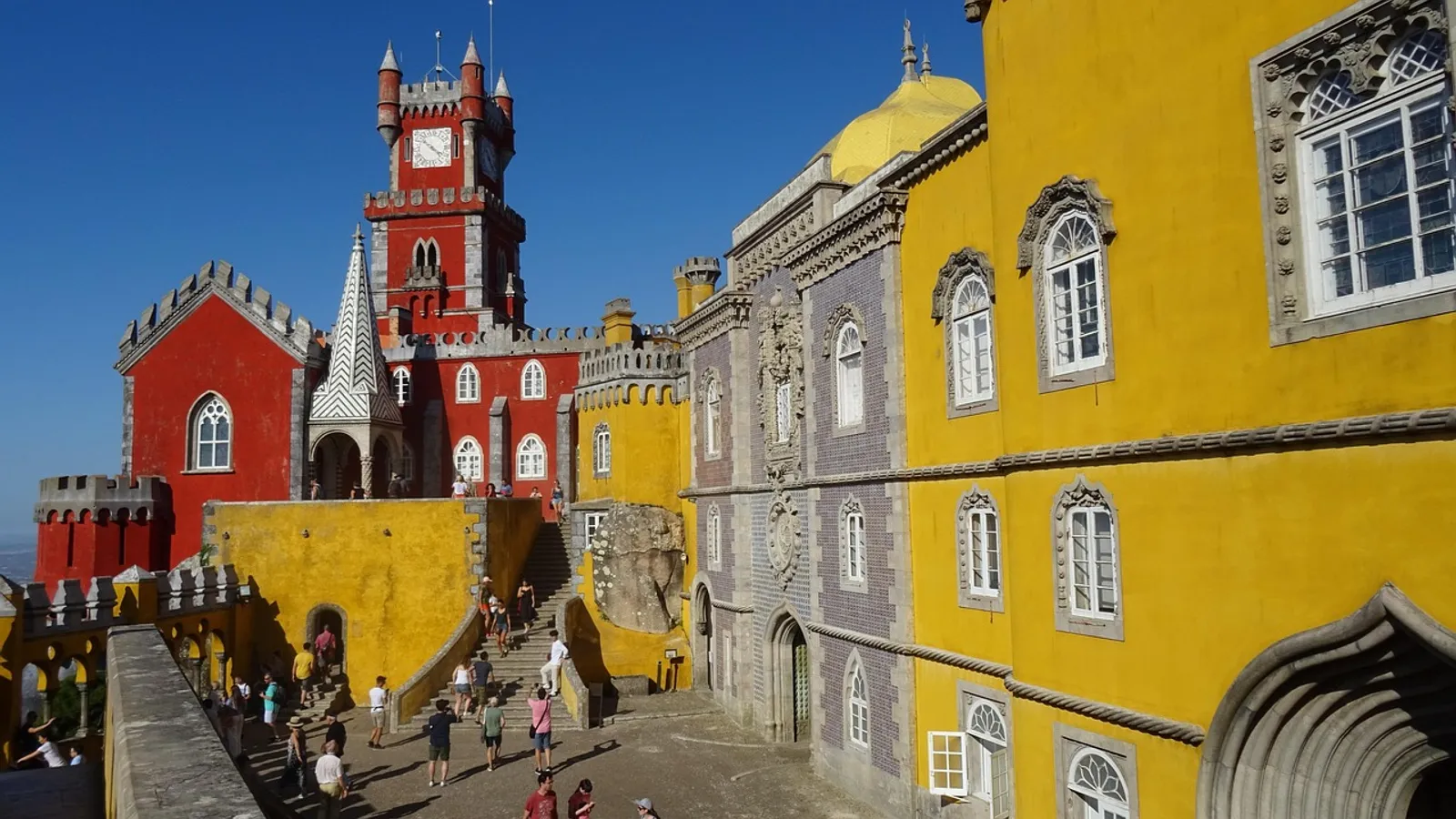
The palaces in the hills are run by Parques de Sintra. The Essential visit to the Park and National Palace of Pena costs €20 for adults, and the National Palace of Sintra in the town centre costs €13 (Parques de Sintra price list, as checked on 13 Nov 2026).
How long to stay, which palaces to pair, and whether to go alone or on a tour get a full article of their own, the Sintra day trip from Lisbon, and Sintra experiences compared lists the guided options. One practical point belongs here: Sintra and Cabo da Roca are linked by bus, so you can end the day on the coast instead of returning the way you came.
2. Cascais and Cabo da Roca: things to do on the coast
Cascais is the day for sea air without effort. The line is 25.4 kilometres long, and it was the first line on Portugal's rail network to be electrified (line history). On the weekday timetable valid from 8 November 2026, the trip takes about 40 minutes with a train every 20 minutes through the middle of the day, and departures back from Cascais run past 1 am (CP weekday sheet). The same line stops at Belém, so a morning in Belém and an afternoon by the sea fit one day; the Belém Tower tickets page explains its timed entry.
Things to do in Cascais fall into three kinds. The town centre has the Citadel, where the old fortress buildings now hold art galleries and the Cascais Citadel Palace, once a summer residence of the Portuguese royal family (Visit Cascais). The bay in the town centre is where the tourism board's own one-day plan sends you to sit on the sea wall. And a cycle path runs 5.46 miles from Cascais Marina to Guincho beach, inside the Sintra-Cascais Natural Park, which you can cover on foot or by bike.
Cabo da Roca marks the westernmost point of mainland Europe, and its lighthouse started working in 1772, making it the second oldest on the Portuguese coast (lighthouse page). The courtyard and interpretation centre keep hours of 9:30 am until 5:30 pm, and adults pay €5 for the Essential visit or €10 for the Panoramic one (Parques de Sintra tariff, checked 13 Nov 2026). Getting there without a car means a bus: line 1624 from the Cascais terminal runs towards Portela de Sintra by way of Azóia, and line 1253 runs from Sintra station (Parques de Sintra directions).
Cascais and Cabo da Roca coast trips to compare

Private Tuk Tuk Tour in Cascais and Cabo da Roca
5.0(24)2 hr 30 minViewFrom$73
Cascais coastal escape: 2h of views, cliffs & ocean
5.0(24)2 hoursViewFrom$161
Palace of Pena, Sintra, Cascais, Cape Roca, private tour, premium
5.0(79)8 hoursViewFrom$206
Sintra and Cascais Tour
5.0(88)9 hoursViewFrom$117Full-Day Tour of Sintra, Pena Palace, Cabo da Roca & Cascais from Lisbon with Lunch
4.3(1,715)9 hoursViewFrom$106
Cascais Coastal EBike Tour
5.0(6)3 hoursViewFrom$61
Discover Sintra and Cascais in a portuguese 4WD
5.0(40)7 hoursViewFrom$89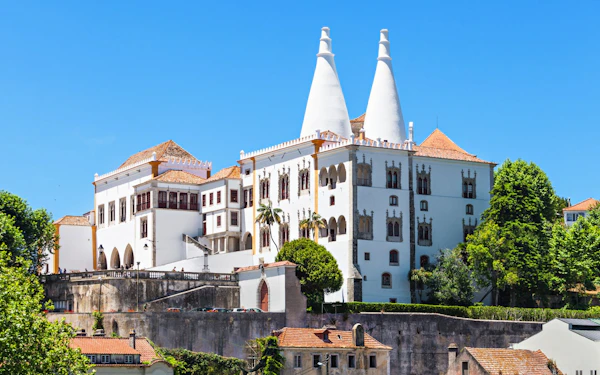
From Lisbon: Sintra National Palace, Queluz Palace, Cabo da Roca and Cascais
0.0(0)10 hoursViewFrom$108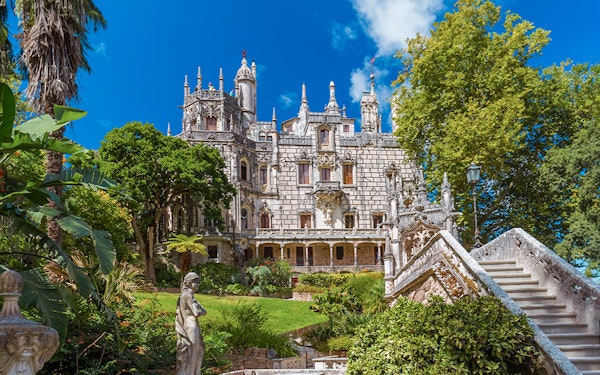
From Lisbon: Sintra, Pena Palace, Cabo da Roca, Cascais & Quinta de Regaleira Full-Day Trip
4.7(542)8 hoursViewFrom$24
Full-Day Sintra Private Tour by TUK TUK
5.0(20)8 hoursViewFrom$246

3. Queluz: a royal palace close to the city
Queluz is the shortest trip on this list. Sintra-line trains reach Queluz-Belas about 18 minutes after leaving Rossio on CP's weekend timetable, and Parques de Sintra puts the palace about 1 kilometre from that station or from Monte Abraão (same directions page).
The National Palace of Queluz is bound up with three generations of the Portuguese royal family, and its official description follows the building's styles from Baroque to Rococo to Neoclassicism (Queluz page). Doors open at 9 am; the palace closes at 6 pm and the gardens half an hour later, with the last entry to either at 5:30 pm. Adults pay €13 for the combined palace-and-gardens entry and €6 for the gardens on their own (checked 13 Nov 2026).
The ticket office closes from noon to 1 pm, though machines sell tickets through the break. Queluz pairs well with a Sintra morning on the same line, or stands alone as a half day.
North-west to Mafra and Ericeira
4. Mafra and Ericeira: a baroque palace and a surf coast
Ericeira is a parish of the Mafra municipality, so the two make one outing by road. The Oeste line has a stop called Mafra, but on the timetable valid from 15 November 2026 that part of the line is served by replacement buses from Mira Sintra-Meleças (CP Oeste timetable), so a car or a guided trip is simpler.
The National Palace of Mafra is the reason to go. King João V ordered it in 1711, building began in 1717, and the whole complex of palace, basilica, convent, garden and hunting park joined UNESCO's World Heritage List in 2019 (MMP page for Mafra). The palace's own site counts about 1,200 rooms, 5,200 doors and windows and 156 staircases, and a library of about 30,000 volumes (Palácio de Mafra).
Tickets cost €15. Opening time is 9:30 am, closing 5:30 pm, last entry 4:30 pm, and it is closed on Tuesdays. The basilica is closed for restoration works, so you see the palace and library but not the church (tickets and hours, checked 13 Nov 2026).
Ericeira, on the coast nearby, is a fishing town that became the centre of Portuguese surfing. Its stretch of about 5 kilometres of coast, with breaks such as Ribeira d'Ilhas and Coxos, was approved as a World Surfing Reserve in February 2011, the second in the world (Save The Waves). Even if you don't surf, the cliffs and small bays make a good late-afternoon stop after the palace.
South across the Tagus
5. Setúbal and the Sado estuary dolphins
Setúbal is the one trip south of the river that works well by train. Fertagus trains run from Roma-Areeiro, Entrecampos and Sete Rios to Setúbal, and the first weekend departure from Roma-Areeiro on the current timetable takes 58 minutes (Fertagus timetables).
The draw is the estuary. The Sado Estuary Natural Reserve, created in 1980, takes the bottlenose dolphin as its symbol, and the national conservation agency ICNF states that the estuary holds the only resident population of the species in Portugal (ICNF). The same page lists the national rules for cetacean watching (Decree-Law 9/2006) among the laws that govern the reserve, so choose a boat operator that states it follows them. It is also a birding site: ICNF notes that it regularly holds more than 20,000 wintering waterbirds.
Setúbal also sits at the edge of a wine region. The Península de Setúbal wine route lists member wineries, among them two in Palmela (Rota de Vinhos da Península de Setúbal), which makes a wine stop easy to add on the way back.
6. Arrábida and Sesimbra: beaches and the coastal park
Arrábida is the coast to choose for scenery, and the hardest of these trips to do without a car. The Arrábida Natural Park covers about 17,000 hectares, more than 5,000 of them at sea, across the municipalities of Palmela, Sesimbra and Setúbal, and it was created in 1976 (ICNF). Its protected area reaches west to Cabo Espichel, where the protection covers sea cliffs, endemic plants and nesting birds.
Sesimbra, one of the three municipalities the park covers, works as the lunch stop on a coast day. We would plan this day by car or with a guided trip: the park's beaches and viewpoints are strung along the coast and the ridge rather than gathered at one stop, and the train only reaches Setúbal.
If you go in summer, check the Setúbal and Sesimbra municipalities' announcements on beach access and parking before you drive down. In November, the weather is the bigger question.
Arrábida, Setúbal and dolphin-watching trips

Become a dolphin protector! Lisbon Eco-dolphin watching
5.0(6)2 hr 30 minViewFrom$57
Sailboat in Arrábida, Setúbal
5.0(8)4 hoursViewFrom$335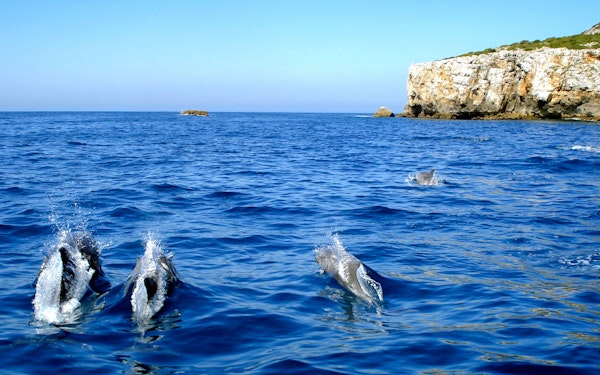
Dolphin Watch - Guided Tour
5.0(1)3 hoursViewFrom$55
Boat Tour - Arrábida Coves
5.0(49)2 hr 30 minViewFrom$50
Dolphins & Scenic Views of Ponta da Piedade 3h small-group tour
5.0(1)3 hoursViewFrom$83
Dolphins & Whales small-group 3h tour with Biologist
5.0(13)3 hoursViewFrom$83
Kayak Marine Reserve, Arrábida Natural Park, Setúbal, near Lisbon
4.9(40)3 hoursViewFrom$39
Boat trip Arrábida beaches, Setúbal (groups up to 10 people)
5.0(20)2 hr 15 minViewFrom$335
Observation of dolphins
4.9(240)2 hoursViewFrom$56
FARO - Fantastic Dolphin Observation Adventure
4.8(22)3 hoursViewFrom$61
Inland and further north
7. Évora: a walled Alentejo city and its wine country
Évora is the best day trip from Lisbon for anyone who has already done Sintra. The Intercidades from Lisboa Oriente takes about 1 hour 40 to 1 hour 45 minutes on the timetable valid from 6 September 2026 (CP Alentejo line). The timing matters: on weekdays the 7:02 am and 9:02 am departures make a good day, while at weekends the first train is the 9:58 am, arriving at 11:40 am. Daily trains back leave Évora at 4:51 pm and 7:14 pm, the second reaching Oriente at 8:57 pm.
UNESCO inscribed the old town in 1986. The city's own heritage page describes a radial plan set in the 16th century and three successive rings of walls, Roman, medieval and Vauban (Évora city council). The Romans called the city Liberalitas Julia, and the Almendres megalithic enclosure outside town is the foremost site in one of the oldest megalithic landscapes in Europe (about Évora).
Two paid sights fill a morning. The Bones Chapel at the Church of São Francisco, built in the 17th century with walls and pillars covered in thousands of bones and skulls, is visited on a single €7 adult ticket that includes the museum areas, open 9 am to 5 pm in winter (Igreja de São Francisco). The cathedral's full visit, with the cloister, museum and the roof terrace that is the highest point in the city, costs €5 and runs from 9 am to 5 pm (Évora Cathedral), both checked 13 Nov 2026.
The organisers' site says it in one line: "Évora and the Alentejo will be European Capital of Culture in 2027" (Évora 2027). If your trip falls in 2027, check the programme before you pick a date.
Évora is also the base for Alentejo wine. The regional wine commission's Alentejo Wine Route lists wineries in Évora, Reguengos de Monsaraz and other towns, and marks which of them offer visits and wine tastings (Wines of Alentejo). Many of the listed wineries are in other towns, so an estate visit needs a car or a tour.
Évora and Alentejo wine day trips from Lisbon

Half Day Wine Tour Around Evora
5.0(10)3 hoursViewFrom$145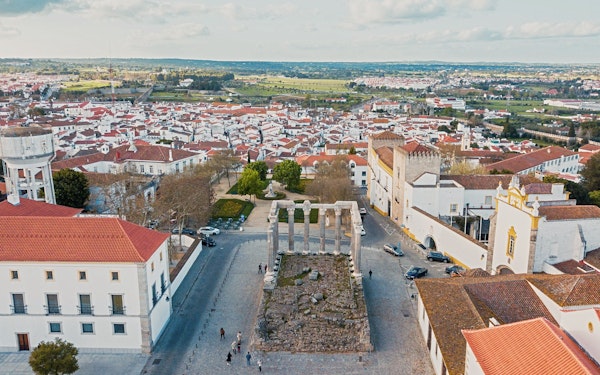
From Lisbon: Évora, Monsaraz, Wine Tasting & Cristo Rei
4.5(2)8 hoursViewFrom$83
Algarve wine tour and lunch in Silves or time to visit the city
5.0(21)6 hoursViewFrom$121
Private Évora Tour - Megaliths, Historical Center and Cork Region
5.0(19)6 hours - 8 hoursViewFrom$307
Algarve wine tour and farmer's lunch at wine estate
5.0(15)6 hours - 7 hoursViewFrom$200
Silves and Monchique Wine Taste Premium - Private> VTours Algarve
5.0(22)8 hoursViewFrom$279
Private Tour: Evora, Elvas and Badajoz (Spain) day trip from Lisbon
3.7(3)10 hoursViewFrom$514
Small Group Wine Tour in Arrábida from Lisbon
5.0(1)8 hoursViewFrom$79
Alentejo Wine Tour from the Algarve
5.0(5)8 hoursViewFrom$329
Exclusive Private Boat to Vineyard with Wine Tasting (from Lagos)
5.0(11)4 hr 30 minViewFrom$364
8. Óbidos: a walled town that does Christmas well
Óbidos is a fortified town on Portugal's western central coast. UNESCO, which named it a Creative City of Literature, describes it as an ancient fortified city that remains a well-preserved example of medieval architecture, and notes the Gothic Saint Peter Church turned into a library and bookshop (UNESCO).
Getting there by train is a project this winter. Storm Kristin damaged the Oeste line, and services between Torres Vedras and Caldas da Rainha, the section that serves Óbidos, were suspended from 28 January 2026. Trains are back on that section on CP's timetable valid from 15 November 2026, while replacement buses still cover Mira Sintra-Meleças to Torres Vedras (Câmara Municipal de Óbidos). That means a train, a bus and a train again. For buses, the town's event site points visitors to Rodoviária do Oeste.
December is the month to go. Óbidos Vila Natal fills the castle grounds between 27 November 2026 and 3 January 2027, this year on the theme of Pinocchio and puppets, with an ice rink, workshops and a Christmas market. Tickets cost €12 for anyone over 12 and €8 for children aged 3 to 11, with entry in timed sessions (municipality announcement). The event closes on 25 December and 1 January (opening times).
9. Nazaré: the big-wave coast
Nazaré is about 100 kilometres from Lisbon airport, around an hour by car on the A8, according to the municipality. Its nearest station, Valado dos Frades on the Oeste line, is 6 kilometres from town (access page), so a car, a tour or the Rede Expressos coaches that the municipality points to will be simpler.
Praia do Norte is known for its giant waves, honoured in a mural on the Ladeira do Sítio (municipality). Offshore lies the Nazaré Canyon, the largest submarine valley in Europe according to the municipality, more than 170 kilometres long and over 5,000 metres deep where it opens onto the abyssal plain, and it begins about 500 metres from the shore (Canhão da Nazaré). Big-wave days depend on the Atlantic swell, so check a surf forecast, or the municipality's weather, waves and tides page, before you go for the surf.
The Fort of São Miguel Arcanjo was begun in 1577 to defend the bay against pirate raids and got a harbour light in 1903 (Forte de São Miguel Arcanjo).
10. Fátima, Batalha and Alcobaça: the pilgrimage and Gothic route
Fátima is a pilgrimage site first, and on a day trip it pairs with the monasteries at Batalha and Alcobaça. The station that carries its name is Chão de Maçãs-Fátima, on the northern main line: the daily 7:30 am Intercidades from Santa Apolónia reached it at 8:46 am on the timetable valid from 20 September 2026 (CP Lisbon to North). Check how you will cover the last stretch to the shrine before relying on it.
The dates to know are the International Anniversary Pilgrimages, which the shrine lists as the 12th and 13th of each month from May to October (Shrine of Fátima). Those are the days to go if you want to see the ceremonies, and the days to avoid if you want the Chapel of the Apparitions quiet. The chapel stands where, by the shrine's account, five of the six apparitions took place in 1917, and it was built in 1919 (places of the apparitions).
Batalha and Alcobaça are the reason to drive this route rather than take the train. The Monastery of Batalha, begun in the late 14th century as a memorial to the Battle of Aljubarrota, keeps 9 am to 6 pm hours between 16 October and 31 March (MMP page for Batalha). The Monastery of Alcobaça, one of the first Cistercian foundations in Portugal, keeps winter hours of 9 am to 5:30 pm from 1 November to 31 March (MMP page for Alcobaça). Each costs €15 (checked 13 Nov 2026), and both are UNESCO World Heritage sites, Batalha since 1983 and Alcobaça since 1989.
Fátima, Óbidos and Nazaré tours from Lisbon

Private Tour - NAZARÉ / FÁTIMA / ÓBIDOS
5.0(3)8 hours - 9 hoursViewFrom$279
Faith,Waves & Legends:A Private tour thru Fátima, Nazaré & Óbidos
7 hoursViewFrom$447
Private Tour to Fatima, Nazaré and Óbidos
5.0(20)8 hoursViewFrom$318
Private Tour of Fatima/Nazaret/Obidus
5.0(13)8 hoursViewFrom$419
Fatima, Batalha and Nazaré, full-day from Coimbra
4.4(9)8 hoursViewFrom$153
Tomar Fatima Batalha Alcobaca and Obidos from Nazare Private Tour
5.0(4)8 hours - 9 hoursViewFrom$251
Road Trip Porto to/from Lisboa with Tour in 3 Different Cities
5.0(1)6 hours - 8 hoursViewFrom$614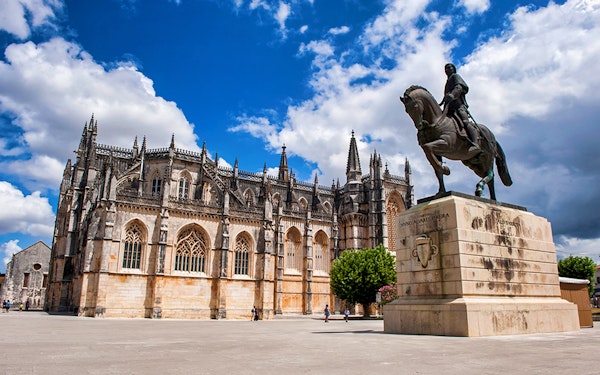
Fátima, Óbidos, Batalha & Nazaré: Day Tour From Lisbon
5.0(5)10 hr 30 minViewFrom$71
Private tour to Fatima, Nazare and Obidos
4.1(9)8 hoursViewFrom$447
Fátima, Batalha and Nazaré Full Day Private Tour from the West
8 hours - 9 hoursViewFrom$243
11. Tomar: the Templar convent
Tomar earns its two hours on the train with one building. The Convent of Christ began as the castle of the Knights Templar, founded with the town in 1160, became the seat of the Order of Christ, and was added to the UNESCO list in 1983 (Museus e Monumentos de Portugal). Its round church, the Charola, was modelled on the early Christian basilica of the Holy Sepulchre in Jerusalem.
Regional trains on the Tomar branch run from Santa Apolónia: the daily 7:45 am reaches Tomar at 9:46 am on the timetable valid from 20 September 2026, and trains back run into the evening, the last at 10:06 pm (CP Tomar timetable). The convent opens from 9 am to 5:30 pm between October and May, and tickets cost €15.
Conservation work still limits access to the south terrace, part of the main cloister, the washing cloister and the garden (checked 13 Nov 2026).
Is Porto a day trip from Lisbon?
Not a good one. The fastest Alfa Pendular trains take about 2 hours 48 minutes from Santa Apolónia to Porto Campanhã on the timetable valid from 20 September 2026 (CP Lisbon to North), so a return trip means roughly five and a half hours of sitting. You would arrive mid-morning and leave before dinner, which is too little for a city with this much to see. Give it at least one night; things to do in Porto is the place to start planning that.
The same logic rules out the Algarve: the fastest morning Alfa Pendular from Lisboa Oriente reaches Faro in a little over three hours on CP's southern timetable. Both are second bases, not day trips, and they fit a multi-stop Portugal itinerary better than a Lisbon stay.
Which day trips from Lisbon work by train
Six of the eleven work well by train, and they are the easiest days to plan:
- Sintra, Sintra line from Rossio, about 40 minutes.
- Cascais, Cascais line from Cais do Sodré, about 40 minutes, with the bus on to Cabo da Roca.
- Queluz, Sintra line to Queluz-Belas, about 18 minutes, then a 1 km walk.
- Setúbal, Fertagus from Roma-Areeiro, just under an hour.
- Évora, Intercidades from Oriente, about 1 hour 40 minutes, with few trains at weekends.
- Tomar, regional train from Santa Apolónia, about two hours.
Fátima and Óbidos are reachable by rail with caveats: Fátima's station is Chão de Maçãs-Fátima, so plan the last stretch to the shrine, and Óbidos needs a bus connection this winter. Mafra, Ericeira, Arrábida, Sesimbra and Nazaré are road trips.
For any long-distance train, note the last useful departure back before you set out, because it decides when your day ends. CP publishes every timetable as a PDF on its timetables page.
Guided day trips compared with going alone
A guided day is worth paying for when it saves you a car. That applies most to Arrábida, to the Óbidos, Nazaré and Fátima circuit, and to wine estates in the Alentejo, where the sights are far apart and no single train links them. For Sintra, Cascais, Queluz, Évora and Tomar, the train covers the hard part and a guide adds history rather than logistics.
When you compare guided trips, look at four things before the price: whether entry tickets are included (at €13 to €20 for the bigger monuments, two of them change the sum), the group size, the number of stops packed into the day, and how long you get at each one. The live cards on this page show those trips from several booking sites together.
To see everything in the city before you leave it, browse Lisbon tours.
Compare day trips from LisbonDay trips from Lisbon: common questions
What's the best day trip from Lisbon?
For a first visit, Sintra. It is the closest of the big sights, the suburban train runs straight there from Rossio, and the palaces are unlike anything in the capital. If you have already been, Évora is the strongest second choice: a different region, a different kind of town and a direct Intercidades train.
What are the best day trips from Lisbon other than Sintra?
Évora for history and wine, Cascais with Cabo da Roca for the coast, and Tomar for one monument that justifies the whole ride. Queluz works as a short half day, and the Óbidos, Batalha and Fátima circuit suits anyone who wants several places in one guided day.
What is the best beach day trip from Lisbon?
Cascais is the easiest, since the train runs straight into town and a cycle path continues from the marina to Guincho beach. The Arrábida coast is the better-looking choice, with beaches inside a natural park, but it is a day for a car or a guided trip rather than public transport.
Can you do a wine-tasting day trip from Lisbon?
Yes, in two directions. South of the river, the Península de Setúbal wine route lists member wineries on the Setúbal peninsula, among them two in Palmela, close enough for a half day. Inland, the Alentejo Wine Route lists estates around Évora and Reguengos de Monsaraz and shows which ones take visitors for tastings.
Which Lisbon day trip suits children best?
Cascais suits most families: a short train ride, the bay in the town centre and a cycle path towards Guincho that you can walk or ride in sections. For older children, the Moorish Castle in Sintra and the Cabo da Roca lighthouse work well. From late November, Óbidos runs a Christmas village inside its castle grounds with an ice rink, workshops and puppet shows.
Are day trips from Lisbon worth doing in winter?
Yes, as long as you allow for winter hours and Atlantic storms. Several monuments close earlier from October or November, and bad weather does shut sites: Parques de Sintra shut all its monuments on 11 November 2026 for that reason. Check the operator's notices page on the morning you travel.
Can you fit two places into one day trip from Lisbon?
Yes, where the places sit on the same route. Óbidos, Nazaré, Batalha and Fátima can share one day as a northern circuit by car or on a guided trip, and Setúbal pairs naturally with the Arrábida coast. Mixing places in opposite directions, such as Évora and Sintra, leaves you with more time on the road than on foot.
Sources
All checked on 13 November 2026; the Oeste line timetable was rechecked on 19 November 2026.
- CP timetables index, with the Sintra and Azambuja, Cascais weekday, Alentejo line, Lisbon to North, Tomar branch and Oeste line timetables, and the Cascais line history page
- Fertagus timetables
- Parques de Sintra: tariffs and hours, directions, Queluz, Cabo da Roca Lighthouse plus its notices page
- Visit Cascais: a day in Cascais
- Museus e Monumentos de Portugal: Mafra, Convent of Christ, Batalha and Alcobaça; Palácio de Mafra and its ticket page
- Save The Waves: Ericeira World Surfing Reserve
- ICNF: Sado Estuary Natural Reserve and Arrábida Natural Park
- Rota de Vinhos da Península de Setúbal and Wines of Alentejo: wine route
- Évora: UNESCO heritage page and about Évora (Câmara Municipal de Évora), Igreja de São Francisco, Évora Cathedral, Évora 2027
- Óbidos: UNESCO Creative Cities, Oeste line reopening, Vila Natal announcement and Vila Natal hours and prices
- Nazaré municipality: getting to Nazaré, Nazaré Canyon and Fort of São Miguel Arcanjo
- Shrine of Fátima: organising a pilgrimage and places of the apparitions