For a first Tokyo walking tour, book a guided morning in Asakusa. Senso-ji is the city's oldest temple, and a guide turns its gates, rituals and side streets into a story you can use for the rest of the trip. Make Yanaka your second walk and Shinjuku's small-bar lanes your evening one. If the dates fit, volunteer guides lead set walks around Asakusa, Ueno, Yanaka and the Imperial Palace East Gardens at no charge.
We sorted the walks below by what a guide adds that a map can't, and checked every hour, rule and date on 13 November 2026 against the official body that sets or publishes it: the temple, market, palace, club, weather agency or observatory. Under each section, the cards line up comparable walks sold on several booking sites, which lets you weigh the same kind of walk against itself.
- Volunteer-led walks
- Asakusa, Ueno Park, Yanaka, Imperial Palace East Gardens (Tokyo SGG Club)
- Length
- About 90 minutes; East Gardens about 2 hours
- Senso-ji Main Hall
- 6:30 am to 5:00 pm, October to March
- East Gardens
- 9:00 am to 4:00 pm, November to February; closed Mondays and Fridays
- Tsukiji outer market
- Professional buyers have priority until 9:00 am
- Sunset in Tokyo
- 4:46 pm on 1 Nov, 4:28 pm on 30 Nov 2026
- Checked
- 13 Nov 2026 on the official sites
Tokyo walking tours at a glance
Here are the walks side by side, with the two Shinjuku bar lanes in one row. Four of them have a volunteer-led version, and one, the palace grounds tour, is run only by the Imperial Household Agency.
| Walk | Best for | Time needed | How to join | Area |
|---|---|---|---|---|
| Asakusa and Senso-ji | Your first morning, temple manners | About 90 min (volunteer walk) | Turn up at the volunteer counter, or book a guided walk | Asakusa |
| Ueno Park | Shogun-era and Meiji history | About 90 min (volunteer walk) | Volunteer walk, a booked tour or alone | Ueno |
| Yanaka, Nezu and Sendagi | A slower second walk | About 90 min (volunteer walk) | Volunteer walk on weekends, or book | Yanaka |
| Harajuku and Meiji Jingu | A shrine and street fashion in one morning | Set by the operator | Book, or walk it alone | Harajuku |
| Shibuya | The crossing and the evening crowds | Set by the operator | Easy alone; book for a night walk | Shibuya |
| Omoide Yokocho and Golden Gai | A guided first evening in small bars | Set by the operator | Book a night walk | Shinjuku |
| Tsukiji outer market | Food and market history | Set by the operator | Book, and start after 9:00 am | Tsukiji |
| Imperial Palace East Gardens | Edo Castle ruins and gardens | About 2 hours (volunteer walk) | No charge to enter; volunteer walk or alone | Chiyoda |
| Imperial Palace grounds tour | Inside the palace walls | About 1 hour, 2.2 km | Apply online or get a numbered ticket on the day | Chiyoda |
Durations and joining rules from Tokyo SGG Club and the Imperial Household Agency, checked 13 Nov 2026.
Which Tokyo walking tour to book first
Book the Asakusa walk first, on your first or second morning. It is the walk where context does the most work. Senso-ji, by its own account the oldest temple in Tokyo, puts its yearly visitor count at 30 million (Senso-ji), so the crowd is there whether or not you understand what you are looking at. A guide explains the Thunder Gate, the shopping street that leads to the temple and the way the temple asks you to pray at the Main Hall: hands together, with the words "Namu Kanzeon Bosatsu". You then carry that frame into every shrine and temple you see after it.
Make Yanaka the second walk. It is the opposite of Asakusa: no single landmark, lots of small things that are easy to pass until someone points them out.
Keep Shinjuku for an evening, once you have your bearings. The lanes are tiny, the bars have their own house rules, and a guide makes the first hour far less awkward.
Two walks we would not pay for on a short trip. Shibuya's crossing and the shopping streets around it make sense on your own, so spend the guide budget in Asakusa or Shinjuku instead. And the Imperial Palace grounds are covered by the agency's own tour, which does not admit commercial sightseeing operators.
If your dates are flexible, look at the volunteer walks before you book anything. They cover Asakusa, Ueno, Yanaka and the East Gardens, and the trade-off is simple: they run on the club's schedule, not yours.
Asakusa and Ueno walking tours
One subway line, the Tokyo Metro Ginza Line, serves both Asakusa and Ueno, which makes a morning in one and an afternoon in the other an easy day. Asakusa is the better guided walk; Ueno Park works well with a guide or alone.
1. Asakusa: Senso-ji, Kaminarimon and Nakamise
Asakusa is built around Senso-ji, with the Kaminarimon (Thunder Gate) and the Nakamise shopping street leading up to it, as the GO TOKYO guide to Asakusa describes it. A good guide starts with the founding legend. The temple tells it as a catch: on 18 March 628, two fishermen brothers hauled a statue of the Bodhisattva Kannon out of the Sumida River in their net. The present Main Hall dates from 1958. Its predecessor, commissioned by the shogun Tokugawa Iemitsu, was lost to the bombing raid that hit Tokyo on 10 March 1945, and worshippers from across Japan paid for the rebuilding (Senso-ji).
Timing changes this walk. Between October and March the Main Hall doors open at 6:30 am, half an hour later than in spring and summer, and they shut at 5:00 pm all year (Senso-ji). After dark, the temple lights up the Main Hall, the five-story pagoda, the Hozomon gate and the Kaminarimon every day from sunset to about 11:00 pm, a practice it began on 1 October 2003 (Senso-ji light-up notice). An early walk before the shops open, or a night walk under the lights, shows you a calmer Asakusa than the midday crush.
The volunteer walk meets at the Tokyo SGG Club counter on the first floor of the Asakusa Culture Tourist Information Center, across from the Kaminarimon. It lasts about 90 minutes, and the club asks you to arrive 10 minutes before the start (Tokyo SGG Club, Asakusa). On the club's schedule for 1 November to 10 December 2026, Asakusa walks started at 10:30 am and 1:15 pm on most days other than Wednesdays and Fridays (schedule).
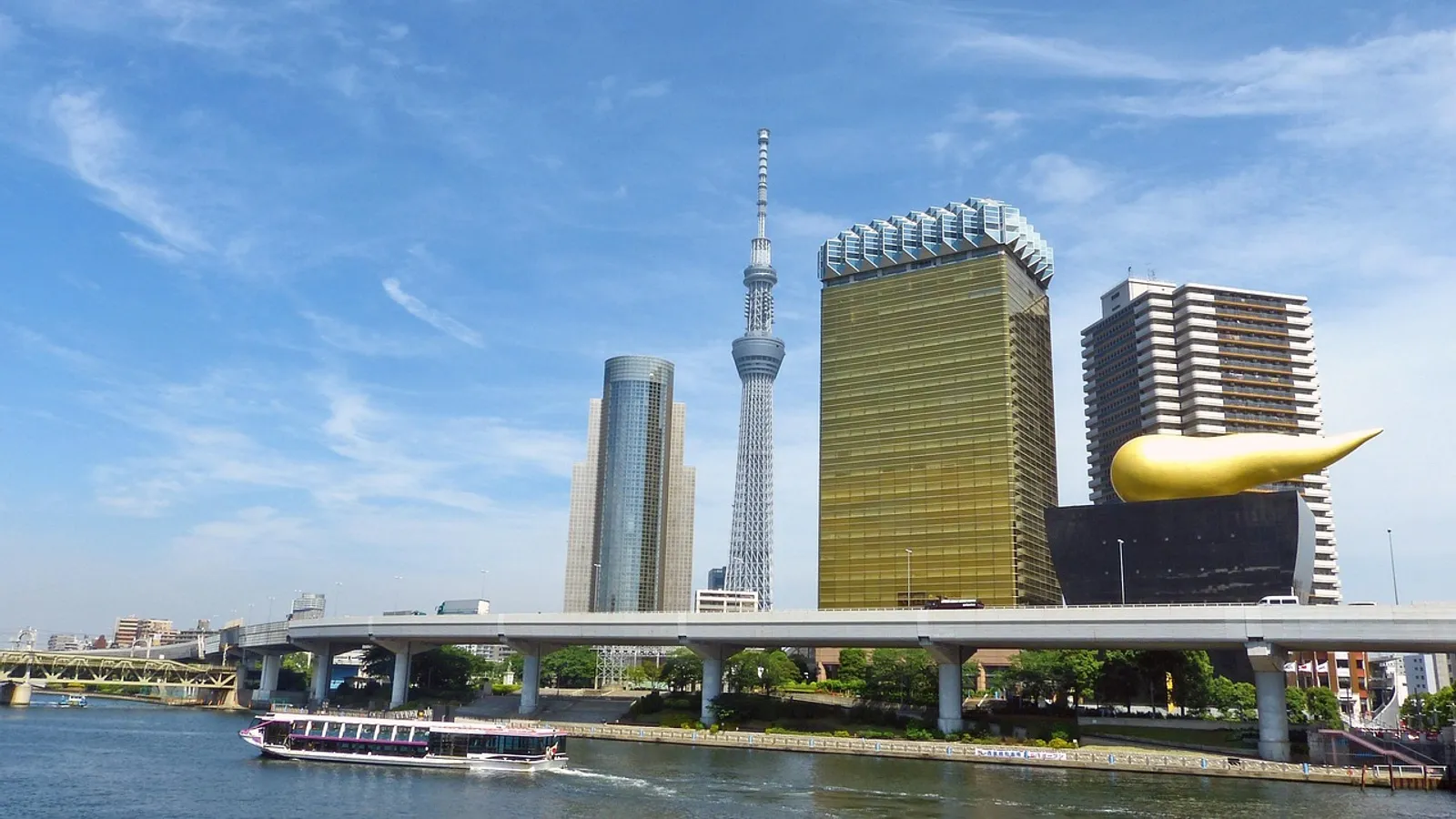
One thing to add on your own: walk to the red Azuma-bashi Bridge for the view of the Skytree across the Sumida River. If you plan to go up, see the options in Tokyo Skytree tickets.
Three lines stop at Asakusa: Tokyo Metro Ginza, Toei Asakusa and Tobu Skytree (GO TOKYO).
2. Ueno Park: shoguns, a battlefield and museums
Ueno Park rewards a guide who knows the history, because the park hides most of it. Tokyo SGG Club sums up the story: the park was originally a temple of the Tokugawa shoguns' family, and later became a battlefield in the nineteenth-century civil war that ushered in the Meiji era. Its walk visits ruins and sites from the Edo period, that war and the Meiji years (Tokyo SGG Club, Ueno Park).
The park also holds Japan's oldest zoo and a cluster of museums, the Tokyo National Museum among them, and the Ameyoko market street, which began as a post-war black market, runs along the tracks toward Okachimachi (GO TOKYO, Ueno).
Ueno's volunteer walk also lasts about 90 minutes. The club moved its meeting point on 20 September 2026, and its Ueno page now gives the entrance of the Ueno Park Management Office. In the November schedule, Ueno walks ran mostly on Wednesdays, Fridays and weekends.
Asakusa and Ueno walking tours to compare

Asakusa History and Kappa Street (Kappabashi Dogugai) Tour
4.7(15)2 hoursViewFrom$22
Tokyo: Private Asakusa Walking Tour with Sensoji Temple
5.0(1)1 hr 30 minViewFrom$33
Tokyo: Asakusa, Senso-ji temple & Shrine Walking Tour
5.0(116)2 hoursViewFrom$23
Explore Tokyo’s History on Foot Asakusa Kappabashi and Ueno
4.9(27)3 hoursViewFrom$52
Recorrido a pie por el templo Sensō-ji de Asakusa
5.0(7)2 hoursViewFrom$33
Asakusa and Sensoji Guided Tour in Tokyo 90min
5.0(11)1 hr 30 minViewFrom$21
Asakusa Kimono Photography Tour (Private Option Available)
5.0(35)2 hr 30 minViewFrom$124
Tokyo Full Day Sightseeing Private City Tour with English Guide
5.0(24)8 hours - 10 hoursViewFrom$339
Asakusa Foods & Drinks, Culture Nightlife
5.0(6)2 hr 30 minViewFrom$196
Private Sake Brewery Tour and Shinran Temple Visit
5.0(2)3 hoursViewFrom$26
Yanaka and old Tokyo backstreet walks
Yanaka is the best second walk in Tokyo. According to GO TOKYO, Yanaka and Nezu came through the wars and Tokyo's natural disasters without major damage, which is why their narrow lanes, wooden houses and old-style shops survive (GO TOKYO, Yanaka and Nezu).
3. Yanaka, Nezu and Sendagi
The three neighborhoods are known together as "Yanesen". These are the places GO TOKYO and the volunteer club single out:
- Yanaka Ginza, a lantern-lined shopping street of around 60 shops over about 170 meters, where GO TOKYO suggests picking up street snacks to eat as you go.
- Yuyake Dandan, the "Sunset Steps", worth timing for the end of the afternoon. Tokyo sunset in November 2026 moves from 4:46 pm on the 1st to 4:28 pm on the 30th (National Astronomical Observatory of Japan).
- Yanaka Cemetery, where Tokyo SGG Club points out the grave of the last Tokugawa shogun (Tokyo SGG Club, Yanaka).
- Nezu Shrine, with its tunnels of red gates and an Azalea Festival in April.
- Kayaba Coffee, in a wooden building from 1916, and the Asakura Museum of Sculpture, the former studio and home of the sculptor Fumio Asakura.
The volunteer walk meets in the waiting room at the West Exit of the North Ticket Gate of JR Nippori Station and takes about 90 minutes. On the schedule to 10 December 2026, Yanaka walks ran on Saturdays and Sundays only, so plan your weekend around it if you want a volunteer guide here.
Nippori is on the JR Yamanote, Keihin-Tohoku and Joban lines and the Keisei line; the Tokyo Metro Chiyoda Line stops at Nezu and Sendagi (GO TOKYO).
Yanaka and old Tokyo walks to compare

Yanaka and Asakusa Walk around DOWNTOWN TOKYO like a local
5.0(36)3 hr 30 minViewFrom$123Explore Tokyo’s History on Foot Asakusa Kappabashi and Ueno
4.9(27)3 hoursViewFrom$52
Private Walking Tour in Fukagawa, Tokyo
6 hoursViewFrom$190Tokyo: Private Asakusa Walking Tour with Sensoji Temple
5.0(1)1 hr 30 minViewFrom$33Tokyo: Asakusa, Senso-ji temple & Shrine Walking Tour
5.0(116)2 hoursViewFrom$23
Kiyosumi Garden Sunamachi Ginza and Fukagawa Fudōdō Tour
6 hours - 8 hoursViewFrom$264
Half-Day Takayama Walking Tour with an English Speaking Guide
5.0(1)3 hr 30 minViewFrom$124
Explore Kichijoji: Walk Through One of Tokyo’s Beloved Districts
4.9(22)2 hoursViewFrom$46
Kawagoe Old Town Walking Tour from Tokyo
5.0(2)6 hoursViewFrom$142
EXPERIENCE TAKAYAMA OLD TOWN 30 MINUTES walk
5.0(12)30 minutesViewFrom$28
Shibuya and Harajuku walks
Harajuku and Shibuya make one walk: GO TOKYO puts them about 20 minutes apart on foot (GO TOKYO, Harajuku). Start at Meiji Jingu in the morning and finish in Shibuya as the lights come on.
4. Harajuku and Meiji Jingu
Meiji Jingu keeps sun hours: its gates follow sunrise and sunset, so the times shift month by month. In November the gates are open from 6:10 am until 4:10 pm; December brings a 6:40 am opening and a 4:00 pm close. The Meiji Jingu Gyoen garden inside the grounds charges 500 yen (official price, checked 13 Nov 2026 on the Meiji Jingu opening hours page). That early close is easy to miss in winter, so put the shrine first.
From the shrine, the walk drops into Harajuku itself. GO TOKYO places the center of Harajuku's niche fashion on Takeshita Street, with Omotesando, a boulevard of luxury brands, a short walk away. Arrive by the JR Yamanote Line at Harajuku Station, or by the Chiyoda or Fukutoshin subway line at Meiji-jingumae.
5. Shibuya: the crossing and the streets behind it
Shibuya Scramble Crossing is the headline sight, and you don't need a guide for it. In GO TOKYO's words the crowd floods the intersection "every two minutes"; its tip is to photograph it from one of the cafes or station buildings around it, and the SHIBUYA SKY deck on Shibuya Scramble Square looks down from about 230 meters (GO TOKYO, Shibuya).
A guide earns more after dark, in the side streets beyond the crossing: Udagawacho and Maruyamacho for record shops and live music, and the quieter Oku-Shibuya with its bars and bookshops. If you book a Shibuya walk, pick an evening one.
Harajuku and Shibuya walks to compare

Harajuku Meiji Shrine Walking Tour in Tokyo
5.0(145)2 hoursViewFrom$25
Private Walking Tour in Tokyo - See all Highlights in 1 Day
5.0(1)8 hoursViewFrom$388
Harajuku Private Tour: Kawaii Fashion & Animal Cafe Included
5.0(85)4 hoursViewFrom$120
Tokyo: Shibuya, Harajuku & Shinjuku 75-Min Go-Karting Experience by Monkey Kart
4.3(3)1 hr 15 minViewFrom$91
Tokyo: Shibuya & Kabukicho 90-Min Go-Karting Experience by JAPANKART
5.0(20)1 hr 30 minViewFrom$131
Art Gallery Okonomiyaki Cooking in Harajuku
5 hoursViewFrom$220
Tokyo: Shibuya Crossing 75-Min Go-Karting Experience by Monkey Kart
4.2(6)1 hr 15 minViewFrom$89
ENJOY ALL SHINJUKU《Red-Light-District-Walking》with DEEPEST INFO!
4.9(52)1 hr 30 minViewFrom$25
Tokyo: Shibuya Crossing & Tokyo Tower 1-Hr 30-Min Go-Karting Experience by Monkey Kart
5.0(1)1 hr 30 minViewFrom$113
Tokyo Private Discovery Tour | Unique Insights & Must Sees
5.0(292)4 hours - 8 hoursViewFrom$121
Shinjuku night walks: Golden Gai and Omoide Yokocho
A Tokyo night tour in Shinjuku is worth booking for your first evening of small bars, not your fifth. Both lanes these walks center on restrict filming, and some Omoide Yokocho shops set table charges, order rules or time limits, which a guide sorts out for you. Once you know how they work, you can go back on your own. GO TOKYO notes that public transport runs until around midnight, though Shinjuku itself keeps going (GO TOKYO, Shinjuku).
6. Omoide Yokocho
Omoide Yokocho sits by the West Exit of Shinjuku Station. It grew from the open-air market that formed in the burned-out city just after the Second World War, and today about 80 premises, including some 60 bars and restaurants, mostly offal and chicken skewer places, share roughly 2,000 square meters (Omoide Yokocho official site).
Kenji Murakami, then president of the traders' association, wrote a guide for first-timers in April 2021. At that time about 60 percent of shops took only cash, and his advice is to come prepared and "have cash, not plastic, to hand". Some shops charge for the table, some ask each guest to order one drink and one dish on arrival, and some limit a group to 90 minutes; the shops on Nakadori Street share a communal toilet; and smoking is banned in the lanes except inside shops that allow it (Omoide Yokocho, first-timers' guide).
The smoking rule has a history: a fire on 24 November 1999 burned about a third of the lanes, and the association now marks that date every year as Omoide Yokocho Day (association notice, in Japanese).
On cameras, the association's filming terms require prior permission and a fee for media shoots in the lanes and ban tripods and flash (photography terms). On a walk, keep photos quick and leave other drinkers out of them.
7. Golden Gai
Golden Gai is in Kabukicho, the neon-lit entertainment district of Shinjuku. The Shinjuku Sanko shopping street association, set up in 1969 and one of the district's traders' associations, describes about 290 small bars standing side by side, a district that was never redeveloped after the war (Shinjuku Sanko association).
The lanes in the Sanko association's area are all private roads, and the association states that photographing or filming them needs its permission, interiors of individual bars excepted (photography terms). Ask about any seat charge before you order; this is where a guide's introductions help most.
Shinjuku night walks and bar tours to compare

Tokyo: Shinjuku Golden Gai Bar Hopping that only locals know
5.0(3)2 hoursViewFrom$98
Shinjuku Nightlife Tour
5.0(21)4 hoursViewFrom$196
Shinjuku Night Tour Include Drinks and Food with Local Guide
5.0(1)3 hoursViewFrom$98
Shinjuku Izakaya Night Hopping Tour
4 hoursViewFrom$213
Ninja+Kabuki Tokyo with Bar Hopping in Shinjuku
5.0(1)3 hoursViewFrom$98
Shinjuku Tokyo Bar Exploration Tour
5.0(1)3 hoursViewFrom$800
Tokyo Nightlife Tour with Bar Hopping, Golden Gai, and Izakaya Visit
5.0(2)3 hr 30 minViewFrom$38
Tokyo Nightlife by Train: Hit the Bars with a Former JR Conductor
4.9(12)3 hours - 4 hoursViewFrom$109ENJOY ALL SHINJUKU《Red-Light-District-Walking》with DEEPEST INFO!
4.9(52)1 hr 30 minViewFrom$25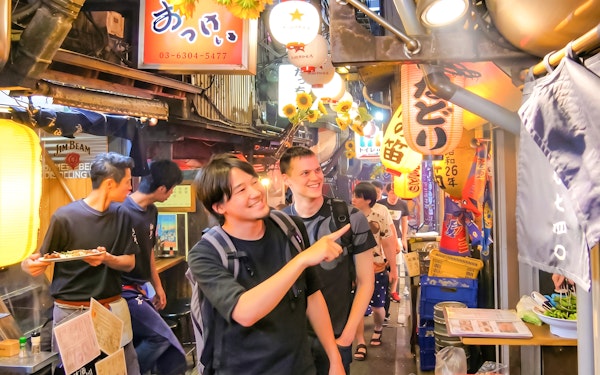
Tokyo: Shinjuku Bar Hopping Tour with All-You-Can-Drink and Dinner
0.0(0)3 hoursViewFrom$106
Food walks and the Tsukiji outer market
If you want one food walk on a sightseeing trip, make it the Tsukiji outer market, and go after 9:00 am. The tuna auctions people still associate with Tsukiji moved with the wholesale fish market to Toyosu, which opened on 11 October 2018 (Tokyo Metropolitan Government, Toyosu Market). The shops around the old market stayed and became the Tsukiji Outer Market (Tsukiji Outer Market).
8. Tsukiji outer market
The market's own site splits the day into three: 6:00 to 9:00 am belongs to professional buyers, the public's hours follow until 2:00 pm, and opening is flexible after that, with each shop keeping its own hours (Tsukiji calendar). Its calendar shows the business days of the Tokyo Central Wholesale Market, and in November 2026 the closing days are 1, 3, 8, 11, 15, 18, 22, 23 and 29 November: the Sundays, the two national holidays and two Wednesdays. In December 2026 they are 2, 6, 9, 13, 16, 20, 23 and 31 December, with Sunday 27 December marked as a temporary opening day. The site asks you to check each shop's own schedule as well.
The market sets rules for guided groups too. Its manners page asks you not to snack while wandering (eat at the stall or in the restaurant); not to touch the food; to ask before photographing a shop; not to bargain; and to move in small numbers. Tour guides are asked not to lead groups into shops without permission or block shop entrances, and first-time guides should consult the Plat Tsukiji information center (How to tour Tsukiji). A guide who keeps to those rules keeps the group welcome, so ask the operator how big its groups are.
December needs a check first. In December 2025 the Tsukiji Food Town Development Council asked tour operators not to run guided tours in the market that month, to protect New Year shopping, while saying it was not telling individual visitors to stay away (SoraNews24). The market's English site showed no such notice for December 2026 when we read it on 18 Nov 2026, so if your trip falls in December, ask the operator whether the walk is going ahead, or book a food walk elsewhere.
Food tours that cross several districts are a separate category from a market walk. Compare them with the rest of the Tokyo tours on our city page.
Tsukiji outer market food walks to compare

Tsukiji Fish Market: Street Food Tour with Tasting
5.0(99)1 hr 30 minViewFrom$65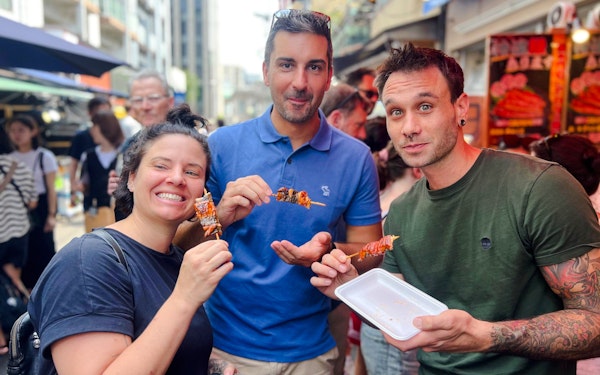
Tokyo Food Tour: Tsukiji Fish Market Walking Tour with Temple Visit
0.0(0)2 hoursViewFrom$16
Tsukiji BBQ Tour with National licensed Guide
3 hoursViewFrom$191
Tokyo: Toyosu Tuna Auction and Tsukiji Market Guided Walking Tour
0.0(0)3 hr 30 minViewFrom$125Tokyo Full Day Sightseeing Private City Tour with English Guide
5.0(24)8 hours - 10 hoursViewFrom$339
Sapporo: Nijo Market Guided Tour with Seafood Meal
5.0(1)1 hr 30 minViewFrom$98
Backstage Pass to Sapporo Central Market
3 hr 20 minViewFrom$120
Authentic Sapporo: Nijo Market Seafood Lunch & Local History Tour
5.0(30)2 hr 30 minViewFrom$63
Sapporo Market and Seafood Brunch Tour Taste Hokkaido’s Freshness
5.0(4)2 hr 30 minViewFrom$62
Hakodate: Morning Market Tour with Seafood Tasting Options
5.0(4)1 hr 30 minViewFrom$88
Volunteer guides: Tokyo walking tours at no charge
Tokyo has a volunteer guide club that leads walks without charging for them, and it is the best place to start if your budget is tight. Tokyo SGG Club belongs to a nationwide volunteer network organized by the Japan National Tourism Organization, and describes its offer as "a free guided walking tour of Asakusa, the Ueno Park area, Yanaka area and the Imperial Palace East Gardens area" (Tokyo SGG Club). The network grew out of the Goodwill Guide movement the tourism organization started in 1964, and the club's FAQ counts 90 such groups across Japan. Members need English at Eiken Grade 2 level or equivalent (club FAQ, in Japanese).
How it works, from the club's pages:
- No booking. You go to the meeting point and join. Places may be limited on a first-come, first-served basis.
- Schedules change. Walks run irregularly, are published month by month, and may be cancelled without prior notice. Some are not held in summer or over the New Year holidays.
- Fixed times. In the schedule for 1 November to 10 December 2026, walks started at 10:30 am in all three neighborhoods, with afternoon starts at 1:15 pm in Asakusa and 1:30 pm in Ueno and Yanaka, and 1:00 pm for the East Gardens.
The limits are the point to weigh. A volunteer walk can't be moved to suit you, the group size isn't fixed, and nobody holds a place for you. A booked walk usually comes with a set start time, a maximum group size and written cancellation terms. If your dates line up with the club's, the volunteer walk is the obvious first choice.
A walk that a private company advertises at no cost is a different arrangement. Read how the guide is paid before you join, and if the page expects a tip at the end, decide your amount beforehand.
The Imperial Palace: East Gardens and palace grounds
Two different walks share the palace site. The East Gardens are open to anyone on their opening days, with or without a volunteer guide; the agency names them as the one part of the palace where visitors may walk around freely, and its own guided tour covers the grounds beyond them (visit FAQ).
9. Imperial Palace East Gardens
The East Gardens occupy part of the old Honmaru, Ninomaru and Sannomaru compounds of Edo Castle; the public has been let in since 1968, and entry costs nothing. Between November and February the gates open 9:00 am to 4:00 pm (entry until 3:30 pm), and they close every Monday and Friday and from 28 December to 3 January. They do open on national holidays, except the Emperor's Birthday on 23 February, and when a holiday falls on a Monday they close on the Tuesday after (Imperial Household Agency). This winter the rule applies twice: Labor Thanksgiving Day on 23 November 2026 and Coming of Age Day on 11 January 2027 both fall on a Monday (Cabinet Office holiday list), so the gardens open on those Mondays and close on Tuesday 24 November and Tuesday 12 January. The agency's closing-day calendar confirms both, and it also marks Monday 30 November and Friday 4 December 2026 as open days, so check it rather than relying on the usual pattern.
You enter through the Ote-mon, Hirakawa-mon or Kitahanebashi-mon gate, and bags are inspected at the entrance. Tokyo SGG Club's East Gardens walk lasts about 2 hours and meets at the Tokyo City i Tourist & Business Information Center in the basement of JP Tower KITTE, a minute's walk from the Marunouchi South Exit of JR Tokyo Station (Tokyo SGG Club, East Gardens). The club suspended this walk from April 2026, when the tourism organization's information center closed, and resumed it in September. In the November schedule it ran mostly on Wednesdays, Thursdays and Saturdays at 1:00 pm.
10. The Imperial Palace grounds tour
The Imperial Household Agency runs its own guided tour of the palace grounds beyond the East Gardens, and it does not permit commercial sightseeing operators. The tour runs twice a day, morning and afternoon, on a route of about 2.2 km that takes an hour with limited shade (Imperial Household Agency visit guide).
- When there are no tours: Sundays, Mondays, national holidays (unless the holiday is a Saturday), afternoons from 1 July to 30 September, 28 December to 4 January, and days of Imperial Court events.
- Online: applications open at 5:00 am Japan time on the first day of the month before your visit and close at 11:59 pm four days before it, up to 200 people per tour.
- On the day: Kikyo-mon Gate gives out 300 numbered tickets per tour, one each, starting at 9:00 am (morning tour) and 12:30 pm (afternoon tour), until none are left.
- Bring: a passport or other original ID; photocopies are not accepted. Bags are inspected.
Kikyo-mon is about 10 minutes on foot from Exit 6 of Nijubashi-mae Station on the Chiyoda Line, or about 15 minutes from the Marunouchi Central Exit of JR Tokyo Station.
Group, small-group or private guide
Pick by what you need explained, not by price alone. A larger group walk suits Asakusa, where the sights are big and the story is well known. A small group is worth paying for in Yanaka and at night in Shinjuku, where the lanes are narrow and the bars are small; the Tsukiji market itself asks visitors to move in small numbers. A private guide makes sense when you want the walk shaped around one interest, such as architecture, crafts or a family history, or when someone in your group walks slowly.
Before you book, check five things on the product page: the maximum group size, whether entry fees, food or drinks are included, the meeting point, the cancellation terms and the language of the guide. For a sense of how prices are built, read what a guided walking tour costs.
A self-guided Tokyo walking route
You can walk old Tokyo alone in a day with one subway ride and one train. This route links the guided walks above in their best order, and every station on it is named by GO TOKYO or the transport operator.
- Asakusa, early. Be there when the Main Hall opens (6:30 am in the cooler half of the year) and walk Nakamise before the shops fill up.
- Ginza Line to Ueno. Ride the Tokyo Metro Ginza Line from Asakusa to Ueno, then walk through Ueno Park, past the museums.
- On foot to Yanaka. Leave the park toward Ueno Sakuragi and continue to Yanaka Cemetery, Nezu Shrine and Yanaka Ginza.
- Yuyake Dandan at sunset. In November that is before 4:50 pm (NAOJ).
- Nippori to Shinjuku. Take the JR Yamanote Line from Nippori to Shinjuku and finish in Omoide Yokocho by the West Exit.
Save Harajuku and Shibuya for a second day, starting at Meiji Jingu before it closes at 4:10 pm in November. If rain wipes out a walking day, an indoor plan such as teamLab Planets tickets fills it. For the rest of the city, our things to do in Tokyo list covers the sights, and the 3 days in Tokyo itinerary shows how these walks fit a short trip.
Ginza Line or Yamanote Line
The Ginza Line links Asakusa and Ueno; the JR Yamanote Line loops through Nippori, Shinjuku, Harajuku and Shibuya. The Yamanote also stops at Tokyo Station, the way in for the East Gardens and the palace tour.
When to walk: seasons, heat and rain
Spring and late autumn are the easiest months for a long walk in Tokyo; midsummer is the hardest. Thirty years of Tokyo weather records show why:
| Month | Typical high | Typical low | Rain in the month |
|---|---|---|---|
| January | 9.8°C | 1.2°C | 59.7 mm |
| April | 19.4°C | 9.8°C | 133.7 mm |
| June | 26.1°C | 18.5°C | 167.8 mm |
| August | 31.3°C | 23.5°C | 154.7 mm |
| October | 22.0°C | 14.8°C | 234.8 mm |
| November | 16.7°C | 8.8°C | 96.3 mm |
Averages for 1991 to 2020 at the Tokyo station, published by the Japan Meteorological Agency, read on 13 Nov 2026.
In summer, book morning walks and keep afternoons for indoor sights. The palace grounds tour drops its afternoon slot from July to September and warns of limited shade, and Tokyo SGG Club pauses some walks in summer. September and October bring the most rain of the year, so check weather terms before you pay.
November is a strong month to walk, with mild days and less rain, but the light goes early. With sunset at about 4:30 pm by late November, plan afternoon walks to start by 2:00 pm, and remember that Meiji Jingu and the East Gardens close at 4:10 pm and 4:00 pm. For month-by-month planning, read the best time to visit Tokyo.
Practical details for a Tokyo walk
Each place on these walks sets its own rules for bags, cash, food, smoking and photos.
- Bags. The East Gardens and the palace tour both inspect bags and suggest leaving luggage in a station locker. Tsukiji asks you to store large bags in a coin locker and keeps strollers at Plat Tsukiji for 500 yen each.
- Cash. Bring yen to Omoide Yokocho, whose own first-timers' guide tells you to arrive with cash.
- Eating on the move. Yanaka Ginza is set up for snacking as you walk; Tsukiji wants food eaten where you bought it.
- Smoking. Tsukiji allows it only in designated areas; Omoide Yokocho bans it in the lanes except inside shops that permit it.
- Photos. Ask shopkeepers in Tsukiji before photographing their stalls, and keep photos of the Shinjuku lanes quick, since both associations there restrict filming.
Tokyo walking tours FAQ
Can you explore Tokyo on foot without a guide?
Yes. The official tools help: the Imperial Household Agency offers an audio guide app for the East Gardens at no charge, plus illustrated maps of the gardens, and the official GO TOKYO travel guide has district guides with station access for Asakusa, Yanaka, Ueno, Harajuku, Shibuya and Shinjuku.
How long are Tokyo walking tours?
The volunteer walks of Tokyo SGG Club take about 90 minutes in Asakusa, Ueno Park and Yanaka, and about 2 hours in the Imperial Palace East Gardens area. The Imperial Household Agency's palace grounds tour covers about 2.2 km in an hour. Commercial walks set their own length, so read the duration on the product before you book, and leave slack if a market or bar stop is included.
Do you tip a walking tour guide in Japan?
Not as a rule. Japan's national tourism organization says it is not common to tip for services such as restaurants, taxis and hotels, and that a private guide used to overseas practice may accept one as thanks. Its advice is that "tipping is not expected and should be done discreetly, even in these cases", ideally in a small envelope from a convenience store.
Do Tokyo walking tours go ahead in the rain?
The Imperial Household Agency's palace tour does: it runs in rain and may be cancelled in severe weather. Tokyo SGG Club gives no rain rule and says only that a walk may be cancelled without prior notice. For a booked walk, check the operator's weather and cancellation terms before you pay, especially from June to October, Tokyo's wettest stretch.
Can children join a walking tour in Tokyo?
Yes, with an adult. The Imperial Palace tour admits visitors under 18 only with an adult, and the Tsukiji outer market asks parents to hold their child's hand in its narrow lanes. Bar walks in Golden Gai and Omoide Yokocho are drinking evenings, so leave them for a night when the children are elsewhere.
How much walking is there on a Tokyo food tour?
It depends on the format. A Tsukiji outer market walk stays inside one market district of narrow streets, while a food tour that crosses several districts may use trains between stops. The product page should say whether transport, food and drinks are included, and that decides how much walking you are signing up for.
Sources
Pages consulted for this guide, each opened on 13 November 2026 and re-checked on 14 November 2026.
- Tokyo SGG Club home page, tour schedule, walk pages for Asakusa, Ueno Park, Yanaka and the Imperial Palace East Gardens, and the club FAQ (Japanese)
- Imperial Household Agency: East Gardens of the Imperial Palace, its closing-day calendar, the Imperial Palace guided tour and the visit FAQ
- Senso-ji (English), About Senso-ji (Main Hall hours) and light-up notice
- Meiji Jingu: opening hours and admission
- Tsukiji Outer Market, calendar and business hours and How to tour Tsukiji
- SoraNews24: Tsukiji's December 2025 request to tour groups, read on 18 November 2026
- Tokyo Metropolitan Government: Toyosu Market
- Omoide Yokocho official site, first-timers' guide, photography terms and the Omoide Yokocho Day notice (Japanese)
- Shinjuku Sanko shopping street association (Golden Gai): about and photography terms (Japanese)
- GO TOKYO district guides: Asakusa, Ueno, Yanaka and Nezu, Harajuku, Shibuya and Shinjuku
- JNTO: tipping in Japan
- Japan Meteorological Agency: Tokyo climate normals
- National Astronomical Observatory of Japan: Tokyo sun times for November 2026
- Cabinet Office: national holidays