DublinCity pillarPlanningFirst-timer
The Ultimate Dublin Travel Guide for First-Time Visitors (2026)
A field-tested 2026 Dublin travel guide - where to stay by neighbourhood, how the trams and trains work, when to go, and the first-timer mistakes worth avoiding.
由 SimilarTours Editorial · Travel Research · · 19 分鐘閱讀

Dublin is an easy city to visit and a surprisingly easy one to get wrong. It is small, friendly, walkable, and packed with things worth doing, but the default first-timer trip - Temple Bar, a brewery, a rushed cathedral, back to Temple Bar - misses most of what makes people fall for the place. A little planning fixes that, because the good version of Dublin is only ever a couple of streets or one train stop away from the obvious one.
This guide covers the practical layer: where to base yourself, how the trams and coastal trains work, when to come, what to book ahead, and the mistakes visitors most often regret. If you have ten minutes, skip to the neighbourhood section, because where you sleep shapes a Dublin trip more than any other single choice.
Browse all Dublin experiences and tickets →Why visit Dublin
Dublin trades on conviviality more than on monuments. There are landmarks - a walled university with a famous library, a castle, two cathedrals, a former prison that is the most affecting visit in the city - but nobody comes home talking about the architecture. They talk about the evening that started as one drink and turned into three hours of live music, the guide who could genuinely tell a story, the cliff path they walked on a whim because it turned out to be half an hour from the hotel.
The scale helps enormously. This is a capital you can cross on foot in under an hour, where the coast is a short train ride from the centre and the mountains are visible from the city streets. It works as a long weekend, as a first stop in Ireland, and as a base for day trips that reach almost anywhere in the country. And it rewards the traveller who is willing to walk two streets past the obvious pub.
When to go
Dublin's weather is mild and unreliable in every season, so timing is more about daylight, crowds, and price than about temperature.
- May, June and early September - the consensus best window. The longest daylight of the year, the mildest and driest stretch, and the coast at its most walkable, with crowds building but not yet at peak.
- July and August - the busiest and most expensive months. Everything is open and the city has real energy, but accommodation prices jump and the headline attractions need booking further ahead.
- Late September to November - quieter, cheaper, and still perfectly walkable, with the trade-off of shortening evenings and more reliable rain. A good choice if pubs and museums are your priority over the coast.
- December to March - the low season, dark by mid-afternoon and often wet, but at its best indoors: fires, sessions, and museums with nobody in them. The exception is the national holiday in March, which brings a huge festival crowd and books out months ahead.
Chase the long evenings
The single most underrated reason to visit Dublin in June is the daylight. Midsummer evenings stay bright late enough that you can finish dinner and still walk a coastal pier or a city park in usable light. It effectively adds hours to your trip, and it is the reason a June visit feels so much longer than the same number of days in November.
Getting there and getting around
Dublin Airport sits north of the city and, unusually for a European capital, has no rail connection. Getting in means one of three things: an express coach to the city centre and the main hotel districts, a standard city bus if you are counting every euro and not in a hurry, or a taxi, which is metered, plentiful, and perfectly reasonable split between a group. Journey times look short on a map and stretch badly at rush hour, so build in a buffer heading back out. Ferries from Britain arrive at the port on the eastern edge of the city and at the harbour south of it.
Once you are here, there are four ways to move:
- On foot - the default and the best. The centre is compact, and almost everything you will want to see sits within a 25 minute walk of Trinity College.
- Tram - two lines crossing the city, and the easiest way to reach the two big western attractions, the Guinness Storehouse and Kilmainham Gaol. Clean, frequent, and simple to use.
- Coastal and suburban rail - the line that hugs the bay, running north to Howth and south through Dun Laoghaire to Dalkey. This is the one that unlocks the best free half-days in Dublin.
- Bus - an extensive network that fills the gaps the tram leaves, including the airport routes and the way out to Phoenix Park.
Pay with a contactless card or pick up a rechargeable travel card, which works across tram, bus and rail and caps what you spend in a day. Cycling is viable in the centre and improving, though the traffic on the quays is not for nervous riders.
Do not rent a car for a Dublin city trip
A car is a liability here. The centre is congested, parking is expensive and scarce, and every attraction is reachable on foot or by tram. If you plan to explore the wider country, the sensible pattern is to do Dublin car-free and pick up a rental on the day you leave the city - or skip driving altogether and take organised day trips, which handle the long drives to the cliffs and the Causeway coast for you.
Where to stay - neighbourhood guide
Dublin is compact enough that no central choice is a disaster, but the difference between a good night's sleep and a 3am singalong under your window is entirely about which street you pick. Here are the five areas that matter most.
Grafton Street and St Stephen's Green - the safe first-timer choice. This is the south-centre core: the main shopping street, the big park at the end of it, the Georgian squares just east, and Trinity College a two minute walk north. You are inside walking distance of nearly everything, the streets are busy but not rowdy, and the restaurant density is high. It is not the cheapest area, but it is the one that wastes the least of your time.
Temple Bar - the cobbled nightlife quarter on the south bank of the river. Staying here means you are 30 seconds from the action, which is exactly the problem: the noise runs late, every night, and prices in the immediate blocks carry a heavy premium. Pick it only if a loud night out is the point of the trip, and pick a room facing away from the street if you do.
The Docklands - the modern quarter east along the river, all glass offices, waterside walkways, and the newer hotels. It empties out at weekends, which makes it quiet and often noticeably better value than the centre, and it is a flat 20 minute walk or a short tram ride into town. Good for business-district value hunters and anyone who wants a calm base with water views.
Portobello and the canal - just south of the city centre across the Grand Canal, a residential neighbourhood of brick terraces, independent cafes, and some of Dublin's best small restaurants. You trade five to fifteen minutes of walking for a real neighbourhood feel and better prices, and the canal walk into town on a bright morning is a genuine pleasure. The pick for repeat visitors and anyone travelling slowly.
Smithfield and the north quays - west of the centre on the northern side of the river, near the distillery district and a short tram ride from the Guinness Storehouse. It has been steadily improving, offers good value, and puts you close to Phoenix Park. The streets are quieter and a little rougher-edged than the south centre, which suits some travellers and not others.
Book accommodation earlier than you think
Dublin's accommodation market is tight, and prices move dramatically with events - rugby and concert weekends, conferences, and the March national holiday can double what a mid-range room costs. If your dates are fixed, book the room first and worry about the itinerary afterwards. This is the one part of a Dublin trip where leaving it late genuinely costs money.
Top experiences to book
Dublin splits neatly into things that need a ticket and things that need only shoes. On the ticketed side, the two to lock in first are Kilmainham Gaol, which runs on limited guided slots and sells out regularly, and the Guinness Storehouse, whose timed entry gets crowded through the middle of the day. Trinity College's old library is the third, particularly between June and September. Beyond those, a whiskey distillery tour is the most reliably good indoor hour in the city, and a guided evening - a literary pub crawl or a traditional music crawl - is the experience most first-timers say they are glad they booked. Our things to do in Dublin guide ranks 27 of them in full, and the Guinness Storehouse tickets guide compares every ticket family for the city's most-booked attraction.
Top experiences in Dublin
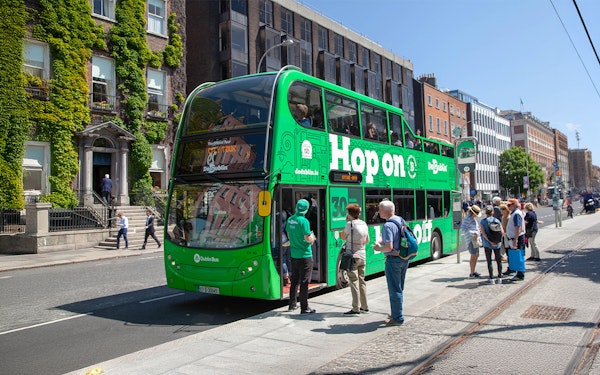
DoDublin: Dublin Hop-on Hop-off Bus Tour with Little Museum Tickets
4.5(67)ViewFrom$34
Dublin Highlights and Hidden Gems Guided Walking Tour
4.9(7,203)2 hoursViewFrom$29
Dublin South Walking Tour: Stories & Splendour: with Local Expert
5.0(9)2 hr 30 minViewFrom$24
Dublin Jameson Distillery Tour and Tasting 45 mins
4.8(5,257)45 minutesViewFrom$37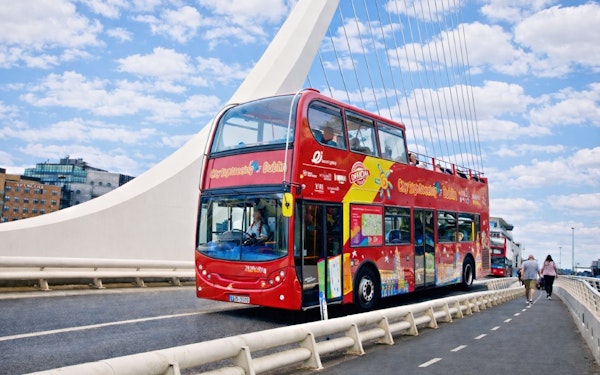
City Sightseeing: Dublin Hop-on Hop-off Bus Tour
4.0(194)1 dayViewFrom$30
Dublin Jameson Distillery and Guinness Storehouse Guided Tour
4.7(2,983)4 hoursViewFrom$146
Dublin City Sightseeing with Private Chauffeur Day Tour
5.0(16)6 hoursViewFrom$1,061
Guinness Storehouse Experience
4.4(5,415)2 hoursViewFrom$38
Walking tour in Merrion Square Park with a pint of Guinness Dublin Rogues Tour
5.0(36)1 hr 15 minViewFrom$40
Dublin to Glendalough, Wicklow and Kilkenny Full Day Guided Tour
4.9(6,266)9 hr 15 minViewFrom$54
The coast and the day trips
The thing most first-time visitors underestimate is how close Dublin is to genuinely dramatic scenery. The coastal rail line runs north to Howth, a fishing village on a headland with a looped cliff path high above the sea, and south through Dun Laoghaire, where two long stone piers reach out into the bay, to Dalkey and the steep climb up Killiney Hill for one of the best views in the region. All three are half-day trips that cost only the fare, and all three are better than most paid attractions in the city.
Further out, Dublin is one of Europe's best day-trip bases because the country is small and the coach networks are well organised. Glendalough and the Wicklow Mountains is the shortest and most scenic option, climbing quickly into open bog and mountain before dropping into a wooded valley with two lakes. The Cliffs of Moher is the long haul west across the country to the Atlantic. The Giant's Causeway trip runs north along the Antrim coast into Northern Ireland, usually taking in the coastal road and often Belfast. Each of the long ones is a full day with several hours of driving, so pick one rather than stacking two.
Top day trips from Dublin

Day Tour from Dublin: Wicklow Mountains, Glendalough, Powerscourt
5.0(74)7 hours - 8 hoursViewFrom$670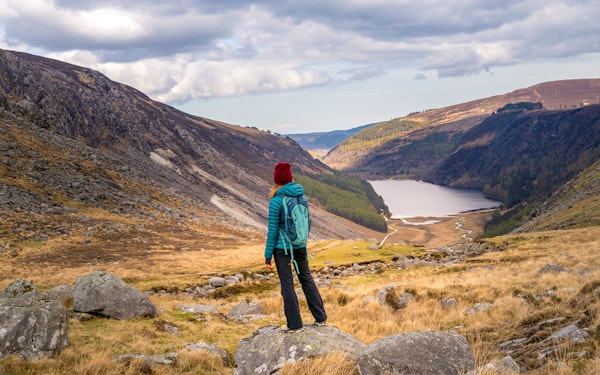
From Dublin: Glendalough, Wicklow, and Kilkenny with Sheepdog Trails Full-Day Trip
4.9(2,552)10 hoursViewFrom$30
Kilkenny, Wicklow and Glendalough Sheepdog Trials from Dublin
4.9(8,684)10 hoursViewFrom$51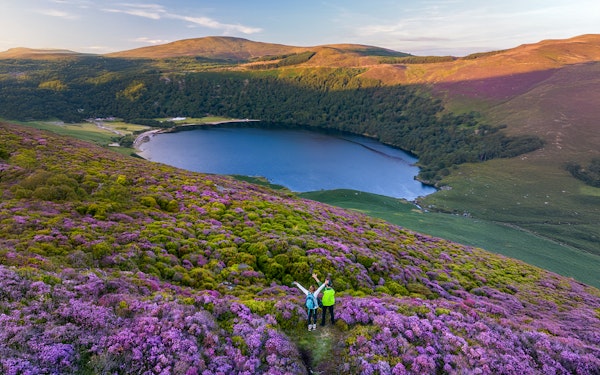
From Dublin: Wicklow Mountains, Glendalough, and Kilkenny Full-Day Trip
4.8(5)9 hr 15 minViewFrom$38Dublin to Glendalough, Wicklow and Kilkenny Full Day Guided Tour
4.9(6,266)9 hr 15 minViewFrom$54
Glendalough & Kilkenny From Dublin Full Day - Private Driver
5.0(11)10 hoursViewFrom$1,364
Glendalough and Wicklow Mountains Half Day Tour from Dublin
4.4(946)5 hoursViewFrom$39
Glendalough and Wicklow Mountains Afternoon Tour from Dublin
4.2(616)5 hoursViewFrom$39
Wicklow and Glendalough Private Chauffeured Sightseeing Tour
5.0(20)6 hours - 8 hoursViewFrom$1,180
Dublin to Powerscourt, Wicklow and Glendalough Small Group Tours
4.7(843)8 hoursViewFrom$77
Food, drink and culture
Dublin's food scene has changed enormously and the reputation has not caught up. The city now does modern Irish cooking properly - short menus built on seafood from the coast, beef and lamb, dairy, and vegetables that actually taste of something - alongside a strong casual layer of bakeries, coffee roasters, and neighbourhood bistros. The best of it clusters south of the canal in Portobello and Rathmines, along the north quays, and in the streets around the old markets, rather than in the blocks nearest the famous pubs.
The pub, though, remains the cultural institution. There is a real distinction between the visitor-facing pubs with painted fronts and nightly covers bands, and the older places with snugs, etched glass, and a barman who takes his time with the pour. Both have their place, but if you only go to the first kind you will leave thinking Dublin's pub culture is a performance. Order a stout, let it settle, and go mid-afternoon on a weekday once during your trip to see what the quiet version looks like. Traditional music sessions are the other thing worth seeking out deliberately, and a guided music crawl is the reliable way to find real ones rather than a house band.
Culturally, the national collections are free and consistently underused - archaeology, decorative arts, natural history, and Irish and European painting, spread across a handful of buildings near the government quarter. The literary heritage is the other thread that runs through everything, and the guided literary walks are the most entertaining way into it.
Top Dublin food and drink experiences

Dublin Ohio Walking Food Tour
5.0(1)3 hr 30 minViewFrom$105
Delicious Dublin Food Tour
4.9(721)3 hoursViewFrom$107
Private Ultimate Day in Dublin (Walking Tour)
5.0(31)8 hoursViewFrom$422
Dublin Historical Centre Food Tour with 7 Food Tastings & Drinks
4.9(2,136)3 hoursViewFrom$133
Taste & Tour: The original Belfast Food Tour™️ with drinks
5.0(30)4 hoursViewFrom$120
Food on Foot: Dublin Street Food Tour with Local Guide
4.9(562)3 hoursViewFrom$33
Taste traditional Irish food in the heart of Dublin
5.0(25)2 hr 30 minViewFrom$166Dublin Highlights and Hidden Gems Guided Walking Tour
4.9(7,203)2 hoursViewFrom$29
Private Dublin Pub Tour (Walking Tour)
5.0(60)4 hoursViewFrom$284
Afternoon Tea Bus Tour in Dublin
4.8(3,105)1 hr 30 minViewFrom$71
Money, safety and etiquette
Ireland uses the euro and Dublin is thoroughly card-friendly, to the point where you can go a whole trip without cash, though a little is useful for small pubs and market stalls. The costs that surprise people are accommodation, which is high and event-driven, and drinks in the busiest visitor blocks, where the premium over a neighbourhood pub is substantial. Tipping is modest and not obligatory: rounding up a taxi fare and leaving around ten percent for good table service is normal, and nobody tips at the bar for a pint.
On safety, Dublin is a generally safe city with rare violent crime against visitors. The realistic risks are opportunistic - bag and phone snatches in crowds, and some anti-social behaviour around the quays and on late-night bus routes. Keep valuables out of back pockets, take the tram or a taxi rather than a long late walk, and use licensed cabs or a ride-hailing app. Etiquette is easy here and mostly about conversation: people talk to strangers, so a nod and a word at the bar is normal rather than intrusive. Buy your round when it comes to you, do not rush a barman pouring a stout, and be aware that a lot of Irish conversational warmth is delivered as teasing.
Two streets is the whole trick
Almost every complaint about Dublin - it is too expensive, the pubs are touristy, the food is mediocre - dissolves if you walk two streets away from wherever the crowd is. The pub with no sign outside, the restaurant on the residential terrace, the quiet stretch of canal: they are all a five minute walk from the busy blocks, and they are the trip people actually remember.
What first-time visitors most regret
A few patterns come up again and again:
- Spending every night in the same few streets. Temple Bar is worth 20 minutes and a photograph. Building an entire trip around it means paying more for a worse version of the thing you came for.
- Not booking Kilmainham Gaol. It is guided-entry only with limited capacity, it sells out, and it is the most affecting visit in the city. People who miss it regret it.
- Underestimating the coast. Howth and Dun Laoghaire are half an hour away by train and cost the price of a fare. Visitors routinely spend three days inside the canals and never see the sea.
- Renting a car for the city. Congestion, expensive parking, and nothing you cannot reach on foot or by tram.
- Packing for the forecast rather than the reality. The weather changes hourly. A waterproof and layers beat a plan built on a sunny morning.
- Trying to do two long day trips. The Cliffs of Moher and the Giant's Causeway are both full days with hours in a coach. Doing both on a short trip means seeing more road than country.
Traveling with kids
Dublin handles families well, largely because so much of it is outdoors and free. Phoenix Park is enormous, with woodland, open grassland, a deer herd, and bikes for hire at the gate, and it can absorb an entire afternoon without a single ticket. The coastal train doubles as an activity in itself, with the pier walks at Dun Laoghaire and the harbour seals and fish shops at Howth as reliable hits. The compact scale means you are never far from a break, and Irish pubs are, by and large, welcoming to children in the daytime in a way that surprises visitors from stricter drinking cultures.
On the indoor side, the digital emigration museum in the docklands is unusually good with older children and teenagers because it is interactive rather than object-led, and the natural history collection is a classic old-fashioned museum of the sort children either love or find gloriously strange. The two things to plan around are the weather, which means always having an indoor fallback, and the fact that a few of the headline attractions - the gaol in particular - are heavy going for younger children.
A first-timer's rhythm for the day
The habit that improves a Dublin trip most is splitting each day between one ticketed thing and one free thing, rather than stacking attractions. Mornings are for the timed-entry sights, when the slots are quietest and you are fresh. Middle of the day is for a long walk - the Georgian squares, the quays, a park, or a train out to the coast if the weather has held. Late afternoon is the window for a museum or a distillery if the rain has arrived. And the evening belongs to a pub, ideally one you found by walking past the busy ones.
Leave at least one evening unplanned. Dublin's best nights are almost never the booked ones: they come from following the sound of a fiddle down a side street, or from a conversation at the bar that turns into directions to somewhere better. Build a trip with enough slack to say yes to that, and you will understand why people keep coming back to a city with relatively few monuments.
Compare Dublin tours and tickets in one search →Common questions
What is the best area to stay in Dublin for a first visit?
The area around Grafton Street and St Stephen's Green is the safest first-timer choice - central, walkable to almost everything, and calm at night. Temple Bar puts you in the middle of the nightlife but is loud until very late. The docklands are modern, quiet, and good value at weekends, while Portobello and Rathmines just south of the canal give you a residential neighbourhood with a strong food scene and a 20 minute walk into town.
How do you get around Dublin?
Mostly on foot. The city centre is compact and almost everything sits within a 25 minute walk of Trinity College. For longer hops there is a two-line tram, an extensive bus network, and a coastal rail line that runs north to Howth and south to Dun Laoghaire and Dalkey. A contactless card or a rechargeable travel card covers all of them, and the trams are the easiest way to reach the Guinness Storehouse and Kilmainham Gaol.
When is the best time to visit Dublin?
May, June and September are the sweet spots - the longest daylight of the year, the mildest weather, and crowds that have not yet peaked. July and August are busiest and priciest. March around the national holiday is a spectacle but books out far ahead, and the winter months are quiet, dark and cheap, with a genuinely good pub and festive season as compensation.
How many days do you need in Dublin?
Two full days covers the city centre - Trinity, the castle, the cathedrals, the Guinness Storehouse, a distillery, and a pub-focused evening. Three days is the sweet spot, because the extra day buys you either the coast at Howth or Dun Laoghaire, or a trip out to Glendalough. Anything beyond four days is best spent using Dublin as a base for longer trips west or north.
Do you need to book Dublin attractions in advance?
Kilmainham Gaol and the Guinness Storehouse are the two that regularly sell out, and Kilmainham runs on limited guided slots rather than open entry, so book those first. Trinity's old library and the larger distillery tours also fill through summer. Day trips to the Cliffs of Moher and the Giant's Causeway want a few days notice in peak season. Parks, walks, and the free national collections need nothing.
Is Dublin expensive?
It is one of the pricier European capitals, with accommodation the biggest line by some distance, particularly at weekends and during big events. Food and drink are dearer in the visitor-heavy blocks than a few streets away, and the difference between a pint in Temple Bar and a pint in a neighbourhood pub is substantial. The savings come from booking accommodation early, eating away from the busiest streets, using the free national collections, and walking rather than taxiing.
How do you get from Dublin Airport into the city?
The airport sits north of the city and there is no rail link, so it is buses and taxis. Frequent express coaches run into the city centre and out to the main hotel districts, and standard city buses are the cheapest option if you are not in a hurry. Taxis are metered, plentiful, and reasonable for a group. Allow more time than the map suggests at rush hour, when the airport road slows badly.
Is Dublin safe for tourists?
Dublin is generally safe, and violent crime against visitors is rare. The usual city-centre caution applies: watch bags and phones in crowds, stay alert around the quays and the main nightlife streets late at night, and use licensed taxis or ride-hailing rather than walking long distances alone after midnight. Anti-social behaviour on some late-night bus routes is the most common complaint, so the tram or a taxi is the safer late choice.
What is the weather like in Dublin?
Mild, changeable, and wetter than the numbers suggest. Temperatures rarely swing to extremes in either direction, which means it is seldom very hot or very cold, but rain can arrive at any point in any season and usually blows through within the hour. Layers and a proper waterproof beat an umbrella, because the wind off the sea turns umbrellas inside out. Summer daylight stretches late into the evening, which is one of the real pleasures of a June visit.
更多閱讀
更多指南以幫助您計畫旅程

2026年吉尼斯啤酒博物館門票:類型、選項和如何跳過排隊
2026年吉尼斯啤酒博物館門票指南 - 標準定時入場、快速通道、導遊和高級體驗,以及都柏林套票比較。

Things to Do in Dublin: 27 Experiences Worth Booking in 2026
A 2026 Dublin shortlist - 27 landmarks, brewery and distillery visits, literary and music pub walks, coastal escapes, and day trips, grouped by theme.

Accademia Gallery Tickets in 2026: Types, Skip-the-Line and Combos Compared
A 2026 guide to Accademia Gallery tickets in Florence - timed entry, skip-the-line reserved slots, guided tours, Uffizi combos and walking tours with entry.

Arc de Triomphe Tickets in 2026: Rooftop Access, Combos and How to Skip the Line
A 2026 guide to Arc de Triomphe tickets - rooftop terrace timed entry, skip-the-line, Paris viewpoint and cruise combos, and guided Champs-Elysees walks.

柏林首次遊客終極旅遊指南 (2026)
經過實地測試的 2026 柏林旅遊指南 - 依區域選擇住宿、交通票務運作方式、最佳旅遊時間,以及首次遊客應避免的常見錯誤。

Buckingham Palace Tickets in 2026: Types, Tours and How to Skip the Line
A 2026 guide to Buckingham Palace tickets - State Rooms timed entry, skip-the-line, Changing of the Guard tours and royal combos compared.

布達佩斯首次訪客終極旅遊指南 (2026)
實用的2026布達佩斯旅遊指南 - 各區住宿選擇、地鐵電車使用方法、溫泉浴場選擇、最佳造訪時間以及首次訪客經常後悔的事項。

Duomo Milan Tickets in 2026: Every Ticket Type Compared
A 2026 guide to Duomo Milan tickets - cathedral entry, rooftop terraces by stairs or lift, fast-track, guided tours and combined passes compared.