BerlinCity pillarPlanningFirst-timer
The Ultimate Berlin Travel Guide for First-Time Visitors (2026)
A field-tested 2026 Berlin travel guide - where to stay by neighbourhood, how the transport tickets work, when to go, and the first-timer mistakes worth avoiding.
By SimilarTours Editorial · Travel Research · · 22 min read

Berlin rewards planning more than almost any capital in Europe, and for an unusual reason: it is enormous, it has no single historic core, and a great deal of what people come to see is outdoors, free, and easy to walk straight past without noticing. The city does not hand itself over the way Paris or Rome does. Get the practical layer right, though - where to base yourself, how the transport tickets work, which few things genuinely need booking - and Berlin turns into one of the most rewarding and most affordable city breaks on the continent.
If you have ten minutes, skip straight to the neighbourhood section and the transport section. Those two decisions shape a Berlin trip more than anything else on this page.
Browse all Berlin experiences and tickets →Why visit Berlin
Berlin is a capital that wears its story on the surface. Preserved sections of wall run through residential streets, memorials sit in the middle of everyday squares, and whole districts still look and feel different from one another because of how the city was divided and later stitched back together. Nowhere else in Europe puts that much recent history at street level, in public, free to walk through at any hour.
It is also, at the same time, an unusually relaxed and unpretentious place to spend a few days. The food scene is broad and cheap, driven by generations of arrivals rather than by a single regional tradition. The nightlife has a global reputation and an unhurried, come-as-you-are attitude that has nothing in common with velvet ropes. The parks are enormous, the lakes and forests start within the city limits, and the whole place is flat enough to cycle end to end.
The third reason is the museums. Berlin's collections are the equal of any city in Europe, spread across an island in the river and a dozen other locations, covering antiquity, painting, design, and the twentieth century in exhaustive depth. You could spend a week here entirely indoors and still not finish.
When to go
Berlin's seasons are more pronounced than its western European neighbours, and the difference between a May visit and a January one is enormous.
- May to early July - the best window. Long daylight running late into the evening, warm without being uncomfortable, canal-side and park life at full tilt, and every outdoor thing worth doing actually open. Book accommodation early.
- Mid July and August - the busiest and hottest stretch, and the point where the city itself partly empties for the holidays. Still very good, but book the Reichstag and any timed entries well ahead.
- September to mid October - the other sweet spot. Warm days, cool evenings, thinner crowds, and the best light of the year on the river and the parks.
- Late October to March - cold, grey and dark by mid-afternoon, which is exactly the right weather for Berlin's museums and long indoor lunches. Prices soften, the city feels like itself rather than a destination, and the Christmas market season from late November brings a busy, cheerful exception.
The shoulder-season sweet spot
Late May into June and the whole of September give you long light, comfortable temperatures and manageable crowds at the same time. If your dates are flexible at all, aim for one of those two windows and book the Reichstag dome the moment the trip is confirmed.
Getting there and getting around
The main airport sits southeast of the city and connects to the centre by regional and suburban rail as well as express bus, taking roughly half an hour to reach the central stations. The important detail is fare zones: airport journeys need a ticket that covers the outer zone, not the standard inner-city one, and buying the wrong combination is the most common first-hour mistake visitors make. Berlin is also a major long-distance rail hub, and arriving by train drops you in the middle of the city with no transfer at all, which is worth considering if you are combining it with another European stop.
Once you are here, there are four ways to move:
- U-Bahn and S-Bahn - the underground and suburban rail networks, and the backbone of the whole trip. Frequent, fast, and running very late at weekends. Between them they reach essentially everything a visitor wants.
- Tram and bus - the tram network covers the eastern districts particularly well, and a couple of ordinary bus routes run right past the central landmarks, making them an accidental sightseeing tour for the price of a normal ticket.
- Bicycle - Berlin is flat, wide and full of cycle lanes, and rental and share schemes are everywhere. It is the most enjoyable way to cover a district, less so in heavy traffic or rain.
- On foot - excellent within a neighbourhood, punishing between them. Berlin's distances are deceptive on a map, and the walk that looks like fifteen minutes is often forty.
Everything above runs on one integrated ticket system. Most visitor journeys stay within the two inner zones, and a day or multi-day travel pass pays for itself after about three rides. Buy before you board and validate at the platform machines, because Berlin's system has no barriers and relies on inspections instead.
Validate your ticket, every time
There are no gates on the U-Bahn or S-Bahn, which routinely leads visitors to assume the system runs on trust. It does not. Plain-clothes inspectors work the trains, an unvalidated ticket counts as no ticket, and the on-the-spot penalty is not negotiable. Stamp it in the small machine on the platform before you get on.
Where to stay - neighbourhood guide
Berlin is a collection of distinct districts rather than a centre with suburbs, and where you sleep determines what your evenings look like. These are the five that matter most for a first visit.
Mitte - the historic and administrative centre, and the default first-visit choice. The Brandenburg Gate, the main memorials, Museum Island, the grand boulevard and Alexanderplatz are all here or within a short walk, and the transport connections are the best in the city. The trade-off is that parts of it are business-district quiet after dark and the restaurants closest to the sights are the least interesting in Berlin. Pick it for a short trip where sightseeing efficiency matters most.
Prenzlauer Berg - just north of Mitte and the best all-round base for many people. Handsome nineteenth-century streets, leafy squares, independent cafes and bakeries, a genuinely good local restaurant scene, and a calm, family-friendly feel. It is one or two U-Bahn stops from the centre, and it is the district most visitors say they would live in. The clear pick for families and for anyone who wants a neighbourhood rather than a hotel zone.
Kreuzberg - the food and street-life capital, dense, loud, multicultural and endlessly walkable, with the best casual eating in the city and a nightlife that runs all week. It is the most interesting place to spend an evening and the least restful place to sleep. Pick it if you are here for the food, the bars and the alternative side of Berlin, and pick a room away from the main strips.
Friedrichshain - across the river from Kreuzberg, younger and rougher-edged, home to the East Side Gallery, the big clubs and a lot of cheap, good eating. It suits travellers in their twenties and thirties who want to be inside the nightlife rather than commuting to it. Quieter in its northern streets than its reputation suggests.
Charlottenburg - the western district, more traditional and more residential, with grand old apartment buildings, department stores, a palace and park, and a calmer, slightly older feel. Rooms are often better value here and the transport links are strong, at the cost of a longer ride to the eastern half of the city. A good second-visit base and a good choice for a quieter stay.
East and west still feel different
Visitors often expect a single homogeneous city and are surprised to find that the eastern and western halves still look, feel and eat differently from each other, right down to the design of the pedestrian-crossing figures. Lean into it. Basing yourself in one half and deliberately spending a full day in the other is one of the more interesting things you can do with a Berlin itinerary.
Top experiences to book
Berlin needs fewer advance bookings than most capitals, because so much of its best material is free and outdoors. The short list of things that genuinely require planning is the Reichstag dome, which runs on registered timed entry and fills weeks ahead, the main Museum Island collections in summer, and the TV Tower at Alexanderplatz. Everything else is about choosing well rather than booking early.
The experiences that consistently earn their place are the guided ones. A general orientation walk on your first morning turns a confusing city into a legible one. A specialist walk on the wall, the Cold War or the wartime period reaches material that plaques and self-guided apps simply cannot. A Spree river cruise doubles as a rest and an orientation. And a Kreuzberg food tour is the fastest possible introduction to how the city actually eats. Our things to do in Berlin guide ranks 26 of them in full, with the reasoning for each.
Top experiences in Berlin

Berlin: Private Highlights Walking Tour with Local Guide and Hotel pickup
5.0(12)3 hoursViewFrom$57
Berlin: Guided Bike tour of the Berlin Wall and Third Reich
4.8(197)3 hoursViewFrom$40
All-in-One Berlin Highlights on Foot: Private Walking Tour
5.0(22)3 hoursViewFrom$220
East Berlin Food Tour with Berlin Wall and Craft Beer
4.9(256)3 hoursViewFrom$97
The History of Berlin City Center Exclusive Guided Walking Tour
5.0(17)3 hoursViewFrom$65
Berlin: Highlights of Berlin Guided Bike & E-Bike Tour
4.9(1,089)3 hoursViewFrom$40
Full Day Private Shore Tour: All Berlin Panoramic Tour
9 hoursViewFrom$319
Historic Pubs of Berlin & Berlin Beer Tour
5.0(235)3 hr 30 minViewFrom$85
Berlin Highlights: including WWII and Cold War Sites
5.0(11)2 hoursViewFrom$5
Express Tour Government District plus Visit Reichstag with Dome
4.7(125)2 hr 30 minViewFrom$18
Top Berlin walking tours
Berlin: Private Highlights Walking Tour with Local Guide and Hotel pickup
5.0(12)3 hoursViewFrom$57
Discover Berlin Half-Day Walking Tour
4.9(10,322)3 hr 30 minViewFrom$23The History of Berlin City Center Exclusive Guided Walking Tour
5.0(17)3 hoursViewFrom$65
Third Reich Berlin: Hitler and WWII Walking Tour
4.9(3,613)3 hoursViewFrom$20
Berlin Third Reich & Cold War Walking Tour With A Guide
4.9(19)2 hoursViewFrom$41
Berlin's Best: 2 Hour Walking Tour Third Reich and the Cold War
5.0(6,318)2 hoursViewFrom$27
Berlin Off the Beaten Path: Neighbourhoods & Street Culture
5.0(14)3 hours - 4 hoursViewFrom$201
Berlin Highlights Walking Tour
4.4(421)3 hoursViewFrom$2
Private Walking Tour Berlin 3 Hours: IIIrd Reich, WW2, Cold War
5.0(11)3 hoursViewFrom$396
East Berlin and the Berlin Wall 2-Hour Walking Tour
4.9(244)2 hoursViewFrom$23
History, memorials and museums
This is the reason most people come, and Berlin handles it with a directness that other cities have not attempted. The memorials are unfenced and free, placed in ordinary public space rather than tucked away, and the documentation centres are unflinching. The Memorial to the Murdered Jews of Europe near the Brandenburg Gate, the Topography of Terror on the site of the old security apparatus, and the wall memorial running along Bernauer Strasse are the three that matter most, and all three cost nothing to enter.
The wall itself survives in several places, each doing a different job. The Bernauer Strasse site is the one that explains how the barrier worked as a system, with a preserved section, the ground behind it, and an observation platform. The East Side Gallery in Friedrichshain is a long painted riverside stretch, better as art than as history. Checkpoint Charlie in Mitte is the weakest of the three on its own and much the strongest as part of a guided Cold War walk.
For the collections, Museum Island in the middle of the Spree holds several major houses covering antiquity, sculpture and European painting, and a combined ticket lets you move between them. Elsewhere, the Jewish Museum in Kreuzberg uses its own architecture as part of the experience, an everyday-life museum near the cathedral covers domestic life in the former East in a deliberately hands-on way, and Charlottenburg Palace out west offers the courtly, pre-modern Berlin that the rest of the city has largely lost.
Top Berlin history tours
Berlin Third Reich & Cold War Walking Tour With A Guide
4.9(19)2 hoursViewFrom$41
Third Reich Walking Tour Munich - Nazi Origins - Max.16 per group
5.0(41)2 hr 30 minViewFrom$35
Private Warnemuende Shore Excursion: Third Reich Berlin
4.8(4)11 hoursViewFrom$893Third Reich Berlin: Hitler and WWII Walking Tour
4.9(3,613)3 hoursViewFrom$20
Private Walking Tour in Berlin: Hitler's Germany & WWII
5.0(23)4 hoursViewFrom$177Berlin's Best: 2 Hour Walking Tour Third Reich and the Cold War
5.0(6,318)2 hoursViewFrom$27
Private Tour : Hitler and the Third Reich Walking Tour
5.0(12)2 hoursViewFrom$49
Third Reich Walking Tour Munich
4.7(4,642)2 hr 30 minViewFrom$43Berlin: Guided Bike tour of the Berlin Wall and Third Reich
4.8(197)3 hoursViewFrom$40Private Walking Tour Berlin 3 Hours: IIIrd Reich, WW2, Cold War
5.0(11)3 hoursViewFrom$396
Food, drink and culture
Berlin has no single defining regional cuisine, and understanding that is the key to eating well here. What it has instead is layers: the traditional German tavern food that predates everything, the Turkish and Middle Eastern cooking that reshaped the city's everyday eating, the Vietnamese kitchens concentrated in the east, and a newer wave of small independent places drawn by cheap space. The best meals come from following the neighbourhoods rather than the guidebook.
The practical version of that advice: eat in Kreuzberg and Neukoelln for street food and casual dinners, in Prenzlauer Berg for brunch and neighbourhood restaurants, and in the covered market halls for a quick, cheap, varied lunch. Bakeries are everywhere and are a legitimate breakfast strategy. Coffee culture is strong and independent. And a guided food walk on an early day pays for itself in the meals it saves you from choosing badly afterwards.
Drinking runs on beer, and Berlin takes it seriously without ceremony, splitting between long-established styles and a lively small-brewery scene across the eastern districts. Beer gardens open the moment the weather turns and are a genuine part of the summer culture rather than a tourist activity. Guided brewery visits and beer crawls cover the ground efficiently if you want the context.
Culturally, the city runs on an enormous, mostly unglamorous calendar of live music, theatre, independent cinema and gallery openings, plus the club scene it is famous for. That scene deserves one piece of honest advice: the doors are selective, unpredictable, and immune to booking. Guided club-culture nights and bar crawls are the sensible route in for visitors, both because they explain how it works and because they take you somewhere that will actually let a group in.
Top Berlin food tours

Berlin Food & Cultural Tour: Must-Try German & Berliner Classics
5.0(94)3 hoursViewFrom$141
Berlin: Mitte District Food Tour with 7 Authentic Local Tastings
4.9(1,559)3 hoursViewFrom$112
Private Food Tour Experience with a born and bred Berliner
5.0(14)3 hr 30 minViewFrom$349Berlin: Highlights of Berlin Guided Bike & E-Bike Tour
4.9(1,089)3 hoursViewFrom$40
Chef Karl's Berlin Culinary Journey
5.0(21)5 hoursViewFrom$164East Berlin Food Tour with Berlin Wall and Craft Beer
4.9(256)3 hoursViewFrom$97
Gastro Tour with Klaus though the Wrangelkiez, Kreuzberg
5.0(10)3 hoursViewFrom$89Discover Berlin Half-Day Walking Tour
4.9(10,322)3 hr 30 minViewFrom$23
Sharing plate food tour in Berlin
5.0(9)4 hr 30 minViewFrom$83
Berlin Food Tour with Full Meal & Drinks by Do Eat Better
4.9(135)3 hr 30 minViewFrom$86
The river, the parks and the lakes
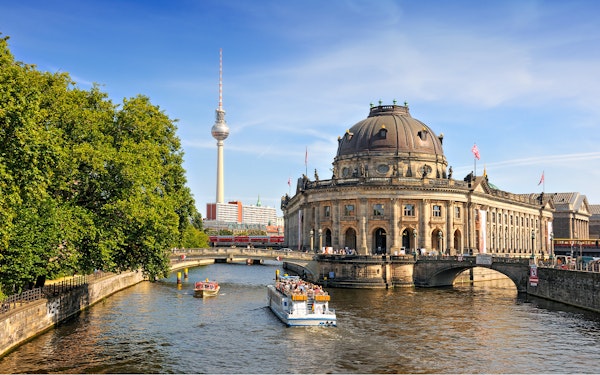
Berlin is much greener and much wetter than its reputation suggests. The Spree runs straight through the middle of it, joined by a web of canals, and a river cruise is both a genuinely good orientation and the easiest hour of any Berlin itinerary. Central loops pass the government quarter, the museum buildings and the modern glass architecture along the banks; evening sailings trade the commentary for lit bridges and a considerably more romantic city than you were expecting.
On land, the enormous park at the centre of the city gives you forest paths a few minutes from the Brandenburg Gate, and the decommissioned airport now open as a public field in the south is one of the strangest and best open spaces in Europe, with people cycling and flying kites down the old runways. Further out, the lakes and woodland on the western and southeastern edges are reachable on the ordinary suburban rail network, and Berliners treat them as an extension of the city rather than a day trip.
Top Berlin river cruises
Berlin Spree River West Harbour or East-Side Sightseeing Cruise
4.3(470)2 hr 30 minViewFrom$36
Berlin sightseeing boat tour on the Spree
4.1(138)1 hourViewFrom$25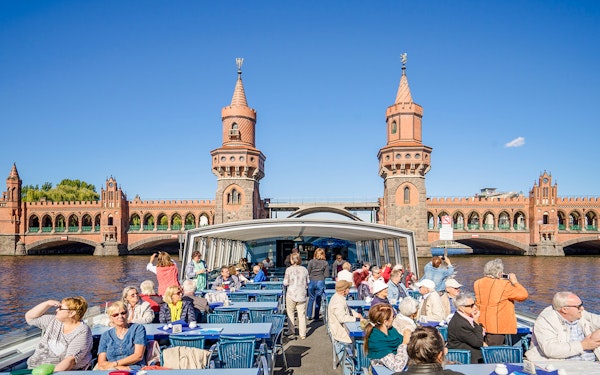
Berlin Spree River & Landwehrkanal Canal Sightseeing Cruise
4.8(99)3 hr 15 minViewFrom$41
Big Bus Berlin Hop-On Hop-Off Tour with optional River Cruise
4.1(973)40 minutes - 2 hoursViewFrom$33
Berlin Spree River City Highlights Sightseeing Cruise
4.4(1,206)1 hourViewFrom$24
Liverpool: 50-Minute Sightseeing River Cruise
4.2(1,392)50 minutesViewFrom$19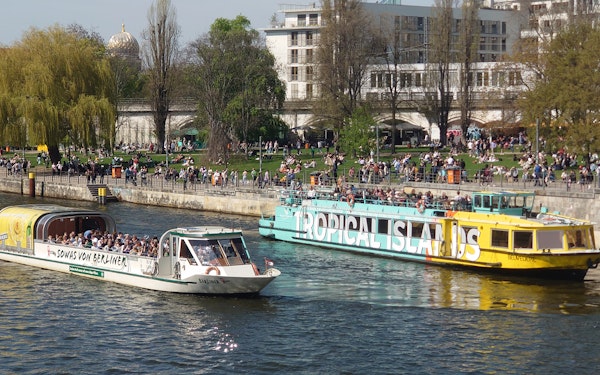
Berlin: 1 Hour Sightseeing Cruise on the River Spree
4.4(1,900)1 hourViewFrom$26
Berlin: Spree River Sightseeing Boat Tour with Audio Narration
3.3(18)1 hour - 1 hr 10 minViewFrom$33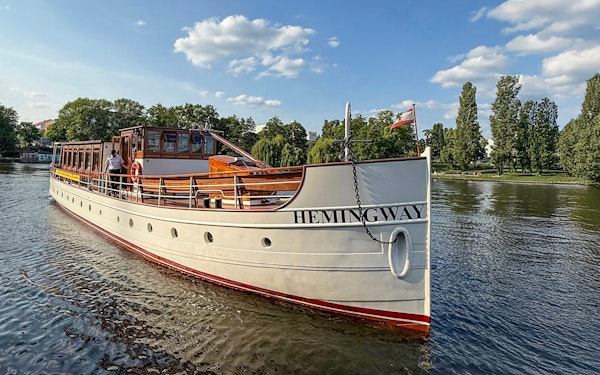
Berlin Spree River Sightseeing Cruise on a Luxury Yacht
4.8(21)1 hourViewFrom$29
London Eye River Cruise
4.8(2,016)40 minutesViewFrom$21
Day trips from Berlin
Two trips out are strong enough to displace a day in the city. Potsdam, just beyond the southwestern edge and reachable on the normal commuter network, is a compact town of palaces, terraced gardens and parkland with a handsome old centre, and it is the classic Berlin day out. The Sachsenhausen memorial site north of the city is the other, a difficult and essential guided visit to a former concentration camp that most visitors describe as the thing that stayed with them longest.
With a full free day and an early start, the network of small waterways in the Spreewald and the restored riverside centre of Dresden both come into range on organised trips. Both are long days and both are better suited to a longer stay than a first three-day visit.
Top day trips from Berlin

City Sightseeing Potsdam Hop-On Hop-Off Bus Tour
3.4(86)1 hr 45 minViewFrom$24
City and Palaces Tour Potsdam - Stadt- und Schloesserrundfahrt Potsdam
4.5(335)3 hoursViewFrom$32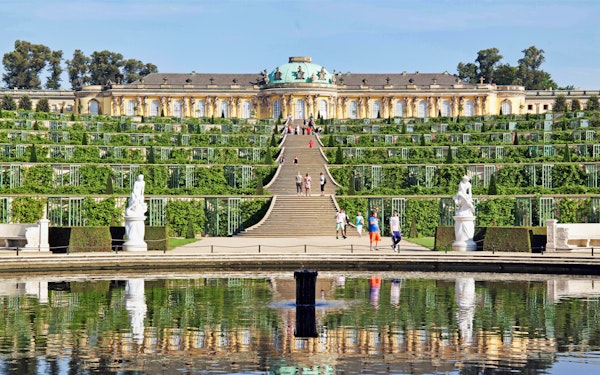
4-Hour Guided Walking Tour to Potsdam from Berlin
4.3(2,102)6 hoursViewFrom$26
Berlin: Sachsenhausen Concentration Camp and Potsdam day tour
4.6(439)9 hr 30 minViewFrom$32
Potsdam Walking Tour with Palace Entry
5.0(1)3 hoursViewFrom$219
Potsdam Half-Day Walking Tour from Berlin
4.6(411)4 hoursViewFrom$25
Private Walking Tour of Potsdam and Sanssouci
4.7(25)2 hoursViewFrom$48
From Berlin: Potsdam Highlights & Sanssouci half day Walking Tour
4.7(164)6 hoursViewFrom$56
Cycling tour 5 The charming neighbour Potsdam
5 hoursViewFrom$530
Potsdam Tour from Berlin With Guided Sanssouci Palace Visit
4.5(439)4 hoursViewFrom$73
Money, safety and etiquette
Berlin runs on the euro and remains one of the better-value western European capitals for eating, drinking and transport, though accommodation has climbed and peak-season rates can catch you out. Card acceptance has improved a great deal but is still not universal, and small bars, bakeries, market stalls and the occasional restaurant are cash-only or have a card minimum. Carry some notes. Tipping is modest and rounded rather than percentage-driven, and you tell the server the total when paying rather than leaving coins on the table.
On safety, Berlin is a comfortable city for visitors. Violent crime is low in the areas travellers use, and the realistic risks are pickpocketing on crowded transport and at the busiest sights, plus the ordinary late-night caution any large city calls for around major stations and party streets. Keep your bag closed and in front of you in a packed carriage, do not leave a phone on an outdoor bar table, and use licensed taxis or a ride app after dark.
A few points of etiquette make things smoother. Do not stand in the cycle lane, which is a distinct strip of pavement and is used at speed. Wait for the green figure at pedestrian crossings even on an empty street, because locals do and will let you know if you do not. Keep noise down in residential courtyards and on Sundays, when much of the city is deliberately quiet and almost all shops are closed. And at memorial sites, treat the ground as what it is: quiet, phone away, no posed photographs.
Sunday is genuinely closed
Shops and supermarkets shut on Sundays across Berlin, with only station kiosks, bakeries, restaurants and small corner shops open. It catches almost every first-time visitor. Buy what you need on Saturday, and treat Sunday as what Berliners do: markets, parks, long breakfasts and museums.
What first-time visitors most regret
A few patterns come up again and again:
- Underestimating the distances. Berlin is far bigger than it looks on a map, and a day that crosses the city three times burns hours on trains. Group your plans by district.
- Not booking the Reichstag dome. Entry is free but registered and timed, and slots go weeks ahead in season. It is the one thing to reserve the moment your dates are fixed.
- Buying single transport tickets. A day or multi-day pass pays for itself after about three journeys, and you will make more than three.
- Visiting Checkpoint Charlie alone. Without a guide it is a reconstructed hut surrounded by souvenir shops. With one, it is a proper stop on a Cold War walk.
- Skipping the guided history walks. Berlin's most important ground often looks like nothing at all. A guide is the difference between a car park and a story.
- Eating beside the landmarks. Walk one street back, or better, eat in Kreuzberg, Neukoelln or Prenzlauer Berg and treat lunch as part of the sightseeing.
- Assuming everything takes cards. Enough places are cash-only that a walletful of notes saves a lot of awkward moments.
Traveling with kids
Berlin is easier with children than its adult-nightlife reputation suggests. The city is flat, the pavements are wide, the public transport is stroller-friendly with lifts at most major stations, and there is green space everywhere. The old airport turned public field is a genuine highlight for kids, with kilometres of runway to cycle and no traffic anywhere. The zoo and aquarium, the big central park, the lakes on the edge of the city and the hands-on everyday-life museum near the cathedral all land well with younger visitors.
Sightseeing needs a bit of triage. The memorial sites and the heavier documentation centres are important but demanding, and the Sachsenhausen trip is not suitable for young children at all. The workable pattern is one substantial thing in the morning, food somewhere casual and lively, and an afternoon outdoors or on the water. A Spree cruise is an easy win with kids because it is scenic, seated, and finite. Prenzlauer Berg is the neighbourhood most families end up preferring as a base, for the playgrounds, the calm streets and the cafes that expect children.
A first-timer's rhythm for the day
The single habit that improves a Berlin trip most is planning by district rather than by sight. Pick a quarter of the city each day, walk it thoroughly, and use the U-Bahn only to get in and out of it. Start with a guided orientation walk on the first morning, because everything afterwards makes more sense once someone has drawn you the map. Put the heavier memorial sites in the morning when you have the energy for them, and follow them with something outdoors, on the water, or over a long lunch, rather than stacking two difficult places back to back.
Then leave room. Berlin's best hours tend to be unplanned ones: an afternoon that drifts into a beer garden, a flea market you walked past by accident, an evening on the river that you meant to spend in a museum. It is a big, loose, unhurried city, and it repays being treated the same way.
If you are choosing what to actually book, our things to do in Berlin list ranks 26 experiences by what they deliver. For nearby capitals with a similar rhythm, see the Amsterdam travel guide and the Prague things to do list.
Compare Berlin tours and tickets in one search →Common questions
What is the best neighbourhood to stay in Berlin for a first visit?
Mitte is the obvious first-visit base, because it puts the landmark spine, Museum Island and the main transport hubs within walking distance. Prenzlauer Berg is the calmer, leafier alternative one stop north and the pick for families. Kreuzberg and Friedrichshain are where the food and nightlife are, at the cost of noise and a longer ride to the sights. Charlottenburg in the west is quieter and more traditional, and often better value. All four inner districts are well connected, so choose by atmosphere rather than by distance.
How do you get around Berlin?
By U-Bahn, S-Bahn, tram and bus, all covered by one integrated ticket system. Most visitors stay inside the two inner fare zones, and a day or multi-day travel pass beats single tickets once you make three journeys. Buy and validate before boarding, since there are no barriers and inspectors do check. Berlin is very walkable within a neighbourhood and much less so between them, and cycling is easy on the flat terrain if you are comfortable in city traffic.
When is the best time to visit Berlin?
May to early July and all of September are the sweet spots - long daylight, warm but not oppressive, and the outdoor life of the city in full swing. High summer is busiest and hottest, and the city empties slightly in August. Winter is cold, dark early and much quieter, which suits a museum-heavy trip, and the Christmas market season from late November brings its own crowd. Spring and early autumn are the safest bets for weather and value together.
How many days do you need in Berlin?
Three full days is the realistic minimum for a first visit: one for the central landmark spine, one for museums and a wall or Cold War site, and one for neighbourhoods, food and the river. A fourth day adds a Potsdam or Sachsenhausen day trip. Berlin is large and spread out, so it absorbs a longer stay more comfortably than most European capitals, and very few people leave feeling they had too much time.
Do you need to book Berlin attractions in advance?
The Reichstag dome is the one non-negotiable advance booking - entry is free but registered and timed, and slots go early. The main Museum Island collections and the TV Tower reward a timed slot in summer and over holidays. Guided walks, food tours and day trips are best booked a few days out in season. The memorials, the East Side Gallery, the parks and Tempelhof Field need no booking at all.
Is Berlin expensive?
By western European capital standards it is one of the more affordable, particularly for eating out, drinking and public transport, though accommodation has climbed and peak-season rates can surprise you. The costs that catch people out are single transport tickets bought one at a time and restaurants directly beside the main landmarks. The fixes are simple: buy a travel pass, eat one street back from the sights, and use the covered market halls and neighbourhood bakeries for lunch.
How do you get from the airport into Berlin?
The main airport sits southeast of the city and connects to the centre by regional and suburban trains as well as express buses, with the journey taking roughly half an hour to the central stations. Airport transport is covered by a ticket that includes the outer fare zone, so buy the right zone combination rather than an inner-city ticket. Taxis and ride apps are straightforward but far more expensive, and the trains run frequently enough that most visitors never need one.
Is Berlin safe for tourists?
Berlin is a safe city for visitors, with low levels of violent crime in the areas travellers use. The realistic risks are pickpocketing on crowded transport and at the busiest tourist spots, and the ordinary caution any large city calls for late at night around major stations and party strips. Keep valuables secure in crowds, watch your bag in bars, and use licensed taxis or a ride app rather than unmarked cars after dark.
What should first-time visitors know about Berlin's layout?
That it is much bigger than it looks. Berlin has no single dense old centre; it is a collection of distinct districts strung along a long east-west axis, with substantial gaps between them and a great deal of green space in between. Plan by district rather than by sight, group your bookings so you are not crossing the city repeatedly, and expect to spend real time on the U-Bahn and S-Bahn. Getting that one thing right improves a Berlin trip more than any other decision.
More reads
More guides to help you plan your trip

Things to Do in Berlin: 26 Experiences Worth Booking in 2026
A 2026 Berlin shortlist - 26 landmarks, history walks, museums, river cruises, food tours, nightlife and day trips grouped by theme, with the ones actually worth booking ahead.

The Cost of a Guided Walking Tour: What 50 Cities Actually Charge in 2026
We measured the price of every guided walking tour in our cross-platform catalog across 50 cities. The median is $50. The more useful number is how far prices spread inside a single city.

1 Day in London: A Realistic Itinerary That Does Not Waste the Day
One day in London, planned around what actually fits - a walkable route through the centre, the two things worth booking, and the traps that eat an hour each.

1 Day in Paris: The Itinerary That Fits, and the One That Does Not
One day in Paris, planned around real distances - what to book, what to walk, what to skip, and why three museums in a day is the classic mistake.

2 Days in Lisbon: The Itinerary That Handles the Hills
Two days in Lisbon, planned around the terrain rather than the map - what to book, what to walk, and why the second day should leave the city.

2 Days in Tokyo: Two Districts, Done Properly
Two days in Tokyo is enough for two districts and nothing else - and that is the right plan. A day-by-day route, what to book, and what to deliberately skip.

5 Days in Rome: The Itinerary Where the City Finally Opens Up
Five days in Rome is where the checklist ends and the city begins. A day-by-day route with the two day trips worth taking and the mistakes that waste the extra time.

5 Days in Tokyo: How to Use a City With No Centre
Five days in Tokyo, organised by district rather than by sight - a day-by-day plan, the day trip worth taking, and why the fifth day should not be booked.