BudapestCity pillarPlanningFirst-timer
The Ultimate Budapest Travel Guide for First-Time Visitors (2026)
A field-tested 2026 Budapest travel guide - where to stay by district, how the metro and trams work, which thermal bath to pick, when to go and what first-timers regret.
By SimilarTours Editorial · Travel Research · · 20 min read

Budapest is two cities sharing a river, and once you understand that, everything about planning a trip here gets simpler. Buda is the hilly western bank: the castle, the terraces, the viewpoints, the quiet lanes. Pest is the flat eastern bank: the boulevards, the grand interiors, the markets, the bars, the vast majority of the places you will actually eat and sleep. The Danube runs between them and you will cross it several times a day, which is the point rather than the inconvenience.
It is also unusually forgiving for a first-time visitor. The sights are close together, the public transport is cheap and legible, and the prices leave room for mistakes. This guide covers the decisions that shape a Budapest trip most: which district to base yourself in, how the transport actually works, which thermal bath to pick, when to come, and the handful of things first-timers reliably get wrong.
If you have ten minutes, skip to the district section. Where you sleep decides how much of Budapest you see on foot.
Browse all Budapest experiences and tickets →Why visit Budapest
Budapest gives you three things at once that few cities manage together: a genuinely dramatic riverfront, a bathing culture that is a daily habit rather than a tourist novelty, and a nightlife district with a form you will not find anywhere else. The riverfront is the headline. The Parliament sprawls along the Pest bank, the castle hill rises opposite, and after dark the bridges and the facades are floodlit so completely that the river becomes the best-looking thing in the city.
Then there is the water underneath it. Budapest sits on hot springs, and the bath houses built over them run from vast outdoor pool complexes to ornate tiled halls, all of them used by locals on ordinary weekday afternoons. It changes the rhythm of a trip: you sightsee, then you get in hot water, then you eat.
And it is cheap in a way western Europe stopped being. A good dinner, an evening cruise, a bath entry, and a night in a ruin bar all cost less here than the equivalent in Paris, Vienna or Amsterdam, which means you can say yes to more of them.
When to go
Budapest has four distinct seasons and each gives you a different city.
- April to June - the consensus best window. Terraces open, outdoor pools at full use, long light on the river, and the crowds building but not yet heavy. The most comfortable time to walk both banks.
- July and August - hot, humid and busy, with the city emptying of locals and filling with visitors. Still fine if your dates cannot move, but plan the outdoors for morning and evening and the bath for the late afternoon.
- September and October - the other sweet spot. Warm days, cool evenings, softer light, wine season in the surrounding regions, and noticeably thinner crowds at the landmarks.
- November to March - cold and often grey, and better than that makes it sound. The outdoor thermal pools are at their absolute best with steam rising into freezing air, the Christmas markets take over the central squares from late November, and hotel prices drop hard.
Cold weather is a bath bonus, not a problem
The single best Budapest experience is sitting in a steaming outdoor thermal pool while it is close to freezing above the water. If your dates land in winter, do not treat it as second best - build the trip around the baths, the indoor landmarks and the markets, and you will get the city at its most atmospheric and its cheapest.
Getting there and getting around
The airport sits southeast of the city and connects in by a dedicated bus and metro combination, a direct airport shuttle bus, or a taxi from the official rank outside arrivals. Use the official rank or a licensed app rather than accepting an offer inside the terminal. The journey is around half an hour by road outside rush hour. Budapest is also a major rail hub, with fast, comfortable trains from the neighbouring capitals, and long-distance river boats in summer.
Once you are here, the network is one of the easiest in Europe to learn:
- On foot - the default for central Pest, where the main landmarks sit within a half-hour walk of each other on flat ground.
- Metro - four lines crossing the city, including a small, shallow historic line running under the grand boulevard that is worth riding once for its own sake. Fast, frequent, and the quickest way between the two halves of Pest.
- Trams - the more useful surface option, especially the riverside line along the Pest embankment, which doubles as a cheap sightseeing ride past the Parliament and the bridges.
- Buses and the funicular - the way up onto the Buda hills. Take the short funicular from the Chain Bridge for the experience, or a bus round the back of Castle Hill to save the fare.
- Taxis and ride apps - cheap by European standards, but only book through an app or by phone. Hailing an unmarked car on the street is the classic way to be overcharged here.
Everything on the public network runs on one ticketing system with singles, day passes and multi-day travel cards. Buy a pass if you plan more than a couple of rides a day, and always validate or activate before you board, because ticket inspectors work the metro entrances and issue fines on the spot.
Two things to be firm about
Decline street currency exchange with headline rates and hidden commissions, and never get into an unmarked taxi that approaches you outside a bar or a station. Both are the standard visitor traps here, both are avoidable in a sentence, and neither has anything to do with the city being unsafe.
Where to stay - district guide
Budapest labels its neighbourhoods by district number, and locals use those numbers constantly. These are the five that matter for a first visit.
District V (Belvaros and Lipotvaros) - the central Pest quarter running along the river from the Chain Bridge up past the Parliament. This is the safest first-visit choice: you are walking distance from the Basilica, the market hall, the embankment and the bridges, it is well served by metro, and it is quiet at night. It is the priciest of the Pest districts and the least characterful after dark, which is the trade-off.
District VII (the old Jewish quarter) - the dense grid of courtyards, small kitchens and ruin bars immediately behind the main shopping streets. Pick it for the food and the nightlife on your doorstep and for the best-value central rooms. The catch is obvious and real: the streets around the big bars are loud until very late on weekends, so ask for a courtyard-facing room.
District VI (Terezvaros) - the strip either side of the grand boulevard running out to the city park, with the opera house, good mid-range restaurants and easy metro access along its length. It is the sensible middle ground between the calm of District V and the noise of District VII, and it puts you close to both.
District I (the Castle district) - up on the hill on the Buda side, inside the old walls. It is the prettiest and quietest place to sleep in Budapest, with the terraces and the views on your doorstep once the day visitors leave. The cost is convenience: everything else involves getting down the hill and across a bridge, so it suits second visits and slower trips more than first ones.
District XI and the Gellert side - the Buda bank downstream around the foot of Gellert Hill, near the ornate bath house and the green bridge across to the market hall. Calmer, greener, cheaper than central Pest, and still a short tram ride from everything. A good choice if you want the baths and the hill more than the bars.
Buda or Pest
Almost everything on a first-time itinerary except Castle Hill and the Gellert Hill viewpoint is on the Pest side. Sleep in Pest for a two or three-night trip, cross to Buda for the days you want height and quiet, and you will spend far less of the trip on bridges than the postcard suggests.
Top experiences to book
Two bookings genuinely need to be made ahead in Budapest. The first is the guided tour inside the Parliament building, which runs on timed slots in set languages and sells out days in advance in season. The second is anything at a thermal bath on a weekend, where fast-track entry and private cabins go first. Evening Danube cruises are the third tier: not usually sold out, but the sunset departures fill in summer.
Everything else is bookable close to the day or free entirely. Castle Hill, the Fisherman's Bastion terraces, Heroes' Square, the embankments and the market hall all cost nothing to walk through. Our things to do in Budapest guide ranks 26 experiences in full, and the Szechenyi Baths tickets guide breaks down the entry types at the city's most-booked bath complex.
Top experiences in Budapest

Walking Tour Budapest incl. the Shoes on the Danube Bank
4.9(394)2 hoursViewFrom$4
Budapest free walking tour: Parliament and Shoes Memorial
5.0(544)2 hoursViewFrom$4
River Cruise ticket and Walking Tour in Budapest
5.0(66)2 hr 30 minViewFrom$70
Budapest Private Walking Tour
5.0(65)4 hoursViewFrom$204
Budapest City Landmarks Walking Tour in 2 Hours
4.9(2,375)2 hoursViewFrom$3
Budapest Walking Tour: Parliament, Basilica & Danube River Cruise
5.0(2)2 hr 30 minViewFrom$82
Budapest Castle District Walking Tour
4.9(677)2 hoursViewFrom$3
Budapest Orientation Walking Tour
4.8(26)3 hoursViewFrom$41
Big Bus Budapest Hop-On Hop-Off Bus and Walking Tour
3.6(2,311)1 hr 50 minViewFrom$44
2 sides of Budapest: 2,5 Hrs Walking Tour (4 h with Heroes' sq.)
5.0(1)2 hr 30 minViewFrom$30
Top Budapest Parliament tours and tickets

Budapest Guided Half-Day Grand City Tour with Parliament Visit
4.1(256)4 hoursViewFrom$77
Budapest Parliament Audio Guide Tour with Danube Cruise
4.3(20)2 hr 20 minViewFrom$112
Budapest Private Historical walking tour with Parliament Option
4.2(5)4 hoursViewFrom$189
Hungarian Parliament Audio Guided Tour
4.0(173)45 minutesViewFrom$47
Budapest Parliament and Saint Stephen Basilica Combo Ticket
4.4(20)2 hoursViewFrom$105
5 Hours Private Budapest First Class Tour with Parliament option
4.5(20)5 hoursViewFrom$254Budapest free walking tour: Parliament and Shoes Memorial
5.0(544)2 hoursViewFrom$4Budapest Walking Tour: Parliament, Basilica & Danube River Cruise
5.0(2)2 hr 30 minViewFrom$82
1 Hour Budapest Segway Tour - Parliament Hightails
5.0(210)1 hr 20 minViewFrom$46Walking Tour Budapest incl. the Shoes on the Danube Bank
4.9(394)2 hoursViewFrom$4
The thermal baths, explained
This is the part of Budapest people most often get wrong, usually by picking the wrong complex or turning up unprepared. Three matter for most visitors.
Szechenyi, in the city park, is the large yellow complex with a set of big outdoor pools at different temperatures and a warren of indoor thermal rooms and steam cabins around them. It is sociable, busy and mostly open-air, and it is the one to choose if you want the classic image of steam rising off a pool with people playing chess in the water. It is also the one that fills hardest in the middle of the day.
Gellert, at the foot of the hill on the Buda bank, is the ornate indoor alternative: tiled halls, a glass-roofed main pool, smaller thermal pools at the sides and a terrace outside. Calmer, prettier and more contained. Pick it if you want the architecture as much as the water.
Rudas, on the Buda embankment, is the moodiest of the three, with a domed older bathing hall and a circular rooftop pool looking up the river. Check the schedule before you commit, because parts of the complex run single-sex and mixed sessions on different days.
Practically: bring your own towel and flip-flops unless you want to rent both at the door, pack a swimming cap if you intend to use a lap pool, and choose a private cabin over a locker if you are a couple or dislike shared changing rooms. Go late afternoon rather than late morning, and treat it as the reset between sightseeing and dinner.
Top Budapest thermal bath experiences

Full-Day Admission to Budapest Lukacs Thermal Bath
3.6(37)1 hour - 8 hoursViewFrom$39
Budapest Széchenyi Thermal Spa Ticket
3.8(2,330)4 hoursViewFrom$65
Budapest Széchenyi Spa with Danube Cruise and Optional Dinner
4.1(126)2 hoursViewFrom$160
Paskál Thermal Bath and Wellness Spa Entrance Ticket
1 hour - 6 hoursViewFrom$30
Széchenyi Spa: Fast Track Entry Tickets with Premium Day Spa Access and Private Cabin
4.3(141)ViewFrom$104
Budapest: Csillaghegyi Spring Bath and Water Park Ticket
1 hour - 6 hoursViewFrom$30
Budapest: Pesterzsébet Salt-Iodine Spa & Sauna World Ticket
1 hour - 6 hoursViewFrom$30
Budapest Palatinus Bath Full-Day Admission
3.7(23)1 hour - 7 hoursViewFrom$32
Budapest: Beer Spa with Unlimited Beer + Széchenyi Add-on
4.5(483)1 hour - 4 hoursViewFrom$82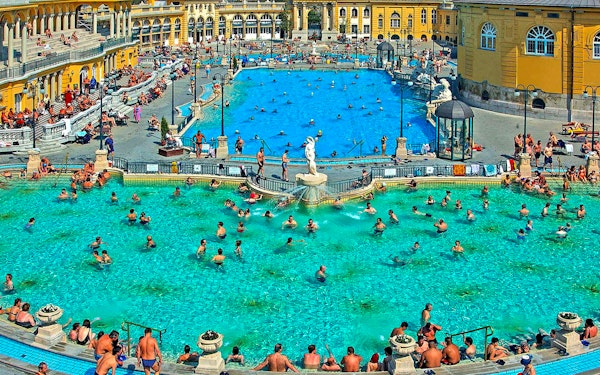
Széchenyi Spa Entry Tickets
4.3(9,851)ViewFrom$39
The river and the bridges
You have not seen Budapest until you have seen it from mid-river. Both banks were built to be looked at from the water, and the bridges tie the whole thing together. A short daytime cruise works as orientation on a first afternoon; an evening sailing with everything floodlit is the one to book if you only do one. Dinner cruises with live music are the fuller version, and the plain sightseeing sailing with a drink in hand is the efficient one.
Free alternatives are almost as good. Cross the Chain Bridge on foot after dark with the castle rising ahead, walk the Pest embankment past the iron-shoes memorial on the stone bank, and ride the riverside tram for a seated version of the same view.
Top Budapest Danube cruises

Budapest Danube River Cruise with Goulash and Lángos
4.8(4)1 hr 30 minViewFrom$58
Budapest Danube Cruise and Dinner Options, Live Music and Dance
4.7(7,559)1 hr 30 minViewFrom$58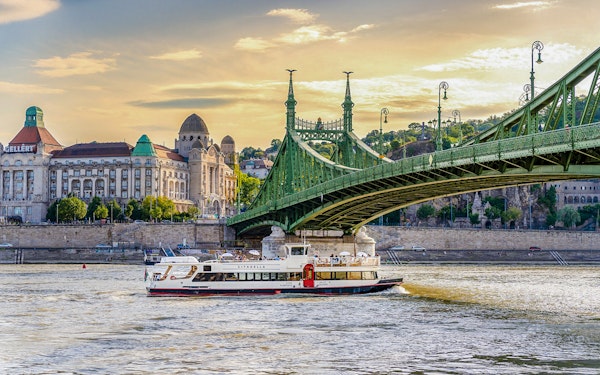
Budapest Premium Sightseeing Cruise with Tokaj Frizzante
4.6(10)1 hourViewFrom$52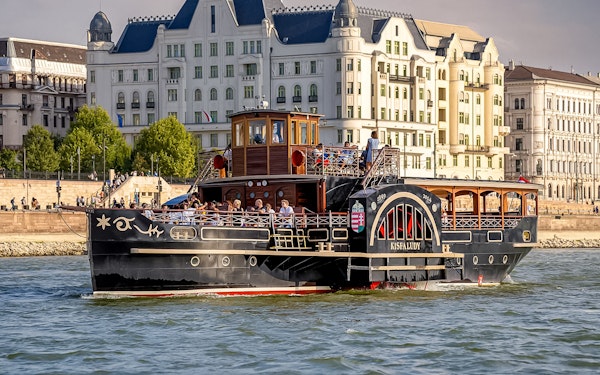
Budapest Danube River Cruise in a Historic Paddle Steamer
4.8(121)1 hourViewFrom$26
Budapest Danube Cruise with Audioguide and Panorama Terrace
3.7(11)1 hourViewFrom$8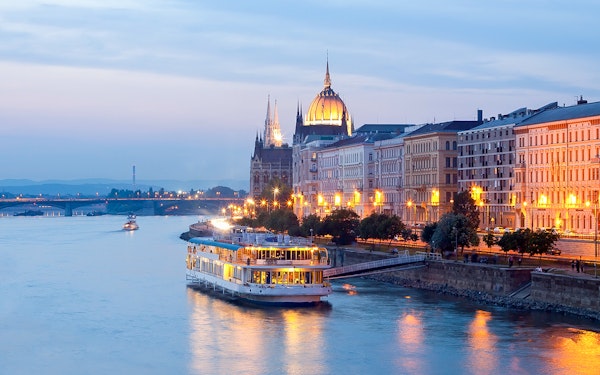
Budapest Danube River Sightseeing Cruise with Drinks
4.6(810)1 hourViewFrom$13
Sightseeing Cruise on the Danube with Audio Guide in Budapest
3.8(385)1 hourViewFrom$14
Budapest Audio Guide Cruise with Day, Sunset and Night Options
3.6(319)1 hourViewFrom$14
Budapest Danube Cruise with DJ, Drinks and After Party
4.9(747)3 hoursViewFrom$23
Booze Cruise Budapest Sightseeing Danube Cruise
5.0(6)1 hourViewFrom$20
Food, wine and going out
Hungarian food is heavier and more paprika-driven than its neighbours: stews and goulash, stuffed cabbage, sausages, fried flatbread topped with sour cream and cheese, and chimney cake sold hot from street stalls. It is cold-weather food, and it is best in the small unglamorous places one street back from the pedestrian drags rather than in the terraces with photo menus.
Wine is the pleasant surprise. Hungary makes far more interesting bottles than its export shelf suggests, across several regions and both dry and sweet styles, and cellar wine bars pour them by the glass with someone happy to explain the map. Palinka, the local fruit spirit, is the other thing to try, usually as a small flight of different fruits.
Going out means District VII. The ruin bars are built into the courtyards and stripped rooms of old inner-city buildings, furnished from junk shops and open to the sky in the middle. The famous one is genuinely worth seeing and completely overrun after about nine, so go early for the setting or head for the smaller unmarked places on the surrounding streets. A guided crawl is the practical way to find those, because they look like residential doorways from the pavement.
Top Budapest food tours and tastings

Taste Budapest - Fat Boy Foodies Walk
4.5(11)4 hoursViewFrom$150
Central Budapest: Guided Walking Food Tour with Drinks
4.9(168)2 hr 30 minViewFrom$82
Flavors of Budapest: Guided Food Tour with Drinks
4.9(90)2 hr 30 minViewFrom$73
Budapest Food Tour: Local Tastings & Drinks
5.0(105)3 hoursViewFrom$63
The Award-Winning Private Food Tour of Budapest: 6 or 10 Tastings
4.5(189)3 hoursViewFrom$157
Food Tour in Budapest 5 to 10 Tastings
5.0(6)3 hoursViewFrom$153
Budapest Food Tour: Market to Tavern with 12+ Tasters & Wines
4.9(715)3 hoursViewFrom$99
Budapest Food Tour: Market Walk, Local Drinks & 20+ Tastings
5.0(214)2 hr 30 minViewFrom$91
Budapest Bites: A Street Food Adventure (5 dishes included)
4.2(5)4 hoursViewFrom$64
Budapest Tipsy Food Tour with Wines, Small Group & Local Guide
4.9(346)3 hoursViewFrom$84
Top Budapest ruin bar and nightlife tours

Budapest Ruin Bars Evening Walking Tour with Drinks & Street Food
4.9(135)3 hoursViewFrom$124
Budapest Ruin Bars: Evening Walking Tour with Drinks & Snacks
4.8(66)3 hoursViewFrom$159
Budapest Pub Crawl & Ruin Bar Tour – Free Shots & VIP Entry
4.9(31)5 hours - 6 hoursViewFrom$14
Budapest Ruin Bars Evening Walking Tour with Drinks & Snacks
5.0(25)3 hoursViewFrom$124
Budapest Pub Crawl & Ruin Bar Tour – Free Shots & VIP Entry
5.0(4)4 hours - 5 hoursViewFrom$26
Budapest Vibe: Ruin Bars, Street Art and Culture Tour
5.0(27)3 hr 30 minViewFrom$59
Budapest Original Ruin Pub Crawl Including 5 Shots
4.8(540)5 hoursViewFrom$22
Budapest Ruin Pub Crawl +6 Shots +VIP Entries +Drinking Games
5.0(1,036)6 hoursViewFrom$17
Budapest Ruin Bars Pub Crawl with Free Shots and VIP Entry
4.9(15)5 hoursViewFrom$20
Lively Small-group Tour of Budapest's Ruin Bars
2 hr 30 minViewFrom$265
Day trips from Budapest
The obvious one is the Danube Bend, north of the city, where the river turns sharply between hills. A full-day loop takes in a small riverside town of galleries and cobbled lanes, a hilltop fortress with a long view over the water, and a domed basilica further upstream, often with a stretch by boat. It is the day trip we would book first.
In warm months, Lake Balaton southwest of the city turns into the country's swimming and wine belt, with shallow warm water on the southern shore and hills and a peninsula on the northern one. And because Budapest sits on a major river with capitals in both directions, a boat or a short train across the border makes an easy second-city day out for anyone on a longer stay.
Top Danube Bend day trips from Budapest

Danube Bend: Day trip from Budapest
4.0(152)8 hoursViewFrom$101
Budapest Danube Bend Full Day Tour with Lunch
4.1(234)9 hr 30 minViewFrom$129
Budapest Danube Bend Private Tour Lunch and Cruise
4.6(43)8 hoursViewFrom$314
Szentendre the Artists Village Half-Day Tour from Budapest
4.1(85)4 hoursViewFrom$83
Szentendre Daytrip (Artists' Village) small group
4.7(195)5 hoursViewFrom$93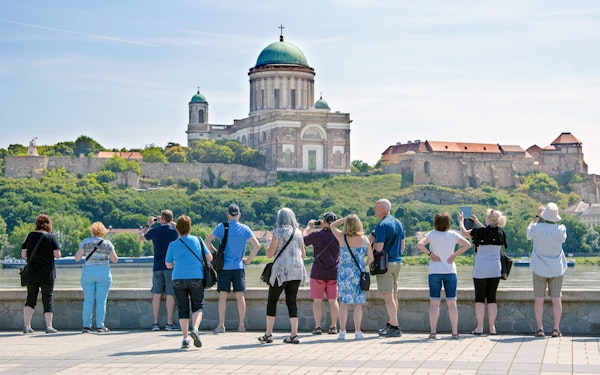
From Budapest: Danube Bend Day Trip
4.2(5)9 hoursViewFrom$99
Private Danube Bend Tour, Szentendre and Vac stops from Budapest
8 hoursViewFrom$626
Budapest Danube River Sightseeing Night Cruise with Drink
4.3(4,193)1 hourViewFrom$28
Danube Bend Day Trip Nature Escape to Zebegeny
5.0(2)6 hoursViewFrom$177Budapest Danube Cruise and Dinner Options, Live Music and Dance
4.7(7,589)1 hr 30 minViewFrom$56
Money, safety and etiquette
Hungary uses the forint, not the euro, and this trips people up constantly. Cards are accepted almost everywhere including transport machines, but carry some cash for market stalls, bakeries and tips. Two rules save real money: refuse the street exchange booths advertising unbeatable rates, and always choose to be charged in forint rather than your home currency when a card terminal offers you the choice.
Tipping is normal and modest, generally rounding up or adding around ten percent in restaurants and bars. Check the bill for a service charge before adding more, since some central places include one.
On safety, Budapest is comfortable. Violent crime against visitors is rare and the central districts are fine to walk at night. The realistic risks are pickpockets on busy metro lines and in crowded squares, unlicensed taxis, and a small number of bars in the nightlife district that add unexplained charges to a tab. Agree the price before you order anything you have not seen listed, use a taxi app, and keep bags closed in crowds.
A few points of etiquette smooth things: greet staff when you enter a small shop or bar, keep noise down in residential courtyards late at night, shower before entering any thermal pool, and do not clink beer glasses if you want to avoid a mildly disapproving look from older locals.
Eat one block back
The reliable rule here is the same as everywhere: the restaurants on the main pedestrian streets with photo menus and someone outside inviting you in are the ones to walk past. Turn one corner into a side street and the same meal costs noticeably less and is usually better.
What first-time visitors most regret
A few patterns come up over and over:
- Not booking the Parliament tour before arriving. It runs on timed, language-specific slots and sells out days ahead in season. It is the one booking you should make from home.
- Doing the thermal bath first thing in the morning. It is a reward, not a warm-up. Go in the late afternoon when the crowds thin and your legs need it.
- Sleeping on Castle Hill on a short trip. It is beautiful and it means crossing a bridge and climbing a hill every time you want dinner.
- Booking a room on a ruin-bar street. District VII is the right choice for the scene and the wrong one for sleep unless the room faces a courtyard.
- Changing money at street booths. The advertised rate is not the rate you get. Use a card or a bank machine.
- Trying to see both banks in a single day. Buda and Pest each want a day. Splitting one day between them means rushing both.
- Skipping winter. The city is cheapest, emptiest and arguably at its best when it is cold, because that is when the outdoor pools come into their own.
Traveling with kids
Budapest works well with children, mostly because so much of it is outdoors and involves getting into water. The bath complexes have shallower warm pools and, at the big park complex, whirlpools that kids treat as a fairground ride. The city park itself holds a zoo, a boating lake that becomes a skating rink in winter, and plenty of open ground. Boats, trams, the funicular and the small historic metro line all count as entertainment in their own right for younger children, and the cave walks under Buda land well with older ones.
Plan around the hills and the cobbles rather than the crowds. Castle Hill is hard going with a stroller, so use the funicular or a bus to gain the height, and keep landmark interiors short. Restaurants are generally relaxed about children, portions are large, and the food is the kind most kids eat without argument.
A first-timer's rhythm for the day
The habit that improves a Budapest trip most is putting the water in the middle of the evening rather than the start of the day. Walk the landmarks while it is cool and the light is good, eat lunch somewhere unglamorous a street back from the crowds, get into a thermal pool in the late afternoon when the day crowd is leaving, then eat late and go out afterwards. Cross the river at night at least twice, once on foot over the Chain Bridge and once on a boat, and leave one evening with nothing booked so you can follow whatever District VII is doing.
Compare Budapest tours and tickets in one search →Common questions
What is the best area to stay in Budapest for a first visit?
District V, the central Pest quarter along the river, is the safest first choice - walkable to almost every landmark, well served by transport and quiet at night. District VII, the old Jewish quarter, is the pick if you want the ruin bars and the food scene on your doorstep, though it is noisy on weekends. District VI along the grand boulevard splits the difference. Staying on the Buda side is prettier and calmer but adds a bridge crossing to almost everything.
How do you get around Budapest?
On foot in central Pest, and by metro, tram and bus for everything else. Four metro lines cross the city, the riverside tram along the Pest embankment doubles as a sightseeing ride, and the network runs on a single ticketing system with day and multi-day passes. Validate or activate every ticket before you travel, because inspectors work the metro entrances and fines are issued on the spot.
When is the best time to visit Budapest?
Late April to June and September to October are the sweet spots - warm days, long light, and terraces and outdoor pools open without the summer crush. July and August are hot and busy. Winter is cold but genuinely good here, because the outdoor thermal pools are at their best when the air is freezing and the Christmas markets take over the central squares.
How many days do you need in Budapest?
Three days is the comfortable number: one for Castle Hill and the Buda viewpoints, one for the Pest landmarks with a bath and a cruise, and one for food, the Jewish quarter and a slower pace. Two days covers the headline sights at speed. A fourth day buys you the Danube Bend or Lake Balaton without cutting anything.
Which thermal bath should I choose in Budapest?
Szechenyi in the City Park is the big, sociable, mostly outdoor complex and the easiest first choice. Gellert is the ornate indoor one, calmer and prettier. Rudas is the moodiest, with a domed older bathing hall and a rooftop pool over the river, though parts of it run single-sex sessions on set days. Bring your own towel and flip-flops, and a swimming cap if you want the lap pool.
Is Budapest expensive?
It is one of the better-value capitals in Europe, noticeably cheaper than western European cities for eating out, drinks, transport and thermal baths. The costs that catch people are the tourist-facing restaurants on the main pedestrian streets and the fake-taxi and street-scam risk around nightlife areas. Eat one block off the main drag, book taxis through an app or by phone, and the trip stays cheap.
Do I need cash in Budapest?
Cards work almost everywhere, including on transport ticket machines and in most bars and restaurants, but Hungary uses the forint rather than the euro and a little cash is useful for market stalls, small bakeries and tips. Avoid the street currency-exchange booths with headline rates and hidden commissions, and decline the offer to be charged in your home currency at card terminals.
Is Budapest safe for tourists?
Yes, broadly. Violent crime against visitors is rare and the central districts are comfortable to walk at night. The realistic risks are pickpockets on busy metro lines and in crowded squares, overpriced bars that add unexplained charges to a tab in the nightlife district, and unlicensed taxis. Agree what you are paying before you order, use a licensed taxi app, and keep bags closed in the crush.
Is Budapest a good city for a first trip to central Europe?
It is one of the best. The landmarks are compact and photogenic, the transport is cheap and easy to learn, English is widely spoken in hospitality, and prices are forgiving while you are still getting the hang of the region. It also connects easily by train and river to the neighbouring capitals, so it works as a first stop or a base.
More reads
More guides to help you plan your trip

Szechenyi Baths Tickets in 2026: Every Entry Type Compared
A 2026 guide to Szechenyi Baths tickets - full-day entry, fast-track, cabin versus locker, massage and tasting packages, and the night bath party compared.

Things to Do in Budapest: 26 Experiences Worth Booking in 2026
A 2026 Budapest shortlist - 26 castle-hill landmarks, thermal baths, Danube cruises, ruin bars, food walks and day trips grouped by theme, with what to book ahead.

The Cost of a Guided Walking Tour: What 50 Cities Actually Charge in 2026
We measured the price of every guided walking tour in our cross-platform catalog across 50 cities. The median is $50. The more useful number is how far prices spread inside a single city.

1 Day in London: A Realistic Itinerary That Does Not Waste the Day
One day in London, planned around what actually fits - a walkable route through the centre, the two things worth booking, and the traps that eat an hour each.

1 Day in Paris: The Itinerary That Fits, and the One That Does Not
One day in Paris, planned around real distances - what to book, what to walk, what to skip, and why three museums in a day is the classic mistake.

2 Days in Lisbon: The Itinerary That Handles the Hills
Two days in Lisbon, planned around the terrain rather than the map - what to book, what to walk, and why the second day should leave the city.

2 Days in Tokyo: Two Districts, Done Properly
Two days in Tokyo is enough for two districts and nothing else - and that is the right plan. A day-by-day route, what to book, and what to deliberately skip.

5 Days in Rome: The Itinerary Where the City Finally Opens Up
Five days in Rome is where the checklist ends and the city begins. A day-by-day route with the two day trips worth taking and the mistakes that waste the extra time.