RomeDay tripsPompeiiTuscanyAmalfi Coast
The Best Day Trips from Rome: Pompeii, Tuscany, Amalfi and More
The best day trips from Rome ranked by what is worth a full day: Pompeii, the Amalfi Coast, Tuscany and Orvieto, Florence, and Tivoli, with the top-rated tours.
Av SimilarTours Editorial · Travel Research · · 19 min lesing

A day trip from Rome is a study in what to leave out. Within a few hours of the capital sit a Roman city buried by a volcano, one of the most photographed coastlines in the world, wine country, a Renaissance capital, and a pair of gardens that inspired half of Europe. The temptation is to chain the farthest and most famous into one exhausting sprint. The better instinct is to pick the trip that matches the day you actually want and give it a real go.
This guide ranks the best day trips from Rome by what survives that test: the destinations worth the early alarm, sorted by what kind of day you are after. It covers the trains-versus-guided-coach question that decides most of these trips, and points to the top-rated tour for each place. Every tour referenced is currently bookable through our partner OTAs and ranked on real ratings and review counts, verified July 2026.
Browse all Rome tours and day trips →How to choose: breadth or depth, train or coach
Before the destinations, the two questions that sort them. First, breadth or depth? Breadth means two big-name places in one long loop, a lot of transit, and a highlights-reel day; the Pompeii-and-Amalfi combos are the classic breadth play. Depth means one place walked slowly, which is what Tivoli or a single Tuscan wine day gives you. Neither is better, but most regret comes from booking one while wanting the other.
Second, train or guided coach? Rome sits on Italy's high-speed rail spine, so Florence and Naples are genuinely easy by train, and there are Pompeii and Amalfi trips built around the fast line. But the Amalfi villages, the Tuscan hills, and Tivoli's gardens sit away from stations, where a guided coach that handles the last-mile driving earns its keep.
| Destination | Best for | Typical length | Getting there |
|---|---|---|---|
| Pompeii | The buried Roman city | 12-13 hours | Coach or high-speed train south |
| Amalfi Coast | Scenery, the coast road | 12-15 hours | Coach south, or train plus transfer |
| Tuscany / Orvieto | Wine country, hill towns | 11-12 hours | Coach north |
| Florence | Renaissance city, art | 13-14 hours | High-speed train, ~1.5 hours |
| Tivoli | Gardens and Roman villas | 5-6 hours | Coach, ~1 hour |
Pompeii
The single most-booked direction out of Rome, and the reason is elemental: a whole Roman city stopped mid-life by the eruption of Vesuvius, its streets, houses, and frescoes preserved under the ash. Nothing else within reach of Rome delivers that shock of the ancient world made suddenly ordinary. Most trips run south by coach, though there are now high-speed-train versions that trade a long bus day for a faster, more expensive one. The catch is that Pompeii is a big, exposed site with almost no shade, which is exactly why a guide who routes you to the highlights, the forum, the baths, the plaster casts, beats wandering it cold. Many tours pair it with the Amalfi Coast or Sorrento on the same southbound run, turning it into a breadth day rather than a Pompeii-only visit.
Top Pompeii day trips from Rome

Pompeii, Amalfi Coast and Positano Day Trip from Rome
The category leader by review volume - Pompeii in the morning and the coast in the afternoon, the standard first-timer's breadth day south of Rome.
4.5(6,842)13 hoursViewFrom$127
Pompeii, Sorrento & Amalfi Coast Day Trip from Rome
A high-rated three-in-one that swaps Positano for Sorrento, often the best value on this route for the ground it covers.
4.7(1,719)12 hoursViewFrom$80
Pompeii Tour & Amalfi Coast Day Trip from Rome
A more premium version of the Pompeii-and-coast pairing, with strong ratings for travelers who want a smaller, smoother day.
4.6(1,998)13 hoursViewFrom$232
Unveiling Pompeii: Guided Day Trip from Rome
A Pompeii-focused guided day for travelers who want the ruins done properly rather than a two-stop dash.
4.4(730)13 hoursViewFrom$121
Pompeii Express Day Trip: High-Speed Train from Rome
The fast-train alternative to the long coach day - a shorter door-to-door trip for travelers who would rather ride the rails south.
4.7(85)9.5 hoursViewFrom$149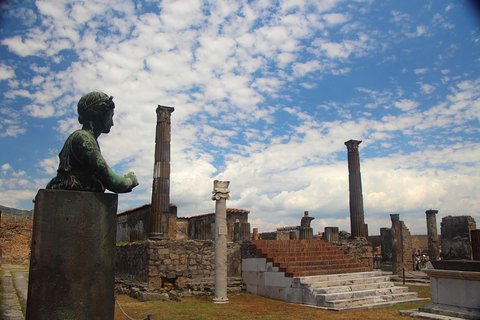
Day Trip to Pompeii Ruins from Rome
4.9(14)8 hoursViewFrom$692
From Rome: AC Coach Transfers to Pompeii with Pompeii Guided Tour
0.0(0)12 hoursViewFrom$194
Private Transfer from Amalfi Coast to Rome or vice versa
5.0(10)5 hours - 7 hoursViewFrom$402
Transfer From Naples area to Sorrento with 2hr stop in Pompeii
5.0(9)3 hoursViewFrom$182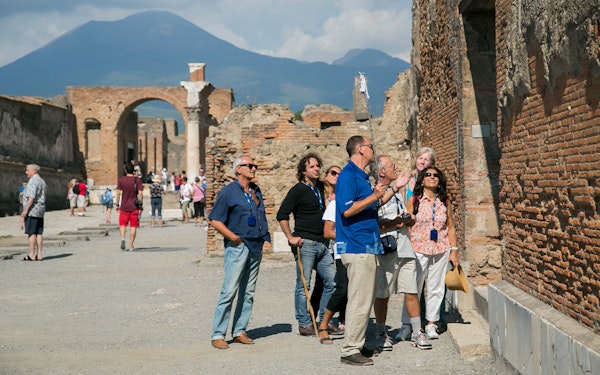
From Rome: Pompeii Guided Tour and Amalfi Coast Day Trip
4.7(313)13 hoursViewFrom$103
Insider tip
Pompeii heat tip. The ruins are almost entirely unshaded, and in high summer the site bakes by early afternoon. Whichever tour you pick, start early, carry more water than feels necessary, and wear a hat and proper shoes for the uneven ancient paving. The morning slot is both cooler and less crowded, which is why most rated tours reach the site before midday.
The Amalfi Coast and Sorrento
The postcard day. A cliff-hugging coast road strung between pastel towns above a blue sea, with Positano tumbling down its hillside and Sorrento perched above the bay. It is scenery over sightseeing: the appeal is the drive, the viewpoints, and an hour of free time in one of the towns rather than a checklist of monuments. Because the coast sits far south of Rome and the road is famously slow and serpentine, this is a place where the guided coach genuinely earns its price; driving it yourself from Rome would eat the day. Most tours reach the coast by pairing it with Pompeii, though there are cruise-focused and high-speed-train versions for travelers who want the water or a faster run. Expect a long day, often 12 to 15 hours, and pick your town, Positano for the drama, Sorrento for the easier pace.
Top Amalfi Coast day trips from Rome
Pompeii, Amalfi Coast and Positano Day Trip from Rome
The most-reviewed way to reach the coast from Rome - Pompeii plus Positano in one loop, the standard breadth day.
4.5(6,842)13 hoursViewFrom$127Pompeii, Sorrento & Amalfi Coast Day Trip from Rome
The Sorrento-based version of the coast day, well rated and often the best value for the mileage covered.
4.7(1,719)12 hoursViewFrom$80
Amalfi & Positano Day Trip from Rome with Coastal Cruise
Trades Pompeii for time on the water - a coastal cruise past the cliffs for travelers who want the coast seen from the sea.
4.4(943)15 hoursViewFrom$80
Amalfi Coast and Scenic Day Trip from Rome by High-Speed Train
The fast-train route to the coast - a smoother, quicker way south than the all-coach day for travelers who want to skip the long bus.
4.6(185)11 hoursViewFrom$279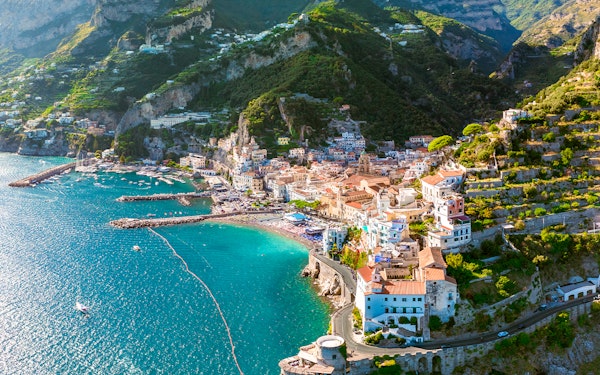
From Rome: Amalfi and Positano Day Trip with Cruise
4.5(28)15 hoursViewFrom$150From Rome: Pompeii Guided Tour and Amalfi Coast Day Trip
4.7(313)13 hoursViewFrom$103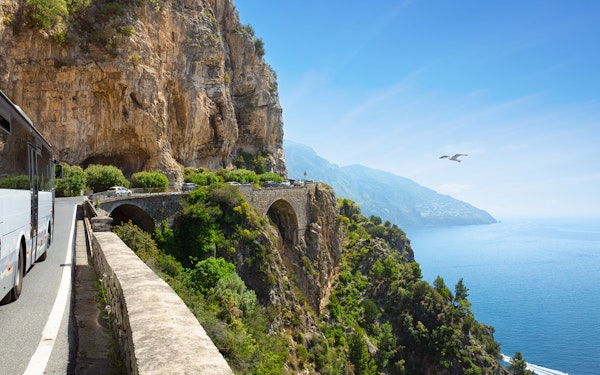
From Naples: Amalfi Coast & Ravello Guided Day Trip
0.0(0)8 hoursViewFrom$93
Amalfi Coast Day Tour: Positano, Amalfi & Ravello from Sorrento
5.0(47)8 hoursViewFrom$141
Daytrip from Naples to Amalfi Coast, Positano, Amalfi & Ravello
5.0(23)9 hoursViewFrom$504
Amalfi Coast Tour
4.9(149)8 hoursViewFrom$461
Tuscany and Orvieto
North of Rome instead of south, and a complete change of register: rolling vineyards, hilltop towns of golden stone, and long lunches with wine tasting instead of ruins and coast roads. The Tuscany days from Rome tend to center on the wine country around Montepulciano and the Val d'Orcia, pairing a cellar visit with a hill-town stop and a traditional meal. Closer to Rome, the Umbrian-edge trips take in Orvieto, dramatic on its tufa plateau, often alongside the crumbling perched village of Bagnoregio. This is a depth day, slower and more sensory than the landmark loops, and it suits travelers who would rather taste and stroll than tick off sights. Because the vineyards sit well off the rail lines, the guided coach does the heavy lifting here.
Top Tuscany and Orvieto day trips from Rome

Rome: Tuscany & Montepulciano Day Trip with Lunch & Wine Tasting
The most-reviewed Tuscany day out of Rome - the wine country around Montepulciano with a cellar visit and a long regional lunch.
4.7(5,480)12 hoursViewFrom$99
Bagnoregio & Orvieto Day Trip from Rome with Wine Tasting & Lunch
The closer, Umbrian-edge alternative - Orvieto on its plateau and the perched village of Bagnoregio, with a tasting and lunch.
4.6(184)12 hoursViewFrom$109
Rome: Tuscany Day Trip with Vineyard Lunch and Wine Tasting
A highly rated small-scale wine day for travelers who want the vineyard lunch front and center.
4.9(70)11.5 hoursViewFrom$139
Tuscany Day Trip from Rome with Wine Tasting & Traditional Lunch
A top-rated premium Tuscany day for travelers who want a slower, more personal pace through the wine country.
5.0(74)12 hoursViewFrom$326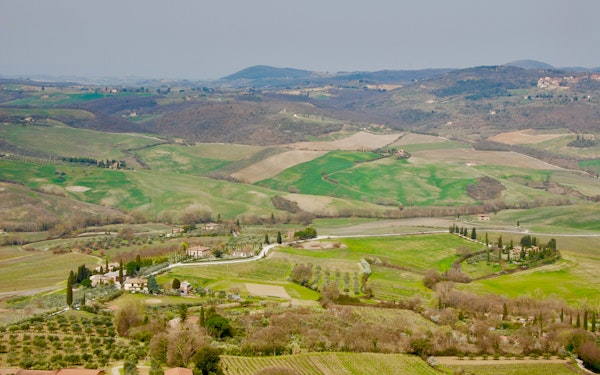
From Rome: Tuscany Day Trip with Lunch and Wine Expert‑Led Tasting
4.3(1,564)12 hoursViewFrom$99
Siena & San Gimignano: Exclusive Tuscany Day Trip from Florence
5.0(31)8 hoursViewFrom$646
Montecatini Private Day Trip To Chianti & San Gimignano
5.0(2)9 hoursViewFrom$1,051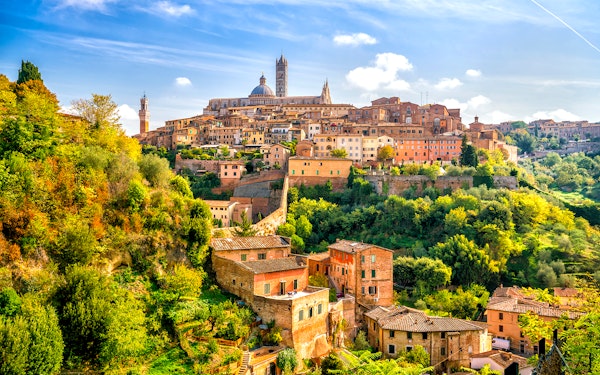
From Florence: Pisa, Siena, San Gimignano & Chianti Day Trip with Wine Tasting & Lunch
4.3(1,949)12 hoursViewFrom$90
Small-Group Arezzo and Cortona Day Trip from Siena
5.0(5)8 hoursViewFrom$223
The Tuscany Countryside from Livorno Port. Lunch and wine in the farm included!
5.0(1)9 hoursViewFrom$555
Florence
The one big day trip that plays to Rome's rail advantage. Florence is around 1.5 hours away on the high-speed line, close enough that the cradle of the Renaissance is a realistic day out, its cathedral dome, the Uffizi, and the Ponte Vecchio all within an easy walk of each other. Guided day trips from Rome usually run by fast train and often pair Florence with Pisa and its leaning tower to make a fuller day. The honest caveat is that Florence rewards more than a day; you will see the headline sights and want to come back. But if your Rome trip has one spare day and Renaissance art is the draw, it is very doable, and going independently by train is genuinely straightforward for confident travelers.
Top Florence day trips from Rome

From Rome to Tuscany: Discover Florence and Pisa in One Day
The most-reviewed Florence day from Rome - the Renaissance city paired with Pisa's leaning tower in one high-speed-rail day.
4.7(1,079)14 hoursViewFrom$185
Florence and Pisa from Rome: Enjoy a Full Day Small Group Tour
A small-group version of the Florence-and-Pisa day for a smaller, smoother pace than the big-coach format.
4.6(781)13 hoursViewFrom$312
Florence and Pisa from Rome: Enjoy a Full Day Private Tour
The private option - your own guide and flexible timing across Florence and Pisa, best for small groups who want control.
4.6(107)13 hoursViewFrom$312
Florence: Round Trip from Montecatini and Grotta Giusti!
9 hoursViewFrom$328From Rome: Tuscany Day Trip with Lunch and Wine Expert‑Led Tasting
4.3(1,564)12 hoursViewFrom$99Siena & San Gimignano: Exclusive Tuscany Day Trip from Florence
5.0(31)8 hoursViewFrom$646From Florence: Pisa, Siena, San Gimignano & Chianti Day Trip with Wine Tasting & Lunch
4.3(1,949)12 hoursViewFrom$90
Chianti Wines and San Gimignano Tour from Florence (1 Winery)
5.0(11)5 hoursViewFrom$1,034
Pisa, Florence and Tuscany
5.0(4)9 hoursViewFrom$1,158
Florence and Chianti wine tasting tour by Minivan from Montecatini
8 hoursViewFrom$396
Tivoli
The easy day. Tivoli sits about an hour from Rome and holds two famous villas: the terraced Renaissance gardens of Villa d'Este, laced with hundreds of fountains, and the sprawling ruins of Hadrian's Villa, the emperor's country estate. Together they make one of the most rewarding short trips out of the capital, gentler and closer than the long southbound hauls, which is why the visits run 5 to 6 hours rather than a full punishing day. It is the pick for travelers who want a break from Rome's intensity without surrendering a whole day to transit, and it works well for families thanks to the fountains and open grounds. Because the villas sit above the town and public transport is fiddly, a guided trip that handles the driving and the two entries is the smooth way to do it.
Top Tivoli day trips from Rome

Tivoli Full Day Trip from Rome: Hadrian's Villa and Villa D'Este
The most-reviewed Tivoli day - both famous villas in one guided trip, the standard way to see the gardens and the ruins together.
4.5(1,800)6 hoursViewFrom$99
Heritage Site: Villa d'Este and Hadrian's Villa in Tivoli Tour from Rome
A well-rated two-villa day for travelers who want both UNESCO sites covered at a steady pace.
4.6(227)5 hoursViewFrom$138
Tivoli Villas Full Day Trip From Rome with Lunch
The two villas with lunch built in - a fuller Tivoli day for travelers who want the meal included.
4.2(469)6 hoursViewFrom$111
Tivoli Day Trip: Villa D’Este & Cooking Class
A top-rated twist that adds a hands-on cooking class to the Villa d'Este visit, for a more immersive day out.
5.0(95)8 hoursViewFrom$200
Day Trip Rome Car Tivoli Unesco Villa D'este & Hadrian Villa
5.0(87)6 hours - 9 hoursViewFrom$105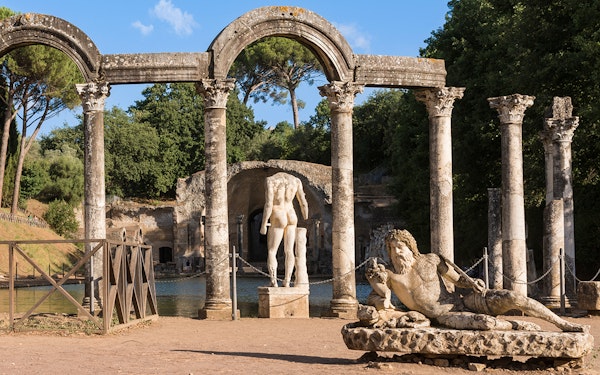
From Rome: Villa D'Este & Hadrian's Villa Skip-the-Line Tickets with Transfers
4.5(14)7 hoursViewFrom$116
Villa d’Este Skip-the-Line Tickets
4.3(157)1 hourViewFrom$94
Rome to Civita di Bagnoregio & Orvieto: Private Day Trip
5.0(1)10 hoursViewFrom$526
Private Day Tour to the Tufo Villages from Orvieto
8 hoursViewFrom$886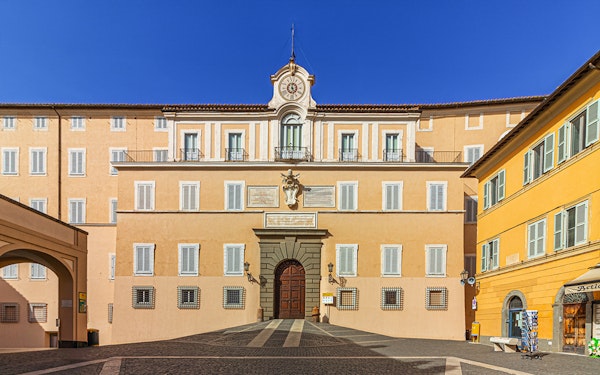
Castel Gandolfo Full Experience with Eco-Minibus Tour of Pontifical Gardens
4.5(12)5 hoursViewFrom$93
Getting around: train vs guided tour
Rome's rail network is the deciding factor on several of these trips. The high-speed line makes Florence a genuinely easy independent day, roughly 1.5 hours each way, with the sights walkable from the station once you arrive. Naples, the gateway to Pompeii and the Amalfi Coast, is also on the fast line, and there are now Pompeii and Amalfi trips built around the high-speed train rather than the long coach.
Where the coach earns its price is the last mile. Pompeii is walkable from its own station, but a guide turns a confusing ruin into a route. The Amalfi Coast, the Tuscan vineyards, and Tivoli's hillside villas all sit off the rail lines, reachable only by onward bus, taxi, or a rental car on roads you would rather not drive yourself. For those, a guided trip that bundles the driving, the entries, and the timing between stops beats a do-it-yourself day. A rough rule: take the train for Florence and, if you want, Pompeii; take the guided coach for the coast, the wine country, and Tivoli.
Booking lead time and cancellation
Peak season for Rome day trips runs May through September, plus the Easter and December weeks. In those windows the popular Pompeii and Amalfi Coast tours, and the small-group and premium-minivan formats especially, book out 2 to 3 weeks ahead. Off-peak, a few days' notice is usually enough. The private tours and the specialty formats like the Tivoli cooking class go earliest of all, because they run on limited daily capacity no matter which operator sells them.
Most coach tours offer free cancellation up to 24 hours before departure, which is the policy worth filtering for given how much a long day south can hinge on weather, especially the Amalfi Coast boat legs. Private and specialty tickets tend to be stricter, so read the terms before you commit if flexibility matters.
Practical tips for the day
Start early. Almost every coach day leaves central Rome between 07:00 and 08:00, and the pickup points fill fast, so arrive 15 minutes ahead.
Carry water and sun cover. Pompeii, the Roman sites, and the exposed hill towns give little shade, and the southbound days run long and hot in summer.
Dress for churches. Some stops include a church or basilica, which means covered shoulders and knees, so pack a light layer even in summer.
Carry some cash. Village cafes, site extras, and the smaller coastal and Tuscan towns still sometimes prefer it.
Pick your pace honestly. The Pompeii-and-coast loops are 12 to 15 hours of a real chunk of your trip; if that sounds like too much transit, a shorter Tivoli day is the gentler choice.
Quick compare: the best day trips from Rome
| Tour | Destination | From | Duration | Rating |
|---|---|---|---|---|
| Pompeii, Amalfi Coast and Positano | Pompeii + coast | $127 | 13h | ★4.5 (6,842) |
| Amalfi & Positano with Coastal Cruise | Amalfi Coast | $80 | 15h | ★4.4 (943) |
| Tuscany & Montepulciano with Lunch | Tuscany | $99 | 12h | ★4.7 (5,480) |
| Florence and Pisa in One Day | Florence | $185 | 14h | ★4.7 (1,079) |
| Tivoli: Hadrian's Villa and Villa d'Este | Tivoli | $99 | 6h | ★4.5 (1,800) |
Plan your trip
See all Rome tours and day trips →What is the best day trip from Rome?
By review volume and rating, the Pompeii-and-Amalfi-Coast combos are the most-booked single day trips from Rome, because they pair a Roman ruin frozen in time with one of the most scenic coastlines in Italy. If you want one place done deeply rather than two skimmed, a Tivoli villas day or a focused Tuscany wine day rates higher for that unhurried experience. The honest answer depends on whether you want breadth or depth from your one spare day.
Can you do day trips from Rome by train?
Yes, and it is one of Rome's biggest advantages: the high-speed rail network puts Florence, Naples, and Pompeii within easy reach. Florence is around 1.5 hours by fast train, and there are Pompeii and Amalfi Coast trips built around the high-speed line. The trade-off is that the Amalfi Coast villages and the Tuscan countryside sit away from stations, so a guided coach that handles the last-mile driving usually beats a do-it-yourself train day for those.
How far in advance should I book a day trip from Rome?
For peak season (May to September, plus the Easter and December weeks) book the popular Pompeii and Amalfi Coast tours 2 to 3 weeks ahead, especially the small-group and premium-minivan options that cap seats low. Off-peak you can often book a few days out. The private and cooking-class formats sell out earliest because they run on limited daily capacity regardless of operator.
Are full-day tours from Rome worth it over going independently?
For Florence and Pompeii, independent high-speed train travel is genuinely easy and can be cheaper. For the Amalfi Coast, Tuscany, and Tivoli, the guided coach earns its price: those places are poorly served by public transport from Rome and a tour bundles the driving, entry timing, and a route between stops you could not link on your own in a day. The coastal roads in particular are slow and stressful to drive yourself.
What should I bring on a day trip from Rome?
Comfortable shoes for the ruins and hill towns, a sun hat and water for the exposed archaeological sites, and a light layer for early departures. Most coach tours leave central Rome between 07:00 and 08:00 and return after 19:00, so bring snacks for the long day. Cover your shoulders and knees if a stop includes a church. Carry some cash for village cafes and site extras.
Can you see Pompeii and the Amalfi Coast in the same day?
Yes, and it is one of the most popular day-trip formats from Rome precisely because the two sit on the same southbound route. A typical loop reaches Pompeii mid-morning, then spends the afternoon on the coast at Positano or Sorrento, returning to Rome in the evening. It is a long day, usually 12 to 13 hours, so it suits travelers who want breadth over depth on their one free day.
Which day trip from Rome is best for families with kids?
Pompeii tends to captivate older children who like the idea of a city frozen by the eruption, and the Amalfi Coast combos add a boat or beach element that breaks up the drive. Tivoli, with its fountains and garden terraces, works well for a shorter, gentler day out. The long southbound coast trips involve big blocks of coach time that younger children find hard, so a nearer destination like Tivoli is often the easier family choice.
How many day trips from Rome can you fit into one visit?
On a typical city break, one or two day trips is the comfortable maximum without the trip feeling like all transit. Each full-day tour is 6 to 15 hours, which is a real chunk of a short stay. A common pattern is one big breadth day (Pompeii and the Amalfi Coast) plus one shorter, gentler day (Tivoli), with the rest of the time spent in Rome itself.
Is Tivoli or Tuscany the better short day trip from Rome?
Tivoli is the shorter, closer option: its two famous villas sit about an hour from Rome, so a half or full day covers them without a punishing amount of driving. Tuscany from Rome is a longer commitment, usually a full 11 to 12 hours, because the vineyards and hill towns are farther north. Choose Tivoli if you want gardens and Roman ruins on an easy day, and Tuscany if wine country and rolling scenery are the goal and you can give it the whole day.
When is the best time to do a day trip from Rome?
Spring (April to June) and early autumn (September to October) are the sweet spots: warm but not the peak summer heat that bakes the exposed ruins at Pompeii and the Roman sites, and lighter crowds than July and August. Summer works if you start early and carry water, and it is the best window for the Amalfi Coast boat trips. Winter brings the thinnest crowds and lower prices, though shorter daylight trims the time at each stop and some coastal boat services pause.
Keep reading
Mer lesing
Flere guider for å hjelpe deg med reiseplanlegging

5 Days in Rome: The Itinerary Where the City Finally Opens Up
Five days in Rome is where the checklist ends and the city begins. A day-by-day route with the two day trips worth taking and the mistakes that waste the extra time.

The Best Walking Tours in Rome: Which Ones Are Worth Booking
Rome is a walking city with more guided tours than any visitor can sort through. Which types actually help, when to do them, and what the free tours really cover.

Christmas Markets in Rome: What the Season Is Actually Like
Rome at Christmas is not a northern market city, and that is the point. What the season actually offers, when it runs, and how to plan a December trip around it.

Pantheon-billetter i 2026: Priser, typer og hvordan du unngår køen
En praktisk guide for 2026 til Pantheon-billetter i Rom - nå som inngang er betalt, billettypene sammenlignet, når du skal reservere, og hvordan du unngår køen.

Billetter til Sixtinkapellet i 2026: Priser, typer og hvordan du slipper køen
En praktisk guide for 2026 til billetter til Sixtinkapellet - hvordan inngangen fungerer gjennom Vatikanmuseet, sammenligning av billettyper, og når det er verdt å slippe køen.

Galleria Borghese-billetter: 2026-guide til tidsbestemte innslag, guidede turer og hvordan unngå utsolgt
En praktisk 2026-guide til Borghese-galleriet - alle billetttyper sammenlignet, hvordan det strenge 2-timers-slottsystemet fungerer, og hva du gjør når offisielle billetter er borte.

1 Day in Rome: The Itinerary and the Best Rome in One Day Tours
How to spend 1 day in Rome without losing it to queues: Colosseum morning, Vatican or historic center afternoon, and the full-day tours that solve it all.

Rome in Winter: Why November to February Is the Connoisseur's Season
Rome in winter means short queues at the Colosseum and Vatican, mild days, Christmas in the piazzas, and the city at its most local - here is how to plan it.