RomeWinterSeasonalItalyChristmas
Rome in Winter: Why November to February Is the Connoisseur's Season
Rome in winter means short queues at the Colosseum and Vatican, mild days, Christmas in the piazzas, and the city at its most local - here is how to plan it.
SimilarTours Editorialによる · Travel Research · · 21分間の読むことができます

Summer visitors queue for Rome; winter visitors get it to themselves. Rome in winter, November through February, is the connoisseur's window: the Colosseum and Vatican queues shrink from hours to minutes, hotel rates drop well below peak, the light turns low and golden, and the city goes back to being a place where Romans live rather than a set they lend out. The weather is the mildest of Europe's great capitals in the cold months, and the things winter takes away, long evenings and terrace dinners, it repays in empty galleries and unhurried food.
This guide covers what winter in Rome is actually like, month by month: the weather, the crowds, Christmas in the piazzas, and the experiences that work best in the cold season. Every tour referenced is currently bookable through our partner OTAs and ranked on real ratings and review counts, verified July 2026.
Browse all Rome tours and experiences →What winter in Rome is really like
The weather. Mild for the season, cold for Rome. The weather in Rome in winter typically runs from the high single digits to the low teens Celsius, roughly 45 to 55 Fahrenheit, with rain arriving in spells rather than settling in. Snow is a genuine rarity. The pattern that matters for planning: midday in the sun can be pleasant enough to sit outside with a coffee, while mornings and evenings bite, so the day has a warm core and cold edges. Compared with London, Paris, or anywhere north of the Alps in the same months, Rome is the soft option.
The light and the hours. Days are short, with darkness arriving by late afternoon in December and January. That compresses the sightseeing day, but it also means the illuminated city, which summer visitors only see late at night, starts at five in the afternoon. The low winter sun on the old stone is the best photographic light of the year.
The crowds. Outside the Christmas holidays, this is the emptiest the big sights get. Queues that dominate a summer visit become an afterthought, walk-up entry becomes realistic at places that need advance booking in May, and the piazzas at breakfast belong to locals. The exception is the Christmas-to-Epiphany window, which fills up and prices up; more on that below.
The prices. January after the holidays, February, and late November are the low season. Flights and hotels run far below summer rates, and while tours rarely discount as steeply, availability is wide open and groups are genuinely small.
The big sights, finally without the queues
Winter is the season to do the heavyweights properly. The Colosseum, the Roman Forum, the Vatican Museums, and the Sistine Chapel run all winter, and the difference in experience is not subtle: rooms you shuffle through in August, you stand in come January. The exposed ancient sites are far more comfortable in a coat than in the summer sun, and the Vatican's endless galleries are entirely indoors, which makes them the perfect wet-day anchor. Booking ahead is still smart, timed entry rules do not pause for winter, but the pressure is off, and the earliest slots buy you something close to a private visit.
Top Colosseum and Vatican tours for the quiet season

Rome: Colosseum, Roman Forum and Palatine Hill Guided Tour
The most-reviewed Colosseum tour in the catalog - all three ancient sites with a guide, and in winter the crowds finally match the pace.
4.5(24,990)3 hoursViewFrom$40
Skip-the-Line Group Tour of the Vatican, Sistine Chapel & St. Peter's Basilica
The most-reviewed skip-the-line Vatican tour - three fully indoor hours, which makes it the ideal anchor for a cold or wet winter day.
4.6(14,408)3 hoursViewFrom$40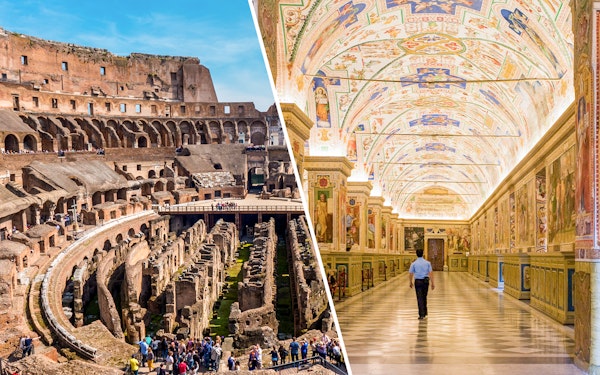
Combo: Colosseum + Vatican Museums Pass
Both mega sights in one combo booking with the largest review count in the Rome catalog - the efficient play for a short winter break.
4.5(47,081)ViewFrom$63
Skip the Line: Vatican Museums & Sistine Chapel Tour + Basilica
The highest-rated of the big skip-the-line Vatican options - museums, chapel, and Basilica with a guide at a strong winter-value price.
4.7(6,433)3 hoursViewFrom$32
Best of Rome: Vatican & Colosseum Guided Tour
4.7(43)9 hr 30 minViewFrom$189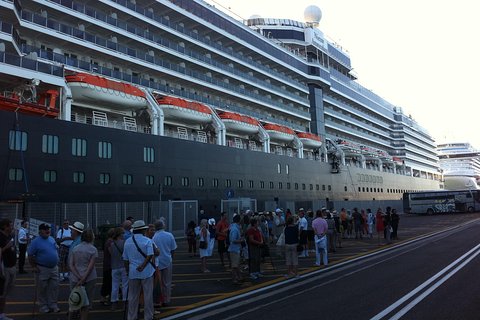
From Civitavecchia port with Vatican Museums & Tour Guide
5.0(10)9 hoursViewFrom$1,051
Private Rome Historical and Early Vatican Guided Tour
5.0(29)1 hour - 3 hoursViewFrom$282
Skip-The-Line Vatican Museums,Sistine Chapel & Optional Basilica
4.7(896)1 hour - 3 hoursViewFrom$49
VIP Private Tour of Rome and the Vatican from Civitavecchia
5.0(5)9 hoursViewFrom$1,239
Vatican Museum's & Sistine Chapel No Line Private Tour
4.5(2)3 hoursViewFrom$1,410
Insider tip
Winter is the small-group season. The same tour that runs full in July often departs half-empty in January, which quietly upgrades every group tour toward a semi-private one. If a small group matters to you, winter is when the standard price buys it.
Christmas in Rome
December is the exception inside the quiet season, and it is worth planning around rather than avoiding. From early in the month the city lights up: nativity scenes, which Rome takes seriously, appear in churches and piazzas across the center, the traditional Christmas market fills Piazza Navona with stalls and sweets, and the shopping streets around Via del Corso glow. St Peter's Square puts up its crib and tree, and the churches move into their richest season of music and ceremony. It is Christmas in a city that has been celebrating it longer than almost anywhere, and it feels that way.
New Year's Eve in Rome is a street party rather than a ticketed spectacle: crowds gather in the big piazzas and along the river, fireworks go up across the city, and the restaurants run special late menus that need booking well ahead. It is loud, warm-spirited, and very Roman, but it is not a sight in itself, so do not build a trip around it unless you love a crowd. Epiphany, on the sixth of January, closes the season with the festival of the Befana, the gift-bringing witch of Italian tradition, and the Piazza Navona market runs right through to it; the following week the city exhales, the prices drop, and the deep quiet season begins.
The practical note: the days around Christmas through Epiphany are a genuine crowd and price spike, a compressed second high season. Book tours, tables, and rooms ahead for that window, expect holiday closures on the feast days, and check schedules for anything you cannot miss. Travel in early December or after the first week of January and you get the decorations or the afterglow with the empty-season advantages intact.
Indoor and underground Rome
Winter is when Rome's indoor and underground city earns its place on the itinerary. The catacombs and crypts beneath and beyond the old walls hold a constant temperature year round, which makes them one of the few experiences that feel identical in January and July, and the dark season suits their atmosphere. Above ground, the museum churches, the galleries, and the palazzo collections give you an all-weather program that summer visitors, busy queueing, rarely reach. A guided underground tour with transfers is the easy way in, since the catacombs sit outside the walkable center.
Top Rome catacombs and underground tours

The Original Roman Crypts and Catacombs Tour with Transfers
The most-reviewed underground tour in the catalog - crypts and catacombs with the transfers handled, a complete half-day out of the weather.
4.5(5,206)3.5 hoursViewFrom$63
Rome Underground: Catacombs Tour, Aqueducts and Appian Way
The highest-rated of the big underground tours - catacombs plus the aqueducts and the old Appian Way in one guided sweep.
4.8(1,370)3.5 hoursViewFrom$64- tiqets
Catacombs of Saint Callixtus: Guided Tour
The direct, budget-friendly way underground - a one-hour guided visit to the catacombs at the lowest price in the cluster.
4.5(1,541)1 hourViewFrom$17 
Rome Catacombs & Capuchin Crypts Group Tour with Transfers
Catacombs paired with the Capuchin crypts on one guided run with transfers - the pick for travelers drawn to the darker side of the underground city.
4.5(857)3.5 hoursViewFrom$56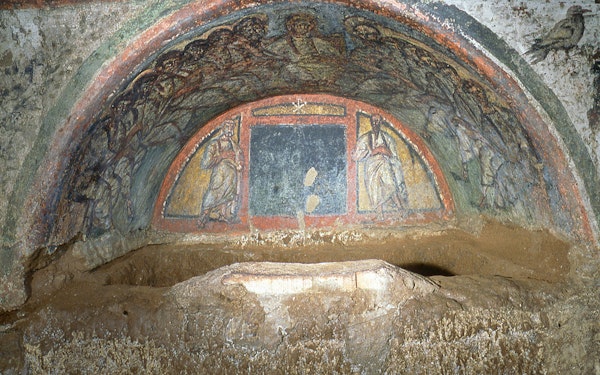
Catacombs of Domitilla and Capuchin Crypt Guided Tour with Transfers
3.9(32)3 hoursViewFrom$79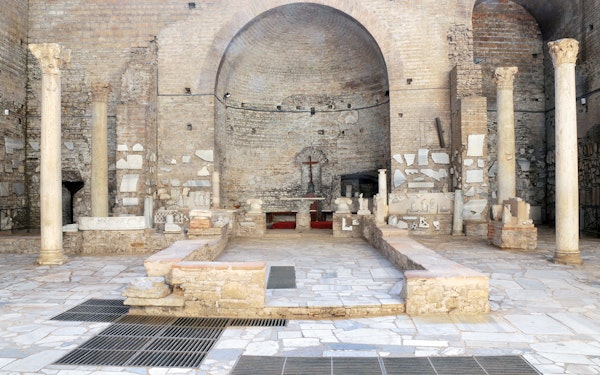
Catacombs of Domitilla Tickets with Guided Tours
4.1(121)3 hoursViewFrom$45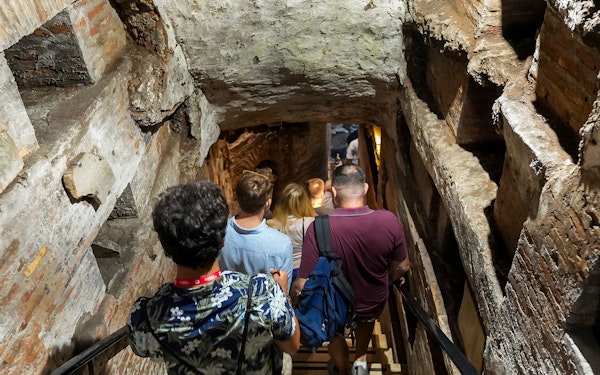
Capuchin Crypt Guided Tour with Transfers
4.3(1,123)3 hoursViewFrom$50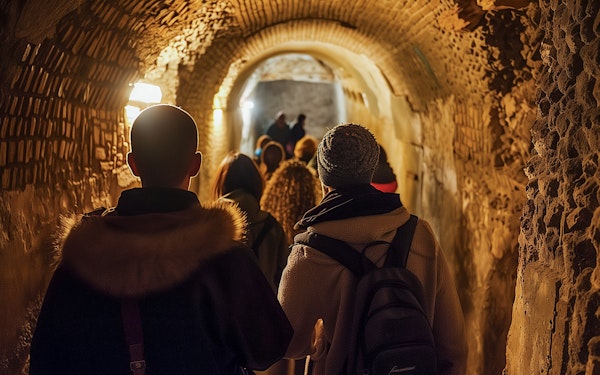
Catacombs of St. Callixtus Ticket with Guided Tour
4.4(3,439)45 minutesViewFrom$16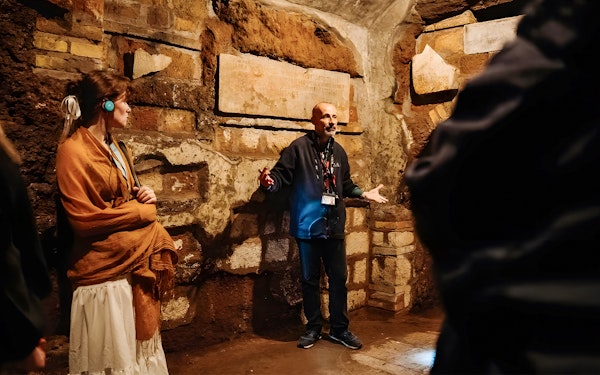
St. Callixtus & Other Catacombs Tour with Transfers
4.3(1,658)2 hoursViewFrom$45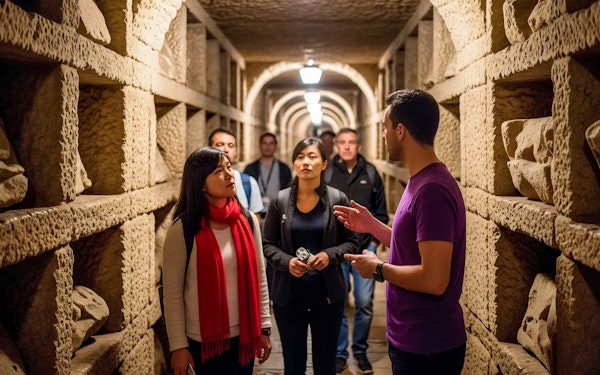
Capuchin Crypt & Roman Catacombs Guided Tour & Transfers
4.3(1,123)1 hourViewFrom$50
The indoor art day: a wet-weather plan that beats the sunny one
Every winter trip should carry one fully indoor day in its back pocket, and in Rome that day can be better than the outdoor ones. Build it in three movements. Morning: one major collection, booked for opening. The Vatican Museums are the heavyweight choice and entirely under a roof; the Borghese Gallery is the connoisseur's alternative, a compact villa collection that runs on timed slots and rewards the winter calm; the Capitoline Museums put you above the Forum with the ancient city framed in the windows, which on a rainy day is the best view in Rome. Midday: a long lunch, unapologetically long, somewhere warm; this is the meal the season is for. Afternoon: the church circuit, which is Rome's free museum network. The great basilicas and the smaller churches of the center hold paintings and sculpture that would headline museums elsewhere, they are heated by candles and history rather than radiators, so keep the coat on, and they ask nothing but quiet. Thread three or four within walking distance of each other, finish with a hot chocolate, the dense Italian kind a spoon stands up in, and the rain outside becomes part of the furniture.
The one discipline the indoor day needs is booking the morning slot ahead. Winter walk-up entry is often possible, but the timed collections still cap their sessions, and the Borghese in particular runs on reservations year round.
Winter is Rome's eating season
Roman food is winter food. The classic dishes of the city's kitchen, the long-simmered, the baked, the carbonara-and-cacio-e-pepe canon, make more sense on a cold evening than they ever do in August, and the trattorias reclaim their tables from the tourist rush. Short days rearrange the schedule in food's favor: a long lunch becomes a legitimate sightseeing activity, and the evening food tours run through streets that are lit, quiet, and cold enough to make every stop feel earned. If you only structure one evening of a winter trip, make it a food tour; the guides have their pick of tables in a way summer never allows.
Eat with the season while you are at it. Winter is when the Roman artichoke takes over the menus, fried whole in the Jewish Ghetto style or braised alla romana, and it is worth ordering every time you see it. The oxtail and the other slow braises of the old Roman kitchen belong to cold evenings, the roast chestnut sellers appear on the street corners of the center, and the pastry counters shift into their richest season. December adds panettone and pandoro everywhere; February adds the fried Carnival sweets, sold by the paper bagful, that alone justify the month. None of this needs a reservation or a plan, just the willingness to order what the blackboard says.
Top Rome food tours for the cold season

Winner 2026 Rome Twilight Trastevere Food Tour by Eating Europe
The most-reviewed Trastevere food tour by a wide margin - a twilight neighborhood crawl that suits winter's early darkness perfectly.
4.9(6,113)4 hoursViewFrom$121
Rome Gourmet Food Tour with Free Flowing Fine Wine Barolo 5*
The highest-rated of the big food tours - four hours of tastings with free-flowing wine, built for a long winter evening.
5.0(3,747)4 hoursViewFrom$72
Rome Street Food Tour with Local Guide
The daytime option - two and a half hours of street food with a local guide, an easy fit between winter museum sessions.
4.8(2,558)2.5 hoursViewFrom$55
Trastevere Food Tour
A tightly rated Trastevere tasting walk - the compact alternative if the four-hour evenings run longer than your appetite.
4.9(138)2.5 hoursViewFrom$80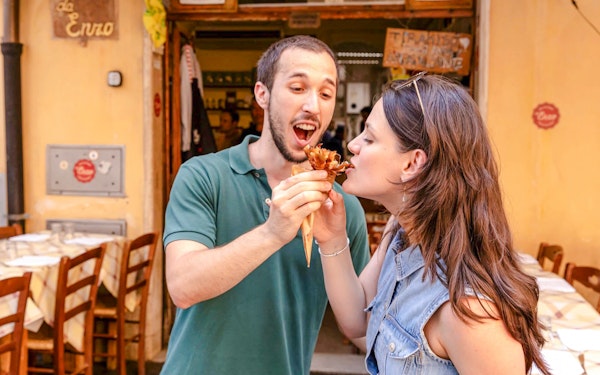
Twilight Food Tour in Trastevere
4.9(105)4 hoursViewFrom$121
Rome by Night Tour with Top E-bike and optional Italian Dinner
5.0(78)2 hours - 4 hoursViewFrom$85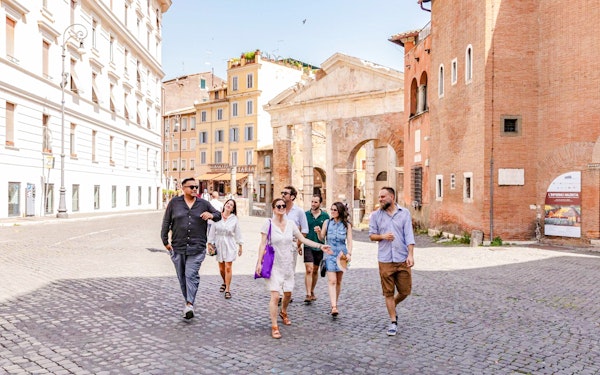
Trastevere and Campo De' Fiori Food Tour With Jewish Ghetto
4.9(123)4 hoursViewFrom$51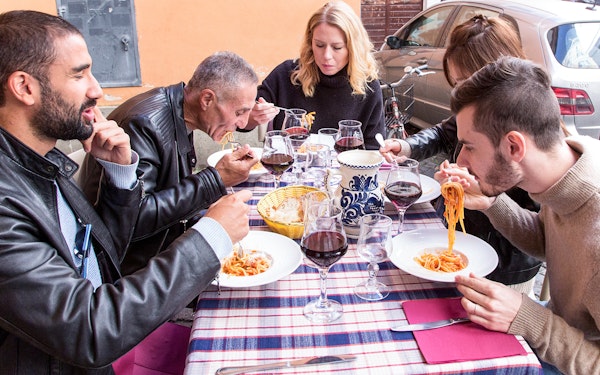
Rome Guided Food Tour with Wine & Beer
5.0(5)3 hoursViewFrom$80
Tasty Prati and Vatican Neighborhood Wine and Food Tour
5.0(1)4 hoursViewFrom$292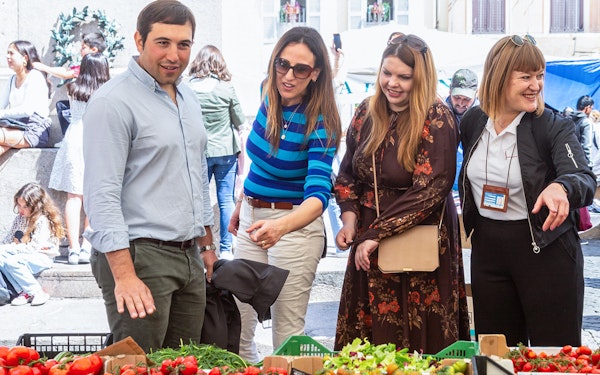
Guided Street Food Tour in Campo de'Fiori & Ghetto
5.0(4)2 hr 30 minViewFrom$51
The perfect wet-day plan: learn to make the pasta
Every winter trip should hold one rainy-day card, and in Rome the best one is a pasta-making class. Two to three indoor hours, flour on your hands, a glass of wine, and a meal you made yourself at the end: it is the rare experience that gets better when the weather gets worse. Classes run across the center year round, from Piazza Navona workshops to Trastevere kitchens, and the winter departures tend to be small enough that everyone gets the attention of the cook.
Top Rome pasta-making classes

Rome Pasta and Tiramisu Class: Ravioli, Fettuccine & Fine Wine 5*
The most-reviewed pasta class in the catalog - ravioli, fettuccine, and tiramisu with wine, at a near-perfect rating across thousands of reviews.
5.0(3,363)3 hoursViewFrom$45
Pasta Cooking Class in Rome - Fettuccine Class in Piazza Navona
A two-hour fettuccine class steps from Piazza Navona - the easy add-on that fits a winter afternoon between sights.
4.9(2,057)2 hoursViewFrom$47
Rome Tipsy Cooking Class: Make Pasta and Mix 3 Spritz Cocktails
The social version - pasta plus three mixed spritzes, the highest-rated pick for groups who want the class to feel like a night out.
5.0(1,907)3 hoursViewFrom$79- tiqets
Rome: Pasta and Tiramisu Workshop
A compact pasta-and-tiramisu workshop with a perfect early rating - a strong small-group alternative to the big-name classes.
5.0(25)2.5 hoursViewFrom$67 
Rome: Hands-on Fettuccine, Ravioli & Tiramisu Cooking Class
5.0(267)2 hr 30 minViewFrom$59
Rome Pasta, Ravioli & Tiramisu Cooking Class with Premium Wine
5.0(167)3 hoursViewFrom$115
Fettuccine & Ravioli Class in Assisi’s Home-Style Cooking School
4.9(10)2 hr 15 minViewFrom$159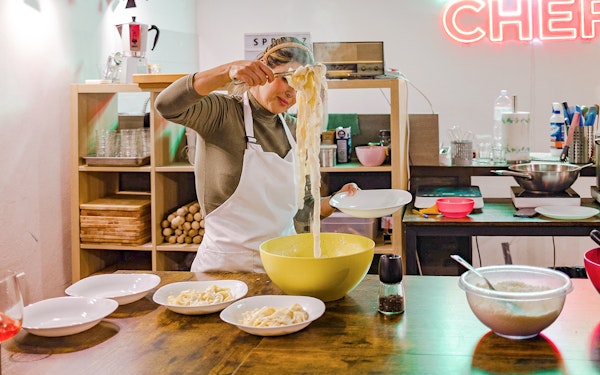
Pasta-Making Cooking Class in Rome with Tiramisu or Spritz
4.3(242)3 hoursViewFrom$86
Pasta and Tiramisu class with Mamma in Spoleto
5.0(7)3 hoursViewFrom$159
Share your Pasta Love: Small group Pasta and Tiramisu class in Foligno
5.0(3)3 hoursViewFrom$116
Rome in winter, month by month
November
The quiet arrives. The first half of the month keeps a little autumn warmth and color; the second half settles into real winter, and rain is at its most likely of the four months. Late November is one of the cheapest windows of the year for flights and rooms, the light turns low and photogenic, and the city feels fully local, with the piazzas back to their neighborhood rhythms. Best for photographers, repeat visitors, and anyone whose priority is Rome without an audience. The one crowd note: the U.S. Thanksgiving week brings a small, noticeable bump.
December
The atmospheric month, and really two months in one. Through mid-December the city is quiet and well priced while the decorations go up around it, which is arguably the best value-to-atmosphere ratio of the whole winter: lights, nativity scenes, and the Piazza Navona market with the empty-season queues still in effect. From the week before Christmas through New Year the spike hits, with holiday pricing and real crowds at the center. Best for festive travelers who book ahead, and for anyone who wants Christmas with domes in the background. Watch the feast-day closures at the major sites.
January
After Epiphany closes the holidays in the first week, January becomes the emptiest, cheapest Rome of the year. Days are short and evenings genuinely cold, but the daytime cores are often bright, and the queues at the Vatican and the Colosseum drop to their annual minimum; this is the closest the Sistine Chapel gets to calm. Hotel rates sit at their floor, and the small-group tours run smallest. The connoisseur's month, best for museum-first travelers, budget trips, and anyone who has already seen Rome in the sun and wants to see it belong to itself.
February
Marginally warmer and brighter than January, still quiet, still cheap, with the first hints of spring light at the end of the month. Carnival lands in February most years, adding costumes, confetti, and the fried sweets that fill every bakery window for a few weeks. Crowds stay low outside that flurry, and availability stays wide open. Best for travelers who want January's advantages with slightly friendlier weather, and the last full month before the spring climb toward Easter begins.
Day trips in winter: yes, with adjustments
The classic day trips out of Rome keep running through winter, but the season redraws the rankings. The garden-and-villa trips, Tivoli above all, lose some of their point with the fountains at low season and the terraces bare, so save those for the warm months if you can. The archaeological trips hold up far better: Pompeii and the region's ancient sites are exposed, shadeless places that punish summer visitors and reward winter ones, walked comfortably in a coat with a fraction of the crowd. The practical adjustments are about light and schedules, not weather: winter days are short, so favor guided coach trips that leave early and handle the logistics, check that your chosen departure runs on winter frequency, and treat the trip as the whole day rather than an add-on. For the full menu, our guide to the best day trips from Rome covers the options in depth.
Compare all Rome tours side by side →Practical tips for winter in Rome
Pack for the edges of the day. A warm coat, scarf, and gloves for mornings and evenings, layers you can shed at sunny midday, and waterproof shoes for wet cobbles.
Book the big sights anyway. Winter shrinks the queues but timed entry still applies at the Colosseum, and holiday weeks fill up like summer.
Plan around the short days. Do the outdoor sights in the warm midday core, save the museums and food for the dark hours, and treat the early-evening illuminations as a feature, not a loss.
Check holiday schedules. The feast days around Christmas, New Year, and Epiphany close or shorten hours at major sites; verify anything essential before locking the dates.
Eat like it is winter. This is the season for the long lunch, the food tour, and the cooking class; the terraces will still be there in May.
Keep an indoor card in hand. A catacombs tour, a pasta class, or the Vatican's galleries turn a rainy day from a loss into the best day of the trip.
Quick recap: why winter works in Rome
Winter in Rome trades warmth and daylight for the two things no other season can offer: the great sights nearly to yourself and the city at its most Roman. Anchor the trip on the Colosseum and the Vatican in their quiet season, add the underground city and one long food evening, keep a pasta class for the rain, and plan around the Christmas spike rather than into it. For repeat visitors it is the best version of Rome; for first-timers on a budget, it is the smartest one. For the full season-by-season comparison, our guide to the best time to visit Rome breaks down all twelve months.
Plan your trip
See all Rome tours and experiences →Is Rome worth visiting in winter?
Yes, and for a certain kind of traveler it is the best season of the year. The headline sights stay open, the queues at the Colosseum and Vatican shrink to a fraction of their summer length, hotel prices drop well below peak, and the city belongs to Romans again. What you trade is warmth and daylight: days are short, evenings are cold, and rain is a real possibility. If you value empty galleries over long evenings outdoors, winter wins.
What is the weather in Rome in winter like?
Mild by northern European standards, cold by Roman ones. Winter days typically sit in the high single digits to low teens Celsius, roughly 45 to 55 Fahrenheit, with occasional rain and the odd genuinely cold snap. Snow is rare enough that it makes the news. Mornings and evenings are the cold hours; midday in the sun can be pleasant enough for an outdoor coffee. Pack a warm coat, waterproof shoes, and an umbrella, and the weather stops being a problem.
Is everything open in Rome in winter?
The big sights run all winter: the Colosseum, the Roman Forum, the Vatican Museums, the churches, and the museums all keep their doors open, with a handful of closure days around the major holidays. Outdoor-focused experiences thin out, some day-trip schedules reduce, and a few tours run fewer weekly departures, but the core of a Rome trip is fully available. Always check holiday-week schedules if you travel around Christmas and New Year.
Is Christmas a good time to visit Rome?
It is a wonderful and busier exception inside the quiet season. From early December the city lights up, nativity scenes appear in churches and piazzas, and the traditional Christmas market fills Piazza Navona. The trade-off is that the days around Christmas and New Year draw a real crowd spike and holiday pricing, so book tours and tables ahead for that window. Early December and January combine the atmosphere with the empty-city advantages.
How crowded is Rome in winter?
Outside the Christmas-to-Epiphany window, winter is the quietest the big sights get all year. Queues that run hours in summer shrink to minutes, tour groups are smaller, and you can walk into places that need advance booking the rest of the year. It is the season when you can stand in the Pantheon or the Sistine Chapel with room to breathe, which for many repeat visitors is the whole point of coming in winter.
What should I pack for Rome in winter?
A proper warm coat, layers you can shed at sunny midday, waterproof walking shoes for wet cobbles, and a compact umbrella. Gloves and a scarf earn their space for evening walks. Sturdy, broken-in shoes matter as much as in summer, because winter Rome is still a walking city. Add a dressier layer if you plan long restaurant evenings, which is what winter nights in Rome are for.
Is winter the cheapest time to visit Rome?
Broadly yes. January after the first week, February, and late November are the low season for flights and hotels, often dramatically below summer rates. Tours rarely discount as steeply, but availability is wide open and small-group departures are genuinely small. The exception is the Christmas and New Year window, which prices like a second high season, so travel either side of it for the best value.
What are the best things to do in Rome in winter?
Lead with everything summer visitors queue for: the Colosseum and Forum, the Vatican Museums and Sistine Chapel, and the great churches, all at their quietest. Add the indoor and underground city, from the catacombs to the crypts, which are atmospheric in the dark season and constant in temperature. Then lean into food: winter is the eating season, and food tours, long trattoria lunches, and pasta-making classes fit the short days perfectly.
Is New Year's Eve in Rome worth it?
It is fun rather than essential. Rome's New Year is a street celebration, with crowds in the big piazzas, fireworks across the city, and restaurants running special late menus that book out well ahead. If you love a crowd, it is a warm-spirited night in a beautiful setting; if you do not, the days on either side give you the decorated city without the crush. Either way, book dinner early and expect holiday pricing for the whole week.
Can you do day trips from Rome in winter?
Yes, and some improve. The exposed archaeological sites, Pompeii above all, are far more comfortable walked in a coat than under summer sun, and the crowds are a fraction of peak. The garden and villa trips lose more to the season, since fountains and terraces are at their barest, so save those for warm months. Favor guided coach departures with early starts, because winter daylight is short, and confirm your trip runs on the reduced winter schedule before locking the date.
Keep reading
その他の読み物
あなたの旅行計画に役立つガイド

5 Days in Rome: The Itinerary Where the City Finally Opens Up
Five days in Rome is where the checklist ends and the city begins. A day-by-day route with the two day trips worth taking and the mistakes that waste the extra time.

The Best Walking Tours in Rome: Which Ones Are Worth Booking
Rome is a walking city with more guided tours than any visitor can sort through. Which types actually help, when to do them, and what the free tours really cover.

Christmas Markets in Rome: What the Season Is Actually Like
Rome at Christmas is not a northern market city, and that is the point. What the season actually offers, when it runs, and how to plan a December trip around it.

2026年のパンテオン チケット:料金、種類、行列を避ける方法
2026年のパンテオン チケットに関する実践的ガイド。有料化されたローマのパンテオン入場料金、チケットの種類、予約時期、行列を避ける方法を比較。

2026年のシスティーナ礼拝堂チケット: 料金、種類、行列をスキップする方法
2026年のシスティーナ礼拝堂チケット実用ガイド - バチカン美術館経由でのエントリー方法、チケット種類の比較、行列スキップが価値ある時期について。

ボルゲーゼ美術館チケット: 2026年ガイド - 時間指定入場、ガイド付きツアー、完売対策
2026年のボルゲーゼ美術館完全ガイド - チケット種類の比較、厳格な2時間枠システムの仕組み、公式チケット完売時の対策をすべて解説

1 Day in Rome: The Itinerary and the Best Rome in One Day Tours
How to spend 1 day in Rome without losing it to queues: Colosseum morning, Vatican or historic center afternoon, and the full-day tours that solve it all.

Rome with Kids: A Family Guide That Actually Works
A practical guide to Rome with kids: the Colosseum and Vatican with children, gladiator school, pizza and gelato classes, and Villa Borghese downtime.