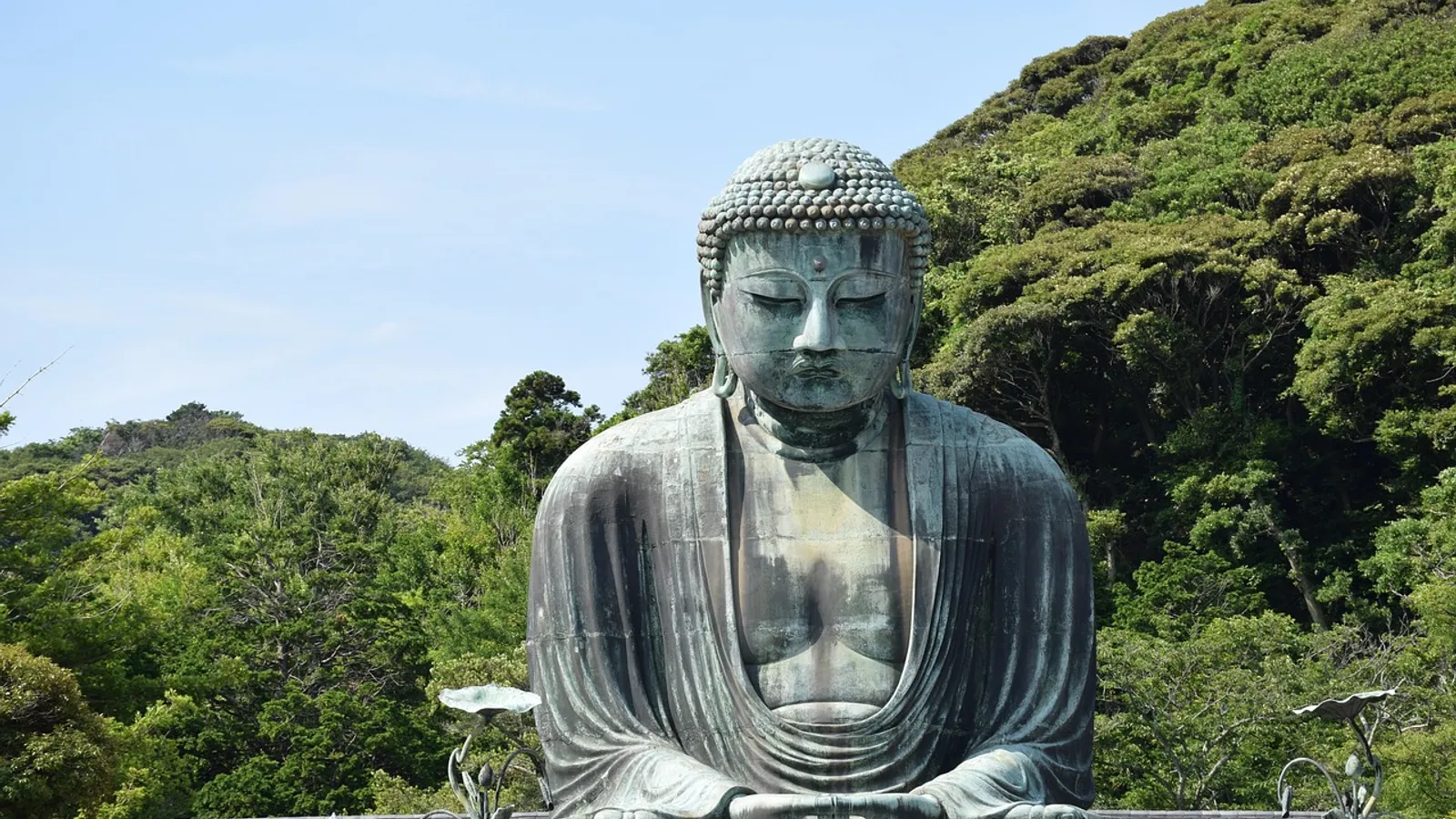
A Kamakura day trip from Tokyo works well without a tour: JR Yokosuka Line trains run direct from Tokyo Station to Kamakura in just under an hour, and the main sights are a short walk, bus or Enoden tram ride from the station. Spend the morning at the Great Buddha and Hase-dera, the afternoon at Tsurugaoka Hachimangu or on Enoshima, and expect to pay a few hundred yen per temple. A guided tour suits you if you want the history explained or a door-to-door day.
- Train from Tokyo
- JR Yokosuka Line, Tokyo Station to Kamakura, just under an hour on most trains
- Last train back
- 11:07 pm from Kamakura through to Tokyo Station (Dec 2026 timetable)
- Great Buddha
- ¥300, plus ¥50 to go inside, checked 13 Nov 2026
- Hase-dera
- ¥400 adults, 8:00 am to 5:00 pm from July to March
- Enoden ride
- Kamakura to Hase, 5 minutes, ¥200
- Best months
- June for hydrangeas, late November to early December for autumn leaves
Kamakura day trips from Tokyo compared
Kamakura day trips from Tokyo come in four shapes, and the right one depends less on budget than on how much you want to organise. The cards below pull guided options from several booking sites, so you can see the same kind of day side by side.
Full-day guided tours from Tokyo
These start in central Tokyo and bring you back in the evening. Before you book one, check whether it travels by coach or by train, whether temple entry is in the price, and how long you get at each stop. A tour that also visits Enoshima or Yokohama spends part of its day on the road, so you see less of Kamakura itself.
Small-group walks that meet in Kamakura
You ride the train yourself and meet a guide at Kamakura or Kita-Kamakura station. This is the format to compare if your interest is the temples: you skip the hotel pickups and spend the whole guided time in Kamakura. Look at the stated group size and whether the route includes the hiking trails, which are steep in places.
Private guides
A private guide builds the day around you, which matters with children, older travellers or a specific interest such as Zen or samurai history. It is the most expensive way to see Kamakura, and the live prices below show how wide the spread is.
On your own by train
The do-it-yourself day costs the train fare, a few temple tickets and lunch. It is the cheapest option and, with the route further down, not hard.
Kamakura day tours from Tokyo, side by side

Kamakura Tours with an expert guide, PRIVATE, CUSTOMIZABLE, FUN
5.0(20)8 hoursViewFrom$65
Kamakura Private Tour (Tokyo Departure Optional)
5.0(2)4 hours - 8 hoursViewFrom$130
Kamakura Day Trip from Tokyo: Private Guided Walking Tour
5.0(3)8 hoursViewFrom$261
Kamakura Walking Tour - The City of Shogun
5.0(144)3 hr 30 minViewFrom$35
Kamakura Private Tour: Temples, Nature, and the Great Buddha
4.9(133)5 hoursViewFrom$129
Kamakura Historical Walking Tour with the Great Buddha
4.9(176)5 hoursViewFrom$91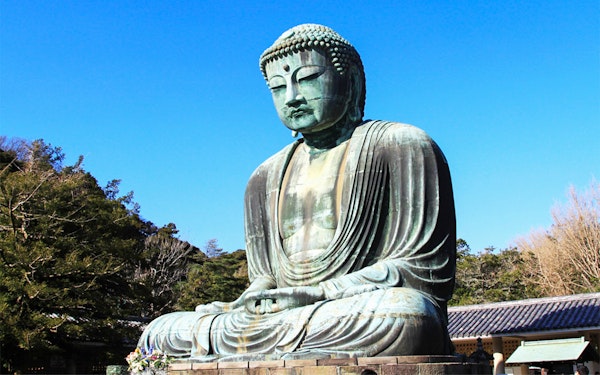
From Tokyo: Kamakura & Hasedera Day Trip with Kotoku In Temple, Enoshima, Enoden Train, & More
4.0(6)10 hoursViewFrom$61
Kamakura & Enoshima 1-Day Bus Tour : From Tokyo
4.5(286)9 hours - 10 hoursViewFrom$61
Day Trip Kamakura from Tokyo with National Licensed Guide
8 hoursViewFrom$300
Exciting Kamakura - One Day Tour from Tokyo
4.9(55)8 hr 30 minViewFrom$142
Is a Kamakura day trip from Tokyo worth it
For most visitors it is, and especially on a first trip to Japan. Kamakura was the seat of the country's first samurai government, the Kamakura shogunate of 1185 to 1333 (Kamakura City Tourist Association), so in one compact town you get major temples, a large shrine, wooded hiking paths and a beach.
It is not a quiet secret. The city counted 15,942,524 visitors in 2024, up 29.8% on the year before (Kamakura City tourism statistics). The tourist association is frank about the result: "Since the townscape is concentrated in a relatively small area, overtourism from tourists gathering in certain sections of the city has become a challenge."
So it is worth it if you plan around the crowds. Come on a weekday if you can, start early, and keep the tourist association's quieter walking route, described below, in reserve for when the main streets are packed. Skip it only if you've already seen Kyoto and Nara and want something different from temples, or if you can only come on a summer weekend and dislike crowds.
Getting from Tokyo to Kamakura by train
Tokyo to Kamakura is one direct train: the JR Yokosuka Line from Tokyo Station, with no change. On JR East's December 2026 timetable, daytime trains are timed to leave Kamakura 54 to 64 minutes after they leave Tokyo Station, and most within 55 to 61, so the ride itself is just under an hour (JR East timetable, Yokosuka Line). In the late morning, trains leave Tokyo Station about every 15 minutes: 10:04, 10:11, 10:25, 10:39 and 10:54 on a weekday.
| From | Line | Time to Kamakura |
|---|---|---|
| Tokyo Station | JR Yokosuka Line, direct | About an hour |
| Shinagawa | JR Yokosuka Line, direct | About 50 minutes |
| Shinjuku | JR Shonan-Shinjuku Line, direct | About 53 minutes |
| Shinjuku | Odakyu limited express to Fujisawa, then the Enoden | About 60 minutes, then about 34 |
| Yokohama | JR Yokosuka Line, direct | About 25 minutes |
Times from the Kamakura City Tourist Association access page and Hokokuji's access page, checked 13 Nov 2026.
The return from Kamakura to Tokyo is just as simple, and it runs late. On both the weekday and the weekend timetables, the last Yokosuka Line train that runs all the way to Tokyo Station leaves Kamakura at 11:07 pm and arrives at midnight (JR East, northbound weekday timetable). Since the temples close by late afternoon, that leaves room for dinner in town or an evening on Enoshima.
The JR line also stops at Kita-Kamakura, one station before Kamakura. Engaku-ji is a one-minute walk from it (Engaku-ji), so you can get off there and walk into town.
The Enoden and the Odakyu pass
The Enoden is the small railway that runs 10 km along the coast between Kamakura and Fujisawa (Enoshima Electric Railway). It is the rail link to Hase, the stop for the Great Buddha and Hase-dera. The railway's own figures for a single adult ticket, checked 13 Nov 2026:
| Kamakura to | Time | Adult | Child |
|---|---|---|---|
| Hase (Great Buddha, Hase-dera) | 5 minutes | ¥200 | ¥100 |
| Enoshima | 23 minutes | ¥260 | ¥130 |
| Fujisawa | 34 minutes | ¥310 | ¥160 |
Suica and PASMO work on the Enoden, and every station has a reader for contactless credit and debit cards (Enoden usage notes). The Noriorikun one-day pass is ¥800 (¥400 for a child) and gives unlimited rides on the whole line for the day of issue (Noriorikun).
If you start from Shinjuku rather than Tokyo Station, Odakyu sells the Enoshima-Kamakura Freepass for ¥1,640 (¥430 for children aged 6 to 11), checked 13 Nov 2026. For one day it covers the trip from Shinjuku and back plus unlimited Odakyu local trains in the area and the Enoden (Odakyu). The faster Romancecar needs a supplement, ¥750 one way to Katase-Enoshima for an adult. The pass makes most sense when your day includes Enoshima and a return through Fujisawa; for Kamakura's temples alone, the direct JR train from Tokyo Station is simpler.
Within town, the Kamakura Free Environment Bill, a day ticket shared by the Enoden and the two local bus companies, covers the Enoden between Kamakura and Hase and five bus routes from Kamakura Station's east exit, including those to Kita-Kamakura, Jomyoji (for Hokokuji) and Daibutsu-mae. It costs ¥900 for adults and ¥450 for children (tourist association transit passes).
A one-day Kamakura itinerary from Tokyo
This route puts the Hase sights first, as soon as they open, and saves the shrine and the bamboo garden for the afternoon. The clock times are suggestions built on the official opening hours. It assumes a weekday train from Tokyo Station a little after 7:00 am; the 7:13 am train is timed out of Kamakura at 8:08 am on the December 2026 timetable, so it pulls in just before.
| Time | Stop | How you get there |
|---|---|---|
| 8:30 am | Great Buddha at Kotoku-in (opens 8:00 am) | Enoden to Hase, 5 minutes, then a 7-minute walk |
| 9:30 am | Hase-dera (opens 8:00 am) | About 5 minutes on foot |
| 11:00 am | Yuigahama beach, or straight back | Short walk, or Enoden from Hase |
| 12:00 pm | Lunch around Komachi-dori | Enoden back to Kamakura |
| 1:30 pm | Tsurugaoka Hachimangu | About 10 minutes on foot from the station |
| 3:00 pm | Hokokuji bamboo garden (entry until 4:00 pm) | Keikyu bus from the east exit, about 12 minutes, then 3 minutes on foot |
| 4:30 pm | Back to Kamakura Station for the train | Bus or taxi |
Walking times from Kotoku-in, Tsurugaoka Hachimangu and Hokokuji, checked 13 Nov 2026.
Two swaps change the day. If you'd rather see the sea, replace Hokokuji with Enoshima: the Enoden from Hase runs on to Enoshima, and you can return to Tokyo from Fujisawa. If you like walking, the Kuzuharaoka-Daibutsu hiking trail links Kita-Kamakura with the Great Buddha: about 3 km and 2.5 to 3 hours, past Zeniarai Benten and Sasuke Inari shrines (tourist association trail page). It's a natural path that turns slippery after rain, and the association warns that hornets are active from summer through autumn.
For a gentler afternoon away from the main streets, the tourist association suggests a one-day walk from Kamakura Station past Eishoji, Kaizoji, Zeniarai Benten and Sasuke Inari, with every leg 8 to 19 minutes on foot (route page).
Do the Great Buddha first
Kotoku-in opens at 8:00 am, an hour before Hokokuji and thirty minutes before Engaku-ji. Going there first puts the town's best-known sight at the start of the day rather than in its busy middle.
Things to do in Kamakura
The things to do in Kamakura fall into two groups: the Hase area, five minutes away on the Enoden, and the sights you reach on foot or by bus from Kamakura Station. Prices below are the official ones, checked 13 Nov 2026.
| Sight | Adult | Child | Hours in mid-November |
|---|---|---|---|
| Kotoku-in (Great Buddha) | ¥300, plus ¥50 inside the statue | ¥150 (ages 6 to 12) | 8:00 am to 5:00 pm |
| Hase-dera | ¥400 | ¥200 (ages 6 to 11) | 8:00 am to 5:00 pm, entry until 4:30 pm |
| Tsurugaoka Hachimangu | No fee listed for the grounds | Gates 6:00 am to 8:00 pm | |
| Hokokuji | ¥400 (high school and above) | ¥200 | 9:00 am to 4:00 pm |
| Engaku-ji | ¥500 | ¥200 | 8:30 am to 4:30 pm (March to November) |
1. The Great Buddha at Kotoku-in
The Great Buddha of Kamakura is a statue of Amida Buddha that the temple describes as a colossal copper image, about 11.3 metres tall and around 121 tons, and a National Treasure (Kotoku-in). Construction began in 1252. In the temple's own words, "The fact that it sits in the open air makes it unusual amongst large Buddha statues in Japan." It once stood inside a hall, which typhoons in 1334 and 1369 and an earthquake in 1498 damaged and finally destroyed, and the Kamakura Buddha has sat outside ever since.
With its platform, the statue measures 13.35 metres (measurements). The Daibutsu is smaller than the Great Buddha at Todai-ji in Nara, but the temple notes that it keeps essentially its original form.
Between October and March the grounds welcome visitors from 8:00 am until 5:00 pm, extended to 5:30 pm from April to September, with entry up to 15 minutes before closing. No reservation is needed. Two practical rules apply. Since a December 2025 notice, eating and drinking on the grounds is prohibited, and so is bringing food in; water in a sealed bottle is allowed, but not drinks in paper or plastic cups. And there is no parking at the temple.
Great Buddha and Hase-dera visits with a guide
Kamakura Historical Walking Tour with the Great Buddha
4.9(176)5 hoursViewFrom$91Kamakura Tours with an expert guide, PRIVATE, CUSTOMIZABLE, FUN
5.0(20)8 hoursViewFrom$65
Kamakura Highlights Great Buddha Shrine and Scenic Enoden Ride
5.0(2)2 hr 30 minViewFrom$83Kamakura Private Tour: Temples, Nature, and the Great Buddha
4.9(133)5 hoursViewFrom$129
Kamakura Customized Half-Day Tour with Licensed Local Guide
4.9(67)4 hoursViewFrom$98
Kamakura & Enoshima: Private Tour, Great Buddha & Shrines
4.0(3)5 hoursViewFrom$130
Kamakura Samurai Legends Shrines and the Great Buddha
5.0(7)3 hours - 5 hoursViewFrom$68Kamakura Walking Tour - The City of Shogun
5.0(144)3 hr 30 minViewFrom$35
Kamakura Private Tour: The Great Buddha & Samurai History
5.0(6)4 hours - 5 hoursViewFrom$136
Sacred Kamakura Serenity: Jean’s 3hour Daibutsu & Hidden Escape
5.0(2)3 hoursViewFrom$59
2. Hase-dera
Hasedera Temple in Kamakura is the one to give the most time to after the Buddha, about five minutes' walk away. The temple holds an eleven-headed Kannon carved from wood and 9.18 metres tall, one of the largest wooden Buddhist statues in Japan, and by its own account it was founded in 736 (Hase-dera). The grounds climb a hillside to an observation platform whose view the temple counts among the most picturesque in Kamakura, and Benten-kutsu is a small cave with figures carved into its rock walls.
Opening hours change with the season. From April to June, visiting hours run 8:00 am to 5:30 pm (entry until 5:00 pm); from July to March, closing is at 5:00 pm (entry until 4:30 pm) (admission). For autumn 2026 it adds evening openings: from 21 November to 6 December, the lit grounds stay open after sunset until the gate closes at 7:00 pm, at the normal ¥400 and ¥200 (Hase-dera notice, in Japanese). Tripods and monopods are not allowed during those evenings.
3. Tsurugaoka Hachimangu
Tsurugaoka Hachimangu is the shrine at the centre of town, about 10 minutes on foot from Kamakura Station's east exit. Minamoto Yoritomo moved it to this site in 1180, the year he set up his government in Kamakura (shrine history). The main shrine and the Wakamiya, the lower shrine, are both national important cultural properties.
Climb the Great Stone Steps to the main shrine: the shrine says that on clear days you can see the Pacific and Izu Oshima island from the top (shrine grounds). Below, the Genji Pond with three islands faces the Heike Pond with four, named for the two rival clans. A shoot of the great ginkgo that fell in strong winds on 10 March 2010 grows beside its old place. The gates open 6:00 am to 8:00 pm all year, and the Kamakura Bunkakan Tsurugaoka Museum on the grounds is open 10:00 am to 4:30 pm except on Mondays.
4. The Hokokuji bamboo grove
For a bamboo forest in Kamakura, go to Hokokuji, a Zen temple founded in 1334 and a 12-minute bus ride from Kamakura Station (Hokokuji). The temple counts about 2,000 bamboo stalks in its garden behind the main hall (visitor guide, in Japanese). Entry is ¥400 from high school age up and ¥200 for younger schoolchildren, 9:00 am until 4:00 pm, closed 29 December to 3 January.
For ¥600 more you can drink matcha with dry sweets in the Kyukoan tea house, overlooking the bamboo, until 3:30 pm. Plan around one change: the temple announced on 13 November 2026 that the tea house will close for renovation from 18 January 2027, with completion planned for mid-March (notice, in Japanese). From November 2026 the temple also holds lit-up evening openings about twice a month, usually on the first and third Saturdays, with a limited number of tickets sold online in advance (notice, in Japanese).
5. Komachi-dori and Wakamiya Oji
Between Kamakura Station and the shrine, the tourist association describes "avenues lined with souvenir shops and restaurants, namely, the streets of Komachi and Wakamiya Oji" (About Kamakura). Komachi-dori is the shopping street, and Wakamiya Oji is the avenue Yoritomo laid out from the shrine straight to the sea, with a raised walkway, the dankazura, between the second and third torii (Wakamiya Oji).
The town asks for some restraint on these streets. Kamakura's manners ordinance asks people to consider their surroundings when eating or drinking in public places, and smoking is prohibited in designated zones, including the route from the station to the shrine; a smoker who ignores an officer's order can be fined ¥2,000 (Respect Kamakura guidelines). Eat at the shop counter, then walk on.
Adding Enoshima and the Enoden coast line
Add Enoshima if you want the sea to be part of the day, and leave it out if temples are the point. The island is 23 minutes from Kamakura on the Enoden, a line its operator sells on its tunnel, its ocean views and its views of Enoshima (Enoden). On the island are Enoshima Shrine, the Samuel Cocking Garden with the Enoshima Sea Candle, and the Iwaya caves (Fujisawa tourism, in Japanese).
Something has to give. With Enoshima in the plan, cut one Kamakura stop, usually Hokokuji, and finish on the island. You don't have to come back through Kamakura: the Enoden continues to Fujisawa, where Odakyu trains run to Shinjuku, which is the route Odakyu's pass is built around.
Winter evenings have a reason of their own. From 1 December 2026 to 28 February 2027, the Shonan no Hoseki illuminations light up the Samuel Cocking Garden and other parts of the island, from 5:00 pm to 8:00 pm on weekdays and from 31 December to 3 January, and to 9:00 pm on other weekends and holidays and from 19 to 30 December, with the lights coming on at 5:30 pm from 16 January (Enoshima Sea Candle, in Japanese). While the illuminations run, the garden charges adults ¥500 after 5:00 pm.
Kamakura and Enoshima tours that add the coast

Introducing all the Famous Spots in Kamakura and Enoshima!
5.0(8)7 hoursViewFrom$125Kamakura & Enoshima: Private Tour, Great Buddha & Shrines
4.0(3)5 hoursViewFrom$130Kamakura Walking Tour - The City of Shogun
5.0(144)3 hr 30 minViewFrom$35Kamakura Private Tour (Tokyo Departure Optional)
5.0(2)4 hours - 8 hoursViewFrom$130
Kamakura & Enoshima Private Tour | Licensed Guide & Driver
5.0(77)10 hoursViewFrom$582
Private Tour to Kamakura and Enoshima in Spanish
5.0(2)8 hoursViewFrom$177Kamakura Tours with an expert guide, PRIVATE, CUSTOMIZABLE, FUN
5.0(20)8 hoursViewFrom$65Kamakura Highlights Great Buddha Shrine and Scenic Enoden Ride
5.0(2)2 hr 30 minViewFrom$83Kamakura & Enoshima 1-Day Bus Tour : From Tokyo
4.5(286)9 hours - 10 hoursViewFrom$61
Jean’s Coastal Walk — Enoshima by Enoden (4-Hour Private Tour)
5.0(1)4 hoursViewFrom$91
Kamakura beaches in summer
Kamakura beach season runs from 1 July to 31 August, when the beaches and the umi no ie, temporary beachfront restaurants and shops, are open (tourist association seasons page). The city opens three swimming beaches each summer: Zaimokuza, Yuigahama and Koshigoe (Kamakura City beaches, in Japanese). It counted 299,470 beach visitors in 2024.
Yuigahama is the easy one for a day trip, about five minutes' walk from Hase, Yuigahama or Wadazuka stations on the Enoden (Yuigahama Beach). In 2016 it became the first beach in Japan and in Asia to receive the Blue Flag environmental award, and it has kept it every year since. Two rules matter: under the city's beach manners ordinance, drinking alcohol and smoking on the sand are prohibited, and the tourist association warns that the local hawks go for food eaten outdoors.
The Kamakura Fireworks Festival is the summer's big night. It started in 1948, and the 78th was held on 10 July 2026, with no reserve date (Kamakura City, in Japanese). On the day, high waves kept the fireworks barge in port, and only the underwater fireworks stayed on the programme (organisers' notice). The city's festival page still shows the 2026 edition, so look there for the 2027 date. Out of season, the beaches are still there to walk on, and the Hase end of Yuigahama is the natural place to sit between temples.
Guided walk or on your own
Travel independently if Japanese trains don't worry you and you'd rather choose your own pace; book a guide if you want the history explained, or if the logistics would spoil the day for you. There is a bus terminal right outside the east exit ticket gates, with English signs and a tourist information centre to point you to the right stop (tourist association buses page).
A guide is most useful on the hiking trails, if you'd rather not find your own way on paths the tourist association calls slippery or steep in places, and for anyone who wants the shogunate and the Zen temples tied together into one story.
When you compare guided options, check these points rather than the headline price:
- Where the day starts: your Tokyo hotel, a Tokyo station, or Kamakura itself.
- Whether temple entry and Enoden fares are included.
- Group size, and whether the guide stays with you all day.
- Whether the plan includes Enoshima, which cuts temple time.
- The return time, if you have evening plans in Tokyo.
Small-group and private walks in Kamakura
Kamakura Private Tour (Tokyo Departure Optional)
5.0(2)4 hours - 8 hoursViewFrom$130Kamakura Walking Tour - The City of Shogun
5.0(144)3 hr 30 minViewFrom$35Kamakura Tours with an expert guide, PRIVATE, CUSTOMIZABLE, FUN
5.0(20)8 hoursViewFrom$65Kamakura Customized Half-Day Tour with Licensed Local Guide
4.9(67)4 hoursViewFrom$98Kamakura Day Trip from Tokyo: Private Guided Walking Tour
5.0(3)8 hoursViewFrom$261Kamakura Private Tour: Temples, Nature, and the Great Buddha
4.9(133)5 hoursViewFrom$129
Kamakura Secret - Private Walking Tour & Photoshoot
4.9(12)3 hoursViewFrom$78Kamakura Historical Walking Tour with the Great Buddha
4.9(176)5 hoursViewFrom$91
Fun Private Kamakura Walking Tour with a Local Guide
5.0(1)5 hoursViewFrom$98Kamakura & Enoshima: Private Tour, Great Buddha & Shrines
4.0(3)5 hoursViewFrom$130
Best time to visit Kamakura: hydrangeas, autumn and crowds
The best times to visit Kamakura are June, when the tourist association says the hydrangeas are in full bloom, and late November to early December, when it rates the autumn leaves at their most impressive (Seasons). Expect company in both, so go early in the day and on a weekday.
Japan's weather agency shows what each season brings. At its Yokohama station, the 1991 to 2020 averages give June 188.8 mm of rain and a mean of 21.8°C; August a mean daily high of 31.0°C; and November a mean of 13.4°C with 107.6 mm of rain (Japan Meteorological Agency, in Japanese). September and October are the wettest months, at 241.5 mm and 240.4 mm.
| Season | What you get | What to watch |
|---|---|---|
| June | Hydrangeas at Hase-dera and Meigetsu-in | The rainy season, which runs through June and July |
| July and August | Beaches open, fireworks | Heat; plan temples for the morning |
| Late November to early December | Autumn leaves, evening openings at Hase-dera | Cooler days; bring a jacket |
| January | First shrine visits of the year | Hatsumode crowds |
Autumn has the most extras for 2026. Besides Hase-dera's evenings from 21 November to 6 December, Meigetsu-in opens the garden behind its main hall in November for the autumn colours, at ¥500 on top of the ¥500 entry (Meigetsu-in). Avoid New Year if you dislike crowds: the tourist association notes that January brings many people to Kamakura for hatsumode, when the new year's first temple or shrine visit is made. For the rest of your Japan trip, the best time to visit Tokyo piece sets out how the seasons play out in the capital.
Kamakura or another day trip from Tokyo
Kamakura is a simple day trip from Tokyo: one direct train, no pass needed, and a full day of sights. Choose somewhere else when you want hot springs, high mountains or a close look at Mt Fuji.
- For onsen and lake views, a Hakone day trip is the closer fit.
- For the mountain itself, see the Mt Fuji day trip from Tokyo guide; it needs a whole day of its own.
- For ornate shrines in the hills, read the Nikko day trip from Tokyo guide.
If you are weighing more than two places, our list of the best day trips from Tokyo compares them on travel time and season. And for experiences in the city itself, browse Tokyo tours, or look wider at things to do in Japan.
To weigh guided days against each other, the search page gathers Kamakura experiences from several booking sites in one list.
Compare Kamakura day trips from TokyoKamakura day trip FAQ
How far is Kamakura from Tokyo?
About an hour by train from central Tokyo, and the starting station changes the figure only a little. The Kamakura City Tourist Association gives about 60 minutes from Tokyo Station and about 50 from Shinagawa on the JR Yokosuka Line. From Shinjuku, the JR Shonan-Shinjuku Line runs through in about 53 minutes, according to Hokokuji's access page. Coming from Yokohama, it is about 25 minutes.
Can you go inside the Great Buddha?
Yes, for an extra ¥50 on top of the ¥300 temple ticket, between 8:00 am and 4:30 pm all year, with entry up to 10 minutes before that closing time. The tourist association says the visit lets you see the casting technique up close. Kotoku-in asks visitors not to use selfie sticks in there, and filming the interior is prohibited. Children under six pay nothing for the temple or the interior.
When is hydrangea season in Kamakura?
June. Hase-dera's own garden diary for 2026 shows how the season runs: the first hydrangeas opened at the end of May, about half were out on 4 June, the temple called them at their best on 11 June, late varieties were still opening on 19 June, and by 26 June the peak had passed. Meigetsu-in in Kita-Kamakura, known as the Hydrangea Temple, may change its hours in June.
Kamakura or Nikko: which day trip from Tokyo?
Pick Kamakura if you have one spare day and want an easy one: the train is direct from Tokyo Station, the sights sit close together, and the coast is part of the day. Pick Nikko if you'd trade the coast for mountain shrines and can spend longer on the train: Tobu's direct limited express from Asakusa takes about 1 hour 50 minutes to Tobu-Nikko.
Can you combine Kamakura and Mt Fuji in one day?
Not comfortably. Kamakura on its own fills a day once you add Hase and the coast, and the Fuji area deserves a day of its own too, so plan them on separate days.
Is there anywhere to leave luggage in Kamakura?
Yes. The Kamakura City Tourist Association stores suitcases, backpacks and smaller items at its office on the 4th floor of the Enoden Building, just outside the west exit of Kamakura Station, during its opening hours, 9:00 am to 5:00 pm, for ¥300 a piece, or ¥700 if any side is over 40 cm; no reservation is needed. The association notes that coin lockers around the station are limited.
Sources
All checked on 13 November 2026 and rechecked on 19 November 2026. JR East took its November timetables offline, so the timetable links now point to the December 2026 tables, read on 20 November 2026.
- Kotoku-in: visiting guide, hours and fees, history, measurements, notices and FAQ
- Hase-dera: admission, introduction, autumn evening openings 2026 and June 2026 flower reports
- Tsurugaoka Hachimangu: access and hours, history and shrine grounds
- Hokokuji: English page, visitor guide, tea house renovation notice and evening openings notice
- Engaku-ji
- JR East timetables: Yokosuka Line southbound and northbound, weekday, plus the weekend southbound and northbound tables
- Enoshima Electric Railway: access and fares, usage notes and Noriorikun pass
- Odakyu: Enoshima-Kamakura pass
- Kamakura City Tourist Association: access, about Kamakura, seasons, guidelines, transit passes, buses, luggage storage, Daibutsu hiking trail, quieter route, Wakamiya Oji, Yuigahama Beach, Meigetsu-in and fireworks notice
- Kamakura City: visitor statistics, beaches and fireworks festival
- Fujisawa City tourism: Enoshima and Enoshima Sea Candle: Shonan no Hoseki 2026-2027
- Tobu Railway: access to Nikko
- Japan Meteorological Agency: Yokohama climate normals