LisbonDay tripsSintraCascaisPortugal
The Best Day Trips from Lisbon: Sintra, Cascais, Obidos and More
The best day trips from Lisbon ranked by what deserves a full day: Sintra, Cascais and Cabo da Roca, Obidos and Fatima, and Evora, with top-rated tours.
Di SimilarTours Editorial · Travel Research · · Lettura di 23 minuti

Lisbon may be the best day-trip base in western Europe. Within an hour or so of the city sit a hill town stacked with romantic palaces, the westernmost cliffs of continental Europe, a walled medieval village, one of the world's great pilgrimage sites, a clifftop surf town, a mountain park over turquoise water, and the wine country of the Alentejo. The problem is not finding a day trip; it is choosing among them and not trying to cram three into a weekend.
This guide ranks the best day trips from Lisbon by what actually deserves a full day, with the practical train-versus-tour call for each and the top-rated tours on every route. Every tour referenced is currently bookable through our partner OTAs and ranked on real ratings and review counts, verified July 2026.
Browse all Lisbon tours and day trips →How to choose
Two questions sort the list. First, castles or coastline? Sintra and the Obidos circuit are monument days; Cascais, Arrabida, and Nazare are scenery-and-sea days. Second, train or tour? Lisbon's suburban rail makes Sintra and Cascais cheap independent trips, but the palaces, cliffs, and wine estates all sit beyond the stations, which is where a guided day earns its price by stitching together stops you cannot practically link alone.
| Destination | Best for | Typical length | Getting there |
|---|---|---|---|
| Sintra | Palaces, gardens | 8-9 hours | Train + hill buses, or guided tour |
| Cascais + Cabo da Roca | Coast, cliffs, beach town | Part of the Sintra loop | Coastal train, or guided tour |
| Obidos, Fatima, Nazare | Medieval towns, pilgrimage, surf cliffs | 9-10 hours | Guided tour only, practically |
| Arrabida + Sesimbra | Mountain-and-sea park, wine | 7-9 hours | Guided tour |
| Setubal + Sado dolphins | Wild dolphins, boat day | Half day to full day | Boat tours from Lisbon or Setubal |
| Evora | UNESCO old town, Alentejo wine | 8-10 hours | Train possible; tours add the region |
If a matrix helps more than a map, match the day to the traveler. First visit, one free day: Sintra, no debate. A couple who would rather taste than queue: Arrabida with wine, or Evora with the Alentejo tastings. Families: Sintra plus Cascais for the castle-and-beach combination, or a dolphin boat for the guaranteed-delight option. History-minded travelers who have already done Sintra: the Obidos, Fatima, and Nazare circuit. Photographers: Sintra in morning mist or the Arrabida ridge road, and Nazare's clifftop in winter when the big swells run. Travelers on a tight budget: the plain Cascais coastal train, one of the cheapest great afternoons in Europe.
Sintra
The one non-negotiable. Sintra's green hills rise out of a cool microclimate less than an hour from Lisbon, studded with palaces that look invented for a storybook: the technicolor Pena Palace on its crag, the mysterious wells and grottoes of the Quinta da Regaleira, the ruined Moorish castle walls along the ridge, and the old town's pastry shops below. It is the most-booked day trip in the Lisbon catalog by a wide margin, and it needs a full day - the hill roads between sights are slow, Pena runs on timed entry, and two palaces plus the town is a realistic maximum. Our dedicated Sintra day trip guide covers the palace-by-palace strategy; the short version is book Pena ahead, go early, and choose your second palace by taste - Regaleira for atmosphere, the National Palace for ease.
Top Sintra day trips from Lisbon

Sintra and Cascais Small-Group Day Trip from Lisbon
The most-reviewed day trip out of Lisbon - Sintra's palaces plus the Cascais coast in one small-group loop, the standard first-timer format.
4.8(7,658)8 hoursViewFrom$69
Sintra-Cascais-Pena Palace 8-People Small Group Tour from Lisbon
An eight-person cap and a near-perfect score across nearly two thousand reviews - the premium small-group way to do the classic loop.
4.9(1,865)9 hoursViewFrom$64
Sintra, Pena Palace, Cabo da Roca, Cascais Day Trip from Lisbon
The highest-rated of the full-loop tours - Pena, the cliffs, and Cascais with skip-the-line entry handled for you.
5.0(396)9 hoursViewFrom$134
Sintra, Pena, Regaleira, Roca & Cascais Guided Tour from Lisbon
The value pick for the fullest sweep - Pena and Regaleira both, plus the coast, at the lowest price in this set.
4.8(1,163)9 hoursViewFrom$40
From Lisbon: Sintra, Pena Palace & Quinta da Regaleira Full-Day Trip
4.6(38)8 hoursViewFrom$111
From Lisbon: Sintra, Pena Palace, Cabo da Roca, Cascais & Quinta de Regaleira Full-Day Trip
4.7(419)8 hoursViewFrom$28
Tour Sintra from Lisbon
5.0(81)7 hours - 8 hoursViewFrom$260
Private Sintra Tour from Lisbon: Pena Palace, Cabo Roca & Cascais
5.0(113)8 hoursViewFrom$171
From Lisbon: Sintra National Palace, Queluz Palace, Cabo da Roca and Cascais
0.0(0)10 hoursViewFrom$114
Private Monuments Tour in Sintra from Lisbon
5.0(64)8 hoursViewFrom$294
Insider tip
Book Pena Palace before anything else. Pena runs on timed entry and its slots go first, exactly like a Lisbon headline sight. Whether you go independently or on a tour, confirm the Pena entry is locked before you plan the rest of the day - the classic Sintra failure is arriving mid-morning to find the afternoon sold out and the hill buses jammed.
Cascais and Cabo da Roca
The coastal half of the classic loop, and worth calling out on its own because it changes the character of a Sintra day completely. Cabo da Roca is the westernmost point of continental Europe: a lighthouse, a cliff edge, and the Atlantic hammering the rocks below, usually a windblown twenty-minute stop that everyone remembers. Cascais, further down the coast, is the elegant old fishing-town-turned-resort where the day exhales - a walkable center, a marina, beaches, and ice cream before the run back to Lisbon along the coast road. Most travelers get both as the back half of a Sintra tour, which is the efficient play; if you want the coast on its own terms, the coastal train from Lisbon to Cascais is one of Europe's more scenic commuter rides and makes an easy independent half-day, with bikes rentable in town for the clifftop path to the Boca do Inferno blowhole.
Top Cascais and Cabo da Roca tours from Lisbon

Best Sintra Day Trip From Lisbon - Pena, Cabo Da Roca & Cascais
A top-rated small-format loop that gives the cliffs and Cascais real time alongside Pena - one of the highest scores on this route.
5.0(501)8 hoursViewFrom$58
Sintra and Cascais Small Group Tour from Lisbon
A well-reviewed small-group take on the palaces-plus-coast day, pitched between the budget and premium formats.
4.8(530)8 hoursViewFrom$80
Sintra and Cascais Tour from Lisbon
A high-rated full-day version of the loop for travelers who want the classic route with a longer day built in.
4.9(174)9 hoursViewFrom$92
Private Tour Sintra, Pena Palace and Cascais from Lisbon
The private option - your own vehicle and timing across Sintra, the cliffs, and Cascais, best for families and small groups.
4.8(260)8 hoursViewFrom$227
Private Tuk Tuk Tour in Cascais and Cabo da Roca
5.0(22)2 hr 30 minViewFrom$77
Palace of Pena, Sintra, Cascais, Cape Roca, private tour, premium
5.0(75)8 hoursViewFrom$187
Cascais coastal escape: 2h of views, cliffs & ocean
5.0(14)2 hoursViewFrom$171
Sintra and Cascais Tour
5.0(67)9 hoursViewFrom$123Full-Day Tour of Sintra, Pena Palace, Cabo da Roca & Cascais from Lisbon with Lunch
4.3(1,715)9 hoursViewFrom$112From Lisbon: Sintra National Palace, Queluz Palace, Cabo da Roca and Cascais
0.0(0)10 hoursViewFrom$114

Obidos, Fatima, and Nazare
The medieval-Portugal circuit, and the strongest second day trip once Sintra is done. It strings together three places with almost nothing in common except that each would justify a detour alone: Obidos, a walled hill village of whitewashed lanes and bougainvillea where you can walk the castle ramparts and taste ginjinha from a chocolate cup; Fatima, one of the most important pilgrimage sanctuaries in the Catholic world, moving even for non-religious visitors for the scale of devotion on display; and Nazare, the clifftop fishing town whose offshore canyon produces the giant winter waves that made it famous among surfers. Many tours add Batalha and its great monastery. There is no practical way to link these by public transport in a day, which is why this is the route where a guided tour is simply the answer. Expect nine to ten hours with real coach stretches between stops - the reward is three completely different Portugals in one day.
Top Obidos, Fatima and Nazare day trips from Lisbon

Fatima, Nazare and Obidos Small-Group Day Trip from Lisbon
The most-reviewed tour on the circuit - the sanctuary, the surf cliffs, and the walled village in one small-group day.
4.7(3,575)9 hoursViewFrom$76
Fatima, Nazare, Obidos 8-People Small Group, Day-Tour from Lisbon
The eight-person version of the circuit with a near-perfect rating - the premium small-group pick on this route.
5.0(1,189)9 hoursViewFrom$93
From Lisbon: Fatima, Nazare, Batalha and Obidos Guided Tour
Adds the monastery town of Batalha for a four-stop day - the value pick for the fullest version of the circuit.
4.7(1,681)10 hoursViewFrom$64
Fatima, Batalha, Nazare, Obidos Small Group Tour From Lisbon
A well-rated small-group four-stop alternative, strong value for covering the whole medieval loop in one day.
4.8(297)9 hoursViewFrom$65
Private Tour - NAZARÉ / FÁTIMA / ÓBIDOS
5.0(3)8 hours - 9 hoursViewFrom$294
From Lisbon: Fatima, Óbidos, Nazaré & Batalha Day Trip
4.8(8)8 hoursViewFrom$38
Faith,Waves & Legends:A Private tour thru Fátima, Nazaré & Óbidos
7 hoursViewFrom$470
Fátima, Óbidos, Batalha & Nazaré: Day Tour From Lisbon
5.0(4)10 hr 30 minViewFrom$75
Private Tour to Fatima, Nazaré and Óbidos
5.0(18)8 hoursViewFrom$337
Private tour to Fatima, Nazare and Obidos
4.1(9)8 hoursViewFrom$472
Arrabida and Sesimbra
The scenery-and-wine day, south across the river. The Arrabida natural park piles green mountain slopes directly over water so clear and blue it reads Mediterranean rather than Atlantic, with hidden beaches tucked below the ridge road and the fishing town of Sesimbra at its western end. The same day naturally folds in the wine country around Setubal and Azeitao, home of the region's famous muscatel, so most tours pair the viewpoints and beach time with a cellar visit and tasting. This is the least monumental of Lisbon's big day trips and the most relaxing: no timed tickets, no queues, just coastline, a swim in season, and wine. It is also the hardest to do without a car, since the park's viewpoints and beaches scatter along roads no train reaches, so a guided day is the practical format.
Top Arrabida and Sesimbra day trips from Lisbon

Arrabida and Sesimbra Small-Group Day Trip from Lisbon with Wine Tasting
The most-reviewed Arrabida day - the park's viewpoints, Sesimbra, and a wine tasting in one small-group loop.
4.8(545)8 hoursViewFrom$84
Private Lisbon Arrabida Wine Tour: Food & Wines, Mountain and Sea
A private food-and-wine take on the park with nearly a thousand reviews - the pick if the tastings are the point.
4.8(960)7 hoursViewFrom$134
Private All Inclusive Setubal & Arrabida Wine Tour from Lisbon
The all-inclusive private format across Setubal's wine country and the Arrabida coast, strongly rated for small groups.
4.9(474)9 hoursViewFrom$152
From Lisbon: Arrábida & Sesimbra Private Day Trip – Wine & Nature
5.0(99)8 hoursViewFrom$251
Cruise along the beaches of Arrábida
4.9(48)3 hoursViewFrom$53
Private Tour in Arrabida Region
5.0(8)4 hoursViewFrom$260
Private Half Day Arrabida Tour with Wine Tasting in Sesimbra
5.0(22)4 hours - 5 hoursViewFrom$144
Private Tour of Cristo Rey and Arrábida
5.0(56)9 hoursViewFrom$123
Small Group Wine Tour in Arrábida from Lisbon
5.0(1)8 hoursViewFrom$83
Private Full Day Tour through Sesimbra and Arrábida
5.0(6)8 hoursViewFrom$254
Setubal and the Sado dolphins
The day trip most first-timers never hear about. The Sado estuary below Setubal, on the far side of the Arrabida ridge, is home to a resident pod of wild bottlenose dolphins, one of the few in Europe, and the boat trips that go looking for them have quietly become some of the highest-rated experiences in the whole Lisbon catalog. The format is simple: a boat, a couple of hours on the water, often a marine biologist aboard narrating what you are seeing, and a strong hit rate on sightings because the pod lives here rather than passing through. Several operators now run straight from Lisbon's own waterfront, which turns this from a logistics project into an easy half-day; others depart from Sesimbra or Setubal and pair naturally with an Arrabida beach or wine stop on the same day. It is the obvious pick for families, for anyone burned out on monuments mid-trip, and for travelers who want one day that needs no timed tickets, no queue strategy, and no walking. Wear layers - even summer mornings run cool on the water - and favor a morning departure, when the estuary is usually at its calmest.
Top dolphin-watching trips from Lisbon and Setubal

Lisbon: Dolphin Watching with a Marine Biologist - Ocean Safari
The category leader - a biologist-guided boat search for wild dolphins departing from Lisbon itself, with a near-perfect score across hundreds of reviews.
5.0(871)2.5 hoursViewFrom$76
Lisbon: Dolphin Watching with Marine Biologist - Small Group
The small-group version of the biologist-led format - a longer run on the water with the same science-first commentary.
4.9(136)3 hoursViewFrom$76
Meet the Lisbon Dolphins - Dolphin Watching in Lisbon
A well-rated Lisbon-departure dolphin trip - the easy half-day format that skips the drive south entirely.
4.9(120)2.5 hoursViewFrom$76
Dolphin Watching in Sesimbra
The Sesimbra-based option - departs from inside the Arrabida coast itself, and pairs naturally with a beach afternoon.
4.9(42)3 hoursViewFrom$58
Become a dolphin protector! Lisbon Eco-dolphin watching
5.0(6)2 hr 30 minViewFrom$59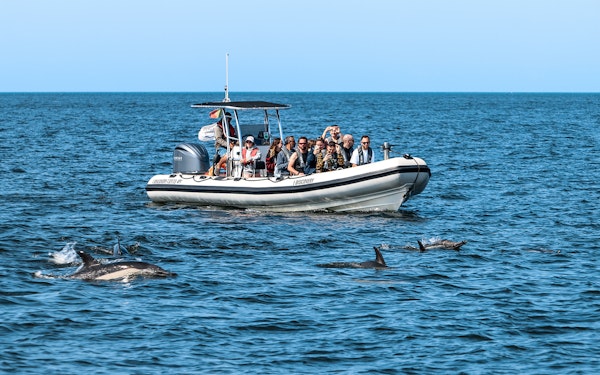
Lisbon Dolphin Watching Cruise
5.0(2)3 hoursViewFrom$75
Cascais coast: Dolphin watching
5.0(29)2 hoursViewFrom$77
Dolphins & Whales small-group 3h tour with Biologist
5.0(12)3 hoursViewFrom$87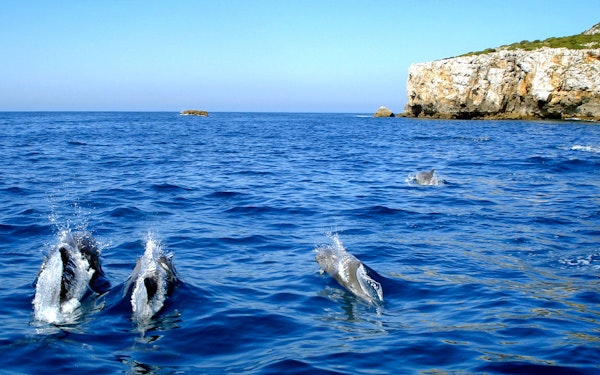
Dolphin Watch - Guided Tour
5.0(1)3 hoursViewFrom$58
Dolphins & Scenic Views of Ponta da Piedade 3h small-group tour
5.0(1)3 hoursViewFrom$87
Evora
The deep cut, east into the Alentejo. Evora is a UNESCO-listed university town where a Roman temple stands a few lanes from a chapel lined with human bones, ringed by golden plains, cork oaks, and some of Portugal's most celebrated wine country. It is the longest of these days and the least crowded, which is exactly its appeal: where Sintra queues, Evora strolls. The town itself is walkable in a relaxed half day - the temple, the cathedral, the bone chapel, the arcaded square - and the guided tours use the rest of the day for the region, adding prehistoric megalith sites or Alentejo vineyard tastings depending on the format. A direct train makes independent Evora possible, but the megaliths and wineries sit out in the countryside, so this is another route where the tour formats deliver a fuller day than the rails can.
Top Evora and Alentejo day trips from Lisbon

From Lisbon to Alentejo: Evora and Megaliths Full-Day Group Tour
The town plus the prehistoric stone circles of the surrounding plain - the well-rated standard format for a first Evora day.
4.8(128)8 hoursViewFrom$93
From Lisbon: Evora, Chapel of Bones & Alentejo Wine - Small Group
The highest-rated Evora format - the old town and bone chapel paired with Alentejo wine tasting in a small group.
5.0(72)10 hoursViewFrom$99
From Lisbon to Alentejo: Evora and Megaliths Full-Day Tour
A second well-reviewed run at the Evora-and-megaliths day for travelers flexible on departure formats.
4.7(159)8 hoursViewFrom$93
Tour Evora and Alentejo with private guide
The private option - Evora and the Alentejo at your own pace with a dedicated guide, strongly rated across a hundred-plus reviews.
4.9(127)9 hoursViewFrom$169
Private Tour: Evora, Elvas and Badajoz (Spain) day trip from Lisbon
3.7(3)10 hoursViewFrom$543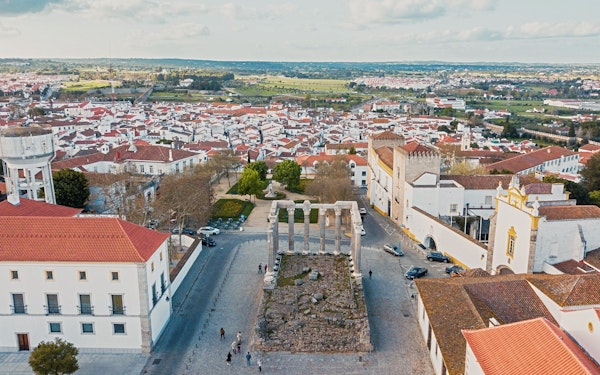
From Lisbon: Évora, Monsaraz, Wine Tasting & Cristo Rei
4.5(2)8 hoursViewFrom$88
Private Évora Tour - Megaliths, Historical Center and Cork Region
5.0(19)6 hours - 8 hoursViewFrom$325
Half Day Monsaraz Tour from Evora by Archaeologists
5.0(16)3 hours - 4 hoursViewFrom$77
1 Day Wine Tour Around Évora
5.0(10)7 hoursViewFrom$331
Half Day Wine Tour Around Evora
5.0(10)3 hoursViewFrom$154
Train or tour: the honest answer per route
Lisbon's suburban rail is excellent where it goes. Sintra and Cascais both have frequent, cheap trains from the center, and Evora is reachable by rail too. If your plan is one palace in Sintra done slowly, or a beach afternoon in Cascais, the train is all you need.
The tours win everywhere else, for one consistent reason: the best parts of these day trips sit beyond the stations. Pena Palace is a steep, bus-or-shuttle climb above Sintra station; Cabo da Roca has no rail at all; the Obidos, Fatima, and Nazare circuit cannot be linked by public transport in a day; and Arrabida's viewpoints and the Alentejo's wineries scatter along country roads. A guided day bundles the driving, the timed entries, and a route you could not stitch together alone - which is why even confident independent travelers tend to go guided on everything except the plain Sintra and Cascais trains.
Booking lead time and cancellation
Peak season for Lisbon day trips runs from Easter through October, with June through September the crunch. In those months the small-group Sintra formats are the first to sell out, one to two weeks ahead, because they cap seats low and everyone wants the same two or three departure times; Pena Palace's timed entry adds a second bottleneck on top. The Obidos and Fatima circuits, the Arrabida wine days, and the Evora tours usually hold availability a few days out, and the dolphin boats sit in between - fine mid-week, tight on summer weekends. Off-season, a day or two of notice covers nearly everything on this list.
Cancellation policy is worth an extra look on two routes. The dolphin trips are weather-dependent by nature, and operators reschedule or refund when the estuary is too rough, so confirm how that works before booking a tight itinerary around one. And on the coastal loops, free cancellation up to 24 hours - which most of the big-volume tours on this page offer - is what lets you swap a grey Sintra forecast for a sunny one without losing money. The private and specialty formats tend to run stricter terms, so read them before committing if flexibility matters.
If you have more time: beyond the classics
A longer Lisbon stay opens the second shelf. Mafra, north of the city, holds a palace-and-monastery complex on a scale that surprises people who thought Sintra had the monopoly on royal excess, and pairs with the low-key surf town of Ericeira, whose clifftop old town and seafood restaurants make an easy afternoon. Both are commonly folded into private or customizable tour formats rather than standing scheduled day trips, which is why they sit here rather than in the ranking above. Nazare also deserves a note on its own: most visitors meet it as the lunch stop on the Obidos circuit, but surf-minded travelers time a dedicated winter visit for the days the giant waves run, when the clifftop above the lighthouse becomes one of the great free spectacles in Europe. None of these needs to displace the classics on a first visit - they are the reasons to come back.
Practical tips for the day
Book Pena Palace first, whatever else you do. It is the one timed entry on this list that regularly sells out and breaks plans.
Start early. Most tours leave central Lisbon between 08:00 and 09:00, and on the Sintra loop the early palace slot is the difference between a stroll and a crowd.
Layer up for the coast. Cabo da Roca and Nazare's clifftop are windy even in summer, and Sintra's hilltop microclimate runs cooler and mistier than Lisbon - a light jacket earns its space in the bag year-round.
Wear real shoes. Palace stairs, castle ramparts, and cobbled village lanes are the terrain of every trip on this list.
Carry some cash. Village cafes, ginjinha counters in Obidos, and beach snack bars still sometimes prefer it.
Do not stack big days back to back. The Sintra loop and the Obidos circuit are both eight-to-ten-hour commitments; give yourself a slow Lisbon day between them.
Quick compare: the best day trips from Lisbon
| Tour | Destination | From | Duration | Rating |
|---|---|---|---|---|
| Sintra and Cascais Small-Group Day Trip | Sintra + coast | $69 | 8h | ★4.8 (7,658) |
| Sintra-Cascais-Pena Palace 8-People Tour | Sintra + coast | $64 | 9h | ★4.93 (1,865) |
| Fatima, Nazare and Obidos Small-Group | Medieval circuit | $76 | 9h | ★4.72 (3,575) |
| Arrabida and Sesimbra with Wine Tasting | Arrabida | $84 | 8h | ★4.83 (545) |
| Dolphin Watching with a Marine Biologist | Sado estuary | $76 | 2.5h | ★4.96 (871) |
| Evora, Chapel of Bones & Alentejo Wine | Evora | $99 | 10h | ★4.96 (72) |
Plan your trip
See all Lisbon tours and day trips →What is the best day trip from Lisbon?
Sintra, and it is not close. The palace-studded hill town less than an hour from the city is the most-booked and most-reviewed day trip in the Lisbon catalog by a wide margin, and most tours pair it with the Cabo da Roca cliffs and the coastal town of Cascais in one loop. If you have already done Sintra, the strongest second pick is the Obidos, Fatima, and Nazare circuit for medieval Portugal, or Arrabida for wine and coastline.
Can you do day trips from Lisbon by train?
Two of them, easily. Suburban trains run frequently from central Lisbon to Sintra and along the coast to Cascais, both cheap and simple. Evora is also reachable by rail. The catch is the last mile: Sintra's palaces sit up a steep hill from the station, and the Obidos, Fatima, Nazare, and Arrabida circuits have no practical rail option at all, which is why guided tours dominate those routes.
Is Sintra worth a full day from Lisbon?
Yes, and treating it as a half-day is the classic first-timer mistake. Between Pena Palace, the Quinta da Regaleira gardens, the Moorish castle walls, and the old town, Sintra fills a day even at a brisk pace, and the hill traffic between sights eats more time than the map suggests. Pick two palaces, book Pena ahead, and give it the whole day - ideally with the Cabo da Roca and Cascais loop on the way back.
How far in advance should I book Lisbon day trips?
In peak season, from late spring through early autumn, book the popular Sintra tours one to two weeks ahead - the small-group formats cap seats low and sell out first, and Pena Palace itself runs on timed entry. The Obidos and Fatima circuits and the Arrabida wine days are usually fine a few days out. Off-season, a day or two of notice covers almost everything.
Should I visit Sintra independently or with a tour?
Both work, and the trade is time versus flexibility. Independent means the cheap train plus the hill buses, with full control of your pace but real queue and logistics overhead at Pena. A guided day handles the palace tickets, the hill driving, and adds Cabo da Roca and Cascais, which are awkward to reach on your own. First-timers on a tight schedule usually get more out of the guided loop; return visitors often prefer the train and one palace done slowly.
What is the Obidos, Fatima and Nazare day trip like?
It is the medieval-Portugal sampler: the walled hill town of Obidos with its castle lanes, the great pilgrimage sanctuary at Fatima, and the clifftop fishing town of Nazare, famous for its giant winter waves. Many versions add the monastery town of Batalha. Expect a full nine-to-ten-hour day with a fair amount of coach time between stops - the payoff is three very different faces of Portugal in one loop that has no public-transport equivalent.
Which Lisbon day trip is best for wine lovers?
Arrabida, the mountain-and-coast park south of the city, pairs dramatic scenery with the wine country around Setubal and Azeitao, and most tours build in cellar visits and tastings. For a bigger commitment, the Evora routes reach the Alentejo, one of Portugal's most celebrated wine regions, and combine the UNESCO-listed old town with vineyard stops. Arrabida is the easy half-measure; Evora is the full immersion.
Which day trip from Lisbon is best with kids?
Sintra plus Cascais is the usual family winner: the palaces read like storybook castles, and the loop ends with beach time or ice cream on the Cascais waterfront. Nazare's cliff-top funicular and beach also land well with children, though the full Obidos and Fatima circuit involves long coach stretches that test younger kids. Arrabida works for families who want a beach-and-boat day more than monuments.
How many day trips should I plan on a Lisbon visit?
On a three-day visit, one - Sintra. On four or five days, two is comfortable: Sintra plus either the Obidos circuit or Arrabida, depending on whether castles or coastline appeal more. Each full-day tour runs eight to ten hours, which is a real bite out of a short trip, and Lisbon itself rewards unhurried time, so resist the urge to day-trip every day.
Can you see wild dolphins near Lisbon?
Yes - the Sado estuary near Setubal, south of the city, hosts a resident pod of wild bottlenose dolphins, and dedicated boat trips run to find them, several departing straight from Lisbon's own waterfront. Because the pod lives in the estuary year-round rather than migrating through, sighting rates are high, and the biologist-guided formats are among the best-rated experiences in the whole Lisbon catalog. Book a morning departure for calmer water and bring layers - it is cool out on the water even in summer.
Can you combine two day trips from Lisbon in one day?
Only along the routes tours already combine: Sintra pairs with Cabo da Roca and Cascais because they sit on one loop, Obidos runs with Fatima and Nazare on the same circuit, and Arrabida folds in Sesimbra and the Setubal wine country. What does not work is chaining two separate directions - Sintra plus Obidos, say - into a single day; the driving eats everything. Pick one route per day and let the tour's built-in combination do the multiplying.
Keep reading
Altre letture
Altre guide per aiutarti a pianificare il tuo viaggio

2 Days in Lisbon: The Itinerary That Handles the Hills
Two days in Lisbon, planned around the terrain rather than the map - what to book, what to walk, and why the second day should leave the city.

Lisbon Travel Guide: First-Time Visitor Essentials for 2026
A practical 2026 Lisbon travel guide: where to stay, how to handle the hills, the Belem ticket strategy, fado and food, and the day trips worth planning around.

3 Days in Lisbon: The Perfect First-Timer's Itinerary
A 3-day Lisbon itinerary that flows: the historic hills on day one, Belem and a food tour on day two, and Sintra on day three, with the top-rated tours at each stop.

Belem Tower Tickets: The 2026 Guide to Entry, Jerónimos Monastery, and the Best Belem Tours
A no-fluff 2026 guide to Belem Tower tickets - entry options compared, how to combine with Jerónimos Monastery, and the best bike and walking tours of Belem.

Gita di un giorno a Sintra da Lisbona: biglietti, treni e quali palazzi scegliere
Tutto quello che serve per una gita a Sintra: quali biglietti dei palazzi comprare, come funziona il treno da Lisbona, quali sights dare priorità, e se prenotare un tour.

Cose da fare a Lisbona: 20 esperienze da prenotare nel 2026
Una lista essenziale di Lisbona 2026 - 20 esperienze, gite di un giorno e tour culinari classificate per quello che vale davvero la pena prenotare, con note sui quartieri e indicazioni oneste sui prezzi.

1 giorno a Londra: Un itinerario realistico che non spreca il tempo
Un giorno a Londra, pianificato intorno a quello che effettivamente si riesce a fare - un percorso a piedi nel centro, le due cose che vale la pena prenotare, e le trappole che mangiano un'ora ciascuna.

1 Giorno a Parigi: L'Itinerario che Funziona, e Quello che Non Funziona
Un giorno a Parigi, pianificato intorno alle distanze reali - cosa prenotare, cosa camminare, cosa saltare, e perché tre musei in un giorno è l'errore classico.