RomeItineraryFive daysPlanning
5 Days in Rome: The Itinerary Where the City Finally Opens Up
Five days in Rome is where the checklist ends and the city begins. A day-by-day route with the two day trips worth taking and the mistakes that waste the extra time.
Par SimilarTours Editorial - Travel Research · · Temps de lecture : 21 min

Three days in Rome is a tour of monuments. Five days is a visit to a city, and the difference is larger than two days of extra sightseeing would suggest.
The reason is that Rome's headline sites - genuinely extraordinary, genuinely worth the queues - are also exhausting, and a short trip spends all of its energy on them. Five days lets you do those properly and still have room for the neighbourhoods, the long lunches, a day outside the city, and the unstructured afternoons where the place actually becomes familiar.
The main risk on five days is not running out of things to do. It is filling the extra time with more of what you already did.
Compare Rome tours and tickets →The shape of the five days
The structure that works is deliberately uneven. Two heavy days, one light day, one day out, and one day that belongs to you.
| Day | Focus | Fixed bookings |
|---|---|---|
| 1 | Orientation and the centre on foot | 0-1 |
| 2 | Ancient Rome, booked and early | 1 |
| 3 | The Vatican side, booked and early | 1 |
| 4 | Day trip out of the city | 1 |
| 5 | Neighbourhoods, markets, nothing scheduled | 0 |
That is four bookings across five days. Every itinerary that goes wrong here has more.
Insider tip
Put the two big ticketed days apart, not together. Back-to-back major sites is how five-day trips produce the same fatigue as three-day ones. A light day between them changes how much you take in at the second, and it is the single easiest improvement to make to any Rome itinerary.
Day 1: walk, do not book
Arrive into the city rather than into a schedule. The first day should have no timed entries on it at all.
Walk the historic centre. The squares, the fountains, the bridges, the streets that connect them. Almost none of it requires a ticket, and it is the part of Rome that most rewards simply being in it. Get lost deliberately; the centre is small enough that you cannot get lost usefully.
A guided walk is worth considering on this day specifically, because orientation is worth most at the start. Two hours in the late afternoon, ending near dinner, is close to the ideal shape.
Rome orientation and centre walks

Rome: Guided Small Group Walking Tour of City Highlights
A two-hour small-group walk through the central squares.
4.8(706)2 hoursViewFrom$29.37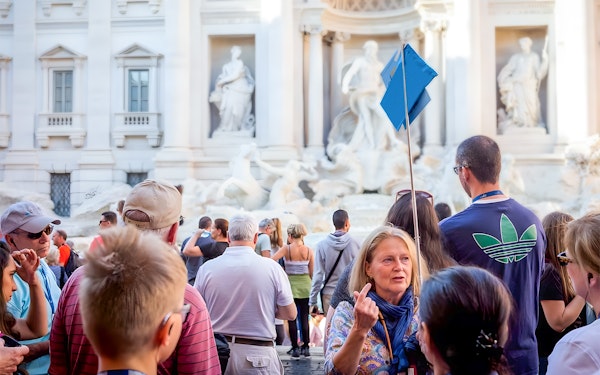
Trevi Fountain & Piazza Navona Guided Walking Tour
Guided context for the squares you will otherwise walk past.
4.5(1,568)2 hoursViewFrom$24.20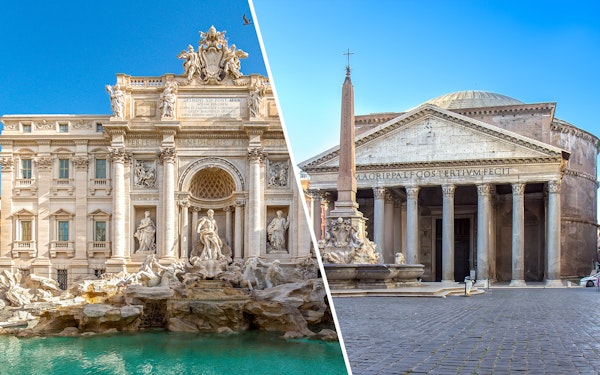
Combo: Rome Walking Tour + Pantheon Fast-Track Tickets
A centre walk with one interior included - enough structure for day one.
4.5(6,169)ViewFrom$33.57
Rome Night Walking Tour: Ghosts, Legends & Haunted Rome
An evening walk - a good arrival-day option when the light has gone.
4.9(616)2 hoursViewFrom$30.24
Rome Highlights Private Shore Excursion from Civitavecchia Port
5.0(13)9 hoursViewFrom$1,218
Classic Rome Private Walking Tour: Pantheon & Piazzas
4.0(1)2 hoursViewFrom$537
Rome: Pantheon, Spanish Steps, Navona and Trevi Private Tour
5.0(80)2 hours - 3 hoursViewFrom$290
Private Tour - City Center
5.0(165)2 hr 30 minViewFrom$136
Rome Walking Tour Spanish Steps Trevi Fountain and Pantheon
2 hr 30 minViewFrom$71
Rome Walking Tour
5.0(21)3 hoursViewFrom$189
Day 2: ancient Rome, early and booked
This is the first of the two heavy days. Book the earliest entry you can get and be there for it.
The ancient sites are large, largely outdoors, and unshaded, which means the difference between a morning visit and an afternoon one is significant in every season and decisive in summer. Give this the whole morning and into the early afternoon.
Then stop. Do not add a second major site to this day. Walk somewhere shaded, eat properly, and let the afternoon be slow. The single most common five-day mistake is stacking a second monument onto the back of this day because there is still daylight left.
Colosseum and ancient Rome tickets
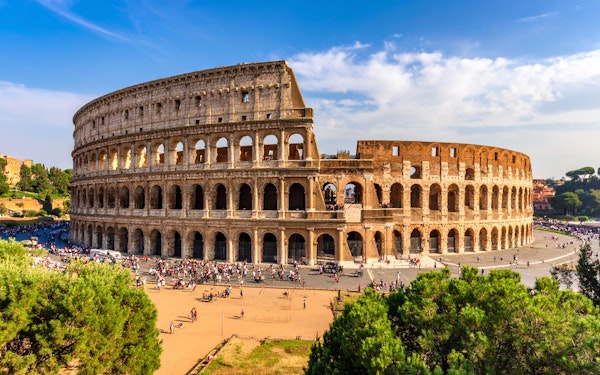
Combo: Colosseum, Roman Forum & Palatine Hill + Vatican Museums + Pantheon
A multi-site bundle covering both of the heavy days in one purchase.
4.4(45,107)ViewFrom$75.39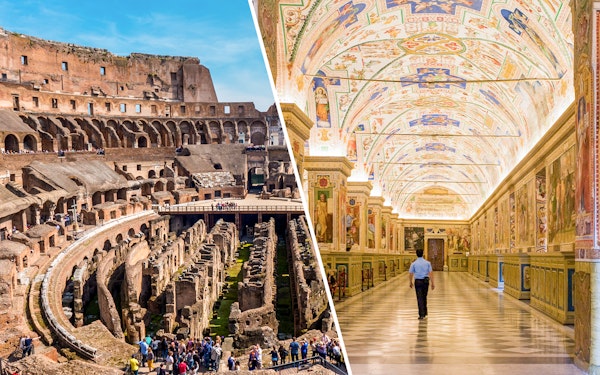
Combo: Colosseum + Vatican Museums Pass
The two headline sites, bookable as a pair.
4.5(47,081)ViewFrom$62.73
Ultimate Rome: Colosseum, Vatican Museums & Walking Tour
A guided full day across both - intense, and best if your time is tight.
4.6(2,650)7 hoursViewFrom$265.00
Leonardo da Vinci Museum, Vatican Museums & Sistine Chapel, and Colosseum Pass
A wider pass including a smaller museum alongside the two giants.
4.4(44,414)ViewFrom$67.75
Combo: Mamertine Prison + Colosseum + Roman Forum + Palatine Hill Tickets
4.3(2,908)4 hoursViewFrom$45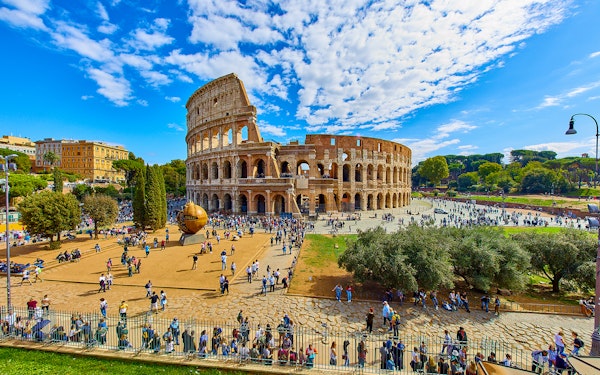
Colosseum, Palatine Hill & Roman Forum Entry Pass
4.4(29,418)4 hoursViewFrom$28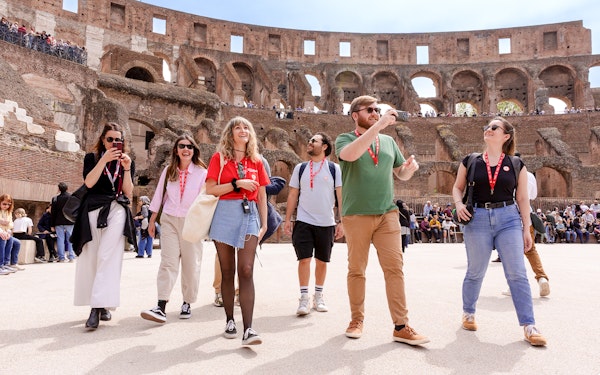
Colosseum, Palatine Hill & Roman Forum with Exclusive Arena Floor Guided Tour
4.5(12,332)2 hr 30 minViewFrom$75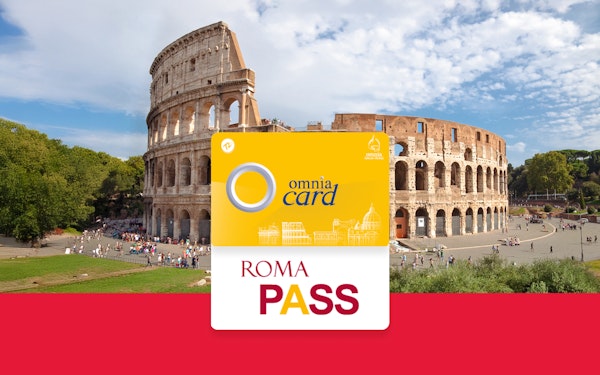
Omnia Card and Roma Pass: Access 10+ Attractions and Unlimited Public Transport
3.9(44)ViewFrom$173
Colosseum Access with Virtual Reality Experience
3.8(73)2 hoursViewFrom$66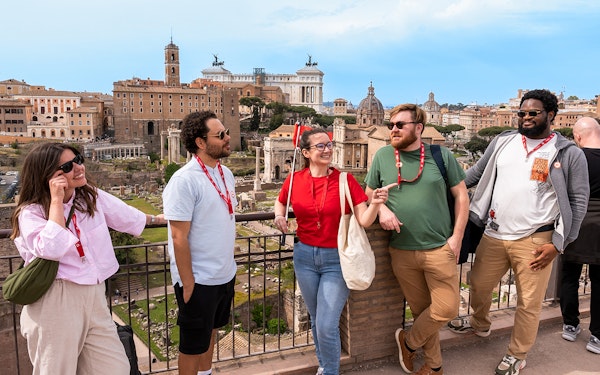
Colosseum, Palatine Hill & Roman Forum Guided Tour
4.5(18,719)2 hoursViewFrom$41
Day 3: the Vatican side, then the river
The second heavy day, and again an early booked entry. The museums here are enormous and the crowd builds through the morning; the difference between the first entry slot and a mid-morning one is not marginal.
Budget three hours minimum, and accept that you will not see everything - nobody does. Pick the sections you care about and walk purposefully to them.
Afterwards, cross the river rather than going back the way you came. The neighbourhoods on that side are where a lot of visitors have their best evening of the trip, and arriving there tired from a museum morning is exactly the right time.
Vatican Museums tickets and guided tours
- tiqets
Vatican Museums & Sistine Chapel: Fast Track Ticket
Timed fast-track entry without a guide, at your own pace.
4.4(47,898)ViewFrom$66.02 
Vatican Museums, Sistine Chapel & St Peter's Basilica Guided Tour
A guided route through all three linked sites in one visit.
4.4(40,497)3 hoursViewFrom$81.05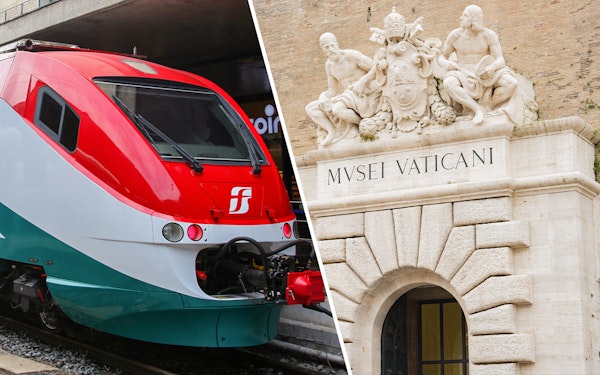
Combo: Leonardo Express One-Way Tickets + Vatican Museums Tickets
Museum entry bundled with an airport train - useful on an arrival or departure day.
4.5(36,057)ViewFrom$55.97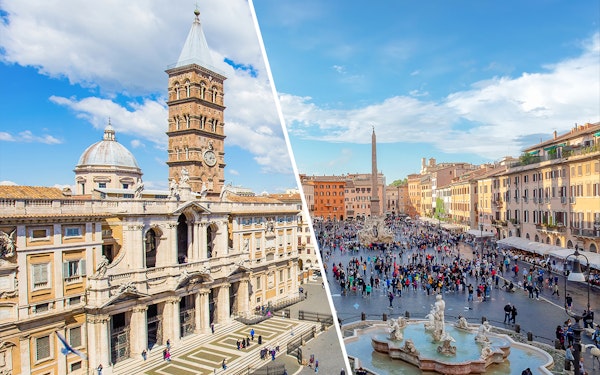
Combo: Santa Maria Maggiore Entry + Trevi Fountain & Piazza Navona Walking Tour
A major church interior with an evening walk - a lighter pairing.
4.5(1,595)ViewFrom$35.03
Entry Tickets Sistine Chapel And Vatican Museum
4.8(11)2 hours - 3 hoursViewFrom$117
Vatican Museums and Sistine Chapel Entry Ticket
5.0(1)3 hoursViewFrom$86
Vatican Museums & Sistine Chapel Reserved Entry Ticket
4.8(4)2 hours - 2 hr 30 minViewFrom$96
Vatican Museums & Sistine Chapel - Entrance Ticket
5.0(9)1 hr 45 min - 2 hoursViewFrom$65
Vatican Museums & Sistine Chapel Skip-the-Line Ticket
4.3(52)1 hour - 4 hoursViewFrom$77
Vatican Museums and Sistine Chapel with Skip The Line Ticket
4.4(52)2 hours - 3 hoursViewFrom$85
Day 4: leave the city
The day trip is the clearest single advantage five days has over three, and it is worth protecting from the temptation to squeeze another Roman site in around it.
The options split into two families. Archaeological trips take you to sites that make the ancient Rome you saw on day two make more sense, and they are genuinely complementary rather than repetitive. Food and countryside trips do the opposite job - they break the pattern entirely, which after three days of monuments is exactly what a five-day trip needs.
Either works. What does not work is booking a day trip and then also planning an evening activity back in the city, because you will return later and more tired than the timetable suggests.
Day trips from Rome

Pompeii from Rome with Optional Mt. Vesuvius & Pizza Lunch
A long archaeological day that complements the ancient sites in the city.
4.6(6,313)12 hoursViewFrom$81.05
Rome to Pompeii Guided Tour with Wine & Lunch by High Speed Train
The same site by fast train - shorter, easier, and seated.
4.8(1,512)9 hoursViewFrom$239.00
Pasta Making & Wine Tasting with Dinner in Frascati from Rome
A short countryside evening - the pattern-break option rather than more ruins.
4.9(1,380)2 hours 30 minutesViewFrom$39.94
Pompeii, Amalfi Coast and Positano Day Trip from Rome
The longest option, combining ruins with the coast - a genuinely full day.
4.5(6,721)13 hoursViewFrom$128.04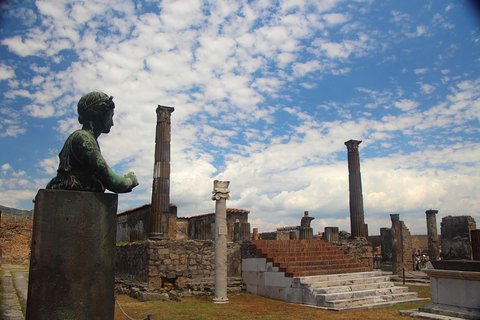
Day Trip to Pompeii Ruins from Rome
4.9(14)8 hoursViewFrom$692
From Rome: AC Coach Transfers to Pompeii with Pompeii Guided Tour
0.0(0)12 hoursViewFrom$194
Transfer From Naples area to Sorrento with 2hr stop in Pompeii
5.0(9)3 hoursViewFrom$182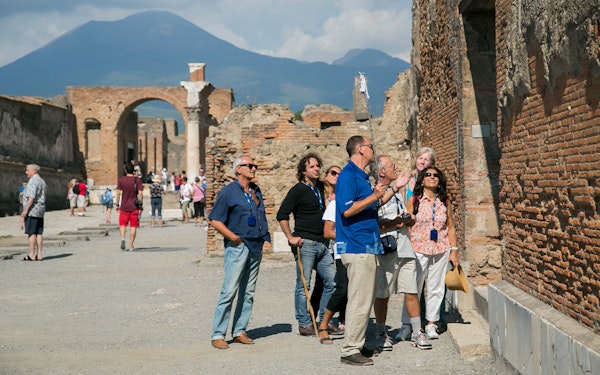
From Rome: Pompeii Guided Tour and Amalfi Coast Day Trip
4.7(313)13 hoursViewFrom$103
Private Transfer from Amalfi Coast to Rome or vice versa
5.0(10)5 hours - 7 hoursViewFrom$402
Day Trip Rome Car Tivoli Unesco Villa D'este & Hadrian Villa
5.0(101)6 hours - 9 hoursViewFrom$105
Day 5: the day that justifies the trip
Book nothing.
This is the day for the neighbourhoods you walked past, the market you did not have time for, the church you noticed on day one, the long lunch that runs into the afternoon. It is also the day you will describe most warmly when you get home, which is not a coincidence.
If you want structure, make it a food tour rather than a sight - it moves you through areas you would not otherwise reach and it fits the tone of a final day better than a monument does.
Rome food tours for the unscheduled day

Rome Food & Wine Tour: 15 Tastings in Trastevere & the Jewish Ghetto
A tasting walk across two neighbourhoods - substantial enough to be dinner.
4.8(3,558)2 hours 45 minutesViewFrom$85.83
Rome Twilight Trastevere Food Tour
An evening food walk through the neighbourhood across the river.
4.9(6,124)4 hoursViewFrom$120.78
Rome: Award Winning Trastevere Group Food Tour with Wine
A three-hour group tasting tour with wine included.
4.9(2,743)3 hoursViewFrom$89.19
Rome Gourmet Food Tour with Free-Flowing Wine
A longer, seated-heavy tasting tour for a relaxed final evening.
4.9(3,687)4 hoursViewFrom$81.05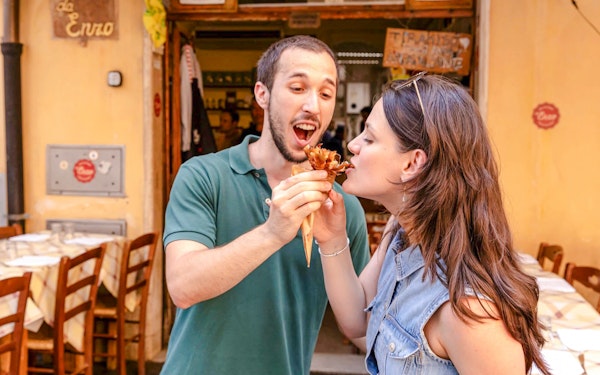
Twilight Food Tour in Trastevere
4.9(105)4 hoursViewFrom$121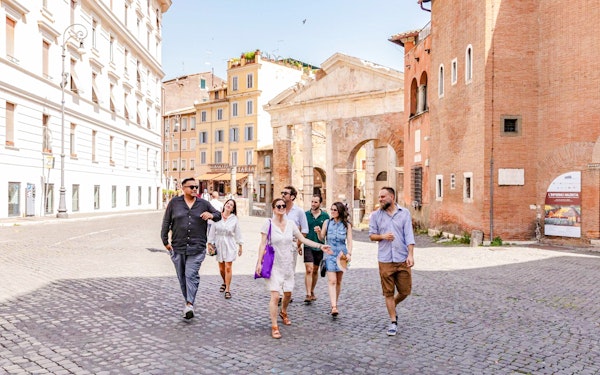
Trastevere and Campo De' Fiori Food Tour With Jewish Ghetto
4.9(123)4 hoursViewFrom$51
Trastevere Food Tour
4.9(142)2 hr 30 minViewFrom$92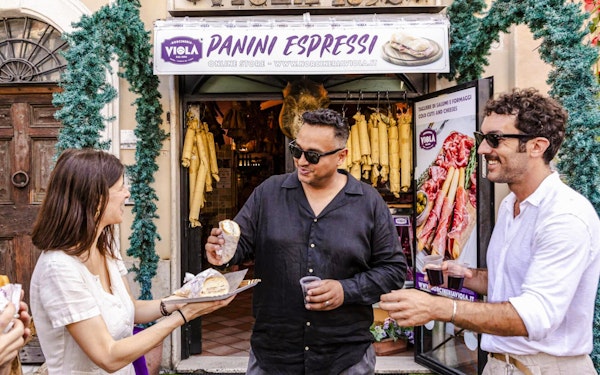
Eternal Rome: Trastevere Food Tour & Jewish Ghetto
4.9(119)4 hoursViewFrom$138
Tasty Prati and Vatican Neighborhood Wine and Food Tour
5.0(1)4 hoursViewFrom$294
Trastevere and Jewish Ghetto Private Walking Tour
5.0(87)2 hoursViewFrom$177
Booking order, and why it matters
On a five-day trip you have enough slack that the order you book in changes what you get.
Book the two big timed entries first, as soon as your dates are fixed, and choose the earliest slots available. These are the only two things in the itinerary where a bad slot materially degrades the experience, and where availability genuinely runs out in high season.
Book the day trip second. Fixed departures with limited capacity, and the good ones fill. Pick which day it lands on by looking at your two big entries and putting it as far from both as possible.
Book a food tour or an evening walk third, if you want one, for either day one or day five. These are the flexible layer.
Book nothing else in advance. Everything remaining - the churches, the neighbourhoods, the markets, the second-tier sites - is walk-up, cheap or free, and better decided on the morning based on weather and energy.
The failure mode this order prevents is the common one: booking enthusiastically in the weeks before travel until every morning has an appointment, then discovering on day three that what you wanted was an afternoon with nothing in it.
Getting around over five days
Rome is a walking city, and on a five-day trip that is both the pleasure and the problem.
Walking covers the historic centre comfortably and is the right default. The centre is smaller than first-time visitors expect, and most of the distances between the major sites are genuinely walkable.
The metro is limited by the simple fact that digging under Rome is difficult, so it serves fewer places than the equivalent network in other capitals. It is useful for a handful of specific journeys and irrelevant for most.
Buses and trams fill the gaps, and they are worth learning for one particular job: getting home at night when your feet have gone. Five days is enough to make that worth the small effort.
Taxis are worth using without guilt for late-night returns and for the airport. On uneven stone in the dark, tired, is where people turn ankles.
The rhythm most people settle into by day three is: walk out in the morning, walk all day, ride home at night. That is the correct rhythm and reaching it sooner improves the trip.
When to go for a five-day trip
Length changes the seasonal calculation, because five days can absorb one bad day and a two-day trip cannot.
Spring and autumn are the best conditions and the busiest. Book the timed entries earlier than you think you need to.
Summer is hot, and on a five-day trip the heat compounds exactly the way the walking does. The itinerary above adapts by shifting everything outdoors to early morning and evening and making the light day genuinely light. Book the earliest entry slots available; they matter more in July than at any other time.
Winter suits a five-day trip unusually well. The queues largely disappear, the walking weather is good, the prices are at their lowest outside the holiday fortnight, and the short daylight matters less when you have five days to spread things across. The main cost is a higher chance of rain, which a five-day trip can absorb.
The holiday fortnight in late December is the exception in the other direction - busy, expensive, and atmospheric.
Five days with children
The structure holds up well, with the pacing being the thing to adjust rather than the content.
Halve the ticketed content. Two major sites across five days is plenty with children, and the ancient outdoor sites generally work better than the museums because there is space and things to climb on rather than rooms to be quiet in.
Protect the middle of the day. Long lunches, parks, and gelato are not filler on a family trip here, they are the mechanism that makes the afternoons possible.
Make the day trip an active one. A countryside or food-based excursion with something to do beats a long coach ride to another archaeological site, which will read as more of the same.
And use the fifth day exactly as written. An unscheduled day is worth more with children than without, because it lets you follow whatever is working rather than whatever you booked six weeks ago.
Managing five days of walking
Fatigue is the thing that quietly ruins longer Rome trips, and it is mostly avoidable.
The surfaces are the issue. Rome's historic paving is uneven stone, and a day on it is harder on the feet and joints than the same distance on flat pavement. Over five days that compounds, and the classic pattern is a great first three days followed by two where nobody wants to leave the hotel.
Shoes with cushioning, not just grip. Grip matters in the wet; cushioning matters every day.
One genuinely slow day around the midpoint. Built into the plan above as day one being light and day five being unscheduled, but if your days shuffle, keep the principle.
Sit down properly at lunch. An hour off your feet in the middle of the day changes the afternoon more than any amount of determination.
Use taxis for the last leg at night. Walking home tired on uneven stone in the dark is where the ankles go.
What five days lets you do that three does not
Worth naming explicitly, because the extra time gets wasted when its purpose is vague.
Go back to something. The single best privilege of a longer trip. A square you liked at midday is a different place at eleven at night; a church you walked through on day one repays a second, slower visit on day four. Nobody with three days does this, and everybody who does it on five days lists it as a highlight.
Eat properly, repeatedly. Three days means three dinners, at least one of which is eaten late and badly after a long day. Five means you can book one good place, discover another by accident, and go back to the one you liked.
See a neighbourhood rather than a sight. Rome's residential districts are where the city stops performing. On a short trip they are what you sacrifice; on five days they are affordable.
Have a bad day without it mattering. Someone gets tired, it rains, a site is unexpectedly shut. On three days that is a third of the trip. On five it is an afternoon in a café.
Leave things undone deliberately. The healthiest sign of a well-planned five-day trip is a short list of things you decided not to bother with. It means the schedule had slack in it.
The most common way five days goes wrong
It is worth being blunt about the failure mode, because it is nearly universal among people who report a longer Rome trip as tiring.
The pattern: the traveller plans three days properly, then looks at days four and five and thinks "what else is there?" They search for more sites, find plenty - Rome has an effectively unlimited supply - and book two more heavy days. The result is five consecutive days of monuments, a level of accumulated fatigue that a three-day trip never reaches, and a distinct sense by the end that it has all blurred together.
The fix is a decision rather than a technique. Days four and five are for a different kind of day, not more of the same day. One of them leaves the city. The other has nothing booked. If that feels like waste, the honest test is to ask anyone who has spent five days here which day they would repeat - it is almost never the one with the extra museum in it.
What to skip on five days
- A third major ticketed site on a day that already has one. Two big things in one day is a three-day-trip compromise you no longer need to make.
- Two day trips. Possible, and it costs you the neighbourhood time that is the whole point of the fifth day.
- Anything booked on day one. Arrival days run late and the day is better spent walking.
- A pass you have not priced against your actual list. Five days sounds like a lot of sites; a good five-day plan has fewer than you think.
- Filling day five. The temptation is strong and the trip is worse for it.
If it rains
Five days almost always includes some weather, and the length is your advantage - you can move things rather than abandoning them.
Swap the unscheduled day and the day trip if the forecast is clearly better on one than the other. Move an indoor-heavy museum morning into the wettest day. Rome's churches are free, extraordinary, and everywhere, which makes them the best rain plan in the city.
The one thing to protect is the day trip, because it is usually the least reschedulable booking in the itinerary. If it is fixed and the day is wet, go anyway - most of the options work in rain, and the alternative is losing it.
Compare Rome attractions, tours, and day trips →Five days, summarised
Two big ticketed days, held apart. One day out of the city. One arrival day spent walking and one final day spent doing nothing in particular. Four bookings total.
That is a trip with room in it, and room is what five days actually buys you. The visitors who come home saying Rome was overwhelming almost always had a fuller schedule than this one. The ones who say they could live there had a lighter one.
Is five days too long for Rome?
No - five days is arguably the first length at which Rome stops being a set of monuments and becomes a city you have some feel for. Two and three day trips are dominated by the headline sites. Five gives you those plus neighbourhoods, a day trip, and enough unscheduled time that the trip has a shape rather than a schedule. The risk is not boredom, it is filling the extra days with more of the same.
What should I book in advance for five days in Rome?
The two or three major timed-entry sites and any day trip. That is it. Five days is long enough that over-booking becomes a genuine problem - a schedule with something fixed every morning removes exactly the flexibility that makes a longer trip better than a short one. Two fixed points a day is the ceiling, and most days should have one.
Can you do a day trip on a five-day Rome trip?
Yes, and you should - it is the single biggest improvement five days offers over three. One full day out of the city is comfortable and adds genuine variety. Two is possible if both are short, but it starts to cut into the neighbourhood time that is the other reason five days is better than three.
How many days do you need to see Rome properly?
Three days covers the headline sites. Five days covers those plus a real sense of the city and a trip outside it. Beyond about a week you are into repeat-visit territory rather than first-visit completeness. If you are choosing between three and five, five is a materially different and better trip, not just a longer one.
What is the best area to stay for five days in Rome?
Somewhere central enough to walk home from dinner, which matters more on a five-day trip than a two-day one because you will be doing it four times. The historic core and the neighbourhoods just across the river both work. Staying further out to save money costs you the evening walks, which are one of the best parts of a longer stay.
How much walking is a five-day Rome itinerary?
A lot, and mostly on uneven historic surfaces that are hard on the feet in a way flat pavement is not. Five days is long enough that fatigue compounds - the mistake is treating day four like day one. Build in one deliberately slow day around the midpoint, and wear shoes with cushioning rather than just grip.
Is a Rome pass worth it for five days?
It depends entirely on how many ticketed sites you plan to visit, and on a well-designed five-day trip that number is lower than people expect - perhaps four or five. Price your actual list individually and compare. If a pass only wins once you add sites you were not otherwise going to visit, it has sold you an itinerary rather than saved you money.
What is the biggest mistake on a five-day Rome itinerary?
Treating it as a three-day itinerary with two extra days of sightseeing bolted on. The extra days are not for more monuments - they are for the neighbourhoods, the day trip, the long lunches, and the unscheduled afternoons. A five-day trip that books something major every morning delivers less than a three-day one that did not.
Keep reading
Itinerary
3 days in Rome: a walkable itinerary
The shorter version, and what has to be cut to make it fit.
Read more
Rome pillar
Rome travel guide: first-time visitor essentials
Where to stay, getting around, and ticket strategy for the big sights.
Read more
Day trips
Best day trips from Rome
Which trips out of the city justify the full day that five days gives you.
Read more
Listicle
Things to do in Rome: the experiences worth booking
The Rome shortlist, ranked by what is actually worth your time.
Read more
Plus à lire
Plus de guides pour vous aider à planifier votre voyage

The Best Walking Tours in Rome: Which Ones Are Worth Booking
Rome is a walking city with more guided tours than any visitor can sort through. Which types actually help, when to do them, and what the free tours really cover.

Christmas Markets in Rome: What the Season Is Actually Like
Rome at Christmas is not a northern market city, and that is the point. What the season actually offers, when it runs, and how to plan a December trip around it.

Billets Panthéon 2026 : prix, types et comment éviter la file d'attente
Un guide pratique 2026 pour les billets du Panthéon à Rome - maintenant que l'entrée est payante, comparaison des types de billets, quand réserver et comment éviter la file d'attente.

Billets Chapelle Sixtine 2026 : Tarifs, Types et Comment Éviter la Queue
Un guide pratique 2026 pour les billets de la Chapelle Sixtine - comment fonctionne l'accès via les Musées du Vatican, comparaison des types de billets, et quand le coupe-file en vaut la peine.

Billets Galleria Borghese : Guide 2026 des entrées horaires, visites guidées et éviter les ruptures de stock
Guide pratique 2026 de la Galerie Borghese - tous les types de billets comparés, fonctionnement du système strict de 2 heures, et ce qu'il faut faire quand les billets officiels sont épuisés.

1 Day in Rome: The Itinerary and the Best Rome in One Day Tours
How to spend 1 day in Rome without losing it to queues: Colosseum morning, Vatican or historic center afternoon, and the full-day tours that solve it all.

Rome in Winter: Why November to February Is the Connoisseur's Season
Rome in winter means short queues at the Colosseum and Vatican, mild days, Christmas in the piazzas, and the city at its most local - here is how to plan it.

Rome with Kids: A Family Guide That Actually Works
A practical guide to Rome with kids: the Colosseum and Vatican with children, gladiator school, pizza and gelato classes, and Villa Borghese downtime.