FlorenceListicleSkip the lineDay tripsFood
Things to Do in Florence: 22 Experiences Worth Your Time in 2026
A 2026 Florence shortlist - 22 attractions, museums, day trips, and food experiences ranked by what's actually worth booking, with skip-the-line picks and price-band notes.
By SimilarTours Editorial · Travel Research · · 19 min read

Florence packs an improbable amount into a small, flat, walkable center. Within a 15-minute radius you have the cathedral and its dome, two of Italy's most important art museums, a bridge lined with goldsmiths, a riverbank that turns gold at sunset, and the surrounding Tuscan hills full of vineyards a short drive out. The catch is the timed-entry system: the headline sights sell their slots ahead, and the difference between a smooth trip and a frustrating one is almost entirely about what you booked and when.
This guide cuts the city down to 22 experiences worth your time, grouped so you can pull the right block depending on whether you are here for the icons, the museums, the views, the food, or a day out into Tuscany. Each entry includes the bare facts - price band, duration, neighborhood, who it suits, and whether you need to book ahead - plus one specific reason it earns its place.
Prices and availability come from our partner OTAs at fetch time; every "from" figure below is the lowest live adult fare we've seen this week. Final cost depends on date, group size, language, and any add-ons selected at checkout.
Browse all Florence tours and tickets →The unmissable icons
Start with these four. Every Florence itinerary loops back to them, and the first two need booking ahead.
1. The Duomo complex + dome climb
Quick facts
- Price band - Free (cathedral floor) · $20-$45 (combined pass with dome climb)
- Duration - 2-3 hours for the full complex
- Neighborhood - Piazza del Duomo, dead center
- Best for - First-time visitors, anyone who wants the city's best rooftop view
- Book ahead? - Yes - the dome climb is timed and sells out days ahead in summer
The cathedral, its towering dome, the bell tower, the baptistery, and the complex museum together make up the city's single biggest sight, and the climb up inside the dome is the experience to book. It is a steep, narrow, capacity-capped ascent that rewards you with the best framed view of the red-tiled rooftops and the hills beyond. The cathedral floor has a free line, but the dome, tower, and museum are ticketed - a combined pass plus a reserved dome slot is the clean way to handle it.
Booking note
The dome climb is the one Florence ticket you should never leave to the day of. Slots are tightly capped and go fast in season - lock a morning slot when you book your trip, then build the rest of the day around it.
Top Florence Duomo and dome climb tours

Florence Duomo Small Group Tour with Exclusive Terrace Access
5.0(19)1 hr 30 minViewFrom$253
Florence Duomo Tour: Dome & Terraces or First Entry Dome Climb
4.8(1,170)2 hours - 4 hoursViewFrom$93
Florence David First Viewing & Duomo with Terrace VIP Access Tour
5.0(40)2 hr 45 minViewFrom$413
Florence Premium Duomo Tour With Terrace View and Dome Climb
4.4(399)2 hoursViewFrom$32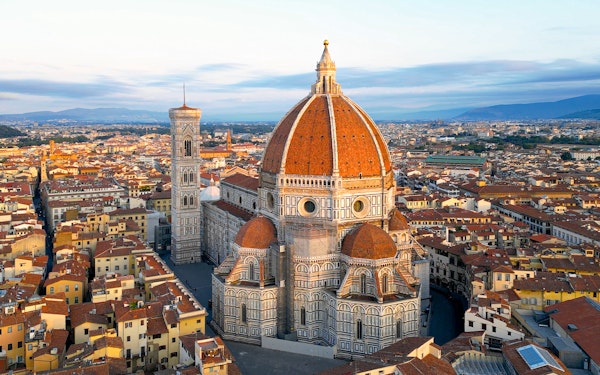
Florence Duomo with Brunelleschi Dome Access
4.5(2,973)2 hoursViewFrom$65
Florence Duomo Express Tour with Optional Dome Climb Upgrade
3.9(980)30 minutes - 2 hoursViewFrom$25
Florence Duomo Complex Private Guided Tour
5.0(42)2 hoursViewFrom$178
Climb the Dome, Own the View: Florence Duomo Tour
4.9(570)3 hoursViewFrom$110
Dome Climb & St. Peter's Basilica Private Tour
5.0(2)2 hoursViewFrom$360
Florence Duomo with Dome Climb Tickets and Museum Tour
4.9(214)2 hr 30 minViewFrom$123
2. Uffizi Gallery
Quick facts
- Price band - From $25 (timed entry) · $50-$90 (guided)
- Duration - 2.5-3.5 hours
- Neighborhood - Between Piazza della Signoria and the river
- Best for - Art lovers, first visits, anyone who wants a clear highlight route
- Book ahead? - Yes - timed entry, books out days to weeks ahead in summer
One of the most important painting collections in the world, and the harder Florence ticket to get day-of. The galleries are vast and the headline works are spread across many rooms, so an unguided visit can blur into an exhausting drift. A skip-the-line timed ticket is the minimum; a two- to three-hour guided tour adds the context that turns a sprint past famous canvases into something you actually remember. Book early morning to beat both the queue and the midday crowds.
Top Uffizi Gallery skip-the-line tours

Florence: Vip early Timed Entry Ticket Uffizi Gallery
5.0(30)2 hoursViewFrom$105
Skip the Line: Uffizi Gallery Ticket in Florence
3.5(168)1 hour - 3 hoursViewFrom$48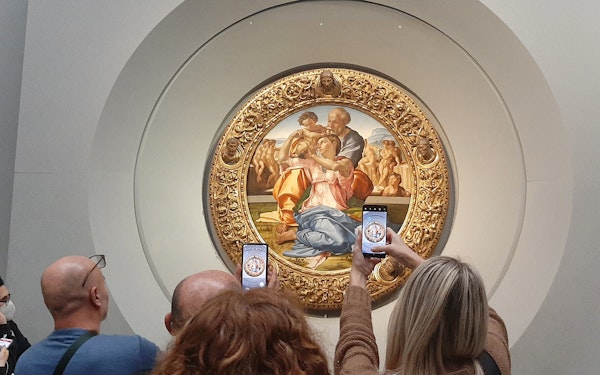
Uffizi Gallery Guided Tour
4.4(6,693)1 hr 30 minViewFrom$63
Florence: Uffizi Gallery self guided tour
3.8(412)1 hour - 3 hoursViewFrom$46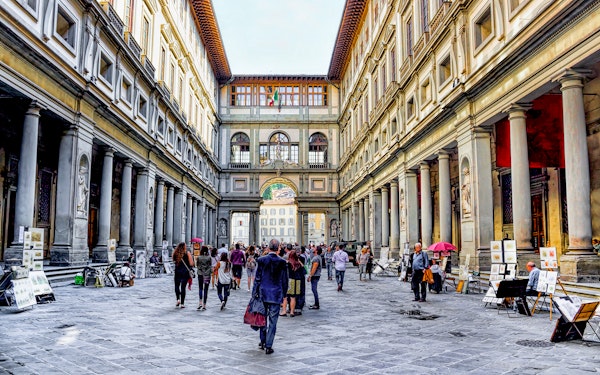
Uffizi Gallery Timed Entry Tickets
4.4(3,136)1 hr 30 minViewFrom$23
Uffizi Gallery Small Group Tour with Guide
4.7(5,965)1 hr 30 minViewFrom$73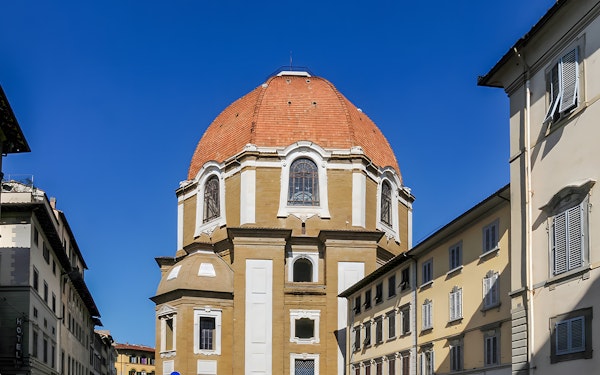
Medici Chapels Skip-the-Line Tickets
4.5(1,933)ViewFrom$20
Uffizi Gallery Timed Entry Admission Tickets
3.8(412)1 hr 30 minViewFrom$46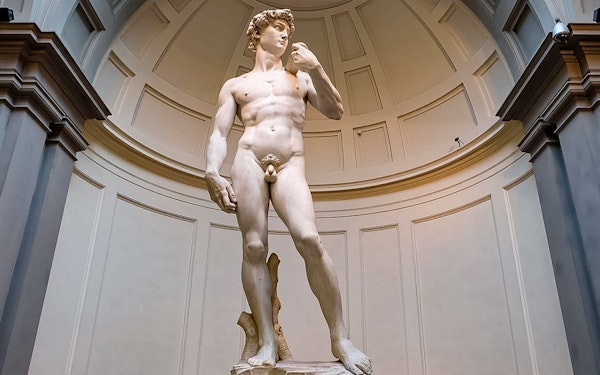
Accademia Gallery Timed Entry Tickets
4.5(7,449)1 hourViewFrom$31
Florence Accademia Gallery Timed-Entry Ticket to See David
4.3(334)1 dayViewFrom$32
3. Accademia Gallery (David)
Quick facts
- Price band - From $25 (timed entry) · $40-$70 (guided)
- Duration - 1-1.5 hours
- Neighborhood - North of the Duomo, near San Marco
- Best for - First visits, anyone short on time who still wants one great masterpiece
- Book ahead? - Yes - timed entry, slots cap hard
The Accademia is essentially one of the most famous sculptures on earth plus a focused supporting collection - a shorter, more concentrated visit than the Uffizi. The standing figure of David in its domed alcove is the draw, and seeing it in person is worth the timed-entry hassle. Because the visit is quick, it pairs neatly with another morning sight. Book the slot; the walk-up line is long and the day-of stock thin.
4. Ponte Vecchio + the river at sunset
Quick facts
- Price band - Free to walk
- Duration - 1 hour, ideally at golden hour
- Neighborhood - Spanning the Arno, center of the city
- Best for - Evening, any age, no booking needed
The shop-lined bridge over the Arno is the city's most recognizable everyday image, still home to goldsmiths and jewelers. Walk across it, then drift along the riverbank as the light goes warm - the bridges and the water turn gold and the crowds thin after the museums close. No ticket needed; this is the free, unstructured part of Florence that ties the booked sights together.
See guided Florence walking tours →Museums + art beyond the big three
The icons are mandatory. These are the strong second tier - book them if you have more than two days, or pick the one that fits your interests.
5. Bargello Museum
Quick facts
- Price band - $15-$25 direct entry
- Duration - 1.5 hours
- Neighborhood - A few minutes from the Duomo
- Best for - Sculpture lovers, quieter museum time, Day 2+
A premier sculpture collection set in a former medieval palace, and far calmer than the Uffizi or Accademia. If you cared about the David, this is where the supporting cast of Renaissance sculpture lives, in rooms you can actually move through. A direct ticket is fine - guided tours are uncommon and not necessary.
6. Medici Chapels + San Lorenzo
Quick facts
- Price band - $15-$30
- Duration - 1.5 hours
- Neighborhood - San Lorenzo market district
- Best for - Day 2+, sculpture and decorative-arts interest
The chapels attached to the San Lorenzo complex are a dense, ornate stop - marble-clad rooms and monumental sculpture that reward a slow look. Pair the visit with a wander through the surrounding San Lorenzo market for leather and street food. Quieter than the headline museums by a wide margin.
7. Palazzo Vecchio
Quick facts
- Price band - $15-$35 (entry) · $35-$60 (guided + tower)
- Duration - 1.5-2 hours
- Neighborhood - Piazza della Signoria
- Best for - Families, history interest, tower-climb views
The fortress-like town hall on the city's main civic square, with grand frescoed halls inside and a tower you can climb for another rooftop view. Family-focused tours with a tower climb land well with kids, and the square outside is an open-air sculpture gallery in its own right. Book the tower portion ahead in summer.
8. Santa Croce
Quick facts
- Price band - $10-$20
- Duration - 1-1.5 hours
- Neighborhood - Santa Croce, east of the center
- Best for - Quiet mornings, art and monuments, fewer crowds
A vast church complex on its own broad square, lined with monuments and chapels and fronting one of the city's most pleasant open piazzas. It is one of the calmer major stops, and the surrounding neighborhood is good for a coffee away from the museum crush. A direct ticket is all you need.
Views + walking on the south bank
9. Piazzale Michelangelo
Quick facts
- Price band - Free
- Duration - 1.5 hours including the walk up
- Neighborhood - Oltrarno hillside, south of the river
- Best for - Sunset, the postcard skyline view, all ages
The terrace above the south bank that gives you the classic full-city panorama - the dome, the bridges, and the rooftops in one frame. It is free, the climb is a pleasant 15-20 minutes from the river, and sunset is the moment everyone aims for. Go a little before the golden hour to claim a railing spot.
View timing
Piazzale Michelangelo faces the city, so the skyline is best lit in the late afternoon and at sunset, when the dome glows. Arrive early for a front-row railing position - it fills up fast on clear summer evenings.
10. Boboli Gardens
Quick facts
- Price band - $15-$25
- Duration - 1.5-2 hours
- Neighborhood - Behind Pitti Palace, Oltrarno
- Best for - A green break, families, slow mornings
A large terraced garden rising up the hillside behind Pitti Palace, with shaded avenues, fountains, and high points that look back over the city. It is the antidote to museum fatigue - room to walk, sit, and breathe. Combine it with the palace in a single south-bank afternoon.
11. Pitti Palace
Quick facts
- Price band - $15-$30
- Duration - 2 hours
- Neighborhood - Oltrarno, across the river
- Best for - Art and decorative-arts lovers, Day 3+
A sprawling former grand-ducal residence housing several museums and galleries under one roof, on the south bank a short walk from the Ponte Vecchio. It is a lot to take in, so pick the galleries that interest you rather than trying to do all of it. Pairs naturally with the Boboli Gardens directly behind it.
12. Oltrarno + artisan workshops walk
Quick facts
- Price band - Free to walk · $30-$60 (guided)
- Duration - 2-3 hours
- Neighborhood - Oltrarno, south of the Arno
- Best for - Slow travel, craft interest, a quieter side of the city
The neighborhood across the river is the workshop district - leather, bookbinding, frame-gilding, and small studios tucked into quiet lanes. A guided artisan walk gets you into a few working ateliers you would never find alone; on your own it is simply a pleasant, low-tourist wander with good food. Either way, it is the antidote to the museum queues.
See Oltrarno + artisan walking tours →Food + wine worth booking
13. Florence food tour
Quick facts
- Price band - $60-$110
- Duration - 3-3.5 hours
- Neighborhood - Central Market + San Lorenzo, or Oltrarno
- Best for - First-time food tour, any day, replaces a meal
The cleanest introduction to Tuscan eating - a walking tour through the Central Market and surrounding streets with stops for the local specialties: a bread-and-tomato dish, cured meats, pecorino, a panino from a famous counter, and usually a wine pour. Three hours, four to six stops, and you finish full. Look for small-group tours over the big herding operations.
Top Florence food tours

Florence Food and Wine Walking Tour - Private
5.0(22)3 hoursViewFrom$117
Florence Half Day Chianti Wine Tour with Tuscan Food Tastings
4.9(70)5 hours - 7 hoursViewFrom$79
Walking Food Tour of Florence with Tastings and Wine
4.8(553)3 hours - 3 hr 30 minViewFrom$113
Guided Walking Tour of Florence with Food & Wine Tastings
5.0(27)2 hoursViewFrom$142
Winner 2026 Florence Sunset Food & Wine Tour by Eating Europe
4.9(6,199)3 hr 30 minViewFrom$125
Food Tour Florence Small Groups
5.0(16)2 hr 30 minViewFrom$101
Florence Walking Tour
4.8(744)2 hr 30 minViewFrom$3
Florence San Lorenzo Food Tour by Secret Food Tours
5.0(77)3 hr 30 minViewFrom$116
Florence Street Food Walking Tour with Wine in Duomo Area
4.8(121)2 hr 30 minViewFrom$62
Livorno Street Food Tour: A Tasty Local Adventure
5.0(24)3 hoursViewFrom$71
14. Tuscan cooking class
Quick facts
- Price band - $70-$130
- Duration - 3-4 hours
- Neighborhood - Central kitchens or countryside villas
- Best for - Evening, couples and families, replaces dinner
Hands-on classes in working kitchens that often start with a market walk and end with you eating what you cooked - fresh pasta, a Tuscan main, and a dessert. The countryside-villa versions add a vineyard setting and a longer afternoon. Avoid daytime classes that eat into your sightseeing; an evening class that turns into dinner is the better use of time.
See Florence cooking classes →15. Gelato + market tasting
Quick facts
- Price band - $30-$50
- Duration - 1.5-2 hours
- Neighborhood - Central Market and historic center
- Best for - Families, an easy afternoon, a quick food fix
A guided gelato and market crawl is the simple way to learn the difference between proper artisanal gelato - small batches, muted natural colors, served in covered tubs - and the tourist-trap heaps piled high in the windows on the main streets. Add the Central Market for cheese, salumi, and a quick stand-up lunch. Short, easy, and good with kids.
16. Wine tasting in the city
Quick facts
- Price band - $40-$80
- Duration - 1.5-2 hours
- Neighborhood - Historic center wine bars
- Best for - An evening, no transport needed, a Chianti primer
If a full day in the vineyards does not fit, an in-city wine tasting covers the Tuscan reds - Chianti and its neighbors - across several pours in a small wine bar, usually with cheese and cured-meat pairings. It is the low-effort version of the Chianti experience, and a good warm-up if you are heading to the hills the next day.
Day trips into Tuscany
17. Chianti wine tour
Quick facts
- Price band - $80-$160
- Duration - Half-day to full day
- Best for - Anyone with a spare half-day, wine interest, the classic Tuscany feel
- Book ahead? - Yes - small-group tours fill in summer
The most-booked, biggest-payoff day trip from the city. A small-group tour drives you out into the rolling Chianti hills for a couple of estate visits, cellar tastings, and a long Tuscan lunch among the vineyards. It packages the transport, the tastings, and the meal that are genuinely hard to arrange independently. Half-day options exist if you are tight, but the full day with lunch is the one to take.
Top Chianti wine tours from Florence
Florence Half Day Chianti Wine Tour with Tuscan Food Tastings
4.9(70)5 hours - 7 hoursViewFrom$79
Chianti Wine Tour from Florence to San Gimignano with 2 Wineries
5.0(32)7 hours - 8 hoursViewFrom$325
Half-Day Chianti Wine Tasting from Florence with Two Wineries
4.5(4,717)5 hr 30 minViewFrom$53
Chianti Wine Tasting Tour from Florence (2 Wineries)
5.0(13)8 hoursViewFrom$1,159
Siena, San Gimignano and Chianti Wines Day Tour from Florence
4.7(3,561)10 hr 30 minViewFrom$74
From Florence: Chianti Wine Experience with Tastings & Views
4.4(856)5 hr 30 minViewFrom$40
Private Day Trip Wine Experience with lunch in Chianti Classico
5.0(30)8 hours - 9 hoursViewFrom$390
Half day Chianti Vineyard Escape from Florence with Wine Tastings
4.5(2,900)5 hoursViewFrom$63
Chianti e-bike tour from Florence with wine tasting
5.0(4)6 hoursViewFrom$307
SMALL-GROUP Wine Safaris: Tuscany Wine Tasting Tour from Florence
4.9(5,814)6 hours - 9 hoursViewFrom$148
18. Tuscany hill towns: San Gimignano + Siena
Quick facts
- Price band - $90-$170
- Duration - Full day (10-11 hours)
- Best for - First-time Tuscany visitors who want hill towns over vineyards
The classic full-day Tuscany loop - the towered skyline of San Gimignano, the great shell-shaped square of Siena, and usually a vineyard or countryside stop in between, sometimes with a Chianti tasting bolted on. It is a long day on a coach, but it covers the iconic Tuscan hill-town scenery you cannot reach easily on your own. Pick a tour with enough free time in each town rather than a constant march.
Top Tuscany day trips from Florence

Siena & San Gimignano: Exclusive Tuscany Day Trip from Florence
5.0(33)8 hoursViewFrom$651
Tuscany Day Trip from Florence: Siena, San Gimignano, Pisa and Lunch at a Winery
4.9(24,431)12 hoursViewFrom$98
Private Siena to Florence Chianti and San Gimignano Transfer Tour
5.0(9)7 hoursViewFrom$935
Florence Day Trip: Pisa, San Gimignano and Siena with Lunch
4.6(1,868)ViewFrom$56
Siena, San Gimignano and Chianti Wine Small Group from Montecatini Terme
4.8(57)9 hoursViewFrom$200
Florence Day Trip to Siena & San Gimignano with Scenic Views
4.8(406)9 hoursViewFrom$56
Siena, S.Gimignano & Chianti Tasting Small Group from Montecatini
5.0(6)11 hours - 11 hr 30 minViewFrom$183
Florence: Day Trip with Free Time in San Gimignano and Siena
4.7(128)9 hoursViewFrom$69
Siena, San Gimignano and Chianti Wine Small Group from Viareggio
5.0(6)11 hr 30 minViewFrom$207
Tuscany in One Day: Pisa, Siena, San Gimignano & Chianti Lunch
4.8(3,215)12 hoursViewFrom$67
19. Pisa half-day
Quick facts
- Price band - $40-$90
- Duration - Half-day (4-5 hours)
- Best for - The bucket-list photo, travelers short on time
Pisa is close enough for a quick half-day, and the leaning tower with its surrounding cathedral square is the obvious draw. It is a short, photo-focused trip rather than a deep one - most tours give you a couple of hours on the famous square and back. Good as an add-on if you have a spare morning, but it is not the day trip to prioritize over Chianti or the hill towns.
20. Cinque Terre full day
Quick facts
- Price band - $120-$220
- Duration - Full day (12 hours)
- Best for - Coast lovers willing to spend a long day on the road and rails
The colorful cliffside villages of the Ligurian coast are a long but rewarding full day from the city, usually a coach to the coast then the connecting train between the villages. It is the most travel-heavy option on this list, so it suits visitors who specifically want the sea and the painted houses. Eat a big breakfast and accept that the day is mostly transit bookended by spectacular scenery.
Two more to round out a longer stay
21. Sunset walking + photo tour
Quick facts
- Price band - $30-$60
- Duration - 2 hours
- Best for - Couples, photographers, a structured golden-hour walk
A late-afternoon guided walk timed to end at a high viewpoint for the sunset over the city - the bridges, the river, and the rooftops in the best light of the day. It threads together the squares, the riverbank, and a climb to a terrace, with a guide pointing out the photo angles. A relaxed, low-effort way to see the prettiest version of the city.
22. Day trip to Lucca + Pisa combined
Quick facts
- Price band - $70-$140
- Duration - Full day
- Best for - Day 4+, travelers who want a quieter Tuscan town
For visitors staying longer, pairing the walled town of Lucca with a Pisa stop makes a relaxed full day - Lucca's intact ramparts and quiet lanes are the antidote to the busier hill-town circuit, and the leaning tower is an easy add-on nearby. It is the under-the-radar pick once you have done the headline Tuscany trips.
How to pick from this list, fast
- One day in Florence: Duomo dome climb in the morning, Uffizi in the afternoon, Ponte Vecchio and the river at sunset. Skip everything else.
- Two days: Add the Accademia for David, Piazzale Michelangelo at golden hour, and a Florence food tour.
- Three days: Add a Chianti wine tour or a Tuscany hill-town day, plus the Oltrarno and Boboli Gardens.
- Four days: Add a cooking class, the Bargello or Pitti Palace, and a Pisa or Lucca half-day.
- Five days: Add the Cinque Terre full day, a second museum, and a slow morning in the Oltrarno workshops.
Common questions
How many days do I need in Florence?
Two full days is the realistic minimum to cover the Duomo complex, the Uffizi Gallery, the Accademia for David, and a slow evening over the river without sprinting. Three days lets you add a Chianti wine tour or a Tuscany day trip and a cooking class. Florence is compact and walkable, so the limiting factor is timed-entry availability, not distance.
Do I need to book the Duomo and dome climb in advance?
Yes for the dome climb. The cupola climb is timed-entry and capacity-capped, and slots sell out days ahead in summer - this is the one Duomo-complex booking you should not leave to chance. The cathedral floor itself has a free entry line that moves, but the dome, the bell tower, the baptistery, and the museum are ticketed. A combined Duomo pass plus a reserved dome slot is the clean way to do it.
Uffizi or Accademia - which should I prioritize?
If you can only do one, the Uffizi Gallery is the broader, more representative collection and the harder ticket to get day-of, so book it first. The Accademia is essentially one unmissable sculpture and a smaller supporting collection - a shorter, focused visit. Most first-timers do both with timed-entry tickets; if you are tight on time, the Uffizi is the priority and the Accademia is the quick add-on.
What is the best day trip from Florence?
A Chianti wine tour is the most-booked, biggest-payoff half- or full-day option - rolling vineyards, a couple of estate tastings, and a Tuscan lunch, all within easy reach of the city. If you would rather see hill towns, a full-day Tuscany trip combining San Gimignano and Siena is the classic alternative. Pisa is a quick half-day add-on, and Cinque Terre is a longer full-day for the coast.
Is the Firenze Card worth buying?
It depends entirely on how many museums you will actually visit. The card bundles entry to a long list of sites over a fixed window, so it pays off only for visitors doing several paid museums in a short stay. For a typical two-day trip built around the Duomo, Uffizi, and Accademia, individual timed-entry tickets are usually cheaper and give you firmer slots. Do the math against your shortlist before buying.
What are some free things to do in Florence?
Plenty of the city's best moments cost nothing. The walk up to Piazzale Michelangelo for the skyline view is free, as is crossing the Ponte Vecchio and wandering the squares of the historic center. The cathedral floor has a free entry line, and the Oltrarno district on the south bank is a free, low-tourist neighborhood to explore. Italy's state museums, the Uffizi and Accademia included, are free on the first Sunday of each month - expect bigger crowds.
Are guided tours of the Uffizi worth it?
For first visits, yes. The Uffizi is large and the highlights are spread across many rooms, so an unguided visit often becomes a tiring drift past hundreds of works with little context. A two- to three-hour skip-the-line guided tour hits the headline pieces with explanation and gets you in past the entry queue. If you already know the collection or prefer your own pace, a timed-entry ticket plus an audio guide app is fine.
What is the most-booked Florence experience?
Skip-the-line access to the big three - the Duomo complex with the dome climb, the Uffizi Gallery, and the Accademia for David - dominates the booking volume, usually as timed-entry tickets or short guided tours. After the city icons, Chianti wine tours and full-day Tuscany hill-town trips are the most-booked add-ons, since they package transport, tastings, and lunch that are hard to arrange independently.
Is Florence walkable, or do I need transport?
Florence is one of the most walkable major cities in Italy - the historic center is compact and most headline sights are within a 15-minute walk of each other. You will not need public transport for the city itself. The exceptions are day trips into Tuscany and the Chianti hills, where a guided tour or a car is the practical way to reach vineyards and hill towns that public transit serves poorly.
Keep reading
Florence itinerary
3 days in Florence: a field-tested itinerary for 2026
A walkable 3-day Florence itinerary built around the booking realities of 2026 - what to do, in what order, and which tickets save you time.
Read more
Florence pillar
Florence travel guide: first-time visitor essentials for 2026
Where to stay, how to get around, ticket strategy, and the things first-time visitors most regret skipping.
Read more
Florence ticket guide
Uffizi tickets: skip-the-line, guided, and timed-entry compared
Every Uffizi ticket format explained, when skip-the-line is worth it, and the booking windows that matter.
Read more
Barcelona listicle
Things to do in Barcelona: experiences worth your time in 2026
The Barcelona shortlist - attractions, day trips, and food experiences ranked by what's actually worth booking.
Read more

Destination guide
Florence, Italy
Browse the full Florence destination page - categorized tours, ticket comparisons, and city FAQs.
More reads
More guides to help you plan your trip

Accademia Gallery Tickets in 2026: Types, Skip-the-Line and Combos Compared
A 2026 guide to Accademia Gallery tickets in Florence - timed entry, skip-the-line reserved slots, guided tours, Uffizi combos and walking tours with entry.

3 Days in Florence: The Perfect 3-Day Florence Itinerary for 2026
A walkable, well-paced 3-day Florence itinerary built around the booking realities of 2026 - what to do, in what order, and which tours actually save you time.

Florence Travel Guide: First-Time Visitor Essentials for 2026
A field-tested 2026 Florence guide: where to stay, how to get around, ticket strategy, eating timing, and the things first-time visitors most regret skipping.

Uffizi Gallery Tickets: The 2026 Guide to Skip-the-Line, Guided Tours, and Combos
A practical 2026 guide to Uffizi Gallery tickets - the ticket types compared, why a reservation is effectively mandatory in peak season, and the combos worth booking.

The Cost of a Guided Walking Tour: What 50 Cities Actually Charge in 2026
We measured the price of every guided walking tour in our cross-platform catalog across 50 cities. The median is $50. The more useful number is how far prices spread inside a single city.

1 Day in London: A Realistic Itinerary That Does Not Waste the Day
One day in London, planned around what actually fits - a walkable route through the centre, the two things worth booking, and the traps that eat an hour each.

1 Day in Paris: The Itinerary That Fits, and the One That Does Not
One day in Paris, planned around real distances - what to book, what to walk, what to skip, and why three museums in a day is the classic mistake.

2 Days in Lisbon: The Itinerary That Handles the Hills
Two days in Lisbon, planned around the terrain rather than the map - what to book, what to walk, and why the second day should leave the city.