FlorenceCity pillarPlanningFirst-timerTuscany
Florence Travel Guide: First-Time Visitor Essentials for 2026
A field-tested 2026 Florence guide: where to stay, how to get around, ticket strategy, eating timing, and the things first-time visitors most regret skipping.
By SimilarTours Editorial · Travel Research · · 19 min read

Florence rewards the prepared. The city is not difficult - it is one of the most walkable capitals of art in Europe, the food is genuinely as good as you have been promised, and the headline sights are densely packed into a compact center. But there is a layer of practical detail the brochures skip: when the restaurants actually open, why one neighborhood works better as a base than another, how the timed-entry sites really queue, and which of the things you are meant to do you should actually skip. This is that guide, focused on Florence in Tuscany, the Renaissance city on the Arno.
If you have ten minutes, the section below on ticket strategy is the single most valuable part - it will save you a half-day of standing in lines, and it is the one thing first-time visitors most often get wrong.
Browse Florence tours and tickets →When to go
A four-season city; pick by your tolerance for crowds and heat.
- April and May - the consensus best window. Warm but not yet hot, full sun, the Tuscan countryside green and in bloom. Crowds heavy but manageable. Easter week is the one peak to watch for higher prices and fuller sites.
- June and September - long days, busy but bearable. June warms toward the high range by midday; September stays milder and is one of the best months for a Chianti day.
- July and August - hot and packed, with the heat sitting heavy on the stone streets and the galleries at their most crowded. Many local businesses thin out in mid-August. Visit only if your dates cannot move, and lean hard on early mornings.
- October and November - under-rated. Mild, golden light, the autumn harvest food in season, far fewer crowds. Rain becomes likelier.
- December through February - the quiet season. Cool, occasionally wet, low queues at the galleries, and the city at its most local. The shortest days, so plan around the light.
The shoulder-month sweet spot
Mid-April through May and mid-September through October are the two windows where you get the city and the Tuscan countryside without the full heat-and-crowd penalty. Most experienced Italy travelers come back to one of those two windows specifically, and they are also the best times for the wine-country day trips.
Where to stay - the four practical neighborhoods
Centro Storico (the historic center / Duomo) - the postcard option. You walk out the door and you are in the Renaissance heart, with the cathedral, the Uffizi, the Ponte Vecchio, and the main squares all within a few minutes. The most expensive and the busiest zone at night, but unbeatable for a short two-to-three-day trip where time matters more than money.
Santa Croce - just east of the very center, anchored by its grand church and a lively square. A touch quieter and a touch cheaper than the core, still an easy walk to everything, with a strong neighborhood food-and-bar scene. A good balance of price, atmosphere, and access.
Oltrarno / San Niccolo - the atmospheric quarter across the river. More artisan in feel, with workshops, quieter lanes, and the strongest aperitivo scene, plus a short climb to Piazzale Michelangelo and the Boboli Gardens. Walkable to the center over the bridges. Pick it for a longer stay where you value evenings out over being in the dead center.
Santa Maria Novella (near the station) - the practical grid around the main train station. Walkable to the Duomo in ten to fifteen minutes, and unbeatable if your trip leans on day trips, since you are steps from the platforms for Pisa, Siena, and the Tuscan countryside. Less charming than the others, but the most convenient for a trip built around excursions.
A note for first visits: wherever you land, stay inside this central ring. Florence is small enough that almost any central base is walkable to everything, and the few hotels well outside the core trade a little money for a lot of daily walking back and forth.
Getting around
Florence is the rare big-name city where you mostly do not need transit at all.
- Walking - the way to do Florence. The entire historic center is covered on foot in fifteen to twenty minutes end to end, and the walk between sights through the squares and along the river is half the pleasure of the city. Comfortable shoes for the stone streets are the only requirement.
- Bus and tram - functional, and useful for reaching the outskirts, the hilltop terraces, and the airport, but rarely needed for the headline sights. The tram connects the airport to the city. Buy tickets at any tabacchi or kiosk, or tap a contactless card where supported.
- Taxi - metered and available at designated taxi ranks around the main squares and the station; flagging on the street is rare. Useful at night, with luggage, or for the ride up to Piazzale Michelangelo if you do not want to walk the hill.
- Trains - the real transport story in Florence is the trains out of town. The main station puts Pisa, Siena, Lucca, and the wider Tuscan and Italian network within easy reach for day trips, which is why so many visitors base themselves here.
Don't drive into the center - the ZTL trap
The historic center is a restricted traffic zone (the ZTL), with camera-enforced limits on who can drive in and when. Tourists who drive a rental car into the center routinely rack up multiple fines that arrive months later. If you are renting a car for the Tuscan countryside, park it outside the center in a garage and walk in, and never thread a rental through the old town. For day trips, the train or a guided tour with its own transport sidesteps the whole problem.
Tickets - the strategy that saves your trip
The single biggest cause of regret on Florence trips is showing up to a timed-entry site and finding it sold out, or queuing for an hour when a small booking fee would have skipped it. The rules:
Book one to three weeks ahead in summer:
- The dome climb (this is the one that genuinely sells out first - reserve the timed slot before anything else)
- The Uffizi Gallery (any guided or skip-the-line format)
- The Accademia Gallery, home to the David
Book a few days ahead in summer:
- The Pitti Palace and the Boboli Gardens (smoother with a slot, less critical)
- The Bargello and the smaller museums
- Popular day trips on busy weekends
Walk up freely:
- The cathedral square, the Ponte Vecchio, and Piazza della Signoria (free, outdoor)
- Piazzale Michelangelo for the skyline view (free)
- Smaller churches and the markets
The Duomo complex sells a cumulative ticket that bundles the cathedral, bell tower, baptistery, crypt, and museum, with the dome climb reserved as a separate timed slot on top. Reserve the dome time first, then arrange the rest of the cumulative-ticket sites around it.
Top Florence tickets to book

Florence Duomo Small Group Tour with Exclusive Terrace Access
5.0(19)1 hr 30 minViewFrom$253
Florence David First Viewing & Duomo with Terrace VIP Access Tour
5.0(40)2 hr 45 minViewFrom$413
Florence Duomo Complex Private Guided Tour
5.0(42)2 hoursViewFrom$178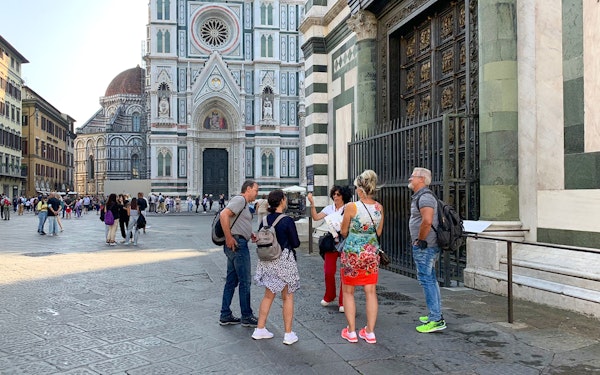
Florence Duomo Guided Tour
4.3(2,546)1 hr 20 minViewFrom$26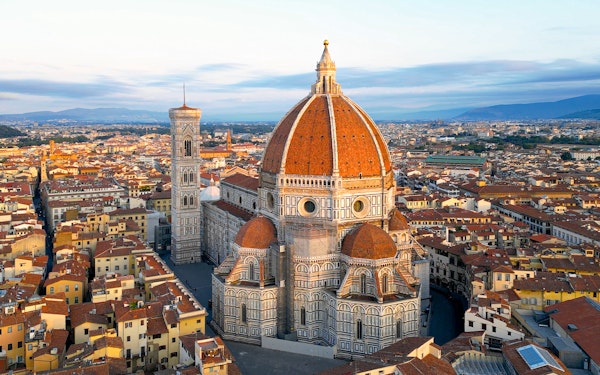
Florence Duomo with Brunelleschi Dome Access
4.5(2,973)2 hoursViewFrom$65
Florence Private WALKING TOUR
5.0(49)3 hoursViewFrom$237
Complete Florence Full Day Guided Tour Uffizi David & walk Pickup
5.0(14)6 hoursViewFrom$496
Private WALKING Tour and ACCADEMIA Gallery in Florence Italy
5.0(12)3 hoursViewFrom$262
Florence Walking Tour Explore Renaissance Gems and Wine Window
5.0(20)2 hoursViewFrom$83
Florence: Affogato Sit e Walk tour
5.0(12)2 hoursViewFrom$133
How long different things take
Useful for planning:
- Duomo complex with the dome climb (guided): 2 to 3 hours
- Uffizi Gallery (guided): 2 to 3 hours
- Accademia Gallery with the David (guided): 1 to 1.5 hours
- Ponte Vecchio stop: 15 to 20 minutes
- Pitti Palace and the Boboli Gardens together: 2 to 3 hours
- Piazzale Michelangelo for the sunset view: 30 to 45 minutes
- Florence food or wine walk (evening): around 3 hours
- Chianti wine day trip: half-day or full day with tastings
- Siena and San Gimignano hill-town loop: full day
- Pisa half-day trip: about 4 to 5 hours
- Cinque Terre day trip: a long full day
- Tuscan cooking class with dinner: around 3 hours
Eating - the practical version
Three rules cover most of it:
-
Don't eat right on the cathedral square. The cafes and restaurants ringing the Duomo and the main tourist sights are uniformly overpriced and forgettable. Walk a few blocks in any direction - toward San Lorenzo, into the Oltrarno, around Santa Croce - and the quality jumps immediately.
-
Lunch is roughly 12:30 to 2:30 p.m. and dinner from about 7:30 to 10:30 p.m. Outside those windows, mostly tourist-trap kitchens are open. Bridge the gaps with an espresso, a gelato, or an aperitivo in the early evening - drinks with small bites at most wine bars.
-
Tipping is minimal. Many bills include a small per-person "coperto" (cover charge) that is not a tip; beyond that, rounding up or leaving a euro or two for good service is plenty. There is no expectation of a U.S.-style percentage, and you do not tip for coffee at the bar.
The Tuscan dishes to specifically look for: the famous bistecca alla fiorentina (the thick, grilled, charred-rare Florentine steak, usually priced by weight and meant to share), ribollita and pappa al pomodoro (hearty bread-based soups), fresh pasta with rich Tuscan sauces, pecorino cheese and cured meats, and the regional wines - this is the doorstep of Chianti, so the house red is rarely a gamble. Pizza by weight makes cheap lunch fuel, and gelato is on every corner.
From the editor
The trattorias on the back streets - the ones with a paper menu, no photo placards, and a short list of regional dishes that changes - are the ones to seek out. The places with multilingual photo menus and a tout outside grabbing tourists right beside the major sights are the ones to walk past, and that is doubly true on the cathedral square itself.
Safety and scam awareness
Florence is safe for first-time visitors, including at night in the central areas. The risks are nuisance-level:
- Pickpockets in the densest crowds - around the Duomo, the Ponte Vecchio, the markets, and on packed buses, especially to and from the station and the airport. Front pockets, secured zippers, and a bag worn in front in a crush handle it.
- Tourist-trap pricing at the restaurants right beside the major sights - not a scam exactly, but the steep premium for the location catches people out. Walk a few streets back.
- The ZTL driving fines - covered above, but worth repeating, since they are the most expensive surprise that catches visitors, arriving by mail months after the trip.
- Aggressive street vendors and bracelet or trinket pushers in the busiest squares - a polite, firm decline and walking on is all it takes.
That is the list. Violent crime is rare in the tourist zones.
Money, costs, and tipping
Florence is on the euro and increasingly card-friendly, though it is worth carrying a small amount of cash for the occasional cash-only trattoria, a market stall, or an espresso at the counter. Costs sit in the moderate band for a major Italian city: an espresso at the bar is a euro or two and is cheaper standing than seated, a casual pasta or pizza-by-weight lunch is inexpensive, and a relaxed dinner for two with wine at a good neighborhood trattoria lands in a moderate range - more if you order the bistecca by weight, which is meant to be shared.
Tipping is minimal and not expected the way it is in the United States. Many bills carry a small per-person "coperto" cover charge that is not a tip; beyond that, rounding up or leaving a euro or two for good service is plenty, and there is no obligation to leave a percentage. The two charges to watch are the seated-versus-standing price difference at cafes and the location premium at the tourist-trap restaurants beside the big sights, where you pay steeply for the view; walk a few streets back for better food at a lower price.
Traveling with kids
Florence works well with children if you pace it around the heat and keep the gallery time short. The climb to the top of the dome is a genuine adventure for older kids, the open squares give little ones room to run, and the Boboli Gardens behind the Pitti Palace are the city's best green space for letting off steam. Gelato is the universal reset button and is everywhere. The two things to plan around are the heat from June through August, when an air-conditioned lunch and a slow afternoon beat pushing through, and the long gallery visits, which tire small legs fast - trade the second museum for Piazzale Michelangelo and the gardens, and choose the family-focused tour formats that run shorter than the standard adult version. A day trip into the Chianti countryside or out to Pisa is an easy change of pace that breaks up the city sightseeing.
Top experiences to book
Florence's headline sights - the Duomo with its dome climb, the Uffizi, and the Accademia - all run on timed entry with queues that can swallow an hour, so a skip-the-line or guided ticket is the single best thing you can book ahead. Beyond those, a food or wine walk is consistently one of the highest-rated experiences in the city, turning dinner into the evening's entertainment, and a Tuscan cooking class is the most hands-on way to spend a final night. Here are some of the top-rated Florence experiences currently bookable, padded live from the catalog.
Top-rated Florence experiences

UFFIZI Private Tour in Florence Italy
5.0(108)1 hr 45 minViewFrom$180
Uffizi Gallery : Guided Tour Without Lines
5.0(54)2 hoursViewFrom$80
Florence: Vip early Timed Entry Ticket Uffizi Gallery
5.0(30)2 hoursViewFrom$105
Uffizi Gallery Florence Exclusive Guided Museum Tour
5.0(14)2 hr 30 minViewFrom$164
Uffizi Gallery VIP Small-Group Guided Tour
4.6(1,623)1 hr 30 minViewFrom$74Uffizi Gallery Florence Guided Tour Semi-Private 8ppl Max
5.0(24)2 hr 30 minViewFrom$164
Uffizi Gallery Guided Tour
4.4(6,693)1 hr 30 minViewFrom$63
Private Family Tour - Uffizi Gallery for Kids
5.0(43)2 hoursViewFrom$314
PRIVATE: Guided Uffizi Gallery Tour with timed entry Ticket
5.0(29)2 hoursViewFrom$196Complete Florence Full Day Guided Tour Uffizi David & walk Pickup
5.0(14)6 hoursViewFrom$496
Day trips worth taking
Florence is the best base in Tuscany for a day trip, sitting at the center of the region's rail and road network. Chianti wine country pairs vineyards and tastings on a short, scenic run south; Siena and San Gimignano deliver two walled medieval towns in one full day; Pisa is the quick, light option for the Leaning Tower, often combined with Lucca; and the Cinque Terre, the cliffside coastal villages, makes a long but spectacular full-day trip by train and boat. The standout for most first-timers is Chianti, for the effort-to-payoff ratio. A guided tour handles the transport and the Tuscan parking restrictions, which is why most visitors leave the car behind. A couple of the most-booked options:
Popular day trips from Florence

Siena & San Gimignano: Exclusive Tuscany Day Trip from Florence
5.0(33)8 hoursViewFrom$651
Montecatini Private Day Trip To Chianti & San Gimignano
5.0(2)9 hoursViewFrom$1,051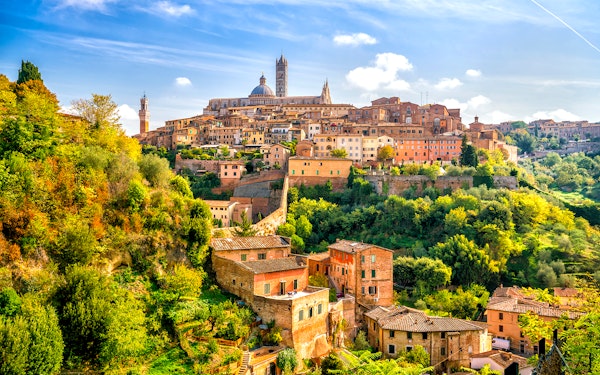
From Florence: Pisa, Siena, San Gimignano & Chianti Day Trip with Wine Tasting & Lunch
4.3(1,949)12 hoursViewFrom$90
Chianti Wines and San Gimignano Tour from Florence (1 Winery)
5.0(11)5 hoursViewFrom$1,041
Private Tour: Guided Hike in Tuscany with Transport from Siena
5.0(6)7 hoursViewFrom$379
San Gimignano and Volterra Private Shore Excursion from Livorno
5.0(5)8 hours - 9 hoursViewFrom$455
Private Tuscany Day Tour: San Gimignano and Chianti Wine Region from Florence
5.0(29)8 hoursViewFrom$423
Tuscany countryside from Livorno: Private Volterra, San Gimignano & Wine Tasting
5.0(7)8 hours - 9 hoursViewFrom$400
Siena, S.Gimignano & Chianti Tasting Small Group from Montecatini
5.0(6)11 hours - 11 hr 30 minViewFrom$183
Private Siena to Florence Chianti and San Gimignano Transfer Tour
5.0(9)7 hoursViewFrom$935
Sample itineraries
If you are still shaping the days, our 3 days in Florence itinerary lays out a walkable, field-tested route: the Duomo complex and the historic center on day one, the Accademia and the Oltrarno on day two, and a flexible day three for a Chianti wine day, the Siena and San Gimignano hill towns, or a Pisa run. Use this guide for the practical decisions - where to stay, how to get around, when to go, and the ticket strategy - and the itinerary for the hour-by-hour plan.
Compare Florence tours and tickets →Common questions
What's the best neighborhood to stay in Florence for a first visit?
The historic center around the Duomo is the safest first-time pick - you walk out the door and you're in the middle of everything, and the whole city is fifteen to twenty minutes away on foot. The Oltrarno, across the river, is the atmospheric, slightly cheaper alternative if you value quieter evenings. The area near Santa Maria Novella station is the practical choice for trips that lean on day trips. All three are walkable to the headline sights.
Do I need public transport to get around Florence?
Mostly no. Florence is one of the most walkable cities in Europe and the entire historic core is covered on foot in fifteen to twenty minutes end to end. Buses and a tram exist and reach the outskirts and the airport, but for the headline sights you simply walk. Save transport thinking for the trains out to Pisa, Siena, and the Tuscan countryside on a day trip.
Do I need to book Florence tours and museums in advance?
For the big three - the dome climb, the Uffizi Gallery, and the Accademia - yes, book ahead. All three run on timed entry and all three sell out in peak season, with the dome slot going first. Walk-up works for the cathedral square, the Ponte Vecchio, Piazzale Michelangelo, and the smaller churches. Book the galleries one to three weeks ahead from spring through fall; same-day is risky in summer.
When do restaurants actually open in Florence?
Lunch runs roughly 12:30 to 2:30 p.m. and dinner from about 7:30 to 10:30 p.m. Turning up at 6 p.m. for dinner usually means tourist-trap kitchens only. Aperitivo - drinks with small bites - bridges the early evening at most wine bars. Many family-run trattorias close one day a week, often Sunday or Monday, so check before you build a dinner plan around a specific place.
Is Florence safe for first-time visitors?
Yes. Florence is a safe, compact city and the central tourist areas are comfortable to walk at night. The only common issue is pickpocketing in the busiest crowds - around the Duomo, the Ponte Vecchio, the markets, and on packed buses. Keep your wallet in a front pocket and your bag zipped and in front of you in a crush, and you'll be fine.
How much cash should I carry in Florence?
Cards and contactless work almost everywhere, even at small bars and market stalls increasingly take them. Carry a modest amount of cash - a small daily float - for the occasional cash-only trattoria, market vendor, espresso at the counter, and tips for guides. Skip the airport currency-exchange windows; airport and in-town ATMs give better rates.
What are the best day trips from Florence?
Four stand out. Chianti wine country is the classic - rolling vineyards and tastings a short ride south, available as a half-day or full day. Siena paired with San Gimignano is the best hill-town loop, two walled medieval towns in one full day. Pisa is the quick, light option for the Leaning Tower, often combined with Lucca. And the Cinque Terre, the cliffside coastal villages, makes a long but spectacular full-day run by train and boat. If you only do one, make it Chianti for the effort-to-payoff ratio, or the hill towns if you want medieval streets over vineyards.
Is the Florence Duomo cumulative ticket worth it?
For most visitors, yes. The Duomo complex sells a cumulative ticket that bundles the cathedral, the bell tower, the baptistery, the crypt, the museum, and the climb to the top of the dome on one pass, valid across a few days. It's the standard way in, since the individual sites aren't sold piecemeal in the same way. The key detail is that the dome climb is a separate timed reservation made on top of the ticket, and those slots sell out first, so reserve the dome time before anything else.
How many days do you need in Florence?
Three days is the sweet spot for a first visit - two for the city's headline art and the Duomo, and one for a Tuscany day trip. Two days covers the absolute essentials at a faster pace if that's all you have. Four or more lets you add a second day trip and slow down over the smaller museums and the Oltrarno. Our 3 days in Florence itinerary lays out the standard long-weekend route hour by hour.
Is Florence a good base for visiting Tuscany?
It's the best base in the region. Florence sits at the center of Tuscany's rail and road network, so the vineyards of Chianti, the hill towns of Siena and San Gimignano, and the coast at Pisa and the Cinque Terre are all reachable as day trips without renting a car. Guided day tours handle the transport and the parking restrictions that make driving in Tuscany a hassle, which is why most first-timers use Florence as the hub and radiate out.
What do first-time visitors to Florence most regret?
The big ones: not pre-booking the dome climb and the galleries and finding them sold out, booking marathon gallery tours that exhaust them, eating at the first place on the cathedral square, skipping the sunset at Piazzale Michelangelo, and treating the Oltrarno as an afterthought when it's the most atmospheric side of the city. Almost all of it comes down to booking the timed sites ahead and pacing the art so you don't burn out.

Destination guide
Florence, Italy
Browse the full Florence destination page - categorized tours, ticket comparisons, and city FAQs.
Keep reading
Florence itinerary
3 days in Florence: the perfect 3-day Florence itinerary for 2026
A walkable, field-tested 3-day route - the Duomo and historic center, the galleries and the Oltrarno, and a flexible Tuscany day trip.
Read more
Florence listicle
Things to do in Florence: experiences worth your time in 2026
The Florence shortlist - attractions, day trips, and food experiences ranked by what's worth booking.
Read more
Florence ticket guide
Uffizi tickets: skip-the-line, guided, and timed entry compared
Every Uffizi ticket format explained, when skip-the-line is worth it, and the booking windows that matter.
Read more
Booking tips
How to compare tour prices across booking sites
Why the same tour shows different prices on different sites, and how to find the real best deal before you book.
Read more
More reads
More guides to help you plan your trip

Accademia Gallery Tickets in 2026: Types, Skip-the-Line and Combos Compared
A 2026 guide to Accademia Gallery tickets in Florence - timed entry, skip-the-line reserved slots, guided tours, Uffizi combos and walking tours with entry.

3 Days in Florence: The Perfect 3-Day Florence Itinerary for 2026
A walkable, well-paced 3-day Florence itinerary built around the booking realities of 2026 - what to do, in what order, and which tours actually save you time.

Things to Do in Florence: 22 Experiences Worth Your Time in 2026
A 2026 Florence shortlist - 22 attractions, museums, day trips, and food experiences ranked by what's actually worth booking, with skip-the-line picks and price-band notes.

Uffizi Gallery Tickets: The 2026 Guide to Skip-the-Line, Guided Tours, and Combos
A practical 2026 guide to Uffizi Gallery tickets - the ticket types compared, why a reservation is effectively mandatory in peak season, and the combos worth booking.

The Cost of a Guided Walking Tour: What 50 Cities Actually Charge in 2026
We measured the price of every guided walking tour in our cross-platform catalog across 50 cities. The median is $50. The more useful number is how far prices spread inside a single city.

1 Day in London: A Realistic Itinerary That Does Not Waste the Day
One day in London, planned around what actually fits - a walkable route through the centre, the two things worth booking, and the traps that eat an hour each.

1 Day in Paris: The Itinerary That Fits, and the One That Does Not
One day in Paris, planned around real distances - what to book, what to walk, what to skip, and why three museums in a day is the classic mistake.

2 Days in Lisbon: The Itinerary That Handles the Hills
Two days in Lisbon, planned around the terrain rather than the map - what to book, what to walk, and why the second day should leave the city.