FlorenceItineraryLong weekendPlanningTuscany
3 Days in Florence: The Perfect 3-Day Florence Itinerary for 2026
A walkable, well-paced 3-day Florence itinerary built around the booking realities of 2026 - what to do, in what order, and which tours actually save you time.
By SimilarTours Editorial · Travel Research · · 14 min read

Three days in Florence is one of the most-booked long weekends in Italy - long enough to cover the headline art and the Duomo without rushing, short enough to keep the trip tight and walkable. This itinerary is built around the booking realities of 2026: which sites need pre-booked timed entry, which tours genuinely save you time, and which order keeps you crisscrossing the smallest amount of the city.
The structure: Duomo and historic-center day, galleries and Oltrarno day, choose-your-own Tuscany day. Adjustable for energy, weather, and party size. Florence is small enough that you can walk almost the entire plan, which is exactly why the order below matters less here than in a sprawling city and the timed-entry slots matter more.
Browse Florence tours and tickets →Day 1 - The Duomo and the historic center
Theme: the cathedral complex and the dome climb in the morning, the historic core and the Uffizi in the afternoon.
Morning (9:00 a.m. - 12:30 p.m.) - The Duomo complex and the dome climb
Start at the cathedral square, the heart of the city. The Duomo complex bundles several sites on one cumulative ticket: the cathedral itself, the bell tower, the baptistery, the crypt, and the museum, plus the headline experience, the climb to the top of the dome. The dome climb runs on strictly timed slots that sell out days ahead in peak season, so reserve that window before anything else on your trip.
A guided tour of the complex is the recommended format for a first visit - the cumulative ticket carries no narration, and a guide handles the reservation logistics that trip up walk-up visitors. Standard cumulative tickets work too, but you will be juggling separate timed entries yourself.
Top Florence Duomo tours and dome-climb tickets

Florence Duomo Small Group Tour with Exclusive Terrace Access
5.0(19)1 hr 30 minViewFrom$253
Florence Duomo Guided Tour with Dedicated Entrance
4.8(452)1 hr 40 minViewFrom$34
Florence David First Viewing & Duomo with Terrace VIP Access Tour
5.0(40)2 hr 45 minViewFrom$413
Best of Florence Small Group Tour David and Accademia with Duomo
4.7(2,150)2 hr 30 min - 3 hr 30 minViewFrom$63
Florence Duomo Complex Private Guided Tour
5.0(42)2 hoursViewFrom$178
Florence Duomo Express Tour with Optional Dome Climb Upgrade
3.9(980)30 minutes - 2 hoursViewFrom$27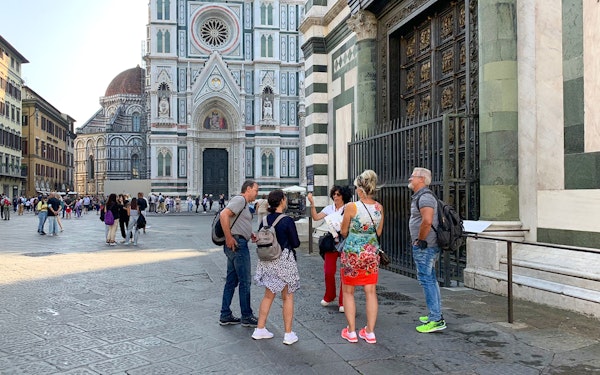
Florence Duomo Guided Tour
4.3(2,546)1 hr 20 minViewFrom$26
Climb the Dome, Own the View: Florence Duomo Tour
4.9(572)3 hoursViewFrom$110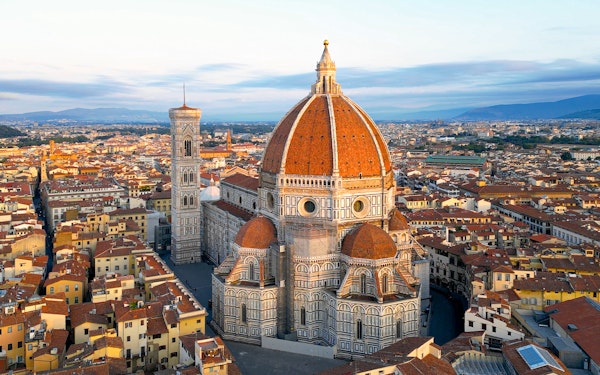
Florence Duomo with Brunelleschi Dome Access
4.5(2,973)2 hoursViewFrom$65
Florence: Duomo Express Guided Tour
4.2(118)30 minutesViewFrom$33
Lunch (12:30 - 2:00 p.m.) - Around San Lorenzo
Walk a few minutes north toward the San Lorenzo market for lunch. Skip the cafes right on the cathedral square, which are uniformly tourist-trap quality and priced for the view. The Mercato Centrale food hall and the trattorias around it serve the Tuscan staples - ribollita, pappa al pomodoro, fresh pasta - at fair prices. Budget roughly 15 to 25 euros per person for a full lunch.
Book the dome slot first
Of everything on this itinerary, the climb to the top of the dome is the one piece that genuinely sells out. The timed slots release in waves and the good morning windows go first. Lock your dome time before you build the rest of the trip around it, then slot the cathedral, baptistery, and bell tower visits on the same cumulative ticket around it.
Afternoon (2:30 - 5:30 p.m.) - The historic-center walking loop and the Uffizi
Walk south into the historic center. The standard loop, about an hour at a relaxed pace with photo stops, before you reach the Uffizi:
- Piazza della Signoria (the open-air square ringed with statues, the city's civic living room)
- The Loggia (the covered arcade of sculpture on the edge of the square)
- Ponte Vecchio (the famous shop-lined bridge over the river - busy at this hour, which is fine)
- The riverfront (the views up and down the Arno are some of the best free sights in the city)
Then the Uffizi Gallery, the headline art museum, on a timed-entry slot in the afternoon. Two to three hours covers the highlights at a comfortable pace. A guided tour is the strongly recommended format here - the collection is vast and the standard ticket includes no narration, so a guide is the difference between a meaningful visit and a tired shuffle past hundreds of frames.
Top Uffizi Gallery tours and skip-the-line tickets

UFFIZI Private Tour in Florence Italy
5.0(108)1 hr 45 minViewFrom$180
Uffizi Gallery Small Group Tour with Guide
4.7(5,969)1 hr 30 minViewFrom$73
Uffizi Gallery : Guided Tour Without Lines
5.0(54)2 hoursViewFrom$80
Florence: Uffizi Gallery self guided tour
3.8(412)1 hour - 3 hoursViewFrom$46
Florence: Vip early Timed Entry Ticket Uffizi Gallery
5.0(30)2 hoursViewFrom$105
Florence: Accademia Gallery & Statue of David with Uffizi Options
4.6(273)3 hr 30 minViewFrom$55
Uffizi Gallery Florence Exclusive Guided Museum Tour
5.0(14)2 hr 30 minViewFrom$164
Florence Accademia Gallery Tour with Entrance Ticket Included
4.8(8,176)1 hr 15 minViewFrom$55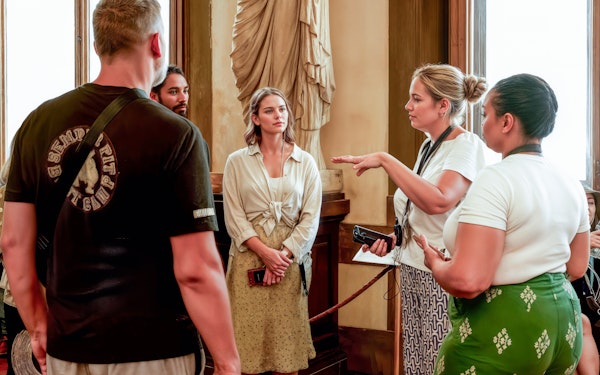
Uffizi Gallery VIP Small-Group Guided Tour
4.6(1,623)1 hr 30 minViewFrom$74
Renaissance Masters: Uffizi Gallery Small Group Tour
4.9(215)1 hourViewFrom$32
Evening (7:00 p.m. onward) - Ponte Vecchio at golden hour and aperitivo
End the day back at the Ponte Vecchio for golden hour, then settle into an aperitivo somewhere in the historic center - drinks and small bites bridge the gap before the late Italian dinner. If you still have energy, a guided evening walking tour covers the floodlit version of the same squares you saw by day, a satisfying way to bookend the day with a different angle on the same streets.
Day 2 - The galleries and the Oltrarno
Theme: the Accademia and the David first thing, then across the river to the Oltrarno and a sunset over the city.
Morning (8:30 a.m. - 11:00 a.m.) - The Accademia and the David
Go early. The Accademia Gallery, home to the David, runs on timed entry and the earliest slots clear the gallery before the crush. The David is the single most-visited statue in the city and the morning crowd around it builds fast, so the first entry of the day is the move. An hour to ninety minutes covers the gallery comfortably.
A skip-the-line or guided ticket is the standard format - the walk-up line here can swallow an hour in peak season, and guided context turns a quick statue stop into a real visit.
Top Accademia and David tours and tickets

Private WALKING Tour and ACCADEMIA Gallery in Florence Italy
5.0(12)3 hoursViewFrom$262Best of Florence Small Group Tour David and Accademia with Duomo
4.7(2,150)2 hr 30 min - 3 hr 30 minViewFrom$63Florence David First Viewing & Duomo with Terrace VIP Access Tour
5.0(40)2 hr 45 minViewFrom$413
Florence Accademia Gallery Timed-Entry Ticket to See David
4.3(335)1 dayViewFrom$32
Florence Accademia Gallery and Michelangelo David Private Tour
5.0(20)2 hoursViewFrom$232Florence Accademia Gallery Tour with Entrance Ticket Included
4.8(8,176)1 hr 15 minViewFrom$55
Accademia David & Florence Tour for Kids & Families
5.0(23)2 hr 30 minViewFrom$268
Florence: Accademia Gallery Entry Ticket and David Tour
4.8(162)1 hourViewFrom$56
Accademia Gallery & David Tales - Private Tour + Skip-the-line reservation
5.0(45)1 hourViewFrom$166
Florence Accademia Gallery Tour & Timed Entry Tickets Included
4.8(3,565)1 hr 5 minViewFrom$42
Lunch (11:30 a.m. - 1:00 p.m.) - Toward the river
Walk south back toward the river, stopping for lunch on the way. The streets between the Accademia and the Arno have a dense pocket of independent spots a few blocks off the main tourist drag, where the price-to-quality ratio jumps the moment you leave the sight-line of the big attractions.
Afternoon (1:30 - 5:00 p.m.) - The Oltrarno: Pitti Palace and the Boboli Gardens
Cross the river into the Oltrarno, the quieter, more artisan-feeling side of the city. The Pitti Palace is a sprawling former grand residence now holding several museums, and behind it the Boboli Gardens climb the hillside in a series of terraces, fountains, and sculpture-lined avenues - the best green space in the city and a welcome change of pace after two gallery mornings. Budget two to three hours for the palace and gardens together, more if you want to wander the Boboli slowly.
Galleries are timed and Monday-closed
The Uffizi and the Accademia both run on strict timed entry and both close on Mondays, as do several smaller museums. Book your slots a week or more ahead in summer, and if your trip includes a Monday, use it for the Duomo complex, the walking loop, the Oltrarno, or a day trip - not the galleries.
Evening (6:30 p.m. onward) - Piazzale Michelangelo sunset and Oltrarno dinner
Walk or take a short ride up to Piazzale Michelangelo, the terrace above the city on the Oltrarno side. It delivers the postcard skyline - the whole city, the dome, the river, and the hills behind - and it is at its best as the sun drops. Time your arrival for golden hour, then come back down into the Oltrarno for dinner, where the trattorias are less touristy and the evening atmosphere is the best in the city.
Top Florence food tours and tastings

Florence San Lorenzo Food Tour by Secret Food Tours
5.0(77)3 hr 30 minViewFrom$116
Florence Half Day Chianti Wine Tour with Tuscan Food Tastings
4.9(70)5 hours - 7 hoursViewFrom$79
Winner 2026 Florence Sunset Food & Wine Tour by Eating Europe
4.9(6,206)3 hr 30 minViewFrom$125
Florence Food and Wine Walking Tour - Private
5.0(22)3 hoursViewFrom$117
Florence Vespa Tour: Tuscan Hills, Food and Chianti Wine
4.8(4,366)6 hoursViewFrom$149
Food Tour Florence Small Groups
5.0(16)2 hr 30 minViewFrom$101
Florence Evening Food Tour with Florentine Steak & Tuscan Wine
4.8(796)3 hr 30 minViewFrom$65
Guided Walking Tour of Florence with Food & Wine Tastings
5.0(27)2 hoursViewFrom$142
Walking Food Tour of Florence with Tastings and Wine
4.8(553)3 hours - 3 hr 30 minViewFrom$113
Florence Private Food Tour of 10+Tastings with Cheeses & Wines
5.0(16)3 hoursViewFrom$396
Day 3 - Choose your own Tuscany day
Three good options for the third day, depending on what kind of trip you want. All three give first-timers a taste of Tuscany without cutting into the city sights you have already covered.
Option A - Chianti wine country (recommended for first visits)
The classic Florence day trip. A guided Chianti tour heads south into the rolling vineyards between Florence and Siena, with stops at a couple of wineries for tastings, lunch among the vines, and the kind of Tuscan landscape the region is famous for. Most run as half-day or full-day formats with transport and tastings included, and you are back in the city by late afternoon or early evening.
Top Chianti wine tours from Florence
Florence Half Day Chianti Wine Tour with Tuscan Food Tastings
4.9(70)5 hours - 7 hoursViewFrom$79
Chianti Wine Tour from Florence to San Gimignano with 2 Wineries
5.0(32)7 hours - 8 hoursViewFrom$325
Half-Day Chianti Wine Tasting from Florence with Two Wineries
4.5(4,719)5 hr 30 minViewFrom$54
Chianti Wine Tasting Tour from Florence (2 Wineries)
5.0(13)8 hoursViewFrom$1,159
Siena, San Gimignano and Chianti Wines Day Tour from Florence
4.7(3,568)10 hr 30 minViewFrom$74
From Florence: Chianti Wine Experience with Tastings & Views
4.4(856)5 hr 30 minViewFrom$40
Private Day Trip Wine Experience with lunch in Chianti Classico
5.0(30)8 hours - 9 hoursViewFrom$390
Half day Chianti Vineyard Escape from Florence with Wine Tastings
4.5(2,901)5 hoursViewFrom$63
Chianti e-bike tour from Florence with wine tasting
5.0(4)6 hoursViewFrom$307
SMALL-GROUP Wine Safaris: Tuscany Wine Tasting Tour from Florence
4.9(5,815)6 hours - 9 hoursViewFrom$149
Option B - Siena and San Gimignano hill towns
If you want walled medieval towns rather than vineyards. A full-day guided loop pairs Siena, with its grand shell-shaped main square, and San Gimignano, the hill town famous for its cluster of stone towers, usually with a Chianti stop or a tasting woven in. It is a longer day, but the single best way to see two of Tuscany's headline towns without renting a car and tackling the parking restrictions yourself.
Top Tuscany hill-town day trips from Florence

Siena & San Gimignano: Exclusive Tuscany Day Trip from Florence
5.0(33)8 hoursViewFrom$651
Tuscany Day Trip from Florence: Siena, San Gimignano, Pisa and Lunch at a Winery
4.9(24,457)12 hoursViewFrom$98
Montecatini Private Day Trip To Chianti & San Gimignano
5.0(2)9 hoursViewFrom$1,051
From Florence: Tuscany Wine Country Day Trip with Vineyard Lunch
4.8(315)9 hoursViewFrom$90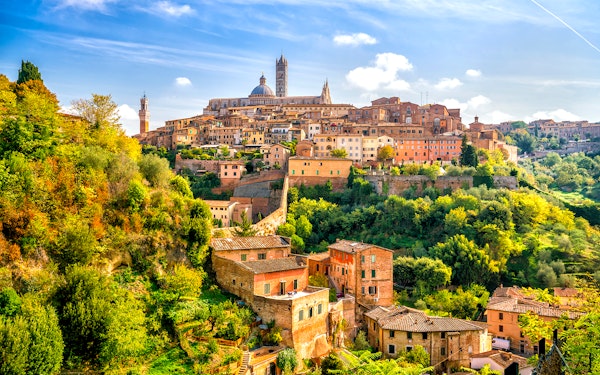
From Florence: Pisa, Siena, San Gimignano & Chianti Day Trip with Wine Tasting & Lunch
4.3(1,949)12 hoursViewFrom$90
Cinque Terre and Pisa Tower Small-Group Day Trip from Florence
4.9(1,707)12 hoursViewFrom$245
Chianti Wines and San Gimignano Tour from Florence (1 Winery)
5.0(11)5 hoursViewFrom$1,041
From Florence: Cinque Terre & Pisa Day Trip
4.7(1,766)12 hr 15 minViewFrom$90
Private Tour: Guided Hike in Tuscany with Transport from Siena
5.0(6)7 hoursViewFrom$379
From Rome to Tuscany: Discover Florence and Pisa in One Day
4.7(1,376)14 hoursViewFrom$109
Option C - Pisa (and the coast)
For travelers who want the famous Leaning Tower checked off. Pisa is a short hop west, and a half-day guided trip covers the tower, the cathedral square, and the famous lean, often paired with the leaning tower climb or a stop in nearby Lucca. It is the lightest of the three options, leaving your afternoon or evening free back in Florence.
See all Florence day trips →Day 3 evening (whichever option you picked)
End the trip with one of two flavors:
- Tuscan cooking class (about 3 hours, replaces dinner) - make fresh pasta or a regional Tuscan menu in a working kitchen, the most hands-on way to send off a Florence trip.
- Wine-and-food walk through the historic center or the Oltrarno - a guided crawl of tastings that doubles as dinner and a final wander through the city after dark.
Where to base yourself for this itinerary
This route is built around walking, so almost any central base works - Florence is small enough that the whole historic core is a fifteen-to-twenty-minute walk end to end. The historic center around the Duomo and Piazza della Signoria is the postcard choice and puts every Day 1 and Day 2 sight on your doorstep, though it is the priciest zone and the busiest at night. The Oltrarno, across the river, is the atmospheric alternative - quieter, more artisan in feel, a short walk to the Pitti Palace and Piazzale Michelangelo, and full of the less touristy trattorias the evenings in this plan call for. Near Santa Maria Novella, by the main train station, is the practical pick if your trip leans on day trips, since you are steps from the platforms for Chianti, Siena, and Pisa, while still a short walk from the Duomo. Staying inside this central ring means you can do the entire in-city itinerary on foot, which is the whole point of a Florence long weekend.
How to adapt this itinerary
The plan moves at a first-timer's pace; adjust it to your trip. Slower pace or with kids: drop the second gallery, build in a long lunch and a gelato break, and give Day 2 to Piazzale Michelangelo and the Boboli Gardens, where children have room to move and the climb to the dome stands in for a museum. Peak summer: front-load the open-air sights and the dome climb into the cool early morning and save the air-conditioned galleries for the brutal midday hours. Return visitors: swap one of the city-center mornings for a second Tuscany day trip, pairing Chianti with the hill towns, and give the Bargello or the San Lorenzo market the slow attention first trips skip. As always, the hour-by-hour timings are a scaffold to keep you moving in a sensible order, not a rigid schedule.
Timing and budget summary
- Total walking: Florence is compact, so expect a manageable few kilometers a day in the city - comfortable shoes still matter on the stone streets.
- Pre-bookable tickets to secure first: the dome climb (sells out first), the Uffizi Gallery, and the Accademia - all timed entry, all worth booking a week or more ahead in summer.
- Tour budget per person: a mid-range band covers a guided Duomo or dome experience, a guided Uffizi tour, a guided Accademia ticket, and one Tuscany day trip - the spine of the itinerary. Premium small-group and private formats sit above that.
- Eating budget per person/day: a moderate daily band outside tour meals, lower if you lean on the markets and pizza-by-weight at lunch.
- Galleries closed Mondays: plan the Uffizi and Accademia around the open days, and use a Monday for the Duomo, the Oltrarno, or a day trip.
Common questions
Can I really see the main Florence attractions in 3 days?
Yes - Florence is compact and almost entirely walkable, so the Duomo complex, the Uffizi, and the Accademia all fit cleanly across the first two days, leaving the third free for either the Oltrarno or a Tuscany day trip. It's the standard long-weekend itinerary and it works without rushing as long as you pre-book the two big galleries.
Which day should I do the Uffizi vs. the Accademia?
Uffizi on Day 1 afternoon, paired with the historic-center walk and the river, since you are already in the heart of town. Accademia on Day 2 morning, first thing, while you are fresh and the gallery is quiet. Reverse only if your timed entry slots force it. Both are timed-entry and both close on Mondays, so plan Day 1 and Day 2 around the open days.
Should I book a day trip on my 3-day Florence itinerary?
Day 3 is the natural slot for one. A Chianti wine day, a Siena-plus-San Gimignano hill-town loop, or a Pisa run all work, and they give first-timers a taste of Tuscany without cutting into the city sights. Keep Days 1 and 2 in town and use the third day for the countryside if the itch to see more strikes.
Is 3 days enough for Florence with kids?
Comfortably, if you keep the gallery time short. Family-focused Duomo and city tours run shorter than the standard adult format, the climb to the top of the dome is a real adventure for older kids, and a Tuscan cooking class or gelato walk replaces a sit-down dinner. Trade the second gallery for Piazzale Michelangelo and the Boboli Gardens, which give children room to move.
What if I arrive on a Monday?
Monday is the tricky day - the Uffizi and the Accademia are both closed, and several smaller museums close too. Use a Monday arrival for the Duomo complex (open), the historic-center walking loop, the Oltrarno, and Piazzale Michelangelo, then shift the galleries to Tuesday and Wednesday. A Monday day trip into Chianti or the hill towns is another clean way to dodge the closures.
What's the best evening activity on each day?
Day 1: golden hour on the Ponte Vecchio and an aperitivo in the historic center. Day 2: sunset from Piazzale Michelangelo for the city's best skyline view, then dinner in the Oltrarno. Day 3: a Tuscan cooking class or a wine-and-food walk that replaces dinner after you are back from the countryside.
What if I have 4 days in Florence instead of 3?
A fourth day lets you stop choosing between the day trips. Keep the three-day spine - the Duomo and historic center, the galleries and the Oltrarno, and one Tuscany excursion - then add a second day trip on Day 4, pairing Chianti wine country with the hill towns, or running out to Pisa and Lucca. Alternatively give the extra day to a slow morning at the Bargello and the San Lorenzo market and an afternoon across the river.
Keep reading
Florence pillar
Florence travel guide: first-time visitor essentials for 2026
Where to stay, how to get around, ticket strategy, eating timing, and the things first-time visitors most regret skipping.
Read more
Florence listicle
Things to do in Florence: experiences worth your time in 2026
The Florence shortlist - attractions, day trips, and food experiences ranked by what's worth booking.
Read more
Florence ticket guide
Uffizi tickets: skip-the-line, guided, and timed entry compared
Every Uffizi ticket format explained, when skip-the-line is worth it, and the booking windows that matter.
Read more
Booking tips
How to compare tour prices across booking sites
Why the same tour shows different prices on different sites, and how to find the real best deal before you book.
Read more
More reads
More guides to help you plan your trip

Accademia Gallery Tickets in 2026: Types, Skip-the-Line and Combos Compared
A 2026 guide to Accademia Gallery tickets in Florence - timed entry, skip-the-line reserved slots, guided tours, Uffizi combos and walking tours with entry.

Florence Travel Guide: First-Time Visitor Essentials for 2026
A field-tested 2026 Florence guide: where to stay, how to get around, ticket strategy, eating timing, and the things first-time visitors most regret skipping.

Things to Do in Florence: 22 Experiences Worth Your Time in 2026
A 2026 Florence shortlist - 22 attractions, museums, day trips, and food experiences ranked by what's actually worth booking, with skip-the-line picks and price-band notes.

Uffizi Gallery Tickets: The 2026 Guide to Skip-the-Line, Guided Tours, and Combos
A practical 2026 guide to Uffizi Gallery tickets - the ticket types compared, why a reservation is effectively mandatory in peak season, and the combos worth booking.

The Cost of a Guided Walking Tour: What 50 Cities Actually Charge in 2026
We measured the price of every guided walking tour in our cross-platform catalog across 50 cities. The median is $50. The more useful number is how far prices spread inside a single city.

1 Day in London: A Realistic Itinerary That Does Not Waste the Day
One day in London, planned around what actually fits - a walkable route through the centre, the two things worth booking, and the traps that eat an hour each.

1 Day in Paris: The Itinerary That Fits, and the One That Does Not
One day in Paris, planned around real distances - what to book, what to walk, what to skip, and why three museums in a day is the classic mistake.

2 Days in Lisbon: The Itinerary That Handles the Hills
Two days in Lisbon, planned around the terrain rather than the map - what to book, what to walk, and why the second day should leave the city.