
Asia
Where to go in Asia, when each region is at its best and how to travel between them, with official sources
This Asia travel guide sets out where to go, when each region is at its best and how to get around, with Turkey and Georgia in the west and Japan in the east. Asia has no single best season, so the monsoon and cyclone months below come from the weather services of India, Singapore and Hong Kong.
Best places to visit in Asia
The best places to visit in Asia are spread across all five sub-regions the UN uses for the continent: Central, Eastern, South-eastern, Southern and Western Asia.3 The list below keeps to sites on UNESCO's World Heritage List and gives one fact from each official record, so you can choose by what you want to see.
Angkor, Cambodia
The remains of the Khmer Empire's capitals, built from the 9th to the 15th century, cover some 400 square kilometres of the archaeological park, forest included.2
Taj Mahal, India
The Mughal emperor Shah Jahan ordered it built in Agra, and the work ran from 1631 to 1648.2
Kyoto, Japan
Laid out in 794 after the pattern of ancient Chinese capitals, it stayed the seat of Japan's emperors from then until the mid-1800s.2
Borobudur, Indonesia
A Buddhist temple in central Java that dates from the 8th and 9th centuries.2
Ha Long Bay, Vietnam
With the Cat Ba Archipelago it covers 65,650 hectares of north-east Vietnam and takes in 1,133 islands and islets.2
Hoi An, Vietnam
Its old town is a well-preserved South-East Asian trading port of the 15th to the 19th century.2
Bagan, Myanmar
On a bend of the Ayeyarwady River, it was the seat of a regional empire from the 11th to the 13th century.2 The US State Department rates Myanmar, which it calls Burma, at Level 4, Do Not Travel.9
The Great Wall, China
Building went on into the Ming dynasty, when the wall became the largest military structure in the world.2
Samarkand, Uzbekistan
Founded in the 7th century BC as Afrasiab, the city grew most under the Timurids in the 14th and 15th centuries.2
Petra, Jordan
The city is half built and half carved into the rock.2
Sagarmatha National Park, Nepal
Mount Everest, at 8,848 m the highest peak in the world by UNESCO's figure, dominates the park.2
Best time to visit Asia
There is no single best time to visit Asia, because the rains reach each region in different months. India's southwest monsoon normally arrives over Kerala around 1 June and covers the whole country around 8 July, and the Indian monsoon season runs from June to September.4 So plan each region by its own calendar rather than by one date for the continent.
Singapore has two monsoons a year: the Northeast Monsoon blows from December into early March, and the Southwest Monsoon sets in each June and lasts until September.5 In Hong Kong, tropical cyclones can strike from May to November, and the risk is highest from July to September.6
Even one country can split in two. The UK government gives Thailand's rainy season as generally May to October, but November to March on Koh Samui and in the south-east of the country.7 Koh Samui's wet months begin just as the rest of Thailand's end, so a beach plan for the dry months points to different coasts at different times of year.
Asia itinerary: classic routes
Asia is too big for one loop, so the classic routes each follow a line that already exists inside one sub-region: a rail corridor in Japan or Malaysia, or a stretch of the old Silk Roads in Central Asia. In Japan, the Tokaido Shinkansen runs from Tokyo through Shin-Yokohama, Nagoya and Kyoto to Shin-Osaka, and the Sanyo Shinkansen carries on from Shin-Osaka to Hiroshima and Hakata.11
On the Malay Peninsula, Malaysia's ETS trains use the West Coast Line from Gemas north to Padang Besar, which the operator KTMB describes as a border town with access to Thailand.12 Its main routes run from KL Sentral to Ipoh, to Butterworth and to Padang Besar, and Butterworth is the gateway to Penang by bridge or ferry.12
The Silk Roads give Central Asia its route. UNESCO's Zarafshan-Karakum Corridor, listed in 2023 across Tajikistan, Uzbekistan and Turkmenistan, stretches 866 km westward, following the Zarafshan River and then over the Karakum Desert as far as the Merv Oasis.2
Further east, the Chang'an-Tianshan Corridor, listed in 2014 across China, Kyrgyzstan and Kazakhstan, covers 5,000 km of the same network. It starts at Chang'an and Luoyang, China's capital under the Han and Tang dynasties, and ends in the Zhetysu region of Central Asia.2
Getting around Asia
Getting around Asia is planned one country at a time, with each country's own trains, boats and roads. Japan shows how far one pass can reach: the six JR Group companies sell the Japan Rail Pass together, and their lines add up to more than 19,000 km.8 The pass does not cover everything, so check each train before you count on it.
Nozomi trains, the quickest service on the Tokaido-Sanyo Shinkansen toward Kyoto and Shin-Osaka, are outside the Japan Rail Pass unless the holder also buys a NOZOMI MIZUHO ticket before boarding.11 Up to 12 Nozomi trains an hour run between Tokyo and Shin-Osaka.8
In Malaysia the ETS is the fastest metre-gauge intercity train, reaching 140 km/h on the West Coast Line, which is electrified and double-tracked.12 In Thailand, the UK government warns that boats between the mainland and the islands can sink or collide, usually through overloading, poor maintenance or rough seas, particularly in the monsoon season, and that Thailand records many road traffic accidents, motorcycle crashes most of all.7
Turkey, Georgia and Western Asia
Turkey and Georgia are the two Asian countries this guide covers in depth, and the UN's M49 standard puts both in the same sub-region, Western Asia.3 Georgia is listed here and under Europe as well, so it appears in both continents' lists.
Istanbul is the hinge between the two continents. UNESCO places its historic areas on the Bosphorus peninsula, at the meeting point of the Balkans and Anatolia and of the Black Sea and the Mediterranean.2 The city itself is covered by the Istanbul travel guide on the SimilarTours blog.
Away from Istanbul, three more Turkish sites have UNESCO records of their own. The Göreme valley in Cappadocia holds rock-hewn sanctuaries of Byzantine art; at Pamukkale, mineral-laden spring water has built terraced basins and petrified waterfalls; and at Ephesus, excavations have brought to light Roman Imperial monuments, among them the Library of Celsus and the city's Great Theatre.2
In Georgia, Mtskheta, a former capital of the country, keeps churches that UNESCO counts among the outstanding medieval religious architecture of the Caucasus.2
Safety and travel advice
Safety in Asia depends on the country, and the US State Department's ratings across the continent run from Level 1 to Level 4. Afghanistan, Burma (Myanmar), Iran, Iraq, Lebanon, North Korea, Syria and Yemen are among those at Level 4, Do Not Travel.9 Japan, South Korea, Singapore, Malaysia, Thailand and Vietnam are at Level 1, Exercise Normal Precautions.9
Of the two countries covered in depth here, Turkey is rated Level 2, Exercise Increased Caution, by the advisory of 9 June 2026, and Georgia Level 1 by the advisory of 13 March 2025.9
For a second view, the UK Foreign, Commonwealth & Development Office has a page for each country covering entry rules, safety and security, health risks and how local laws differ.10 Read both governments' pages for the country you are going to, and read them again close to departure.
Countries in Asia
- Thailand
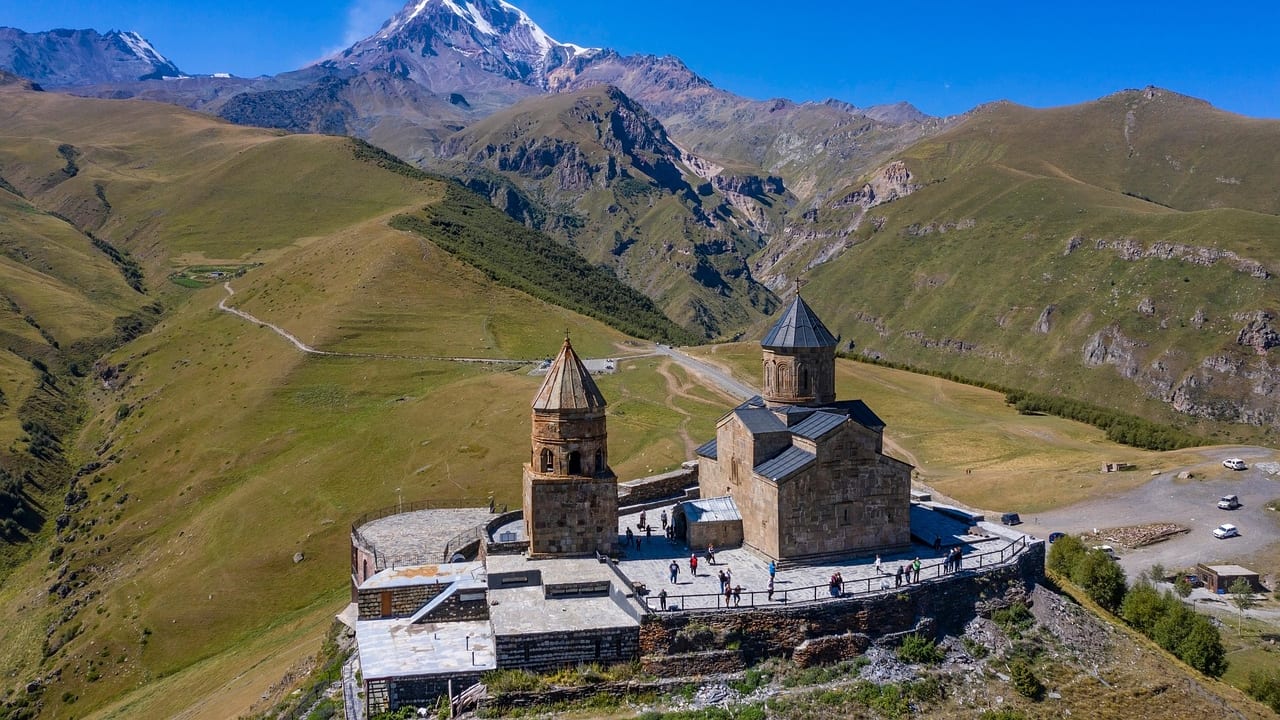 Georgia
- Turkey
- Vietnam
- Singapore
- Maldives
- Armenia
- China
- Jordan
- Azerbaijan
- Bahrain
- Bangladesh
- Bhutan
- Brunei
- Cambodia
- India
- Indonesia
- Israel
- Japan
- Kazakhstan
- Kuwait
- Kyrgyzstan
- Laos
- Lebanon
- Malaysia
- Mongolia
- Myanmar
- Nepal
- Oman
- Pakistan
- Palestinian Territories
- Philippines
- Qatar
- Saudi Arabia
- South Korea
- Sri Lanka
- Taiwan
- Tajikistan
- United Arab Emirates
- Uzbekistan
Asia travel FAQ
Is Asia safe to travel?
It depends on the country, not the continent. The US State Department rates Japan, South Korea, Singapore, Malaysia, Thailand and Vietnam at Level 1 and Afghanistan, Iran, North Korea and Yemen, among others, at Level 4, Do Not Travel.9 The UK government publishes its own advice for each country as well.10
When should you travel to Asia?
Pick the month by region. India's monsoon season runs from June to September,4 Singapore's two monsoons run from December to early March and from June to September,5 and Hong Kong's cyclone risk peaks from July to September.6
How do you travel around Asia?
One country at a time, with that country's own trains, ferries and passes. In Japan one rail pass covers the lines of all six JR Group companies, more than 19,000 km,8 while in Thailand the UK government warns about boat safety between the mainland and the islands and about road accidents.7
Can you travel around Asia by train?
Within some countries, yes. Japan's Shinkansen lines run from Tokyo through Kyoto and Shin-Osaka to Hiroshima and Hakata,11 and in Malaysia the ETS runs up the West Coast Line to Padang Besar, a border town with access to Thailand.12
Where can you travel in Asia in July?
Koh Samui and south-east Thailand, whose rainy season usually runs from November to March rather than May to October.7 Elsewhere, several places are in their rains or storm season in July: the monsoon normally covers all of India around 8 July,4 Singapore is in its Southwest Monsoon,5 and July is one of Hong Kong's most likely months for tropical cyclones.6
Sources
- United Nations Statistics Division (UNdata, Statistical Yearbook table "Population, density and surface area")
- UNESCO (open data portal, World Heritage List dataset)
- United Nations Statistics Division (M49 standard)
- India Meteorological Department (monsoon FAQ)
- Meteorological Service Singapore
- Hong Kong Observatory
- UK Foreign, Commonwealth & Development Office (GOV.UK), Thailand
- JR Group (Japan Rail Pass official site)
- US Department of State, Bureau of Consular Affairs
- UK Foreign, Commonwealth & Development Office (GOV.UK)
- Japan National Tourism Organization (JNTO)
- Keretapi Tanah Melayu Berhad (KTMB)