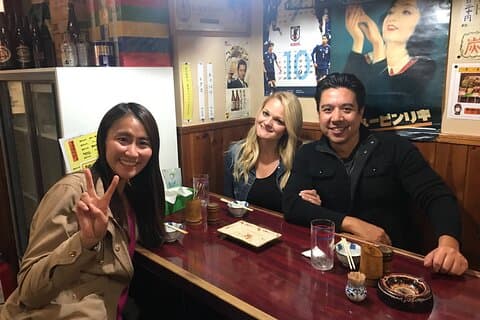
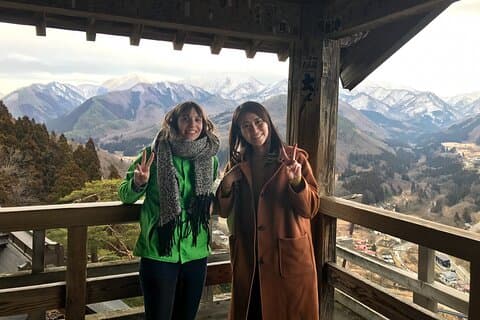
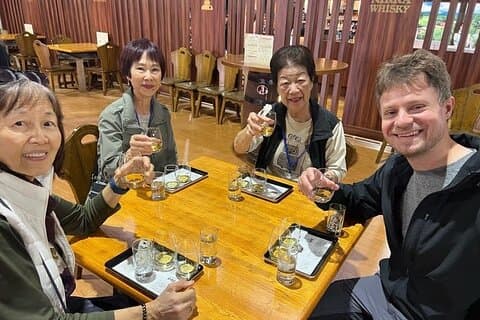
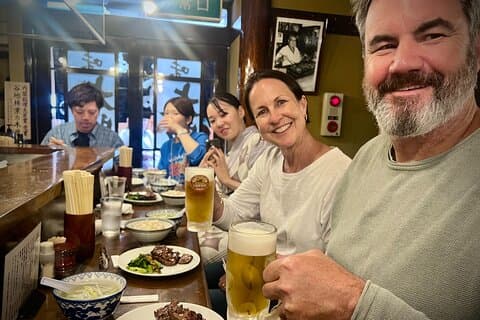
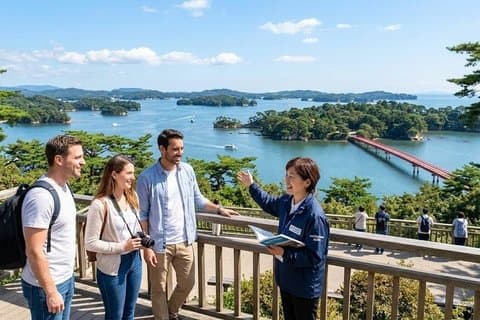
This value-packed trip with a government-licensed and experienced multilingual tour guide is a fantastic and efficient way to explore Sendai and Matsushima!
Sendai is a city that sits at the doorstep of the nation’s more wild side. It’s a day trip from secluded mountain retreats, rugged coastlines, and remote islands. At the same time, it’s one of Japan’s most modern and sophisticated cities with a culinary scene that will challenge and surprise.
Let us know what you would like to experience and we will customize a four-hours tour that's best for you!
Note*1: Please select your must-see spots from a list in the tour information to create your customized itinerary. Note*2: The National Government Licensed Guide Interpreter certification is issued by the Japanese government requires a good knowledge and understanding of Japanese culture and history.
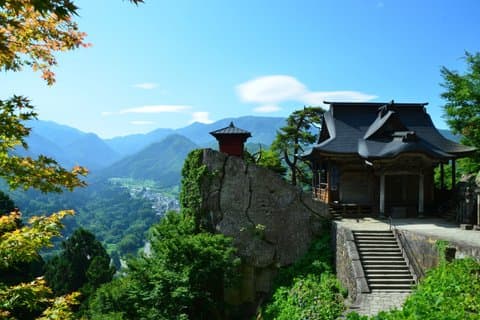
He was also known for being a great architect and is known for having designed this building during the Momoyama Period. Zuihoden is a riot of gorgeous wood carvings and panels as well as some pretty art work and you can also go for a walk around the grounds. The paths are shaded by beautiful cedar trees which are also mean to be a symbol of the longevity of the Date family.
The moon over the desolate castle’ and this tells you all you need to know about their condition now. The ruins also do include a model of the original gate to give you a feel of how Sendai Castle would have looked in the days of old. There is also a small museum here that takes you through the history of the castle although don’t expect anything too grand as Sendai is not one of the cities in Japan that is best known for a complete or particularly impressive castle. If that is what you are looking for then there are plenty of other options in other cities.
This building is actually an office block so there is not much to check out here except for two observation decks on the 29th and 30th floors. These are free to visit and give you panoramic vistas across all of Sendai so try to come in the morning or the late afternoon when you will get the best photo opportunities from the decks.
On a visit here you can find out all how the Saki Stone Age would have looked in the days of old and learn more about the excavation of the Tomizawa Ruins. The museum has a huge number of galleries and if you want to know more about the 20,000 year Saki Stone Age then this is the best place to come.
You woll discover how to enjoy the KIRIN ICHIBAN brewery tour. *You need to make a reservation in advance, please ask your guide to book a tour.
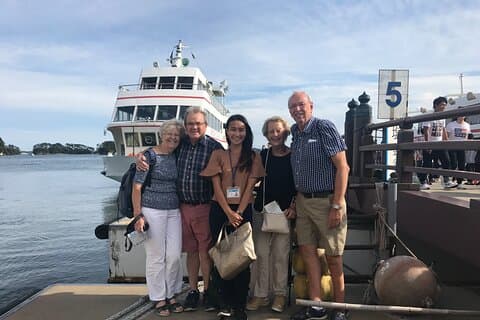
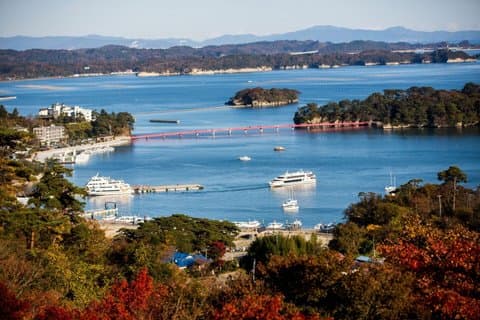
hich is dotted by many pine clad islets and has been ranked one of Japan's three most scenic views for centuries. The small town is also known for Zuiganji, one of the Tohoku Region's most important Zen temples. Matsushima was hit by the earthquake and tsunami of March 11, 2011, but escaped major damage thanks to its protected location inside the island dotted bay. Most tourist attractions, shops and hotels reopened within a few weeks or months of the earthquake.
es, and is well known for its beautifully gilded and painted sliding doors (fusuma). Zuiganji was originally founded in 828 as a temple of the Tendai sect, and was converted into a Zen temple during the Kamakura Period (1192-1333). After years of decline, Zuiganji was restored to prominence by the feudal lord Date Masamune who rebuilt it as his family temple in 1609.
ushima Bay that is accessible to the public. The island is reached via a 252 meter long, red painted bridge that costs 200 yen (round trip) to cross. The bridge was damaged by the tsunami of March 11, 2011 and had to undergo repair works.
ant temple, Zuiganji Temple, to house the mausoleum of Date Mitsumune, the son of the ruling local feudal lord Date Terumune. The temple was built in mourning and is devoted to Kannon, the Buddhist goddess of mercy, as Mitsumune died an untimely death at the age of 19.
omi Hideyoshi, who gave it to Date Masamune for his service. Date's son eventually moved it to its current location overlooking Matsushima Bay. Kanrantei means "place to view ripples on water", due to its beautiful view over the water and surrounding islands.
Due to its prominent location, it has become a symbol of Matsushima. Godaido was built in 807 and contains five statues which were enshrined by the same priest who founded nearby Zuiganji. The statues are displayed to the public only once every 33 years, and were last displayed in 2006.
Oshima (雄島) is a small, pine tree-covered island close to the pier of Matsushima. The island can be accessed over a short bridge free of charge and offers some pleasant, short walks. There are multiple small shrines and viewpoints dotted about the island. Oshima used to be a retreat for monks, and decorated meditation caves can still be found on the island. The bridge to Oshima was destroyed in the 2011 tsunami, but was rebuilt and reopened two years later.
ns of Sendai castle for the purpose of preserving, exhibiting, and studying a set of materials (cultural assets) donated by the Date family of Sendai (One of the samurai families that has continued since the Kamakura Era.) . The museum houses a collection of documents from the Keicho mission to Europe—a national treasure that includes a portrait of Hasekura Tsunenaga that is also a national treasure as well as a registered UNESCO Memory of the World—and historical and artistic collections, mostly from the Edo period, that concern Sendai.
Known from the ninth century, fifteen of its buildings have been designated Important Cultural Properties. It is the head shrine of several hundred Shiogama shrines located throughout Japan.
The box-shaped, generously proportioned building is home to over 100 seafood stalls dealing in fresh fish, processed marine products, and salted and dried seafood. With Shiogama Port located right next door, the wholesale market sees large hauls of fresh fish unloaded daily.(Closed on Wednesday)
oku region, approximately 16 km from Sendai. The city embraces Chiganoura (Shiogama Bay), a portion of the beautiful scenic bay of Matsushima. Urakasumi brewery is the most famous sake Browery located in Motomachi area.If you are interested in architecture, Former Kamei Residence is worth to visit the building with modern methods would be extremely difficult making this structure one of high historical value.
e architecture with intricate wood carvings and vivid lacquer. Built by warlord Date Masamune in 1607, it attracts visitors with its historical value and is designated a National Treasure of Japan.
ato Tane to pray for healing eye diseases. It enshrines Fudo Myo-o, a deity believed to protect eyesight and offer spiritual support. Located in a busy shopping area, it draws visitors seeking good fortune, safety, and success.
ehensive overview of the Tohoku region's history from the Paleolithic era to modern times. Its main exhibition hall is divided into nine chronological sections, showcasing artifacts and cultural materials that highlight the region's unique heritage.
Cruise port pick-up is not available. This private tour is a walking day tour. A private vehicle is not included. Public transportation or local taxis maybe used to transfer between sites. Exact transportation costs can be discussed with the guide after a reservation is finalized. Please have Japanese Yen on hand for your transportation costs. If you wish to arrange for a private vehicle, please contact us directly. All Private vehicles must be booked 5 days in advance. Maximum number of passengers: 7.
For a full refund, cancel at least 24 hours before the scheduled departure time.
Parcourez Sendai par catégorie - billets coupe-file, visites à pied, excursions d'une journée, expériences culinaires et plus