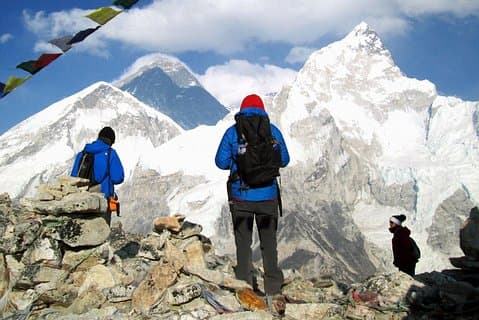
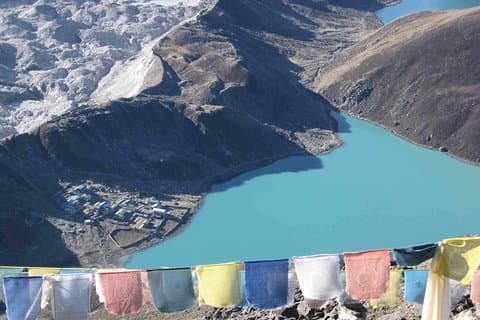
Experience the Everest Base Camp Trek like never before with Go Nepal’s all-inclusive, worry-free package. We offer a complete A-to-Z service that covers everything you need—from permits, domestic flights, meals, and accommodations to expert guidance every step of the way. What sets us apart is our exceptional on-ground support, ensuring your journey is smooth, safe, and memorable. You'll be accompanied by the best local guides and porters who bring deep knowledge and care to your adventure. Enjoy private domestic transportation and relax in the best available hotels along the route. With Go Nepal, you’re not just trekking—you’re experiencing the Himalayas with unmatched comfort and support.
th Stupa, all of which are World Heritage Sites. The Durbar Square highlights the life of royalty in antiquity. The Pashupatinath Temple is one of the most important pilgrimage sites for all Hindus. Swayambhunath is also known as the monkey temple and the Baudhanath stupa is one of the largest stupas in the world. At evening, we introduce ourselves to our fellow participants and discuss our trip to the Everest Base Camp. Overnight in Kathmandu.
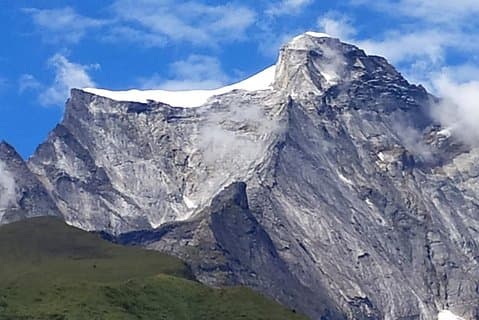
We met the rest of our team in Lukla and started walking from there. We walk along a path that gradually descends to Cheplung village from where we can see the Mountain Khumbila, a sacred mountain that has never been climbed. From there, we descend gradually towards Phakding. Overnight at Phakding.
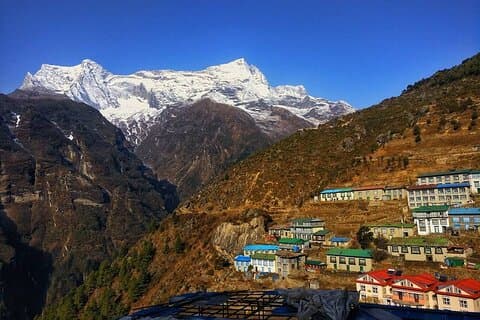
path that leads north into the Benkar Valley. We crossed the Dudh Koshi River and crossed the villages of Chumoa and Monjo before arriving at the entrance to Everest National Park. After crossing a suspension bridge, we crossed the village of Jorsale and skirted the rivers Dudh Koshi and Bhote Koshi. We climb a steep path and arrive at the Namche Bazaar, which is probably the largest city in the Everest region. We will spend the night at Namche Bazaar.
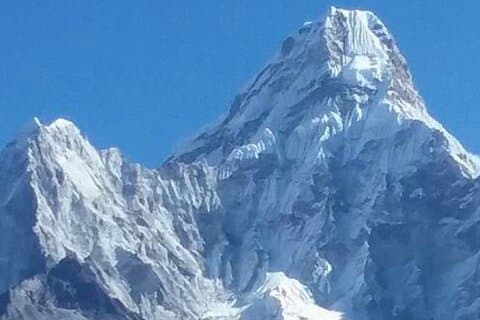
has various government offices, ATMs, cybercafés, local shops, restaurants and a colorful market. We can hike to the Sagarmatha National Park and enjoy the sunrise over the Himalayas, including Mt. Everest, Lhotse, Nuptse, Ama Dablam, Thamserku, and Kongde and so on. If you are interested in a day hike, we can walk to the village of Khumjung. Today we will also visit the Hillary school and a monastery, a monastery in Khumjung houses a purported Yeti scalp. We will spend the night in the Namche bazaar.
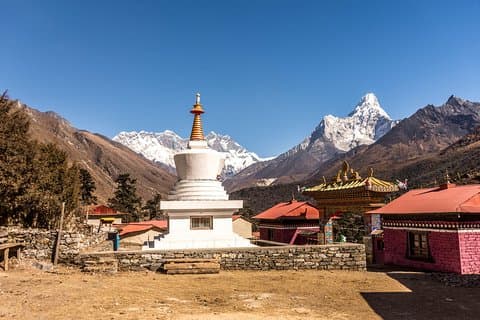
From here we climb to Tengboche City, home to the famous Tengboche Monastery, which is the largest monastery in the Everest region. It is located in Sagarmatha National Park, which falls under a UNESCO World Heritage Site. The monastery has a panoramic view of the Himalayas, including Mt. Everest, Nuptse, Lhotse, Ama Dablam and Thamserku. The Tengboche Monastery opens at 15:00. So if we arrive by 3 pm, we can attend a Buddhist religious ceremony. Night in Tengboche.
During the trek we can admire the beautiful mountain views. Everest, Lhotse and Ama Dablam. We descended to Debuche and crossed the Imja River to reach Pangboche. We chose the upper Pangboche Trail and admire the view of the Himalayas and the Pangboche Monastery. We continue our hike in the Imja Valley and the Lobuche River before climbing to Dingboche. It is a picturesque village with beautiful fields of barley, potatoes and buckwheat with grazing animals scattered throughout these fields.
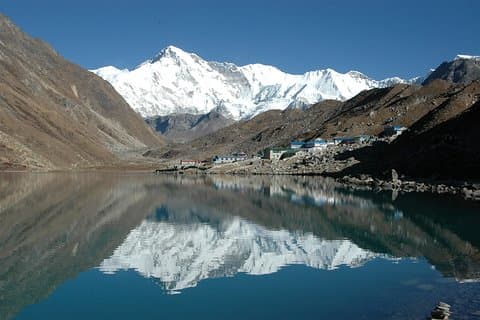
Instead of staying inactive, we climb a ridge behind the village and see six of the highest peaks in the world, including Lhotse, Makalu and Cho Oyu. In addition, we can also admire the peaks of Cholatse and Taboche. In our northwest we see more Himalayan peaks overlooking the Khumbu Khola Valley. Of these summits, Lobuche West, Lobuche East and Lhotse are the most dominant. From another location on the ridge, we can also admire the picturesque valley of Imja Khola and the beautiful village of Dingboche. Night in Dingboche.
We are going through a wide passage that is a very desired change to walking in a straight line. At the beginning of our walk today, we enjoy the company of powerful Himalayas on all sides. The valley begins to shrink as Dusa approaches. We started to see Mt. Pumori as we continue our journey. As our path descends and bends, we say goodbye to the mountain, Pumori. We cross a stream and climb to Duglha, which is a small town with a huge row of prayer flags hanging in the valley. Once we reach in Duglha, we can walk between 45 minutes and an hour and visit the Memorial Sanctuary. Overnight in Duglha.
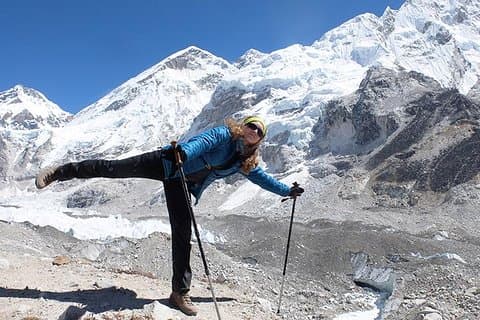
The path leads over rocky slopes up the Chupki Lhara, a ridge with spectacular mountain views. The summit of the ridge is full of prayer flags and stones that are memorial shrines for mountaineers who have lost their lives on the Mount Everest. As the road to Khumbu Glacier Moraine descends, we are standing in front of some peaks such as Khumbutse, Lingtren, Pumori and Mahalangur Himal. Crossing the Khumbu glacier we can also see the Mount Nuptse. Night in Lobuche.
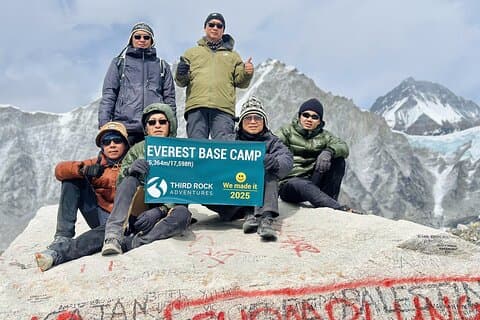
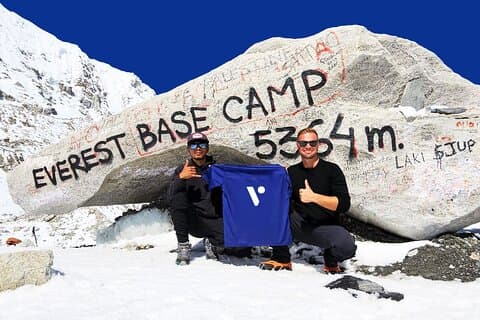
However, we go up and down mainly on a glacier trail. There are also many meanders in difficult terrain. Upon arrival at the base camp, we enjoyed the incredible fusion models and admired the slightly rounded ice towers at the top of the Khumbu Glacier. The Everest Base Camp is incredibly beautiful. From base camp, we can enjoy incredible views of the Nuptse, Khumbuste and Pumori Mountains. After immersing ourselves in beauty, we return to Gorak Shep where we will spend the night. Overnight in Gorak Shep.
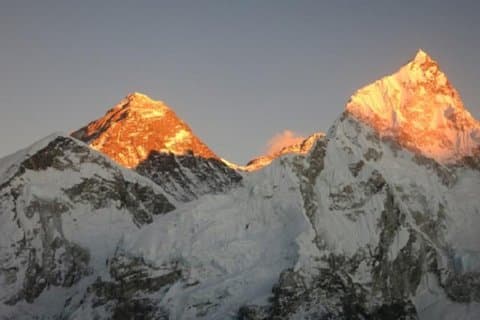
It is dark outside with cold temperatures and most likely cold winds. We walked on a fairly steep path at a comfortable pace. Going up the hill, we can see the mountains Lingtren, Khumbutse and Changtse. The view from the top is exceptional. You can see the highest mountain in the world, Everest, along other peaks of the Himalayas. After spending some time at the top of Kala Patthar, we return to Gorak Shep, which is relatively easier than climbing to Kala Pathhar. Hikers visiting Everest Base Camp today will have an early breakfast, as the walk to Everest Base Camp takes longer than Kala Patthar's. After their return to Gorak Shep, both groups will have lunch together. After lunch, we go down to Pheriche to spend the night. Overnight at Pheriche.
We descend a slope full of rhododendrons and junipers and cross a bridge over the river Dudh Koshi. We descend quickly through the pine forest, where we can easily see mountain goats, pheasants and other common animals and birds in the area. The road finally reaches Sansa from where we can admire the views of the Ama Dablam, Thamserku and Nuptse mountains. We continue along winding paths, followed by another hike in a forest before reaching Namche Bazaar. We will spend the night in the Namche bazaar.
It is mainly a descent on a path along the Dudh Koshi River. We shall pass through several hanging bridges and we will cross several monasteries and then towns before arriving at Lukla. After arriving in Lukla, we spent the rest of the day resting because it will be our last day in the mountains region. Overnight in Lukla.
Once we arrive in Kathmandu, we can take a break or buy souvenirs. If we want to explore other parts of Kathmandu, we can do it today. Our guides can help you with the purchase of souvenirs or sightseeing. There will be a farewell dinner in the evening to celebrate the success of our trip. Overnight in Kathmandu.
A Go Nepal representative will drop you off at the Tribhuwan International Airport a few hours before the scheduled flight.
Basically we will pick up the guest from their Hotel in Kathmandu.
If you cancel at least 3 full day(s) before the scheduled departure time, you will receive a full refund.<br>If you cancel within 3 day(s) of the scheduled departure, you will receive a 0% refund.
Parcourez Kathmandu par catégorie - billets coupe-file, visites à pied, excursions d'une journée, expériences culinaires et plus