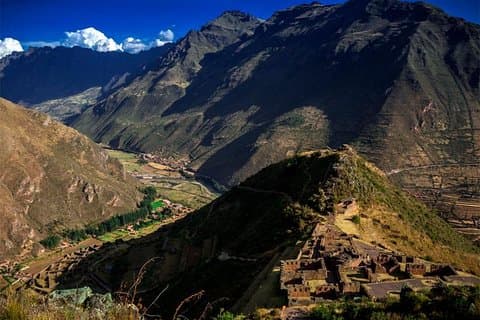
• There’s an only place in the world that has it all, magic, history, nature and culture composed of the four elements that forges the spirit of the earth, and sun. A land where the gods are hidden in mountains and stones; where the sons and daughters of the sun are dressed with gold and mortals with scissor hands dance all day . A ancient and mysterious culture chosen by gods.
l of the Inca Empire, set in the Andes Mountains. Discover Spanish churches and mansions that sit alongside Inca remains and enjoy the vibrant nightlife or sampling Peruvian restaurants.
The foremost city of the Inca Empire is now the undisputed archaeological capital of the Americas, as well as the continent’s oldest continuously inhabited city.
ny hotel in Cusco!) at 4-4:30am (time to be confirmed at the briefing time) and travel by bus to Piskacucho (which is called kilometer 82) where the trail starts. There will be a breakfast stop in Ollantaytambo (6:30-7am) to load up on energy. Upon arrival at kilometer 82 (8:30am), we will have some time to organize ourselves (use of the restrooms, applying sunscreen, insect repellent, and more) and it will be necessary to show your entrance tickets, passports and (if paying a student rate) the student card at the trail’s first control point. To start the trail (2720m/8923ft), we cross the Vilcanota River and follow its route to the right.
ll have great views of the site of an Incan Fortress ('Huillca Raccay'), the vast and incredible Incan site of Llactapata (officially called 'Patallacta'), the Urubamba mountain range that divides the jungle, the Andes and the beautiful snow-capped peak of 'W'akay Willca' (5860m/19225ft), known in books as Veronica.
Wayllabamba (3000m/9842ft) in the temperate green valley of the same name. Temperatures at night are around 5ºC (depending on the month).
The trail becomes quite steep as we follow the narrow Llullucha gorge leading up toward the highest pass of our journey. The switchbacks are well-marked, passing through a dense forest with abundant birdlife and flowering plants before topping out in the wide, open meadows of Llulluchapampa.
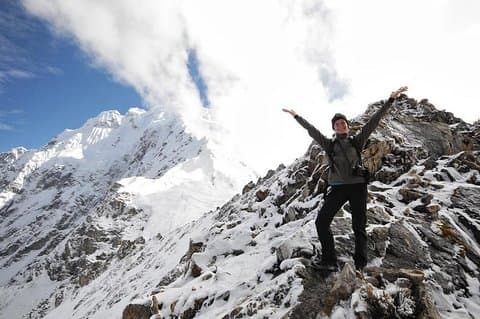
pass of our route before us, Warmiwañusqa, at 13,780'. The final approach to the pass, a long steep ramp ending with a few switchbacks, typically takes about 2-2.5 hours from the meadows of Llulluchapampa. Reaching the top, we enjoy views of the rugged, glacier-clad Wiyañey peaks across the valley and the forested Pacaymayo gorge on the other side. We watch as our porters, or Huayruros, some dressed in their traditional red ponchos and chullos (earflap hats) carry their loads up the same route and then continue past us to arrive to the campsite ahead of the group. From the top our descent is steep, following a newly completed stone-paved trail with sections of staircases.
afternoon of photography, relaxing or exploring the area.
We continue climbing Inca stairs past a small lake to reach our route’s second high pass at 12,631'. A clear day offers excellent views to the horizon of the glacier- clad peaks of the Pumasillo Mountains as well as the deep gorges and ridges of the eastern Andes.
cmarca (11,811') and the smaller, neighboring ruins of Conchamarca. The descent is steep but follows a well-defined trail. After exploring the ruins, we contour along the ridge, marveling at the dense vegetation of the cloud forest as we walk on a 4-6-foot-wide stone-paved trail.
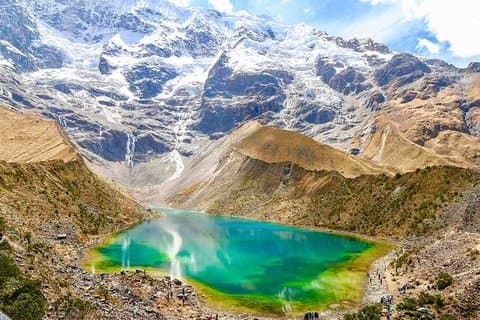
nd arrive to Phuyupatamarca, or “the town above the clouds” as the site's name translates from Quechua. This final campsite is one of the most spectacular along the Camino Inca with a 360-degree view of both the Urubamba and the Aobamba River valleys, and Mount Salcantay, (20,575') whose impressive glacier-covered summit is the highest in the Vilcabamba range. Sunrise here can be spectacular; we begin to understand why the mountain was worshiped as a god by the Incas. Condors are sometimes seen soaring above the valley on their way to the highlands, as the world's largest flying bird, their wingspan can reach 10 feet!
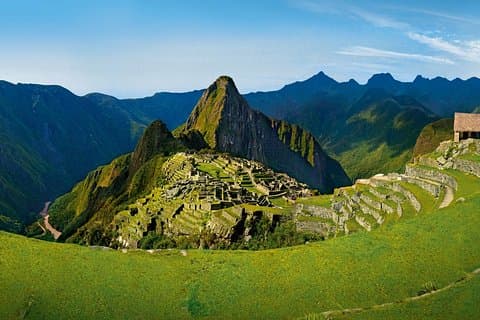
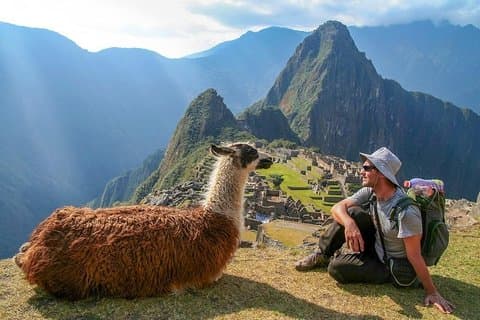
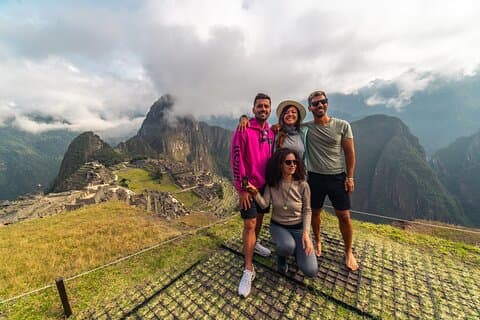
break and as the sun begins to rise, the dramatic views of Machu Picchu are revealed. We will spend some time here taking photos and upon completing the final steps of the Inca Trail we will visit Machu Picchu itself with a guided tour (approximately 2 hours). After the tour you are free to explore the mysterious city by yourselves.
The transfer is more like a tour - it stops at four interesting sites along the way: • Pukara: This is the most important and oldest ceremonial center of the altiplano. There are interesting sculptures and tombs.
The landscapes here are stunning and it is common to see typical Andean animals like the llama, alpaca and vicuña. It is also the geographical border between the two cultures - Quechua and Aymara
The temple is divided into two naves, and each nave has eleven giant columns – huge!
tiful examples of Andean popular religious art.
he port of Puno where you will board the motor boat to take you first to the floating Uros Islands, which are located 25 minutes from the port of Puno, more of 65 small islands floating living today, but you will visit two, while visiting the guide will explain a little about the history and lifestyle of the people living in these floating islands for many years, you will also have the opportunity to talk with the people of these islands and visit their homes and learn a little of their lifestyle, you will enjoy one hour of visit floating around these islands.
The island is a traditional Quechua speaking community, full of ancient agricultural terraces and some ruins dating back to the pre-Inca times. The Taquile population was relatively isolated from the mainland until 1950s, and the notion of the community and family is still very strong among them. The weaving tradition of this Island goes back to early civilizations, thus keeps elements from pre-Inca Andean cultures alive in the present. The most characteristic garments are the "Chullo", a knitted hat with an earflap; and "The Calendar Waistband", depicting the annual cycles connected to ritual and agricultural activities. When you reach the island, you walk up along a narrow path, enjoying impressive views of Lake Titicaca and seeing gorgeous little houses inhabited by the direct descendants of the Inca Culture. You will then have free time to explore the Island on your own, and afterwards return to Puno.
Please, provide your flight details or hotel information to arrange the pick up service
All sales are final. No refund is available for cancellations.
Parcourez Cusco par catégorie - billets coupe-file, visites à pied, excursions d'une journée, expériences culinaires et plus