BudapestListicleThermal bathsDanubeRuin bars
Things to Do in Budapest: 26 Experiences Worth Booking in 2026
A 2026 Budapest shortlist - 26 castle-hill landmarks, thermal baths, Danube cruises, ruin bars, food walks and day trips grouped by theme, with what to book ahead.
By SimilarTours Editorial · Travel Research · · 19 min read

Budapest is really two cities that agreed to share a river. Buda climbs the western bank in hills, castle walls and quiet cobbled lanes; Pest spreads flat and grand across the east in boulevards, cafes and courtyards. The Danube between them is not scenery you glance at once, it is the thing you keep crossing, and the bridges are half the pleasure of being here.
It is also one of the best-value big-hitters in Europe, and it packs an unusual mix: grand landmark interiors, a serious bathing culture, a nightlife district built inside crumbling buildings, and a river that delivers day trips in both directions. That range is exactly why people over-plan it and then spend the trip rushing.
This guide cuts the list to 26 experiences worth booking, grouped so you can pull whichever block matches your trip - the landmarks, the baths, the water, the late nights, the food, or the days out of town. Each entry gives one clear reason it earns a place and who it suits.
We compared the Budapest experiences currently bookable across our partner OTAs and grouped them by what they actually deliver, so you can compare like with like on one comparison site instead of ten browser tabs. Availability and pricing are live at the moment you search, and depend on date, group size and language.
Browse all Budapest experiences and tickets →Buda: castle hill and the high ground
The western bank is the old, quiet, elevated half. Everything here rewards gaining height early and walking downhill afterwards.
1. Buda Castle Hill
The long, walled plateau above the river holding the castle complex, a run of museum buildings, and a grid of pastel lanes that empty out completely once the coach groups leave. You can walk up from the Chain Bridge, ride the short funicular from the bridgehead, or take a bus round the back and start at the far end. The hill itself costs nothing to wander, which is what most people underestimate: the ramparts, the courtyards and the views down over Pest are free, and only the interiors are ticketed. Give it a half-day and start early, because the light on the Pest skyline is best before midday.
Top Budapest walking tours

Walking Tour Budapest incl. the Shoes on the Danube Bank
4.9(394)2 hoursViewFrom$4
Budapest Walking Tour: Parliament, Basilica & Danube River Cruise
5.0(2)2 hr 30 minViewFrom$82
Budapest Orientation Walking Tour
4.8(26)3 hoursViewFrom$41
2 sides of Budapest: 2,5 Hrs Walking Tour (4 h with Heroes' sq.)
5.0(1)2 hr 30 minViewFrom$30
Essential Walking Tour
4.9(111)3 hoursViewFrom$41
Budapest Old Town and Top Attractions Private Walking Tour
5.0(3)2 hoursViewFrom$117
River Cruise ticket and Walking Tour in Budapest
5.0(66)2 hr 30 minViewFrom$70
All day walking tour in Budapest
8 hoursViewFrom$354
Budapest Castle District Walking Tour: History & Views
3 hoursViewFrom$414
4 hour Budapest Walking Tour
4 hoursViewFrom$331
2. The Fisherman's Bastion
The white, turreted terrace along the eastern lip of Castle Hill, and the single most photographed viewpoint in the city. Its arcades frame the Parliament dome across the water almost perfectly, which is why it is shoulder to shoulder from mid-morning onwards. The lower terraces are open and free; an upper section carries a small charge in peak hours. Come at sunrise or after dark and you get the same view with a fraction of the people, and the stonework lit from below.
3. Matthias Church
The steep-roofed church beside the Bastion, with a patterned tiled roof and a richly painted interior that looks nothing like the plain stone you expect from the outside. It is a short, focused visit rather than a long one, and it pairs naturally with the Bastion terraces since they share the same square. Worth stepping inside even if churches are not usually your thing, because the decoration is the point.
4. Gellert Hill and the viewpoint above the city
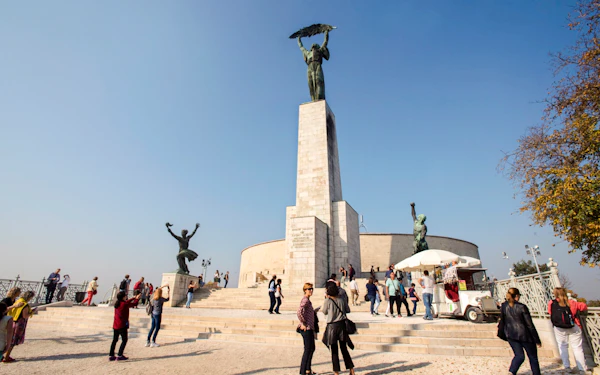
The steep green hill on the Buda side downstream of the castle, topped by a monument and a walled lookout with the widest panorama in Budapest - both banks, every bridge, and the river curving away in each direction. The climb is genuinely a climb, so take a bus part of the way up if the heat is on, and walk down through the woodland paths to the bath house at the bottom. Sunset is the obvious slot and the busiest one.
5. The caves under Buda
The hill is riddled with a natural cave system, and guided underground walks take you through lit passages and chambers well below the streets. It is a good weather-proof option, a strong choice with older kids, and a genuinely different angle on a city most people only see at ground level and above. Wear shoes with grip and expect it to be cool underground whatever the surface temperature.
Pest: the grand landmarks
The flat eastern bank is where the big set-piece buildings are, and where you will do most of your walking.
6. A guided tour inside the Parliament
The riverfront landmark everyone photographs from the other bank, and the interior that most rewards actually going in - a grand staircase, a domed central hall and chambers you can only see on a timed guided tour in a set language. This is the one Budapest booking that regularly sells out days ahead, and slots in your language are the constraint rather than tickets in general. Book it before you fly, then plan the rest of the day around the slot you get.
Top Budapest Parliament tours and tickets
Budapest Grand City Tour with Parliament Visit
4.5(1,694)4 hoursViewFrom$74
Budapest Parliament Audio Guide Tour with Danube Cruise
4.3(20)2 hr 20 minViewFrom$112
Budapest Private Historical walking tour with Parliament Option
4.2(5)4 hoursViewFrom$189
5 Hours Private Budapest First Class Tour with Parliament option
4.5(20)5 hoursViewFrom$254
Private Budapest Walking Tour: Parliament & Downtown
2 hoursViewFrom$414
Hungarian Parliament Audio Guided Tour
4.5(5,735)45 minutesViewFrom$44
Budapest Guided Half-Day Grand City Tour with Parliament Visit
4.1(256)4 hoursViewFrom$77
Private Buda Castle walking tour and Parliament tour package
5.0(4)4 hoursViewFrom$243Budapest Walking Tour: Parliament, Basilica & Danube River Cruise
5.0(2)2 hr 30 minViewFrom$82
Budapest Parliament and Saint Stephen Basilica Combo Ticket
4.4(20)2 hoursViewFrom$105
7. St Stephen's Basilica
The domed basilica anchoring a pedestrian square in the middle of Pest, with a lift and stairs up to a circular outdoor gallery around the dome. The interior is free to enter with a suggested donation, the panorama level is ticketed, and the terrace is the best rooftop view on the Pest side - flat city, Danube, castle hill opposite. Evening organ and chamber concerts run in the nave and are an easy, low-effort way to spend an hour after dinner.
8. Andrassy Avenue and the Opera House
The long tree-lined boulevard running from the centre of Pest out to the city park, lined with grand townhouses, embassies, cafes and the opera house about a third of the way along. Walk it in one direction and take the small underground line beneath it back. The opera house runs guided visits as well as performances, and a mid-week ticket to whatever is on is one of the best-value grand nights out in Europe.
9. Heroes' Square and the City Park
The vast open plaza at the top end of Andrassy, framed by a colonnade and flanked by two galleries, opening straight into the city park behind. The park holds a boating lake that freezes into a skating rink in winter, a mock castle on an island, the zoo, and the Szechenyi bath complex. Treat the square as a photo stop and the park as the reason you came up here.
10. The Jewish Quarter and the great synagogue
District VII, immediately behind the main shopping streets, is the dense grid of courtyards, small galleries, food spots and bars that gives central Pest its energy. Its landmark is the large ornate synagogue on Dohany Street, visited with a ticket that includes the memorial garden and museum rooms behind it. A guided walk through the quarter connects the buildings, the courtyards and the bar scene in one route, which is the efficient way to do it before dark.
11. A walking tour of central Pest
Budapest is a city where a two-hour orientation walk on your first morning genuinely changes the rest of the trip, because the layout is not obvious from a map and the good streets are one block off the obvious ones. Take one that runs both banks if you can, or a Pest-only route if you are doing Castle Hill separately. Best booked for the first morning, not the last.
See all Budapest guided walking tours →The thermal baths
Bathing is not a novelty here, it is a normal weekday habit. Bring flip-flops, a towel and a swimming cap if you plan to use a lap pool.
12. The Szechenyi Baths
The big yellow bath complex in the city park, and the one most visitors picture when they think of Budapest - a set of large outdoor pools at different temperatures, a warren of indoor thermal rooms and steam cabins around them, and chess players parked at floating boards whatever the weather. It is sociable rather than serene, it is at its best on a cold, steaming morning, and it fills through the middle of the day. Our Szechenyi Baths tickets guide compares the entry types, cabin and locker options and the fast-track routes.
Top Szechenyi Baths tickets and packages

Budapest Széchenyi Thermal Spa Ticket
3.8(2,330)4 hoursViewFrom$65
Budapest: Beer Spa with Unlimited Beer + Széchenyi Add-on
4.5(483)1 hour - 4 hoursViewFrom$82
Private 4 Hours Budapest city tour and 3 hours Széchenyi thermal spa relax
4.5(17)7 hoursViewFrom$337
Full-Day Admission to Budapest Lukacs Thermal Bath
3.6(37)1 hour - 8 hoursViewFrom$39
Budapest Széchenyi Spa with Danube Cruise and Optional Dinner
4.1(126)2 hoursViewFrom$160
Budapest Palatinus Bath Full-Day Admission
3.7(23)1 hour - 7 hoursViewFrom$32
Budapest: Lukács Beer Spa — Bath & Ice Bath add-ons available
4.7(109)1 hourViewFrom$83
Budapest: Csillaghegyi Spring Bath and Water Park Ticket
1 hour - 6 hoursViewFrom$30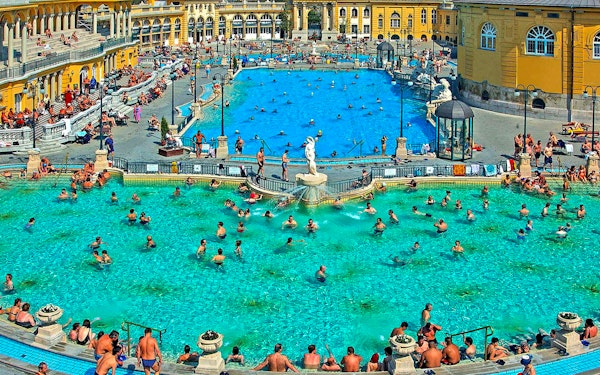
Széchenyi Spa Entry Tickets
4.3(9,851)ViewFrom$39
Széchenyi Spa: Fast Track Entry Tickets with Premium Day Spa Access and Private Cabin
4.3(141)ViewFrom$104
13. The Gellert Baths
The ornate indoor bath house at the foot of Gellert Hill, tiled floor to ceiling, with a glass-roofed main hall, smaller thermal pools at the sides and an outdoor terrace pool behind. It is calmer, prettier and more contained than Szechenyi, and it suits anyone who wants the architecture as much as the water. Go here if the big park complex sounds too much like a swimming pool with crowds.
14. Rudas and the rooftop pool
The moodiest of the three, on the Buda embankment: a domed older bathing hall lit from above, a set of small hot pools around it, and a circular rooftop pool looking straight up the river at the bridges. Check the schedule before you go, because parts of the complex run single-sex and mixed sessions on different days, and the rooftop is the bit worth timing your visit around. Best late in the day.
Top Budapest thermal bath experiences
Full-Day Admission to Budapest Lukacs Thermal Bath
3.6(37)1 hour - 8 hoursViewFrom$39Budapest Széchenyi Thermal Spa Ticket
3.8(2,330)4 hoursViewFrom$65Budapest Széchenyi Spa with Danube Cruise and Optional Dinner
4.1(126)2 hoursViewFrom$160
Paskál Thermal Bath and Wellness Spa Entrance Ticket
1 hour - 6 hoursViewFrom$30Széchenyi Spa: Fast Track Entry Tickets with Premium Day Spa Access and Private Cabin
4.3(141)ViewFrom$104Budapest: Csillaghegyi Spring Bath and Water Park Ticket
1 hour - 6 hoursViewFrom$30
Budapest: Pesterzsébet Salt-Iodine Spa & Sauna World Ticket
1 hour - 6 hoursViewFrom$30Budapest Palatinus Bath Full-Day Admission
3.7(23)1 hour - 7 hoursViewFrom$32Budapest: Beer Spa with Unlimited Beer + Széchenyi Add-on
4.5(483)1 hour - 4 hoursViewFrom$82Széchenyi Spa Entry Tickets
4.3(9,851)ViewFrom$39
On the Danube
The river is the spine of the city and the only place you see both halves at once.
15. A daytime sightseeing cruise
A short, cheap loop up and down the central stretch, passing under the bridges with the castle on one side and the Parliament on the other. It doubles as orientation on a first day and gets you the classic facade-on views you cannot get from either bank. An hour is plenty; longer daytime cruises mostly repeat the same water.
16. An evening cruise with the city lit up
The upgrade, and the one to book if you only do one boat. After dark the bridges, the castle, the basilica dome and the Parliament are all floodlit, and the reflection off the water is the image people come home with. Options run from a plain sightseeing sailing with a drink to full dinner cruises with live music, so pick by how much of the evening you want to hand over. Sunset departures book out first in summer.
Top Budapest Danube cruises

Budapest Danube River Cruise with Goulash and Lángos
4.8(4)1 hr 30 minViewFrom$58
Budapest Danube Cruise and Dinner Options, Live Music and Dance
4.7(7,559)1 hr 30 minViewFrom$58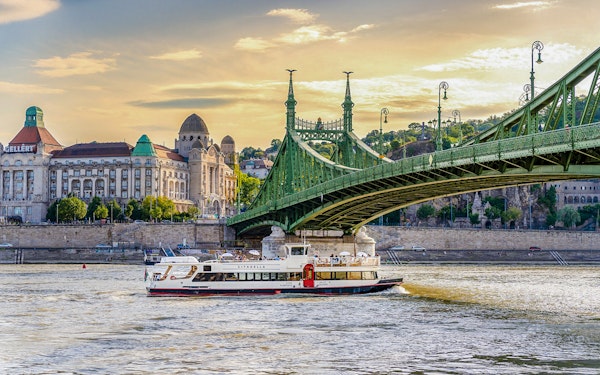
Budapest Premium Sightseeing Cruise with Tokaj Frizzante
4.6(10)1 hourViewFrom$52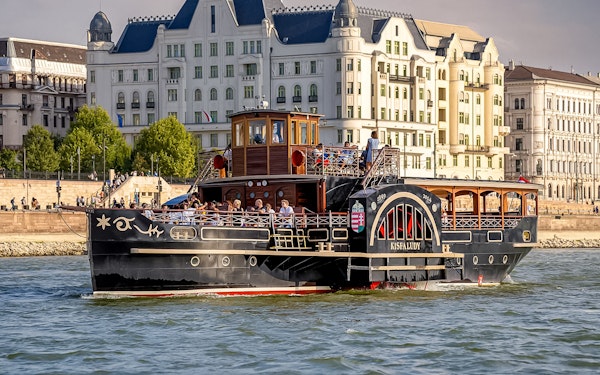
Budapest Danube River Cruise in a Historic Paddle Steamer
4.8(121)1 hourViewFrom$26
Budapest Danube Cruise with Audioguide and Panorama Terrace
3.7(11)1 hourViewFrom$8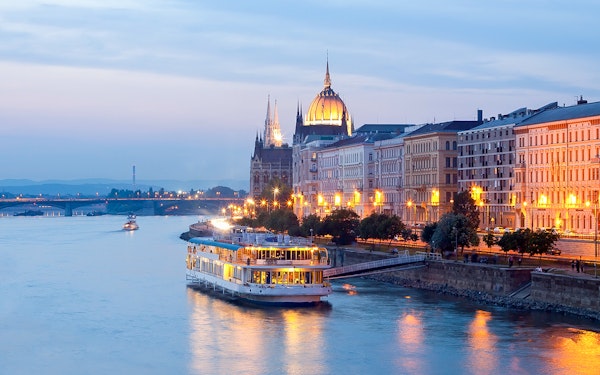
Budapest Danube River Sightseeing Cruise with Drinks
4.6(810)1 hourViewFrom$13
Sightseeing Cruise on the Danube with Audio Guide in Budapest
3.8(385)1 hourViewFrom$14
Budapest Audio Guide Cruise with Day, Sunset and Night Options
3.6(319)1 hourViewFrom$14
Budapest Danube Cruise with DJ, Drinks and After Party
4.9(747)3 hoursViewFrom$23
Booze Cruise Budapest Sightseeing Danube Cruise
5.0(6)1 hourViewFrom$20
17. Walking the bridges and the embankments
Free, and better than it sounds. Cross the Chain Bridge at night for the castle rising ahead of you, walk the Pest embankment past the riverside memorial of iron shoes on the stone bank, and take the tram that runs along the water for the sit-down version of the same view. Do this on your first evening and the geography of the city clicks into place.
See all Budapest boat and water experiences →Ruin bars and nights out
Budapest's nightlife has a genuinely distinctive form, and it is concentrated in a few walkable blocks.
18. The ruin bars of District VII
Bars built into the courtyards and stripped rooms of old inner-city buildings, furnished out of junk shops and open to the sky in the middle. The best-known one is a warren over several floors and is unmissable and completely overrun in equal measure, so go early in the evening for the setting or push on to the smaller, scruffier places on the surrounding streets. Drinks are cheap by western European standards and the crowd is young.
19. A guided ruin bar crawl
The reason to take a guided crawl here rather than winging it is that the good small bars are unmarked doors in residential blocks and you will not find them from the street. A crawl handles the route, gets you past the queue at the busy ones and usually includes a couple of rounds. It suits solo travellers and small groups who want company as much as bars.
Top Budapest ruin bar and nightlife tours

Budapest Ruin Bars: Evening Walking Tour with Drinks & Snacks
4.8(66)3 hoursViewFrom$159
Lively Small-group Tour of Budapest's Ruin Bars
2 hr 30 minViewFrom$265
Your Own Budapest Ruin Bars Walking Tour
5.0(1)2 hr 30 minViewFrom$272
Budapest By Night - Pub Crawl to Ruin Bars with Private Guide
3 hoursViewFrom$165
Private Budapest Ruin Bars Walking Tour with Drinks and Snack
5.0(1)3 hours - 3 hr 30 minViewFrom$163
Private Budapest Ruin Bar Tour with Local Drinks & Street Food
4.5(8)3 hoursViewFrom$166
Budapest Ruin Bars Evening Walking Tour with Drinks & Snacks
5.0(25)3 hoursViewFrom$124
Budapest Ruin Bars Evening Walking Tour with Drinks & Street Food
4.9(135)3 hoursViewFrom$124
Budapest Pub Crawl & Ruin Bar Tour – Free Shots & VIP Entry
5.0(4)4 hours - 5 hoursViewFrom$26
Budapest Ruin Bars Pub Crawl with Free Shots and VIP Entry
4.9(15)5 hoursViewFrom$20
20. A bath party or a boat party
Two very Budapest late nights. The bath complex in the city park runs occasional night-time party sessions with lights and music over the outdoor pools, which is either the most fun you will have on the trip or exactly what you want to avoid, depending on your temperament. The river alternative is a boat party sailing the central stretch after dark. Both are ticketed events on set dates, so check the calendar against your trip before you plan a night around either.
Food, markets and wine
Hungarian food is heavier and more paprika-driven than its neighbours, and the drinking culture runs from cellar wine bars to fruit spirits.
21. The Great Market Hall
The big iron-and-brick market hall at the Pest end of the green bridge, with produce, paprika, sausage and pickles on the ground floor and a gallery of food stalls upstairs. Go in the morning for the market and the middle of the day for lunch at the counters, and treat the upstairs souvenir stalls as scenery rather than shopping. Free to walk through and a good rainy-hour option.
22. A food walking tour
The efficient way to eat Budapest properly on a short trip: a guide walks you between a market, a couple of small kitchens and a cellar bar, covering the stews, the fried flatbread, the sausages and the wine in one route. It works best as a late-morning or early-evening slot and generally replaces the meal it sits over. Strong pick for a first full day, because you will get restaurant recommendations for the rest of the trip out of it.
Top Budapest food tours and tastings

Taste Budapest - Fat Boy Foodies Walk
4.5(11)4 hoursViewFrom$150
Central Budapest: Guided Walking Food Tour with Drinks
4.9(168)2 hr 30 minViewFrom$82
Flavors of Budapest: Guided Food Tour with Drinks
4.9(90)2 hr 30 minViewFrom$73
Budapest Food Tour: Local Tastings & Drinks
5.0(105)3 hoursViewFrom$63
The Award-Winning Private Food Tour of Budapest: 6 or 10 Tastings
4.5(189)3 hoursViewFrom$157
Food Tour in Budapest 5 to 10 Tastings
5.0(6)3 hoursViewFrom$153
Budapest Food Tour: Market to Tavern with 12+ Tasters & Wines
4.9(715)3 hoursViewFrom$99
Budapest Food Tour: Market Walk, Local Drinks & 20+ Tastings
5.0(214)2 hr 30 minViewFrom$91
Budapest Bites: A Street Food Adventure (5 dishes included)
4.2(5)4 hoursViewFrom$64
Budapest Tipsy Food Tour with Wines, Small Group & Local Guide
4.9(346)3 hoursViewFrom$84
23. Wine and palinka tasting
Hungary makes far more interesting wine than its export shelf suggests, and a guided tasting in a cellar bar is the quickest route through the regions without ordering blind. Palinka, the local fruit spirit, is the other tasting to try, usually in a flight of a few fruits. Both suit an evening slot and both are considerably better with someone explaining what you are drinking.
See all Budapest food and drink experiences →Day trips worth leaving the city for
Budapest sits on a river with good things at both ends of it, and the rail and road links are quick.
24. The Danube Bend
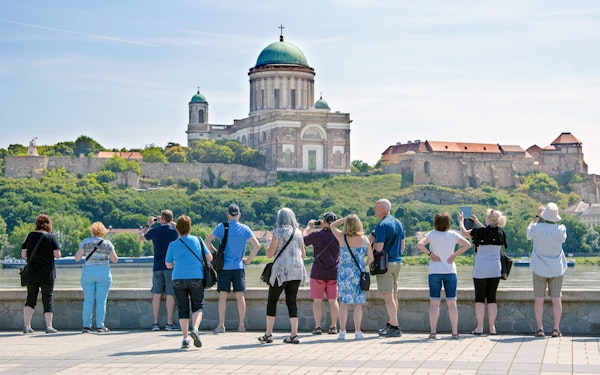
The standard day out and the best one: a loop north of the city where the river turns sharply between hills, taking in a small riverside artists' town of galleries and cobbled lanes, a hilltop fortress with a long view over the water, and a domed basilica on the bank further upstream. Guided full-day versions handle the driving and often include a stretch by boat, which is the part worth paying for.
Top Danube Bend day trips from Budapest
From Budapest: Danube Bend Day Trip
4.2(5)9 hoursViewFrom$99
Danube Bend: Day trip from Budapest
4.0(152)8 hoursViewFrom$101
Private Danube Bend Tour, Szentendre and Vac stops from Budapest
8 hoursViewFrom$626
Danube Bend Day Trip Nature Escape to Zebegeny
5.0(2)6 hoursViewFrom$177
Danube Bend Private Tour to Esztergom, Visegrád and Szentendre
5.0(5)8 hoursViewFrom$532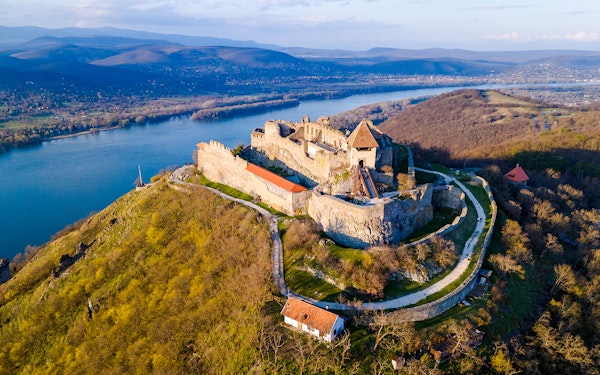
From Budapest: Danube Bend Tour
4.0(3)9 hoursViewFrom$99
The Beautiful Danube Bend Private Day Tour
8 hoursViewFrom$414
Private Danube Bend Visegrad & Szentendre Tour from Budapest
5.0(3)4 hoursViewFrom$188
Danube Bend Highlights- Private Full Day Tour from Budapest
4.9(14)8 hoursViewFrom$794
Private Budapest Danube Bend Tour Lunch and Cruise
4.5(59)8 hoursViewFrom$314
25. Lake Balaton
The big inland lake southwest of the city, and the country's summer resort belt - shallow warm water on the southern shore, wine hills and a peninsula on the northern one. It is a full day and only really worth it in warm months, when it turns into the best swimming and lakeside eating within reach of Budapest. Go by organised trip if you want the wine side without driving.
26. A cross-border river trip
The Danube runs on to the next capital downstream, and a fast boat or a short train turns it into a comfortable day trip out of Budapest. It suits travellers on a longer stay who want a second city without repacking, and the river version is the more scenic of the two. Book the boat ahead in summer, since sailings are limited and fill.
See all Budapest day trips →Sequence the day around the bath
The one scheduling trick that makes Budapest better is treating the thermal bath as the late-afternoon reset rather than a morning activity. Do the walking and the landmarks while it is cool and the light is good, get in the water somewhere between four and seven when the crowds thin and your legs have earned it, then eat and go out afterwards. Two hours in a hot pool is also the only reliable cure for a day spent on Castle Hill's cobbles.
What to bring to a thermal bath
Bring your own towel and flip-flops unless you want to rent both at the door, pack a swimming cap if you intend to use the lap pool at any of the big complexes, and take a small waterproof bag for a phone. Most complexes offer a locker or a private cabin, and the cabin is the more comfortable choice for couples and anyone who dislikes a shared changing room.
How to pick from this list, fast
- One day in Budapest: Castle Hill and the Fisherman's Bastion in the morning, the Parliament or the Basilica after lunch, an evening Danube cruise
- Two days: Add the Szechenyi or Gellert baths in the late afternoon and a ruin-bar evening in District VII
- Three days: Add Gellert Hill at sunset, a food walking tour, and the Great Market Hall
- Longer: Add the Danube Bend, Lake Balaton in summer, and a night at the opera or a cellar wine tasting
If you are still shaping the trip, our Budapest travel guide covers where to stay by district, how the transport works, when to go and the mistakes first-timers most regret. And if the baths are the reason you are coming, the Szechenyi Baths tickets guide sorts out which entry type you actually need.
Compare every Budapest experience in one search →Common questions
What are the top 10 things to do in Budapest?
The headline ten are Buda Castle Hill, the Fisherman's Bastion terraces, a guided tour inside the Parliament building, St Stephen's Basilica, a soak at the Szechenyi Baths, an evening Danube cruise, the ruin bars of District VII, the Great Market Hall, the Gellert Hill viewpoint, and a day trip up the Danube Bend. Of those, the Parliament and the baths are the two most worth locking in before you arrive.
How many days do you need in Budapest?
Three days is the comfortable number. Day one covers Castle Hill and the Buda viewpoints, day two covers the Pest landmarks with a bath in the late afternoon and a cruise after dark, and day three is either a slow food and ruin-bar day or a trip out to the Danube Bend. Two days works if you skip the day trip and accept a brisk pace.
Which thermal bath in Budapest should I choose?
Szechenyi in the City Park is the big, sociable, mostly outdoor one and the easiest first choice. Gellert is the more ornate indoor experience, calmer and better if you want architecture with your soak. Rudas is the moodiest of the three, with a domed older bathing hall and a rooftop pool over the river. Our Szechenyi Baths tickets guide compares the entry types in detail.
Are the ruin bars in Budapest worth visiting?
Yes, at least once. They are bars built into the courtyards and half-derelict rooms of old inner-city buildings in District VII, filled with mismatched furniture, junk-shop decor and open-air courtyards. The most famous one is packed and touristy by late evening, so go early for the setting or take a guided crawl that also gets you into the smaller places on the side streets.
Is a Danube cruise in Budapest worth it?
It is one of the few boat rides in Europe we would call essential rather than optional. The city is built along both banks and the bridges, the Parliament facade and the castle skyline all read best from mid-river. Book the evening departure if you can only do one, because the whole riverfront is floodlit after dark.
What food should you try in Budapest?
Goulash and other paprika-heavy stews, langos (fried flatbread with sour cream and cheese), stuffed cabbage, chimney cake from a street stall, and the sweet or dry Hungarian wines poured by the glass in the cellar bars. A guided food walk is the fastest way to cover the lot, and the Great Market Hall is the free self-guided version.
What is the best day trip from Budapest?
The Danube Bend is the standard answer and it earns it - a river-and-road loop north of the city taking in an artists' town, a hilltop fortress and a domed riverside basilica, usually as a full day. Lake Balaton is the summer alternative for swimming and wine country, and a river trip across the border to the next capital downstream is the pick if you want a second city stamped into the trip.
Do you need to book Budapest attractions in advance?
The Parliament interior tour is the one that genuinely sells out, often days ahead, and it is worth booking before you fly. Thermal bath fast-track entry and evening cruises fill on weekends and through the summer. Everything outdoors - Castle Hill, the Fisherman's Bastion terraces, Heroes' Square, the embankment walks - is free and needs nothing.
Is Budapest walkable?
The flat Pest side is very walkable and most of its landmarks sit within a half-hour of each other. Buda is the hilly half, so use the funicular or a bus to gain the height up to the castle and Gellert Hill rather than climbing cold. The metro, trams and the riverside tram line along the Pest bank cover the longer hops cheaply.
More reads
More guides to help you plan your trip

The Ultimate Budapest Travel Guide for First-Time Visitors (2026)
A field-tested 2026 Budapest travel guide - where to stay by district, how the metro and trams work, which thermal bath to pick, when to go and what first-timers regret.

Szechenyi Baths Tickets in 2026: Every Entry Type Compared
A 2026 guide to Szechenyi Baths tickets - full-day entry, fast-track, cabin versus locker, massage and tasting packages, and the night bath party compared.

The Cost of a Guided Walking Tour: What 50 Cities Actually Charge in 2026
We measured the price of every guided walking tour in our cross-platform catalog across 50 cities. The median is $50. The more useful number is how far prices spread inside a single city.

1 Day in London: A Realistic Itinerary That Does Not Waste the Day
One day in London, planned around what actually fits - a walkable route through the centre, the two things worth booking, and the traps that eat an hour each.

1 Day in Paris: The Itinerary That Fits, and the One That Does Not
One day in Paris, planned around real distances - what to book, what to walk, what to skip, and why three museums in a day is the classic mistake.

2 Days in Lisbon: The Itinerary That Handles the Hills
Two days in Lisbon, planned around the terrain rather than the map - what to book, what to walk, and why the second day should leave the city.

2 Days in Tokyo: Two Districts, Done Properly
Two days in Tokyo is enough for two districts and nothing else - and that is the right plan. A day-by-day route, what to book, and what to deliberately skip.

5 Days in Rome: The Itinerary Where the City Finally Opens Up
Five days in Rome is where the checklist ends and the city begins. A day-by-day route with the two day trips worth taking and the mistakes that waste the extra time.