BerlinListicleHistoryMuseumsNightlife
Things to Do in Berlin: 26 Experiences Worth Booking in 2026
A 2026 Berlin shortlist - 26 landmarks, history walks, museums, river cruises, food tours, nightlife and day trips grouped by theme, with the ones actually worth booking ahead.
By SimilarTours Editorial · Travel Research · · 20 min read

Berlin is a city best understood on foot and with someone talking. Its landmarks are scattered across a footprint far larger than most European capitals, and a great deal of what people come to see is not a building at all but a line in the pavement, a preserved fragment of wall, a field of grey stone slabs, or a stretch of grass where something once stood. That makes Berlin unusually rewarding for guided experiences and unusually easy to waste if you wander it blind.
This guide cuts the list down to 26 experiences worth booking, grouped so you can pull the block that matches your trip: the landmark spine, the history sites, the museums, the water, the food, the after-dark half of the city, and the day trips that get you out of it. Each entry gives you one clear reason it earns a place and who it suits.
We compared the Berlin experiences currently bookable across our partner OTAs and grouped them by what they actually deliver, so you can compare like with like on one comparison site instead of ten browser tabs. Availability and pricing are live at the moment you search, and depend on date, group size, and language.
Browse all Berlin experiences and tickets →Landmarks and history on foot
Berlin's central axis holds most of the sights people arrive with on their list, and they sit close enough together to string into a single long walk. This is the block to do first, ideally with a guide, because the connective tissue between the stops is the part that makes them mean something.
1. The Brandenburg Gate
The colonnaded gate that closes off the western end of the boulevard through the city centre, and the image most people carry of Berlin before they get here. It is free, always open, and permanently busy, so the trick is timing rather than ticketing: early morning gives you the columns without the crowd, and after dark the floodlighting makes it worth a second pass. Stand on the eastern side for the classic framing down the tree-lined avenue, then walk through and keep going into the park on the other side, which almost nobody does and which immediately shows you how green this city is.
Top Berlin walking tours

Berlin: Private Highlights Walking Tour with Local Guide and Hotel pickup
5.0(12)3 hoursViewFrom$57
Discover Berlin Half-Day Walking Tour
4.9(10,322)3 hr 30 minViewFrom$23
The History of Berlin City Center Exclusive Guided Walking Tour
5.0(17)3 hoursViewFrom$65
Third Reich Berlin: Hitler and WWII Walking Tour
4.9(3,611)3 hoursViewFrom$20
Berlin Third Reich & Cold War Walking Tour With A Guide
4.9(19)2 hoursViewFrom$41
Berlin's Best: 2 Hour Walking Tour Third Reich and the Cold War
5.0(6,313)2 hoursViewFrom$27
Berlin Off the Beaten Path: Neighbourhoods & Street Culture
5.0(14)3 hours - 4 hoursViewFrom$201
Berlin Highlights Walking Tour
4.4(420)3 hoursViewFrom$2
Private Walking Tour Berlin 3 Hours: IIIrd Reich, WW2, Cold War
5.0(11)3 hoursViewFrom$396
East Berlin and the Berlin Wall 2-Hour Walking Tour
4.9(244)2 hoursViewFrom$23
2. The Reichstag and its glass dome
The parliament building at the edge of the park, and the one interior in Berlin that everybody should try to get into. The draw is the glass dome on the roof, a spiralling ramp that climbs above the debating chamber with a full circle of city views on the way up. Entry is free but strictly registered and timed, and slots go early, so treat it as the first booking you make rather than something to try on the day. Guided visits and rooftop-restaurant options exist for people who miss the standard windows. Go near sunset if you can choose.
3. The Memorial to the Murdered Jews of Europe
A field of grey concrete slabs on undulating ground a few minutes from the gate, and the most quietly powerful thing in central Berlin. It is open, free, and unfenced, and the experience changes entirely once you walk into the middle of it and the ground drops away and the noise of the street disappears. There is an information centre underneath. Treat it as a place to be still rather than a photo stop, and give it more time than the map suggests.
4. The Berlin Wall Memorial on Bernauer Strasse
The most complete and best-explained of the city's wall sites, running along a residential street well north of the tourist centre. Rather than a single fragment, it preserves a full section with the ground behind it, plus an observation platform, an outdoor exhibition along the street, and a documentation centre. If you visit exactly one wall site, make it this one: it is the only place that shows how the barrier actually worked as a system rather than as a decorated slab.
Top Berlin Wall tours

Small-Group Berlin Wall Bike Tour
5.0(17)4 hoursViewFrom$40Discover Berlin Half-Day Walking Tour
4.9(10,322)3 hr 30 minViewFrom$23
Berlin Cold War Stretch Walking Tour with East Side Gallery
0.0(0)3 hoursViewFrom$23
Communist East Berlin and Berlin Wall Walking Tour
4.9(2,842)2 hoursViewFrom$1
2 hour Private Walking Tour: The Berlin Wall & the Cold War
5.0(41)2 hoursViewFrom$141
East Berlin Food Tour with Berlin Wall and Craft Beer
4.9(256)3 hoursViewFrom$97
Private Shore Excursion: Cold War and East Berlin from Warnemünde
11 hoursViewFrom$883
Explore The Berlin Wall: Cold War Berlin and Behind the Berlin Wall
4.9(217)3 hoursViewFrom$31
Berlin Food & Cultural Tour: Must-Try German & Berliner Classics
5.0(94)3 hoursViewFrom$141
Berlin: Highlights of Berlin Guided Bike & E-Bike Tour
4.9(1,089)3 hoursViewFrom$40
5. The East Side Gallery
The long riverside stretch of wall in Friedrichshain, painted end to end with murals and now one of the most photographed open-air galleries anywhere. It is free, permanently accessible, and busiest in the middle of the day when the coach groups arrive. Walk it in the early morning for clean shots, start from the bridge end so you finish near the cafes, and read it as art rather than as history, because the Bernauer Strasse site does the explaining far better.
6. Checkpoint Charlie and the Cold War quarter
The old crossing point in Mitte, now a small reconstructed guardhouse hemmed in by shops and street performers. Taken alone it disappoints almost everyone. Taken as part of a guided Cold War walk that links it to the surrounding streets, the escape stories, and the nearby museums, it becomes one of the more interesting stops in the city. Book the context, not the photograph.
7. Unter den Linden and Gendarmenmarkt
The grand boulevard that runs east from the Brandenburg Gate, lined with embassies, the opera, the university and the great civic buildings, and the elegant square a couple of blocks south of it framed by two matching domed churches and a concert hall. This is where Berlin looks most like a classical European capital, which surprises visitors who arrive expecting only concrete and graffiti. Walk it slowly, ideally as part of an orientation tour, and detour to the square in the late afternoon when the light hits the domes.
8. The TV Tower at Alexanderplatz
The tall spire with the sphere near the top that anchors the eastern skyline and is visible from almost everywhere in the city. A lift takes you to a viewing level and a slowly revolving restaurant above it. Book a timed slot rather than queueing, go on a clear day, and use it early in the trip: seeing Berlin's layout from above, with the parks and the river and the sheer scale of it, makes everything at ground level easier to place.
9. A guided Third Reich and wartime history walk
The specialist walk that most repays booking. Much of the relevant ground in central Berlin is now unremarkable to look at, which is precisely why a guide matters: the sites are legible only with someone to point at a car park, a plot of grass, or an ordinary office block and explain what stood there. These walks are sober, detailed, and consistently rated the most valuable few hours people spend in the city. Choose a small-group version if you can.
Top Berlin history tours
Berlin Third Reich & Cold War Walking Tour With A Guide
4.9(19)2 hoursViewFrom$41
Third Reich Walking Tour Munich - Nazi Origins - Max.16 per group
5.0(41)2 hr 30 minViewFrom$35
Private Warnemuende Shore Excursion: Third Reich Berlin
4.8(4)11 hoursViewFrom$893Third Reich Berlin: Hitler and WWII Walking Tour
4.9(3,611)3 hoursViewFrom$20
Private Walking Tour in Berlin: Hitler's Germany & WWII
5.0(23)4 hoursViewFrom$177Berlin's Best: 2 Hour Walking Tour Third Reich and the Cold War
5.0(6,313)2 hoursViewFrom$27
Private Tour : Hitler and the Third Reich Walking Tour
5.0(12)2 hoursViewFrom$49
Third Reich Walking Tour Munich
4.7(4,641)2 hr 30 minViewFrom$43
Berlin: Guided Bike tour of the Berlin Wall and Third Reich
4.8(197)3 hoursViewFrom$40Private Walking Tour Berlin 3 Hours: IIIrd Reich, WW2, Cold War
5.0(11)3 hoursViewFrom$396
Museums and galleries
Berlin's museum density is the equal of any city in Europe, and the collections are spread far beyond the obvious island in the river. Pick two or three rather than trying to sweep them.
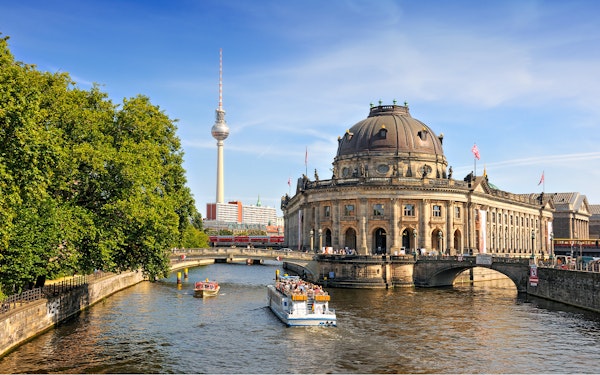
10. Museum Island
The cluster of major collections on an island in the Spree in the middle of the city, covering antiquity, sculpture, and European painting across several separate buildings. A combined ticket lets you move between them, but the honest advice is to choose one or two and go deep rather than sprinting through all of them in an afternoon. Timed entry helps in summer. Check which houses are open for your dates, as buildings on the island rotate through long renovation programmes.
Top Berlin museum tickets

Skip the Line: Kunsthistorisches Museum Vienna Entrance Ticket
4.3(495)1 hourViewFrom$26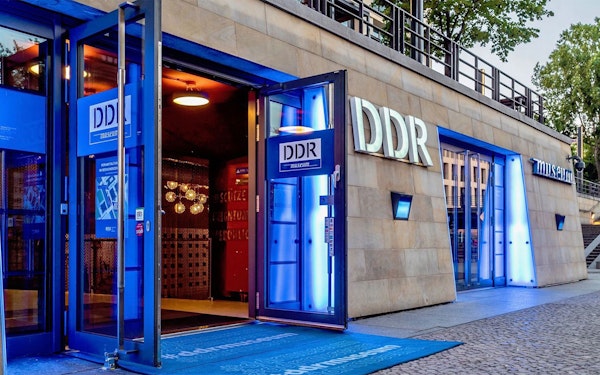
DDR Museum Berlin Admission Tickets
4.3(1,519)ViewFrom$17
NYC 9/11 Memorial and Museum Ticket with Tour Options
4.7(6,737)1 hr 30 minViewFrom$36
Illuseum Berlin Tickets
4.3(805)1 hourViewFrom$17
Intrepid Museum Admission Ticket
4.6(1,104)1 hr 30 minViewFrom$38
Madame Tussauds Berlin Admission Ticket
4.6(28)2 hoursViewFrom$26
American Museum of Natural History Admission Ticket
4.0(2,077)3 hours - 4 hoursViewFrom$37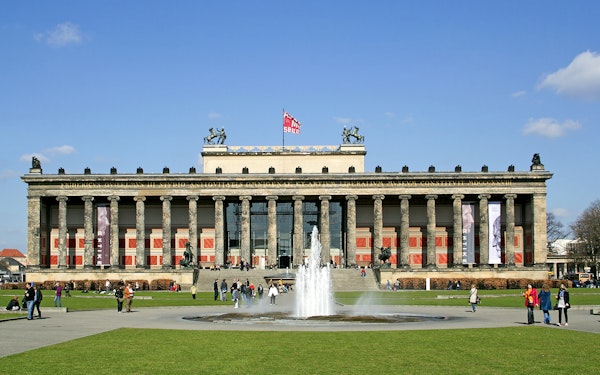
Altes Museum Skip-the-Line Tickets
4.5(4)ViewFrom$17
Field Museum of Natural History Admission Tickets
4.6(594)4 hoursViewFrom$29
Berlin BODY WORLDS Museum Tickets
4.4(11)ViewFrom$23
11. The Topography of Terror
An outdoor and indoor documentation centre on the site of the security apparatus that once operated there, with a long exhibition running beside a surviving stretch of wall. Entry is free, the material is dense and text-heavy, and it is the single best place in Berlin to understand how the machinery of the period actually functioned. Allow ninety minutes, and go on a day when you have the emotional capacity for it rather than squeezing it between lighter stops.
12. The everyday-life museum of the former East
A hands-on, deliberately tactile museum near the cathedral devoted to daily life in the former East Germany, with a reconstructed apartment, a car you can sit in, and drawers and cupboards you are meant to open. It is popular with families and a good counterweight to the heavier sites, because it deals in ordinary domestic detail rather than politics. Small, busy, and best booked with a timed entry.
13. The Jewish Museum
A large museum in Kreuzberg whose architecture is as much the exhibit as the collection, with angled corridors, voids, and a garden of leaning pillars that unsettles you on purpose. The permanent exhibition covers centuries of Jewish life in the German-speaking lands, not only the darkest chapter, which is what makes it a fuller experience than visitors expect. Give it half a day and use the cafe as a decompression stop.
14. Charlottenburg Palace
The baroque palace and formal gardens out in the west of the city, and the best surviving example of Berlin's courtly past. It suits travellers who want gilded interiors, a change of register from the twentieth-century material, and a genuinely lovely park to walk afterwards. It is a train ride from the centre, so treat it as its own half-day rather than an add-on, and consider it especially on a rainy afternoon.
See all Berlin cultural and historical experiences →On the water and above the streets
Berlin sits on a river and a web of canals, and the water is the easiest way to cover ground without walking. It is also the fastest way to see how green the city is.
15. A Spree river cruise
The classic Berlin boat trip, running through the middle of the city past the government quarter, the museum buildings, the cathedral and the modern glass architecture along the banks. It is a genuinely useful orientation as well as a rest for your feet, and the commentary fills in the buildings you have been walking past. Short central loops suit a first day; longer routes push out towards the east and the industrial stretches. Sit on the open upper deck if the weather allows.
Top Berlin river cruises
Berlin Spree River West Harbour or East-Side Sightseeing Cruise
4.3(470)2 hr 30 minViewFrom$36
Berlin sightseeing boat tour on the Spree
4.1(138)1 hourViewFrom$25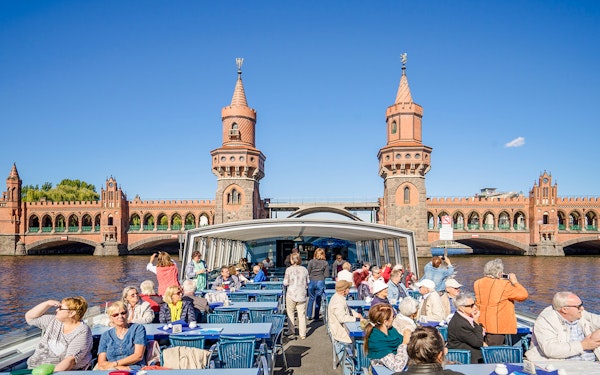
Berlin Spree River & Landwehrkanal Canal Sightseeing Cruise
4.8(99)3 hr 15 minViewFrom$41
Big Bus Berlin Hop-On Hop-Off Tour with optional River Cruise
4.1(973)40 minutes - 2 hoursViewFrom$33
Berlin Spree River City Highlights Sightseeing Cruise
4.4(1,206)1 hourViewFrom$24
Liverpool: 50-Minute Sightseeing River Cruise
4.2(1,391)50 minutesViewFrom$19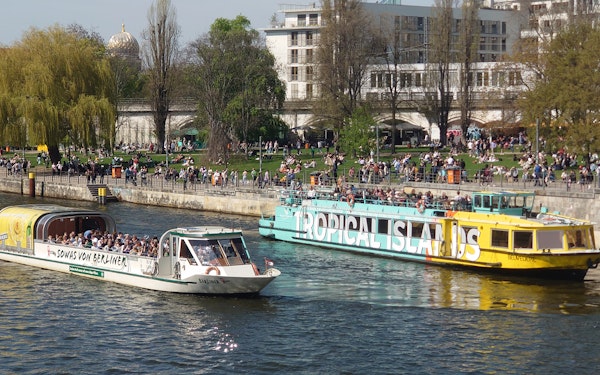
Berlin: 1 Hour Sightseeing Cruise on the River Spree
4.4(1,900)1 hourViewFrom$26
Berlin: Spree River Sightseeing Boat Tour with Audio Narration
3.3(18)1 hour - 1 hr 10 minViewFrom$33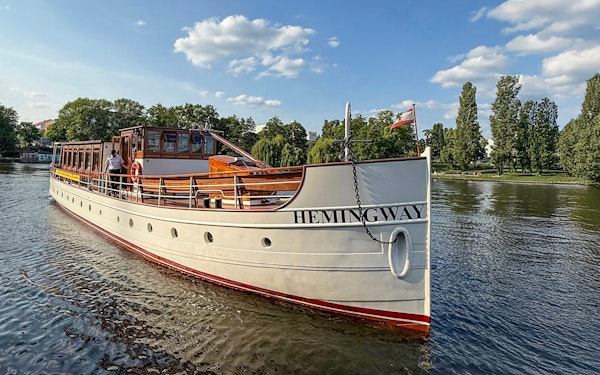
Berlin Spree River Sightseeing Cruise on a Luxury Yacht
4.8(21)1 hourViewFrom$29
London Eye River Cruise
4.8(2,013)40 minutesViewFrom$21
16. An evening or dinner cruise
The same water with the lights on. Evening departures trade the commentary for atmosphere, with the government buildings and the bridges lit up and the city looking considerably more romantic than its reputation suggests. Dinner versions turn it into the whole evening, which suits couples and anyone who wants one relaxed night in a trip otherwise full of walking. Book ahead in summer, when the sunset sailings go first.
17. A hop-on hop-off loop
Ordinarily the least interesting way to see a city, but Berlin is one of the places where it genuinely earns its keep, because the distances between the sights are long and the loops connect them in an order that makes sense. It suits first-timers with limited days, travellers with mobility limits, and anyone visiting in bad weather. Combine it with a river cruise if a combined option is available on your dates.
See all Berlin boat and water experiences →Food and drink
There is no single Berlin cuisine, and that is the point. The food story here is about migration, cheap rents, and neighbourhoods, which is exactly the kind of thing a good guide can explain and a menu cannot.
18. A Kreuzberg or Neukoelln street-food tour
The food experience to book. A guide walks you between small counters, bakeries, snack stands and family-run kitchens across a couple of the city's most layered districts, explaining how each arrived and why it stuck. It replaces lunch or dinner, gets you into places you would never pick from a shopfront, and doubles as the most enjoyable neighbourhood walk in Berlin. Come hungry and wear shoes you can walk several kilometres in.
Top Berlin food tours
Berlin Food & Cultural Tour: Must-Try German & Berliner Classics
5.0(94)3 hoursViewFrom$141
Berlin: Mitte District Food Tour with 7 Authentic Local Tastings
4.9(1,558)3 hoursViewFrom$112
Private Food Tour Experience with a born and bred Berliner
5.0(14)3 hr 30 minViewFrom$349Berlin: Highlights of Berlin Guided Bike & E-Bike Tour
4.9(1,089)3 hoursViewFrom$40
Chef Karl's Berlin Culinary Journey
5.0(21)5 hoursViewFrom$164East Berlin Food Tour with Berlin Wall and Craft Beer
4.9(256)3 hoursViewFrom$97
Gastro Tour with Klaus though the Wrangelkiez, Kreuzberg
5.0(10)3 hoursViewFrom$89Discover Berlin Half-Day Walking Tour
4.9(10,322)3 hr 30 minViewFrom$23
Sharing plate food tour in Berlin
5.0(9)4 hr 30 minViewFrom$83
Berlin Food Tour with Full Meal & Drinks by Do Eat Better
4.9(135)3 hr 30 minViewFrom$85
19. A beer and brewery tour
Beer is the one drink Berlin takes entirely seriously, split between long-established styles and a lively small-brewery scene spread across the eastern districts. Guided crawls and brewery visits cover both, usually with tastings and a lot of context about how the city drinks. It suits groups and anyone who wants an evening activity that is social rather than sightseeing. Book the earlier slots if you also want dinner afterwards.
See all Berlin food and drink experiences →Nightlife and alternative Berlin
This is the half of the city that made its modern reputation, and it is the half most itineraries under-serve. None of it requires staying out until dawn, though the option is always there.
20. A street-art and graffiti tour
Berlin's walls are a working gallery, and the murals, tags and paste-ups across Kreuzberg, Friedrichshain and Mitte carry a running argument about the city that changes month to month. A guided walk teaches you to read it: who paints what, which pieces are sanctioned, what the crews are saying to each other. Some versions include a hands-on workshop. It is the best-value alternative-Berlin experience and it works in any weather.
21. A club-culture night or bar crawl
Berlin's nightlife is famously unstructured and famously hard to crack from outside, with door policies that no booking can guarantee. Guided bar crawls and club-culture walks are the sensible way in for visitors: they explain how the scene works, take you to venues that will actually let a group in, and save you an evening of queueing at the wrong door. Treat any promise of guaranteed entry to a specific famous club as a warning sign rather than a feature.
22. Tempelhof Field
A decommissioned airport in the middle of the city, now an enormous public park where people cycle, skate, barbecue and fly kites down the old runways. It costs nothing, needs no booking, and is one of the strangest and most likeable open spaces in Europe. Bring something to sit on, go on a clear afternoon, and walk the full length of a runway at least once for the sheer scale of it.
23. Mauerpark on a Sunday
The weekly flea market in the north of the city, with an open-air karaoke session in the amphitheatre beside it that draws a crowd of hundreds. It is chaotic, cheerful and completely free, and it shows you a Berlin that is doing something for its own amusement rather than for visitors. Go in the early afternoon, eat from the stalls, and stay for the karaoke even if you have no intention of getting up.
Day trips worth leaving the city for
Berlin is surrounded by lakes, forest, and a flat, easy landscape, and two of the trips out are as strong as anything inside the city limits.
24. Potsdam
The palace town just beyond the southwestern edge of Berlin, with a cluster of royal residences, terraced gardens, parkland and a handsome old centre, all reachable on the regular commuter network. It is the classic Berlin day trip and the most photogenic, and the guided versions handle the walking route between the palaces so you are not crossing an enormous park by guesswork. A half-day works; a full day is better.
Top Potsdam day trips from Berlin

City Sightseeing Potsdam Hop-On Hop-Off Bus Tour
3.4(86)1 hr 45 minViewFrom$24
City and Palaces Tour Potsdam - Stadt- und Schloesserrundfahrt Potsdam
4.5(335)3 hoursViewFrom$32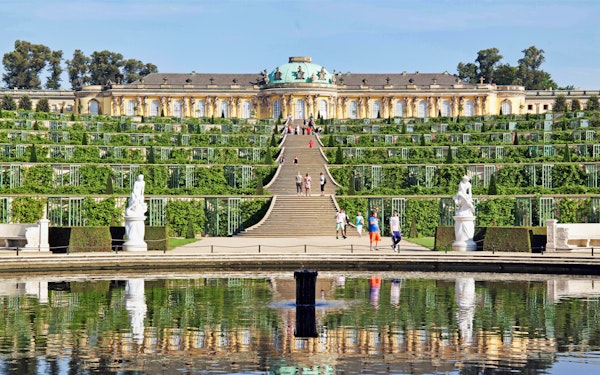
4-Hour Guided Walking Tour to Potsdam from Berlin
4.3(2,102)6 hoursViewFrom$26
Berlin: Sachsenhausen Concentration Camp and Potsdam day tour
4.6(438)9 hr 30 minViewFrom$23
Potsdam Walking Tour with Palace Entry
5.0(1)3 hoursViewFrom$219
Potsdam Half-Day Walking Tour from Berlin
4.6(411)4 hoursViewFrom$25
Private Walking Tour of Potsdam and Sanssouci
4.7(25)2 hoursViewFrom$48
From Berlin: Potsdam Highlights & Sanssouci half day Walking Tour
4.7(164)6 hoursViewFrom$56
Cycling tour 5 The charming neighbour Potsdam
5 hoursViewFrom$530
Potsdam Tour from Berlin With Guided Sanssouci Palace Visit
4.5(439)4 hoursViewFrom$73
25. The Sachsenhausen memorial
The memorial and museum on the site of a former concentration camp north of the city, visited on a guided half-day or full-day trip. It is difficult, essential, and the thing most visitors say stayed with them longest. Go with a guide rather than alone: the site is large, largely open ground, and almost impossible to read without someone to explain what each area was. Not suitable for young children, and best scheduled on a day with nothing demanding after it.
Top Sachsenhausen memorial tours

Shore Excursion from Warnemünde - Berlin & Sachsenhausen
12 hoursViewFrom$129
Best of Berlin and Sachsenhausen Shore Excursion from Warnemunde
12 hoursViewFrom$117
Private Sachsenhausen Concentration Camp Memorial Tour
5.0(17)6 hoursViewFrom$414
Berlin: Sachsenhausen Concentration Camp Tour in English
4.9(5,967)5 hr 30 minViewFrom$27
Join-in Shore Excursion: Berlin Highlights and Sachsenhausen
12 hoursViewFrom$502
Sachsenhausen Concentration Camp Bus Tour in English from Berlin
4.9(2,177)4 hoursViewFrom$62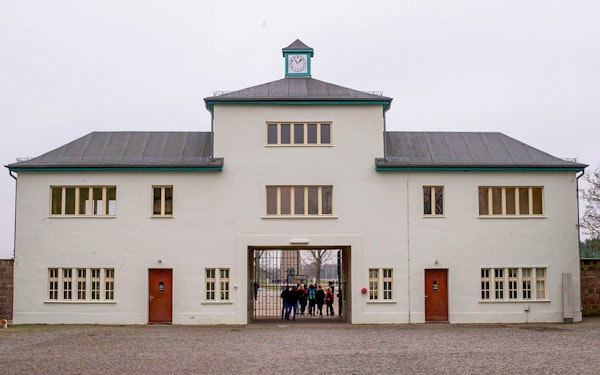
Sachsenhausen Concentration Camp Memorial Private Guided Tour From Berlin
0.0(0)6 hoursViewFrom$219
From Berlin: Sachsenhausen Concentration Camp Museum Tour
4.5(621)5 hours - 6 hoursViewFrom$31
Private Berlin & Sachsenhausen Shore Excursion from Warnemünde and Rostock Port
5.0(7)12 hoursViewFrom$1,240Berlin: Sachsenhausen Concentration Camp and Potsdam day tour
4.6(438)9 hr 30 minViewFrom$23
26. A longer day further out
With a full free day and an early start, Berlin opens onto a wider region: the maze of small waterways in the Spreewald, where flat-bottomed boats and canoes are the local transport, and the restored baroque centre and river setting of Dresden a couple of hours south. Both are long days and both are best done on an organised trip that takes the timetables off your hands. Pick them for a second visit or a longer stay rather than a first three-day trip.
See all Berlin day trips →A note on distances and stamina
Berlin is much larger than it looks on a map, and the classic first-timer mistake is planning a day that crosses the city three times. Group your bookings by district instead: the landmark spine and Museum Island in one block, Kreuzberg and the East Side Gallery in another, the northern wall sites and Mauerpark in a third. Buy a day travel pass rather than single tickets, and accept that you will use it. Two well-placed sights done properly beat five reached in a hurry.
How to pick from this list, fast
- One day in Berlin: the landmark spine from the Brandenburg Gate to Alexanderplatz with a guided walk, the memorial, and a Spree cruise in the late afternoon
- Two days: add Museum Island or the Topography of Terror, plus the East Side Gallery and an evening in Kreuzberg
- Three days: add the Bernauer Strasse wall memorial, a street-food tour, and a street-art walk
- Four days or more: add Potsdam or Sachsenhausen, Charlottenburg Palace, and an unbooked afternoon on Tempelhof Field
If you are still shaping the trip, our Berlin travel guide covers where to stay, how the transport tickets work, when to go, and the mistakes first-timers most often regret. For a different kind of capital-city break, the Amsterdam things to do and Prague things to do lists cover two of the easiest onward hops from here.
Compare every Berlin experience in one search →Common questions
What are the top 10 things to do in Berlin?
The headline ten are the Brandenburg Gate, the Reichstag and its glass dome, the Memorial to the Murdered Jews of Europe, the Berlin Wall Memorial on Bernauer Strasse, the East Side Gallery, Museum Island, the Topography of Terror, a Spree river cruise, a Kreuzberg food tour, and a day trip to Potsdam. The Reichstag dome and the big Museum Island collections are the ones to reserve in advance; the outdoor memorials and the wall sites are free and open to walk at any hour.
How many days do you need in Berlin?
Three full days is the realistic minimum. Day one covers the central landmark spine from the Brandenburg Gate to Alexanderplatz, day two takes Museum Island plus a wall or Cold War site, and day three gives you a food tour, a river cruise or a neighbourhood walk. A fourth day buys you a Potsdam or Sachsenhausen day trip, and Berlin is spread out enough that a fifth never feels wasted.
Is a guided walking tour worth it in Berlin?
In Berlin, more than in most cities, yes. Much of what matters happened on ground that now looks like ordinary streets, car parks and grass, so a guide is often the difference between a meaningful stop and a blank space. A general orientation walk on your first morning makes the rest of the trip legible, and specialist walks on the wall, the Cold War or the Third Reich period go far deeper than plaques ever will.
Should I book Berlin attractions in advance?
The Reichstag dome runs on registered timed entry and fills up well ahead, so book it as soon as your dates are fixed. Museum Island collections and the TV Tower reward a timed slot in summer and over holiday weekends. Guided walks, food tours and day trips to Potsdam or Sachsenhausen are best reserved a few days out. The memorials, the East Side Gallery, Tempelhof Field and the parks need no booking at all.
What is the best day trip from Berlin?
Potsdam is the most popular and the easiest - a compact town of palaces, parks and lakeside gardens just outside the city, and a comfortable half or full day. The Sachsenhausen memorial site is the other major option, a sobering guided visit that most people find the most affecting thing they do in Germany. If you have a full free day and want landscape instead, the waterways of the Spreewald and the historic centre of Dresden are both reachable on organised trips.
What food experiences are worth booking in Berlin?
A Kreuzberg or Neukoelln street-food walk is the one to book, because Berlin food is a story about immigration and neighbourhoods rather than a single regional cuisine, and a guide connects the two. Beer tours and brewery visits are the other strong pick, and the covered market halls are a good self-guided alternative if you would rather graze than follow a group.
Can you see Berlin without a tour?
A lot of it, yes. The central landmark spine, the outdoor memorials, the East Side Gallery, the parks and the flea markets are all free and self-guided, and the public transport network makes the city easy to cross without a car. Tours earn their place for the ticketed interiors, for the history sites where context is the whole point, and for the day trips where someone else handles the timings.
How do you get around Berlin?
By U-Bahn, S-Bahn, tram and bus, all on one integrated ticket, which is the fastest way to cover a city this spread out. A day or multi-day travel pass usually beats single tickets once you make three journeys. Central Berlin is very walkable in patches but the gaps between districts are long, so plan to walk within a neighbourhood and ride between them. Cycling is popular and the flat terrain makes it easy.
What should you avoid booking in Berlin?
Skip the packaged bundles that stack five ticketed interiors into one day, because Berlin's best material is outdoors and free and you will end up rushing past it. Be wary of tours that promise to cover the whole city in two hours; the distances are too great for that to mean anything. And do not book a club night through an intermediary that guarantees entry, since Berlin's door policies do not work that way.
More reads
More guides to help you plan your trip

The Ultimate Berlin Travel Guide for First-Time Visitors (2026)
A field-tested 2026 Berlin travel guide - where to stay by neighbourhood, how the transport tickets work, when to go, and the first-timer mistakes worth avoiding.

The Cost of a Guided Walking Tour: What 50 Cities Actually Charge in 2026
We measured the price of every guided walking tour in our cross-platform catalog across 50 cities. The median is $50. The more useful number is how far prices spread inside a single city.

1 Day in London: A Realistic Itinerary That Does Not Waste the Day
One day in London, planned around what actually fits - a walkable route through the centre, the two things worth booking, and the traps that eat an hour each.

1 Day in Paris: The Itinerary That Fits, and the One That Does Not
One day in Paris, planned around real distances - what to book, what to walk, what to skip, and why three museums in a day is the classic mistake.

2 Days in Lisbon: The Itinerary That Handles the Hills
Two days in Lisbon, planned around the terrain rather than the map - what to book, what to walk, and why the second day should leave the city.

2 Days in Tokyo: Two Districts, Done Properly
Two days in Tokyo is enough for two districts and nothing else - and that is the right plan. A day-by-day route, what to book, and what to deliberately skip.

5 Days in Rome: The Itinerary Where the City Finally Opens Up
Five days in Rome is where the checklist ends and the city begins. A day-by-day route with the two day trips worth taking and the mistakes that waste the extra time.

5 Days in Tokyo: How to Use a City With No Centre
Five days in Tokyo, organised by district rather than by sight - a day-by-day plan, the day trip worth taking, and why the fifth day should not be booked.