The best day trips from Barcelona for a first visit are Girona, Tarragona, Sitges and Montserrat. Regional trains reach Sitges in about 35 minutes and Tarragona or Girona in about 70 to 90, while Montserrat takes about 90 minutes with a change to the rack railway at Monistrol. Figueres, home of the Dalí Theatre-Museum, and the cava towns of the Penedès also work by train. The Costa Brava villages and Andorra need a coach, a car or a guided tour.
This guide sets out eight day trips from Barcelona with the line that gets you there, journey times read from the operators' own timetables, official entry prices and the days each place shuts. Everything was checked on 13 November 2026. Where a guided tour does the job better than a train ticket, we say so, and the carousels compare the same kind of trip across several booking sites.
The best day trips from Barcelona side by side
| Day trip | How to get there | Time each way | Official entry | Watch out for | Best for |
|---|---|---|---|---|---|
| Montserrat | FGC R5 from Plaça d'Espanya, then rack railway or cable car | About 1 h 30 min | Rack railway and cable car tickets on the official shop | Funiculars not adapted for reduced mobility | Mountain views, the monastery |
| Girona | Rodalies R11 from Sants or Passeig de Gràcia; high-speed trains too | About 1 h 20 min to 1 h 30 min on the R11 | Cathedral and Sant Feliu joint ticket | Cathedral opens at noon on Sundays in winter | Old town walks |
| Sitges | Rodalies R2 Sud | 32 to 38 min from Sants | Cau Ferrat and Maricel museums €12 | Museums close on Mondays | A short beach day |
| Costa Brava | Coach, car or guided tour | Depends on the village | Varies by site | No train to Tossa, Calella or Cadaqués | Coves and fishing villages |
| Tarragona | Rodalies R14, R15 or R16 | About 1 h 10 min | Roman amphitheatre €5 | Amphitheatre closes on Mondays | Roman history |
| Figueres | R11 to Figueres; high-speed to Figueres-Vilafant | About 1 h 50 min to 2 h 10 min on the R11 | Dalí Theatre-Museum from €18.50 | Closed most Mondays outside July and August | Art lovers |
| Penedès | Rodalies R4 | 54 min to Sant Sadurní d'Anoia | Set by each winery | Tastings and driving don't mix | Cava and vineyards |
| Andorra | Coach or car only | A long road day | No single site ticket | You leave the Schengen area | Mountains and a third country |
Journey times from the Rodalies de Catalunya timetables for the R2, R4, R11 and R15 and from the Montserrat rack railway's site; entry prices from each official site linked in the sections below. All checked 13 Nov 2026.
How to pick a day trip from Barcelona
Pick by the ratio of travel time to time on the ground. A trip that costs you 40 minutes each way can be a relaxed half day; one that costs two hours each way needs an early start or a driver. We'd sort the options like this:
- Under 40 minutes: Sitges. You can leave after lunch and still get a few hours by the sea.
- About 55 to 90 minutes: the Penedès, Tarragona, Girona and Montserrat. Full days, but the train does all the work.
- About two hours, or road only: Figueres, the Costa Brava and Andorra. A guided tour earns its price here, because it removes the changes and the waiting.
On a short stay, one day out is plenty. The 3 days in Barcelona plan shows where a trip like this slots in without costing you the city's main sights. If you're travelling between November and March, the guide to day trips from Barcelona in winter covers what changes with the shorter days.
Mind the Monday closures
Several of these trips lose their main sight on a Monday. The Dalí Theatre-Museum opens Tuesday to Sunday for most of the year, Tarragona's Roman amphitheatre is closed on Mondays, and the Sitges museums close every Monday. Save Mondays for Girona, whose cathedral opens Monday to Saturday, or for a beach day in Sitges.
Montserrat: the mountain monastery
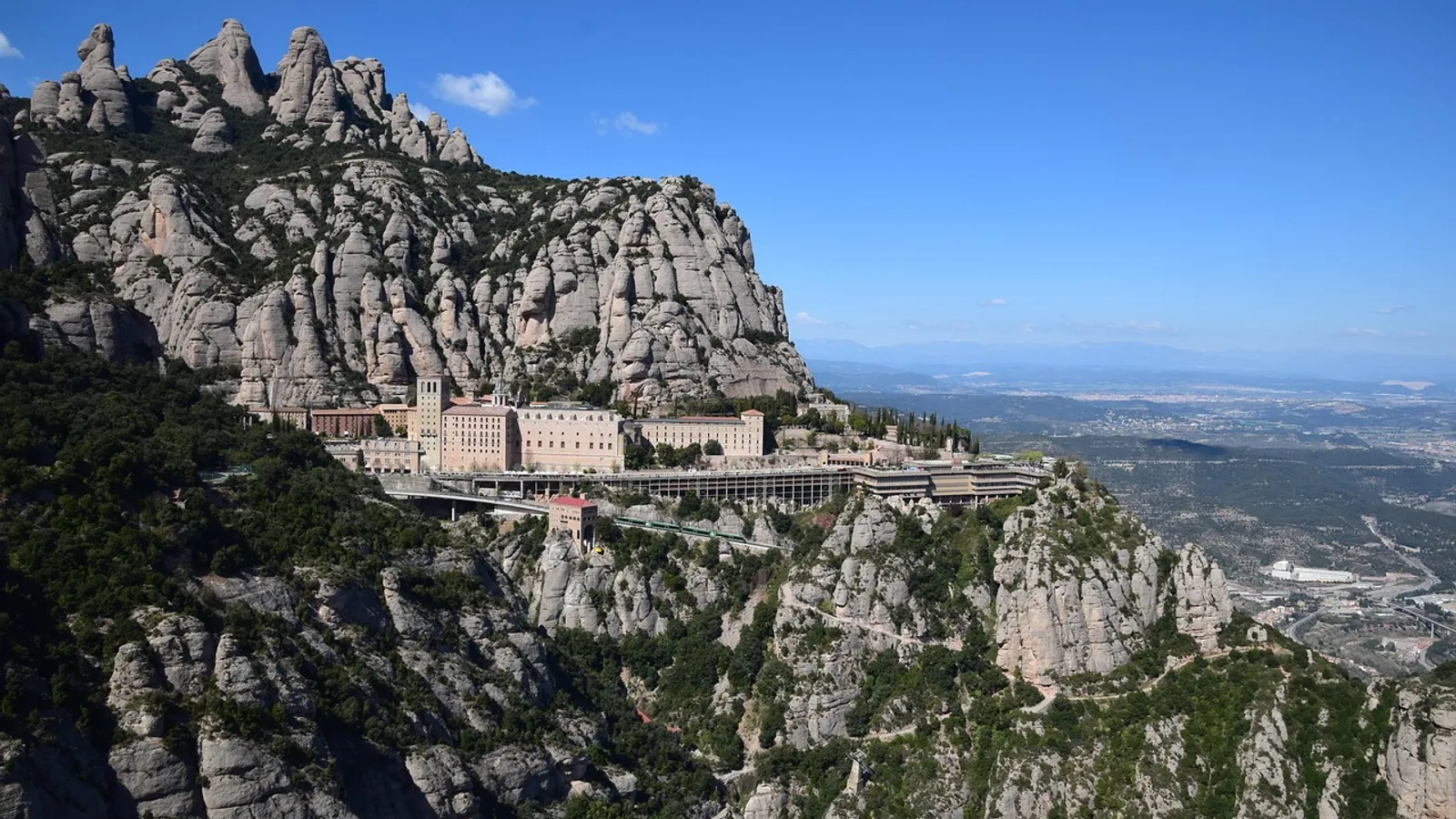
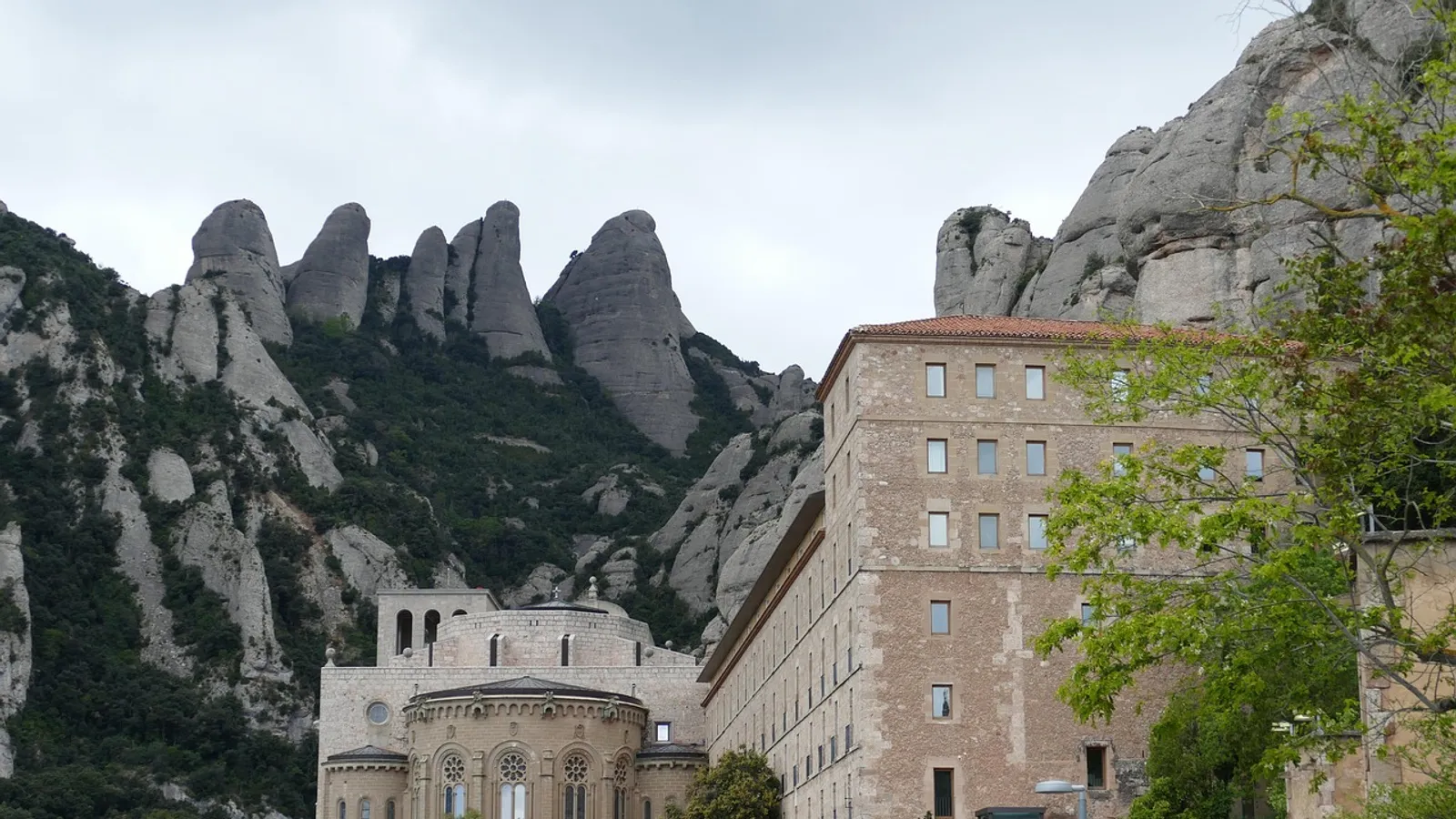
Montserrat is the trip for the mountain and its monastery, about an hour and a half from the city centre by public transport. The monastery has been marking its thousand years with a light and video show called Lux Splendens, according to the official Montserrat visitor site.
The train leaves from Plaça d'Espanya. The rack railway operator puts the trip at 90 minutes in all: 60 minutes on the FGC R5 line to Monistrol de Montserrat, then 20 minutes on the rack railway and the change between them. Trains run every hour, and the Aeri cable car is the other way up. Worth knowing if anyone in your group can't manage steps: the rack railway is adapted for people with reduced mobility, but the two funiculars above the monastery are not.
Our separate Montserrat day trip from Barcelona article weighs the cable car against the rack railway, explains the combined tickets and suggests how long to stay.
Montserrat monastery day trips and tours to compare

Montserrat Private Tour: Black Madonna, Basilica &tasting cheese
5.0(71)4 hours - 5 hoursViewFrom$90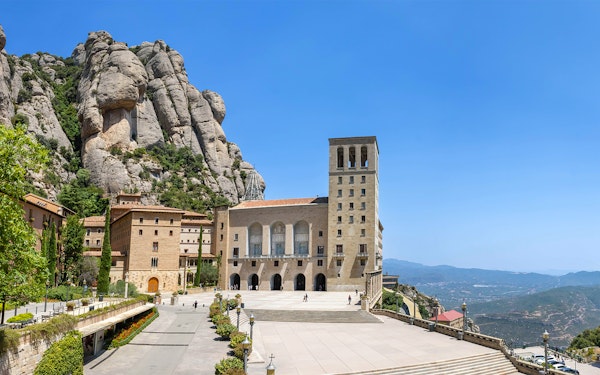
From Barcelona: Montserrat Day Trip with Transfers & Optional Black Madonna Access
4.5(1,248)4 hr 30 minViewFrom$54
Barcelona to Montserrat Monastery: Tour, Transfers & Basilica
4.7(381)6 hoursViewFrom$42
Full-day Montserrat Private Tour by Train + Cable car and/or Rack Railway
5.0(7)8 hours - 9 hoursViewFrom$614
From Barcelona: Montserrat Small Group Day Trip with Wine Tasting + Optional Lunch & Black Madonna Access
4.4(50)8 hoursViewFrom$87
Montserrat Private Tour from Barcelona with Pick-up
5.0(173)5 hoursViewFrom$173
From Barcelona: Montserrat Day Trip & Horseback Riding
5.0(3)6 hoursViewFrom$109
Montserrat Private Tour All-Inclusive from Barcelona Hotel Pickup
4.5(13)5 hoursViewFrom$170
Montserrat Afternoon Private Tour with Pick Up
5.0(4)4 hr 30 minViewFrom$172
Montserrat All-Inclusive Guided Small-Group Tour from Barcelona
5.0(4)5 hoursViewFrom$155
Girona: the medieval old town
Girona is the best long day out by regional train: a walled old town on the river Onyar, 100 km from Barcelona according to the Costa Brava Girona tourist board. Its list of places to start reads like a route plan: the cathedral, the lanes of the Call (the old Jewish quarter), the Romanesque monastery of Sant Pere de Galligants, the basilica of Sant Feliu, the coloured houses along the river and the city walls. The board's own Girona page warns that a one-day dash doesn't do the city justice, which is a fair reason to give it a whole day rather than half.
- Train
- Rodalies R11 from Barcelona-Sants, Passeig de Gràcia or El Clot
- Journey
- About 1 h 20 min to 1 h 30 min each way on the R11
- Last R11 back
- 9:19 pm on weekdays, 9:23 pm at weekends (timetable from 4 Jul 2026)
- Cathedral, 1 Nov to 14 Mar
- Mon to Sat 10:00 am to 4:30 pm, Sun 12:00 noon to 4:30 pm
- Checked
- 13 Nov 2026
Getting there. The R11 runs from Barcelona-Sants towards Portbou via Granollers Centre and Girona. On the Rodalies R11 timetable, the faster MD trains reach Girona in about 1 hour 20 minutes and the stopping R trains take about 1 hour 30 minutes. On weekdays the R11 leaves Sants every 30 to 60 minutes through the day. High-speed trains also stop at Girona, which the tourist board mentions; check their times and fares on the Renfe site before you choose.
The cathedral. The Girona Cathedral visitor page sells a joint ticket for the cathedral and the basilica of Sant Feliu, valid for 12 months from purchase, so you can split the two over separate days. It allows about 60 minutes for the cathedral and 30 for Sant Feliu. Under-8s enter at no charge, and the nave alone is open without a ticket from 8:45 am to 9:45 am Monday to Saturday and until 11:45 am on Sundays. The visitor page doesn't print prices, so check them in the cathedral's official ticket shop before you go.
The Jewish quarter. The Museum of Jewish History, run by the city's Call de Girona trust, tells the story of Catalonia's medieval Jewish communities across eleven galleries, using objects and documents from Girona itself where it can.
Guided or not. We'd do Girona on our own: one train there, one train back, and every sight on the tourist board's list is inside the city. A guided day earns its place when it adds Figueres, or when you'd rather have the history of the Call explained on the spot. For everything else in town, see things to do in Girona.
Sitges: things to do in the closest beach town
Sitges is the quickest escape from the city: a seaside town with a seafront promenade, town beaches and a cluster of art museums. The R2 Sud timetable (dated 1 Sep 2026) shows trains from Barcelona-Sants reaching Sitges in 32 to 38 minutes, with the return taking 37 to 43. Trains start further back at Estació de França and stop at Passeig de Gràcia, and the last one back from Sitges on both the weekday and weekend tables leaves at 10:22 pm.
- Train
- Rodalies R2 Sud from Estació de França, Passeig de Gràcia or Sants
- Journey
- 32 to 38 min from Sants
- Cau Ferrat and Maricel museums
- €12 standard, under-16s €0
- Museums closed
- Every Monday
- Checked
- 13 Nov 2026
The best things to do in Sitges, if you're coming from Barcelona for the day:
- Walk the seafront. The town's tourism site, Sitges Anytime, is run by the Sitges Tourism Department and puts a stroll along the Passeig Marítim among its suggested experiences.
- Pick a beach. The town hall's tourism page describes several kilometres of beaches and coves, running north as far as Les Botigues and Garraf and south to the Cala de l'Home Mort. The beaches guide separates the urban, family beaches, which are easy to reach by public transport, from quieter coves inside the Garraf natural park.
- See the Cau Ferrat. The painter Santiago Rusiñol founded it in 1893 as his home and workshop, and it became a public museum in 1933, according to the Museus de Sitges. It holds his collections of old ironwork, ceramics, glass and painting alongside modern works, in a building restored between 2010 and 2014.
- Add the Maricel. The Maricel Museum shares a ticket with the Cau Ferrat. The Palau de Maricel has its own ticket and guided tours; from September to June they run on Sundays, with the English tour at 10:00 am, per the museums' schedule.
On the official fees page, the Cau Ferrat and Maricel ticket costs €12, and adding the Fundació Stämpfli contemporary art collection brings the combined ticket to €17. Under-16s get in without paying, and so does everyone on the first Wednesday of the month, unless it falls on a public holiday. The schedule page lists opening hours for April to October only (Tuesday to Sunday, 10:00 am to 7:00 pm), so check the winter times before a November to March visit. The Romantic Museum is temporarily closed for renovation.
Sitges needs no guide. The train is quick, frequent and runs late, so we'd do it on our own and spend the money on lunch.
The Costa Brava: coves and coastal villages
The Costa Brava is the trip for rocky coves and old fishing villages, but it's the hardest to do by public transport. The R11 runs through Girona and Figueres, and the only stops after Figueres on the R11 timetable are Vilajuïga, Llançà, Colera and Portbou. No line stops at Calella de Palafrugell or Cadaqués, so for those you're on a coach, in a car or on a tour. Tossa de Mar is the exception: Rodalies sells a combined train and bus ticket that takes you by train to Blanes and on by bus to Lloret de Mar or Tossa.
Three villages that show the range, as the Costa Brava Girona tourist board describes them:
- Tossa de Mar. The walls of its medieval old town almost touch the water, with beaches and pine-backed coves around it (Tossa page).
- Calella de Palafrugell. An old fishing village with small beaches and coves, where havaneres, the old sea songs, are sung on summer nights and the Cap Roig Festival takes place (Calella page).
- Cadaqués. A fishing town beside the Cap de Creus natural park, tied to Salvador Dalí, whose house was at Portlligat (Cadaqués page).
Getting there without a car. The tourist board's travel page lists the transport companies that operate in the province. For Cadaqués, the Dalí Foundation's FAQ names Moventis coach line 3 from Barcelona and notes that the Cadaqués bus station is 2 km from the Dalí House. The House-Museum itself must be booked for a fixed date and time: groups enter every 10 minutes, and tickets have to be collected half an hour before entry.
Guided or DIY. This is where we'd book a tour. One coastal village by coach is doable on your own; two in one day, or Cadaqués there and back, is a long day of timetables that a driver solves.
Costa Brava day trips from Barcelona to compare

Medieval Girona & Costa Brava’s Top Beach–Unforgettable Day Trip
5.0(7)10 hoursViewFrom$218
Private Girona and Costa Brava Tour from Barcelona
5.0(6)10 hoursViewFrom$1,396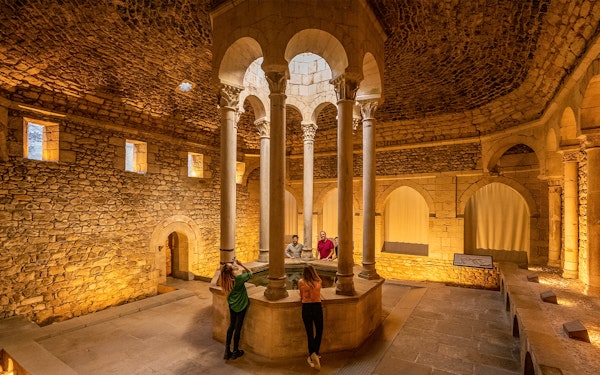
From Barcelona: Montserrat, Girona & Costa Brava Day Trip
4.9(27)11 hr 30 minViewFrom$93
Costa Brava Small Group Hiking Tour from Barcelona
5.0(4)9 hoursViewFrom$166
Full Day Medieval Costa Brava
5.0(5)10 hoursViewFrom$1,502
Catalonia Girona Costa Brava and Local Bites Small Group Tour
5.0(22)8 hoursViewFrom$256
Costa Brava Hike & Tossa de Mar: Small Group Tour from Barcelona
5.0(13)9 hoursViewFrom$168
Private Costa Brava Tour from Barcelona with Hotel Pick Up
5.0(31)9 hoursViewFrom$240
Private Costa Brava Tours from Girona
5.0(1)8 hoursViewFrom$251
Costa Brava Tour: Tossa de Mar Easy Hike & Snorkel from Barcelona
5.0(136)9 hr 30 minViewFrom$95
Tarragona: Roman ruins by the sea
Tarragona is the day trip for Roman history, and the evidence is still standing in the middle of town. UNESCO's World Heritage listing for the Archaeological Ensemble of Tarraco, inscribed in 2000, calls the Roman city "the first and oldest Roman settlement on the Iberian Peninsula", and its sites include the walls, the circus, the forums, the theatre and the amphitheatre.
- Train
- Rodalies R14, R15 or R16 from Sants or Passeig de Gràcia
- Journey
- About 1 h 10 min each way
- Roman amphitheatre
- €5, Tue to Fri 9:00 am to 6:30 pm, Sat 9:30 am to 6:30 pm, Sun 9:30 am to 2:30 pm
- Dates
- Hours valid 1 Nov to 23 Dec 2026; last entry 30 min before closing
- Checked
- 13 Nov 2026
Getting there. On the R15 timetable dated 13 Oct 2026, regional trains leave Barcelona-Sants about every half hour and reach Tarragona in about 1 hour 10 minutes; R14, R15, R16 and R17 trains all call there. The Tarragona tourist board explains that the city has two stations: the regional trains use the one in the centre, while the Camp de Tarragona high-speed station is about 10 minutes from the centre, with a PLANA bus to the city's bus station. Some departures on the timetable run only on certain days, so check the last train back in the Rodalies app on the day.
The amphitheatre. The tourist board's amphitheatre page dates it to the turn of the 2nd century AD, with alterations in 221 AD recorded on a 140-metre inscription around the podium, which it calls the longest such inscription in the empire. The amphitheatre was also where Saint Fructuosus and his deacons were martyred in 259 AD, and a Visigothic basilica and then a medieval church were built on the site.
Hours and prices until 23 December. The municipal timetable for 1 November to 23 December 2026 lists the amphitheatre, the archaeological walk along the walls and the local forum at €5 each, open Tuesday to Friday 9:00 am to 6:30 pm, Saturday 9:30 am to 6:30 pm and Sunday 9:30 am to 2:30 pm. The Praetorium and Roman circus, also €5, stay open until 8:00 pm from Tuesday to Saturday. The cathedral and diocesan museum cost €12.50 and are one of the few sites that open on Mondays.
Guided or DIY. The amphitheatre, the walls walk, the circus and the forum all have city-centre addresses on the municipal timetable, which lists Centcelles, the Mèdol quarry and the Els Munts villa separately as outside the city, so the train works fine. A guided tour adds the context the fragments need, since UNESCO itself notes that most of the remains are partial and many sit beneath later buildings. For more to book in the city, see Tarragona experiences.
Tarragona Roman history tours to compare

From Barcelona: Private Tarragona Guided Tour with Free Time
5.0(3)6 hoursViewFrom$274
Private Tarragona Tour with 2 Guides and Tarragona Cruise Pickup
5.0(2)8 hoursViewFrom$391
Private Day tour : Tarragona in times of the Roman Empire
5.0(4)7 hr 30 minViewFrom$380
Tarragona Highlights Private Tour
4.9(76)4 hoursViewFrom$140
Tarragona Hidden Gems Private Tour
5.0(57)2 hoursViewFrom$151
Tarragona Gems Half-Day Private Tour
4.5(2)4 hoursViewFrom$413
Guided Tour of Roman Tarragona
4.8(122)2 hoursViewFrom$14
One Day Private Historical Tour in Tarragona and Sitges
5.0(4)8 hoursViewFrom$940
TimePort Tarragona, an Immersive VR trip to Roman Tarraco
5.0(4)30 minutesViewFrom$18
Tarragona Walking Tour: An Audio Guide to Tarraco
4.6(41)3 hours - 4 hoursViewFrom$15
Figueres and the Dalí Theatre-Museum
Figueres is a one-sight trip, and the sight is the reason to go: the Dalí Theatre-Museum, which opened in 1974 and holds the world's most extensive collection of the artist's work, according to the Gala-Salvador Dalí Foundation. Expect a long day: the R11 takes about 1 hour 50 minutes to 2 hours 10 minutes from Sants.
- Hours, 1 Oct to 31 Dec
- Tue to Sun 10:30 am to 6:00 pm; last admission 45 min before closing
- Hours, 1 Jul to 31 Aug
- Every day 9:00 am to 8:00 pm
- General admission
- From €18.50; reduced from €15.00; ages 0 to 8 €0
- With a guided tour
- €26.50 general, €23.00 reduced
- Closed
- 1 Jan and 25 Dec; closes at 3:00 pm on 24 Dec
- Checked
- 13 Nov 2026
Opening days. Outside July and August the museum is closed on Mondays, apart from a short list of exceptional Monday openings on the official page (for the rest of 2026, 7 December). Hours change through the year: from 23 March to 31 May and in September it opens at 9:30 am, and from 1 January to 22 March, in June and from 1 October to 31 December at 10:30 am. Entry to the museum and the ticket office stops 45 minutes before closing.
Tickets. The museum's FAQ advises booking ahead: there's a ticket desk at the entrance, but it sells only what capacity allows. Reduced tickets cover students aged 18 and over, ages 9 to 17, seniors aged 65 and over and some other groups, with proof where the museum asks for it. The foundation also sells a combined ticket with La Pedrera in Barcelona.
What you can't take in. Rucksacks and other bags worn on the back, pushchairs, luggage and anything larger than 35 x 35 x 25 cm aren't allowed inside. There is a left-luggage service, but it doesn't accept bulky items. Photos without flash are fine; tripods and selfie sticks are not.
Getting there. The FAQ lists two rail options: the R11 regional train to Figueres station, or high-speed AVE and Avant trains to Figueres-Vilafant, which has a shuttle bus to the centre. On the R11 timetable, the last regional train back leaves Figueres at 8:46 pm on weekdays and 8:49 pm at weekends.
Guided or DIY. If you only want the museum, the train is the cheaper way. A guided day pays off when it pairs Figueres with Girona, which saves you working out two sets of times.
Girona and Figueres Dalí tours to compare

Guba+Khinaligh Day Trip
5.0(7)12 hoursViewFrom$75
Gobustan+Absheron Day Trip
4.9(21)6 hours - 8 hoursViewFrom$80
Gabala+Shamakhi Day Trip
5.0(5)12 hoursViewFrom$85
Full Day Private Tour of Guba and Khinalig from Baku
6 hr 30 minViewFrom$218
Heritage tour in Quba and Khinaliq
7 hours - 9 hoursViewFrom$111
Guba and Khinaliq Village Tour including Homemade Lunch
4.7(245)10 hoursViewFrom$59
Shamakhi and Gabala ( Group or Private ) TOUR ( All inclusive )
4.8(102)12 hoursViewFrom$65
Full-Day Private Tour of Guba and Khinalig
4.9(39)10 hours - 11 hoursViewFrom$130
Private Gabala & Shamakhi Full-Day Tour from Baku with Driver
5.0(10)12 hours - 13 hoursViewFrom$55
Private Gabala Tour
4.8(13)10 hoursViewFrom$119
The Penedès: cava and wine country
The Penedès is where cava comes from, and its capital is close enough for an easy afternoon. The D.O. Cava regulatory board calls Sant Sadurní d'Anoia the capital of cava and places the area 45 km from Barcelona. Its two recommended stops in town are the historic cava cellars and the Cava Interpretation Centre, which occupies La Fassina, a distillery building dating from 1814.
Getting there. The R4 is the line. On the R4 timetable dated 1 Sep 2026, trains from Barcelona-Sants reach Sant Sadurní d'Anoia in 54 minutes and Vilafranca del Penedès in about 67 minutes, with departures every half hour on weekdays. The last train back to Barcelona leaves Sant Sadurní at 10:36 pm on both the weekday and weekend tables.
Vilafranca and the vineyards. In Vilafranca del Penedès, Vinseum, the museum of Catalan wine cultures, holds 17,000 pieces in archaeological and ethnological collections, according to the regulatory board. The same page describes the Camí del Vi, a 3.5 km walk with eight stops on the town's ties to wine, and a set of vineyard viewpoints called miravinyes, one of them up at the Romanesque hermitage of Sant Benet d'Espiells above Sant Sadurní.
Guided or DIY. The regulatory board describes cellar visits as organised visits and tours run by the wineries, so book with a winery before you go, or take a tour that handles the bookings and the driving. If tastings are the point of the day, leave the car behind: the R4 or a tour is the sensible choice.
Penedès cava and winery tours to compare

Wine & Cava Penedes Tour: Wineries, Wine Tasting and Tapas
5.0(5)6 hoursViewFrom$961
Private Tour: Top Three Organic Wineries & Local Lunch Included
5.0(7)9 hoursViewFrom$754
From Barcelona: E-Bike Tour in the vineyards with 2 Wineries
5.0(14)7 hr 30 minViewFrom$88
Exclusive Champagne & Chocolate Getaway - with excellent lunch
5.0(25)8 hr 30 minViewFrom$246
Haft-day Winery tour from Zaragoza
5.0(21)4 hoursViewFrom$162
From Valencia: Vineyard Tour with Wine Tasting, Cava and Snacks
4.9(17)4 hoursViewFrom$77
Montserrat Tour: Lunch and Winery Visit with Free Hotel Pickup
5.0(4)8 hoursViewFrom$214
Tapas in the vineyards
5.0(54)7 hoursViewFrom$200
Two wineries tour with wine tasting
5.0(130)5 hours - 6 hoursViewFrom$140
Private Premium Wine & Cava Tour: Requena
5.0(3)8 hours - 10 hoursViewFrom$381
Andorra and the Pyrenees: three countries in one day
Andorra is the long-haul option: a small country in the eastern Pyrenees, between Catalonia and the French department of Ariège, with an area of 468 km² of which only 8% is built up, per Andorra Turisme. It has seven parishes, and Andorra la Vella is the capital.
Getting there. Every route is by road. Andorra has no airport, and the official travel page gives the nearest train station as L'Hospitalet-près-l'Andorre in France, about 11 km from the border by road. From Spain the road in is the N-145 from La Seu d'Urgell, and scheduled coach services connect Andorra with Barcelona.
The three-countries idea. A day out from Barcelona already counts Spain and Andorra, so a third country means a stop on the French side before the drive back. If that's the appeal, ask the tour which French town it visits and how long you spend there before you book.
Our view. For a short Barcelona stay, Andorra is the day trip we'd book last, because a large share of the day goes on the road. It makes sense if you want the mountains, or if you're adding a country to the list on purpose.
Andorra and Pyrenees day trips from Barcelona to compare

Andorra, France and Spain Day Tour with 2 Guides and Hotel Pickup
5.0(85)11 hoursViewFrom$255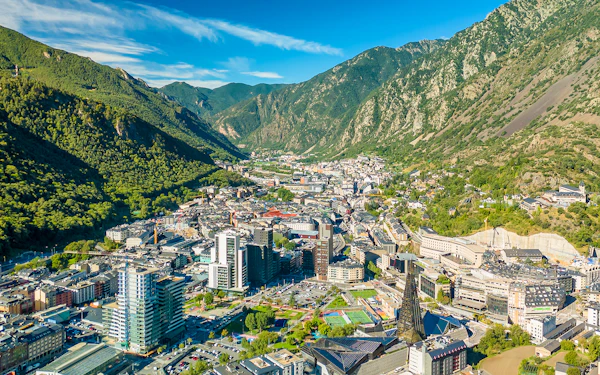
From Barcelona: Guided Day Trip to Andorra, France, and Spain
4.5(6)12 hoursViewFrom$119
Private Tour of Andorra and Montserrat
4.6(7)10 hr 40 minViewFrom$659
From Barcelona: 1-Way Bus Transfer to/from Andorra la Vella
5.0(2)2 hr 45 minViewFrom$33From Barcelona: Montserrat Day Trip with Transfers & Optional Black Madonna Access
4.5(1,248)4 hr 30 minViewFrom$54
Andorra Private Walking Tour with official tour guide
4.8(5)2 hoursViewFrom$256From Barcelona: Montserrat Small Group Day Trip with Wine Tasting + Optional Lunch & Black Madonna Access
4.4(50)8 hoursViewFrom$87
Private Walking Tour of Andorra with Local Guide and Transfer
4 hoursViewFrom$726
The Best of Andorra la Vella: Art, Heritage & Alpine Vistas
2 hoursViewFrom$238
Snowshoes in Andorra from Barcelona
12 hr 30 minViewFrom$313
Which of the best day trips from Barcelona work by train
Six of the eight work by train, and only the Costa Brava villages and Andorra really need a road trip. Two operators matter. Rodalies de Catalunya runs the R2 Sud to Sitges, the R4 to the Penedès, the R11 to Girona and Figueres, and the R14 to R16 to Tarragona, mostly from Barcelona-Sants. FGC runs the R5 to Montserrat from Plaça d'Espanya.
| Destination | Line | Last regional train back on the timetable | Timetable |
|---|---|---|---|
| Sitges | R2 Sud | 10:22 pm | Dated 1 Sep 2026 |
| Sant Sadurní d'Anoia | R4 | 10:36 pm | Dated 1 Sep 2026 |
| Girona | R11 | 9:19 pm weekdays, 9:23 pm weekends | Dated 4 Jul 2026 |
| Figueres | R11 | 8:46 pm weekdays, 8:49 pm weekends | Dated 4 Jul 2026 |
| Tarragona | R14, R15, R16 | Check the app on the day | Dated 13 Oct 2026 |
Read from the Rodalies de Catalunya timetables, checked 13 Nov 2026.
The timetables carry a warning that schedules are subject to change, and they mark departures that run only on certain days or that are replaced by a road service. Check the Rodalies website or app on the morning you travel.
If you're comparing these with what to see inside the city, the list of things to do in Barcelona sets them against the city's own sights.
Day trips from Barcelona with kids
Sitges is the easiest with small children and Tarragona the best for older children. The facts that decide it:
- Sitges. The shortest train ride of the lot, and the town's urban family beaches are easy to reach by public transport. At the museums, under-16s get in without paying, and the Cau Ferrat page offers a family game for children aged 7 to 10 (Museus de Sitges).
- Tarragona. Children who've read about gladiators can see the amphitheatre where gladiatorial combat was staged. The tourist board also promotes The Roar of Tarraco, a mixed-reality experience inside the amphitheatre (amphitheatre page).
- Montserrat. The rack railway and the funiculars are part of the fun, but the funiculars are not adapted for reduced mobility, so plan around them with a pushchair (rack railway FAQ).
- Figueres. Children up to 8 enter at no charge, but pushchairs and bags worn on the back aren't allowed inside, and the left-luggage service won't take bulky items, so ask the museum before you bring a pushchair (Dalí Foundation FAQ).
- Girona. Under-8s enter the cathedral at no charge, which makes the city's main ticketed sight an easy add-on for a young family (cathedral visitor page).
Trips to plan carefully
A few combinations look good on a map and go wrong on the day:
- Cadaqués by public transport. The nearest train station is Figueres, so the whole journey from Barcelona is by coach or a train and coach. Add the timed booking at the Dalí House and the margin for error is thin. Take a tour or stay overnight.
- Andorra on a three-day stay. It costs a full day in a coach that you could spend in Girona or Tarragona.
- Tarragona on a Sunday afternoon. From 1 November to 23 December the municipal Roman sites close at 2:30 pm on Sundays, so arrive in the morning.
For tours inside the city as well, browse Barcelona tours.
Common questions
Which is the best day trip from Barcelona?
If you only have room for one, make it Girona or Tarragona. Both are a single direct train away, both reward a full day on foot, and both work without a tour. Girona suits people who want a walled medieval town and a cathedral; Tarragona suits anyone curious about Roman history, since UNESCO lists its remains as a World Heritage site. Choose Sitges instead if the day is mostly about the sea.
Which beach town makes the best day trip from Barcelona?
Sitges, if you're travelling without a car. The R2 Sud train covers the trip in well under an hour, and the town's tourism office describes its urban beaches as easy to reach by public transport. The Costa Brava villages, such as Tossa de Mar or Calella de Palafrugell, have quieter coves, but getting there takes a coach, a car or a guided tour.
Can you visit three countries in one day from Barcelona?
Yes, if the tour stops in France as well as Andorra. Andorra borders both Spain and France, but a day out that only drives to Andorra and back covers two countries, so check that the itinerary names a French stop before you book. Bring a passport, or a national ID card if you're an EU citizen. Andorra is outside both the EU and the Schengen area, so if your nationality needs a Schengen visa it has to allow at least two entries: leaving Andorra means entering Schengen again.
Is the Costa Brava worth a day trip from Barcelona?
Yes, as long as you pick one or two villages rather than trying to see the coast. Most of the day goes on the road, so a guided tour that strings two stops together gives the best return. If one of your stops is the Dalí House at Portlligat, make sure the tour includes a booked entry time, since the house only admits visitors with one.
Is Girona worth a day trip from Barcelona?
Yes, and it's the easiest long day out by regional train. The R11 takes about 80 to 90 minutes each way and the last train back leaves Girona after 9 pm, so you get a full day on foot. Start at the cathedral, then the Jewish quarter and the walls, and leave the river houses for the late afternoon.
How far ahead should you book a day trip from Barcelona?
Some sights need booking more than the trains do. The Dalí Theatre-Museum recommends booking because the desk depends on capacity, and the Dalí House in Portlligat can only be visited with a date and time booked in advance. Tarragona's municipal monuments take online bookings. For guided tours in summer, book once your date is fixed so you get the departure time you want.
Can you combine two places in one day trip from Barcelona?
Girona and Figueres are the natural pair, because both sit on the R11 line and the regional train between them takes about 30 to 40 minutes. Do Figueres first so you reach the Dalí Theatre-Museum well before its last admission, then stop in Girona on the way back. Other pairs, such as two Costa Brava villages, work better on a guided tour.
Sources
All checked on 13 November 2026.
- Rodalies de Catalunya: all timetables and the train and bus ticket for Blanes, Lloret and Tossa de Mar, including the R2, R4, R11 and R15 timetables
- Montserrat rack railway (Cremallera de Montserrat) and Montserrat official visitor site
- Costa Brava Girona tourist board: how to get there, Girona, Tossa de Mar, Calella de Palafrugell and Cadaqués
- Girona Cathedral: visitor information and Museum of Jewish History, Girona
- Museus de Sitges: fees, schedule and Cau Ferrat Museum
- Sitges Anytime (Sitges Tourism Department), its beaches guide and the Ajuntament de Sitges tourism page
- UNESCO World Heritage Centre: Archaeological Ensemble of Tarraco
- Tarragona Turisme: Roman amphitheatre, how to get here and museum and monument hours, 1 Nov to 23 Dec 2026
- Gala-Salvador Dalí Foundation: Dalí Theatre-Museum and visitor FAQ
- D.O. Cava regulatory board: visit the Penedès
- Andorra Turisme: essential information, how to get here and passports, visas and customs