BarcelonaItinerarySpainSagrada FamiliaGothic Quarter
2 Days in Barcelona: What to See and How to Plan the Perfect Weekend
What to see in Barcelona in 2 days: the Sagrada Familia and the Gothic Quarter on day one, Park Guell, Montjuic, and the seafront on day two, plus top tours.
By SimilarTours Editorial · Travel Research · · 22 min read

If you are working out what to see in Barcelona in 2 days, the answer is less about cutting sights and more about ordering them. Barcelona clusters beautifully: the Sagrada Familia and the medieval old city fill one day without a wasted step, and Park Guell, Montjuic hill, and the seafront chain into a second day that rolls downhill from mosaic terraces to the Mediterranean. Fight that geography and a weekend feels frantic; follow it and 2 days in Barcelona flows.
This barcelona 2 day itinerary is built for a first visit. Day one covers the Sagrada Familia, the Gothic Quarter, and El Born; day two covers Park Guell, the Montjuic cable car, and Barceloneta, with tapas and flamenco threaded through the evenings. Every tour referenced is currently bookable through our partner OTAs and ranked on real ratings and review counts, verified July 2026.
Browse all Barcelona tours and experiences →Before you go
Where to stay. Base yourself central, one base, no mid-stay moves. The neighborhood choice matters enough on a weekend that it gets its own section below.
How to get around. Walk the old city, take the metro for distance. A shareable multi-ride ticket covers a typical weekend and works across the metro, buses, and trams. Park Guell sits uphill from its nearest stations, so plan for a climb or a short taxi on day two, and treat the rest of the city as a walking destination, because it is.
What to book ahead. Two things, in this order: the Sagrada Familia, then Park Guell. Both run on timed entry, both sell out days ahead in peak season, and the Sagrada Familia goes first. Lock those slots before you plan anything else and let the days form around them. Tapas tours, flamenco shows, and the cable car are far easier to grab last-minute.
Pace and meals. Barcelona eats late. Lunch is the big meal, dinner rarely starts before nine, and the early evening belongs to tapas. Build that rhythm into the plan rather than fighting it: a proper sit-down lunch each day, small plates in the evening, and no rush. Two days of sightseeing here is a lot of walking, so the late-day slowdown is a feature.
Where to stay for a weekend in Barcelona
On a two-day trip your hotel's location is worth more than its star count, because every metro ride you avoid buys back sightseeing time. Four zones cover almost every weekend traveler.
The Eixample is the default recommendation for a reason. The elegant grid north of the old city holds the Gaudi landmarks on Passeig de Gracia, endless restaurants at every price, and metro lines radiating in all directions, so both days of this itinerary start close to home. It is also the calmest of the central options at night, which matters when day two starts with a timed morning slot.
The Gothic Quarter and El Born put you inside the postcard. Waking up in the medieval lanes, with the cathedral square empty before the day-trippers arrive, is a genuine experience, and everything on day one is a walk from the door. The trade-offs are noise, some tired-looking budget stock, and the pickpocket-dense corridors around La Rambla; pick a reviewed hotel on a quieter lane rather than the cheapest bed on the busiest one.
Barceloneta and the seafront suit a summer weekend built around the beach half of day two: sea views, the promenade downstairs, and a holiday mood the inland neighborhoods cannot match. In winter, the same location feels far from the action.
Gracia, uphill beyond the Eixample, is the local-life pick, plazas full of neighborhood terraces, hardly a souvenir shop in sight, and the closest base to Park Guell. The compromise is distance: everything else on this itinerary starts with a metro ride, which is a real cost on two days.
If in doubt, take the Eixample and spend the difference on one good dinner.
Day 1: The Sagrada Familia and the old city
Day one pairs the city's signature landmark with its oldest streets. The Sagrada Familia anchors the morning, then the afternoon drops you into the Gothic Quarter and El Born, where the lanes do the entertaining and no timed ticket is required. It is the highest-contrast day Barcelona can offer: a basilica still under construction in the morning, medieval stone by afternoon.
Morning: the Sagrada Familia
Start with the one sight every first-timer comes for, and go early: morning light through the stained glass is the reason to take the first slot you can get, and the queues only build from there. A guided visit is the format that pays off here, because the interior rewards context and the guided options handle the timed-entry logistics that trip up walk-up visitors. Budget around two hours, more with a tower add-on.
Top Sagrada Familia tickets and tours

Sagrada Familia Guided Tour with Skip the Line Ticket
The most-reviewed Sagrada Familia tour in the catalog - a guided interior visit with skip-the-line entry, the standard first-timer format.
4.4(9,665)1.5 hoursViewFrom$64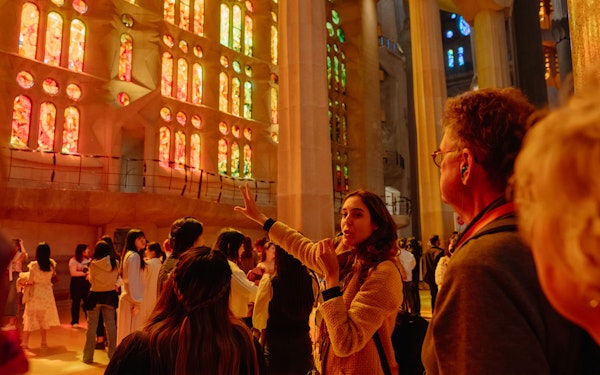
Sagrada Familia Fast-Track Guided Tour
A fast-track guided visit with strong volume - the value pick if you want the guiding and the queue-jump at the lowest price of the group.
4.5(7,761)1.5 hoursViewFrom$55
Barcelona: Sagrada Familia Skip-the-Line Guided Tour and Tickets
A highly rated skip-the-line guided tour - the quality pick among the standard-length visits.
4.7(3,751)1.5 hoursViewFrom$63
Park Guell and Sagrada Familia Tour with Skip the Line Tickets
Both Gaudi headliners in one guided half-day with skip-the-line entry to each - the shortcut if you would rather compress the two timed entries into a single run.
4.8(6,853)4 hoursViewFrom$127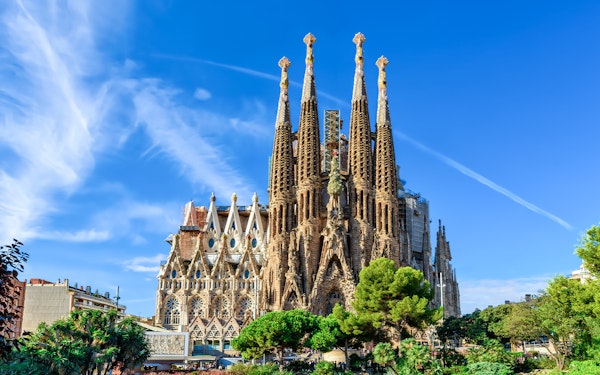
Sagrada Familia Fast-Track Guided Tour with Towers Access
4.5(2,855)1 hourViewFrom$88
Sagrada Familia Guided Tour with Skip the Line Ticket
4.7(4,031)1 hr 15 minViewFrom$80
Golden Hour at Sagrada Familia: Private Tour with Licensed Guide
5.0(3)2 hoursViewFrom$385
Sagrada Família Semi Private Tour with Fast Entry
4.9(37)1 hr 30 minViewFrom$124
Sagrada Familia Skip the Line Guided Tour
4.7(323)1 hr 30 minViewFrom$62
Sagrada Familia & Official Guide Private or Small Group Tour
4.9(33)1 hr 30 minViewFrom$79
Insider tip
Book the Sagrada Familia slot first. Of everything on this itinerary, it is the entry that sells out earliest and hardest, and the morning slots vanish first. Reserve it before you book flights-adjacent anything else, then slot Park Guell into day two and let both days form around those two fixed points.
Afternoon: the Gothic Quarter and El Born
From the basilica, ride the metro into the old city and give the afternoon to the Gothic Quarter, the medieval maze at Barcelona's heart. The cathedral, the hidden squares, and the lanes barely wide enough for two people are the attraction; there is no ticket gate, just streets that reward slow walking. A guided walk is the difference between wandering pretty alleys and understanding them, and most run about two hours, which leaves time to drift east into El Born, the Gothic Quarter's more relaxed neighbor, for a cafe stop among the boutiques.
Fold La Rambla into the walk rather than making it the destination. The famous promenade forms the Gothic Quarter's western edge, so you will cross or skirt it naturally, and that is the right dose: walk a stretch, duck into La Boqueria market off its midpoint for the fruit-and-ham spectacle of the stalls, and then step back into the side streets, where the food is better priced and the crowds thin out. Treat the market as theater and a snack stop, not lunch, and keep a hand on your bag through the whole corridor; it is the city's densest pickpocket beat.
Top Gothic Quarter walking tours

Barcelona Old Town & Gothic Quarter Small Group Tour
The volume leader for the old city - a small-group walk through the Gothic Quarter's lanes and squares with excellent ratings for the price.
4.9(1,729)2.5 hoursViewFrom$21
Barcelona Historical Walking Tour: Gothic Quarter and El Born
The highest-rated of the classic old-city walks - covers both the Gothic Quarter and El Born, which is exactly this afternoon's route.
4.9(327)2 hoursViewFrom$25- tiqets
Gothic Quarter Barcelona: Guided Walking Tour
A well-rated guided walk through the quarter's medieval core - a solid straightforward option for the afternoon.
4.7(190)2 hoursViewFrom$34 
Barcelona Gothic Quarter Walking Tour with Tapas
The walk with tapas stops folded in - a smart pick if you want the afternoon tour to flow straight into the evening's eating.
4.9(283)3 hoursViewFrom$28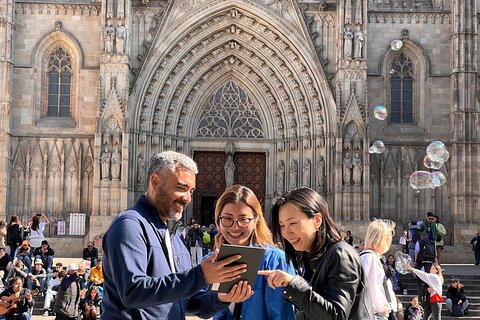
Barcelona Gothic Quarter Tour (Small Group)
4.9(11)2 hoursViewFrom$35
Introduction to Barcelona's Old Town Gothic Quarter Walking Tour
5.0(92)2 hr 35 minViewFrom$43
Discover Barcelona’s Gothic Quarter | Private & Semi-Private
5.0(23)2 hoursViewFrom$129
Barcelona Gothic Quarter Walking Tour
4.6(465)2 hoursViewFrom$31
Barcelona Gothic Quarter Self-Guided Tour: Hidden Skull Route
4.6(11)1 hr 30 min - 2 hr 30 minViewFrom$9
Private Barcelona Old Town and Gothic Quarter Walking Tour
5.0(197)2 hr 30 minViewFrom$92
Evening
Stay in the old city as the light goes. The Gothic Quarter and El Born at dusk are a different place from the daytime version, quieter in the back lanes and busier around the squares, and this is the natural night for a tapas crawl, covered in the evenings section below. If you would rather freestyle it, the rule of thumb is simple: skip anywhere with a picture menu on La Rambla, walk two streets in any direction, and eat where the counters are crowded.
Day 2: Park Guell, Montjuic, and the seafront
Day two runs top to bottom, literally: Gaudi's hillside park in the morning, Montjuic hill and its cable car in the afternoon, and the beachfront to close. It is the outdoors day, so if your two days have one clearly better-weather forecast, spend it here.
Morning: Park Guell
Park Guell is the morning's timed entry, and the earlier the better, both for the light on the mosaics and for photographing the famous terrace before the crowds fill it. The park sits uphill from its nearest metro stops, so give yourself margin to arrive; your booked slot is your start time. Guided visits run about an hour and earn their keep the same way the Sagrada Familia ones do, by adding the story to what is otherwise a very pretty walk.
Top Park Guell tickets and tours

Park Guell Guided Tour with Skip the Line Ticket
The most-reviewed Park Guell tour by a wide margin - a guided visit with skip-the-line entry, the standard way in.
4.6(8,037)1 hourViewFrom$33
Combo: Park Güell + Sagrada Familia Hosted Entry Tickets
Hosted entry to both Gaudi headliners on one booking, with the biggest review volume of any option here - the bundle pick if you are sorting both timed entries at once.
4.5(35,360)ViewFrom$73
Barcelona: Skip-the-Line Gaudi's Park Guell Guided Tour
The highest-rated of the dedicated Park Guell walks and the cheapest guided way in - strong value for the morning slot.
4.8(784)1.1 hoursViewFrom$24
Barcelona: Park Guell Skip the Line Guided Tour
A well-rated skip-the-line guided visit at a mid-range price - a solid alternative if the bigger names are booked out.
4.5(309)1.3 hoursViewFrom$31
Private Park Güell Guided Tour:Skip the Line & Expert Local Guide
5.0(6)1 hr 30 minViewFrom$177
Park Guell Guided Tour with Skip the line Ticket
4.2(1,185)1 hr 30 minViewFrom$41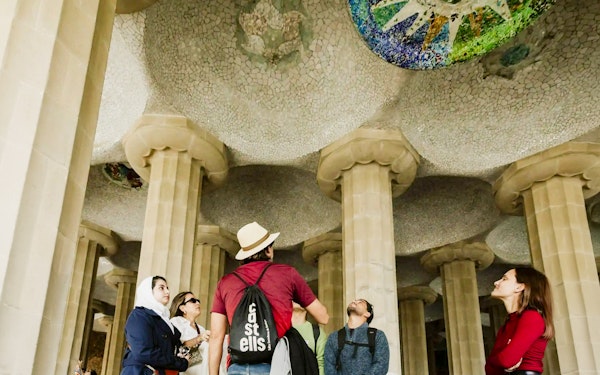
Park Güell Skip-the-Line Guided Tour
4.6(11,912)1 hourViewFrom$31
Skip the Line Park Güell Guided Tour in Barcelona
5.0(9)1 hr 15 minViewFrom$47Sagrada Familia Guided Tour with Skip the Line Ticket
4.7(4,031)1 hr 15 minViewFrom$80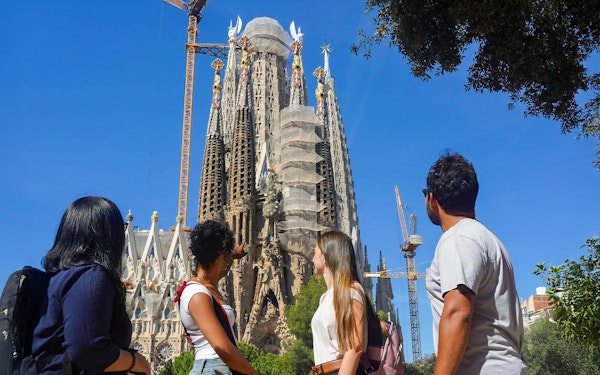
Combo: Park Güell + Sagrada Familia Skip-the-Line Guided Tour
4.5(3,388)3 hr 30 minViewFrom$95
Afternoon: Montjuic and the cable car
From the park, cross the city to Montjuic, the hill that rises over the harbor on Barcelona's south side. The cable car is the way to do it on a short trip: the ride up delivers the city and the coastline from above, and the top holds the castle, terraced gardens, and the widest views in Barcelona. It is also the itinerary's built-in rest, a seated climb after a walking morning. Combined old-town-and-Montjuic tours exist for travelers who want the hill guided, but on your own the formula is simple: ride up, walk the ramparts, wander down through the gardens toward the port.
Late afternoon: Barceloneta and the seafront
Finish at the water. The descent from Montjuic points you naturally toward the harbor and Barceloneta, the old fishing quarter turned beach neighborhood, where the promenade runs along the sand and the city ends in the Mediterranean. In summer this is swim-and-sunset territory; the rest of the year it is still the best walk in the city, palm-lined and wide, with seafood restaurants facing the water. After two days of basilicas and medieval stone, the sea is the right closing register.
Compare all Barcelona tours and experiences →How to eat well in Barcelona in 2 days
Barcelona rewards eating on the local clock more than almost any city in Europe, and on a weekend you only get four or five meal slots, so each one counts.
Lunch is the anchor. The midday meal is the big one here, and it is also where the value lives: many restaurants run a fixed-price midday menu on weekdays that delivers their real cooking at a fraction of the dinner price. Sit down properly once a day, and make it lunch, ideally at the end of a morning's sightseeing when the timed slots are behind you.
Early evening belongs to vermut and tapas. The pre-dinner hour is a ritual, a glass of vermouth or a cana of beer with olives, anchovies, and whatever the counter does best, and it is the single easiest way to eat like a local without a reservation. Stand at the bar; the counters are where the atmosphere is.
Dinner is late, if at all. Kitchens fill from nine, and plenty of visitors discover they do not need a formal dinner at all after a proper tapas run. On a two-night trip, the guided tapas crawl on night one and a flamenco show with a light bite on night two is a complete plan.
Two traps to skip. Paella advertised with photos on La Rambla is a tourist product, not the regional rice cooking it imitates; if rice is the goal, eat it at lunch near the seafront, where it is actually from. And any menu translated into six languages with pictures is telling you who it is for.
Evenings: tapas and flamenco
Barcelona's evenings deserve their own plan. Night one belongs to a tapas crawl in the old city, the single best way to eat well fast in an unfamiliar food town, because a local leads you past the tourist menus to the counters that earn their crowds. Night two closes the trip with flamenco: an intimate venue, an hour of guitar and dance, and no better final scene for the weekend. Both book out on busy weekends, but a day or two of notice is usually enough.
Top Barcelona tapas tours and flamenco shows

Barcelona Tapas and Wine Experience Small-Group Walking Tour
The most-reviewed tapas crawl in the city - a small-group evening of bars, small plates, and wine in the old town.
4.9(6,344)3 hoursViewFrom$80
Authentic Flamenco Show Barcelona : Intimate Casa Sors Experience
The standout flamenco pick by rating - an intimate guitar-house setting rather than a big tablao, and reviewers rave about the closeness of it.
5.0(1,894)1.3 hoursViewFrom$55- tiqets
Los Tarantos Barcelona: Flamenco Show
A short, punchy show at a famous old-city venue - the easy pick if you want flamenco as a nightcap rather than a full evening.
4.6(715)40 minutesViewFrom$34 
Barcelona Food Tour: Tapas, Paella, Sangria & 8+ Local Tastings
The fuller food-tour format with paella and sangria in the mix - top-rated, and effectively dinner plus a guided eating tour in one.
5.0(1,359)3 hoursViewFrom$113
Sevilla Private Flamenco and Tapas Tour
5.0(18)4 hoursViewFrom$183
Barcelona´s Lunch or Dinner Tapas Tour: Food, drinks, happiness!
5.0(45)3 hoursViewFrom$130
Flamenco Show and Dinner in Fuengirola Mijas Restaurant Tipi Tapa
4.6(7)3 hoursViewFrom$35
Barcelona Tapas Walking Tour: Food, Wine & History
4.8(2,316)3 hoursViewFrom$63
Hidden Bars & Authentic Tapas Journey
5.0(8)2 hr 30 minViewFrom$107
Flamenco Show Ticket at Theatre Barcelona City Hall
4.4(1,431)1 hourViewFrom$29
If you have an extra day: Barcelona day trips
A third day is best spent outside the city, and Barcelona's backyard is unusually strong: the serrated mountain and monastery of Montserrat, the medieval lanes of Girona, the coves of the Costa Brava, and the seaside town of Sitges are all realistic day trips. Montserrat is the classic half-day for first-timers; our dedicated guides to the best day trips from Barcelona and the Montserrat day trip break down which is worth your one spare day.
See all Barcelona day trips and experiences →What to skip with only 2 days
A weekend plan is defined by what it leaves out, and cutting the right things is what keeps this itinerary from becoming a sprint.
The Gaudi house interiors. Casa Batllo and Casa Mila line Passeig de Gracia between the two days' territory, and their facades, which are free, deliver a large share of the delight. Going inside both would consume most of a half-day and duplicate the Gaudi immersion you already get at the Sagrada Familia and Park Guell. Walk the facades on your way through the Eixample, and save the interiors for a longer trip, or swap one in only if you are willing to trade away Montjuic.
Camp Nou and the football pilgrimage. For a devoted fan it may outrank everything here; for everyone else it is a long metro ride to a stadium tour, and a poor trade against the old city.
Tibidabo. The mountaintop church and amusement park have a wonderful view and a long journey attached. Montjuic delivers the panorama for a fraction of the transit on day two.
A second beach day. Barceloneta as a late-afternoon close works beautifully; building half a day around sunbathing does not, when the sea will still be there on your next visit.
Day trips. Montserrat and Girona are superb, and they are exactly what a third day is for. Squeezing one into a two-day visit means seeing the city at a run, which is the worse version of both trips.
Practical tips
Book the two Gaudi timed entries before anything else, Sagrada Familia first. Those two slots are the skeleton of the weekend; everything else is soft and reschedulable.
Go early to both timed sights. The first slots are cooler, quieter, and better lit, and an early anchor leaves the rest of each day slack instead of tight.
Watch your pockets in the crowds. Barcelona is safe in the ordinary sense, but the tourist-dense spots, La Rambla, the metro, the beach, are pickpocket territory. Front pockets, zipped bags, nothing on cafe tables.
Eat on the local clock. Big lunch, tapas at dusk, late dinner if any. Restaurants that are full at seven are usually full of tourists; the counters that fill at nine are the ones worth queuing for.
Cluster, do not crisscross. The itinerary works because each day is one coherent area. Resist the urge to bolt a far-flung extra sight onto either day; it costs more time in transit than it returns.
What to see in Barcelona in 2 days: the quick recap
Day 1, Gaudi and the old city. Morning at the Sagrada Familia on a booked slot; afternoon walking the Gothic Quarter and El Born; evening tapas crawl through the old town's counters.
Day 2, hills and the sea. Morning at Park Guell; afternoon up the Montjuic cable car for the castle and the views; late afternoon down to Barceloneta and the seafront; flamenco to close the night.
Two days built this way covers what most first-timers come for, the icons, the medieval core, and the Mediterranean, and leaves the day trips and the deeper neighborhoods as the ready-made excuse to come back.
Plan your trip
See all Barcelona tours and experiences →Is 2 days enough for Barcelona?
Two days covers Barcelona's headline sights comfortably if you cluster by area instead of zigzagging. Day one pairs the Sagrada Familia with the Gothic Quarter; day two pairs Park Guell with Montjuic and the seafront. That sequence walks you through the Gaudi icons, the medieval core, and the Mediterranean side of the city without the trip feeling like a checklist sprint. It is not enough to exhaust Barcelona, but it is a genuinely satisfying weekend that leaves a clear list for a return visit.
What should I book in advance for Barcelona?
The Gaudi sites are the non-negotiables: the Sagrada Familia and Park Guell both run on timed entry and sell out days ahead in peak season, with the Sagrada Familia going first. Book those two before anything else and build each day around the slot you get. Tapas tours, flamenco shows, and the Montjuic cable car are far more flexible and can usually be grabbed a day or two out.
How do you get around Barcelona in 2 days?
On foot plus the metro. The old city is walkable end to end, and the metro links the Sagrada Familia, Park Guell, and the waterfront quickly. A shareable multi-ride metro ticket covers a typical weekend comfortably. Park Guell sits uphill from its nearest stations, so budget a climb or a short taxi, and save your legs for the old-city wandering that fills the rest of the trip.
Can you see the Sagrada Familia and Park Guell on the same day?
You can, and combined guided tours bundle both with skip-the-line entry in a single morning-to-afternoon run. On a two-day trip, though, splitting them works better: the Sagrada Familia anchors day one alongside the old city, and Park Guell opens day two before Montjuic and the beach. Splitting the two timed entries across two mornings means less clock-watching and more slack when a slot you wanted is sold out.
What is the best area to stay in Barcelona for a weekend?
Stay central. The Eixample puts the Gaudi landmarks on your doorstep with fast metro links everywhere else, and it is the comfortable first-timer pick. The edge of the Gothic Quarter or El Born drops you into the atmospheric heart of the old city, walkable to the waterfront, though noisier at night. Either base keeps everything in this itinerary within a walk or a couple of metro stops, and on two days you do not want to commute.
What should I do in Barcelona in the evenings?
Eat late and lean local. Dinner in Barcelona starts far later than most visitors expect, which is exactly what the tapas hour is for: graze small plates from early evening, then a proper dinner after nine if you still want one. A guided tapas crawl solves the where-to-eat question on night one, and a flamenco show in an intimate venue makes a strong closing note on night two. Both are easy to book a day or two ahead.
Is the Montjuic cable car worth it on a short trip?
Yes, because it compresses a lot into little time: the ride up gives you the city and the harbor from above, and the hilltop delivers the castle, gardens, and the best wide view of the coastline. On a two-day itinerary it slots neatly into the second afternoon between Park Guell and the seafront, and it doubles as a sit-down break in a walking-heavy weekend.
How much should I budget for tours in Barcelona for 2 days?
Barcelona sits mid-range for a major European city. Skip-the-line entries and guided visits at the headline sights mostly land in the $25 to $80 band, evening food tours and flamenco tickets range from about $30 to $115, and combined Gaudi tours run higher. A sensible plan is one anchor booking per day, the Sagrada Familia on day one and Park Guell on day two, plus one evening experience, which keeps the total predictable.
Do I need a guide for the Sagrada Familia?
Not strictly, but it is the one sight in Barcelona where a guide earns the price most clearly. The interior rewards context, the standard ticket includes no narration, and guided options fold in the skip-the-line entry that protects your morning. For the Gothic Quarter, a guided walk turns anonymous lanes into a story, while Park Guell, Montjuic, and the seafront are easy to enjoy on your own.
Should I go inside Casa Batllo or Casa Mila on a 2-day trip?
Usually not, and that is a scheduling call rather than a quality judgment. Both houses are remarkable inside, but their facades on Passeig de Gracia are free to admire in passing, and the interiors are timed entries that each consume a meaningful slice of a short day. With the Sagrada Familia and Park Guell already anchoring your two mornings, a third and fourth timed Gaudi ticket buys diminishing returns. Walk the facades this trip; give an interior its proper slot when you come back with three days or more.
Is La Rambla worth visiting in Barcelona?
Yes, briefly, as a walk-through rather than a destination. The promenade is part of the city's furniture and you will cross it naturally between the Gothic Quarter and the Raval side, with La Boqueria market just off it worth ducking into for the spectacle. What it does not deserve is your money: the sit-down restaurants along it trade on location, and the crowds make it the city's busiest pickpocket corridor. Walk it once, snack at the market, and eat two streets away.
Keep reading
More reads
More guides to help you plan your trip

Barcelona in Winter: The Season Locals Quietly Prefer
Winter in Barcelona - mild days, empty queues, and the lowest prices of the year. What the weather actually does, what stays open, and what to book ahead.

The Best Museums in Barcelona: Which Ones Are Worth Your Time
Barcelona's museums, sorted by who each one actually suits - the art collections, the architecture houses, the specialist rooms, and which to skip on a short trip.

Casa Batllo Tickets in 2026: Prices, Types and How to Skip the Line
A practical 2026 guide to Casa Batllo tickets in Barcelona - the ticket types compared, when skip-the-line is worth it, and the best Gaudi combos to book.

The Best Day Trips from Barcelona: Montserrat, Girona, Costa Brava and More
The best day trips from Barcelona ranked by what is worth a full day: Montserrat, Girona, Costa Brava, Sitges, Tarragona, and Dali's Figueres, with top tours.

Montserrat Day Trip from Barcelona: Tours, Trains and Tips
Plan a Montserrat day trip from Barcelona: guided tours vs the train, the wine and cava combos, private options, and the tours travelers rate highest in 2026.

Park Guell Tickets: The 2026 Guide to Skip-the-Line, Guided Tours, and the Free Zone
A practical 2026 guide to Park Guell tickets - the Monumental Zone vs free area, when skip-the-line matters, and the best guided tours to book.

3 Days in Barcelona: The Perfect First-Timer Itinerary for 2026
A walkable, well-paced 3 days in Barcelona itinerary for first-timers - Gaudi core, the Gothic Quarter, a Montserrat or Girona day trip, and what to pre-book.

Barcelona Travel Guide: First-Time Visitor Essentials for 2026
A practical 2026 Barcelona travel guide - where to stay, getting around, the Gaudí timed-entry strategy, food timing, day trips, and the pickpocket truth.