类似体验
 Viator
 Viator
 Viator
 Viator
 Viator
 Viator
 Viator
 Viator
 Viator
 Viator
 Viator
5-Day Private Delhi, Agra and Jaipur with Ranthambhore Tiger Tour From Delhi
5.0(44)5 Days- 免费取消
- 私人旅游
从$697 Viator
India's golden triangle is a tourist circuit which connects the national capital Delhi, Agra and Jaipur. The Golden Triangle is so called because of the triangular shape formed by the locations of New Delhi, Agra and Jaipur on a map. The trips start in Delhi moving south to the site of Taj Mahal at Agra, then west, to the capital city of Rajasthan - Jaipur. The circuit is about 720 km by road. Each leg is about 4 to 6 hours of drive.
a UNESCO World Heritage Site in the Mehrauli area of Delhi. Qutb Minar was 73-metres tall before the final, fifth section was added after 1369.
This Temple is open to all, regardless of religion or any other qualification.
jpath, on the eastern edge of the "ceremonial axis" of New Delhi, formerly called Kingsway. It stands as a memorial to 70,000 soldiers of the British Indian Army who died in between 1914–1921 in the First World War, in France, Flanders, Mesopotamia, Persia, East Africa, Gallipoli and elsewhere in the Near and the Far East, and the third Anglo-Afghan War.
ects Sir Edwin Lutyens and Sir Herbert Baker in 1912-1913 as part of their wider mandate to construct a new administrative capital city for British India. It is said that the circular structure of the 11th-century Chausath Yogini Temple may also have inspired the design of the building. Construction of the Parliament House began in 1921 and it was completed in 1927.
ficial residence of the President of India located at the Western end of Rajpath in New Delhi. Rashtrapati Bhavan may refer to only the 340-room main building that has the president's official residence, including reception halls, guest rooms and offices, also called the mansion
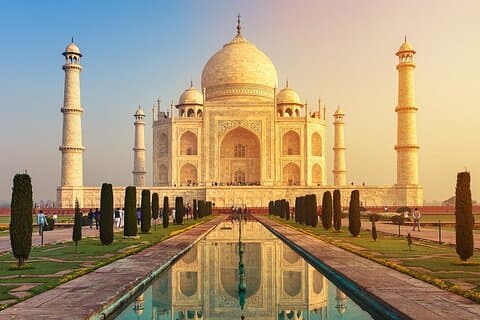
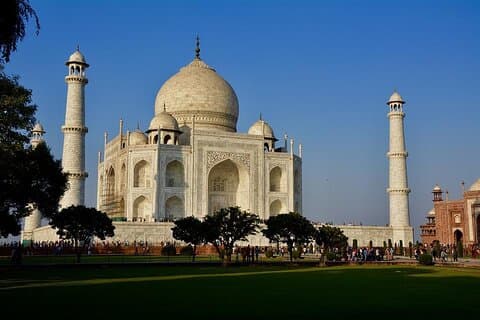
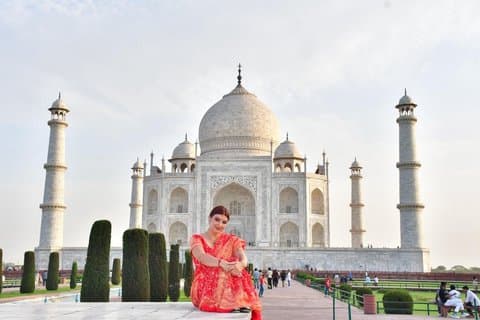
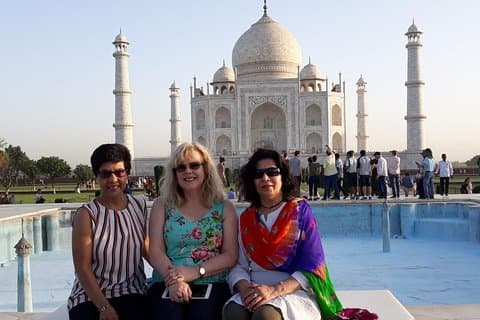
The Taj Mahal is an ivory-white marble mausoleum on the southern bank of the river Yamuna in the Indian city of Agra. It was commissioned in 1632 by the Mughal emperor Shah Jahan to house the tomb of his favourite wife, Mumtaz Mahal; it also houses the tomb of Shah Jahan himself. Return back to your hotel to enjoy breakfast, check out from hotel and visit Agra Fort.
It was the main residence of the emperors of the Mughal Dynasty until 1638, when the capital was shifted from Agra to Delhi. Before capture by the British, the last Indian rulers to have occupied it were the Marathas. Continue to Jaipur post visiting the fort.
Made with the red and pink sandstone, the palace sits on the edge of the City Palace, Jaipur, and extends to the women's chambers. The structure was built in 1799 by Maharaja Sawai Pratap Singh, the grandson of Maharaja Sawai Jai Singh, who was the founder of Jaipur.
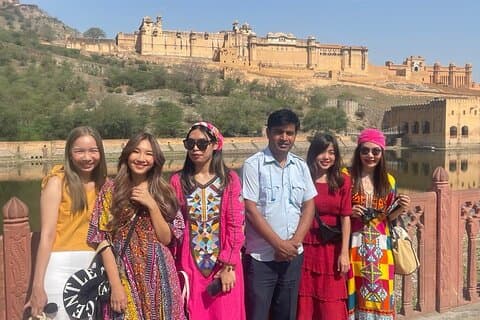
tres (6.8 mi) from Jaipur, the capital of Rajasthan. The town of Amer and the Amber Fort were originally built by the Meenas, and later it was ruled by Raja Man Singh I. Located high on a hill, it is the principal tourist attraction in Jaipur. Amer Fort is known for its artistic style elements. With its large ramparts and series of gates and cobbled paths, the fort overlooks Maota Lake, which is the main source of water for the Amer Palace.
It’s believed this room was used for religious ceremonies before weddings or on popular festival dates.
The palace and the lake around it were renovated and enlarged in the 18th century by Maharaja Jai Singh II of Amber.
by Maharaja Sawai Jai Singh II, who moved his court to Jaipur from Amber, in 1727.
ents built by the Rajput king Sawai Jai Singh II, the founder of Jaipur, Rajasthan. The monument was completed in 1734. It features the world's largest stone sundial, and is a UNESCO World Heritage site.
Please mention flight details in case of pick up from Airport
If you cancel at least 3 full day(s) before the scheduled departure time, you will receive a full refund.<br>If you cancel within 3 day(s) of the scheduled departure, you will receive a 0% refund.
按分类浏览 New Delhi - 免排队门票、漫步游、一日游、美食体验等