This Dublin travel guide is for a first trip to the Irish capital. Plan on three days: two for the compact city centre and one for the coast by DART train. Base yourself south of the Liffey near Trinity College or in the Docklands, buy a TFI Leap card for trams and buses, and pre-book Kilmainham Gaol on its official site. Spring and early summer bring the most sunshine and the least rain.
- Days needed
- Three for a first visit; two covers the centre only
- Sunniest months
- May and June, 6.4 and 6.0 hours a day on average (Met Éireann)
- Currency
- Euro
- Airport to centre
- Coach, TFI bus or taxi (about €30 to €45 by taxi, per Dublin Airport)
- Transport card
- TFI Leap card, adult daily cap €6, checked 13 Nov 2026
- Book ahead
- Kilmainham Gaol (its own site or Heritage Ireland only) and the Book of Kells Experience
Things to know before you visit Dublin
Before you plan the days, know which museums cost nothing or are shut, which sight must be booked on its own website, and how to pay on the trams.
- Some big museums cost nothing. The National Museum of Ireland's own homepage states that admission costs nothing at its sites, and the National Gallery of Ireland charges nothing for its permanent collection (some temporary exhibitions have a fee). Checked 13 Nov 2026.
- Check two well-known collections before you go. The Chester Beatty museum at Dublin Castle shut its doors to visitors on 15 June 2026, and when checked on 14 Nov 2026 its site gave the end of December 2026 as the end of the closure, so look there for opening hours before you plan a visit. The Natural History museum on Merrion Street is closed for works; the National Museum has opened a smaller "Dead Zoo Lab" at Collins Barracks in the meantime.
- Kilmainham Gaol sells its own tickets and nobody else's. The Gaol's site says tickets bought from third parties are not valid. In its words, "Access to the Gaol is by guided tour only, and you must pre-book your ticket" (Kilmainham Gaol Museum, checked 13 Nov 2026).
- National museum hours are short on Sundays and Mondays. The Kildare Street and Collins Barracks sites open 10 am to 5 pm Tuesday to Saturday but only 1 pm to 5 pm on Sunday and Monday (museum.ie). Put the gallery or Trinity College on those mornings instead.
- Tap on and tap off on the Luas. Riding the tram without tapping your Leap card on the platform validator counts as travelling without a valid ticket, and the Luas fares page lists a €100 Standard Fare Notice.
- The euro is the currency, and sockets take three-prong plugs at 230 V (Visit Dublin traveller information).
This page sticks to planning; for the sights themselves, start with our pick of Dublin's top sights and things to see.
The best time to visit Dublin
The best time to visit Dublin for weather is May or June: they are the two sunniest months at Dublin Airport, and February to May are the four driest months on its record. July and August are the warmest. November is the wettest month, and December has the least sunshine.
For Ireland as a whole, Met Éireann's climate summary says: "Between February and June, the influence of continental and Greenland anticyclones make these the months of least rainfall" (Met Éireann, Climate of Ireland). Rain is possible in any month, though, so give every day an indoor fallback.
Spring (March to May)
Average highs climb from 10.1°C in March to 14.8°C in May, and May averages 6.4 hours of sunshine a day, the highest of the year. Mid-March brings St Patrick's Festival (dates in the FAQ below). Outside that week, the drier spring months suit the coastal walks at Howth and Dalkey.
Summer (June to August)
July has the highest average maximum at 19.5°C, with August close behind at 19.1°C. Rain does not stop: August averages 73.4 mm, more than any month from February to July. Dublin Zoo keeps its longest hours from March to September, 9:30 am to 6 pm (Dublin Zoo opening hours), which helps families fit it into a long day.
Autumn (September to November)
The average high in September is 16.9°C, warmer than May. October and November are the two wettest months on the Dublin Airport record, with 78.4 mm and 82.7 mm. Met Éireann notes that in settled autumn weather, fog across Ireland is slow to clear in the morning, especially in November, so leave the Howth cliff walk for a clear afternoon.
Winter and Dublin in December
Winter is cool rather than cold, with average highs of 8°C to 8.5°C from December to February. Expect short days: December averages 1.7 hours of sunshine a day. Snow is rare: Dublin Airport averages 12.5 days a year with snow or sleet, and snow is on the ground at 9 am on about two days a year. Plan around Christmas closures. Kilmainham Gaol closes 24 to 27 December inclusive, the National Gallery shuts over 24, 25 and 26 December, and the National Museum on Christmas Day and St Stephen's Day, opening only 10 am to noon on Christmas Eve. Dublin Zoo closes at 4 pm through November and December, with last entry at 3 pm.
Getting from Dublin Airport into the city
Take an express coach or a TFI bus from outside the terminal, or a taxi from the rank. Dublin Airport's own bus page lists three kinds of bus and coach link to the city centre, and the airport's getting-there pages cover only road transport: buses, coaches, taxis and cars.
Express coaches
Dublin Express coaches leave from Zone 1 and Zone 21 and stop at more than 15 city-centre points, including Temple Bar, Trinity College, O'Connell Street and Heuston Station. The operator gives a frequency of every 7½ minutes between the airport and the city and a fastest time of 14 minutes. Aircoach leaves from Zone 2 and Zone 20 and serves the city, the rest of County Dublin and Northern Ireland.
TFI public buses
TFI routes 16, 19, 24, 33a, 41, 101, 102 and 109A leave from Zones 11, 13 and 15, run by Dublin Bus, Go-Ahead Ireland and Bus Éireann. The airport describes the TFI network as running 24-hour bus services to and from the city. A Leap card pays the lowest fare on these routes, and convenience stores in both terminals sell Leap cards. Leap Visitor Cards are sold at the T1 Convenience Store and WHSmith in Terminal 1 Arrivals, and at SPAR in Terminal 2 Arrivals.
Taxis
Taxis wait outside both terminals. Dublin Airport's taxi page gives a metered standard rate of €1.32 per km from 8 am to 8 pm Monday to Saturday, and €1.81 to €2.20 per km at other times. Its own estimates for the ride are €30 to €45 to Dublin city, €40 to €50 to Heuston Station and €25 to €40 to Busáras, the central bus station. Checked 13 Nov 2026.
How to get around Dublin: walking, trams, buses and the coastal train
Walk the centre and use a TFI Leap card for everything else. Trinity College, Temple Bar and the cathedrals are within walking distance of each other; Kilmainham Gaol, 3.5 km from the city centre by the Gaol's own measure, is a bus or tram ride. The Luas trams, Dublin Bus and the DART coastal train share one card and one daily spending cap.
Leap cards and fares
| Fare (adult) | Price | Notes |
|---|---|---|
| TFI 90 Minute Fare, Leap card | €2.00 | Most Luas journeys; changes to another mode within 90 minutes in the Dublin area are included |
| Luas Short Fare, Leap card | €1.50 | Selected Luas journeys of up to about 3 km |
| Leap daily cap | €6.00 | Dublin Bus, Luas, DART and Commuter Rail; the day runs from 4:30 am to 4:29 am |
| Leap weekly cap | €24.00 | Monday 4:30 am to the following Monday 4:29 am |
| Luas paper single, 1 zone | €2.00 | Child €0.90; valid 90 minutes, one trip |
| Luas paper single, 2 to 8 zones | €2.60 | Child €0.90 |
Fares from the Luas Leap card page and the Luas single and return ticket page, checked 13 Nov 2026.
Once you reach the cap, further trips that day cost nothing, as long as you keep tapping. Luas ticket machines take cash, cards (contactless included), Apple Pay and Google Pay, but you cannot buy a ticket on the tram (Luas, "Paying your way is easy").
Leap Visitor Card or a standard Leap card
For most visitors, a standard Leap card with its daily cap works out cheaper than the Leap Visitor Card. Irish Rail's ticket page lists the Visitor Card at €8 for 1 day (24 hours), €16 for 3 days and €32 for 7 days (checked 14 Nov 2026), with unlimited travel on Dublin Bus, Go-Ahead, Luas, and DART and Commuter Rail within the Short Hop Zone. Set those beside the standard card's caps of €6 a day and €24 a week. One day on the Visitor Card costs more than the daily cap. Three days come out €2 cheaper only if you would have hit the cap every day, which takes about three full-fare trips a day. If you mostly walk and ride a couple of times a day, pay as you go. Check what the shop charges for the card itself before you compare, and confirm Irish Rail's Visitor Card prices where you buy it.
Luas trams
The Luas has two lines, according to the official network map. The Red Line runs west to east from Saggart and Tallaght through Heuston Station, Smithfield, Jervis, O'Connell-GPO and Connolly Station to The Point in the Docklands. The Green Line runs from Brides Glen in the south through Ranelagh, Charlemont, St Stephen's Green and Trinity, then north to Broombridge. The two lines meet in the O'Connell Street area. Kilmainham Gaol's nearest Luas stop is Suir Road on the Red Line, per the Gaol's visit page. One planning note from Irish Rail's timetables: allow an hour to cross between Heuston and Connolly stations by Luas or bus if you are changing trains.
DART and the coast
The DART is the train to use for the coast. Visit Dublin puts Howth a 25-minute train ride from the city centre and Dalkey about half an hour away. Howth is on the line north of the city centre; Dún Laoghaire, Dalkey and Bray are on the line south of it, with Tara Street and Connolly in between. Irish Rail issues new timetables from time to time, so check the DART timetable for your travel date.
Buses and taxis
Dublin Bus and Go-Ahead Ireland cover the areas the Luas misses: the Gaol's page lists bus 60 from Wellington Quay or Heuston Station, and the G1 and G2 from Spencer Dock or Wellington Quay. Taxis are metered at the rates given in the airport section above.
Guided Dublin walking tours to compare

Dublin LGBTQ Pride Historical and Cultural Walking Tour
5.0(109)2 hoursViewFrom$27
Dublin Private Walking Tour | Highlights, History & Hidden Gems
5.0(41)3 hr 30 minViewFrom$154
2-Hour Historical Walking Tour from Dublin
4.9(1,050)2 hoursViewFrom$21
Highlights of Dublin Private Walking Tour with Guide
5.0(23)3 hoursViewFrom$473
Dublin Highlights and Hidden Gems Guided Walking Tour
4.9(7,679)2 hoursViewFrom$27
Haunted Dublin Walking Tour
4.9(1,265)2 hoursViewFrom$27
Vikings, Rebels, Monks and Monarchs Self Guided Tour of Dublin
4.0(1)2 hours - 4 hoursViewFrom$6
Dublin Historical Centre Food Tour with 7 Food Tastings & Drinks
4.9(2,319)3 hoursViewFrom$100
Walk the Walls of Medieval Dublin - Private Group Tour
5.0(66)2 hr 20 min - 3 hr 30 minViewFrom$114
Dark Dublin Walking Tour: Torture, Murder and Mystery
4.9(2,451)2 hoursViewFrom$27
Where to stay in Dublin: the neighbourhoods compared
For first-timers, the best area to stay in Dublin is the south city centre, between Trinity College, St Stephen's Green and Temple Bar: the main museums and Trinity College are close together and the Green Line runs through it. Pick the Docklands for the modern riverside quarter, Smithfield or Stoneybatter for a local feel, and the coast if you want sea air and don't mind a train ride.
| Area | Best for | Getting to the centre |
|---|---|---|
| South city centre (Trinity, Stephen's Green) | First-timers, short stays | Walk |
| Temple Bar | Night owls who want pubs and live music | Walk |
| Docklands | The modern riverside, museums on the quays | Luas Red Line or walk |
| Smithfield and Stoneybatter | A local neighbourhood feel, the Jameson distillery | Luas Red Line |
| The Liberties | History, cathedrals, distilleries | Walk |
| Portobello and Ranelagh | Quieter streets, canal walks | Walk or Luas Green Line |
| Howth, Dalkey or Dún Laoghaire | Sea air, coastal walks | DART |
Neighbourhood descriptions draw on Fáilte Ireland's Visit Dublin neighbourhood guide and its area guides, checked 13 Nov 2026.
South city centre
Best for: first-timers. Trinity College, the National Gallery, the National Museum on Kildare Street and St Stephen's Green are all here, and the Green Line's Trinity, Dawson and St Stephen's Green stops connect you north and south. This is the area where a two-day trip loses the least time to transport.
Temple Bar
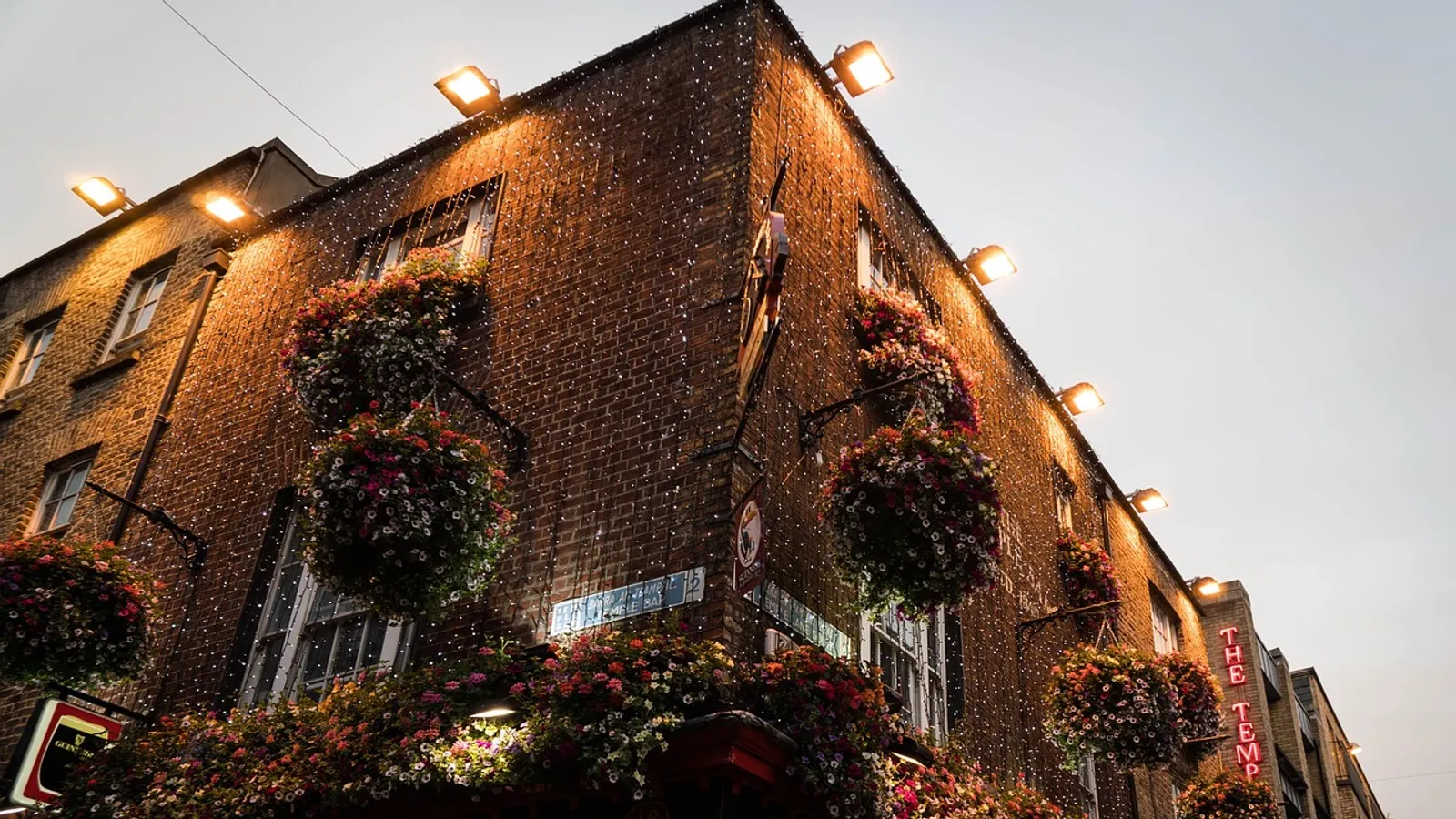
Best for: evenings out. Visit Dublin describes it as a cobbled district on the south bank of the Liffey, known for pubs, live music and trad sessions, but also home to Photo Museum Ireland, the Irish Film Institute and the Temple Bar Food Market.
Docklands
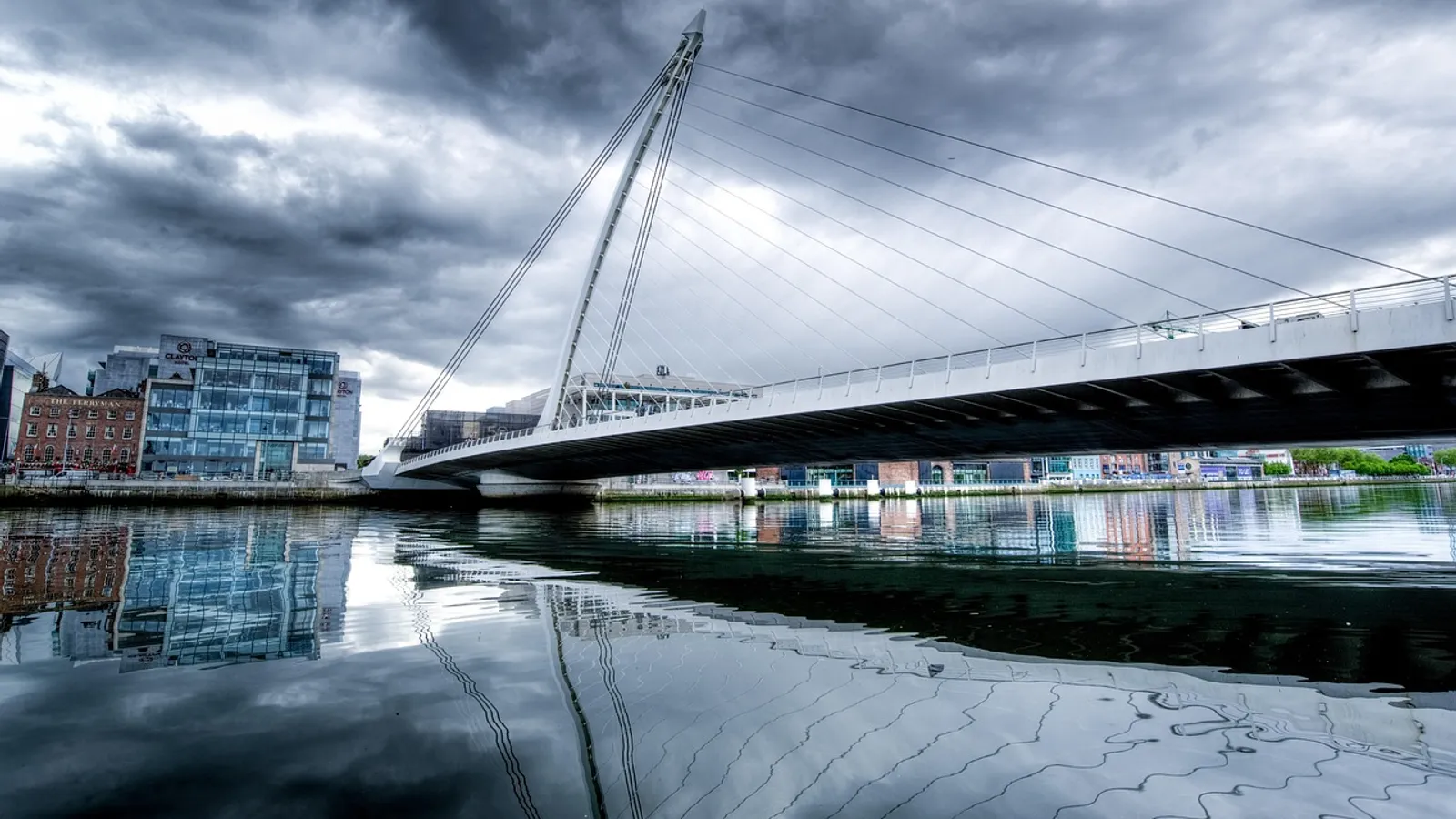
Best for: the river and its newer quarter. EPIC The Irish Emigration Museum sits in the CHQ Building, the famine ship replica Jeanie Johnston is moored on the quay, and the Samuel Beckett Bridge crosses the Liffey here. The Luas Red Line ends at The Point.
Smithfield and Stoneybatter
Best for: a neighbourhood feel within a tram ride of the centre. Visit Dublin calls Stoneybatter "Dublin's original urban village", with Victorian terraces and a main street of pubs and restaurants. Smithfield's square is home to the Jameson distillery, founded on that spot in 1780, and the Lighthouse Cinema.
The Liberties
Best for: history. Christ Church Cathedral and St Patrick's Cathedral both stand here, and the area, once a whiskey-making centre, has distilleries open for tours again.
Portobello and Ranelagh
Best for: a quieter base. Portobello is a residential area of Georgian townhouses and cottages by the canal, just south of the centre. Ranelagh, a little farther south, has red-brick townhouses and a main street of restaurants, cafés and bookshops, with Green Line stops into town.
The coast: Howth, Dalkey and Dún Laoghaire
Best for: repeat visitors or anyone who prefers the sea. Visit Dublin describes Howth as a harbour village with beaches and sea cliffs, 25 minutes from the city by train, and Dalkey as a village of narrow streets about half an hour away, at the start of the coastal walk to Killiney Hill. The trade-off is that every city-centre day starts and ends on the DART.
How many days you need in Dublin
Give Dublin three days the first time: two days cover the city-centre sights without rushing, and the third goes to the coast. With two days you can see the centre but not the sea; with four or five you can add a longer trip out of the city.
Two days in Dublin
Spend day one on the south side. Start at Trinity College with an early Book of Kells ticket (Trinity's visitor page gives an 8:30 am start from Monday to Saturday and 9 am on Sundays), then walk to the National Gallery or, from Tuesday to Saturday, to the National Museum on Kildare Street. Finish at St Patrick's Cathedral and eat in the Liberties or Temple Bar.
Day two heads west. Take the 60 bus or the Red Line out to Kilmainham Gaol for a tour you booked in advance; the Gaol asks you to allow about 90 minutes. Then go on to the Guinness Storehouse (see Guinness Storehouse tickets for the ticket types and how far ahead to book) and end with a walk in Phoenix Park, which is open 24 hours a day.
Three days in Dublin
Add a coast day. Take the DART north to Howth for the cliff walk, or south to Dalkey for the walk up Killiney Hill and the view over Killiney Bay.
Four days or more
With a fourth day, take a guided day trip to Glendalough in the Wicklow Mountains, or the train to Belfast (details below). Five days leaves room for a longer day tour to the Cliffs of Moher.
What a trip to Dublin costs, and whether a city pass pays off
Sightseeing in Dublin need not be expensive, because several of the biggest collections cost nothing to enter. The paid headline sights below add up to just under €50 for one adult: the Book of Kells Experience from €21.50, Kilmainham Gaol at €8, St Patrick's Cathedral at €11.50 and a full day of Leap card travel capped at €6. Accommodation, which we don't price here, will be the larger part of your budget.
| Sight or service | Official adult price | Seller |
|---|---|---|
| Book of Kells Experience (Old Library plus Red Pavilion) | from €21.50 | Trinity College |
| Book of Kells and Old Library only | from €19 | Trinity College |
| Kilmainham Gaol guided tour | €8 (family €20) | Kilmainham Gaol Museum |
| St Patrick's Cathedral | €11.50 (family €31) | St Patrick's Cathedral |
| Dublin Zoo, online day ticket | €22.50 (gate €26.50) | Dublin Zoo |
| National Gallery, permanent collection | €0 | National Gallery of Ireland |
| National Museum (Kildare Street, Collins Barracks) | €0 | National Museum of Ireland |
| Leap card travel, daily cap | €6 | Luas |
Official prices checked 13 Nov 2026, and the Book of Kells price again on 20 Nov 2026.
Ways to keep costs down
Put the no-charge collections on your list: the National Gallery, the National Museum on Kildare Street for archaeology and Collins Barracks for decorative arts and military history. St Patrick's Cathedral includes its own guided tours in the admission price, twice a day from Monday to Saturday (none on Sundays), and sells a joint ticket with Marsh's Library for €17. Children under 12 enter Kilmainham at no charge, though they still need a booked ticket. Pay as you go on a Leap card, so the daily cap limits what a busy travel day can cost.
Do Dublin city passes pay off
Only if you will stack several paid attractions into each pass day. Commercial multi-attraction passes are sold for Dublin, but two things limit their value for a first visit. The national museums and the National Gallery cost nothing anyway, and Kilmainham Gaol, which calls itself a very busy site, sells tickets only on its own site and on Heritage Ireland's. Before buying, total the official prices above for the sights you will really reach on each pass day; a pass only wins when it costs less than that sum. If a pass also bundles hop-on hop-off bus rides, price those rides separately on the city tours page linked in the experiences section below.
Dublin weather by month
Dublin's weather is mild and changeable all year: average highs run from 8°C in January to 19.5°C in July, and even June, the month with the fewest rain days, averages close to 10 days of 1 mm or more. The table uses Met Éireann's official 1991 to 2020 averages for Dublin Airport, the national weather service's long-term record for the city.
| Month | Mean daily max °C | Mean daily min °C | Rainfall mm | Rain days (1 mm+) | Sun hours per day |
|---|---|---|---|---|---|
| January | 8.0 | 2.3 | 61.8 | 12.5 | 1.9 |
| February | 8.5 | 2.2 | 52.4 | 11.0 | 2.9 |
| March | 10.1 | 3.0 | 51.4 | 10.7 | 3.7 |
| April | 12.3 | 4.0 | 55.0 | 11.1 | 5.4 |
| May | 14.8 | 6.6 | 57.0 | 10.5 | 6.4 |
| June | 17.7 | 9.0 | 64.0 | 9.8 | 6.0 |
| July | 19.5 | 11.3 | 61.0 | 11.6 | 5.0 |
| August | 19.1 | 11.2 | 73.4 | 11.8 | 5.0 |
| September | 16.9 | 9.5 | 63.3 | 10.7 | 4.4 |
| October | 13.6 | 7.1 | 78.4 | 11.6 | 3.4 |
| November | 10.3 | 4.3 | 82.7 | 12.5 | 2.4 |
| December | 8.3 | 2.6 | 72.1 | 13.3 | 1.7 |
Source: Met Éireann, Dublin Airport 1991 to 2020 averages, checked 13 Nov 2026.
Across a year, Dublin Airport averages 772.5 mm of rain, spread over 137 days that each bring 1 mm or more. That is the number to plan around: expect measurable rain on more than one day in three. January and February have the strongest average winds, and gales average 7.8 days a year, most of them between October and March. Kilmainham Gaol's visitor page warns that the old prison building is very cold in winter, so dress for it.
Dublin with kids
Dublin works well with children if you build the days around the zoo, the parks and the museums that cost nothing, and skip the sights not meant for small children.
Dublin Zoo and Phoenix Park
Dublin Zoo sits inside Phoenix Park. Children under 3 enter at no charge; a child ticket for ages 3 to 15 costs €17 online for a day visit (€20 at the gate), and a family ticket for 2 adults and 2 children is €62.50 online (Dublin Zoo ticket prices, checked 13 Nov 2026). Around it, Phoenix Park is open day and night all year. The Office of Public Works describes it as one of Europe's biggest enclosed parks in a capital city; it was laid out for royal hunting in the 1660s, has been open to the public since 1747, and wild fallow deer still roam it. Keep children back from the deer: the park advises the public not to feed or approach them.
Museums and galleries
The National Museum's Dead Zoo Lab at Collins Barracks keeps natural history on show while the Merrion Street museum is closed. The National Gallery has an audio tour written for kids and families, played on your own device.
What to skip with small children
The Gaol's tour lasts an hour and is not recommended for under-6s; buggies and strollers stay behind. On the Luas, children up to 4 travel at no charge and children aged 5 to 15 pay the child fare.
Experiences and day trips worth booking
Book ahead for the guided visits where numbers are limited, and keep the rest flexible. The Dublin sights and attractions guide ranks the city itself; this section covers what is worth reserving and which trips out of the city fit a short stay. When the same guided visit is sold by more than one booking site, our Dublin tours page lines the offers up together, which makes differences in group size, inclusions and price easy to spot.
In the city
Trinity College sells Book of Kells tickets on its own site, where entry is timed, online booking is "strongly recommended" and tickets cannot be refunded once bought. Trinity also runs its own guided campus walk, Trinity Trails, which can be bundled with the Book of Kells. Kilmainham Gaol opens a first batch of tour tickets 28 days before each date, at midnight Irish time; if your date is gone, its site releases more tickets and returns from 9:15 am on the morning of the visit. Remember that a Gaol ticket from any other seller will be refused at the door.
Book of Kells and Trinity College visits to compare

Dublin, Trintiy College Library Tour & Book of Kells
5.0(103)3 hr 30 minViewFrom$106
Private Dublin Highlights and Coastal Villages Tour
5.0(20)7 hoursViewFrom$804
History & Heritage Tour: Kells, Trim, Loughcrew, Fore, Distillery
5.0(17)8 hoursViewFrom$743Vikings, Rebels, Monks and Monarchs Self Guided Tour of Dublin
4.0(1)2 hours - 4 hoursViewFrom$6
4 Hour Private Dublin City Sightseeing Tour ( 1-7 People)
5.0(27)4 hoursViewFrom$513
Celtic Day Trip from Dublin with Spanish-Speaking Guide
5.0(9)9 hoursViewFrom$84
Medieval Mile Street Tour
4.9(43)1 hr 5 min - 1 hr 15 minViewFrom$20
Private Kilkenny Tour: Medieval History & Local Insights
4.9(37)2 hoursViewFrom$112
Marble City Kilkenny Private Car Tour
8 hours - 9 hoursViewFrom$586Walk the Walls of Medieval Dublin - Private Group Tour
5.0(66)2 hr 20 min - 3 hr 30 minViewFrom$114
Howth and Dalkey by DART
Neither needs a tour: the DART reaches both in about half an hour from the centre. Visit Dublin also lists guided walking tours in Howth for anyone who would rather walk the headland with a local guide.
Howth coastal walks and tours from Dublin

Dingle Bay 1 Hour Guided Coastal Boat Tour With Cliffs
4.9(176)1 hourViewFrom$29
Private Howth Coastal Walk
5.0(8)5 hoursViewFrom$443
Howth Cliffs and Ireland's Eye Boat Tour
4.5(495)50 minutes - 1 hourViewFrom$28
Newport Cliff Walk Self-Guided Walking Audio Tour
4.0(94)1 hour - 2 hoursViewFrom$15
Sliabh Liag Cliffs and Glencolmcille Tour
5.0(35)6 hours - 8 hoursViewFrom$918
Howth Coastal Half-Day Bus Tour from Dublin with Live Guide
4.6(1,093)4 hoursViewFrom$42
Cliffs of Moher Access and Wild Atlantic Way Irish Experience
5.0(4)2 hr 30 minViewFrom$77
Ireland's Eye and Howth Coastal Boat Tour
4.4(217)50 minutesViewFrom$28
2 Hour Walking Tour in Slieve League Ireland
4.3(11)2 hoursViewFrom$28
Howth Coastal Tour in Dublin
4.3(10)6 hoursViewFrom$44
Glendalough and the Wicklow Mountains
Glendalough is the most visited site in Wicklow Mountains National Park, which covers almost 23,000 hectares south of Dublin. Its round tower, ruined churches and carved crosses mark six centuries as a monastic settlement. Check the park's notices before you go: trail works on the White Trail began on 20 July 2026 and were expected to take five or six months, according to the park's notice on 14 Nov 2026.
Glendalough and Wicklow day trips from Dublin

Day Tour from Dublin: Wicklow Mountains, Glendalough, Powerscourt
5.0(104)7 hours - 8 hoursViewFrom$631
Glendalough and Wicklow Mountains Half Day Tour from Dublin
4.4(973)5 hoursViewFrom$37
Dublin to Glendalough, Wicklow and Kilkenny Full Day Guided Tour
4.9(7,085)9 hr 15 minViewFrom$50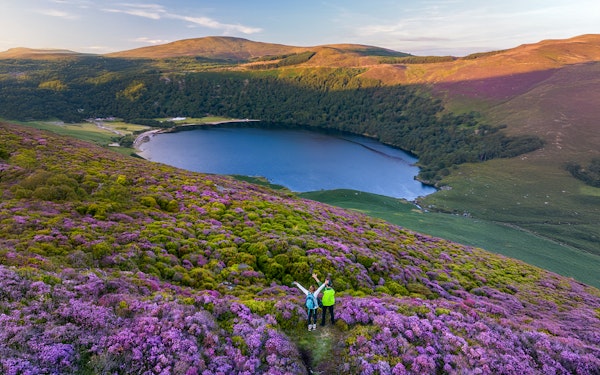
From Dublin: Wicklow Mountains, Glendalough, and Kilkenny Full-Day Trip
4.8(6)9 hr 15 minViewFrom$49
Glendalough and Wicklow Mountains Afternoon Tour from Dublin
4.2(657)5 hoursViewFrom$37
Glendalough & Kilkenny From Dublin Full Day - Private Driver
5.0(15)10 hoursViewFrom$1,284
Dublin to Powerscourt, Wicklow and Glendalough Small Group Tours
4.7(863)8 hoursViewFrom$73
Wicklow and Glendalough Private Chauffeured Sightseeing Tour
5.0(21)6 hours - 8 hoursViewFrom$1,111
Kilkenny, Wicklow and Glendalough Sheepdog Trials from Dublin
4.9(8,818)10 hoursViewFrom$48
Wicklow: Glendalough & Powerscourt Distillery Private WhiskeyTour
5.0(8)9 hoursViewFrom$503
Belfast and the Cliffs of Moher
Belfast is a straightforward train trip: on Irish Rail's weekday timetable (checked 14 Nov 2026), trains leave Dublin Connolly about once an hour and reach Belfast Grand Central in a little over two hours. The Belfast page has tours there. The Cliffs of Moher are in County Clare, on Ireland's Atlantic coast; without a car, a guided day trip is the simplest way to fit them into one day. For more ideas beyond the capital, browse experiences across Ireland.
Cliffs of Moher day trips from Dublin

Cliffs of Moher Day Tour from Limerick: Wild Atlantic Way
4.1(319)7 hoursViewFrom$71
Exclusive Cliffs of Moher & Galway City private: Top guide Éamonn
5.0(69)12 hoursViewFrom$1,599
Cliffs of Moher and Galway City Day Tour from Dublin
4.3(422)12 hr 15 minViewFrom$84
Private Day Tour Cliffs of Moher from Dublin
5.0(10)10 hours - 12 hoursViewFrom$1,507
Dublin to Cliffs of Moher, Burren, Wild Atlantic Way, Galway Tour
4.9(15,360)12 hr 30 minViewFrom$79
Cliffs of Moher and Wild Atlantic Way Private Tour from Dublin
5.0(24)11 hr 30 minViewFrom$1,167
Dublin to Cliffs of Moher, including Wild Atlantic Way and Galway
4.9(25,089)13 hoursViewFrom$84
Cliffs of Moher, Burren and Galway Day Tour from Dublin
4.6(2,974)13 hoursViewFrom$76
The Cliffs of Moher Day Tour
5.0(5)8 hoursViewFrom$1,117
Galway to Aran Islands & Cliffs of Moher Day Tour & Cliffs Cruise
4.8(2,750)10 hoursViewFrom$94
Dublin travel FAQ
Can you see Dublin in a day?
Yes, if you stay in the south city centre and accept that the coast and the western sights wait for another trip. Check the day of the week first: on Sundays and Mondays the National Museum opens only from 1 pm and the National Gallery from 11 am, so a one-day visit on those days starts at Trinity College and leaves the museums for the afternoon. On a stopover, Dublin Express gives a fastest airport transfer of 14 minutes.
Is Dublin safe for tourists?
GOV.UK's travel advice for Ireland, read on 14 November 2026 (still current at that date, last updated 4 September 2026), raises no Dublin-specific warning. Its crime section asks visitors to take precautions against bag-snatching and pickpocketing and says most incidents occur in the larger cities. In an emergency, call 999 or 112 for the Gardaí (police), an ambulance or the fire brigade.
What should you pack for Dublin?
Pack for rain and wind in every month. Met Éireann's Dublin Airport averages count roughly 10 to 13 rain days in every month, and the windiest months are December to February. A waterproof jacket with a hood beats an umbrella on breezy days, and comfortable walking shoes matter because the centre is compact. Bring a warm layer even in summer: the July average high is 19.5°C.
When is St Patrick's Festival in Dublin?
The organisers list St Patrick's Festival for 13 to 17 March 2027, ending on St Patrick's Day itself. Grandstand seats for the parade are sold through the festival's own website. Book accommodation early for those dates.
Do you need a visa to visit Dublin?
Not if you are a citizen of the EU or the European Economic Area. Visit Dublin's traveller page, read on 14 November 2026, says citizens of visa-required countries can apply for a short-stay visa for visits of up to 90 days. Check your own nationality on the Irish Immigration website before you book.
What plugs and voltage does Dublin use?
Ireland uses three-prong sockets on a 230 V, 50 Hz supply, according to Visit Dublin. Bring an adapter for three-prong plugs, and check that chargers and hair tools accept 230 V.
Where can you get tourist information in Dublin?
Fáilte Ireland runs two tourist information centres in the city: one at 3 Palace Street, Barnardo Square, Dublin 2, and one at 14 Upper O'Connell Street, Dublin 1. Both give independent advice, maps and printed guides.
Sources
All checked on 13 November 2026 and again on 14 November 2026.
- Met Éireann: Dublin Airport 1991 to 2020 averages and Climate of Ireland
- Dublin Airport: Dublin bus routes, by bus and by taxi
- Dublin Express
- Luas: Leap card fares, single and return tickets, network map and paying for travel
- Irish Rail: tickets explained (Leap Visitor Card) and timetables by route (DART and Dublin to Belfast timetables)
- Visit Dublin (Fáilte Ireland): traveller information, neighbourhoods, Temple Bar, Docklands, Howth and Dalkey
- Trinity College Dublin: Book of Kells Experience
- Kilmainham Gaol Museum and plan a visit
- National Museum of Ireland, Kildare Street hours and Collins Barracks hours
- National Gallery of Ireland: opening hours and visit us
- St Patrick's Cathedral: visit
- Chester Beatty
- Dublin Zoo: ticket prices and opening hours
- Phoenix Park (Office of Public Works)
- Wicklow Mountains National Park
- St Patrick's Festival
- GOV.UK: Ireland travel advice, safety and security
- An Garda Síochána: contact us (emergency numbers)