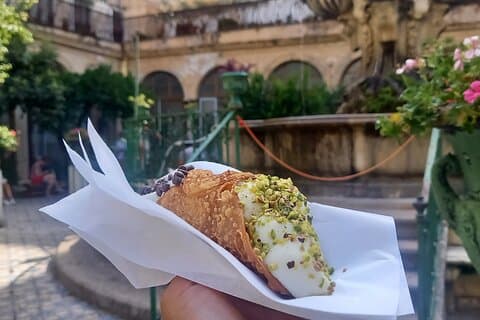
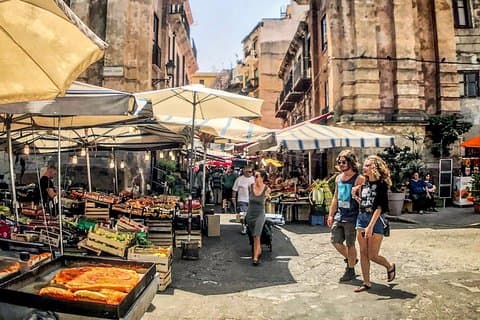
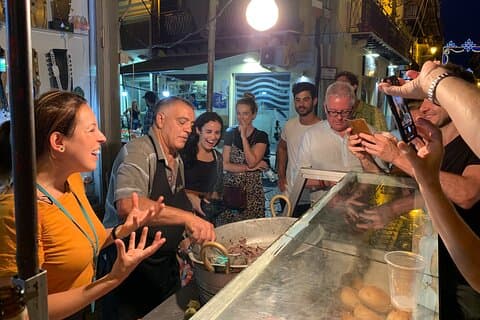
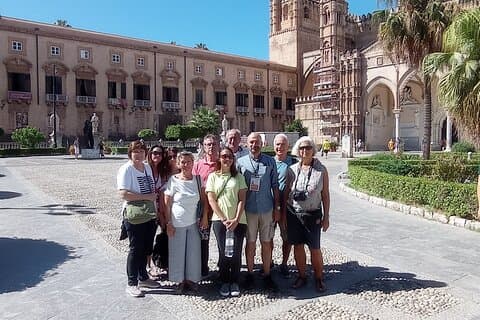
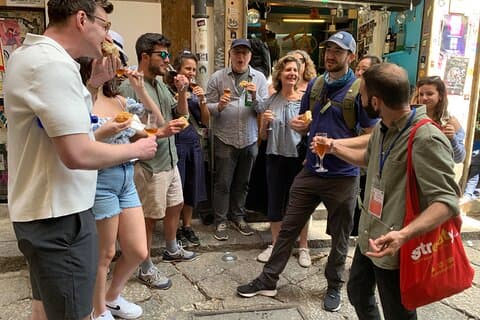
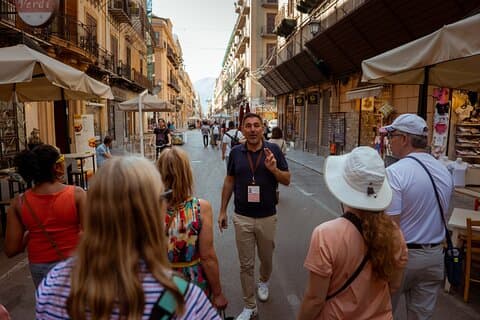
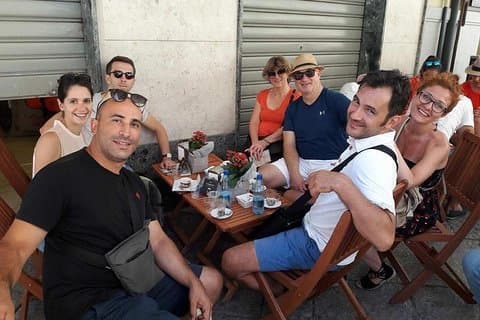
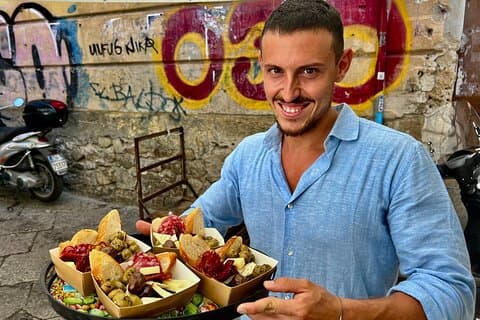
Enjoy and taste the street food in the old markets of Palermo observing people, products, colors and characters from another time. The smells and the flavors will accompany you during three unforgettable hours during which you will see also the Cathedral of Palermo
Via Collegio di Maria al Borgo, 17, , Palermo, Italy
Puppet opera is a particular type of puppet theatre, which emerged in southern Italy and particularly in Sicily in the early 1800s, is Masterpieces of the Oral and Intangible Heritage of Humanity.
Piazza Giuseppe Verdi, Palermo, Italy
It is the largest Opera House in Italy, the third one in Europe. It was built in 1875 and its history is full of legends.
Via Cappuccinelle, Palermo, Italy
The best street food market in Palermo
The sect, as described by the author Luigi Natoli in his historic novel I Beati Paoli. Whereas the novel is fictitious, Sicily's history bears some evidence that the Beati Paoli actually existed.
Corso Vittorio Emanuele, , Palermo, Italy
The Cathedral of Palermo is the most important monument of the “Arab-Norman Palermo and the Cathedrals of Cefalù and Monreale” site inscribed on the World Heritage List of UNESCO on 2015. The Cathedral of Palermo was founded by Gualtiero Offamilio, archbishop of the town from 1169 to 1190. It was a mosque in Islamic times and converted into a cathedral church by Roberto the Guiscardo after the conquest of Palermo. Its exclusive elements are the inlays and the architectural and sculptural plastic that reflects the penetration of Romanic art and the first Gothic decorative taste in Sicily.
Via Vittorio Emanuele, 481, Palermo, Italy
It is the most ancient street of Palermo. From the 16th century the street also named Via Toledo. After the unification of Italy, it was renamed Via Vittorio Emanuele II, but the old name is still in use.
Piazza Vigliena, Via Maqueda, Palermo, Italy
Quattro Canti, or Vigliena square, is the name of the octagonal square in the intersection between the two most important streets in Palermo: via Maqueda and Cassaro (corso Vittorio Emanuele). Ancients sources refers about it as “Octagon” or “Sun’s Theatre”, because during the daylight almost one of the façades is lighten by the sun. The “Four Corners” were realized from 1609 until 1620. The shape of the square is an octagon and it’s placed in the middle of the ancient city as a perfect point of connection between the four most important districts of that period which are: Kalsa, La Loggia, Capo e Albergheria. The four façades of the buildings have four different levels. In the lowest one it is possible to see the fountains as the symbols of the four old Palermo’s main rivers: Oreto, Kemonia, Pannaria, Papireto; in the next level are shown the allegories of the four seasons represented by Eolo, Venus, Cerere and Bacchus; the middle part is decorated by the statues of Carlo V, Filippo II, Filippo III, Filippo IV; and in the last order there are the illustration of the four saints of Palermo before the arrival of Saint Rosalia (1624): Agata, Ninfa, Oliva e Cristina.
Only for cruise passenger. It is at 10:00a.m. just outside the cruise terminal
If the ship arrives at 9.00am or earlier, we meet the cruise passenger cruise at 10.00. If the ship arrive later, please contact us to ask a different pick-up hour.
The meeting point is at 10.30 in Piazza Olivella, in front of the entrance of the Salinas Archeological Museum.
For a full refund, cancel at least 24 hours before the scheduled departure time.
Bläddra Palermo efter kategori - biljetter utan kö, promenader, dagsturer, matupplevelser och mer