Self-guided tour with audio guide with everything you need to know about Besalú Points of interest linked to Google Maps geolocation Routes by car through some parts of Besalú Walking routes to visit: the viewpoint, the bridge, the Roman house, the Monastery of Sant Pere de Besalu... Access to Web Panel to customize your own route Access to Panel Web as a repository of travel documents Audio guides with 6 languages available (Spanish, Portuguese, German, Italian, French, English.)
Carrer Del Pont Vell, 17, Besalu, Spain
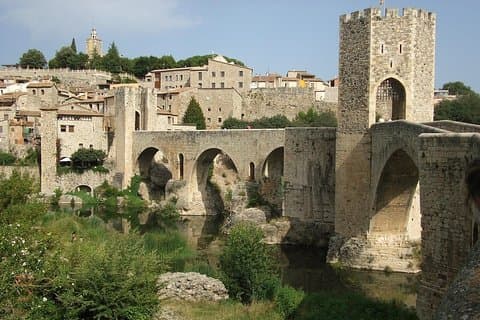
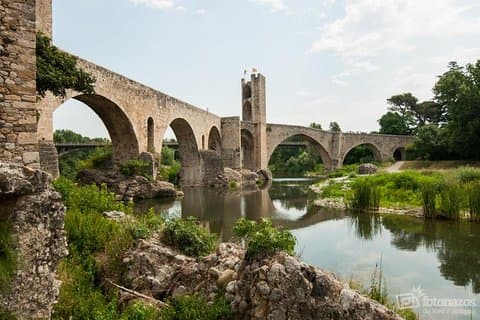
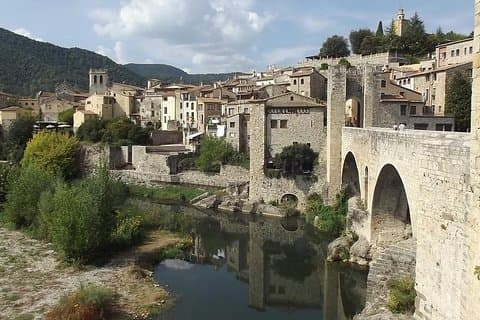
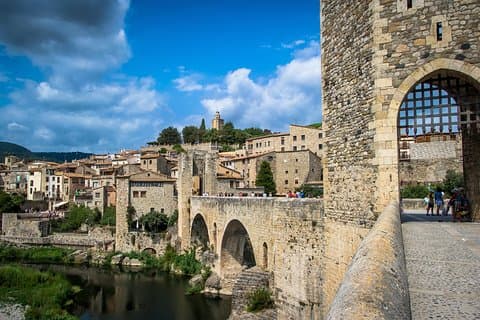
This bridge is the gateway to Besalú and is about 105 meters long and 30 meters high. For us it is one of the most beautiful bridges we have found in Spain and it can be seen from different viewpoints or from the C-66 road.
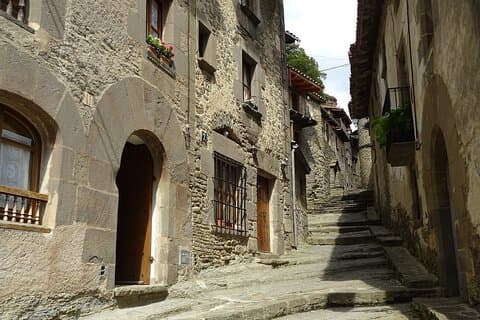
a large gate with two impressive towers, which lead us through cobbled streets. The main streets that we recommend visiting are Pont Vell, Abat Oliva, Rocafort and Comte Tallaferro. In Rocafort street we find something very curious, sculptures of chairs that were made by artists from Girona and Italy in 1994. In any of these streets we find beautiful corners such as arches, doors or old wells of the Jewish inhabitants who lived in this part. from Besalu. Going up Portalet street there are some houses with inscriptions and mezuzà, which were holes next to the doors where a scroll with verses from the Torah was kept.
The one in Besalú is a small 5×4 meter chamber where the pool was to perform rituals in certain circumstances such as after childbirth, menstruation, before Sabath and Yom Kippur for religious men. It was found by chance in an excavation; It is the first building of these characteristics that has been found in Spain and the third in importance of the ten existing in Europe. It is located under the remains of what was the old Synagogue, from 1264, and the only way to see it is with a guided tour.
It dates from the year 977 and also has some Gothic details such as the rose window and a large window. Inside is the tomb of Pere de Rovira who in 1413 moved the relics of San Vicente to Besalú.
Also dating from the year 977 and founded by Count Miró de Besalú, it is located in Prat de Sant Pere square. On its façade there is a large window with several Gothic arches and two lions that are symbols of strength, power and the protection that the church offered against evil and paganism.
hich one has one of the best views of the bridge and the houses.
rtal de la Força, which is also known as the Portal del Castillo and which gave access to the Força enclosure, which was an extension of the old Visigothic settlement.
r tower that once had two floors with a raised access door. The road to Figueras passed next to this tower and from the tower one had one of the best views and was used to keep watch in case attackers approached the town.
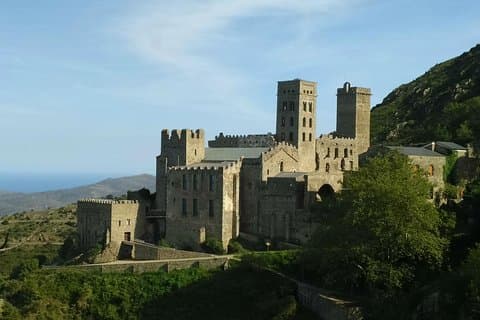
When from 1137 it became the seat of an Augustinian community, it had to undergo a few transformations to adapt the constructions of the enclosure to the uses of the new spaces. The original chapel, with the name of Santa Maria del Castell, was a simple work, destined only for the religious service of the palace. A reform in the year 1055 is documented, a fact that suggests a Romanesque church of already consolidated dimensions. From 1137 it became the seat of an Augustinian community. It is, then, in the twelfth century when, according to the requirements of the new community, a new church must be built.
All sales are final. No refund is available for cancellations.
Bläddra Girona efter kategori - biljetter utan kö, promenader, dagsturer, matupplevelser och mer