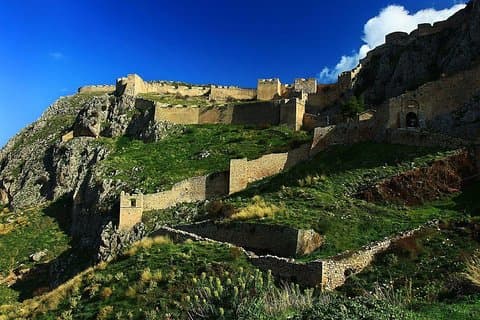
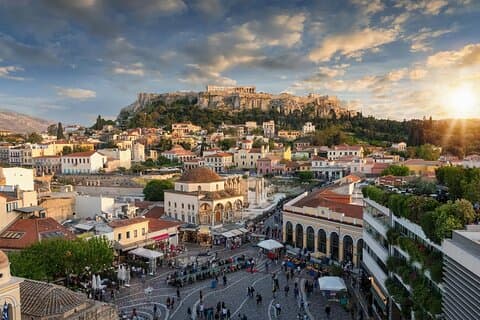
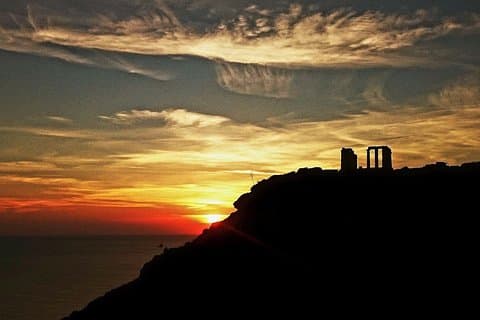
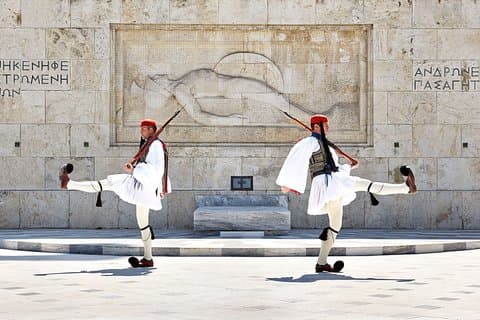
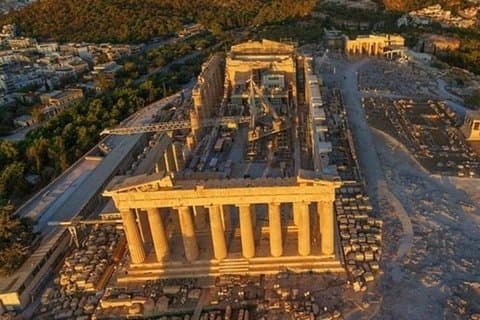
Visit the most archeologically important sites in Athens. The Acropolis, the Propylaea, the Temple of Athena Nike, the Erechthion, the Parthenon the theater of Dionysus, the Roman Odeon, and the Areopagus the Panathenaic Stadium where the first modern Olympic Games were revived in 1896, Then the three buildings of knowledge (the University, the Academy, the National Library) the Parliament building and the Tomb of the Unknown Soldier. The Lycabettus hill with the panoramic view of Athens and then in the famous Plaka visit the Roman market, Monastiraki with the flea market and at the end lunch in a Greek grill restaurant.
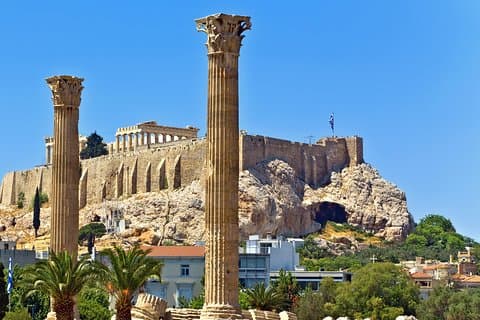
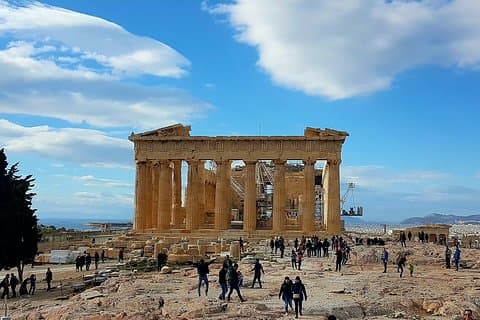
The tour includes a walk that travels the visitors through ancient times in one of the oldest cities in the world, which was considered as the cradle of the western civilization, birthplace of the philosophy, the theatre and the democracy. By passing the monumental gate of Propylaea you’ll see the Temple of Athena Nike, the Erechteion and the Parthenon. You will enjoy the panoramic view of Athens and Piraeus port. At the foot of the Acropolis hill you’ll see the ancient theater of Dionysos (the oldest theatre of the world), the Odeon of Herodus Atticus and the Areopagus (Mars Hill).
th century BC) after the Acropolis had become a sanctuary dedicated to Athena. A new propylon, built-in 510-480 BC, was destroyed by the Persians in 480 BC and repaired after the end of the Persian Wars, during the fortification of the Acropolis by Themistokles and Kimon. The monumental Propylaia admired by modern visitors was part of the great Periklean building program. They were erected in 437-432 BC, after the completion of the Parthenon, by architect Mnesikles.
Built around 420 BC, the temple is the earliest fully Ionic temple on the Acropolis.
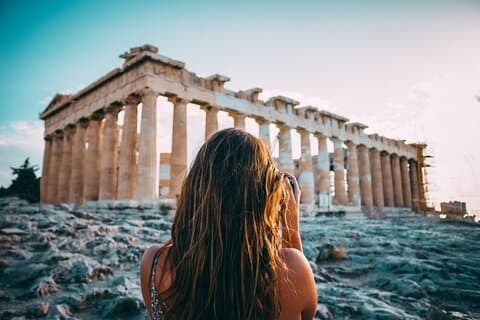
(Vergin), the patron of their city, is the most magnificent creation of Athenian democracy at the height of its power. It is also the finest monument on the Acropolis in terms of both conception and execution. Built between 447 and 438 BC.
It was designed by the architect Mnesikles and was a complex building constructed in the last twenty years of the 5th century BC. It replaced the ancient Temple of Athena Polias, part of which had been destroyed by the Persians sixty years earlier. The new temple was divided into two chambers: an eastern room dedicated to Athena, which held the goddess’ wooden cult statue; and a lower western room that accommodated shrines of Poseidon-Erechtheus, Hephaistos, and Boutes, the brother of Erechtheus.
It was here that the most important works of the great playwrights, Aeschylus, Sophocles, Euripides, and Aristophanes, were presented.
It is a stone Roman theatre structure located on the southwest slope of the Acropolis of Athens.
pian Zeus, is a former colossal temple at the centre of the Greek capital, Athens. It was dedicated to "Olympian" Zeus, a name originating from his position as head of the Olympian gods. Construction began in the 6th century BC during the rule of the Athenian tyrants.but it was not completed until the reign of Roman Emperor Hadrian in the 2nd century AD.
at the presidential mansion which occurs every day, every one hour.
Thousands of Athenians and tourists climb up to the top every year to enjoy the view from a height of 277 meters.
The stadium doesn't look like an ordinary archaeological site. There are no ruins. This stadium was not rebuilt during modern times. However, in 1896, during the first modern Olympic Games, there were works for the renovation of its marble covering. The work was financed by Georgios Averof. The present-day shape of the stadium is the same as the ancient stadium of the 4th century BC, was.
1926, as an Academy of Sciences, Humanities and Fine Arts. This building is a copy of the Propylaea of the Acropolis.
eek, Óthon) and was named in his honour Othonian University. It was the first university in the liberated Greek state and in the surrounding area of Southeast Europe as well.
Founded by Ioannis Kapodistrias in 1832, its mission is to locate collect, organize, describe and preserve the perpetual evidence of Greek culture and its uptake over time, as well as important representative evidence of human intellectual production.
Monastiraki Flea Market, a shopper’s paradise located right in the heart of Athens, at the legendary Monastiraki Square.
dministrative, and social activity, the religious and cultural center, and the seat of justice.
he Acropolis, around the northeastern slopes of the Sacred Rock, between Syntagma and Monastiraki metro stations. Its village-like atmosphere, neoclassical buildings, quaint cafes, souvenir shops, and museums make it a favorite among visitors and Athenians who stroll along its narrow streets. Plaka is visited by hundreds of thousands of tourists around the year.
the main monument and museum at the Ancient Agora of Athens after the Temple of Hephaestus.
It was dedicated to Hephaestus, the Olympian god of fire.
For a full refund, cancel at least 24 hours before the scheduled departure time.
Bla gjennom Athens etter tema - billetter uten køkøing, wandelturer, dagsturer, matopplevelser og mer