LondonWalking toursUnited KingdomBeatlesJack the Ripper
Best Walking Tours in London: Beatles, Ripper, Royals and More
The best walking tours in London by theme: classic highlights, royal Westminster, Beatles and Abbey Road, Jack the Ripper, Harry Potter, and food walks.
Par SimilarTours Editorial - Travel Research · · Temps de lecture : 24 min

London is the best walking city of Europe's capitals, and the numbers back it up: walking tours in London are consistently among the highest-rated experiences in the whole catalog, regularly outscoring attractions that cost five times as much. The reason is simple. London's story does not live inside ticket gates; it lives in the streets, from the medieval lanes of the City to the Abbey Road crossing, and a good guide is the difference between walking past it and walking through it.
This guide collects the best walking tours in London by theme: classic highlights walks, the royal Westminster circuit, the Beatles and Abbey Road, Jack the Ripper and the ghost walks, Harry Potter film locations, and the food and pub walks that turn eating into sightseeing. Every tour referenced is currently bookable through our partner OTAs and ranked on real ratings and review counts, verified July 2026.
Browse all London tours and experiences →How to choose a London walking tour
Pick by theme, not by rating alone. Almost every walk in this guide scores above 4.5, so the real question is what you want London to be for two hours: royal ceremony, rock history, Victorian crime, wizardry, or lunch. First-timers usually do best starting with one classic highlights walk to get oriented, then adding one themed walk that matches their interests.
Mind the time of day. Highlights and royal walks are daytime affairs, and the Changing of the Guard walks are pegged to the ceremony schedule. Ripper and ghost walks run after dark by design, which makes them an easy add-on to a day already full of sightseeing. Food walks work best when you arrive hungry, so plan meals around them rather than on top of them.
Group size matters more than price. The gap between a $23 walk and a $48 walk is usually group size and guide style rather than route. Small groups hear more and stop less; big groups are cheaper and livelier. Private options exist for every theme in this guide if you want the route to yourself.
Classic London highlights walks
If you only take one guided walk, make it a highlights walk. These routes stitch the postcard sights into one narrative line: Westminster and Big Ben, Trafalgar Square, Covent Garden, and on into the City, where the modern towers hem in medieval alleys around St Paul's. The best of them cover an enormous amount of ground without ever feeling like a route march, and they double as an orientation day, because after two hours you understand how the pieces of central London fit together. The stretch along the river takes in the bridges too; the walk between Tower Bridge and London Bridge, the one everyone mixes up, is where a guide's storytelling earns its keep.
Top classic London walking tours

London Sightseeing Walking Tour with 30+ sights
The heavyweight orientation walk - more than 30 sights in one guided five-hour sweep, with a near-perfect rating across hundreds of reviews.
5.0(799)5 hoursViewFrom$26
Changing of the Guard Guided Walking Tour in London
The most-reviewed walk in this cluster - a guided route around the Changing of the Guard ceremony that solves the where-to-stand problem for you.
4.9(1,866)2 hoursViewFrom$27
Medieval History Walking Tour from The Tower of London
The highest-rated pick of the classic walks - two hours through the oldest corner of the City starting from the Tower, strong on storytelling.
5.0(269)2 hoursViewFrom$24
Hidden London Walking Tour
A 90-minute walk built around the alleys, courtyards, and stories the main routes skip - the pick for a second visit or for travelers who hate crowds.
4.8(401)90 minutesViewFrom$27
London: Landmarks Walking Tour
A compact two-hour landmarks loop at one of the friendliest prices in the category - the efficient choice for a first afternoon.
4.8(260)2 hoursViewFrom$22
Private Guided London Highlights Walking Tour
5.0(10)6 hoursViewFrom$709
South Bank (London Bridge) Walking Tour & Enter The Tower of London
5.0(8)3 hoursViewFrom$134
Private Tour London Highlights, entries Westminster Abbey, The Tower of London
5.0(100)8 hoursViewFrom$644
London Highlights Family-Friendly Walking Tour with Top Guide
5.0(14)3 hoursViewFrom$264
Walk London: Big Ben to Tower Bridge (Private or Group City Hike)
5.0(27)4 hoursViewFrom$70
Royal Westminster walks
The royal core is the most concentrated walking territory in London: Westminster Abbey, Big Ben, the Houses of Parliament, Whitehall, Horse Guards, St James's Park, and Buckingham Palace all sit within one connected stroll. You can wander it alone, but this is the area where a guide adds the most, because nearly everything you pass is ceremonial and nothing explains itself. Guided Westminster walks usually pair the route with skip-the-line Abbey entry or time the loop around the Changing of the Guard, and the ceremony is genuinely better with someone who knows where to stand and when to move. If timed Abbey entry matters to your plan, book this one first; the good morning slots go early in peak season.
Compare London guided walking tours →Beatles walking tours in London
The Beatles walking tour London scene is small, devoted, and better than it has any right to be given that the band's most famous London landmark is a pedestrian crossing. The classic route runs through Marylebone and St John's Wood, tracing the band's London years past homes, studios, and the streets that ended up on record sleeves, and finishes at the Abbey Road zebra crossing for the photo. Guides on these walks tend to be genuine obsessives, which is exactly what you want; the difference between looking at a crossing and hearing what happened around it is the whole tour. If your Beatles map extends beyond walking range, a private taxi tour covers the spread-out sites in one run.
Top Beatles walking tours in London

Beatles London Walking Tour of Marylebone and Abbey Road
The most-reviewed Beatles walk in the catalog - Marylebone and St John's Wood with the Abbey Road crossing as the finale, at the friendliest price in the theme.
4.5(158)2.5 hoursViewFrom$23
London Beatles Walks and Tours
The highest-rated of the group Beatles walks - a two-and-a-half-hour route through the band's London led by specialist guides.
4.7(67)2.5 hoursViewFrom$27
The Beatles London Walk
A long-running Beatles walk covering the band's studios, homes, and haunts - a solid alternative when the other departures are full.
4.5(137)2.5 hoursViewFrom$48
London Private Beatles Taxi Tour
The private option - a taxi tour that reaches the Beatles sites too spread out for any walking route, with a strong rating across dozens of reviews.
4.8(65)3 hoursViewFrom$181
Beatles Walking Tour of London
5.0(15)3 hoursViewFrom$266
The Beatles Magical Mystery Walking Tour
5.0(18)2 hoursViewFrom$67
Iconic Beatles London Taxi Tour
5.0(28)4 hoursViewFrom$708
Beatles London Walking Tour of Soho and 3 Savile Row
5.0(16)2 hoursViewFrom$36
Private Beatles and London Rock Tour in Electric Taxi
5.0(25)3 hr 30 minViewFrom$545
Woolton Liverpool Musical Walking Tour, Beatles and History
5.0(4)2 hr 15 minViewFrom$31
Insider tip
Abbey Road etiquette. The famous crossing is a live, working zebra crossing on a real road, not a film set. Traffic has right of way between photo attempts, so listen to your guide, take the shot quickly, and clear the crossing. Early morning walks get the crossing at its quietest, which is worth knowing if the photo is the point of the day.
Jack the Ripper and ghost walks
London after dark is its own tour category, and it is enormous. The Jack the Ripper walks through Whitechapel are the most famous night walks in the world, retracing the Victorian East End with guides who range from theatrical to forensic; the best of the current crop include one that projects period images onto the modern streets and one that retells the story around the five women rather than the killer. The broader ghost walks cover haunted pubs, plague pits, and the darker corners of Westminster and the City. None of it requires belief; it requires a good storyteller and a dark street, and London supplies both in quantity.
Top Jack the Ripper and ghost walks in London

The World Famous Underground Ghost Tour
The most-reviewed night walk in the catalog by a wide margin - 75 minutes of London's underground ghost stories with more than ten thousand reviews behind it.
4.7(10,114)75 minutesViewFrom$26
London Jack the Ripper Guided Tour with Ripper-Vision
The signature Ripper walk - handheld projections put period images onto the Whitechapel streets as you pass, backed by nearly five thousand reviews.
4.6(4,987)1.8 hoursViewFrom$24
Ultimate Jack the Ripper : Guided Tour of London
The highest-rated of the big Ripper walks - a two-hour evening route through the East End with a strong storytelling reputation.
4.8(1,631)2 hoursViewFrom$27
Ghastly Ghost Walking Tour in London
The top-rated pure ghost walk - two hours of hauntings and dark history for travelers who want the atmosphere without the true-crime focus.
4.9(927)2 hoursViewFrom$34
London Jack The Ripper Private Walking Tour
5.0(9)2 hr 30 minViewFrom$245
Jack the Ripper Private Day Time Walking Tour
5.0(16)3 hoursViewFrom$239
Private Jack the Ripper Walking Tour of Whitechapel and Brick Lane
5.0(10)2 hr 30 minViewFrom$205
Jack the Ripper London Private Taxi Tour
5.0(10)4 hoursViewFrom$543
The Ultimate Jack the Ripper Tour (Private Group Booking)
5.0(225)2 hoursViewFrom$348
Harry Potter walking tours
London doubles as the wizarding world's home city, and the Harry Potter walking tour London routes visit the real exterior locations and inspirations: the Platform 9 3/4 photo opportunity at King's Cross, Leadenhall Market's painted arcades, the Millennium Bridge, and the streets that shaped Diagon Alley. These walks are the rare theme that genuinely works for mixed groups, because the guides pitch the trivia at the fans while the route happens to be a first-rate tour of the City and the river anyway. They do not overlap with the Warner Bros. Studio Tour outside London, which holds the actual sets and costumes; think of the walk as the city half and the studio as the movie half.
Top Harry Potter walking tours in London

Tour for Muggles The Ultimate Harry Potter Walking Tour in London
The most-reviewed Potter walk in London and one of the best-rated walks in the whole city - two hours of film locations and book inspirations.
4.9(4,802)2 hoursViewFrom$23
Original Harry Potter Locations Tour - Guided Tour of London
The long-running original locations walk - thousands of reviews and a route that doubles as a tour of the City's most photogenic corners.
4.9(4,194)2 hoursViewFrom$24
London The Best of Harry Potter Guided Tour (Free for Kids)
The family pick - kids join free on this three-hour version, which makes it the obvious choice for traveling parties with young fans.
4.8(872)3 hoursViewFrom$12
Magical Movies of London Harry Potter Tour
5.0(27)2 hoursViewFrom$22
Magical Harry Potter Walking Tour (Private Group)
5.0(17)2 hoursViewFrom$341
Harry Potter Filming Locations: Private Black Cab Tour in London
5.0(22)4 hoursViewFrom$544
Harry Potter's Edinburgh Tour and House of Illusions Experience
5.0(15)3 hr 30 minViewFrom$79
Harry Potter + Self Guided Christ Church- PRIVATE 9.30am
5.0(5)3 hoursViewFrom$170
Oxford On Screen Walking Tour
4.9(9)2 hoursViewFrom$49
Street art walks in the East End
The East End is London's open-air gallery, and it changes weekly. Shoreditch, Brick Lane, and the streets between them carry one of the densest concentrations of street art in Europe, from commissioned murals the size of buildings down to paste-ups and stencils you would walk past without a guide. That churn is exactly why this theme rewards a guided walk more than most: the guides know what went up this month, what got painted over, and which shutter only shows its artwork when the shop closes. The same streets carry the East End's other stories, from the market lanes to the gangster history, so the walks double as an introduction to the neighborhood that London's food and creative scenes now orbit. Several operators add a spray-paint workshop at the end, which is a better souvenir than anything on a shelf.
Top London street art and East End walks

Shoreditch Street Art Tour London
The most-reviewed street art walk in the catalog - three hours through Shoreditch's murals and back lanes with a near-perfect rating.
5.0(513)3 hoursViewFrom$29
The Original London Street Art Tour
The long-running original - a two-hour East End route led by guides embedded in the scene, strongly rated across hundreds of reviews.
4.9(326)2 hoursViewFrom$27
Street Art Tour and Spray Painting Workshop in London
The hands-on version - the street art walk plus a spray-painting workshop at the end, the pick for travelers who want to make something.
5.0(102)3 hoursViewFrom$52
Gangster Tour of London's East End Led by Actor Vas Blackwood
The East End's other history - a two-hour gangster-era walk led by a working actor, for the stories the murals grew up around.
4.9(425)2 hoursViewFrom$41
London Street Art Tour of the East End Semi-Private 12ppl Max
5.0(24)2 hr 30 minViewFrom$61
London East End Instagrammable Street Art and Graffiti Tour
5.0(16)2 hoursViewFrom$300
Urban Canvas: Exploring Shoreditch's Vibrant Street Art
5.0(40)2 hr 40 minViewFrom$27
Alternative Street Art Walking Tour of Budapest with Drink
4.7(56)1 hr 40 minViewFrom$35
Private Guided Tour of London's East End
5.0(8)2 hoursViewFrom$164
Guided Tour of Street Art in Birmingham
5.0(2)1 hr 30 min - 2 hoursViewFrom$109
Wartime London walks
London wears its wartime history quietly, and the Blitz-era walks are the theme where a guide changes the city most. The streets around Westminster and the City look whole until someone shows you where they were not: the scarred walls, the churches rebuilt around surviving towers, the stations that doubled as shelters. The strongest walks in this theme pair the street route with entry to the Churchill War Rooms, the underground complex preserved beneath Westminster, which turns a two-hour walk into a half-day of the twentieth century. These sell out further ahead than the general walks because the War Rooms entry is capacity-limited, so book this theme first if it is the one you care about.
Top WW2 and Churchill walking tours in London

London in WW2 Walking Tour with Churchill War Rooms Visit
The highest-rated of the big wartime walks - a three-hour Blitz-era route with the Churchill War Rooms visit built in.
4.9(837)3 hoursViewFrom$98
WW2 London Walking Tour & Churchill War Rooms Entrance Ticket
The most-reviewed pairing of the wartime walk and War Rooms entry - the high-volume standard for this theme.
4.5(982)2.5 hoursViewFrom$91
Wartime London Walking Tour & Churchill War rooms Entry 12ppl Max
The small-group version capped at twelve - a near-perfect rating for travelers who want the wartime story told at conversation volume.
5.0(205)2.5 hoursViewFrom$139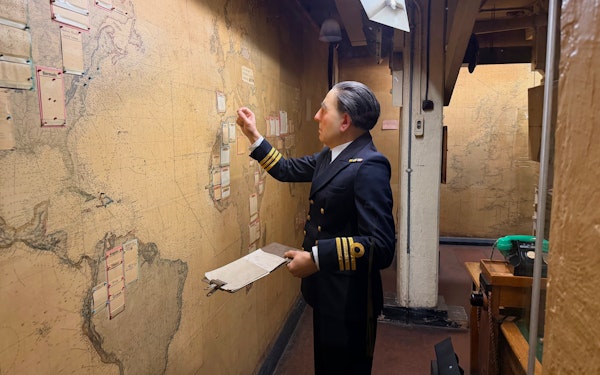
Churchill's Wartime London Walking Tour with Optional Churchill War Rooms Entry
The budget entry to the theme - a 90-minute Churchill-focused walk with the War Rooms as an optional add-on.
4.3(155)90 minutesViewFrom$34
Churchill War Rooms and Wartime London Exclusive Guided Tour
5.0(88)2 hr 30 minViewFrom$194
Churchill Museum and War Rooms Guided Tour
5.0(31)2 hr 30 minViewFrom$191
Winston Churchill's London - A Very Small Group Walking Tour
5.0(8)2 hours - 3 hoursViewFrom$94
Darkest Hour - Parliament and Churchill War Rooms Private Tour
5.0(29)4 hr 15 minViewFrom$409
Discover the Secrets of Whitehall
5.0(11)2 hoursViewFrom$55
Imperial War Museum and Churchill War Rooms
5.0(11)3 hoursViewFrom$198
The South Bank, the City and London Bridge
Two more stretches deserve a place in any walking plan, guided or not.
The South Bank is London's easiest great walk: a car-free riverside path from Westminster Bridge to Tower Bridge, with the skyline of the north bank as a continuous backdrop. It passes the London Eye, the theatres and food stalls of the cultural stretch, and ends near the Tower, which makes it the natural connector between the two halves of the city that most itineraries split apart. Walk it in the late afternoon so you finish in the illuminations; it is the best free evening in London, and several of the guided highlights walks above use pieces of it for exactly that reason.
The City and London Bridge reward a slower, more deliberate walk. The old square mile packs medieval alleys, livery halls, church spires, and the dome of St Paul's between the glass towers, and the area around London Bridge, the real one, plainer than the famous Tower Bridge beside it, holds Borough Market and some of the oldest riverside lanes in the capital. This is the terrain the classic highlights and medieval walks above cover best with a guide, because almost nothing here explains itself. If you go alone, a London Bridge walking tour route worth copying runs from the Monument across the bridge to Borough Market, along the riverside past the recreated Globe theatre, and back over the Millennium Bridge to St Paul's.
Food and pub walks
The most underrated walking tours in London are the ones built around eating and drinking. Borough Market and the streets around London Bridge anchor the classic food walk, a graze through one of the world's great food markets with a guide who knows which stalls earn their queues. The East End walks lean into the neighborhoods that made London's food scene what it is, from bagel shops to curry houses. And the historic pub walks are quietly one of the highest-rated experience types in the city, threading centuries-old pubs together with the stories that happened inside them. Come hungry, wear comfortable shoes, and treat the walk as the meal; the tastings add up fast.
Browse London food and drink experiences →Guided or self guided: which walking tour of London
A self guided walking tour of London is genuinely worth doing, and it costs nothing. Central London splits into three natural self guided routes, each about half a day at a wandering pace, and together they cover most of what the guided highlights walks cover.
Route one, the royal river route. Start at Westminster with Big Ben and the Abbey exteriors, walk up Whitehall past Horse Guards to Trafalgar Square, cut through Covent Garden's market halls and street performers, then follow the Strand and Fleet Street to St Paul's, and finish across the Millennium Bridge on the South Bank with the river views back the way you came. This is the postcard route, and the one to do first.
Route two, the City loop. Start at the Tower of London, cross Tower Bridge for the view back at the fortress, return along the south riverside to London Bridge and Borough Market, then recross and thread the City's medieval alleys, Leadenhall Market's painted arcades, the lanes around the old churches, up to St Paul's. Best on a weekday, when the square mile is alive; it empties eerily on weekends, which has its own appeal.
Route three, the parks and palaces line. Start at Buckingham Palace, walk the length of St James's Park to Horse Guards, cut up through Green Park toward Piccadilly, and finish in Mayfair or Soho depending on whether you want quiet or noise. The gentlest of the three, mostly on grass and gravel, and the one to save for the day your feet complain.
Download an offline London walking tour map before you set out, because the medieval street pattern in the City swallows your sense of direction, and phone signal dips in the narrow lanes. Comfortable shoes and a loose schedule do the rest.
The honest trade-off is context. Self guided you see everything and learn what the plaques tell you; guided you hear the layer underneath, which in London is usually the better half of the story. The pattern that works for most travelers is one or two guided themed walks from this guide plus self guided wandering in between, letting the guided walks teach you how to read the city and the free hours put it to use.
Compare all London walking tours side by side →Practical tips for walking tours in London
Book the themed walks a few days ahead in peak season. The small-group departures cap out, and the best-rated walks with the smallest groups sell out first.
Check the meeting point twice. London walking tours start from Tube stations, statues, and pub doorways scattered across the city, not from a central office, and arriving at the wrong exit of a big station can cost you the departure.
Wear real walking shoes. Even a 90-minute walk covers a surprising distance on hard pavement, and the cobbled stretches in the City and the East End punish thin soles.
Layer for the evening walks. Ripper and ghost tours start after dark year round, and the temperature drop after sunset catches people out even in summer.
Do not schedule dinner after a food walk. The tastings are a full meal by stealth, and the pub walks are exactly as filling as they sound.
Rain does not cancel walks. Bring a compact umbrella and keep the plan; London in the wet, with a good guide, is still London.
Quick recap: the best walking tours in London
Classic highlights: the 30+ sights sightseeing walk for orientation, or the medieval City walk from the Tower for depth. Royal Westminster: a guided Abbey and Changing of the Guard loop, booked early for the good slots. Beatles: the Marylebone and Abbey Road walk, finishing on the crossing. After dark: Ripper-Vision or the five women's version in Whitechapel, or a pure ghost walk. Harry Potter: Tour for Muggles or the original locations walk. Street art: a guided Shoreditch walk, because the gallery repaints itself weekly. Wartime: a Blitz-era walk with Churchill War Rooms entry, booked ahead of everything else. Food: Borough Market by day, a historic pub walk by evening.
Mix one orientation walk with one themed walk that matches your interests, keep the evenings for the dark stuff, and London will do what it does best: turn a list of famous names into streets you have actually walked.
Plan your trip
See all London tours and experiences →Are walking tours in London worth it?
For most visitors, yes, and often more than the big-ticket attractions. London is a city of layers, and a good guide connects streets you would otherwise walk past into a story: the medieval lanes of the City, the royal ceremonial route through Westminster, the East End of the Ripper era. Walking tours are also among the cheapest experiences in London, with most themed walks in the $20 to $50 band, so the value per hour is hard to beat.
Is there a Beatles walking tour in London?
Yes, several. The classic Beatles walking tour in London covers Marylebone and St John's Wood, taking in locations tied to the band's London years and finishing at the Abbey Road crossing for the photo everyone comes for. Options range from small-group walks in the $23 to $48 range to private taxi tours that cover more ground, including sites too spread out to reach on foot.
Can you do a self guided walking tour of London?
Absolutely, and central London is well suited to it. The classic self guided route runs from Westminster along the river to the Tower: Big Ben, Whitehall, Trafalgar Square, Covent Garden, St Paul's, and across the bridges to the South Bank. A paper or offline map helps because the medieval street pattern is disorienting. The trade-off is context: without a guide you see the buildings but miss most of the stories, which is why many travelers mix one guided walk with self guided wandering.
How long do London walking tours last?
Most themed walks run 90 minutes to 2.5 hours, which is enough to cover a neighborhood at a comfortable pace. Full highlights walks that string together 30 or more sights can run up to 5 hours with breaks. Food and pub walks usually sit in the 3-hour range because the stops are the point. Whatever the length, distances are moderate; guides pace the route so it never becomes a march.
What is the best Jack the Ripper tour in London?
The most-reviewed option is the Ripper-Vision walk through Whitechapel, which uses projections at the murder sites and has thousands of reviews. The highest-rated alternatives take a more historical, storytelling approach, and one popular tour reframes the story around the five women rather than the killer. All of them cover the same compact East End area after dark, so the choice comes down to the style of guiding you prefer.
Do Harry Potter walking tours visit real film locations?
The London walks visit real exterior filming locations and the real-world places that inspired the books, including the Platform 9 3/4 photo spot at King's Cross, Leadenhall Market, and the Millennium Bridge. The actual sets, props, and costumes live at the Warner Bros. Studio Tour outside the city, which is a separate half-day trip. The walking tours and the studio visit complement each other rather than overlap.
What should I wear on a London walking tour?
Comfortable broken-in shoes above all, because even a 2-hour walk covers a few miles on hard pavement. London weather changes fast in any season, so bring a light rain layer; tours run in the rain and the guides do not melt. In winter add warm layers for evening walks like the ghost and Ripper tours, which start after dark when the temperature drops.
Do London walking tours run in the rain?
Yes, almost all of them. Rain is part of London and the walks are planned around it, with guides weaving in covered stretches like markets, arcades, and church porches where they can. A compact umbrella and a waterproof layer are all you need. If weather is genuinely severe, operators typically offer a reschedule or refund, and most tours in this guide offer free cancellation.
How much do walking tours in London cost?
The core themed walks are the best value in the city, mostly in the $12 to $50 band for 90 minutes to three hours with a professional guide. Food and pub walks run higher, roughly $40 to $125, because the tastings are included, and the wartime walks that bundle Churchill War Rooms entry sit around $91 to $139 with the ticket built in. Private versions of any theme cost several times the group price and buy you the route and the guide to yourselves.
Are London walking tours good for kids?
The right themes are excellent with kids. The Harry Potter walks are the obvious win, and one popular version lets kids join free; the Changing of the Guard walks give children a spectacle to anchor the route; and street art walks work well with visually minded teenagers. The Ripper and ghost walks are told as dark stories after nightfall, so judge them by your own child. Whatever the theme, two hours is the realistic ceiling for younger kids, so favor the shorter departures.
Keep reading
Plus à lire
Plus de guides pour vous aider à planifier votre voyage

1 jour à Londres : un itinéraire réaliste qui ne gaspille pas la journée
Un jour à Londres, planifié autour de ce qui rentre réellement - un parcours à pied dans le centre, les deux choses à réserver, et les pièges qui mangent une heure chacun.

The Best Museums in London: Which of Them Deserve Your Day
London has more world-class museums than any trip can absorb, and most of them are free. A guide to which ones suit which visitor, and how many you can realistically do.

Londres en été : que réserver, ce qu'il faut éviter et quoi porter en 2026
Un guide pratique pour l'été à Londres - comment la saison se déroule réellement, quelles expériences valent la peine d'être réservées à l'avance, et quoi emporter quand la météo change d'heure en heure.

Billets Palais de Buckingham 2026 : types, visites et comment éviter la queue
Guide 2026 des billets du Palais de Buckingham - accès chronométré aux Salons d'État, coupe-file, visites de la Relève de la Garde et comparaison des forfaits royaux.

Billets pour l'Abbaye de Westminster en 2026 : Types, visites guidées et comment éviter la queue
Guide 2026 des billets pour l'Abbaye de Westminster - accès à horaire fixe avec audioguide, coupe-file, visites avec verger et forfaits combinés à Londres comparés.

5 Days in London: The Full Itinerary, Day by Day
A 5-day London itinerary: the Tower and Westminster, Greenwich by riverboat, a Stonehenge or Windsor day trip, plus markets and real neighborhood time.

London in Winter: What It's Really Like and How to Enjoy It
An honest guide to London in winter: how cold it gets, the festive season, the quieter big attractions, theatre and afternoon tea, and how to plan the days.

London with Kids: The Family Guide That Actually Works
A practical guide to London with kids: the family attractions worth booking, where to stay, the parks that save the afternoon, and a real rainy-day plan.