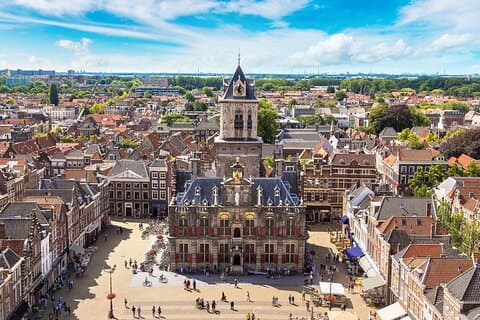
Sightseeing tour with a professional guide and driver on the highlights of Amsterdam. You will see Central Railway Station, St. Nicholas Basilica, Dam Square, Oude Kerk, Nieuwe Kerk, Royal Palace, Canals and bridges of the city, Canal houses, Anne Frank House, Rijksmuseum, Red Light District, etc. The tour ends with a return transfer to your cruise ship.
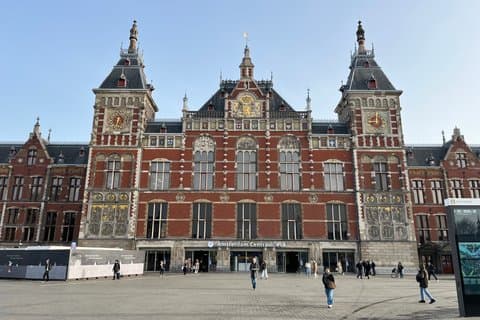
It was designed by Dutch architect Pierre Cuypers, who is also known for his design of the Rijksmuseum, and first opened in 1889. It features a Gothic/Renaissance Revival style building and a cast iron platform roof spanning approximately 40 meters. It's the main transportation hub of the city, linking the railway, the metro of Amsterdam and the city buses.
It is the city's major Catholic church. The basilica has a collection of religious murals. Above the high altar is the crown of Maximilian I, which is a symbol seen throughout Amsterdam. Inside the newly renovated church, there is a 19th-century Sauer Organ, on which concerts are given and mass is accompanied.
Its notable buildings and frequent events make it one of the most well-known and important locations in the city and the country. On the west end of the square is the Royal Palace, formerly a city hall. Beside it are the 15th-century Gothic Nieuwe Kerk (New Church) and the Madame Tussaud's Wax Museum. The National Monument, a white stone pillar erected in 1956 to memorialize the victims of World War II, can be found on the opposite side of the square. Also overlooking the plaza is the upscale department store De Bijenkorf.
1213. After the Reformation in 1578 it became a Calvinist church, which it remains today. It stands in De Wallen, now Amsterdam's main red-light district. The floor consists entirely of gravestones. The reason for this is that the church was built on a cemetery.
It is a 15th-century church, located on Dam Square, next to the Royal Palace. It was built after the Old Church became too small for the growing city population, that explains the name. The Nieuwe Kerk is no longer used for church services but is used as an exhibition space. It is also used for organ recitals. The Nieuwe Kerk is a burial site for Dutch naval heroes, including Admiral Michiel de Ruyter, Commodore Jan van Galen, and Jan van Speyk. The poet and playwright Joost van den Vondel is also buried in the church.
re at the disposal of the monarch by Act of Parliament. It was built as a city hall during the Dutch Golden Age in the 17th century. The building became the royal palace of King Louis Napoleon and later of the Dutch Royal House. The palace is located on the west side of Dam Square in the centre of Amsterdam, opposite the War Memorial and next to the Nieuwe Kerk.
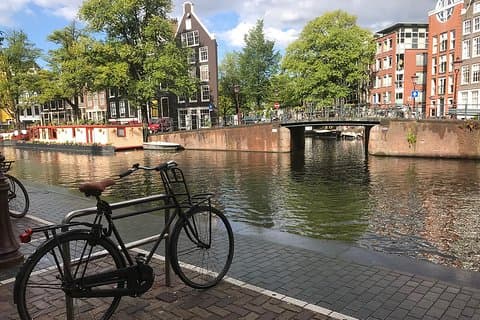
l houses, nice restaurants and original shops. When in Amsterdam, it is a must to stroll through the little streets and canals.
During World War II, Anne Frank hid from Nazi persecution with her family and four other people in hidden rooms at the rear of the 17th-century canal house, known as the Secret Annex.The museum opened on 3 May 1960. It preserves the hiding place, has a permanent exhibition on the life and times of Anne Frank, and has an exhibition space about all forms of persecution and discrimination.
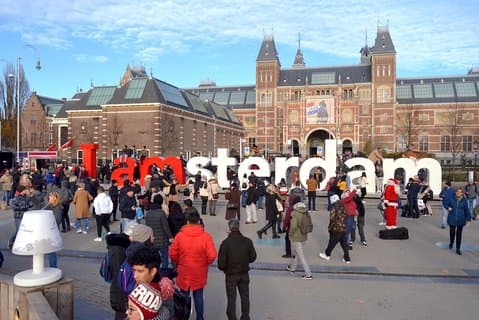
The museum is located at the Museum Square in the borough Amsterdam South, close to the Van Gogh Museum, the Stedelijk Museum Amsterdam, and the Concertgebouw. The museum has on display 8,000 objects of art and history, from their total collection of 1 million objects from the years 1200–2000, among which are some masterpieces by Rembrandt, Frans Hals, and Johannes Vermeer. The museum also has a small Asian collection, which is on display in the Asian pavilion.
The three main canals, Herengracht, Prinsengracht, and Keizersgracht, dug in the 17th century during the Dutch Golden Age, form concentric belts around the city, known as the Grachtengordel. The most exciting feature of the canals are the houseboats. By origin houseboats were a way to deal with the Amsterdam housing shortage, however, nowadays they are still in high demand.
It consists of a network of alleys containing approximately three hundred one-room cabins rented by prostitutes who offer their sexual services from behind a window or glass door, typically illuminated with red lights. These "kamers" are the most visible and typical kind of red light district sex work in Amsterdam and are a large tourist attraction.
Meet your guide and driver outside the main port gate.
All sales are final. No refund is available for cancellations.
Explora Amsterdam por categoría - entradas sin cola, tours a pie, excursiones de un día, experiencias gastronómicas y más