ViennaCity pillarPlanningFirst-timer
The Ultimate Vienna Travel Guide for First-Time Visitors (2026)
A field-tested 2026 Vienna travel guide - where to stay by district, how the transport works, when to go, and the first-timer mistakes worth avoiding.
By SimilarTours Editorial · Travel Research · · 18 min read

Vienna is an easy city to enjoy and a surprisingly easy one to get wrong. The sights are grand, close together and well organised, which tempts first-time visitors into a forced march through palace after palace until everyone is exhausted by day two. The version of Vienna that people fall for is slower than that: a morning in one great interior, an afternoon in a coffee house, a concert in the evening, and a long walk somewhere green in between.
This guide covers the practical layer - where to base yourself, how the transport works, when to come, what to book ahead, and the mistakes that come up again and again.
If you have ten minutes, skip to the district section. Choosing where to sleep shapes a Vienna trip more than any other single decision.
Browse all Vienna experiences and tickets →Why visit Vienna
Vienna is a capital built at the scale of an empire and now lived in at the scale of a comfortable mid-sized city, and that mismatch is what makes it pleasant. The great avenues, the museums, the concert halls and the palaces all come from the grand era; the coffee houses, the markets, the parks and the tram network are what the city actually runs on day to day.
For visitors that means an unusual combination. You get world-class ticketed sights within a compact centre, the deepest classical music calendar in Europe, and a food culture built around sitting still. You also get a city where the public transport works, the streets are clean and calm, and nothing about the logistics is hard. Vienna is a good first European capital, a good second trip for people who found other capitals overwhelming, and a strong base for days out along the Danube.
When to go
Vienna is a genuine year-round city, and the seasons feel very different from each other.
- May and June - the consensus best window. Warm without being hot, long evenings, gardens and terraces in use, and the palace queues manageable if you book a morning slot.
- July and August - hot, and the busiest stretch at the headline sights. Many locals leave, so parts of the city feel quieter than you would expect, but the palaces and the big museums are at their fullest. Start early and plan indoor afternoons.
- September and early October - the other sweet spot. Softer light, comfortable walking weather, thinning crowds, and the cultural season restarting after the summer break.
- Late October to March - cold, often grey, and dark by late afternoon. This is also when the concert and opera calendar is at its densest and when the Christmas market season fills the squares from late November. A deliberate choice rather than a compromise, if you are here for the indoor half of the city.
The shoulder-season sweet spot
Late May into June and all of September give you the best trade-off in Vienna: warm enough for the gardens and the river, cool enough to walk all day, and short enough queues that a morning palace slot plus an afternoon museum is comfortable rather than a slog.
Getting there and getting around
The main airport lies southeast of the city and is well connected. There is a fast rail link into the centre, an ordinary suburban service that takes a little longer for less money, and a bus network serving several points around town. Taxis and pre-booked transfers are the path of least resistance with luggage or small children. Vienna also has more than one major rail station, so if you arrive by train from elsewhere in Europe, check which one you are pulling into before you book a hotel on the wrong side of the centre.
Once you are in the city, there are three practical ways to move:
- On foot - the default inside the Ringstrasse. The historic core is small, flat and dense, and almost everything in it is a ten to fifteen minute walk from everything else.
- Public transport - an integrated network of underground lines, trams and buses on one ticket. It is frequent, punctual, easy to read, and runs late, with overnight service on the busiest nights. A multi-day pass is better value than singles the moment you make more than a couple of trips a day.
- Bike - Vienna is flat, well signed and generously supplied with separated cycle paths, which makes cycling along the Ringstrasse or the river genuinely relaxing rather than a nerve test.
Trams deserve a specific mention. The line that loops the Ringstrasse passes most of the grand civic buildings, and riding a section of it with an ordinary transport ticket is the cheapest city tour in Vienna.
Validate and check the zone
Vienna's transport runs on trust rather than barriers, with roving inspectors and on-the-spot fines for travelling without a valid ticket. Buy before you board, validate where the machines require it, and make sure any pass you buy covers the zone you are travelling in - the airport in particular sits outside the standard city zone on some tickets.
Where to stay - district guide
Vienna is divided into numbered districts spiralling out from the centre. Four of them matter most for a first visit.
The first district (Innere Stadt) - the historic core inside the Ringstrasse, holding the cathedral, the Hofburg, the opera house and most of the grand shopping streets. You step out of the door into the middle of everything, which is the draw and the cost: it is the most expensive area, the quietest at night in a slightly hollow way, and the least connected to everyday Viennese life. Pick it for a short trip where walking distance beats everything else.
Neubau and Mariahilf (seventh and sixth) - the best all-round base for most first-timers. Just outside the Ring, threaded with independent shops, small restaurants and bars, and served by the underground and trams that put you in the centre in a few minutes. It sits next to the MuseumsQuartier and the Naschmarkt, so two of the city's best browsing grounds are on your doorstep. The strongest balance of atmosphere, access and price.
Leopoldstadt (second) - across the canal from the old town and the value pick. It is a short walk or one stop from the centre, backs onto the big park and the funfair, and has a genuinely mixed, lived-in feel with a good and inexpensive food scene. Best for travellers who want more room for their money and do not mind crossing the water.
Landstrasse (third) - quiet, residential and central enough, with the Belvedere gardens on its edge and quick connections to the airport rail link. It suits people arriving late or leaving early, families who want calm streets, and anyone happy to trade a little atmosphere for space and easy logistics.
Inside the Ring versus one district out
The honest trade-off is that the first district saves you ten minutes of travel per outing and costs a meaningful premium per night. If your trip is two nights, that maths works. If it is four or more, staying one district out and using the trams gives you better food, better prices, and a much clearer sense of what Vienna is like to live in.
Top experiences to book
Vienna splits neatly into things that need a booking and things that do not. The ones that do: Schonbrunn Palace, where timed entry governs the whole morning; concerts and opera performances, where the date and venue you want will go before you get there; guided palace tours; and day trips out along the Danube. The ones that do not: the cathedral square, the Hofburg courtyards, the Ringstrasse, the markets, the parks, and every coffee house in the city.
Our things to do in Vienna guide ranks 24 experiences in full, and the Schonbrunn Palace tickets guide breaks down every ticket family for the city's most-booked interior.
Top experiences in Vienna

Fall in Love with Vienna in 3 hours-Private Tour
4.8(186)3 hoursViewFrom$139
Vienna : Vienna Forest Tour with Underground Lake and Wine Tasting
4.6(34)4 hoursViewFrom$154
Vienna: 60 min. Imperial E-Carriage Sightseeing Tour with Drinks
4.6(17)1 hourViewFrom$413
Vienna Guided Food Tour with 7 Food Tastings & a Secret Dish
4.9(176)3 hr 30 minViewFrom$122
Vienna: 60 min. Royal E-Carriage Sightseeing Tour with Drinks
4.0(4)1 hourViewFrom$307
Best of Vienna 1-Day Tour by Car with Schonbrunn Tickets
4.5(19)3 hours - 8 hoursViewFrom$375
Best of Vienna : Historic Center Walking Tour
4.9(2,042)2 hr 30 minViewFrom$89
The imperial Vienna, private tour from Budapest
3.0(1)10 hours - 12 hoursViewFrom$600
Self-Guided Tours In Vienna With 100 Captivating Audio Stories
5.0(2)1 hour - 6 hoursViewFrom$3
Authentic Experience: When in Vienna, do as the Viennese do!
5.0(21)3 hoursViewFrom$667
Palaces, museums and the classical music calendar
The imperial sights are the backbone of a Vienna itinerary. Schonbrunn on the western edge is the big one, a summer palace with a fixed interior route and gardens that climb to a hilltop pavilion overlooking the whole city. The Hofburg in the centre is not one attraction but a complex holding several separate ticketed collections, so pick one or two rather than attempting all of it. The Belvedere is the manageable middle option, two baroque buildings facing each other across a terraced garden with the city's most famous painting collection upstairs.
Top Vienna palace tickets and tours

Vienna: Skip-the-Line Schönbrunn Palace & Gardens Tour
4.7(1,209)2 hr 30 minViewFrom$55Vienna: Skip the Line Schönbrunn Palace and Gardens Guided Tour
4.6(1,729)2 hoursViewFrom$74
Schönbrunn Palace Guided Tour with Skip the Line Access
4.6(101)2 hoursViewFrom$61
Skip-the-Line Sisi Museum, Hofburg and Gardens Tour Vienna
4.5(510)2 hr 30 minViewFrom$52
Skip-the-line Upper Belvedere Tickets and Guided Tour Vienna
4.8(78)2 hoursViewFrom$81
Skip the Line: Kunsthistorisches Museum Vienna Entrance Ticket
4.3(495)1 hourViewFrom$26
Hofburg Imperial Palace and Sisi Museum Skip the line tour
4.2(82)2 hoursViewFrom$57
Vienna Hofburg Palace Skip-the-Line Ticket Sisi Museum Tour
4.7(40)2 hours - 4 hoursViewFrom$251
Madrid: Royal Palace Guided Tour with Skip the Line Ticket
4.7(3,085)2 hoursViewFrom$40
Vienna Skip-The-Line to Hofburg Palace, Sisi Museum and Gardens
3.4(80)2 hours - 3 hoursViewFrom$31
On the museum side, the two great twin buildings on the Ringstrasse cover art and natural history respectively, and the MuseumsQuartier outside the Ring gathers the modern and contemporary collections into a courtyard complex that doubles as a place to sit and eat.
Music is the category where Vienna has no real competition. The range runs from short visitor-focused Mozart and Strauss programmes in ornate halls, through church concerts with the acoustics doing the work, to full opera evenings in a working house with a dense schedule. Read any listing carefully before booking: the ensemble size, the venue and whether dinner is included vary enormously, and the packages sold on the street around the cathedral are the ones to be most careful with.
Top classical concerts in Vienna

Vienna Classical Concert at House of Music: Mozart & Strauss
4.9(121)1 hourViewFrom$26
Vienna: Classical Concert in St. Anne's Church (Annakirche)
4.7(1,046)1 hr 10 minViewFrom$32
Vienna: Classical Music Concert in the World-Famous Musikverein
4.4(228)2 hoursViewFrom$38
Vienna Classical Concert Mozart and Strauss at Palais Alte Borse
4.4(189)1 hr 30 minViewFrom$52
Vienna Classical Concert at St. Peter’s Church
4.7(2,352)1 hour - 1 hr 10 minViewFrom$46
Classical concert Vivaldi 4 seasons in Karlskirche Vienna
4.7(763)1 hr 10 min - 1 hr 20 minViewFrom$45
Classics of Austria – The Classical Concert in Vienna
4.8(192)1 hour - 2 hoursViewFrom$82
Imperial Gala Concert at Palais Auersperg Vienna
4.7(20)1 hr 30 minViewFrom$58
Vienna Mozart Concert in Historical Costumes at the Musikverein
4.3(924)2 hoursViewFrom$82
Classical Concerts in the Minorite Church - Tickets Vienna
4.8(103)1 hour - 1 hr 15 minViewFrom$22
Food, coffee houses and the local evening
Vienna's food culture rewards knowing three words. A kaffeehaus is the institution everyone comes for: marble tables, newspapers on racks, unhurried service, a glass of water beside your coffee, and no expectation that you will leave. Order a specific coffee by name rather than asking for a plain one, take a cake with it, and sit for an hour. A beisl is the neighbourhood tavern, small and wood-panelled, serving the city's classic dishes without ceremony. A heuriger is a wine tavern out among the vineyards on the city's edge, serving young local wine with cold food at long shared tables, and it is the most local evening available to a visitor.
The Naschmarkt is the main market strip, best in the morning for browsing and standing lunches, with a big flea market on its usual weekend day. Guided food walks are the single most useful food booking here precisely because they cover several of these formats in one evening and explain the differences you would otherwise take a week to work out.
Top Vienna food tours

Authentic Vienna Food Tour inc. lunch, street food, 3 drinks
5.0(850)5 hoursViewFrom$168Vienna Guided Food Tour with 7 Food Tastings & a Secret Dish
4.9(104)3 hr 30 minViewFrom$126
Vienna Food Tour: Coffeehouses, Markets, Lunch & Street Food
5.0(1,219)5 hr 30 minViewFrom$155
Taste Vienna: A Full Meal Walking Food Tour by Do Eat Better
4.8(158)3 hr 30 minViewFrom$93
Best of Food Tour Vienna
4.7(120)2 hr 30 minViewFrom$159
Vienna Food and Wine tasting tour of Hidden Gems for Small Groups
4.8(119)3 hoursViewFrom$141
Vienna Coffeehouse Tour: Pastries, Bites & Local Stories
5.0(494)3 hr 30 minViewFrom$129
Vienna Guided Christmas Market Food and Drink Tour
5.0(10)4 hoursViewFrom$164
Classic Food Tour of Vienna
4.6(53)4 hoursViewFrom$177Vienna : Vienna Forest Tour with Underground Lake and Wine Tasting
4.6(47)4 hoursViewFrom$148
Day trips from Vienna
Vienna is one of the better bases in central Europe for days out. The Wachau Valley upstream on the Danube is the classic - terraced vineyards, small riverside towns and an abbey above the water, usually packaged as a coach-and-boat combination with a wine tasting. Bratislava is the easy second capital, close enough for a half day, compact enough to walk, and reachable by boat as well as road, which makes the journey itself worthwhile. Salzburg is the long one, a genuinely full day with several hours of driving, and worth it only if you have no plan to visit it properly on another trip.
Top day trips from Vienna

Danube Valley and Melk Abbey Guided Day Trip from Vienna
4.1(1,601)8 hours - 11 hoursViewFrom$144
Wachau Valley Small-Group Tour and Wine Tasting from Vienna
4.8(640)8 hr 30 minViewFrom$235
Wachau Valley Wine Tasting Bike Tour from Vienna
4.8(853)11 hoursViewFrom$159
Hallstatt Guided Day Trip from Vienna With Skywalk Option
4.6(1,448)13 hoursViewFrom$82
Cesky Krumlov and Wachau Danube Valley Tour from Vienna
4.5(4)13 hoursViewFrom$159
Guided Hallstatt Day Trip from Vienna (incl. Boat)
4.3(267)13 hoursViewFrom$132
From Vienna to Hallstatt, Salzburg, Alps and Lakes Day Trip
4.3(377)13 hoursViewFrom$148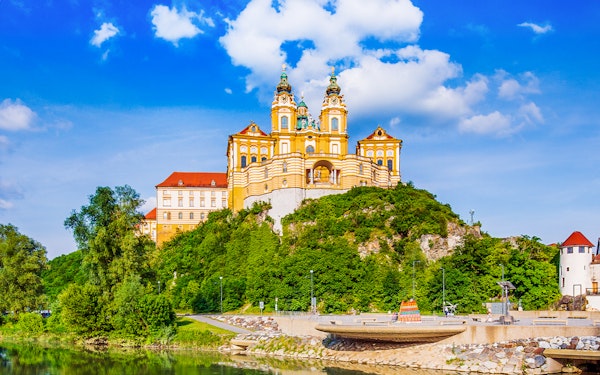
From Vienna: Wachau, Melk Abbey & Danube Valley Day Trip
4.5(577)9 hoursViewFrom$138
Full-Day Private Trip from Vienna to Wachau Valley
5.0(1)7 hoursViewFrom$933
Budapest Semi-Private Day Trip from Vienna
4.9(600)12 hoursViewFrom$200
Money, safety and etiquette
Vienna runs on the euro and is broadly card-friendly, though cash is more widely used than in much of western Europe and a few older coffee houses, taverns and market stalls still prefer it. Tipping is modest and expected: round up the bill or add a small percentage, and hand it to the server rather than leaving it on the table.
On costs, Vienna sits in the middle of the western European range. The line items that add up are palace and museum tickets and sit-down meals inside the first district. The fixes are the usual ones: buy a multi-day transport pass instead of single rides, eat one street back from the tourist squares, use the markets for lunch, and treat the coffee house as a long affordable sit rather than a quick expensive stop.
Safety is not a real concern here by European standards. The visitor areas are calm at all hours and the transport is comfortable to use late. The realistic risks are pickpockets in crowded trams and around the busiest squares, and ordinary late-night caution near a couple of nightlife strips and the larger stations.
A few points of etiquette smooth things. Wait to be seated in a coffee house rather than ordering at the counter. Greet staff when you enter a small shop or restaurant. Keep your voice down on public transport, which is noticeably quieter than in most capitals. And stand on the right of escalators, because Vienna enforces this social rule with more energy than it enforces most laws.
Eat where the menu is short
The reliable test in Vienna is the same as everywhere: a restaurant with a photo menu translated into six languages beside a famous square is the one to walk past. The small beisl a few streets back with a short handwritten menu and a local crowd at seven in the evening is the one to sit down in.
What first-time visitors most regret
A few patterns come up again and again:
- Stacking the big interiors. Schonbrunn plus the Hofburg plus a major museum in a single day sounds efficient and feels punishing by mid-afternoon. One large ticketed sight per day, paired with something low-effort, is the right rhythm.
- Not booking a Schonbrunn slot early. Timed entry means the morning windows go first in summer, and a late-afternoon slot changes the shape of your whole day.
- Buying a concert on the street. The costumed sellers around the cathedral do sell real tickets, but you have no way to check the venue, the ensemble or the seat quality on the spot. Book something that names all three.
- Buying single transport tickets. A multi-day pass pays for itself almost immediately and removes the friction of buying before every ride.
- Treating the coffee house as a pit stop. It is an activity, not a break between activities. Budget an hour for it at least once.
- Skipping the outer districts entirely. The city outside the Ring is where most of the good food and nearly all of the everyday life is.
Traveling with kids
Vienna handles children better than its formal reputation suggests. The big park across the canal has a permanent funfair with a slow-turning wheel that gives a wide view over the city, the natural history museum is a straightforward win on a wet day, and the Schonbrunn grounds include a zoo alongside the gardens, which is why so many families end up spending a full day out there rather than a morning.
Practically, the transport system is stroller-friendly, lifts are common if not universal, and the flat terrain in the centre makes walking easy. Restaurants are relaxed about children at ordinary hours, portions are generous, and there is almost always something plain on the menu. The two things to plan around are the palace interiors, which are long and quiet and best kept short with small children, and the summer heat, which makes an afternoon in a park or by the water a better plan than a third museum.
See all family-friendly Vienna experiences →A first-timer's rhythm for the day
The habit that improves a Vienna trip most is alternating. Book one big ticketed sight in the morning, when the interiors are quietest and your attention is best. Spend the middle of the day somewhere low-effort - a market lunch, a park, a tram loop around the Ringstrasse, an hour in a coffee house with the papers. Then put the evening to work: a concert, an opera, a wine tavern out among the vineyards, or a long dinner in a beisl one district out from the centre.
Do that three days running and you will have covered the palaces, the museums, the music and the food without ever queuing at the busiest hour or walking yourself into the ground. Vienna is not a city that rewards intensity. It rewards a plan with gaps in it.
Compare Vienna tours and tickets in one search →Common questions
What is the best area to stay in Vienna for a first visit?
The first district, the historic core inside the Ringstrasse, puts you within walking distance of nearly every headline sight and is the easy answer for a short first trip, at a price. The Neubau and Mariahilf area just outside the Ring is the best all-round balance, with independent restaurants and shops and a five-minute tram ride into the centre. Leopoldstadt across the canal is the value pick, and Landstrasse suits travellers who want quiet and quick airport access.
How do you get around Vienna?
On foot inside the old town and by public transport everywhere else. The network combines an underground, trams and buses on a single ticket system, it runs frequently and late, and a multi-day pass is almost always better value than single rides if you are moving around at all. Taxis and ride apps work fine but are rarely necessary, and the flat terrain plus separated cycle paths make bikes a genuine option in warm months.
When is the best time to visit Vienna?
May to June and September to early October are the sweet spots, with mild weather, long light and gardens and terraces in full use. July and August are hot and busy in the palace queues, though the city empties out somewhat in high summer. Winter is cold and dark but comes with the Christmas market season and the indoor concert calendar at its fullest, which is why some people prefer it.
How many days do you need in Vienna?
Three full days is the comfortable number for a first visit - one for the old town and the Hofburg, one for Schonbrunn plus a museum or the Belvedere, and one for a concert, the coffee houses and the slower corners. Two days covers the essentials if you cut the day trips. A fourth day lets you add the Wachau Valley or Bratislava without dropping anything.
Do you need to book Vienna attractions in advance?
Schonbrunn Palace runs on timed entry and is the one to book first, especially for morning slots in summer. Concerts, opera performances and guided palace tours are the other categories worth reserving ahead, since the good dates go early. Museums are usually fine to buy on the day outside peak weekends, and the squares, parks, markets and the Ringstrasse itself need no ticket at all.
Is Vienna expensive?
It sits in the middle of the western European range - noticeably cheaper than the big Swiss or Nordic cities, roughly comparable to Munich or Amsterdam. The costs that add up are the palace and museum tickets and sit-down meals in the first district. The savings are straightforward: buy a transport pass rather than singles, eat one street back from the tourist squares, use the markets for lunch, and treat coffee houses as an affordable long sit rather than a quick stop.
How do you get from the airport into Vienna?
The airport sits southeast of the city and connects by several rail options plus a bus network, with the fastest train reaching the centre in well under half an hour and the ordinary suburban service taking a little longer for less money. Taxis and pre-booked transfers are the simplest choice with luggage or a family. Whichever you pick, check which station you arrive at, because Vienna has more than one main rail hub and they sit on different sides of the centre.
Is Vienna safe for tourists?
Vienna is consistently among the safest large cities in Europe, and the visitor areas feel calm at all hours. The realistic risks are ordinary ones: pickpockets in crowded transport and around the busiest squares, and the usual late-night caution around a couple of nightlife areas and larger stations. Emergency services are efficient, English is widely spoken, and the transport system is safe to use late in the evening.
What is coffee house etiquette in Vienna?
Sit down and wait to be served rather than ordering at a counter, expect your coffee to arrive with a glass of water, and do not feel hurried - staying an hour or two over a single order is the entire point of the institution, not an imposition. Order by the specific coffee name rather than asking for a plain coffee, tip modestly by rounding up, and be aware that some of the older houses still prefer cash.
More reads
More guides to help you plan your trip

Schonbrunn Palace Tickets in 2026: Types, Combos and How to Skip the Line
A 2026 guide to Schonbrunn Palace tickets - timed entry, skip-the-line, guided tours, garden and zoo combos and concert packages compared.

Things to Do in Vienna: 24 Experiences Worth Booking in 2026
A 2026 Vienna shortlist - 24 palaces, concerts, museums, coffee houses and Danube day trips grouped by theme, with the experiences actually worth booking ahead.

The Cost of a Guided Walking Tour: What 50 Cities Actually Charge in 2026
We measured the price of every guided walking tour in our cross-platform catalog across 50 cities. The median is $50. The more useful number is how far prices spread inside a single city.

1 Day in London: A Realistic Itinerary That Does Not Waste the Day
One day in London, planned around what actually fits - a walkable route through the centre, the two things worth booking, and the traps that eat an hour each.

1 Day in Paris: The Itinerary That Fits, and the One That Does Not
One day in Paris, planned around real distances - what to book, what to walk, what to skip, and why three museums in a day is the classic mistake.

2 Days in Lisbon: The Itinerary That Handles the Hills
Two days in Lisbon, planned around the terrain rather than the map - what to book, what to walk, and why the second day should leave the city.

2 Days in Tokyo: Two Districts, Done Properly
Two days in Tokyo is enough for two districts and nothing else - and that is the right plan. A day-by-day route, what to book, and what to deliberately skip.

5 Days in Rome: The Itinerary Where the City Finally Opens Up
Five days in Rome is where the checklist ends and the city begins. A day-by-day route with the two day trips worth taking and the mistakes that waste the extra time.