類似體驗
 Viator
 Headout
 Viator
 Headout
 Viator
 Headout
 Viator
 Headout
 Viator
 Viator
 Viator
 Viator
This 3-day tour program is tailored to offer its participants the best combination of historical sites of Southern Albania with some of the best national parks such as Butrint. This tour offers also the possibility to visit two UNESCO sites (Butrint and Gjirokaster).
Our main destination for today is Shkodra, situated in the north-western part of Albania, giving its name to the biggest lake in the Balkans. It is one of the oldest cities in Albania, with a history of a thousand years of habitation. We will visit Rozafa castle offering tremendous scenery of the lake and the three rivers melting all together towards the Adriatic Sea. Shkodra’s architecture is a fusion of Illyrian foundations, Ottoman influence and Venetian elegance. Most of the guests are surprised to learn that the majority of the Venetian masks are handmade and produced in Shkodra.
f the most fascinating artistic workshops in Albania. Inspired by Venetian traditions, this small factory handcrafts exquisite papier-mâché masks, each one painted and decorated entirely by hand. The vibrant studio is filled with color and creativity, where every mask tells a story, from classic Venetian carnival styles to imaginative modern creations. Overnight in Shkoder
We will take a tour around the farm. In addition, we will learn about the story of this farm and how it created jobs for more than 400 people in the surrounding area. The farm collects, elaborates and preserves regional bio fresh local products. We will also learn how this family business adapted some old communist buildings to serve as storage for local-made bio products. You will have some free time to enjoy a traditional lunch or buy some fresh produce products from the farm.
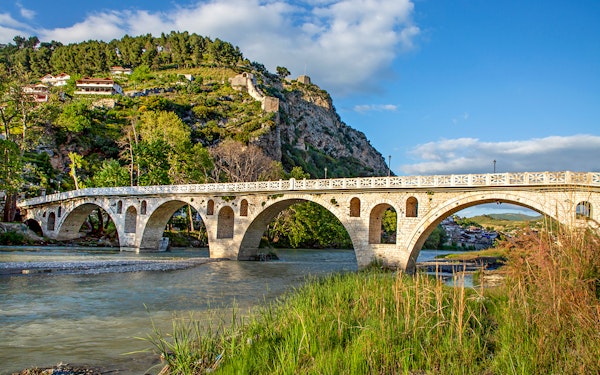
Walking through the narrowed stone streets offers a fantastic view of the medieval old houses, with windows that seem to stand on top of each other. The city’s life began in the 6th-5th century B.C. as an Illyrian settlement. Later, in the 3rd century B.C., it was turned into a castle city known as Antipatrea. Uniquely today, residents still live inside of the castle walls. Berat has it all; a beautiful medieval castle, ancient churches and mosques, a lively lower town consisting of grand old houses draped on steep hillsides, an old stone bridge, great museums and remains from the communist era in Albania. Berat is also known as the birthplace of Onufri, the famous painter of churches all-over the Balkans, distinguished for creating a specific reddish colour still difficult to imitate. We will continue our tour and visit the Gorica Neighbourhood
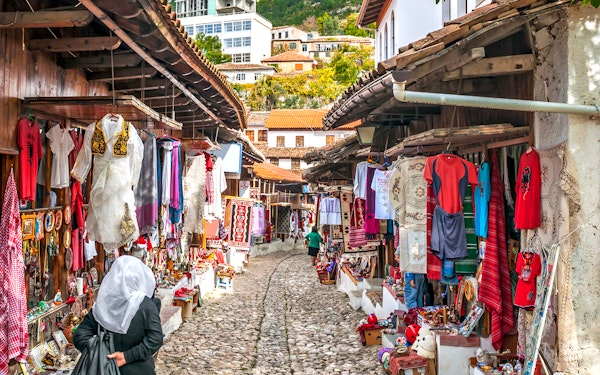
UNESCO World heritage is situated in Southern Albania on the eastern side of mountain “Mali i Gjere”. Gjirokastra resembles a fortified city where every single house is like a small fortress. The origin of the city starts with the castle of Gjirokastra, built in IV century A.D., and is considered as one of the best-preserved medieval towns in the Balkans. Every five years Gjirokastra becomes the capital of the Albanian folklore and traditional music, where passionate folklore ensembles gather in the “stone city” and perform their traditional music, dances and show off their costumes. Right before entering the castle of Gjirokastra you would have to pass by the medieval bazar. The atmospheric old town cascading down in graceful hill crammed with beautiful narrowed stone decorated streets, where you will be amazed by the wide variety of handmade crafts from local artisans and producers.
At The Barrels, a family-run vineyard and restaurant set among rolling hills and greenery, you can soak in the scenery before enjoying some free time for a meal, a glass of wine, or a leisure stroll.
The city offers a great combination of very interesting museums, historic sites, national parks, mountains and Ottoman, Italian and communist style architecture all clashing with each other, but offering a great pleasure to wander through.
Located on the main boulevard opposite the government building, this site honors the political prisoners who suffered under the oppressive regime. Next, we’ll head towards the colorful and lively Blloku Neighborhood. Once a restricted area for members of the Albanian politburo, Blloku is now one of Tirana’s most vibrant areas, full of cafes, boutiques, and colorful street art. While there, Blloku we will also pass by the residence of Albania’s communist leader Enver Hoxha.
The main square is surrounded by the National Museum, the Bank of Albania, the theatre of Opera, Skanderbeg Statue, Ethem Beu Mosque and fancy bars. Our tour continues towards Tirana Castle, found in the city center. The castle is now a pedestrian street where modern and tradition perfectly merge creating one of the fanciest areas of modern Tirana. In 1967, Albania was declared the world’s first atheist state, with all religious practices banned and institutions shut down or repurposed by the regime. We will get to learn more about Albanian’s religious while we pass by Namazgah Mosque (the largest in the Balkans); Orthodox Cathedral and Catholic St. Paul’s Cathedral. This marks the end of this remarkable adventure through history and culture
The tour departs from Choose Balkans office On request (at least 12 hours before tour departure) we can pick you up at 9:00 am from your hotel in Tirana free of charge.
All sales are final. No refund is available for cancellations.
按類別瀏覽 Tirana - 免排隊票券、步行導覽、一日遊、美食體驗等