Experience the best of Romania's UNESCO World Heritage sites in a single tour that spans from south to north.
The journey begins in Bucharest before heading to Peles Castle, Bran Castle, Brasov, Alba Iulia, and Sibiu.
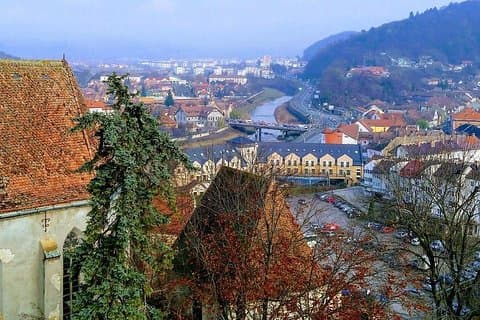
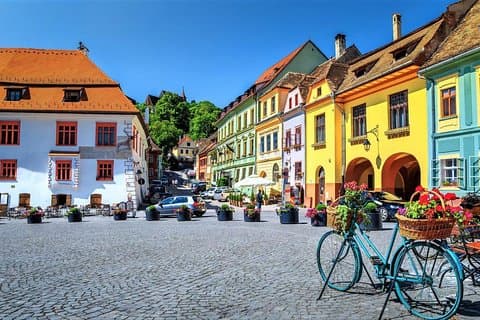
We visit the stunning Sighisoara Citadel, also known as the Pearl of Transylvania, a UNESCO World Heritage Site.
We then venture into the northern region of Maramures, famous for its wooden churches and Maramuresean gates, where we indulge in local cuisine and experience the hospitality of the locals.
Visit to the colorful Merry Cemetery and the painted monasteries of Bucovina.
On our way to Brasov, we stop at the Neamt Citadel and explore the fortified church of Prejmer before discovering the old town of Brasov.
This flexible program offers an amazing experience suitable for all ages, where you can witness more than 2000 years of Romanian history and culture. Prepare to be amazed by the unparalleled beauty of Romania!

Arrive in Sinaia, once an exclusive aristocratic resort, where we visit Peles Castle, the summer residence of the former Romanian royal family. Peles Castle is one of the most beautiful museums in Romania and was built in almost 40 years by King Charles 1.
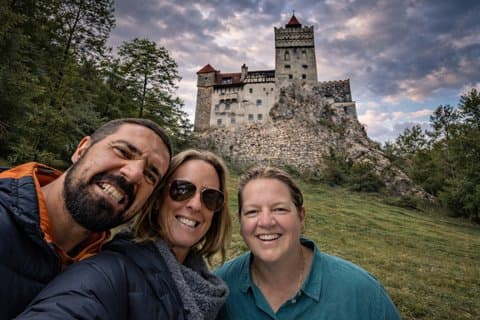
To get there we must go trough Prahova Valley, leaving behind elegant mountain resorts Predeal, Azuga and Busteni which are continuously attracting a high number of Romanian and foreign tourists, on the road that crosses the whirling Prahova River. Breathtaking natural beauty is opened in front of your eyes but the most spectacular view is from Busteni where you can admire the highest peaks of the Bucegi Mountains: Caraiman Peak, Costila Peak and Omu Peak. Also called Dracula's Castle, it is situated at the entrance of Bran-Rucar pass. A remarkable architectural, the monument was built between 1377-1382 on a rock 60 m. After Bran Castle visit, head to a local restaurant for lunch of fresh salads, traditional soups, delicious sarmale, meat, chicken, vegetables and other regional fares (drinks and meals at own expense). Traditional lunch can be arranged in Bran village.
in Transylvania and UNESCO world heritage site. Walking through this enchanting village is like going back in time! Even Prince Charles of Wales, attracted by the beauty of this area, bought a house here a few years ago. Time allocated for taking pictures and walking through the village. Your guide will lead you to the best spots!
Rising sharply above a huddle of Saxon-style buildings, Biertan’s fortified church is a poetic sight surrounded by medieval-themed inns and pastel-coloured houses.
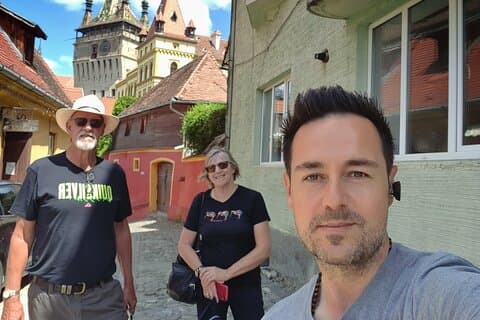
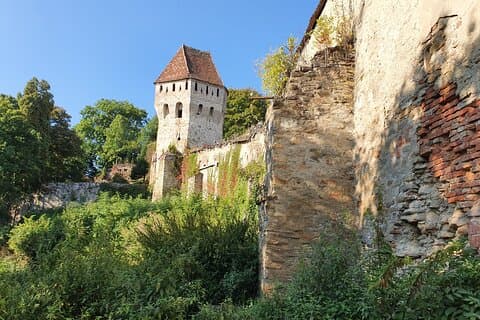
Walking tour in Sighisoara Citadel. So resplendent are Sighişoara’s pastel-coloured buildings, stony lanes and medieval towers, you’ll rub your eyes in disbelief. Fortified walls encircle Sighişoara’s lustrous merchant houses, now harbouring cafes, hotels and craft shops. Visit Sighisoara medieval town including The Clock Tower, The Church on the Hill and the house where Vlad the Impaler was born. Lunch can be arranged in Sighisoara medieval town at Dracula House Restaurant. The rest of the day at your leisure.
al position in the valley of Iza, at a crossroads. Unlike most other churches, which stand on hilltops, the church of St. Nicholas is in the middle of the village, in the centre of a flat cemetery yard.
ar-old edifice, which made it the most famous church in the region. It is now known that marauding Tatars set the initial church on fire in the 17th century, and it was totally destroyed. Two 16th century books found in the present church are proof of the existence of an older church in this place.
t villages in the valley of the Iza River. The church, which now stands on a small hill surrounded by an orchard, is one of the eight churches on the UNESCO World Heritage List.
Some days the throngs of tourists that assault the cemetery with their cameras ready make one wonder if it really is possible to rest in peace here!
Due to the harmonious whole and the well-preserved paintings, the church of St. Paraskeva has been included in the UNESCO World Heritage List.
or the 100 years old mill which is perfectly functioning today, with water. Here, a man together with his wife, grinds the corn using rocks, washes the clothes and the old carpets, cuts wood, but also prepares HORINCA - the plum brandy, a traditional alcoholic drink which is stronger and tastier than any whiskey, as the locals say.
level, located in the Bârgău Mountains, in Romania. The road over the pass is asphalted. It’s called DN17 and is part of the European Route 58. It connects Bistriţa (Transylvania) and Vatra Dornei (Bukovina, Moldavia). On the summit, there’s a hotel, called Hotel "Castel Dracula". It was built in 1974.
the church of the Monastery of Voronet was built in just a couple of months, in 1488, by Stephen the Great, the most popular prince of Moldavia, after one of his victories against the Ottoman armies. This was a common practice of the prince who promoted an architecture known as the Moldavian style. Many of the churches built this way are still preserved until today in the regions of Moldavia and Bucovina. Exquisite testimonies of their painters’ talent, the frescoes of Voronet conserve a centuries-old secret. The distinct ‘Voronet blue’ colour is unique in the world, and its composition is almost impossible to replicate today.
d Heritage Sites, all masterpieces inspired by the Byzantine art of the 15th and 16th centuries. Their distinctive element – the external walls covered with frescoes representing complete religious cycles – makes them unique in the myriad of churches built anywhere in the world in that time. Their spiritual function was supported by their political and educational role that aimed to defend and strengthen the Orthodox Church in a time when both Protestantism and Islamism were at the borders of the medieval Romanian provinces.
ry, one of the eight painted churches from Bucovina included on the UNESCO World Heritage list. A masterpiece and ‘a testament of Moldavian art’, Sucevita Monastery marks the end of an era, a time in which medieval religious art reached new levels of innovation and creativity in this part of Romania.
e symbol of the most glorious period of its eastern part, Moldavia, under the rule of Stephen the Great (1457-1504). The history of the fortress is related to the development of the Moldavian state in medieval times when enemy attacks were a constant threat. The fortress witnessed some crucial fights and survived harsh sieges like the Ottoman attack in 1476 and the Polish attack in 1691. Built-in the 14th century, the fortress was first mentioned in 1395, in a document issued by the Hungarian King Sigismund of Luxemburg. Located at 480 meters altitude and named after the nearby river Neamt, the fortress had a strategic position for defending the territory of Moldavia. It was substantially reinforced during the rule of Prince Stephen the Great, highly praised for his heroic victories against the Turks and the many churches and monasteries he founded, including today’s UNESCO World Heritage Sites.
s in Romania, especially if you decide to leave your car behind and explore its many trails on foot. Crossed by the road that links the historical regions of Moldavia and Transylvania, these gorges are one of the most popular summer destinations in Romania. In this park, you’ll also see the most popular natural dam lake in Romania, Red Lake, the Ghilgos Massif (1,378 meters), the Altar’s Stone (1,154 meters) and the peak Hasmasu Mare (1,792 meters). But keep in mind that you have to go off the beaten and crowded track to enjoy the best experience nature has to offer in the picturesque Bicaz Gorges.
of a mountain; the trunks of the trees are still present in the lake, giving it a particularly evocative atmosphere. The location is fascinating, particularly because of the legends that arose and spread in relation to the lake's name. During your visit, you will learn about these legends.
A remarkable success for this historical monument now part of the UNESCO World Heritage Sites and a must-see of any itineraries through medieval Transylvania. Located only a few kilometers from Brasov, one of the seven citadels founded by the Saxon colonists starting with the 12th century, the fortified church of Prejmer had from the beginning a challenging mission. The most eastern Saxon village from Transylvania, close to Buzau Pass, Prejmer was often in the front line of enemy attacks which could only mean that the fortified church had to endure more sieges than most similar constructions from the region. A task for which Prejmer Fortified Church was strengthened for centuries, starting with its founders, the mythical Teutonic Knights.
ments and one of the best-preserved fortifications used by the Saxon colonists centuries ago when enemy attacks were a constant threat. The church is located only 10 kilometres from Brasov, in the village of Harman, known as Honigberg in German and Mons Mellis in Latin, translated literally as the Mount of Honey. The history of Harman goes back many hundreds of years, to the early 13th century when the Teutonic Knights were given the area of Brasov by the Hungarian King Andreas II. Their rule ended abruptly in just a few years and, in 1240, Harman was donated by the Hungarian king, along with other churches, to the Cistercian Monastery of Carta. The donation document represents the first written mention of Harman and of its church that dates from the 13th century. Like most of the villages from the south and east of Transylvania, Harman witnessed many Ottoman attacks and sieges during the medieval centuries, even more given its location at the border of the region. The main defensive solution was in this case also the fortification of the village church that began in Harman in the 15th century.
We will pick you up from your hotel in Bucharest.
If you cancel at least 3 full day(s) before the scheduled departure time, you will receive a full refund.<br>If you cancel within 3 day(s) of the scheduled departure, you will receive a 0% refund.
Browse Bucharest by category - skip-the-line tickets, walking tours, day trips, food experiences & more